1948 Half Dollar Error List with Pictures

A Lincoln cent with a Franklin half-dollar design stamped over it sold for $14,100 in January 2016. Its readable 1948 date belongs to the cent; only 19 remains from the half-dollar date.
Less dramatic 1948 half dollar errors include repeated letters, clash marks, and a string-shaped impression. Estimated values across the examples below range from $40 to $15,000.
Read on to see which clues identify each feature, including how to read two different designs on one coin.
1. 1948 Franklin Half Dollar Struck-Through String Error (Estimated Up to $250)
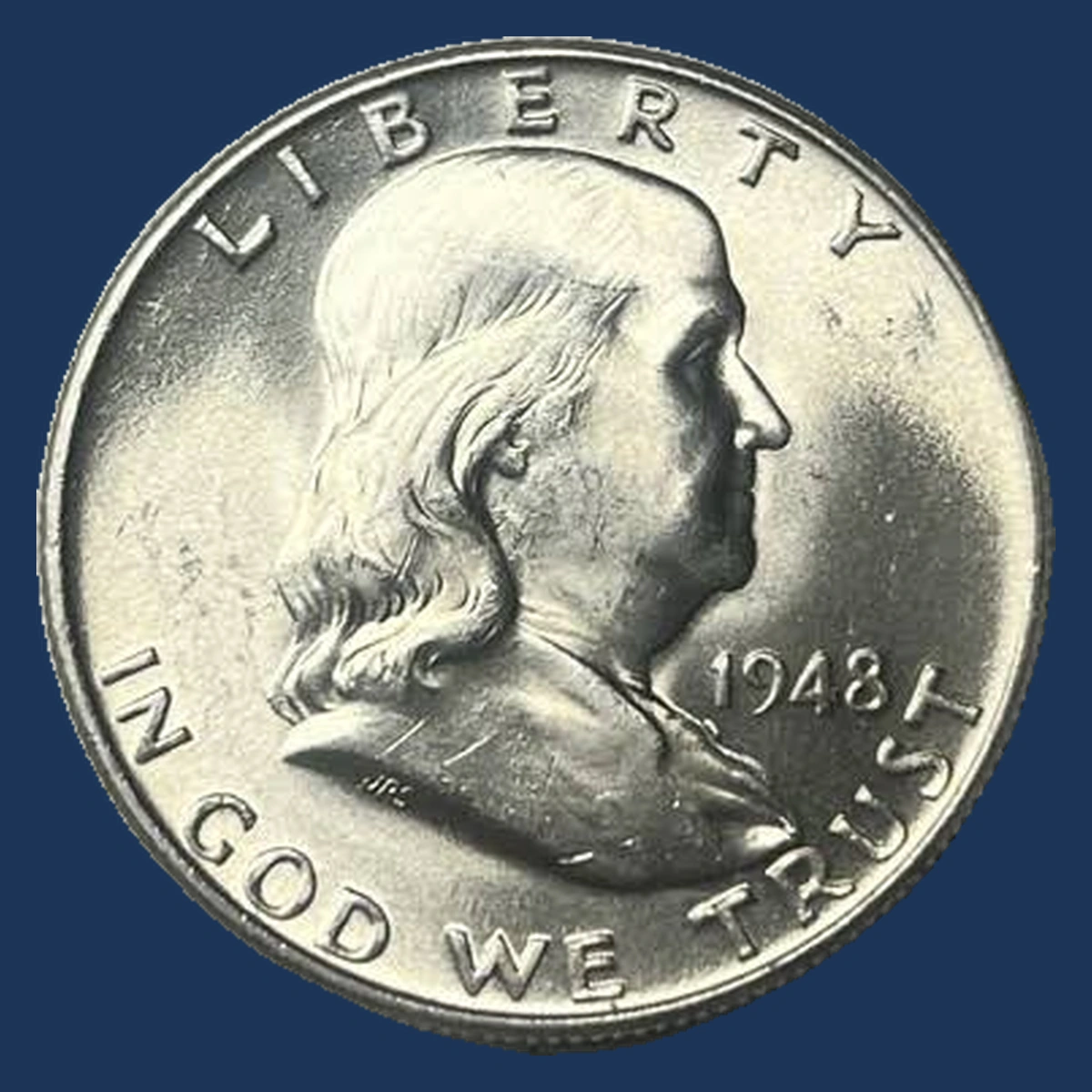
A curved impression runs from near Franklin’s forehead and nose toward the final T in TRUST. Tiny fiber marks appear at its upper end on Denny Polly’s illustrated 1948 example.
A piece of string lay between the metal blank and the die, the steel tool that stamped the design. The strike pressed the string’s outline into the coin.
Its texture is the useful clue. A smooth curved mark alone could have another cause.
Unlike a later scratch, this impression formed while the coin received its design. The fiber detail helps connect the mark to the material that blocked the strike.
Estimated Value
Heritage sold a 1948 front struck-through-string example for $139 in June 2023. It was graded NGC MS63 Full Bell Lines, meaning unworn with clear lines near the bell’s bottom.
Use an estimated $75–$250 for comparable examples. Visible fibers, a clear impression, and good surrounding surfaces strengthen the comparison.
The auction record does not establish that it was Polly’s illustrated coin. Full Bell Lines describes strike detail, not another mint error.
How to Identify
The CONECA illustration shows the curve near the forehead and nose toward TRUST. Follow it with a 10× magnifier, paying attention to the upper end.
A low lamp angle helps reveal the small fiber impressions. A bright cut with pushed-up edges would suggest a later scratch instead.
Keep both faces in your photographs so any mintmark stays connected to the example. A normal silver half dollar weighs 12.50 grams and measures about 30.6 millimeters, checked with a digital scale and calipers.
A curve alone is not enough. The fiber texture at its upper end is the most revealing first check for string.
2. 1948 Franklin Half Dollar Obverse Die Clash Error (Up to $2,550)
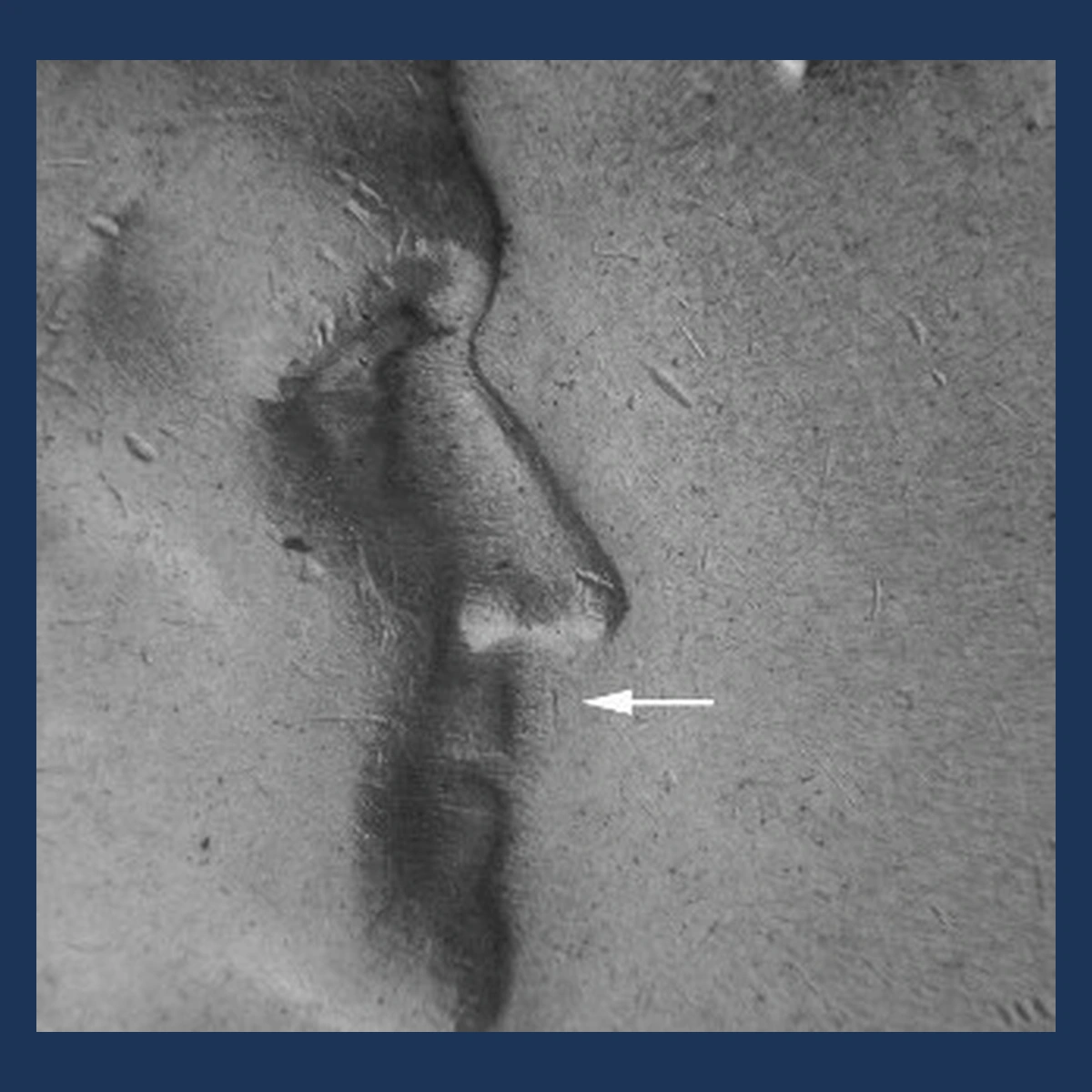
Unwanted traces of the back design can appear around Franklin’s portrait. PCGS recognizes the Philadelphia 1948 pattern as FS-401, an obverse die clash.
Obverse means the front. A clash happens when the two stamping tools touch without a metal blank between them.
That contact can transfer parts of one design onto the opposite tool. Later coins then copy the shallow extra marks.
The crack in the Liberty Bell is normal design detail, not this error. Nor should a Bugs Bunny nickname or a random tooth-like mark replace a comparison with the actual 1948 Philadelphia pattern.
Estimated Value
A PCGS MS65 Full Bell Lines example brought $329 at Heritage in February 2026. PCGS also records $2,550 for MS66+ FBL on eBay in December 2020.
Estimate $40–$2,700 from worn examples through selected higher-grade unworn coins. The better grade and clear bell lines help explain the large price difference.
These are whole-coin values. A faint mark beside the portrait does not automatically receive the high-end price without the correct pattern and comparable condition.
How to Identify
Confirm Philadelphia by checking that there is no mintmark above the bell. A normal example has a ridged edge, a 12.50-gram original weight, and a diameter near 30.6 millimeters.
Use a scale and calipers for those basic measurements. Then inspect the portrait area with a 10× magnifier and light from several angles.
Compare shallow extra contours with a known 1948 FS-401. They should relate to parts of the back design, unlike random scratches or lines left by polishing the tool.
Do not scrape deposits to improve the view. A complete pattern match to the Philadelphia reference is the direct check, rather than finding any projection near the mouth.
3. 1948 Franklin Half Dollar Doubled Die Reverse Error (Up to $8,550)
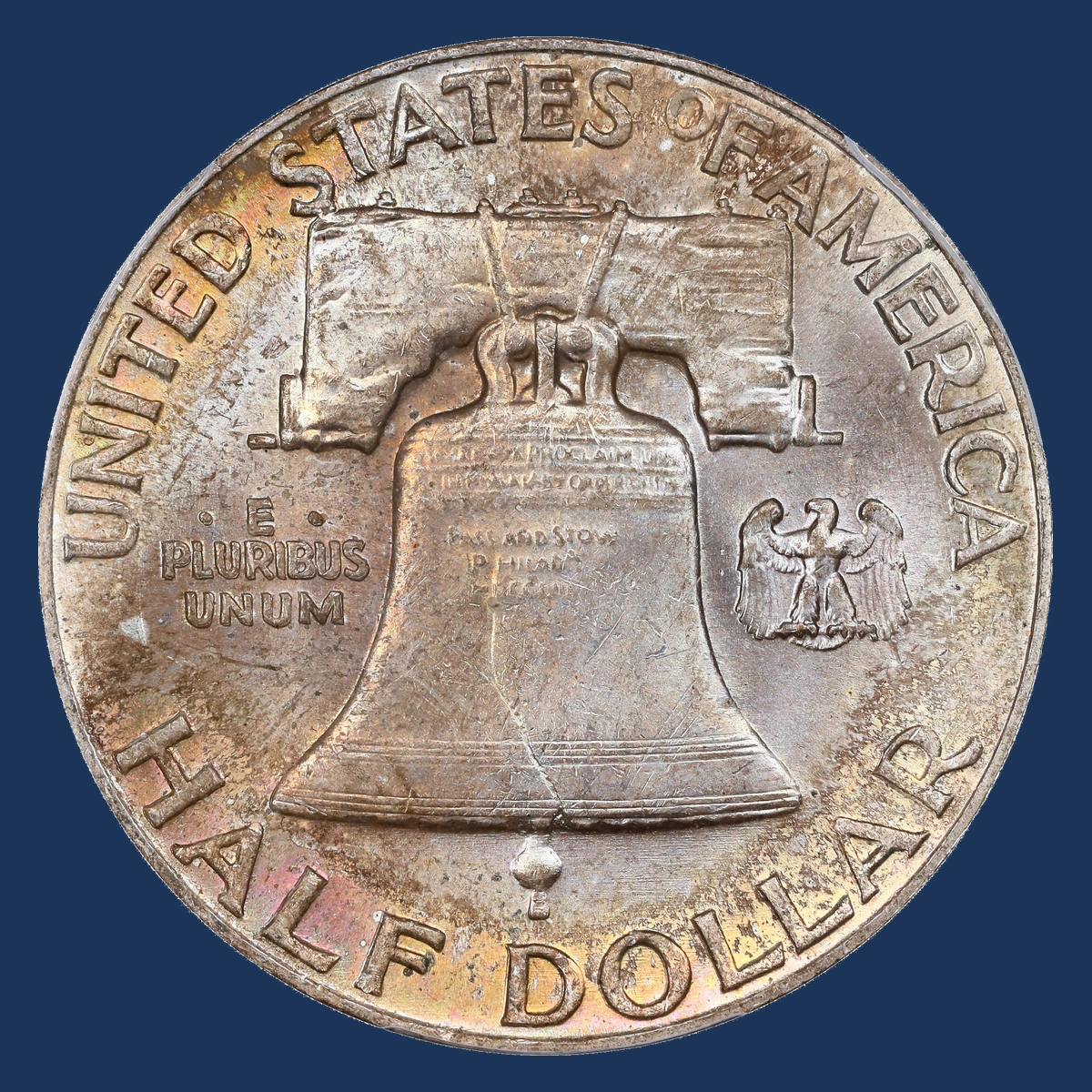
Small extra outlines appear in E PLURIBUS UNUM, the words to the left of the Liberty Bell. They are slight on the Philadelphia doubled-back variety, so a clear close-up helps.
The repeated detail was already in the stamping tool. Coins struck from it copied that pattern instead of receiving a second strike.
Denver also has a recognized 1948 doubled reverse. Both use the catalog number FS-801, but the Philadelphia and Denver examples need different reference pictures.
Keep the mintmark with the comparison. A flat ledge that only makes a letter wider does not by itself establish the same doubled design.
Estimated Value
PCGS records $8,550 for a Philadelphia MS67 FBL sold on eBay in January 2021. That is an exceptional unworn grade with clear bell lines.
An estimated $50–$9,000 spans circulated examples through selected superb Philadelphia coins. Much of the high-end price comes from preservation and strike detail.
Denver examples need their own comparisons. The Philadelphia record should not be applied to every D-marked doubled reverse or to an ordinary worn coin.
How to Identify
Photograph E PLURIBUS UNUM with the bell’s left edge still visible. Through a 10× magnifier, compare the small repeated letter shapes with the correct reference.
A D above the bell means Denver. Switch to that mint’s variety picture rather than using the Philadelphia pattern.
Move the light gently without polishing the coin. Reflections and flat ledges from tool movement can make letters look doubled for other reasons.
A normal Franklin half weighs 12.50 grams and measures about 30.6 millimeters across. Check these measurements with a scale and calipers, and inspect the edge grooves.
Matching the motto’s extra outlines to the correct mint’s example gives the clearest confirmation.
4. Franklin Half Dollar Overstruck on a 1948 Cent (Up to $14,100)
Lincoln-cent details survive beneath Franklin’s larger portrait on this copper-colored coin. A finished 1948 cent entered the half-dollar press and received another denomination’s design.
Collectors call this a double-denomination error. It differs from a half dollar struck on an unused cent blank because the cent already had its own design.
The cent’s 1948 appears above Franklin’s ear. The half-dollar date shows only 19, and the two designs lie roughly at right angles.
Read each date with its own design. The cent’s last two digits cannot complete the half-dollar date, even though both appear on the same piece of metal.
Estimated Value
The NGC MS64 Brown example sold for $14,100 at Heritage on January 6, 2016. Estimate $8,000–$15,000 for a comparable certified piece with both designs clear.
MS64 describes an unworn coin, while Brown describes its copper color. Heritage called the half-dollar strike undated and assigned 1948 to the cent.
The value belongs to that specific combination. It is not a price for an ordinary damaged cent or a fully dated 1948 Franklin half.
How to Identify
Find the cent’s 1948 near Franklin’s ear, then identify other surviving cent details. Use a 10× magnifier to trace the half-dollar portrait separately.
Both designs must make sense. Random dents or impressions from squeezing two finished coins together do not prove a mint overstrike.
Only 19 survives from the half-dollar date. Keep it separate from the cent’s four digits.
Because this started as a cent, normal half-dollar weight and size are not pass-or-fail tests. Record actual measurements with a digital scale and calipers, then compare the outline and missing design areas with the certified specimen.
Matching the two coherent designs and their separately read dates is the quickest useful confirmation.
Conclusion
These examples have estimated values from $40 to $15,000. String leaves an impression, a clash transfers unwanted design, and a doubled tool repeats letter outlines.
The cent overstrike is different again because it carries two denominations. Its 1948 belongs to the Lincoln cent, so keep the dates separate and use the correct mint’s photographs when checking the smaller Franklin features.