1952 Half Dollar Error List with Pictures

A 1952-D half struck on a silver quarter blank sold for $1,150 at Heritage in June 2010. It weighed only 6.2 grams, about half the weight of a normal Franklin half.
Other 1952 half dollar errors fit within an ordinary outline. Extra mintmark curves, a raised cheek mark, and thin peeling layers can all hide in plain sight.
The estimates below span $50–$5,000. Read on to compare the visible features, prices, and checks for each type.
1. 1952 Half Dollar Lamination (Estimated Up to $300)
A silver flake may lift from a weak layer inside the coin. That surface separation is called lamination.
The flake can remain attached or fall away, leaving a rough patch beneath it. The problem comes from the alloy rather than the design stamped onto the coin.
Reports for 1952 do not name a mint or fixed location for every example. Confirm Franklin on the front and the Liberty Bell on the back.
Another half dollar, the Carver-Washington commemorative, also has a 1952 date. Small surface peeling belongs here; a coin opening through much of its thickness is a clamshell split.
Estimated Value
Estimate $50–$300 for a modest genuine lamination across circulated coins and ordinary examples without circulation wear. This is a whole-coin range.
A 1957 NGC MS63 front lamination sold for $74.49 including the buyer’s fee at Pristine in January 2021. That different-year result offers a comparison near the low end.
An attached flake can display the error clearly. More missing silver does not always add value, especially if it spoils an otherwise attractive coin.
How to Identify
Use a 10× magnifier and light from the side where intact design meets the rough patch. A thin opening in the metal can reveal the separating layer.
Repeated scrape lines or metal pushed beside a cut suggest later damage. Photograph any attached flap without lifting it.
Turn to the ridged edge and check whether the separation stays near the surface or extends deep through the coin. That helps distinguish peeling from a clamshell split.
Calipers should show about 30.6 millimeters, while a scale can compare the weight with 12.50 grams before wear or metal loss. An irregular separating layer attached to original silver is the first clue to confirm.
2. 1952 Half Dollar Curved and Double Clips (Estimated Up to $500)
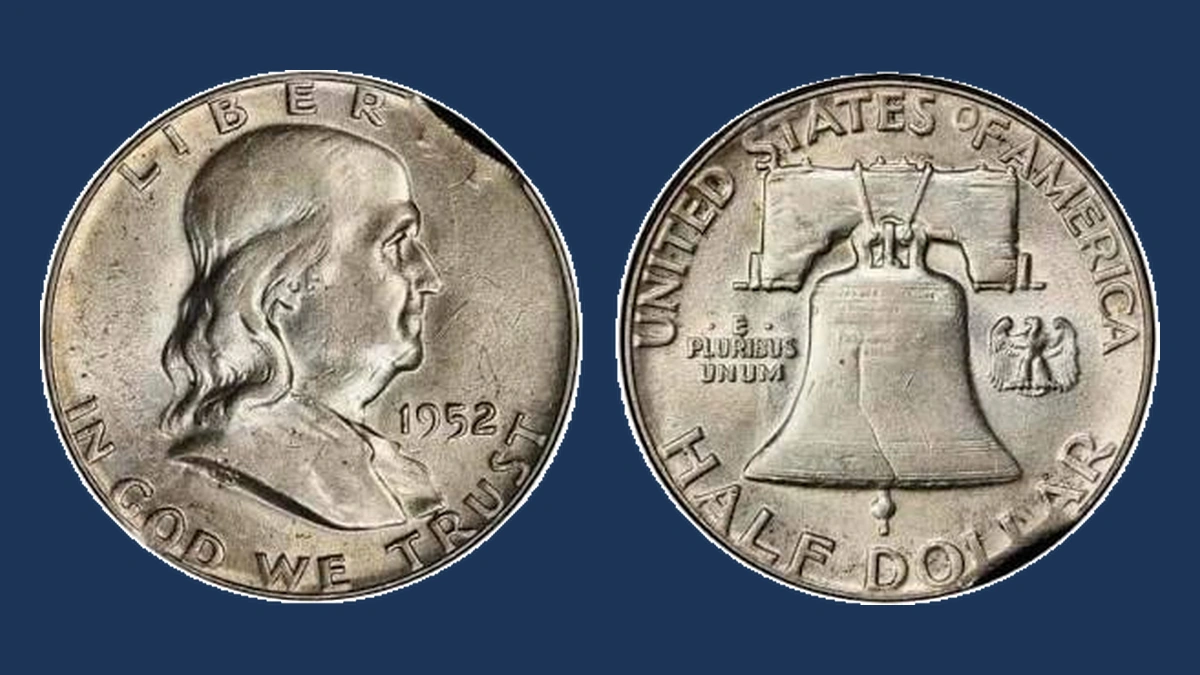
A small curved gap removes one percent of the metal near two o’clock on the 1952 half illustrated by PCGS. The opposite rim is weak.
Other reports place single clips at six o’clock on a Philadelphia coin and four o’clock on a Denver coin. These are separate examples.
Another half, graded ANACS MS64 and listed by GreatCollections, has two clips. It is not a combination of the three single-clip descriptions.
Clips begin when a punch cuts a new blank across metal already missing from the strip. The incomplete blank then receives the coin’s design around the existing gap.
Estimated Value
Estimate $75–$200 for modest single clips and $150–$500 for clearer large or double clips. The ranges cover collectible circulated coins and ordinary examples without circulation wear.
A 1952-D MS62 minor clip had a reported $99 asking price. That is not a completed sale.
The separate ANACS MS64 double-clip listing provides no sale price used here. Gap size, original edges, and condition matter more than simply counting how many pieces are missing.
How to Identify
On the PCGS example, examine the one-percent gap near two o’clock and the weak opposite rim with a 10× magnifier. Other genuine clips may show less obvious opposite-rim weakness.
Inspect each gap on a double clip separately. Do not combine positions from different single-clip coins to identify one supposed multiple-clip example.
A scale can show the loss against the normal 12.50 grams. Measure intact parts with calipers against about 30.6 millimeters.
Where the gap meets the edge ridges, look for original struck borders rather than saw marks, filing, or sharp cut surfaces. A missing curved section that the rim formed around is the useful first distinction.
3. 1952 Half Dollar Struck Through (Estimated Up to $500)
A weak patch or hollow can form when debris blocks part of the stamping tool. The coin’s design cannot form normally beneath the obstruction.
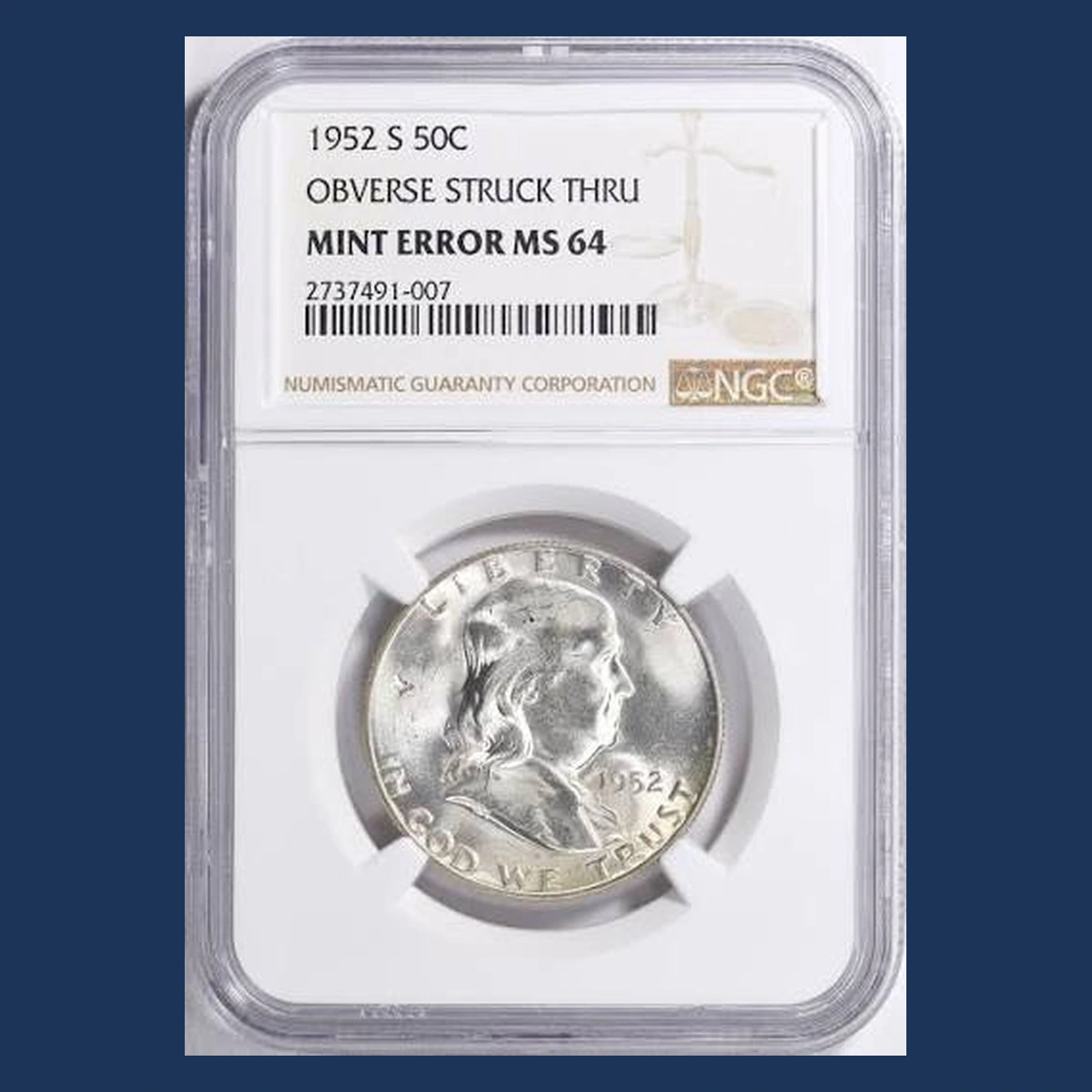
Reports for 1952 include an NGC MS64 San Francisco example with a front-side strike-through. Other descriptions show debris at the bell’s lower-left corner and a clapper-area feature.
The clapper is the piece that hangs inside the bell to make it ring. The reports do not establish whether those two back views show different coins.
Each feature needs a close look. The crack drawn on the Liberty Bell is normal design, not evidence of debris during striking.
Estimated Value
A modest visible strike-through has an estimated range of $75–$500. Size, clear detail, and good surfaces help collectors understand the error.
For comparison, Greysheet records a 1951-S NGC MS64 front strike-through at $134 in April 2026. That is not a sale of the listed 1952-S coin.
A larger recognizable impression may attract more interest. A vague weak spot still needs a convincing Mint-made explanation before it should receive an error premium.
How to Identify
For the San Francisco example, examine the front. Its description should not be matched to the separate bell-area pictures.
Through a 10× magnifier, inspect where normal detail gives way to a hollow or weak patch. Turn the light to show the surface rather than just its color.
On the back reports, look at the bell’s lower-left corner or clapper area. Neither location alone proves that the obstruction was cloth, wire, or another particular material.
Check the ridged edge and use a scale and calipers against 12.50 grams and 30.6 millimeters. A small obstruction may leave both measurements normal.
An original-looking border around detail that failed to form is the first feature to compare.
4. 1952 Half Dollar Reported Doubled Die Obverse (Estimated Up to $600)
An owner lists a Philadelphia 1952 half as ANACS MS65 Full Bell Lines with a doubled front design. The entry does not provide pictures of the extra outlines or a checked variety label.
A doubled die is a steel stamping tool with repeated design details. Coins struck by it can show the added shapes.
That differs from extra mintmark punches or the outlines left by clashing tools. The added shapes should belong to the front design itself.
Full Bell Lines describes sharp lines near the bell’s base on the back. It does not prove how the front acquired extra detail.
Estimated Value
Once the doubling is clearly identified, estimate $75–$600 for an ordinary collectible example. This compares minor Franklin varieties across circulated and normal uncirculated grades.
The owner’s MS65 Full Bell Lines description is not a sale price. It also does not establish a standard added amount for front-side doubling.
Better preservation and a clear match can support the upper estimate. Thick letters or flat ledges caused during striking do not qualify as the same variety.
How to Identify
Look for a genuinely repeated shape with a 10× magnifier before choosing a variety name. Rounded extra outlines differ from a flat shelf beside a reduced letter.
Compare with an ordinary Philadelphia coin and obtain the complete label or photographs for the reported ANACS example. A cataloged die from 1951 or 1954 cannot identify this 1952 coin.
Keep the whole date and front design visible in your pictures. The extra shapes should repeat in a consistent arrangement rather than appear as unrelated thick spots.
Inspect the ridged edge and compare weight and width with 12.50 grams and about 30.6 millimeters using a scale and calipers. The first match to seek is the same added front-side outlines on a verified example.
5. 1952-D Half Dollar Clamshell Split (Estimated Up to $1,000)
A clamshell split opens through much of the coin while leaving part of its edge joined. From the side, it can resemble two halves connected by a hinge.
The split follows a weakness inside the silver alloy. It is deeper than a thin flake lifting from one face.
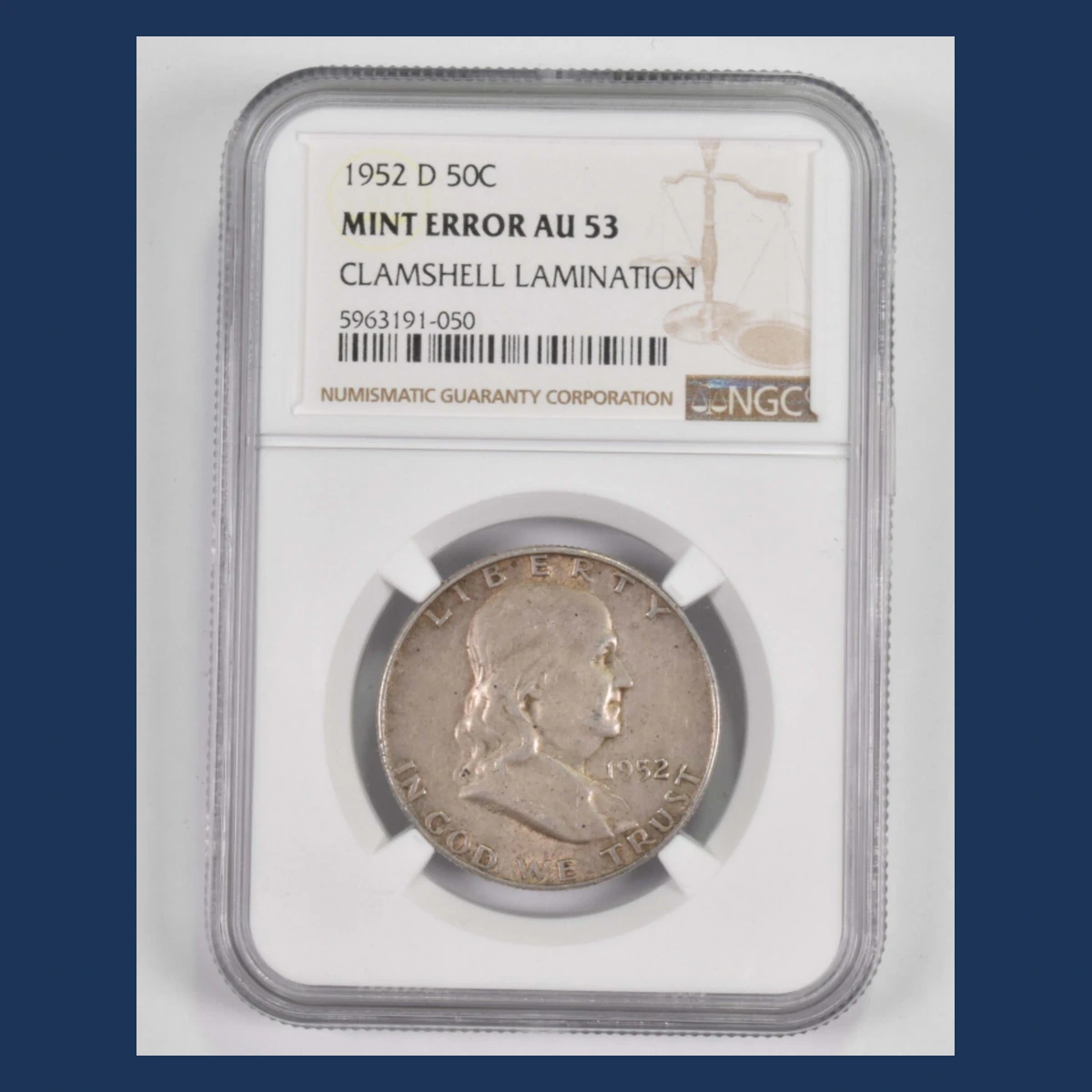
An account reports a 1952-D example described as AU53, meaning slight wear. It gives no exact location of the opening.
The remaining metal connection is a clue. A bent solid coin or a half cut open with a saw has a different structure, even if its outline looks similar.
Estimated Value
The reported AU53 coin was listed at $599. That figure is an asking price, not a recorded sale.
Estimate $300–$1,000 for a genuine, attractive split on a lightly worn Franklin. The year account links that comparison to the 1952-D report.
Look at how the layers remain joined and how much design survives. Prying the coin wider can damage it, and a manipulated opening should not receive the same estimate as a natural separation.
How to Identify
Photograph the edge opening and the part still joined. With a 10× magnifier, look for a break through the alloy rather than smooth saw tracks or an added seam.
Do not pry the layers apart. Keep the date, D above the bell, and both faces linked to the same coin in your photographs.
If all the metal remains, its weight may still be close to the normal 12.50 grams. An open shape does not always mean silver has been lost.
Use a scale and gentle caliper measurements against the usual 30.6-millimeter face, taking care around the remaining edge ridges. A natural internal split ending in an intact metal hinge is the clearest first test.
6. 1952 Half Dollar Repunched Mintmarks (Estimated Up to $2,000)
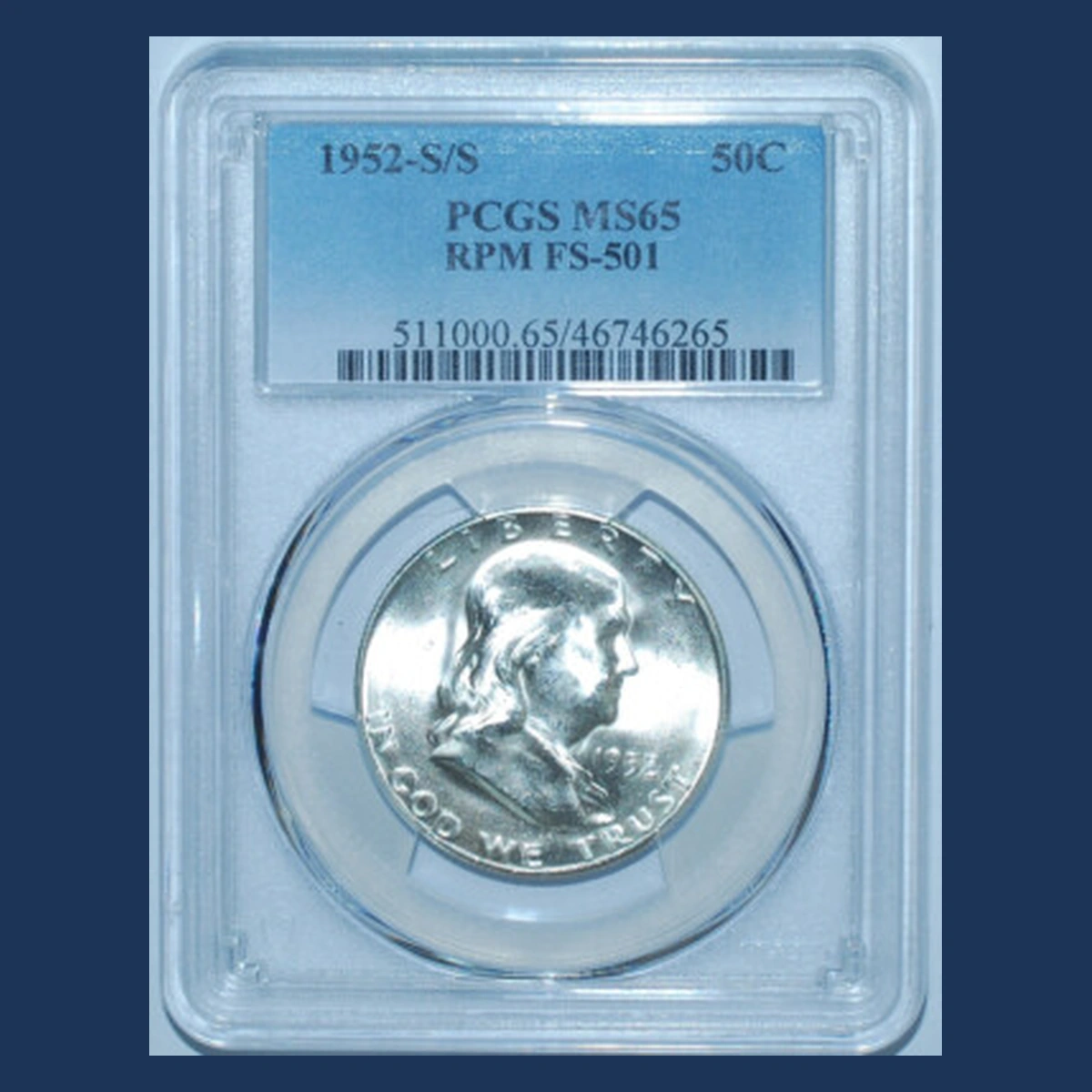
Extra S curves to both the left and right create the best-known 1952-S S/S/S appearance. Other San Francisco examples have tilted or left-shifted impressions.
Denver examples include tilted, downward, leftward, and multiple D placements. They are separate varieties, not one mintmark with all those extra pieces.
Workers punched mintmarks into the stamping tool by hand. Repeating the punch in a slightly different position could leave part of the earlier letter.
On one reported S variety, a flat ledge from striking movement is more obvious than the repunching. The strongest doubled-looking line is therefore not always the correct feature to identify.
Estimated Value
PCGS records a $590 eBay transaction in May 2021 for a 1952-S FS-501 graded MS65. Estimate $75–$750 for ordinary collectible repunched mintmarks.
Especially desirable San Francisco examples with clear features and better preservation can fit $750–$2,000. These are whole-coin estimates.
The many Denver and San Francisco varieties do not all have the same value. Sharp bell lines can add to the coin’s price separately from how clearly the earlier mintmark punch appears.
How to Identify
Find the mintmark above the bell’s wooden support. With a 10× magnifier, trace the extra letter curves and compare one complete example in the Wexler catalog.
For the prominent S/S/S, check both left and right remnants. For Denver coins, select the picture matching the tilted or shifted D.
Catalog numbers from different references may not mean the same thing. Separate a flat ledge from the true raised curve left by the earlier punch.
Confirm the full date and ridged edge. A scale and calipers should broadly match 12.50 grams and 30.6 millimeters.
The earlier letter’s shape and position, matched to one complete variety description, give the quickest useful identification.
7. 1952 Half Dollar Bugs Bunny and Booger Die Clashes (Estimated Up to $3,500)
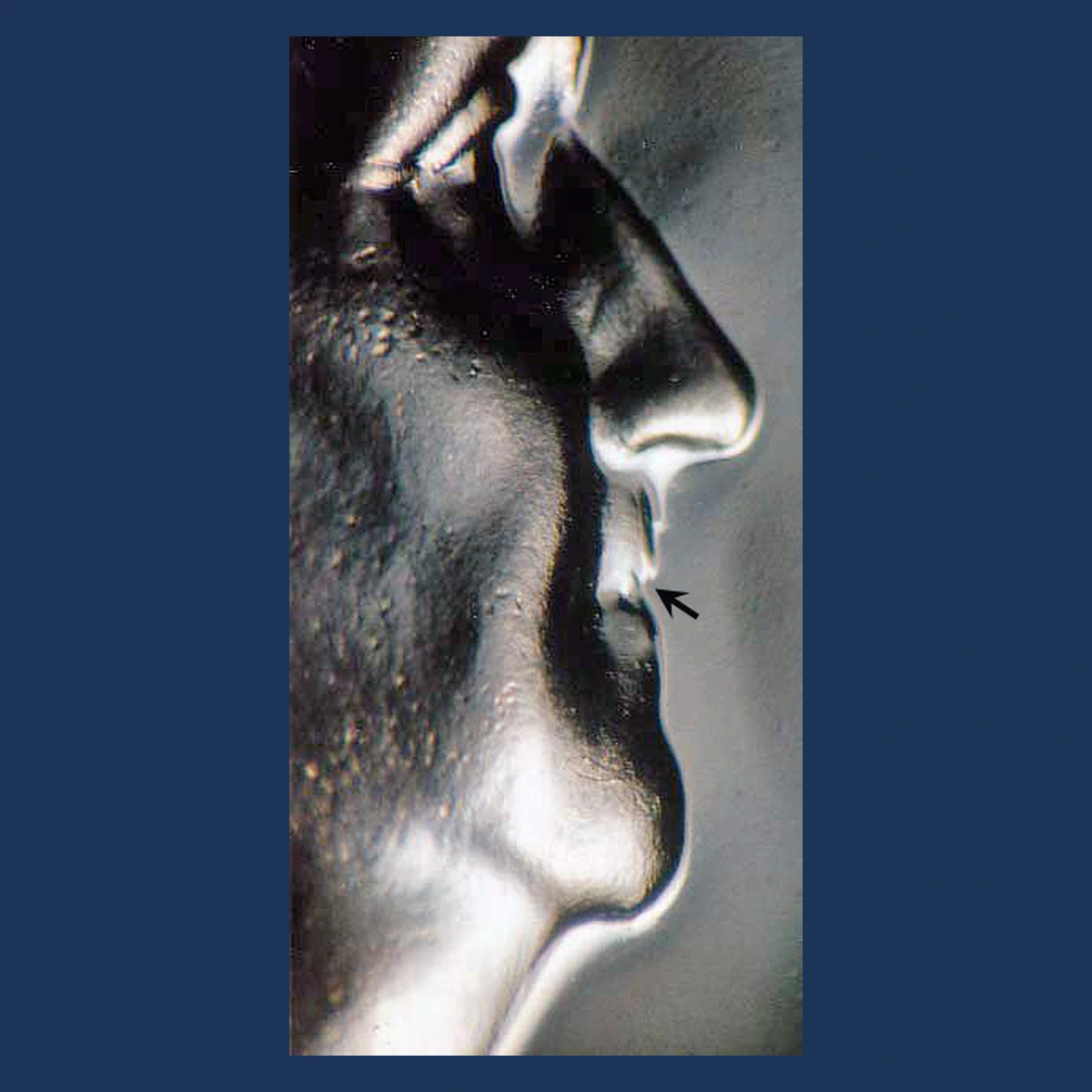
Tooth-like shapes at Franklin’s mouth give Philadelphia examples the Bugs Bunny name. A separate Denver variety has a hooked mark near the nose, nicknamed Booger.
Both came from stamping tools meeting without a blank between them. Part of the eagle design marked the front tool and appeared on later coins.
A Philadelphia Proof Bugs Bunny was publicized in 2015 as a PCGS PR65 discovery. Proofs are specially made collector coins.
That Proof uses catalog number FS-403, separate from the cited circulation-strike FS-401 varieties. The same cause does not make the mouth and nose marks, mints, or finishes interchangeable.
Estimated Value
Estimate $75–$1,500 for identified Philadelphia circulation-strike Bugs Bunny coins and $75–$1,000 for ordinary Denver Booger examples. The separate Proof variety has an estimated range of $500–$3,500.
A 1950 Bugs Bunny MS64 Full Bell Lines sold for $390.40 in April 2026. That is an ordinary-strike comparison from another year, not a Proof sale.
The Proof estimate instead uses published variety-guide levels. Its grade, surfaces, and clear mouth feature need their own comparison.
How to Identify
For Philadelphia Bugs Bunny, start at the mouth; for Denver Booger, start near the nose. Use a 10× magnifier to compare the raised shape with the correct variety photograph.
A cut, nick, or random lump does not automatically represent part of the eagle design. Change the light to see how the feature joins the face.
The Proof needs its own comparison and collector-coin finish. A shiny ordinary coin is not automatically FS-403, and a lower-cheek Scarface mark has a different cause.
Keep the mintmark area in photographs and inspect the ridged edge. Compare 12.50 grams and 30.6 millimeters with a scale and calipers.
The matching raised shape at the correct mouth or nose position is the starting test.
8. 1952 Half Dollar Scarface Die Break (Up to $4,250)
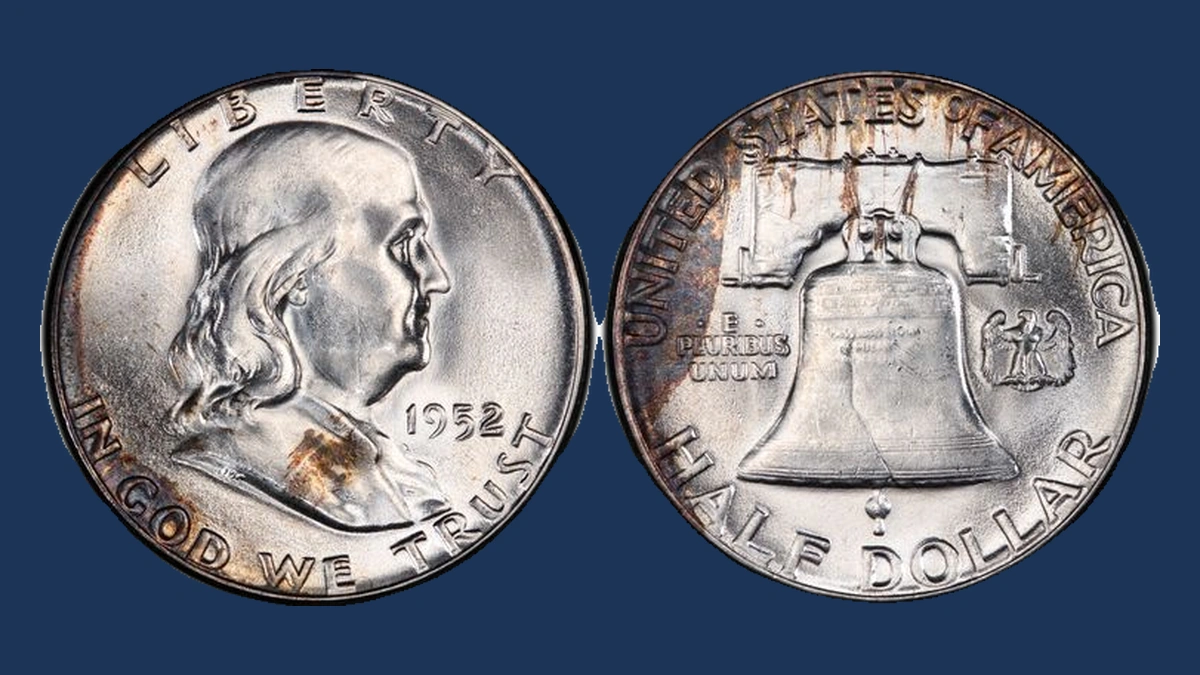
A raised backward-J shape near Franklin’s lower cheek and jaw identifies the Scarface variety. Despite its name, the mark is not a scratch cut into the finished coin.
A damaged area in the stamping tool let extra metal rise there during striking. The coin carries the resulting shape above the face.
PCGS lists this die-break variety as FS-402. It differs from the mouth-area Bugs Bunny clash and the FS-403 Proof variety.
The location and height matter together. A dramatic scratch elsewhere on Franklin’s face does not qualify, and a dark line in a photograph needs checking from another light angle.
Estimated Value
PCGS records an MS66+ Full Bell Lines example at $4,250 on eBay in December 2020. That price includes exceptional condition and strong bell detail.
Estimate $150–$1,000 for more ordinary identified examples across circulated and uncirculated grades. Substantially better preservation can support $1,000–$4,250.
A worn or damaged half does not inherit the high-grade result just because its mark looks similar. Match the actual raised shape and compare the whole coin’s condition.
How to Identify
Light the lower cheek near the jaw from opposite directions. Through a 10× magnifier, the backward-J should rise above the face.
A scratch can have a channel with pushed-up metal beside it. Follow the whole shape to avoid mistaking one bright section for the variety.
Compare directly with a clear FS-402 image while keeping the surrounding portrait visible. If Bugs Bunny is also claimed, examine the mouth separately.
Philadelphia coins have no mintmark above the bell. Check the ridged edge and compare a loose coin with 12.50 grams and 30.6 millimeters using a scale and calipers.
The raised backward-J in the correct lower-cheek position gives the quickest Scarface match.
9. 1952 Half Dollar Struck on a Silver Quarter Planchet (Estimated Up to $5,000)
Two cataloged 1952 halves received their designs on smaller silver quarter blanks. Both weigh 6.2 grams and were graded NGC AU58, but only one is explicitly identified as Denver.
The other example is shifted toward seven-thirty. Parts of the front motto and national name on the back did not fit on the metal.
Its catalog title does not show a mintmark, but that alone cannot prove Philadelphia. The area where a mintmark would appear may be incomplete.
A small blank can spread under the larger half-dollar tools. The outer details may stretch toward the edge while other lettering remains missing.
Estimated Value
The 1952-D NGC AU58 sold for $1,150 at Heritage on June 4, 2010. Estimate $1,200–$5,000 for comparable lightly worn through attractive uncirculated quarter-blank strikes.
The other AU58 is a separate specimen, not another sale at $1,150. Preservation and readable date or mint details can change the comparison.
A smaller-looking half must first prove that it was struck on the wrong blank. A coin cut down later does not fit this range.
How to Identify
A silver quarter blank began at 6.25 grams and about 24.3 millimeters, against 12.50 grams and 30.6 millimeters for a half. Start with a scale and calipers.
The smaller blank can spread during striking, so its finished width need not remain exactly 24.3 millimeters. Inspect the ends of the lettering with a 10× magnifier.
A half ground down later can also be small and light. Look for filing, damaged edge ridges, or other altered surfaces instead of normal design flowing toward the edge.
Photograph every surviving date digit and the actual mintmark area. Quarter-like weight paired with naturally incomplete half-dollar designs is the strongest first evidence of a wrong blank.
Conclusion
The estimated values for these 1952 errors run from $50 to $5,000. Small peeling layers sit near the low end, while genuine strikes on quarter blanks can bring far more.
Match each feature to its proper location, mint, and finish. A mouth clash, lower-cheek break, and extra mintmark curve have different causes.
Keep the whole Franklin half in view when comparing photographs, and let its condition guide the price comparison.