1968 Half Dollar Error List with Pictures

A 1968-S half dollar that sticks to a magnet sold for $9,000 in August 2025. It weighs about 8.1 grams, far below the normal 11.50 grams.
The 1968 half dollar errors below range from slight doubled details to coins struck on the wrong metal. Their estimated values run from $10 to $10,000.
Read on to see which marks, missing pieces, and measurements help tell these errors apart.
1. 1968 Half Dollar Inherited Die Doubling (Estimated Up to $35)
Some 1968-D halves have slightly thickened details that seem to spread inward. The back can show an even smaller doubled effect.
These marks began in a tool used to make several dies, the steel tools that stamp coins. Different dies could therefore leave the same small doubling on many coins.
A scratch on one die might differ from a scratch on another. Their doubled details can still match.
There is also a report of similar inherited doubling on San Francisco coins. That report does not yet give a clear picture of the exact marks to seek.
Estimated Value
Estimate $10–$35 for collectible examples with this slight doubling. This range reflects a small design difference, rather than the much stronger doubled designs discussed later.
The coin’s silver and condition also contribute to the price. An unusually well-preserved example needs a closer comparison with coins in similar condition.
The San Francisco report alone does not establish an extra premium. First match the actual doubled detail on the coin.
How to Identify
Use a 10× magnifier and turn the coin slowly under a lamp. Look for a repeated raised edge that stays visible as the light moves.
On the Denver issue, compare the inward spread and thickened shapes with clear photographs of known examples. The back’s doubling is subtler, so an ordinary shadow can easily distract you.
A normal coin weighs 11.50 grams and measures 30.61 mm across. A digital scale and calipers can check these measurements without rubbing the surfaces.
Individual scratches may differ between genuine examples. Do not apply Denver’s pattern to the separate San Francisco report; match the shape and position of the raised doubling itself.
2. 1968-D Half Dollar Thin-Planchet Candidate (Estimated Up to $250)
One 1968-D auction listing calls its coin a thin-planchet error. A planchet is the metal blank before it becomes a coin.
There is a catch. The listed weight is 11.5 grams, which is normal for this year.
A thin appearance alone does not show that the Mint used too little metal. A blank can spread outward during striking and become wider without becoming lighter.
A truly thin blank may come from metal rolled too thin before blanks were cut. The reported coin needs thickness and width measurements to show which explanation fits.
Estimated Value
The coin listed as a thin-planchet error brought about $94 in June 2010. Estimate $75–$250 for a properly identified thin-blank error of this general kind.
That sale does not explain why the listed weight is normal. The estimate applies only when the coin’s measurements support an original blank defect.
A half dollar flattened or filed after leaving the Mint belongs in a different price comparison based on its damaged condition.
How to Identify
Check the weight first. A reading of 11.50 grams is normal, so it cannot by itself prove that the blank was too thin.
Use calipers gently to measure thickness at several undamaged points. Also compare the width with the normal 30.61 mm diameter; a wider coin may have spread during striking.
Study the edge through a magnifier. The bonded metal layers should remain intact if the problem began with a thin blank.
Filed edges, peeling metal, and flattened designs suggest other causes.
Compare thickness, width, and weight together; a thin-looking edge with normal weight is a reason to measure further, not a finished diagnosis.
3. 1968-D Half Dollar Curved Clip (Estimated Up to $350)
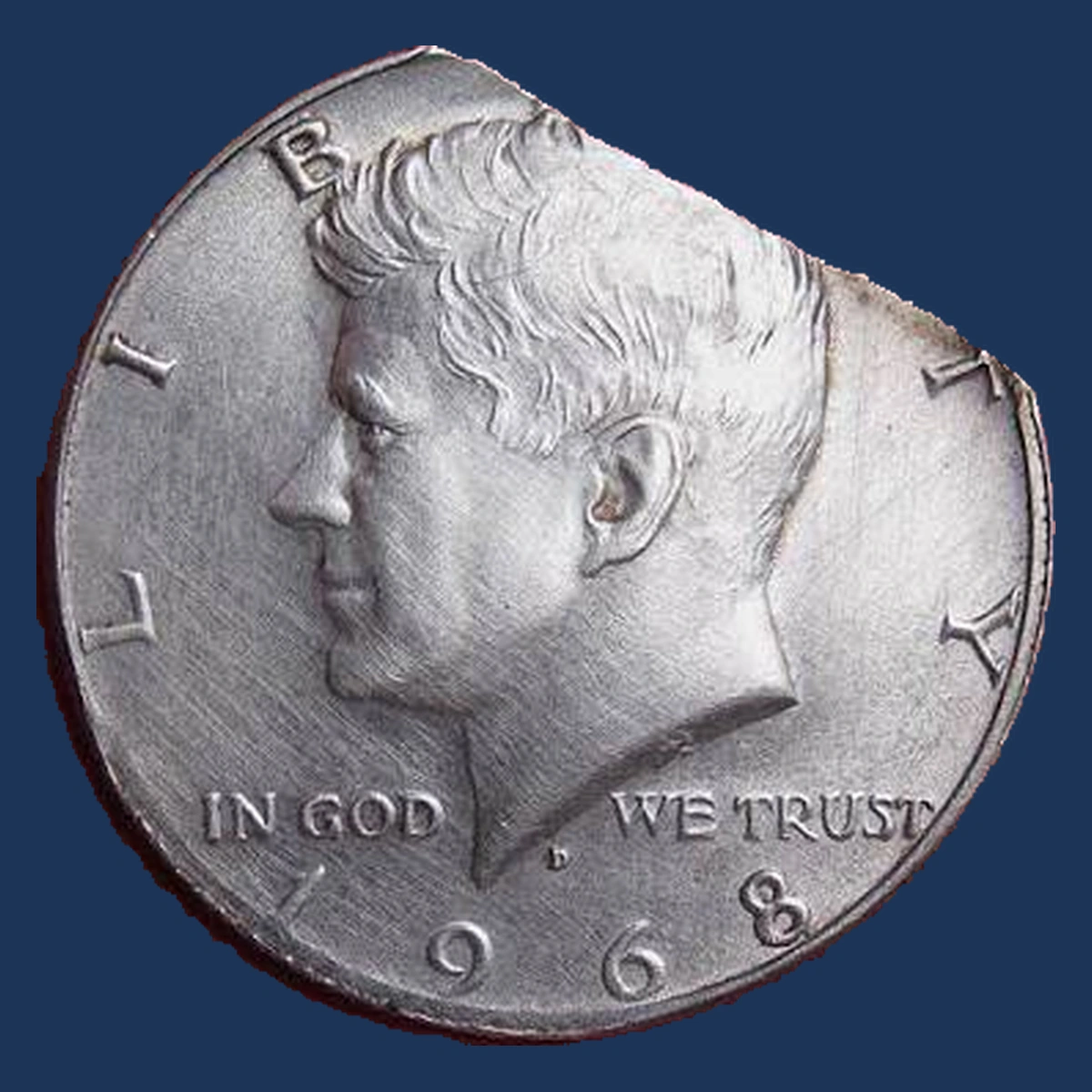
A smooth curved bite can be missing from the edge of a 1968-D half dollar. The shortage began when the Mint cut the blank from a metal strip.
One recorded example has about 28% missing and carries a PCGS MS61 grade. That grade describes a coin with no circulation wear, although marks may remain.
A different ANACS AU50 example weighs 11.25 grams and has a much smaller shortage. Its weight does not belong to the large clip.
Both coins were struck after the metal was missing. Their rims and nearby designs can show the effect.
Estimated Value
The large 28% clip graded PCGS MS61 brought about $84 in July 2021. Its size did not guarantee a high price.
For genuine examples overall, use an estimated $50–$350 range. Buyers consider how much of Kennedy, the date, and the mintmark survives, along with surface condition.
The separate AU50 coin weighs 11.25 grams and has a smaller clip. Its measurements help describe that coin, but do not set a price for the large shortage.
How to Identify
Follow the curved gap with a 10× magnifier. At each end, look for a rim that weakens or curves toward the missing section.
A saw or file used after striking can cut straight through finished lettering. Such cuts may leave sharp scratches instead of the softer changes made when an incomplete blank was struck.
A scale will show how much weight remains compared with a normal 11.50-gram half. Measure surviving widths with calipers against the usual 30.61 mm diameter.
Weakness on the opposite rim can help, but it is not present on every clip. Start with the two ends of the curved gap and look for original struck metal flowing toward it.
4. 1968 Half Dollar Repunched Mintmarks (Estimated Up to $675)
An extra curve beside the small S or D can come from a mintmark punched twice into a die. The second punch did not fully cover the first.
One San Francisco variety has an extra S below the main letter. Another, called FS-512, shows an S with pointed tips over an earlier S with rounded tips.
Collectors call these shapes Serif S and Knob S. Look closely at the tips.
Reports also list a doubled Denver mintmark and another San Francisco example. Their exact extra outlines are not yet described clearly enough for a close visual match.
Estimated Value
Minor, clearly matched repunched mintmarks have an estimated range of $25–$150. For the recognized FS-512 collector coins, estimate $275–$675.
These San Francisco Proofs were specially made for collectors. Strong contrast between frosted designs and mirrorlike backgrounds, called Cameo or Deep Cameo, can raise the value.
The ranges are estimates. A small extra curve beside an ordinary S does not earn the FS-512 price unless its punch shapes match that variety.
How to Identify
The small S or D sits below Kennedy’s neck. A normal coin weighs 11.50 grams and measures 30.61 mm across, which a scale and calipers can check.
For the documented S/S, enlarge the letter with a 10× magnifier and look below the main S. An earlier curved stroke remains there.
FS-512 needs a different comparison: its pointed tips overlap remains of an S with rounded tips. Do not assume that every extra mark below an S is FS-512.
Flat shelves may come from movement during striking, and scratches can imitate thin extra lines.
The useful first clue is a recognizable second S curve or tip, rather than a single stray bump.
5. 1968-D Half Dollar Clad-Layer Separation and Loss (Estimated Up to $750)
A layer can lift from a half dollar like the lid of a small shell. It may remain attached or break away completely.
The 1968 coin contains bonded layers, with 40% silver overall. Its outer layers contain 80% silver, while the inner metal contains about 20.9% silver.
The exposed center is therefore not the pure copper found inside later halves. Color alone can mislead you.
Known Denver examples include layers opening on either face, plus complete and partial front-layer loss. A complete-loss AU58 coin weighs 9.52 grams; a different partial-loss MS62 weighs 9.93 grams.
Estimated Value
The 9.52-gram AU58 front-layer loss sold for $129 in December 2024. A separate partial-loss coin weighing 9.93 grams brought $174 in March 2022.
These sales help support an estimated $75–$750 range for layer failures. Size, original appearance, and condition all matter.
A cleaned example with an attached, opening layer sold for $69. That lower result shows why a dramatic opening does not always outweigh damage to the surfaces.
How to Identify
Do not lift an attached flap. Moving it could break the remaining bond and damage the coin.
Instead, use a magnifier to follow the opening along the edge. A natural separation runs between metal layers; a cut made with a tool may leave gouges and pushed metal.
Weigh the coin on a digital scale against the normal 11.50 grams. A layer that remains attached may leave almost all the weight, while a lost layer makes the coin lighter.
Check the 30.61 mm outline with calipers and photograph the opening from the side. The clearest clue is an actual layer boundary continuing into the edge, not just a differently colored patch.
6. 1968 Half Dollar Struck Through Foreign Material (Estimated Up to $800)
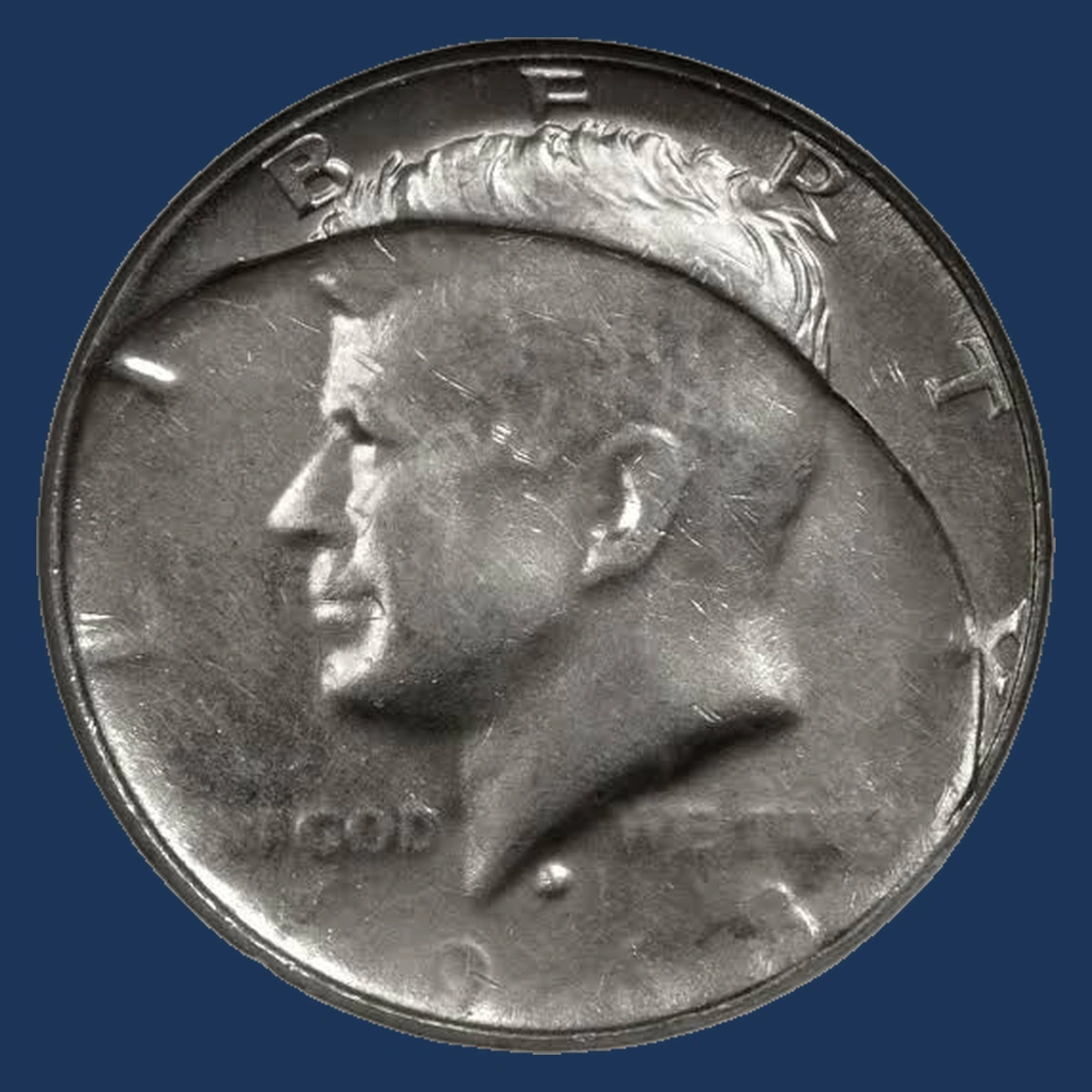
A patch of design may disappear where an extra piece of metal lay over the blank. The stamping tool pressed that piece into the coin instead of leaving the full design.
This is called a strikethrough. The loose piece may fall away afterward.
Denver examples include front impressions made by fragments of a coin’s outer layer. A separate back example shows marks from a ridged edge fragment.
The layer-fragment coins include separate AU58 and MS64 examples; the large affected area belongs to the MS64. Other 1968 reports do not identify the mint or trapped material.
Estimated Value
A Denver AU55 coin with a ridged-fragment impression on the back sold for $134 in June 2023. Estimate $75–$800 across this group.
A small, plain mark sits toward the lower end. A large impression with a recognizable object texture can bring more, especially on a clean coin.
The upper estimate is not a recorded sale for the MS64 layer-fragment example. Its size and condition need their own comparison with similar errors.
How to Identify
A normal 1968 half weighs 11.50 grams and measures 30.61 mm across. A scale and calipers can help rule out a different blank before you study the unusual patch.
Now tilt the coin under a lamp and look inside the interrupted design with a magnifier. Parallel ridges may show where a fragment from another coin’s edge pressed into the face.
Those marks are different from the grooves around the coin’s own edge. Check the depressed area itself.
A later gouge often leaves rough borders and pushed metal. For the recorded ridged-fragment error, look for an orderly groove pattern inside the depression, with no fresh cuts around it.
7. 1968 Half Dollar Doubled and Tripled Die Obverses (Estimated Up to $1,000)
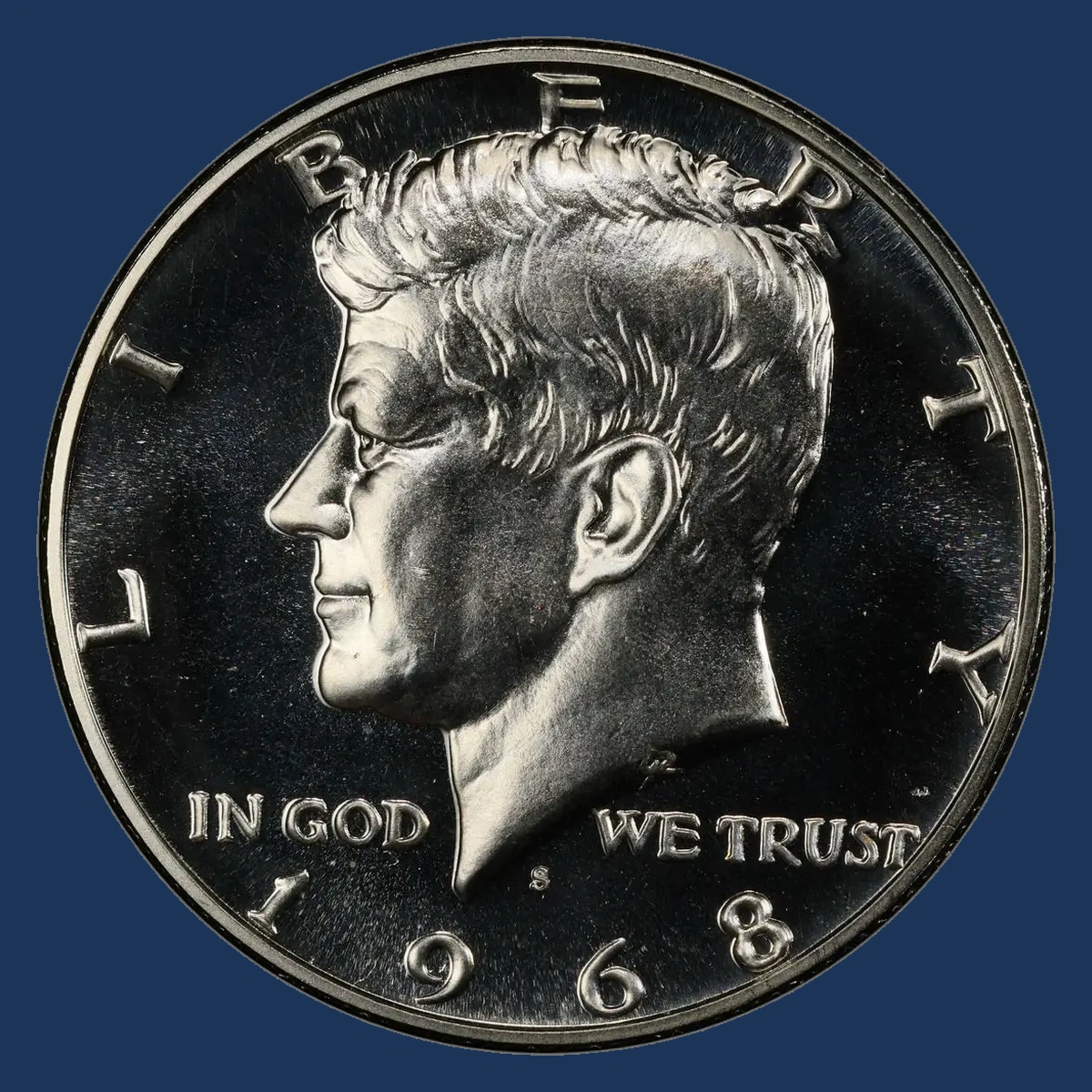
Several outlines can appear around TRUST on the Denver FS-101 variety. Nearby clues include notches in IN, a split at the top of Y, and extra date details.
The extra shapes were already in the die before it struck the coin. They are not three separate blows to the finished half dollar.
San Francisco’s FS-101 is a different Proof variety. Its doubling spreads clockwise through parts of the motto, date, and portrait.
Other reports describe smaller extra edges or thicker details. Some lack clear photographs, so their exact marks still need a careful match.
Estimated Value
Small, clearly identified front varieties are estimated at $25–$150. Stronger Denver and San Francisco examples fall around $100–$1,000, depending on condition and finish.
A Denver FS-101 graded PCGS MS65 sold for $288 in August 2025. A San Francisco FS-101 graded PR68 brought $325 in May 2022.
These are separate varieties, despite sharing FS-101 in their names. Neither sale sets a price for an ordinary thick letter or flat doubling caused during striking.
How to Identify
Read the mintmark before choosing a comparison picture. Denver and San Francisco both have an FS-101, but their doubled shapes are different.
For a Denver coin, enlarge TRUST, then check IN, the upper Y, and the date. Several matching marks are stronger evidence than one thick letter.
On the San Francisco Proof, follow its clockwise extra outlines around the motto and portrait. Flat, shelf-like edges do not match the rounded raised shapes of these varieties.
A scale and calipers can check the normal 11.50 grams and 30.61 mm. Keep the whole coin visible in photographs, and use the linked TRUST, IN, and Y features as the first check for Denver FS-101.
8. 1968-S Half Dollar Inverted S Mintmark (Estimated Up to $1,250)
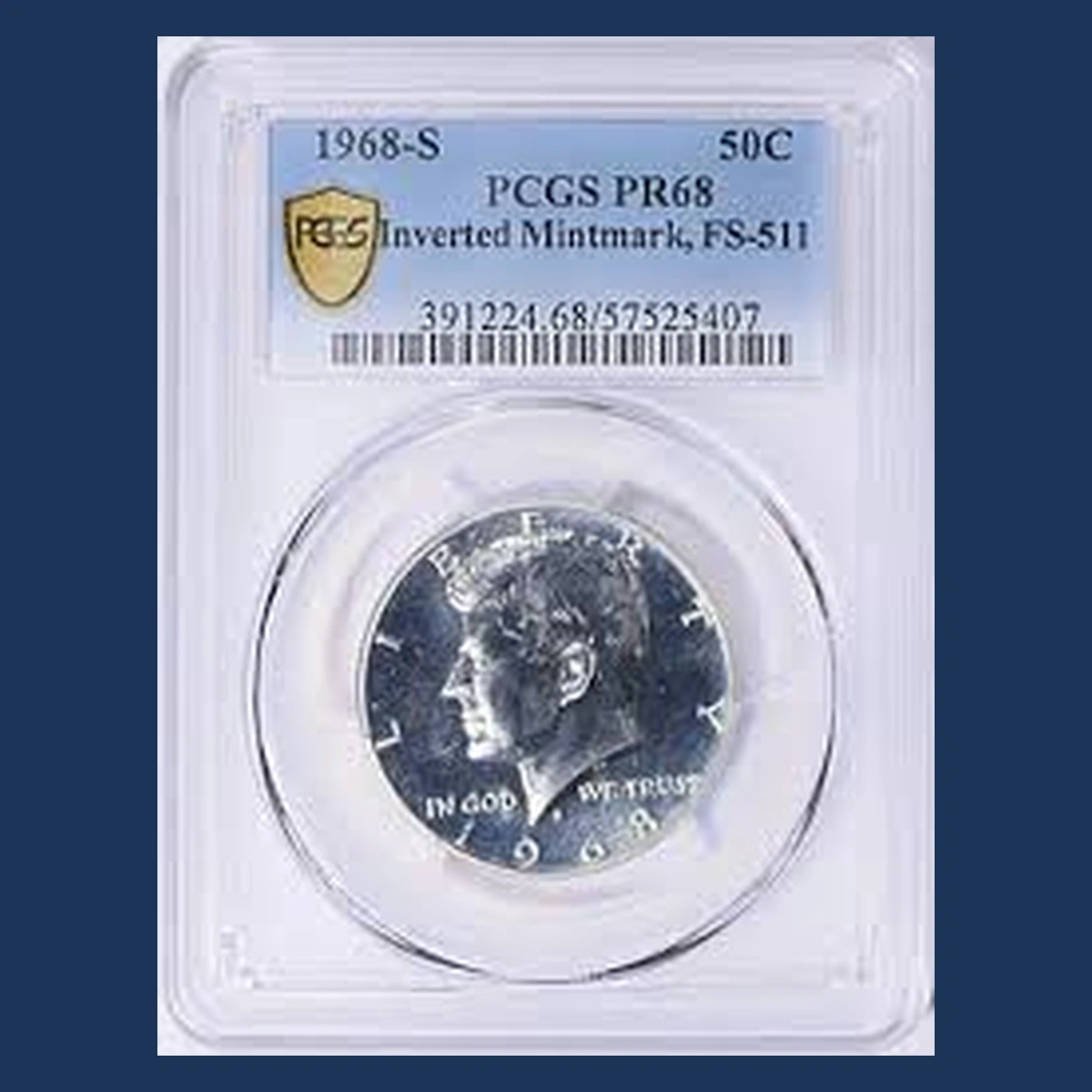
The S below Kennedy’s neck can look almost normal even when its punch was used upside down. The two loops are not exactly alike, so their shapes reveal the mistake.
Collectors call this variety FS-511. The date and portrait remain upright; only the mintmark’s punch orientation is reversed.
It differs from FS-512, where two mintmark punches overlap. An upside-down S does not automatically mean there are two S impressions.
Another catalog also reports an inverted mintmark. A second listing alone does not prove that a different die made a separate variety.
Estimated Value
Estimate $150–$1,250 for correctly identified FS-511 examples. Better surfaces and stronger contrast between the portrait and background can push a Proof toward the upper end.
One PCGS PR66 sold for $456 in May 2022. A different coin with the same grade brought $705 in January 2016.
Those sales show that matching grades do not guarantee matching prices. They apply to the inverted S, rather than the separate overlapping-punch FS-512 variety.
How to Identify
Place a clear photo of a normal S beside the coin. Keep both portraits upright, then compare the size of each loop and the shapes of the tips.
Use a magnifier to check for scratches inside the letter. A hit can push metal around and make a normal loop seem smaller.
The angle of the whole letter is not enough. Match the unequal loops against a clear FS-511 example, rather than deciding from a tilted photograph.
For an accessible coin, check 11.50 grams with a scale and 30.61 mm with calipers. The decisive visual check remains the S itself: its upper and lower loop shapes should trade places compared with the normal punch.
9. 1968-D Half Dollar Off-Center Strike (Estimated Up to $1,500)
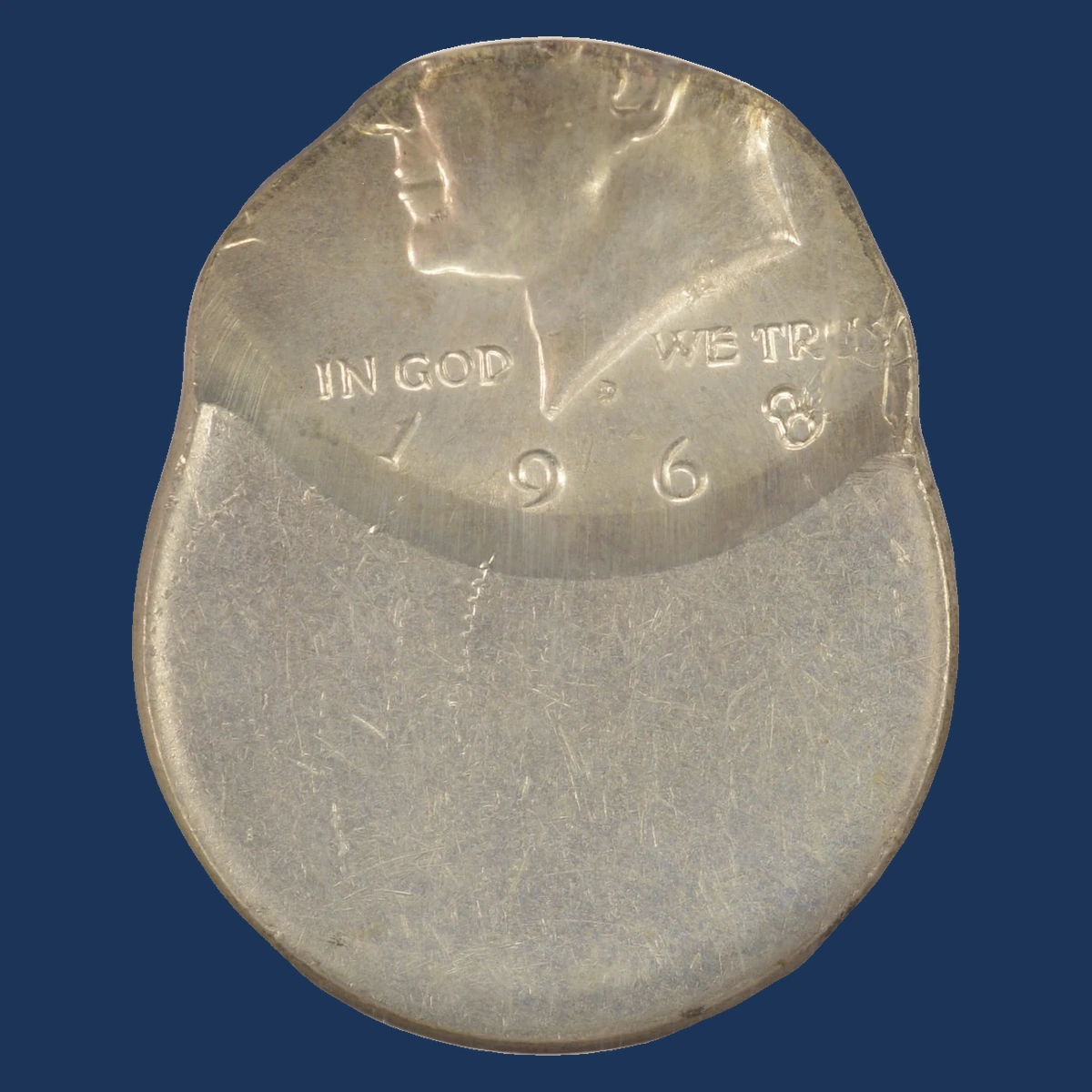
A large blank crescent sits beside the design on a recorded Denver half struck 40% off center. The blank was not fully under the stamping tools when they came together.
The NGC MS63 label gives the year as (1968)-D. Parentheses mean the year was determined from other evidence, rather than promising a complete visible date.
Both faces should show the same misplaced strike. If only one side is shifted, another striking problem may explain it.
Silver content alone cannot identify an undated example as 1968. Other years also used the same silver-clad construction.
Estimated Value
Estimate $150–$1,500 for genuine examples, from smaller shifts to dramatic coins with strong remaining designs. This is a comparison range, not a recorded sale for the 40% off-center MS63.
Coins without circulation wear often bring more than worn examples. A readable date, or a well-supported date on the grading label, also helps buyers.
A largely blank silver-clad half cannot receive a 1968 price simply because its metal looks right.
How to Identify
Compare the two faces before measuring the blank crescent. Both should show the design shifted into the same part of the coin.
Under a magnifier, examine the untouched metal beside the strike. Grinding away a finished design leaves scratches and a changed surface, rather than an original blank area.
The starting blank normally weighs 11.50 grams, so an off-center strike need not make it lighter. Use a scale, and record the altered outline with calipers against the ordinary 30.61 mm width.
Edge grooves may be incomplete where the coin missed the surrounding ring during striking. The useful first check is matching displacement on both faces beside genuinely unstruck metal.
10. 1968-D Half Dollar Double Strike with Uniface Reverse (Estimated Up to $1,800)
A small second design appears far outside the main design on this Denver half. The coin had already been struck once before it returned under the tools in a very different position.
The later strike was about 85% off center. It touched only a small part of the coin.
The NGC MS62 example also has a uniface reverse at that second contact. This means the area did not receive the normal back design because another surface was in the way.
The two faces tell one connected story. The small extra impression and plain reverse area belong together.
Estimated Value
This double-struck NGC MS62 sold for $600 in December 2024. Estimate $400–$1,800 for comparable examples with clear extra designs and similar dramatic shifts.
Buyers judge the whole coin, including its marks, remaining date, and the strength of the second impression. A clearer, more attractive example may bring more.
The off-center second strike and its plain reverse are parts of the same event. Their prices should not be added as separate premiums.
How to Identify
First follow the main portrait, lettering, and date. Then turn the coin until the smaller second impression is easier to read.
A magnifier should reveal real struck details within that extra area. Look nearby for places where the second blow flattened parts of the first design.
Turn to the back and find the corresponding plain area. It should agree with where the second strike landed on the front.
The normal blank weighs 11.50 grams and is 30.61 mm wide; a scale and calipers help document the changed coin.
Examine the edge for seams or added pieces, then match the small second design to its opposite plain area.
11. 1968 Half Dollar Doubled and Tripled Die Reverses (Estimated Up to $4,000)
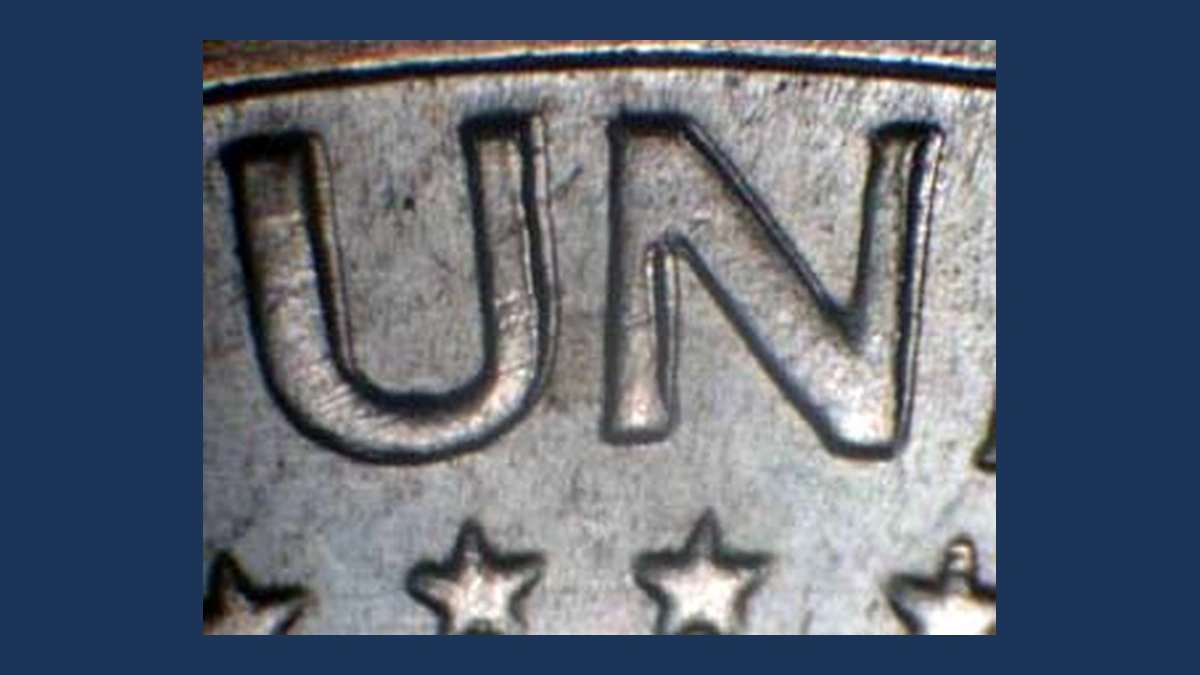
Tiny extra points can make the stars below OF AMERICA look tripled on a 1968-S FS-801. The strong extra outlines spread counterclockwise around parts of the back design.
Those repeated shapes came from a die that already held the extra details. Every coin it struck could receive the same pattern.
Denver reports include inward tripling and smaller separations around letters. Other San Francisco Proofs have their own patterns, so one comparison photo cannot identify them all.
The designer’s G may also differ between designs. Its shape alone is not evidence of doubling.
Estimated Value
An FS-801 PR68 Deep Cameo sold for $3,833 in June 2022, according to PCGS. Its bright background and strongly frosted design helped make it an attractive Proof.
Estimate $300–$4,000 for strong, correctly matched Proof varieties. Smaller Denver and San Francisco back varieties have a separate estimated range of $25–$200.
The high sale does not apply to every doubled-looking letter. Match the coin’s actual pattern and condition before using that comparison.
How to Identify
Find OF AMERICA on the back, then inspect the stars directly below it with a 10× magnifier. The strong San Francisco FS-801 shows repeated star points, not merely blurred outlines.
Its extra shapes spread counterclockwise. Compare nearby letters to see whether the same direction continues.
The normal designer’s G can change shape between designs, so that letter alone is not a test. Denver examples also need Denver comparison photos rather than the San Francisco pattern.
An accessible coin should weigh about 11.50 grams on a scale and measure 30.61 mm with calipers. Tilt it under a lamp to rule out shadows, then check those tripled points below OF AMERICA first.
12. 1968-D Half Dollar Struck on Smaller-Denomination Blanks (Estimated Up to $4,500)
Part of Kennedy’s design can run off the edge when a small blank reaches the half-dollar press. The tools stamp a half-dollar design onto metal intended for another denomination.
One quarter-blank example weighs 5.67 grams and is graded NGC MS68. Separate coins were struck on nickel blanks.
A quarter blank has copper-nickel outer layers over copper. A nickel blank is solid copper-nickel; neither contains the half dollar’s normal 40% silver.
Another quarter-blank example, graded NGC MS63, was also struck about 80% off center. Its large blank area is a separate effect of that shifted strike.
Estimated Value
Estimate $800–$4,500 for Denver half dollars struck on these smaller blanks. An auction index records $1,495 for the quarter-blank MS68 in June 2006.
Nickel-blank examples brought $2,160 in MS63 and $3,720 in MS64 during 2024. These grades and metals belong to different coins.
The quarter-blank coin struck 80% off center needs its own whole-coin comparison. Do not add an off-center price to a wrong-blank price to estimate it.
How to Identify
A cropped design should make you check the edge and weight, not assume that the coin used a smaller blank. Someone can cut down a normal half dollar after minting.
A quarter blank starts near 5.67 grams and a nickel blank near 5.00 grams. Compare those figures with the half dollar’s normal 11.50 grams on a digital scale.
Use a magnifier to look for the quarter’s layered edge or the nickel’s solid metal. Calipers can record spreading during the strike against the usual 30.61 mm half-dollar width.
A filed edge or freshly cut lettering suggests damage. Look for original struck half-dollar details on metal whose weight and layered or solid construction match the smaller denomination.
13. 1968-S Half Dollar Proofs on Wrong Planchets (Estimated Up to $10,000)
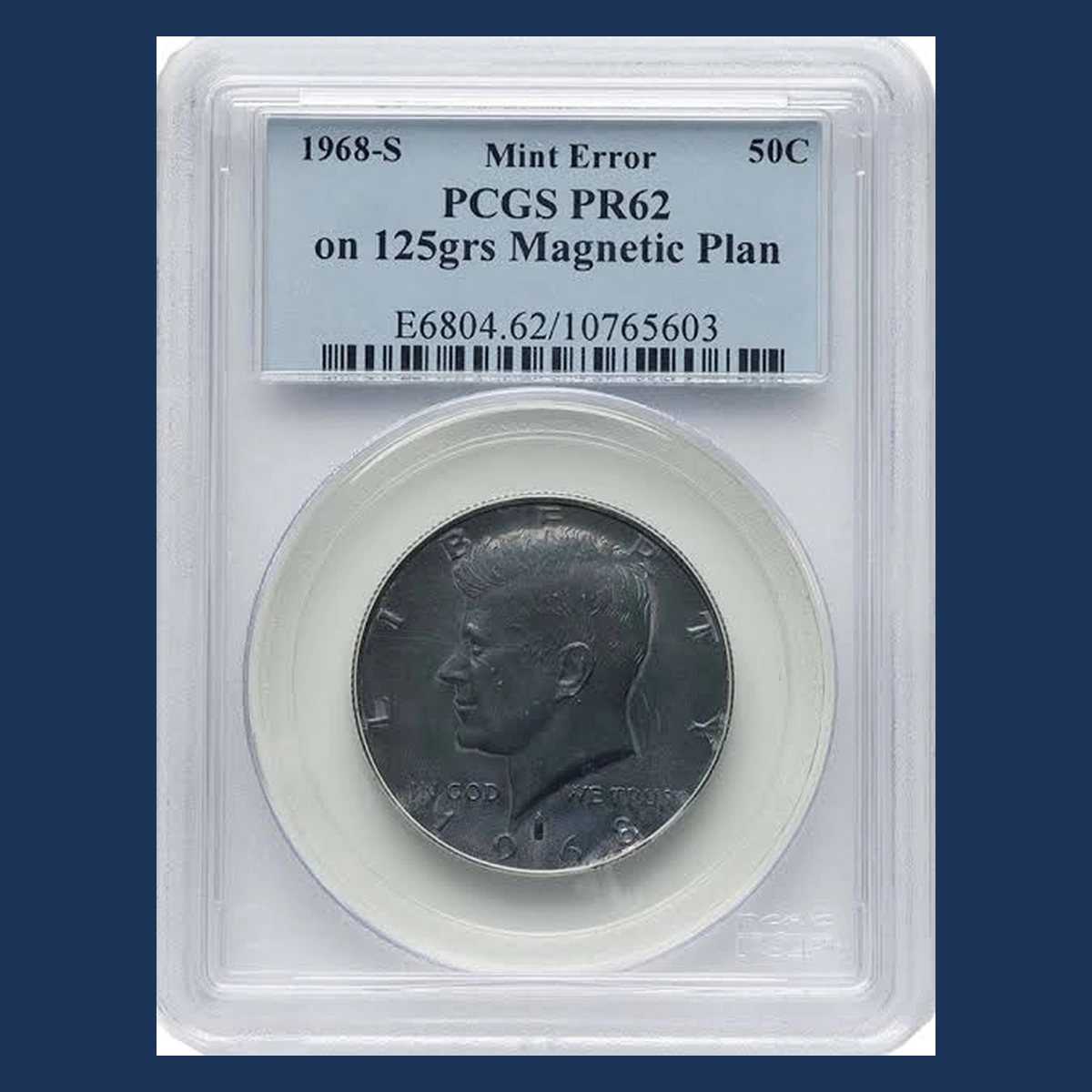
A magnet attracts the metal in one unusual 1968-S Proof, graded PR62. The coin weighs about 8.1 grams, although striking expanded it to normal half-dollar width.
Its surface also lacks the usual mirrorlike shine of a Proof. The listed weight is 125 grains, not 125 grams.
A separate PR67 Cameo was struck on a quarter blank, with two slightly shifted, overlapping impressions. Another published report describes an ANACS-certified Proof on a Philippine 50-centavos blank.
These are three different coins. The magnetic example’s weight and size do not describe the Philippine blank.
Estimated Value
The magnetic PR62 sold for $9,000 at Heritage in August 2025, supporting an estimate of $4,000–$10,000. The double-struck quarter-blank Proof brought $2,760 in May 2022 and is estimated at $2,500–$5,000.
For the reported Philippine blank, estimate $3,000–$8,000 by comparison with other major wrong-blank Proof errors. No sale is assigned to that example here.
Each range depends on identifying the actual blank, not merely noticing an unusual surface.
How to Identify
Read the unit on a weight record carefully: 125 grains is about 8.1 grams. A digital scale should use grams when comparing with the normal 11.50-gram half dollar.
Calipers may still show the usual 30.61 mm width on the magnetic example. A normal diameter therefore does not prove that its metal is correct.
Professional metal testing can identify the material; magnetic attraction alone cannot name an alloy. A magnifier can also show the quarter-blank Proof’s shifted second impression, which ordinary repeated Proof striking should not create.
Check the Philippine example against its own grading record. For a suspected magnetic-blank coin, test attraction without touching the surface and compare the unusually low weight first.
Conclusion
Estimated 1968 half-dollar error values run from $10 to $10,000, from slight doubling to the unusual magnetic Proof. Start with the mark you can actually see: an extra letter edge, a lifting layer, or a shifted design.
Then check the mintmark and measurements. A normal coin weighs 11.50 grams, but a smaller blank or missing layer needs its own explanation before you choose a price comparison.