1998 Half Dollar Error List with Pictures

A huge curved gap left one 1998-D half weighing only 6.25 grams. It sold for $240 in 2021, and its low weight came from missing metal rather than a blank meant for another coin.
The 1998 half dollar errors below have estimated values from $30 to $3,500. Some change the outline; others affect only a small surface area.
Read on to compare what remains of the design, outer layers, and edge before choosing an explanation.
1. 1998-P Kennedy Half Dollar Reported Doubled Die Obverse (Estimated Up to $250)
Extra outlines in LIBERTY, the date, or the portrait are the areas named in reports of 1998-P front doubling. The reports do not give a confirmed variety number.
A doubled die is a steel stamping tool with repeated design details. Later coins can carry the same extra shapes.
That differs from a finished coin being struck again. It also differs from a flat ledge caused by movement during a normal strike.
The reported extra outlines still need to be matched on an actual coin. One thick-looking letter or a second bright edge in a photograph is not enough.
Estimated Value
For a clearly identified example with no circulation wear, estimate $50–$250. The added outlines should be genuine repeated design, rather than flat ledges from striking movement.
No independently checked auction result or formal variety number is supplied for the report here. The price is an estimate.
Kennedy doubled dies from other years show that collectors value this feature. Their rarity or special Proof condition cannot simply be transferred to an ordinary reported 1998-P example.
How to Identify
Use a 10× magnifier on LIBERTY, the date, and the portrait edge. The year reference specifically mentions L, I, and B.
Move the light and compare a normal 1998-P at the same enlargement. Look for rounded extra outlines or separated corners, rather than flattened ledges or rough worn-tool edges.
The normal P coin is clad, with bonded copper-nickel faces over copper. It weighs 11.34 grams and measures about 30.6 millimeters across.
Use a scale and calipers, and inspect the edge ridges to check its basic identity. The useful first match is the same repeated outline pattern on another verified coin from the same tool.
2. 1998-P Kennedy Half Dollar Type 1 Planchet Broadstrike (Estimated Up to $300)
A Type 1 blank has not yet received the raised rim normally prepared before striking. Heritage identified a 1998-P NGC MS65 as struck on that kind of blank and also broadstruck.
A broadstrike happens when the collar, the ring around the blank, does not hold its edge properly. Metal can spread outward while the design stays complete.
The two descriptions belong to the same coin. They concern different steps in making it.
A normal prepared blank can also spread during striking. Extra width alone therefore proves neither that its rim was unprepared nor that someone flattened it after minting.
Estimated Value
The NGC MS65 Type 1 broadstrike sold for $106 at Heritage on January 10, 2010. Estimate $100–$300 for a similarly clear coin with no circulation wear.
A complete design, original shine, and a visible expanded edge help its appeal. The old sale is a historical comparison.
A much more dramatic broadstrike needs its own comparison. A normal coin with its rim flattened after minting is damage, even if it looks equally wide.
How to Identify
Measure the coin against the normal 30.6-millimeter diameter with calipers. A scale should remain near 11.34 grams if the blank spread without losing metal.
Inspect both full designs with a 10× magnifier. A broadstrike can keep them complete while the edge expands.
The normal edge ridges come from the collar. Missing collar contact can change that edge, but it does not by itself prove a Type 1 blank.
For the unprepared-rim claim, compare with the certified example. Later flattening often damages the raised design and leaves pressure marks.
A complete design within an original expanded border is the first broadstrike clue; the Type 1 identification needs the additional rim evidence.
3. 1998 Kennedy Half Dollar Reported Strike-Through (Estimated Up to $400)
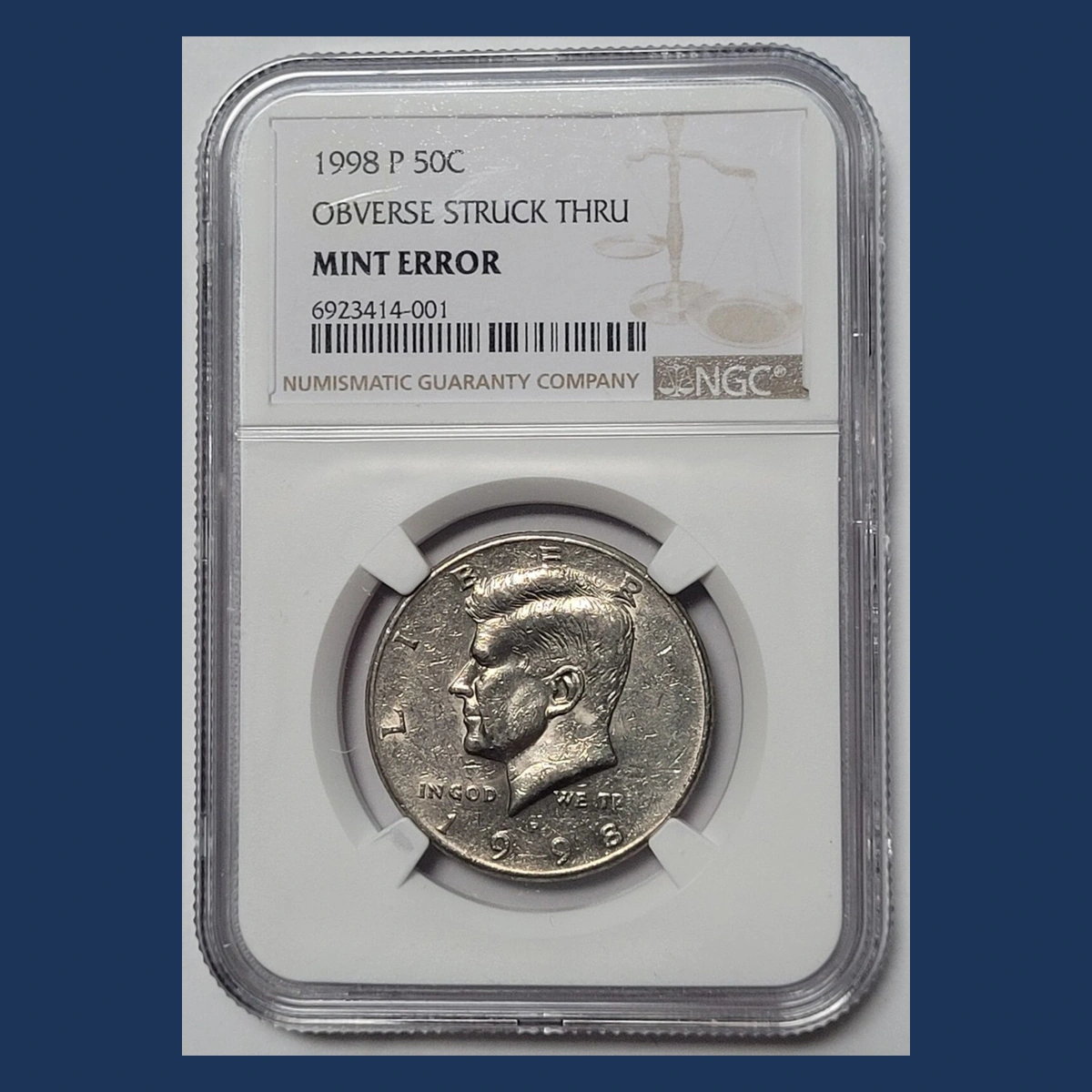
A seller reported a 1998-D with a strike-through on the front. Another described a separate 1998-P as struck through grease.
Both claims concern something getting between the stamping tool and the metal blank. The results need not look alike.
A solid object may leave a shaped hollow, while soft grease can block letters or other details from forming fully. The reports do not establish every boundary or the exact material on these coins.
A worn portrait or scratched patch is not a substitute for those clues. The affected area should show that the interruption happened as the design was struck.
Estimated Value
Estimate $30–$120 for a modest grease-blocked area and $100–$400 for a clear object impression. The reported 1998 coins need those features established before the ranges apply.
A 1992-D graded NGC MS64, struck through a fragment of edge ridging, sold for $336 in July 2021. That provides a same-series comparison.
The object on that coin was identified. A general seller description of grease does not establish an equally distinctive error or price.
How to Identify
Look where the affected patch meets normal detail through a 5×–10× magnifier. A hollow formed during striking should fit beside the design that did form.
A later scrape may cut across completed letters or leave metal pushed along its sides. Side lighting helps distinguish those cuts from an original impression.
For the grease claim, compare a normal same-mint coin so ordinary weak detail is not mistaken for an error. Keep the date and mintmark visible.
P and D halves are normally clad, 11.34 grams and about 30.6 millimeters. Check with a scale and calipers, plus the ridged edge.
The first useful clue is a naturally struck border around the interrupted design, without later cutting marks.
4. 1998 Kennedy Half Dollar Curved and Multiple Clips (Estimated Up to $500)
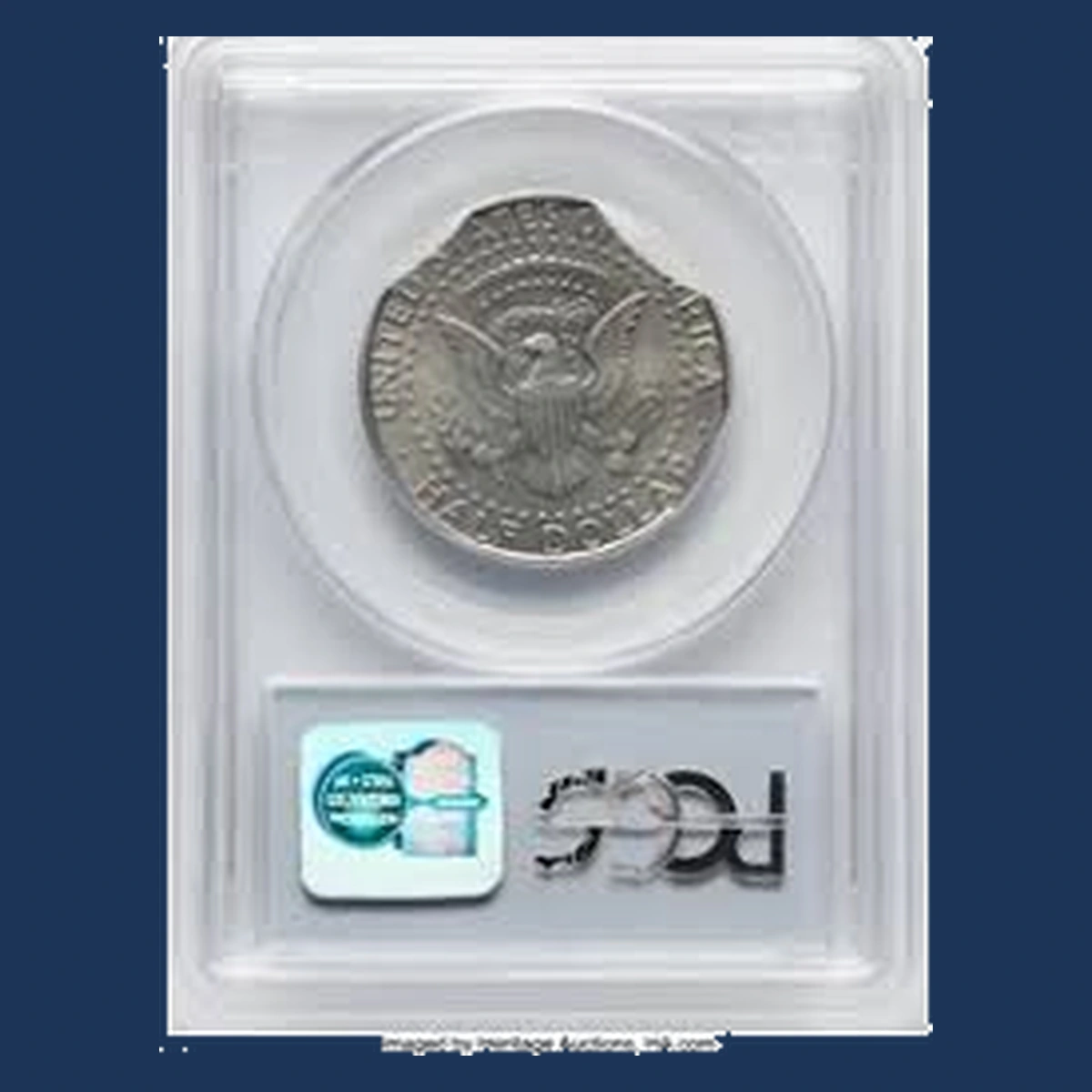
A forty-five-percent curved clip removed a large piece from the 1998-D graded NGC MS66. Its remaining weight is 6.25 grams.
Other Denver examples include a fifteen-percent curved clip graded NGC MS64 and a ten-percent triple clip graded PCGS MS63. They have different amounts and arrangements of missing metal.
The gaps existed before the coins received their designs. Their low weights do not automatically mean the wrong blank was used.
A year guide separately reports a clipped S-mint Proof, a specially made collector coin. Its alloy is not established here, so it should not inherit the Denver coins’ weights or grades.
Estimated Value
Heritage records show $65 for the MS64 fifteen-percent clip and $240 for the MS66 forty-five-percent clip in July 2021. The MS63 triple clip brought $99 in March 2025.
Estimate $60–$500 for comparable clips, depending on size, grade, and appeal. Those are separate coins and sales.
The S-Proof report needs its alloy and identity checked before comparison. It is not assigned the Denver coins’ grades, weights, or prices.
How to Identify
The large Denver clip weighs 6.25 grams because much of its metal is missing. Use a scale against the normal clad 11.34 grams and calipers across surviving parts against 30.6 millimeters.
Inspect every gap with a 10× magnifier. Look for original struck borders and, when visible, weakness in the opposite rim.
Keep the remaining edge ridges in view. An S mark requires another check because Proof means a specially made collector coin.
Clad Proofs begin at 11.34 grams, while silver Proofs and the silver matte issue begin at 12.50 grams. Matte means a soft, non-mirror finish.
Missing metal joined to original struck borders at each gap is the strongest first evidence, rather than low weight alone.
5. 1998 Kennedy Half Dollar Defective or Partly Missing Cladding (Estimated Up to $600)
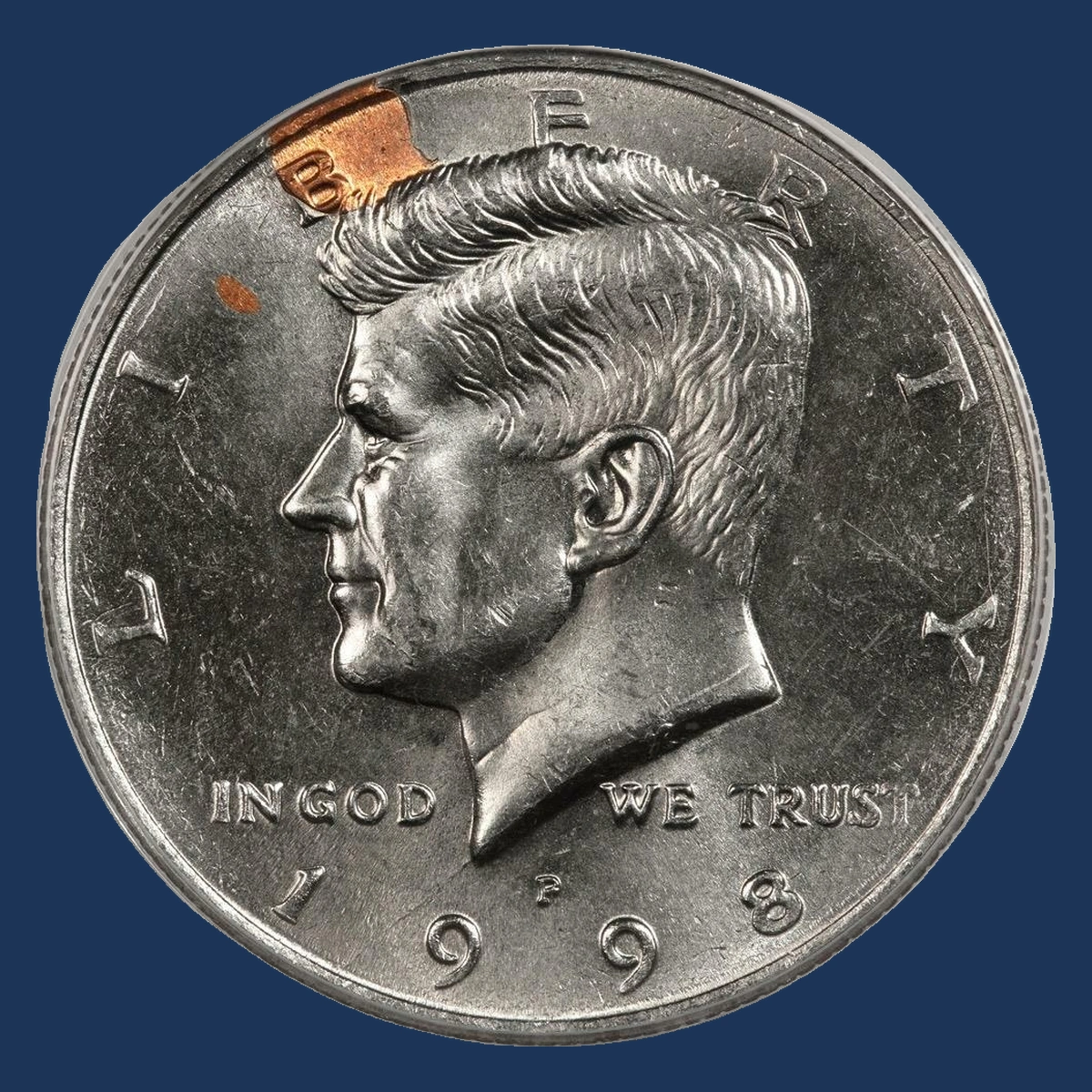
A normal clad half has copper-nickel outer layers bonded to a copper center. A flaw in those layers can make the surface uneven or expose copper underneath.
Heritage listed a 1998-P with defective front cladding, graded NGC MS63. A dealer separately offered a 1998 ANACS MS64 with part of a clad layer missing.
The second description does not establish its mint or affected side here. Keep it separate from the Philadelphia example.
Neither report means an entire outer layer disappeared. Examine how much is missing and where the remaining layer meets the design, rather than deciding from the color alone.
Estimated Value
The 1998-P defective-cladding MS63 sold for $149 in March 2023. The separate ANACS MS64 partial-loss listing asked $349.97, which is not a completed sale.
Estimate $125–$600 for modest defects through clear partial loss on coins without circulation wear. Larger exposed areas need convincing original borders.
Artificial peeling, corrosion, and brown staining can imitate the appearance. They do not qualify for the estimate merely because a photograph shows similar colors.
How to Identify
Find the physical border between the pale outer layer and the affected area before judging its color. A 10× magnifier and side light may reveal a thin step or separation through the design.
Copper showing at the normal edge is not an error. The usual clad half weighs 11.34 grams and measures about 30.6 millimeters.
Check with a scale and calipers, and inspect the edge ridges. Partial loss may reduce weight, but a small defect need not change it much.
Compare both faces for stains, acid damage, or tool marks without scraping or peeling anything. A genuine layer border is the first clue to match, rather than a brown patch by itself.
6. 1998-D Kennedy Half Dollar Reported Off-Center Strike (Estimated Up to $800)
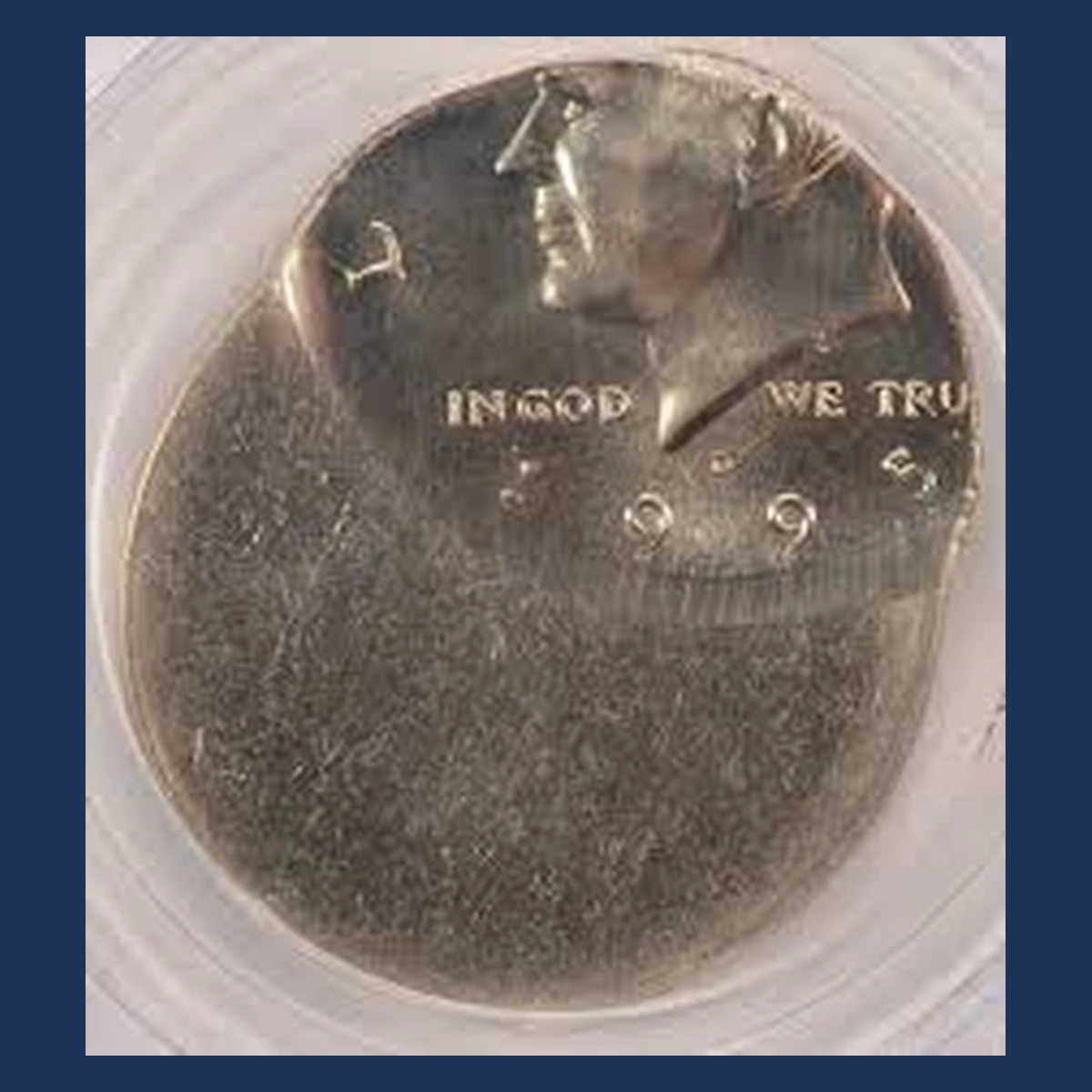
A bare crescent beside a shifted design is the expected clue to an off-center strike. A year report names a 1998-D example without a measured angle or percentage.
The blank lay partly outside the stamping tools. Both faces should therefore show the displacement.
If only one side shifts, one tool may have moved instead. A broadstrike can be wider while retaining its complete design.
A clipped blank presents another possibility: part of its edge is actually missing. These different causes can all make the border look uneven, so the surviving metal and both designs need to be considered together.
Estimated Value
Estimate $150–$800 for a genuine 1998-D with a readable date and obvious offset. Smaller shifts generally bring less than a dramatic bare crescent.
A 1999-D graded NGC MS66 and struck sixty-five percent off center sold for $552 in March 2023. It provides a nearby-year comparison.
That confirmed percentage and high grade belong to the 1999 coin. They cannot be assigned to the less specific 1998-D report or to an ordinary coin with an uneven rim.
How to Identify
Place a normal half beside the candidate and compare their outlines before lining up the portraits. Follow where each design ends against the surviving metal.
Both faces should show a matching shift. A 10× magnifier helps examine the border of the bare crescent for grinding or other later damage.
Use uncropped photographs of both sides. Cropping can make a complete design appear missing at the edge of a picture.
The Denver coin normally starts at 11.34 grams and about 30.6 millimeters. Use a scale and calipers, and inspect any missing edge ridges where the collar failed to hold the blank.
An untouched bare crescent beside matching shifted designs on both faces is the clearest first check.
7. 1998-P Kennedy Half Dollar Embedded Magnetic Edge Particle (Estimated Up to $1,000)
A tiny dark particle near 5:30 on the edge of a 1998-P strongly attracted a magnet. Mike Diamond described edge ridges continuing across its surface.
The position is measured with the back upright. The particle was about half a millimeter across, and the circulated coin weighed 11.25 grams, within normal variation.
Only that small spot attracted the magnet strongly. The observation does not mean the whole coin has a steel center.
Diamond suggested steel embedded during edge preparation. The material and exact timing are interpretations, not results from a reported laboratory test.
Estimated Value
A well-documented foreign particle with clear evidence of Mint-made embedding has an estimated range of $200–$1,000. No sale price is claimed for Diamond’s examined 1998-P.
The 1992-D struck-through-ridging example graded MS64 sold for $336 in July 2021. It offers a comparison for recognizable foreign material affecting a Kennedy half.
An embedded magnetic particle has a different cause. Its price depends on convincing physical evidence and collector interest, rather than the other coin’s label alone.
How to Identify
With the back upright, find the small dark spot near 5:30 on the edge. Photograph and enlarge it, using a 10× magnifier to see how it meets the surrounding metal.
Test attraction gently without dragging a magnet across the coin. A loose speck of magnetic dirt is different from a particle embedded beneath original ridges.
The reported coin weighs 11.25 grams, within normal variation around the 11.34-gram clad standard. A scale need not show extra weight simply because a particle is present.
Use calipers against about 30.6 millimeters and inspect the complete edge. Continuous struck ridges across the particle are the first physical detail to compare with the normal ridges beside it.
8. 1998 Kennedy Half Dollar Reported Wrong-Planchet Strike (Estimated Up to $3,500)
A wrong blank is metal intended for another coin that receives the half-dollar design. Its size or composition may leave the design incomplete or produce an unusual weight.
A year reference lists this error for 1998-P and 1998-D. It does not identify a particular receiving blank, measured weight, or certification.
A quarter-sized example used to explain the general error does not establish either reported coin’s identity. The actual metal must be checked.
A large clip already explains why some halves are light. Missing outer layers or later trimming also need to be considered before calling a coin a wrong-blank strike.
Estimated Value
For a genuine Kennedy half struck on an identifiable wrong blank, estimate $1,000–$3,500. This covers circulated through ordinary uncirculated examples and is not a recorded 1998 sale.
A 1974 Kennedy on a Taiwan five-dollar blank, graded PCGS AU55, sold for $2,880 in September 2023. That is a different year and receiving blank.
It shows the market for established examples. It does not identify the metal, blank, or grade behind the general 1998-P and D reports.
How to Identify
Write down the weight, widest measurement, edge appearance, and remaining design before naming another denomination. Use a scale, calipers, and a 10× magnifier.
Normal P and D halves begin at 11.34 grams and about 30.6 millimeters, with copper-nickel faces over copper and a ridged edge. A smaller blank can spread during striking.
Check for trimming, chemical attack, or missing outer layers. Compare the measurements with a real candidate blank, and seek professional metal testing for unusual composition.
The 6.25-gram Denver clip already has a reason for being light. Matching metal, weight, and an original struck edge to the proposed blank is the useful first test.
Conclusion
Estimated values for these 1998 errors range from $30 to $3,500. A weak patch, large clip, and genuine wrong blank need different comparisons.
The 6.25-gram Denver clip is light because metal is missing. The magnetic-particle coin still has a normal-range weight.
Measure the whole coin and inspect its original edges before choosing a name. Keep clad coins, silver Proofs, and the silver matte issue separate when comparing prices.