1872 Quarter Error List with Pictures

A repeated mint letter can sit on a coin whose year and condition are already valuable. An exceptional 1872-S quarter cataloged with that feature brought $84,000 in February 2022.
That whole-coin price should not be read as the value of an extra S stroke alone. Other 1872 quarter errors appear near the date or among the small teeth inside the rim.
Estimated values span $40 to $85,000, from worn Philadelphia varieties to exceptional San Francisco pieces. The guide below explains where the features belong and how to compare them.
1. 1872 Liberty Seated Quarter Wavy Lines Through the Border Teeth
The small teeth just inside the raised rim are called denticles. A cataloged Philadelphia variety has wavy lines passing through them, rather than an entirely regular border.
Greysheet names this FS-401 variety by that visible feature. The name distinguishes it from the ordinary grooves running around the coin’s edge.
Border teeth and edge grooves are different parts of the coin. Examine the face to look for the reported lines.
The listing does not establish their exact cause. A wavy-looking scratch should not receive the variety name without a matching comparison.
Estimated Value
For circulated through ordinary unworn examples, estimate $40 to $1,500. The visible border pattern must match the named Philadelphia variety before assigning a premium.
A worn coin with indistinct teeth may be less appealing than one that shows the lines clearly. Surface scratches can also interfere with identification and reduce the coin’s value.
This is a whole-coin estimate. Exceptionally preserved Philadelphia quarters can cost more for their condition, while damaged pieces should not be priced as clean examples.
How to Identify
Take overlapping close-ups around the rim on both faces, keeping nearby letters or stars in each picture. Those landmarks prevent a small border crop from losing its position.
Compare the photographs with a verified FS-401 example. The catalog name alone does not tell you which face or exact section of the border contains the identifying pattern.
Use light from more than one direction to distinguish a real line from a shadow between the teeth. Check whether a suspected scratch cuts across already finished raised detail.
Do not confuse the border teeth with the grooves on the narrow outer edge. Bent edges and crushed rims also need to be separated from a repeated variety pattern before paying for the name.
2. 1872 Liberty Seated Quarter Repunched and Misplaced Dates
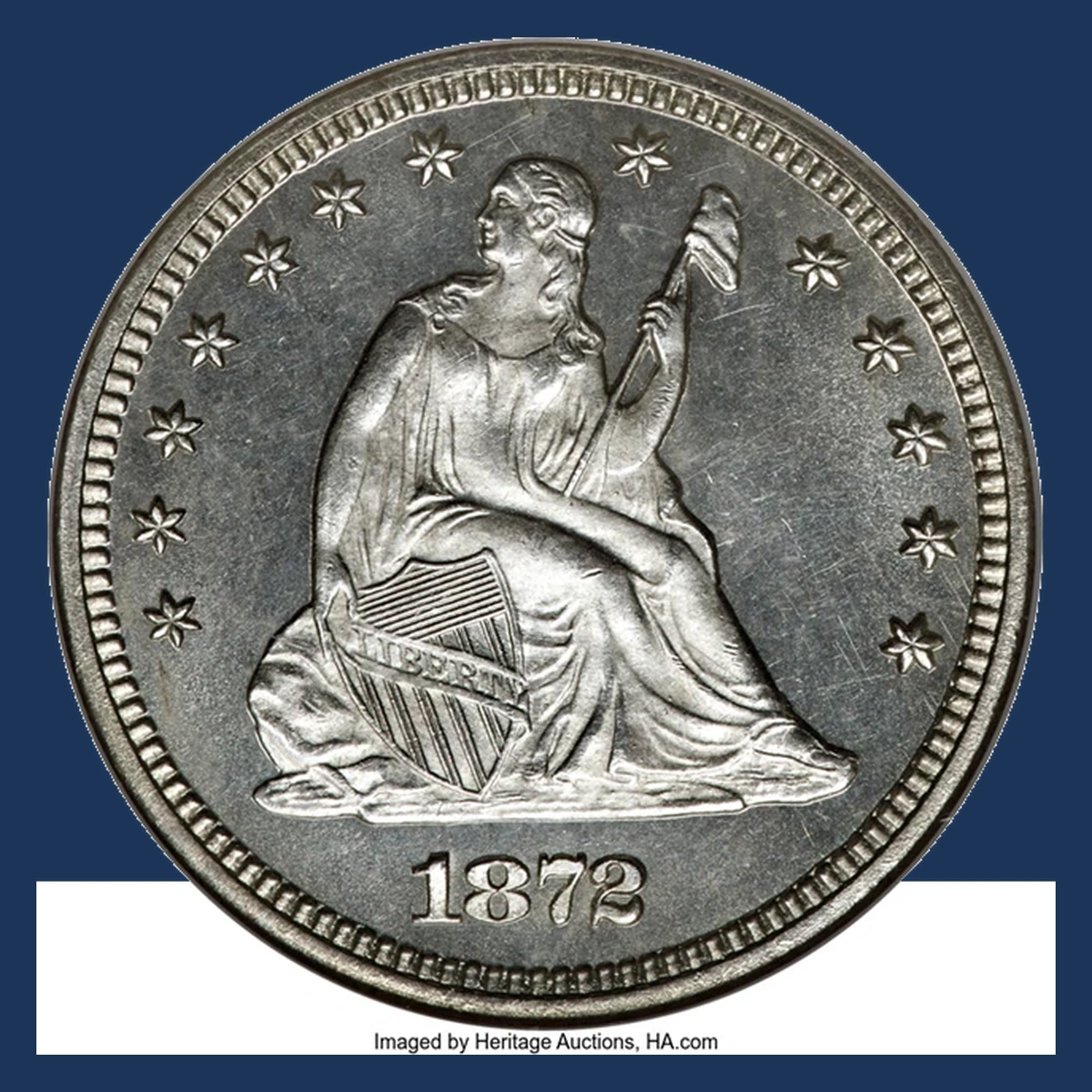
An extra piece of a date digit can remain beside the normal number or farther away from it. These two arrangements are called a repunched date and a misplaced date.
The date punch made the marks in a die, the steel tool that stamped the finished coins. The extra strokes then appeared repeatedly on coins from that tool.
Both kinds are cataloged for Philadelphia’s 1872 quarters. They require different comparison photographs.
A stray curve or bump is not enough by itself. Its shape and position must agree with the particular date-punch variety, rather than another year or denomination.
Estimated Value
Allow an estimated $50 to $2,000 for Philadelphia date-punch varieties from circulated to ordinary unworn condition. A clear digit remnant is easier to appreciate than a faint mark hidden by wear.
For context, a Philadelphia 1892 Barber quarter with a repunched date and repeated design outlines sold for $528 in March 2024. That is a different design and a combined variety, not an 1872 sale.
Use the comparison cautiously, keeping preservation and the strength of the actual date feature central.
How to Identify
Keep the normal date in every close-up of a suspected extra digit. Its size and spacing provide a reference for deciding whether the stray shape could belong to the same punch.
If the extra stroke lies beside a normal digit, compare it with the repunched-date photograph. If it sits farther away, use the misplaced-date comparison instead.
The published names alone do not establish the precise digits or directions for these 1872 quarter varieties. Avoid filling that gap with pictures of an 1872 half dime or another denomination.
Check that the suspected remnant rises from the original surface rather than being cut into it. Show a specialist the full front and the detailed crop together, so the mark can be matched in its proper setting.
3. 1872 Liberty Seated Quarter Repunched S Mintmark
An 1872-S quarter can show a trace of an earlier S beside the final mint letter. The letter was punched into the back stamping tool more than once, leaving overlapping impressions.
Stack’s Bowers explicitly described a repunched mintmark on a coin offered in August 2021. It was a sharply detailed but damaged example.
The small feature sits on a scarce San Francisco issue. Its normal date-and-mint value can greatly exceed the premium for the repeated letter.
The expected remnant still needs a close comparison. A thick S, a nearby scratch, or an added mintmark is not the same thing.
Estimated Value
The damaged example brought $2,880 on August 17, 2021. PCGS described it as AU Details, meaning light wear with a separate problem.
Another example, graded NGC MS67 for exceptional unworn preservation, sold for $84,000 on February 27, 2022. Both prices include the scarce 1872-S coin itself.
Estimate $1,500 to $85,000 across well-worn through exceptional examples. Original surfaces and preservation drive much of that spread; the repeated S alone does not explain the high price.
How to Identify
Before studying the extra stroke, establish that the mint letter belongs on the coin. The S is below the eagle on the back, and valuable San Francisco coins can attract altered mintmarks.
Compare the letter’s main shape and the surrounding silver with an authenticated 1872-S quarter. Look for disturbed metal or an unnatural join that could signal an added letter.
Then enlarge the suspected repeated stroke under gentle side lighting. It should have the curved form of part of an S, rather than a random ridge beside it.
The auction description establishes repunching but does not supply a precise direction to copy. Ask for a matching close-up of a confirmed example before assigning a variety name to a small projection on your coin.
Conclusion
The estimated $40 to $85,000 span joins very different coins: small Philadelphia varieties and a scarce San Francisco issue in exceptional condition. The $84,000 sale belongs to that latter category.
Photograph the whole coin as well as the extra mark. A date fragment, a border line, and a repeated S each need their own comparison before the correct variety and value can be established.