1951 Quarter Error List with Pictures

Wheat ears do not belong on a Washington quarter. They survive on a remarkable 1951 example struck over a Lincoln cent, with a $3,335 auction result reported by Mint Error News.
That mix of two coins is one of several 1951 quarter errors covered here. Estimated whole-coin values range from $20–$6,000, including smaller mintmark changes and flaws in the silver blank.
Start with the shape, then check the finer details. The sections below explain what separates each mistake from ordinary damage.
1. 1951 Washington Quarter Lamination Flaw
A ragged seam across the silver surface may open into a thin flap or a shallow missing patch. A lamination develops when a weak layer inside the alloy pulls apart.
The 1951 year guide includes this error among the date’s reported types. It does not identify a particular mint or a fixed location for every example.
These quarters were made from silver mixed with copper. The flaw is therefore a separation within that alloy, not the loss of a copper-nickel covering used on later quarters.
Estimated Value
Use $20–$200 as an estimated range for genuine 1951 laminations. A thin seam on a worn coin may add little, while a large original flap can be more appealing.
The position also matters: an obvious split beside intact design is easier to understand than damage hidden among scratches. Any cleaning or corrosion affects the whole coin.
This estimate covers varying sizes and conditions, rather than quoting a sale for one identified 1951 specimen.
How to Identify
A missing patch is easier to judge when its border survives. Under a magnifier, follow the transition from intact design to the rough exposed metal.
Look for a thin edge lifting above the surface or a seam extending underneath it. Leave that edge alone; moving a flap can break it off.
A scrape often cuts across the design and pushes metal to one side. Corrosion can leave scattered pits without a connected peeling layer.
Photograph the whole face as well as the split so its relationship to the design remains clear. Change the lighting angle to see whether the thin layer continues into the metal beside the opening.
2. 1951 Washington Quarter Clipped Blank
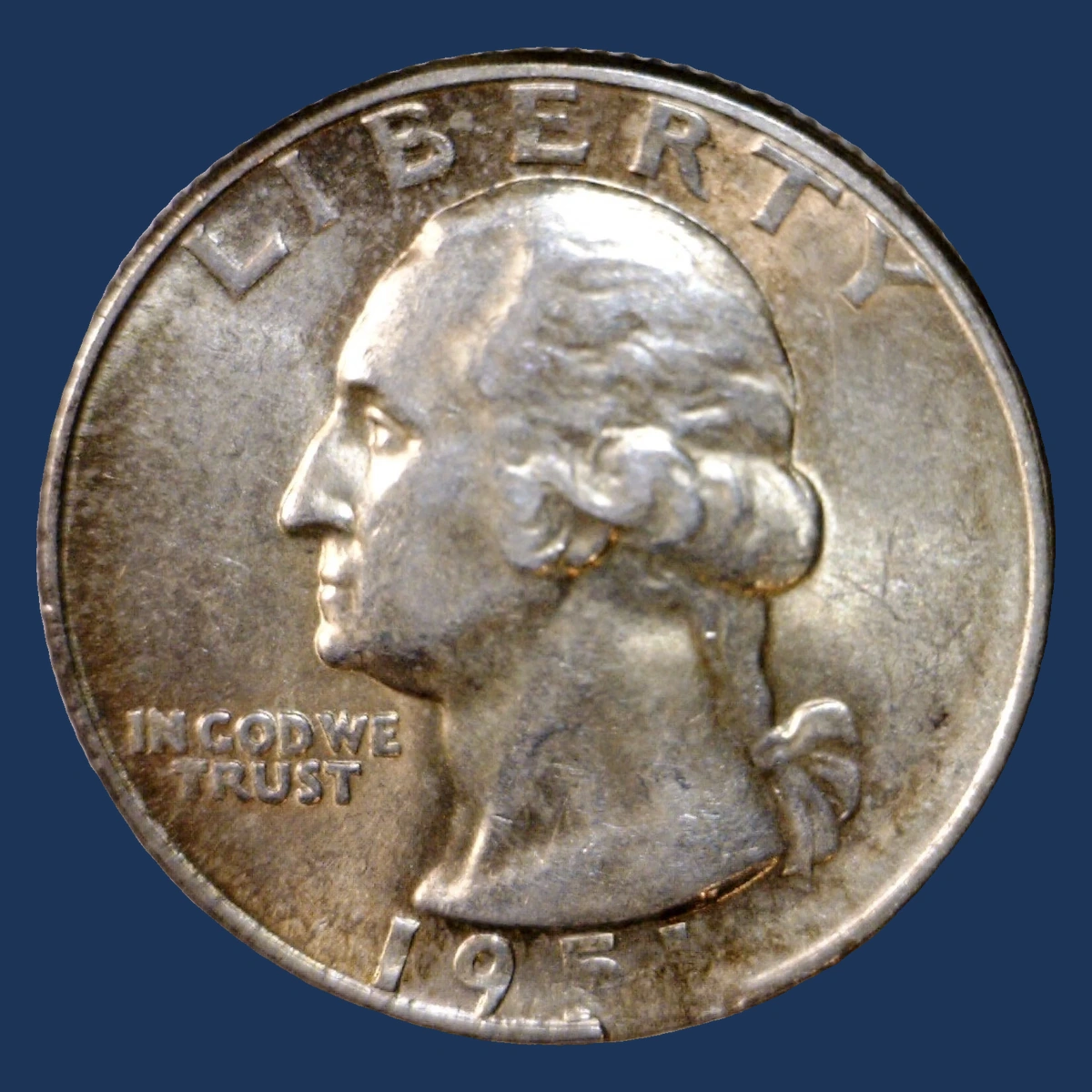
One section of the coin’s outline may be absent because the original blank was incomplete. When a blanking punch overlaps a previous hole in the metal strip, it can produce a curved clip.
A seller has offered a 1951-S quarter as a clipped error, and year guides also list clips. The seller’s description alone does not authenticate the missing section.
The metal beside the gap can help explain its origin. A genuine clip was already present when the design was struck, unlike a piece cut away from a finished coin.
Estimated Value
For an authenticated 1951 clip, estimate $25–$250. An obvious gap with original nearby surfaces usually makes a stronger display than a barely visible edge flaw.
The reported San Francisco example has no confirmed individual auction result in the available description. This is a type estimate, not the seller’s asking price.
Wear, cleaning, and the amount of missing metal all affect value. A large fresh-looking cut is not worth a genuine-clip premium merely because it is dramatic.
How to Identify
Check the S below the reverse wreath when comparing the reported San Francisco coin. Keep the entire missing section visible in photographs of both faces.
Examine the two ends of the gap with a 10× magnifier. Nearby lettering or the rim may weaken where metal flowed toward the opening during striking.
The opposite rim can also be weak, although that feature is not equally clear on every clip. A digital scale may show less than the normal 6.25 grams on a loose example.
Weight loss by itself also fits cutting or filing. Inspect the gap for tool grooves and sharp burrs, then follow how the original struck surface approaches each endpoint.
3. 1951 Washington Quarter Broadstrike
A broadstruck quarter can look wider than usual, with extra metal around a complete design. The retaining ring, called the collar, failed to hold the blank at its normal width during striking.
Metal then spread outward instead of forming the normal enclosed edge. The picture can sit unevenly within that expanded outline and still remain complete.
This mechanism appears in the 1951 year guide. The report does not establish a particular mint, measured diameter, or certified example, so those details must come from the individual coin being examined.
Estimated Value
A genuine 1951 broadstrike can be estimated at $50–$400. The upper part suits clearer expansion on attractive, unworn surfaces rather than a slight shape change mixed with damage.
An intact date and complete outer lettering help explain the error at a glance. A bent or hammered coin may be wide too, but its distorted surfaces have a different cause.
The range is an estimate for verified examples; no particular 1951 broadstrike auction result is being quoted.
How to Identify
Look around the entire design before measuring the coin. Every intended letter and outer detail should remain on the metal; a design partly beyond the edge suggests an off-center strike instead.
Place a loose candidate beside a normal quarter and use calipers to compare the width. A normal 1951 quarter is about 24.3 millimeters across, with a 6.25-gram standard weight.
Check the side for an expanded edge lacking the usual fully confined shape. A magnifier helps reveal flattened, battered surfaces left by a hammer.
Original design detail should survive within the wider outline. Follow the outer lettering all the way around, checking that expansion surrounds a complete picture.
4. 1951 Washington Quarter Off-Center Strike
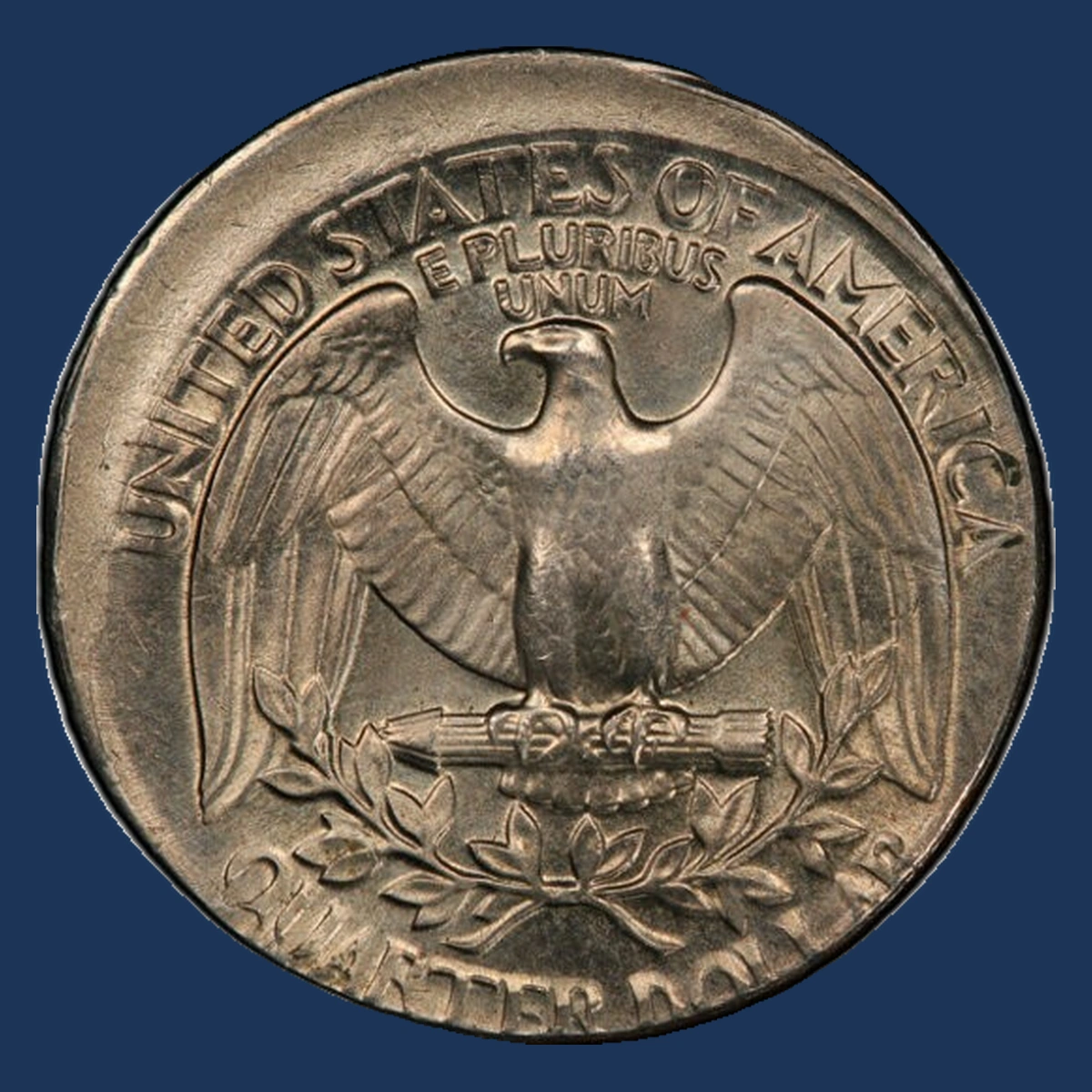
The portrait and eagle may stop at the edge while a crescent of blank metal remains on the other side. This happens when the disk sits partly outside the proper striking position.
Unlike a broadstrike, an off-center strike loses part of the intended design beyond the coin. A minor difference in rim width is not enough to show that this happened.
The 1951 error guide reports off-center strikes, but does not establish separate authenticated examples from each mint. A candidate needs its own readable date, mint identity, and intact blank surface.
Estimated Value
Estimate $75–$750 for a genuine 1951 off-center quarter with a readable date. The amount of visible displacement, overall condition, and surviving design affect its appeal.
As a different-year comparison, a 1988-P quarter struck thirty percent off center brought $109 in January 2022. That ANACS MS63 example was a later clad coin, not a silver 1951 issue.
A stronger-looking error with its year missing cannot automatically be sold as a confirmed 1951 quarter.
How to Identify
Keep the date in view while turning the coin over. The front and reverse should tell the same story about a disk struck out of position.
If only one face moves sideways and the other remains centered, consider a shifted stamping tool. Both designs matter.
Inspect the blank crescent under a magnifier for surviving original surface. Scraping off lettering can create an empty area after striking, but usually leaves disturbed metal.
On a loose coin, a digital scale can check whether the weight remains near the normal 6.25 grams. This measurement supports a full silver blank without proving the strike itself.
Find where the displaced design actually runs beyond the edge opposite the blank area.
5. 1951 Washington Quarter Repunched D and S Mintmarks
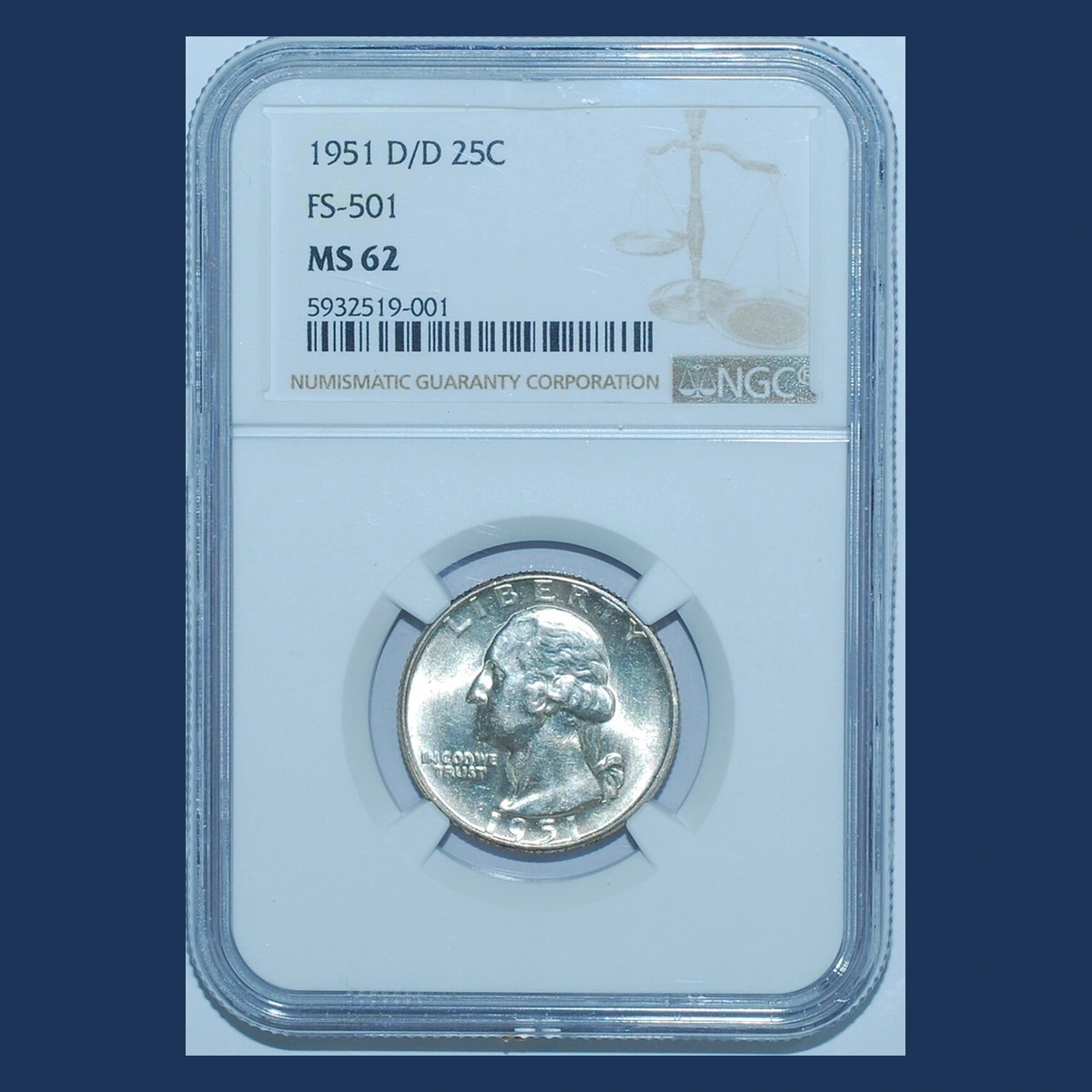
A small extra curve beside the D or S can reveal an earlier position of the mintmark punch. Mint workers added these letters to dies, the steel tools used to stamp coins.
When a second punch landed slightly differently, part of the first outline could remain. Each coin struck by that tool then repeated the feature.
PCGS recognizes both Denver and San Francisco repunched mintmarks for 1951. Their letter shapes differ, so an S example cannot serve as the visual match for a D, even when both carry the FS-501 catalog number.
Estimated Value
An MS66 Denver repunched-mintmark coin appears in PCGS records at about $858 on eBay in December 2020. MS66 means an unworn coin with relatively few marks.
Estimate $40–$900 for identified 1951-D examples and $30–$400 for the separate San Francisco pattern. Together, the group spans $30–$900.
The recorded Denver price does not price the S variety. The clarity of the additional letter and the condition of the whole coin remain central.
How to Identify
The mintmark sits between the reverse wreath and QUARTER DOLLAR. Start by deciding whether the main letter is D or S, then choose a matching 1951 photograph.
With a 10× magnifier, trace the D’s straight stroke and outer curve, or the S’s upper and lower curves. An extra punched outline should fit another position of that same letter.
A hit can push a mintmark’s edge sideways without leaving a true second letter. Flat shelves beside a reduced main letter can instead come from movement during striking.
Compare the added strokes and their spacing, not just overall thickness. For each mint, match the small surviving portions to the corresponding D-over-D or S-over-S example.
6. 1951 Washington Quarter Strike on a Silver Dime Blank
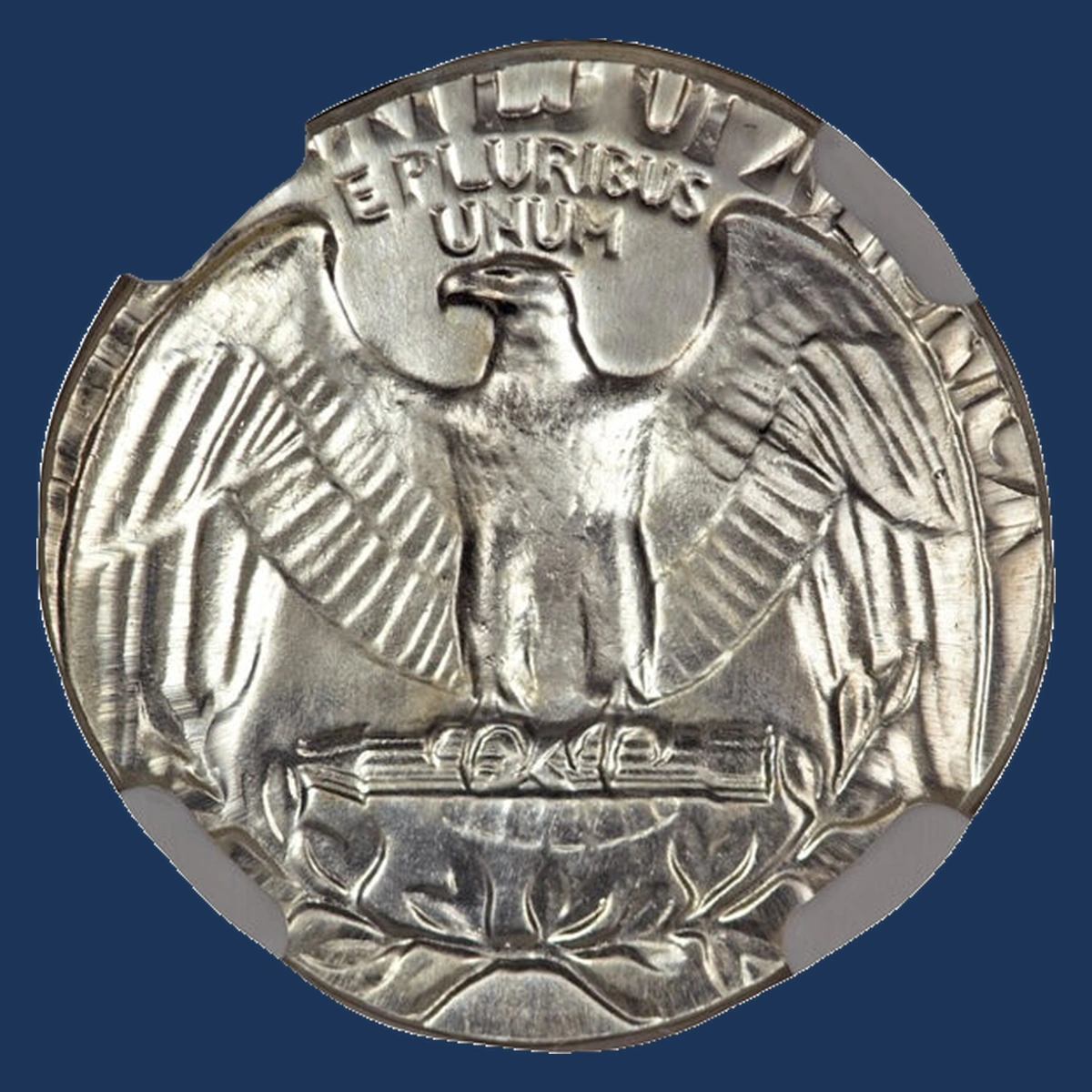
Washington’s design can be too large for the metal beneath it. On a quarter struck on a dime blank, the smaller disk cannot carry the full outer lettering at normal size.
A dedicated 1951 error page reports this Philadelphia type, although it does not establish a specific certified specimen. The report concerns a blank made for a dime, not a finished dime with an earlier design.
Both normal 1951 quarters and dimes contain ninety percent silver. Silver color alone therefore cannot distinguish the wrong blank from the correct quarter metal.
Estimated Value
A verified 1951 quarter on a silver dime blank has an estimated range of $600–$2,000. A readable date and enough surviving design to identify the quarter make the error easier to recognize.
For comparison, a 1963 quarter on a silver dime blank, graded PCGS AU55, sold for $675.63 in October 2016. That grade describes light circulation wear.
This is a different dated coin. It supports a mechanism comparison without proving the identity or price of the reported 1951 example.
How to Identify
Measure a loose candidate with a digital scale before relying on its silver appearance. A normal 1951 dime blank started around 2.50 grams, far below the quarter’s 6.25-gram standard.
Use calipers to record its width. A dime blank began around 17.9 millimeters, but spreading under quarter tools can change the finished error’s diameter.
Inspect the remaining outer words with a magnifier. A quarter cut down afterward usually has an altered edge and chopped design rather than naturally spread details.
Check for traces of an earlier dime image too. Those would indicate a finished coin struck again, a different mechanism.
The small silver disk, appropriate low weight, and quarter design must agree with one another.
7. 1951 Washington Quarter Doubled Front Lettering
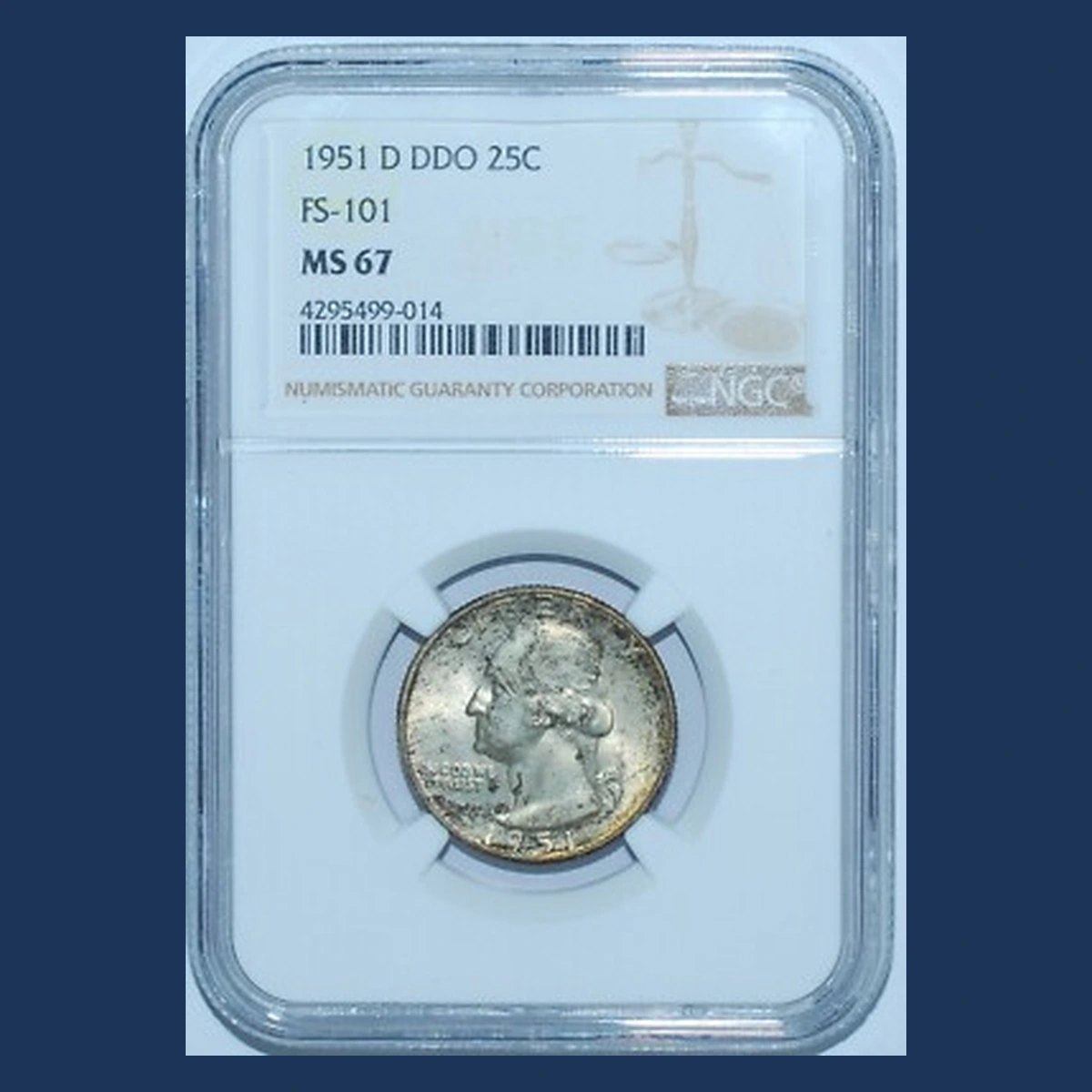
IN GOD WE TRUST may show extra raised outlines on a 1951-D quarter. The listed doubled-front variety also calls for close comparison of LIBERTY and the date.
Here, a die already carried a doubled design before it struck the blank. One blow could therefore leave repeated letter details on the finished quarter.
PCGS recognizes the Denver FS-101 variety. A flat ledge from striking movement is different, and a thick letter alone does not identify this doubled design or establish a valuable extra outline.
Estimated Value
PCGS lists an eBay auction result of about $2,612 in October 2020 for an MS67 example. That is a very high condition grade, with no circulation wear and few marks.
For matched 1951-D doubled fronts, estimate $75–$3,000 across different grades. Modest worn examples should not inherit the price of that exceptional coin.
Clear separation and original surfaces support the stronger values, while scratches or cleaning can reduce appeal.
How to Identify
Take close-up photographs of the motto, LIBERTY, and the date with the same lighting. Seeing several areas together is more useful than enlarging one thick-looking letter in isolation.
Compare those pictures with a confirmed Denver FS-101. The size and direction of the extra outlines should agree at the affected points.
Under a 10× magnifier, examine whether the added edges have raised, rounded form. A thin, flat shelf can result from the striking tools moving and is not the same doubled design.
Confirm the reverse D before assigning the Denver variety name. Return to the front and match the repeated letter details to the same FS-101 pattern, rather than relying on general blurriness.
8. 1951 Washington Quarter Struck Over a Lincoln Cent
Wheat lines and parts of a cent’s lettering remain beneath the quarter design on this unusual copper coin. It entered the quarter press after already being struck as a 1951 Lincoln cent.
The cataloged NGC MS66 Brown example shows wheat traces above IN GOD WE TRUST and near the front’s right edge. Parts of the cent’s date and LIBERTY survive on the eagle side.
This is a double denomination: two different coin designs on one piece of metal. Those earlier cent details distinguish it from a quarter struck on an unused cent blank.
Estimated Value
Mint Error News reported a $3,335 auction result for the NGC MS66 Brown quarter over a 1951 cent. The price applies to the entire copper error, with both designs still identifiable.
Use an estimated $2,500–$6,000 for a comparable authenticated example. Readable traces of the earlier coin and attractive original surfaces are especially important.
Brown describes the copper color. It does not mean the coin was cleaned or has circulation wear.
How to Identify
Find the cent’s surviving 51 near the eagle’s right wingtip as viewed. A faint Y from LIBERTY also lies above the arrowheads.
On Washington’s side, use a magnifier to look above IN GOD WE TRUST and toward the right edge for wheat lines. These details should be part of an earlier cent design, not random scratches.
A normal copper cent of this period weighed 3.11 grams before any striking distortion. That is a comparison standard, not a reported measurement of the cataloged error.
The quarter design may flatten portions of the first image. Follow multiple recognizable cent details beneath it to establish that the blank had already become a Lincoln coin before the quarter strike.
Conclusion
A 1951 quarter can show an extra mintmark outline, a damaged blank, or even pieces of a Lincoln cent’s design. The estimated $20–$6,000 span reflects those very different errors and their condition.
For small features, compare clear close-ups before paying for a variety name. For unusual metal or shape, examine the whole coin and its measurements.
Traces of the earlier cent are essential to identifying the most unusual example here.