1876 Quarter Error List with Pictures

Five stars disappeared from one 1876 quarter when its design landed far off-center. The coin still showed its date and sold for $2,160 in December 2022, despite earlier cleaning.
Smaller 1876 quarter errors take a different search: an extra 6, a curved missing edge, or a raised line joining letters. Some names also sound alike, especially repunched dates and repunched mintmarks.
The estimates below span $25 to $5,000 for the whole coins. Use the feature descriptions to separate them and avoid counting one coin’s several marks as separate prices.
1. 1876 Liberty Seated Quarter Die Cracks
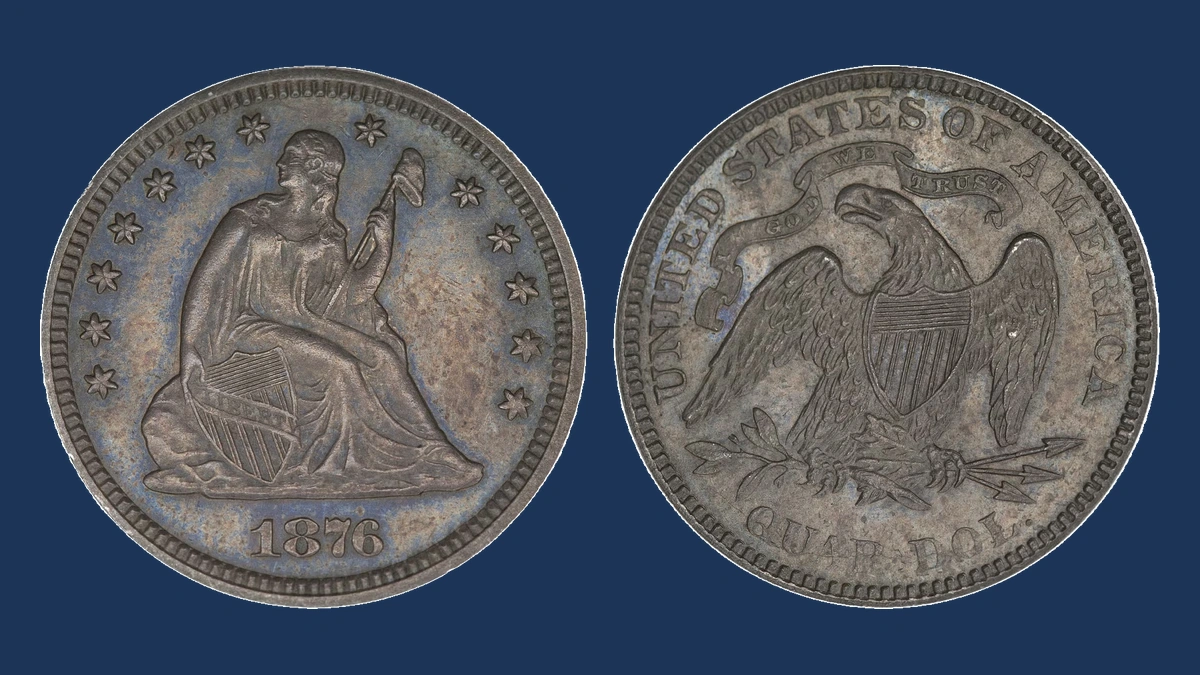
A raised line through QUAR DOL has been reported on a Philadelphia quarter. Another documented coin has a line near the back’s border between three and six o’clock.
These traces come from a cracked die, the steel tool that stamps the coin. Silver enters the opening and forms a ridge.
The line need not cut through the coin’s metal. The broken object was the tool.
The border-crack example also has a major off-center strike, described later. Its extra features belong to that same coin rather than proving a separate high value for a small crack.
Estimated Value
For ordinary circulated Philadelphia examples, estimate $25 to $400 including the coin’s normal value. A thin crack can add little if it is difficult to distinguish from wear.
A clear raised path through several letters may attract a collector who studies how the tools changed during use. Original surfaces make that path easier to examine.
The $2,160 off-center coin also carries a crack. Its large striking error prevents that sale from serving as the price of a simple crack alone.
How to Identify
Trace the mark across the letters without touching it. If it appears to join parts of QUAR DOL, photograph both ends and the connections between letters.
A light placed low beside the surface can reveal whether the mark rises above the silver. A scratch generally leaves a groove, although its displaced edge can also stand up.
Then compare the entire route with a photographed example from the same tool. Do not assume the line through the denomination is the border crack on the off-center coin.
For that second example, the catalog places the crack from roughly three to six o’clock on the back. Keep the full back upright in photographs so the stated position can be checked.
2. 1876 Liberty Seated Quarter Curved Clip
The round outline is interrupted by an inward curve near seven o’clock on a recorded Philadelphia example. Part of its metal blank was missing before the coin received its design.
This happens when the blanking punch overlaps a previously cut opening in the strip of silver alloy. The resulting incomplete disc can still reach the coin press.
GreatCollections listed an NGC VF30 example in January 2025. That grade describes a circulated coin with substantial design remaining.
The smooth curve is only one clue. Later cutting can remove a similar-looking piece from a finished quarter.
Estimated Value
Use an estimated $75 to $700 for circulated examples with a genuine curved clip. The size and clarity of the missing section matter alongside the condition of the remaining coin.
A small gap on a heavily worn piece may attract only a modest premium. A larger clip with readable date details and convincing original edge features can bring more.
The recorded VF30 coin provides a useful condition example. This range is an editorial estimate, not its disclosed auction result.
How to Identify
Inspect the edge at the two ends of the curved gap. Look for signs that the rim and nearby design formed around an already incomplete blank.
Letters may weaken or spread near the opening. A weak rim on the opposite side can support a genuine clip, but its absence does not settle the question.
For a loose coin, compare the weight with the normal 6.25 grams. Missing silver should reduce it, although ordinary wear also removes metal.
Cut marks through finished lettering, fresh-looking tool grooves, or a sharply forced bend suggest later damage. Have an error specialist examine the edge rather than relying on the shape alone.
The cataloged seven-o’clock position describes one coin; another genuine clip need not occur at that exact point.
3. 1876 Liberty Seated Quarter Reported Repunched Mintmark
Two C letters are normal on an 1876-CC quarter. They identify Carson City, and their presence is not itself doubling.
A repunched mintmark would show parts of an earlier impression beside one or both letters. That would happen when the mintmark punch moved between impressions in the stamping tool.
This claim requires care for 1876. The familiar FS-301 listing refers to a repunched date, not proof that the CC was repunched.
A reported mintmark error therefore needs its own matching letter shapes. Extra strokes near the date cannot establish an error in the mintmark.
Estimated Value
If a genuine repeated mintmark is independently identified, estimate $75 to $1,200 for circulated through ordinary lightly worn examples. This conditional range includes the value of the Carson City coin itself.
The size of the visible repeated stroke would influence collector interest. Heavy wear or cleaning can conceal the feature and reduce its appeal.
An FS-301 date label does not establish this mintmark premium. Judge an offered coin by its actual letters and authentication, rather than a seller’s abbreviation.
How to Identify
Read the full wording on any certification label before enlarging the coin. RPD means repunched date, while RPM means repunched mintmark; one does not establish the other.
At the back, examine each C separately with a 10× magnifier. A claimed earlier impression should contain a recognizable curved stroke, not simply a thick edge or a stain.
Compare the surrounding surface with the rest of the coin. Added letters, scratches, and flattened metal can create misleading outlines.
No specific direction or position of a repeated C is established for this report. Ask for a clear authenticated comparison showing the claimed letter feature on an 1876 quarter.
If the seller points only to the date, return to the date-punch varieties rather than treating that evidence as a mintmark error.
4. 1876 Liberty Seated Quarter Repunched and Misplaced Dates
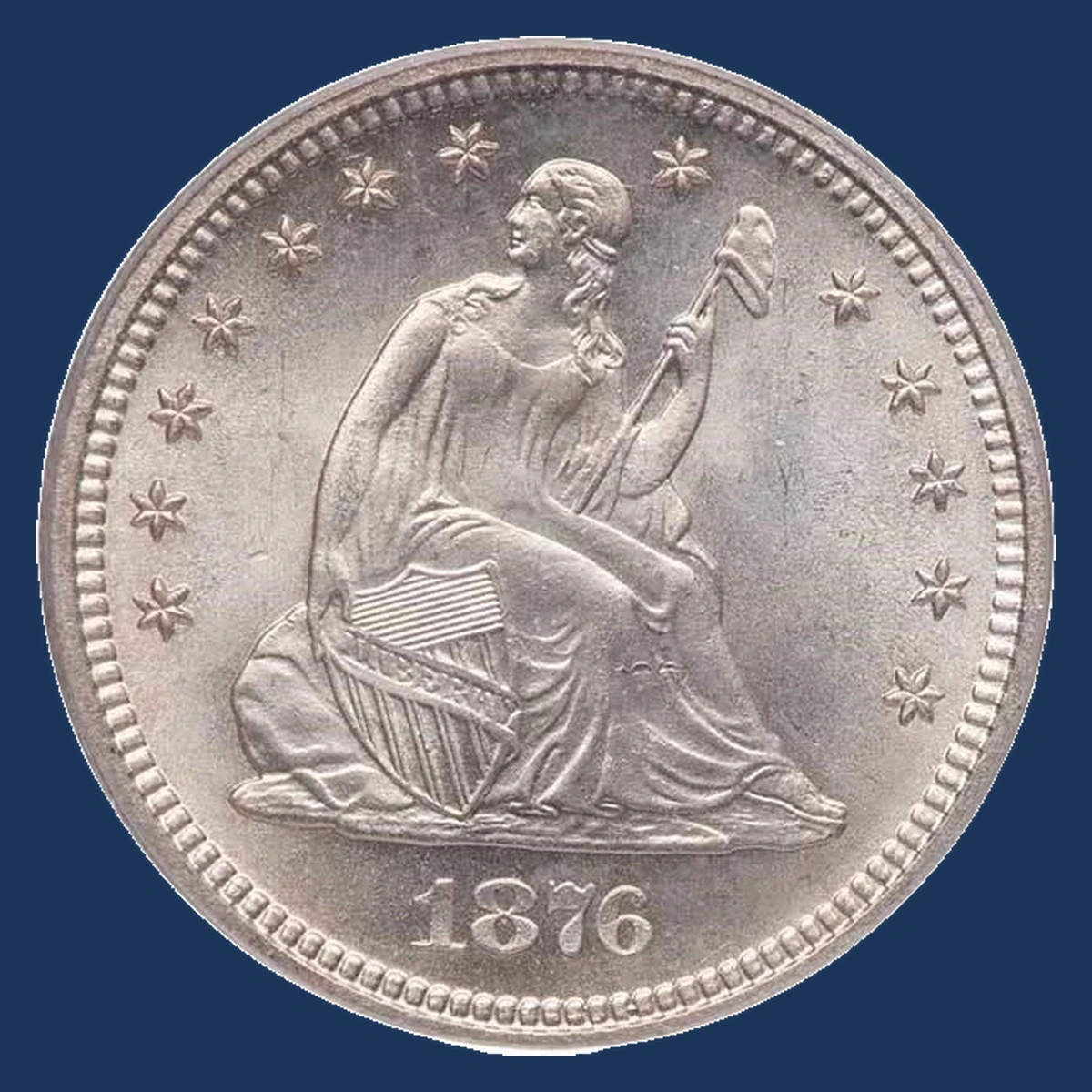
Look closely at the last two digits. Philadelphia examples include repeated strokes below 7 and 6, a strongly repeated 6, and an extra 6 between the normal 7 and 6.
The first two patterns are repunched dates. A more distant misplaced digit comes from a date punch landing away from its intended position.
Greg Johnson describes these date-punch problems and related Carson City examples. San Francisco misplaced-date varieties are also cataloged.
Each coin needs its own comparison. An extra digit’s position on a Philadelphia quarter should not be copied onto a Carson City or San Francisco example.
Estimated Value
Estimate $50 to $2,000 for date-punch varieties in circulated through ordinary unworn condition. Remnants and attractive surfaces help place a coin toward the higher end.
The date, mint, and grade still account for much of the total. A small repeated stroke does not erase the price differences between Philadelphia, Carson City, and San Francisco coins.
A cataloged Carson City example graded MS62 is unworn with noticeable marks. Compare such a coin with similarly preserved pieces, rather than heavily worn examples.
How to Identify
Draw a simple map of the date in your notes: which digit has an extra stroke, and on which side? Keep a full photograph beside the map so no nearby detail is lost.
For Philadelphia coins, distinguish the pair of lower remnants at 76 from an extra 6 between those digits. A heavily repeated 6 represents another pattern.
Then turn to the mint area under the eagle. A CC or S changes which date photograph you need for a reliable comparison.
Scratches can imitate short strokes but usually cut into the surface. A genuine date-punch remnant should be raised and shaped like part of the original numeral.
Match the date’s spacing as well as the extra curve before choosing a named variety.
5. 1876 Liberty Seated Quarter Doubled Die Obverse
A doubled die can place extra outlines beside parts of the front design. The tool received slightly separated impressions while it was being made, then transferred that repeated design to coins.
Catalogs recognize an 1876-CC front variety of this kind. A complete match requires photographs of the actual variety, rather than assuming every thick star or letter is doubled.
The term obverse simply means the front, where Liberty sits. Doubling there is separate from extra date-punch strokes.
A reflective Carson City coin may be described as prooflike. That describes its appearance and does not make it a specially manufactured Proof.
Estimated Value
For identified circulated through ordinary unworn examples, use an estimated $100 to $2,500. The strength of the visible separation and the coin’s preservation both influence its appeal.
A coin with substantial wear may retain only part of the repeated design. Cleaner surfaces and clearer detail can justify a stronger price, but artificial polishing can reduce value.
Compare Carson City quarters of similar grade first. The estimate includes normal coin value, and a prooflike surface describes appearance rather than another error.
How to Identify
Start with a clear comparison photograph rather than increasing magnification. It should show the cataloged doubled front of an 1876-CC quarter at several locations.
Place matching photographs side by side and look for the same extra contours in the same places. Do not use images of the similarly dated twenty-cent coin, which has a different design and separate varieties.
With a 10× magnifier, check whether the suspected outline is a rounded repeated shape or a flat ledge. Movement during striking can shave detail into a ledge without producing a doubled die.
Photograph the strongest matching areas and the whole coin. A variety specialist can then compare the pattern; one unusually wide letter alone does not identify this listing.
6. 1876 Liberty Seated Quarter Off-Center Strike with Clash Marks
On one documented quarter, the design shifted about 30% toward eight o’clock. Five front stars are missing, and the sixth is only partly present.
Much of the country name also fell beyond the blank. The remaining date still identifies the year.
The same coin has a back crack near the border and a clash mark below WE. A clash occurs when the stamping tools strike each other without a blank between them.
Those traces were already in the tools when this coin was struck off-center. They describe one complex piece, not three separately priced coins.
Estimated Value
The coin sold for $2,160 on December 21, 2022. NGC described it as XF Details, with cleaning: substantial design remained, but the surface had been altered.
For genuine dated examples with comparable displacement, estimate $500 to $5,000, depending on condition and visual strength. The actual sale shows that an obvious striking error can retain interest despite cleaning.
The crack and clash help identify this particular coin. Their guide values must not be added to the sale price.
How to Identify
Begin with the missing design, not the empty border. On the documented coin, stars one through five are gone and part of the sixth remains.
Check the back for the matching loss of UNITED and much of STATES. Because the A in STATES is absent, this example cannot be assigned confidently to either normal back design.
The blank itself remains intact; the displaced design ends at its edge. Later clipping removes silver and should not be confused with this striking pattern.
For the recorded example, compare the back’s border crack from three to six o’clock and the clash below WE. Those marks tie the close-ups to the same coin.
Keep the date visible when photographing the full outline, since a missing date changes how specifically the coin can be identified.
Conclusion
An extra date stroke and a large off-center strike tell very different stories. Estimated whole-coin values here range from $25 to $5,000, with the documented 30% off-center example bringing $2,160.
Keep mint letters separate from date digits, and compare each reported feature with the correct coin. When several marks occur together, assess their effect on one coin rather than adding every guide range.