1901 Quarter Error List with Pictures

Follow a fine line across the stars of a 1901-S quarter and you may be tracing a cracked stamping tool. A high-grade example with such a crack sold for $84,000 in January 2025, chiefly because of its rare date and condition.
Estimated whole-coin values for these 1901 quarter errors span $40–$150,000. Philadelphia date and strike errors belong in very different price comparisons from San Francisco rarities.
The checks below show where each feature begins and how to separate it from damage.
1. 1901 Barber Quarter Repunched First Date Digit
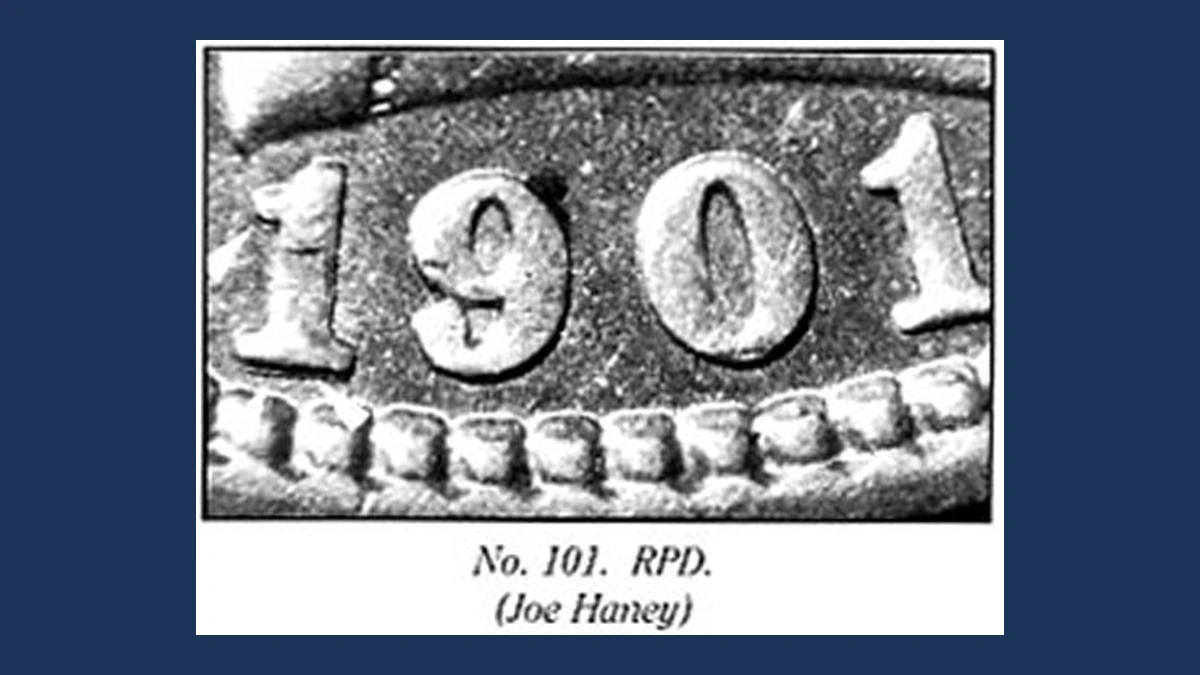
The first 1 in 1901 can show a small remnant below its main outline. The Barber Coin Collectors’ Society records this Philadelphia variety as a repunched date shifted south.
South means downward on an upright coin. It describes the earlier impression’s position, not a second date added to the finished quarter.
The repeated digit came from placing the date into the stamping tool more than once. Only part of the earlier impression remained visible.
A slightly higher or lower date by itself is different. Repunching requires an extra digit remnant, not merely unusual spacing above the rim.
Estimated Value
Estimate $40–$1,500 for an authenticated first-1 repunched date, from worn pieces through attractive unworn coins. The clearest remnant is easier to appreciate when nearby details have survived circulation.
This range is an editorial whole-coin estimate rather than a documented series of auction results. Most ordinary worn examples belong toward the lower end.
An otherwise pleasing surface helps. Cleaning or deep scratches can outweigh the appeal of a small extra numeral.
How to Identify
Center a magnifier on the first 1, not the final digit. Look just below the main outline for a raised remnant that follows part of the numeral’s shape.
Keep the little tooth-like marks inside the rim visible while comparing photographs. They help you judge the date’s position without mistaking normal spacing for an extra impression.
A scratched line has a cut center and may leave pushed-up metal alongside it. Move the light to see whether the suspected remnant belongs above or below the surrounding surface.
Check that no mintmark appears beneath the eagle before matching the Philadelphia report. The useful feature is a second piece of the first 1, not a generally blurry date.
2. 1901 Barber Quarter Doubled Designs and the New Orleans Reverse Report
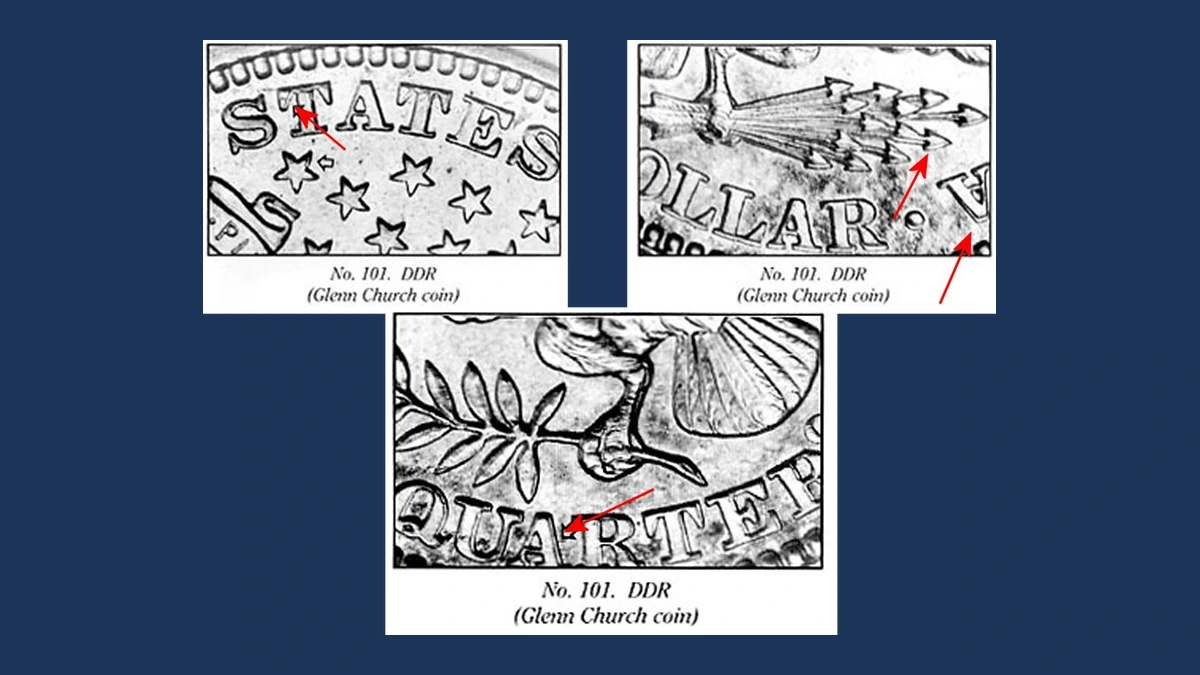
Repeated edges on letters can come from a doubled die, a stamping tool that already carried a doubled picture. Philadelphia reports name front details such as LIBERTY, the motto, and parts of the portrait.
These reports do not establish one precise pattern shared by every candidate. A doubled date alone is not enough to identify it.
The society’s survey separately lists New Orleans doubling on QUARTER DOLLAR and the arrows. Another guide calls it mechanical doubling, leaving that identification disputed.
Mechanical doubling produces flattened ledges during striking. It differs from a repeated picture formed in the tool.
Estimated Value
For an authenticated Philadelphia doubled die, estimate $40–$2,000. A confirmed New Orleans doubled die has a conditional whole-coin estimate of $100–$2,500, with condition and clear doubling setting the comparison.
The combined range is $40–$2,500. These are estimates for genuine doubled tools, not sale records for the disputed reverse.
If the New Orleans feature is only mechanical doubling, do not add a doubled-die premium. The underlying quarter still retains its normal date-and-condition value.
How to Identify
Sort the candidates by mint before comparing repeated edges. An O below the eagle directs attention to the back lettering and arrows; no mintmark fits the Philadelphia front report.
On the Philadelphia coin, compare LIBERTY, IN GOD WE TRUST, and the portrait under a magnifier. Check several features rather than deciding from one shadow beside the date.
For New Orleans, follow the ends of QUARTER DOLLAR and the arrow outlines.
Change the lamp angle to reveal each extra edge’s height. A flat step below the main shape suggests mechanical doubling, while separate rounded contours need closer variety comparison.
Use clear photographs of those actual edges when seeking identification. A label saying doubled does not resolve the disputed New Orleans mechanism.
3. 1901 Barber Quarter Off-Center Strike
The documented Philadelphia example has extra blank metal along the front edge from about eight to twelve o’clock. The corresponding area on the back shows the same misplaced blank.
PCGS graded this five-percent off-center quarter AU55, meaning only light circulation wear remains. The original auction described slate-gray color and traces of mint shine.
The metal disc entered the striking area slightly out of position. Some of the intended picture therefore failed to fit where it normally would.
This is a displacement of the blank during striking. An off-center photograph cannot create that physical relationship between the design and metal.
Estimated Value
The five-percent example brought $862.50 on January 4, 2001 at Heritage. Its AU55 grade and original-looking surfaces describe that particular auction comparison.
For comparable dated 1901 off-center quarters, estimate $300–$5,000. Greater displacement can create a stronger display, provided enough of the date and design survives to identify the coin.
The range covers more than the small shift on the known specimen. Damage, cleaning, or a partly lost date can reduce interest despite an obvious blank crescent.
How to Identify
Place the portrait upright and inspect the front’s upper-left edge, from roughly eight to twelve o’clock. Compare the extra metal there with the corresponding back edge in straight-on photographs.
Trace the design around the opposite side, checking where it reaches or passes beyond the available metal. A widened coin retaining its complete intended picture may instead be a broadstrike, made without normal restraint around the blank.
Use a magnifier to look for grinding lines or flattened remnants of removed detail inside the apparently empty area. Both faces should support the same misplaced blank, rather than a shift confined to one stamping tool.
4. 1901 Barber Quarter San Francisco Cracks through the Stars
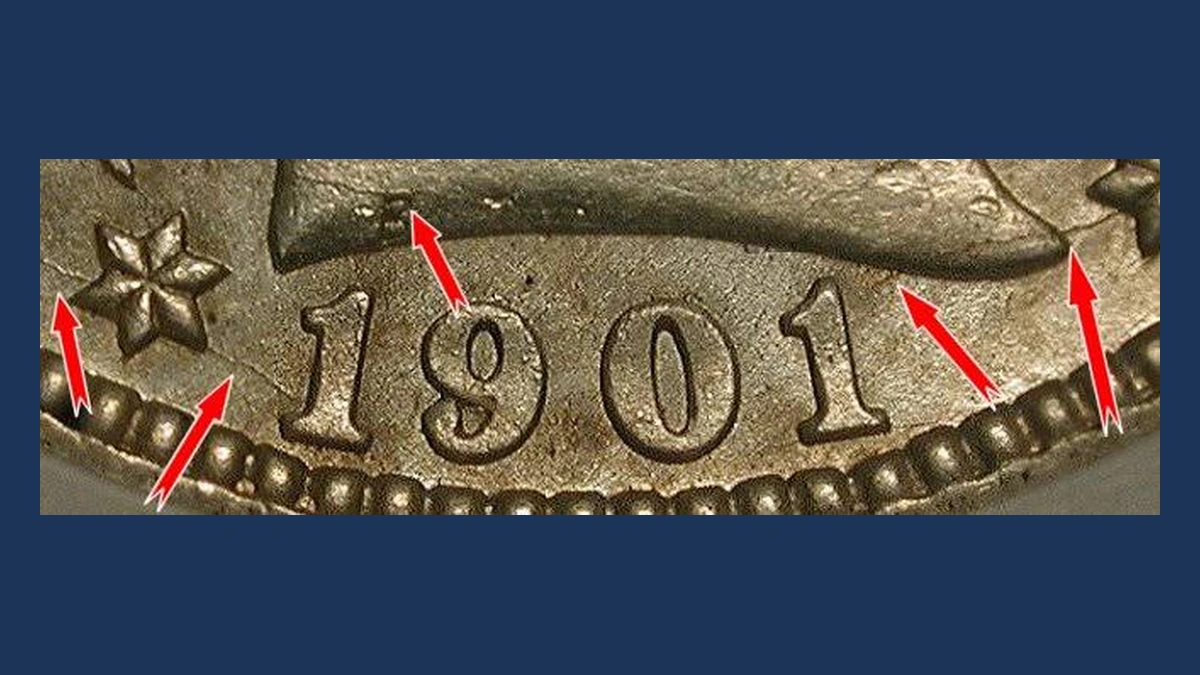
One 1901-S pattern has a raised line from Liberty’s bust tip through the first nearby star toward the second. An earlier stage reaches only the first star.
Another pattern develops cracks upward from the date through the stars on both sides. Less advanced examples may show only the beginning near the date’s right side.
The society’s authentication guide illustrates these two tool patterns, called A and B. They are stages of cracking, not separate kinds of damage.
Metal entered splits in the stamping tool and left thin raised lines on the coins.
Estimated Value
For genuine 1901-S quarters bearing these cracks, estimate $3,000–$150,000 across heavily worn through exceptional unworn examples. The scarce date and preservation account for most of that whole-coin value.
A PCGS MS66 example with a fine bust-to-stars crack sold for $84,000 on January 15, 2025. MS66 means unworn with very few marks.
That result does not measure a separate crack premium. The same thin line on a damaged or falsely altered coin cannot justify that comparison.
How to Identify
Begin with the date and S together. The crack is useful supporting evidence, but it cannot authenticate this valuable issue alone.
For pattern A, follow the bust tip toward the first nearby star and then the second. For B, examine the date’s right side before tracing any longer line through the stars.
Use side lighting to check that the line rises above the surface. A cut with displaced metal along its sides needs a different explanation.
Compare the positions of both 1s and the S with certified examples of the same pattern. Wear should look consistent across the coin and mintmark.
Inspect the edge for a seam from joined coin halves. Have the complete coin checked rather than relying on a convincing-looking crack.
Conclusion
The estimated $40–$150,000 spread combines small Philadelphia varieties, a displaced strike, and valuable San Francisco coins with cracks. Each needs its own comparison, especially when a scarce date accounts for most of the price.
Start at the first 1 for repunching, compare repeated letters for doubling, and follow the metal outline for an off-center strike. On a suspected 1901-S, examine the whole coin before trusting its crack.