1914 Quarter Error List with Pictures

Tiny extra edges in the motto can be worth a closer look on a 1914-D Barber quarter. PCGS lists an unworn MS65 doubled-front example at $4,750 in January 2023.
This 1914 Barber Quarter error list also covers a reported repeated D and a missing edge segment. Estimated values span $40–$5,000.
Compare the mint letter and the whole feature before choosing a section: a second outline beside the date needs different evidence from the known Denver doubled design.
1. 1914 Barber Quarter Extra Outlines on the Denver Mintmark
Extra notches at the top and bottom ends of the D are reported on some 1914 Denver quarters. They may preserve parts of an earlier impression of the mint letter.
At this time, a worker punched the letter into the steel tool used to stamp coins. A second punch in a slightly different position could leave overlapping letter shapes.
This reported repeated mintmark needs comparison with an actual matching coin. A D sitting higher or lower than usual is simply a position difference unless another punch outline remains visible.
Estimated Value
For a verified repeated D, use an estimated $40–$750 across worn and attractive unworn coins. The upper end assumes clear extra letter detail together with pleasing original surfaces.
The price depends on the matching pattern, not just the presence of a notch. Wear, contact damage, and small lumps can change a mintmark’s outline, so a damaged D should not receive the same premium merely because it looks thicker than normal.
How to Identify
Turn the quarter to its eagle side and find the D beneath the tail. Begin with its top and bottom ends, where the extra notches have been reported.
Under a 10× magnifier, follow any extra shape beyond one isolated bump. A surviving punch should help form another letter outline rather than look like a random blob of silver.
Compare a normal D beside it at the same scale. Small position differences between coins do not prove that the letter was punched twice.
Change the lamp angle to separate a flat shelf from raised, rounded letter detail. Use a matched photograph of the whole D to judge the repeated shape instead of assigning a variety from one notch alone.
2. 1914 Barber Quarter A Missing Segment of the Silver Blank
A section missing from the edge may have been absent before the quarter received its design. The Mint cut round metal blanks from strip, and an overlapping cut could leave an incomplete disc.
A dealer offered a 1914-S Barber quarter described as a clipped blank in VG, or heavily worn condition. The listing did not provide independent grading-service confirmation of the error.
That makes the actual edge important. A missing piece cut or ground away after circulation can resemble a Mint-made clip, even when the date and S are genuine.
Estimated Value
The dealer listing displayed a $99 asking price for the worn 1914-S example. That is an offer to sell, not a completed auction result.
A genuine comparable clip has an estimated whole-coin value of $100–$1,500, depending on the amount missing, wear, and originality. The San Francisco date already carries collector value, so the final price should reflect the whole quarter rather than treating its entire value as an error premium.
How to Identify
Inspect the surviving date and S first, then trace the gap along the edge. Avoid assigning a percentage or clock position from a listing that does not establish those details.
Look closely at each end of the missing segment. Naturally thinning rim metal and design near the boundary can support an incomplete blank, while sharp cuts through finished details suggest later alteration.
A weak rim directly opposite the clip can provide another clue. It should support the edge evidence rather than replace it.
A complete unworn Barber quarter weighs 6.25 grams, so a scale can help assess missing metal. Weight alone cannot distinguish a genuine clip from a later cut; the natural boundary remains the more important check.
3. 1914 Barber Quarter Doubled Front Details and the Reported Extra Date Outline
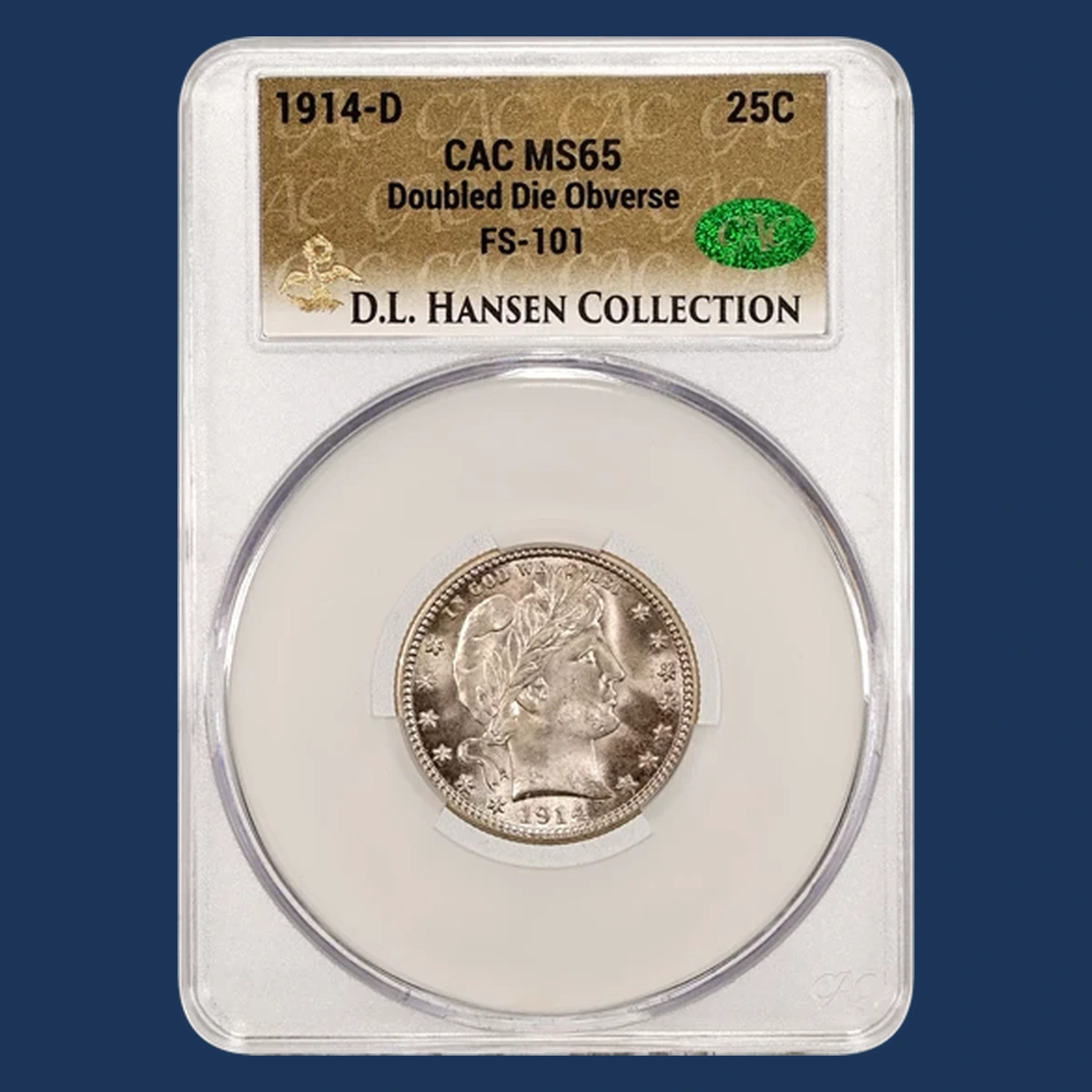
On the known 1914-D doubled front, extra edges appear in IN GOD WE TRUST, stars, and ribbon ends. FS-101 and VP-001 are names for the same variety, not two different errors.
The repeated design was present in the stamping tool before it touched the coin. It therefore differs from a flat shelf caused by movement during striking.
A separate San Francisco claim describes an extra outline beside the final 4. That appearance does not establish a hand-repunched date; its actual cause must be distinguished from tool doubling, wear, or damage.
Estimated Value
PCGS records $4,750 for a Denver FS-101 graded MS65 in January 2023. Estimated whole-coin values for matching examples span $100–$5,000.
For a San Francisco coin with confirmed collectible tool doubling at the date, estimate $100–$2,000, depending heavily on preservation. That conditional range does not apply to ordinary wear or a flat striking shelf.
An unexplained “1914/4” label should not inherit the documented Denver variety’s price.
How to Identify
On a Denver quarter, begin with IN GOD WE TRUST and compare the same letters against a confirmed FS-101 image. Then check the stars and ribbon ends for the matching repeated shapes.
A separated rounded edge or a split at a letter corner is more useful than simple thickness. Move the light to rule out reflections before making a match.
The San Francisco date claim follows a different route.
Inspect the last 4 and neighboring digits together, looking for scratches, wear, or flat shelves that could explain the extra line. Dates were transferred through the tool-making process by 1914, so an outline alone does not prove individual hand repunching.
Match the Denver pattern across several details; have the separate S-date feature examined on its own merits.
Conclusion
A matching Denver doubled design offers stronger evidence than a thick date digit or a random lump beside the mintmark. The reported San Francisco clip needs a natural missing-metal boundary as well.
Estimated values across these forms run from $40–$5,000. Keep the $4,750 doubled-front record separate from the $99 clip asking price, and treat an unexplained “1914/4” label as a reason to examine the coin more closely.