1917 Quarter Error List with Pictures

A quarter broken into two pieces might look ruined, yet one matched 1917-S pair brought $4,600 in August 2008. Its break came from faulty metal, according to the auction description.
Estimated 1917 Standing Liberty Quarter error values below run from $75–$10,000. The designs changed during 1917, so identifying the correct version comes before comparing an unusual feature.
Read on for doubled feathers, displaced designs, a natural hole, and the two-piece quarter.
1. 1917 Standing Liberty Quarter Repeated Eagle Feathers and Back Lettering
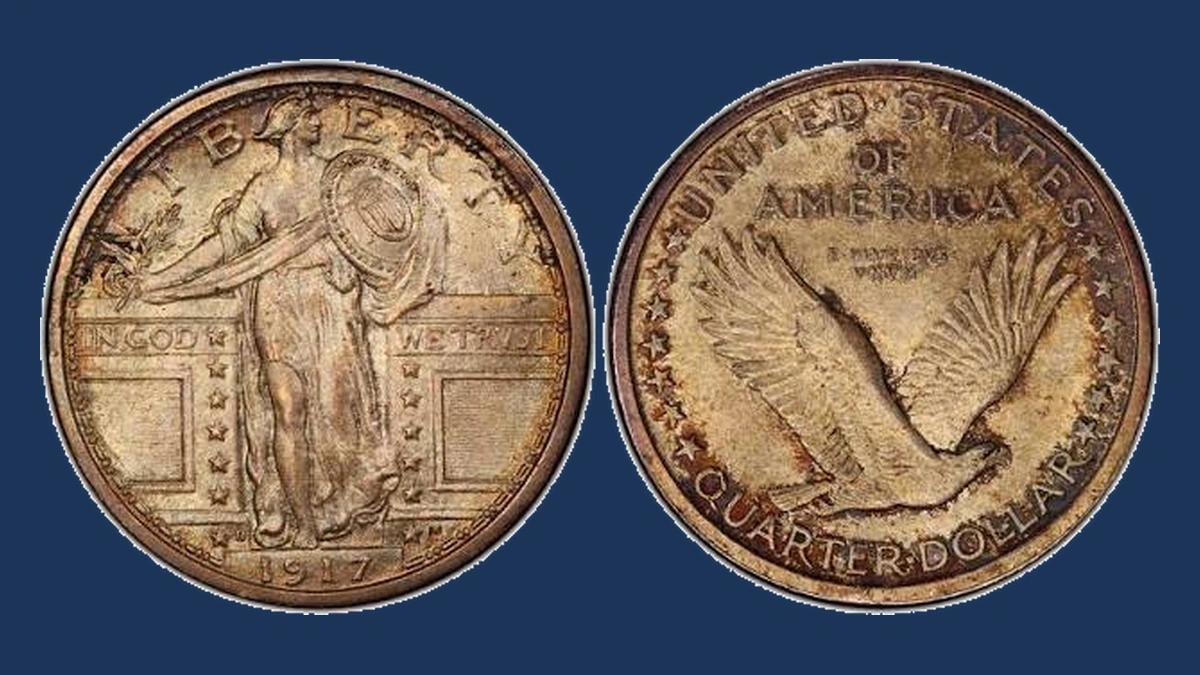
Repeated edges on eagle feathers and E PLURIBUS UNUM are reported on the back of the 1917-D Type I quarter. The extra shapes belong to the design, rather than a second mint letter.
They can result from a stamping tool receiving a doubled image while it was being prepared. One normal strike then copies both images to the coin.
Type I has no stars below the eagle. The later Type II back is different, so comparing those two normal designs cannot establish that one has a doubled stamping tool.
Estimated Value
For a confirmed matching doubled back, estimate $75–$2,500 across worn and attractive unworn examples. The coin’s condition and clarity of the repeated feathers and lettering both affect its value.
A bright or thick edge by itself does not justify the range. The extra details must match a genuine doubled pattern, and the value already present in a well-preserved 1917-D quarter should be considered before assigning a separate premium to the doubling.
How to Identify
Check the space below the flying eagle first. No stars there indicates Type I; three stars identify the later Type II design and require a different comparison.
The D should appear near the lower left of the front. With those two identity checks settled, study the wing feathers and E PLURIBUS UNUM under a magnifier.
Compare several repeated edges with a confirmed example. Flat shelves caused by movement during striking can imitate doubling without showing the same separated shapes.
Rotate the light to rule out reflections, then compare the same letters again. A consistent pattern across the feather and lettering details is more useful than one bright line beside a single feather.
2. 1917 Standing Liberty Quarter A Design Struck Partly beyond the Blank
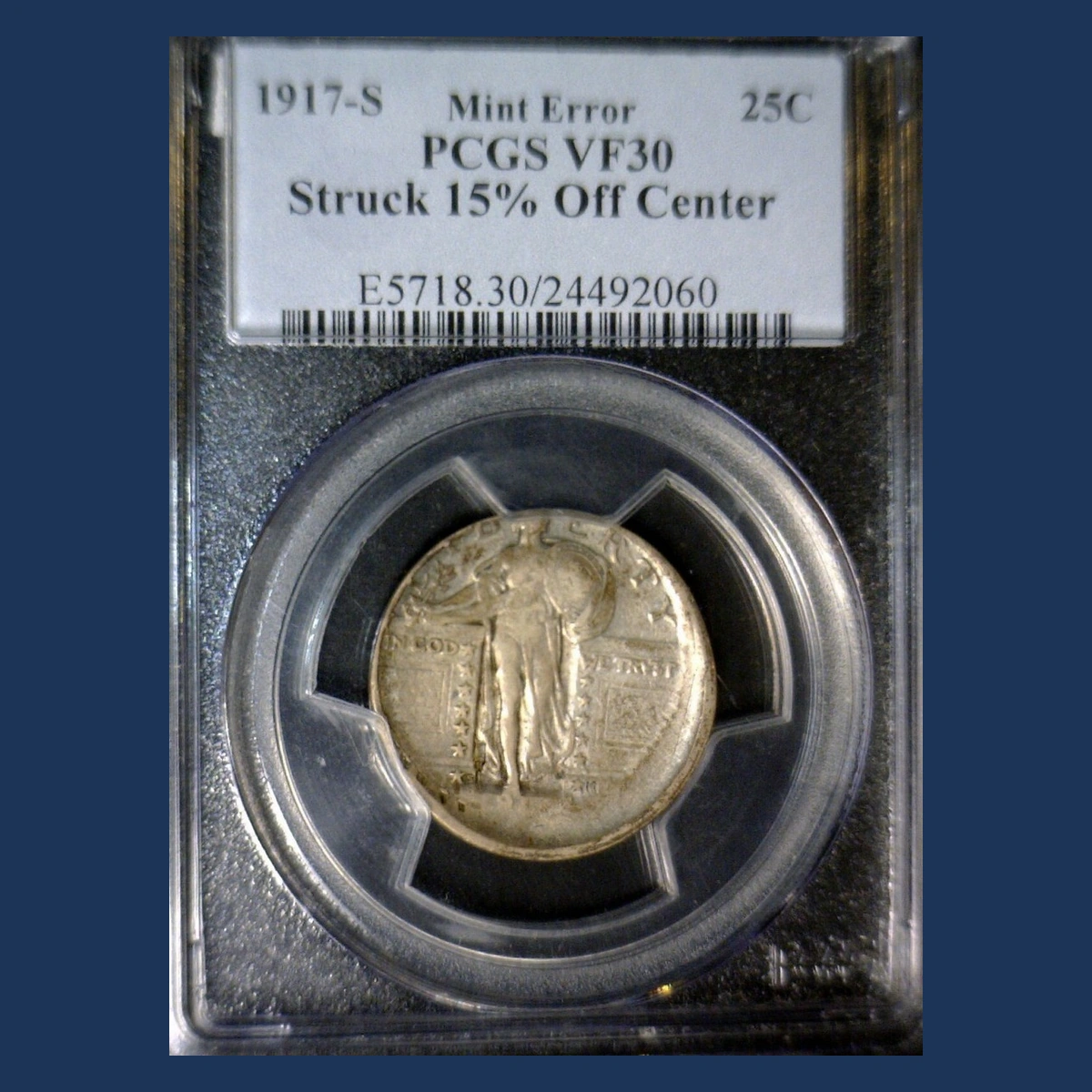
A blank crescent beside a partly missing design shows that the metal disc did not sit correctly between the stamping tools. Part of each tool’s picture landed beyond the disc.
This is an off-center strike. Both faces should fit the same misplaced piece of metal, rather than only one face having an uneven rim.
Off-center pieces are reported for 1917 without one established mint or design type applying to every example. The surviving date, front mintmark area, and stars below the eagle help identify the particular coin instead of guessing from its outline.
Estimated Value
An estimated $200–$5,000 covers genuine dated examples, with the strongest combinations of clear displacement and attractive surfaces toward the upper end. A small shift on a worn coin usually attracts less attention.
Type I and Type II quarters, and the different mints, can have different underlying values. Compare the right version before adding an error premium; a missing date or unreadable mint area can limit how precisely the coin is identified and priced.
How to Identify
Lay photographs of both faces beside each other and follow the same physical blank crescent around the coin. The incomplete designs should agree with that one displacement.
If the entire design survives inside an expanded rim, compare a broadstrike instead. If only one face shifts, a misaligned stamping tool may explain the shape.
Use the surviving date to establish 1917 before choosing a mint or design type. A missing mint letter cannot prove Philadelphia when that part of the picture also missed the metal.
Finally, inspect the boundary between struck and unstruck silver under side light. Natural flow at that boundary should differ from scraped-away detail or metal flattened after the coin was made.
3. 1917 Standing Liberty Quarter A Natural Hole from Defective Metal
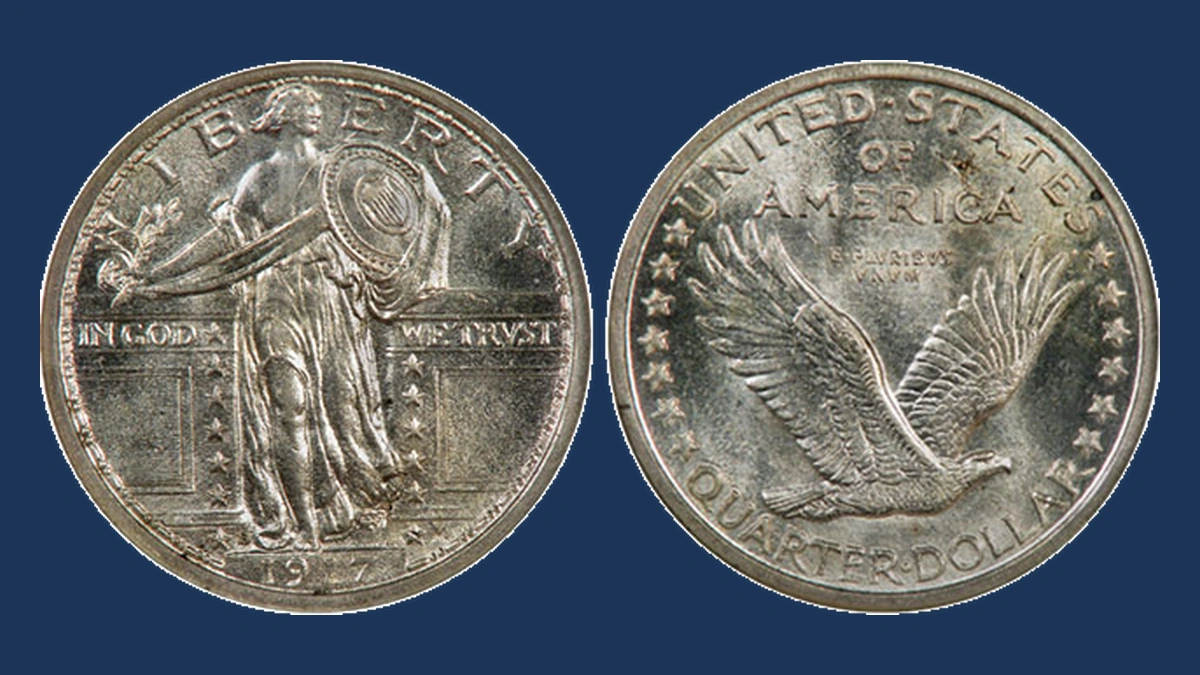
Light passes through a small irregular hole beside Liberty’s foot on a documented 1917-S Type I quarter. On the back, the same opening sits above the C in AMERICA.
Coin specialist Cline described a flaw in the original metal, possibly linked to trapped impurities. The exact foreign material was not established.
NGC graded the piece MS63 Full Head and labeled it Defective Planchet. Here planchet means the metal blank, while Full Head describes sharp head detail; neither term means that every holed 1917 quarter has a genuine Mint error.
Estimated Value
For a confirmed natural hole comparable to this piece, use an estimated $2,000–$8,000. Its unusual appearance and preservation both matter; an ordinary drilled coin has no matching error premium.
Cline’s account says the coin attracted no serious buyer at its 2014 auction appearance. That history supplies no actual sale price.
The estimate concerns a verified metal fault, with the known MS63 Full Head piece serving as the physical comparison.
How to Identify
View the opening with light behind the coin, then inspect it from each face. The documented hole lies beside Liberty’s foot and above AMERICA’s C, so both positions should line up.
Do not insert a needle or probe.
Under magnification, examine the irregular wall of the opening and the way surrounding struck detail meets it. A round drilled channel, scraping, or metal pushed outward may reveal later damage.
An irregular hole is not proof by itself, because corrosion can also eat through silver. A specialist should examine the original surfaces and the inside boundary before calling it a defective blank.
Compare that complete boundary with the known piece, rather than accepting light passing through the coin as the deciding test.
4. 1917 Standing Liberty Quarter A Broken Quarter with Both Matching Pieces
Two matching pieces preserve almost the whole design of a 1917-S Type I quarter. The fracture runs from about two-thirty to six-thirty with the front upright.
Heritage described faulty alloy mixing as the cause and said the coin broke after brief circulation. One fragment covers roughly seventy percent of the original area; the other covers thirty percent.
This is a break across the coin, not two thin layers separating through its thickness. The pieces were offered together as an ANACS AU50 matched pair, preserving the relationship between their designs and broken edges.
Estimated Value
The complete matched pair sold for $4,600 on August 1, 2008, at Heritage. That amount belongs to both pieces of the original quarter together.
Allow an estimated $3,000–$10,000 for a comparable authenticated pair with its matching design and fracture preserved. A single fragment is a different purchase and should not automatically receive half the pair’s price; later bending or sawing is also a different cause.
How to Identify
Keep the pieces separate and protected while comparing them visually. Pressing the broken edges together can damage the surfaces that explain how they once fitted.
The date, portrait, and back design should continue across the same break when the pieces are correctly arranged. For this pair, the front fracture joins the areas near two-thirty and six-thirty.
Inspect the fracture faces with magnification for natural texture rather than a neat saw cut. The surrounding coin should also be checked for bending or other signs of forced breakage.
Matching outlines prove that fragments fit, but do not alone prove faulty Mint metal. Use the documented design match and an expert examination of the fracture to separate the known error from later breakage.
Conclusion
Identify the 1917 design before comparing a doubled eagle or missing metal. Type I has no stars below the eagle, while Type II has three.
Estimated values range from $75–$10,000, with the $4,600 matched broken pair providing a documented sale. The natural hole and broken pair are different faults, and neither a drilled hole nor an ordinary snapped coin automatically shares their value.