1932 Quarter Error List with Pictures

Look at the nostril and earlobe before searching the motto on a 1932 quarter. Those portrait details help identify Philadelphia’s FS-101 doubled-front variety, whose MS66 auction record is $3,055 from December 2014.
The 1932 quarter errors below have estimated whole-coin values of $50–$10,000, including conditional ranges for major reported errors. Read on to compare each visible feature and understand why a scarce D or S coin needs its own value assessment.
1. 1932 Washington Quarter Broadstrike
A widened quarter can form when the surrounding steel collar does not hold the blank during striking. The metal spreads farther than intended while the main design remains on the coin.
This is called a broadstrike. The border may be uneven, and the edge can show incomplete grooves where the collar failed to contain it.
Broadstrikes are reported for 1932 without a specific mint established for every example. A later flattened quarter can also become wider, but its crushed portrait and lettering need to be distinguished from the original spreading of freshly struck metal.
Estimated Value
For an authenticated ordinary Philadelphia example, estimate $100–$800, depending on expansion and condition. A confirmed Denver or San Francisco coin needs the value of its scarcer issue considered separately.
A scratched 1945 broadstrike sold for $134 in June 2026. That different-year silver quarter gives a modest comparison, while clean original surfaces and a dramatic widened outline can support more interest than an altered-looking rim on a heavily worn 1932 coin.
How to Identify
Compare the portrait and eagle with a normal quarter before measuring the rim. Strong original details surrounded by spread metal tell a different story from details crushed flat by later pressure.
Use calipers across several directions to compare the outline with the normal 24.3-millimeter diameter. Inspect the edge for incomplete grooves, but do not use a smooth edge alone as proof.
Trace the outer lettering on both faces to check that the main design stayed on the metal. If part of it missed the blank, consider an off-center strike instead; also keep the mint-letter area visible, because a genuine D or S affects the whole coin’s identity and value.
2. 1932 Washington Quarter Raised Rim Break
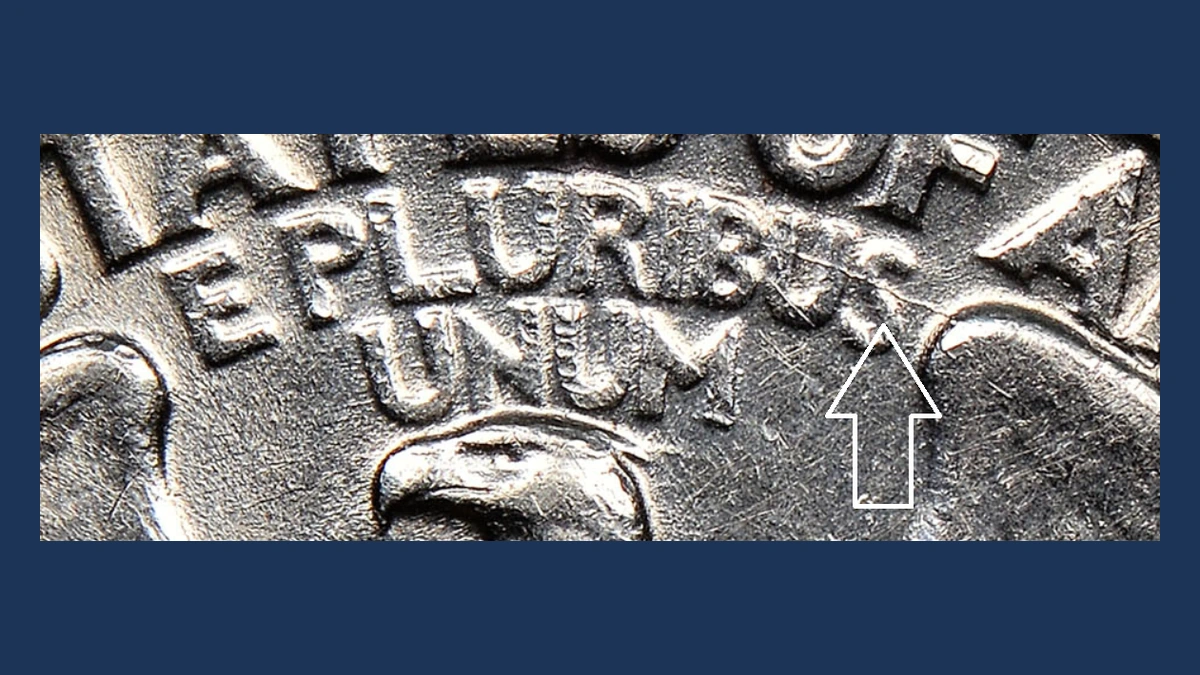
A rounded mound can replace part of the design and run into the rim. It forms after a piece breaks away from the edge of the steel stamping tool.
Coin metal fills the newly opened space instead of receiving the missing design. Collectors call this rim-connected feature a cud.
The 1932 report does not establish one clock position for the break. A small raised line inside the design is a different feature, and damage that squeezes metal upward at the edge should not be accepted as a cud without checking its boundary.
Estimated Value
Estimate $50–$1,000 for a genuine rim break on an ordinary Philadelphia 1932 quarter, with larger clear examples toward the stronger end. The figure is a whole-coin estimate rather than a payment for each raised area.
Wear and later edge damage can reduce interest even when the break is genuine. For a D or S coin, its scarce-year mint identity must also be authenticated and included, rather than applying a Philadelphia estimate to the entire coin.
How to Identify
Check whether the raised area actually joins the rim. A bump surrounded by normal design on every side is an internal chip, not the rim break described here.
View the feature with light from the side and follow where the normal letters or portrait stop. The metal should form a natural raised area where the tool no longer supplied its original design.
Look at the opposite face for weaker detail that may accompany poor support, without demanding that clue on every example.
Inspect the nearby edge for a dent or crushed groove that could explain metal pushed up later. Use the entire boundary and affected design to judge the break, not a guessed clock position.
3. 1932 Washington Quarter Peeling Front Metal
A thin surface layer can split or peel away from the front of a quarter. This happens when a weakness inside the blank allows part of its metal to separate.
The error is called a lamination. A documented 1932-S example graded NGC AU58 has the separation on the front, with its S mint mark on the back.
The coin is a solid silver-copper alloy rather than a modern coin with bonded outer sheets. A shallow peeling layer therefore comes from the metal’s internal weakness, not from a copper core being exposed beneath a missing silver-colored cover.
Estimated Value
For 1932-S quarters with a genuine front lamination, estimate $150–$1,500 across worn to well-preserved examples. Their scarce date-and-mint combination contributes to the whole-coin price, so the entire amount is not a lamination premium.
The NGC AU58 example sold for $228 on September 18, 2023. Its surface condition and particular separation should be compared with another candidate before assuming that a larger-looking peel will necessarily command more.
How to Identify
Confirm the S below the branches on the back before comparing a coin with this San Francisco example. Photograph both faces so the mint identity stays attached to the front defect.
Under a magnifier, follow the edge of the peeling area and its relationship to the portrait or lettering. A thin split or attached flap should differ from a sharp gouge cut into finished metal.
Leave any raised fragment alone. Moving it can destroy evidence of how the surface separated.
If the fragment has already detached, inspect the exposed shallow patch for its original boundary. Do not assign a particular location from another lamination, since the auction description establishes the front face without specifying a common position.
4. 1932 Washington Quarter Repunched Mint Marks
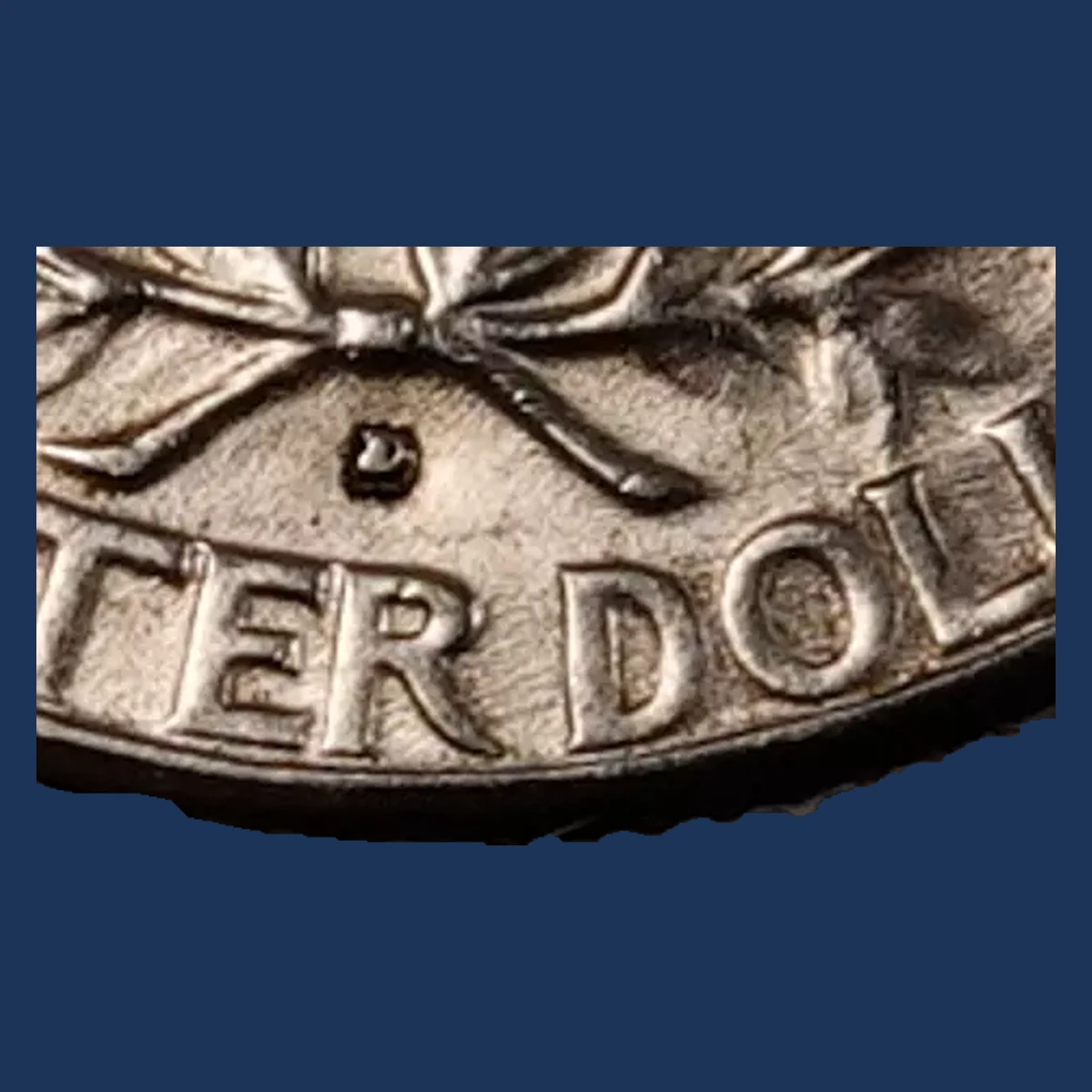
An extra piece of D or S may remain where a worker repeated the mint-letter punch in the stamping tool. The coin then copies both impressions when struck.
The cataloged San Francisco WRPM-001 shows its extra S toward the left. A flat shelf on the right of that example is movement-related doubling, not the repeated punch outline.
A northwest D/D and an S over an upside-down S are also reported. These claims need their own matching shapes and should not be treated as the same westward S/S merely because all involve a mint letter.
Estimated Value
Use a conditional estimated whole-coin range of $150–$3,000 for authenticated 1932-D or 1932-S mint-mark varieties, depending on wear and the exact pattern. Much of the price can come from the scarce underlying coin.
A 1949-D D/D FS-501 sold for $384 in MS65 in March 2018. That different-year variety offers context for collector interest, but its price and catalog number do not establish the value or identity of a reported 1932 D/D or inverted S.
How to Identify
For the listed westward S/S, concentrate on the left side of S rather than the flat shelf at its right. Compare the extra outline with the Wexler reference photographs under a magnifier.
Keep the coin upright with the nearby branches visible. This prevents a rotated close-up from changing what left, right, or northwest means.
The reported D/D needs a genuine extra D shape toward the upper left. A dent beside the letter can push metal into a misleading curve.
For an inverted-S claim, compare both ends of the extra letter with an upside-down S. A distorted center alone cannot establish the orientation or catalog identity of a second punch impression.
5. 1932 Washington Quarter Off-Center Strike
Part of the quarter’s design can miss the metal when a blank sits away from its intended position. An untouched crescent remains opposite the side where the design runs off the edge.
The resulting off-center strike changes the fit of the designs on both faces. An uneven border limited to one face may instead reflect a shifted stamping tool.
The reported 1932 category has no established percentage or mint for every candidate. Those details must be visible on the actual coin, particularly when the displacement removes the back area where a mint letter would normally appear.
Estimated Value
For a genuine dated Philadelphia 1932 off-center quarter, estimate $100–$3,000, depending on displacement and preservation. A verified D or S example also carries the value of its scarcer original issue.
A later silver quarter is not automatically an exact price match, and a missing date can greatly limit identification. Compare readable identity, original surfaces, and how clearly both shifted designs demonstrate the error instead of assigning a fixed dollar amount to each percentage of displacement.
How to Identify
Keep the full date in view while examining the blank crescent. A dramatic shift cannot establish 1932 if the year itself is missing or has been altered.
Turn the coin over and compare how the second design fits the same disk. The unused area and missing outer details should make sense together.
Inspect the untouched-looking metal for filing lines, hammering, or scraped-away design. Later changes can create a false blank patch.
If the mint-letter area never received a strike, an absent D or S cannot identify Philadelphia.
Describe the displacement actually visible on the coin and preserve its original outline in photographs. The natural transition between struck and unstruck metal matters more than a seller’s percentage.
6. 1932 Washington Quarter Doubled Portrait and Back Details
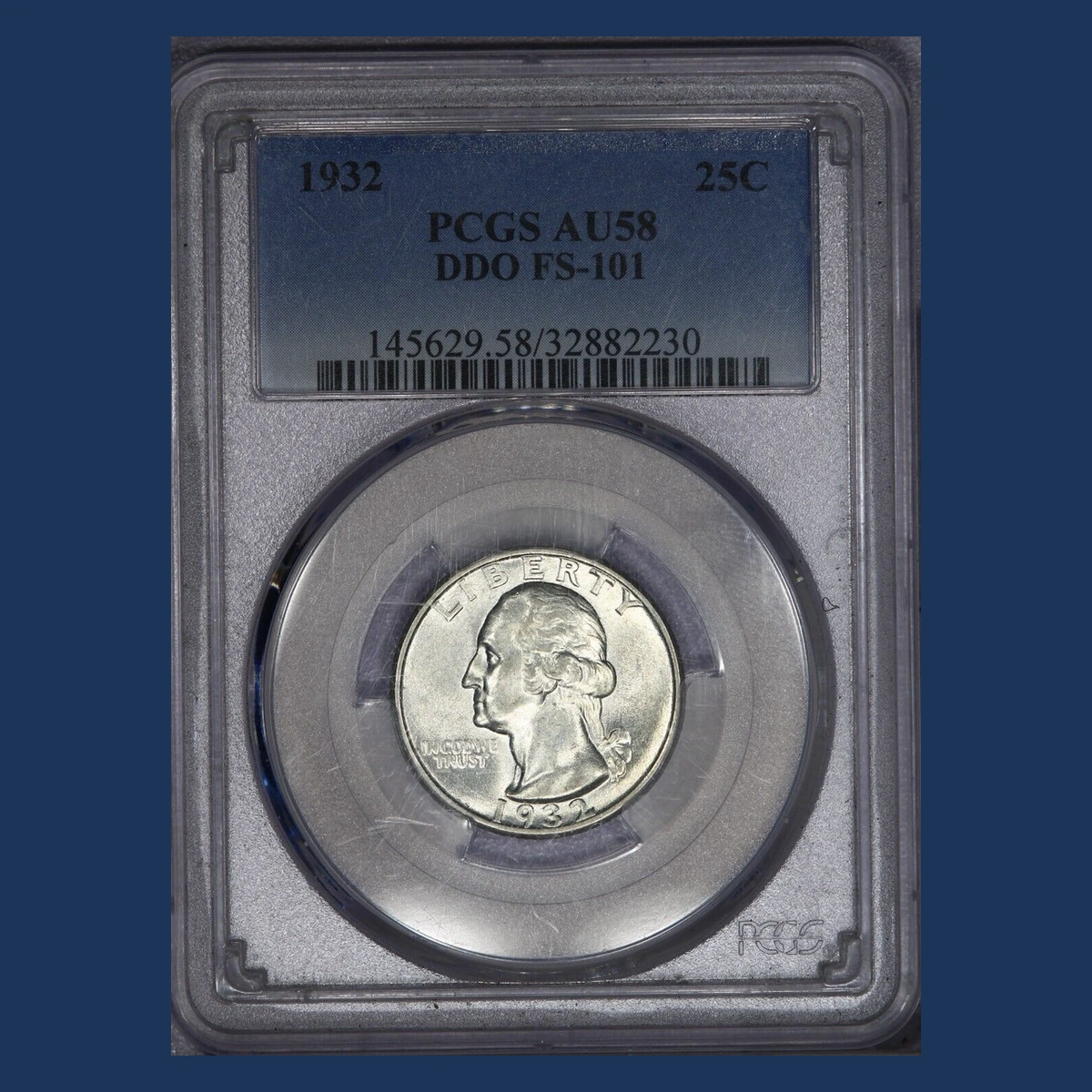
The nostril, earlobe, and rear edge of the hair ribbon show the important extra outlines on Philadelphia FS-101. These details were doubled in the steel stamping tool, called a die, before it struck the coin.
Separate back varieties are also recorded. Philadelphia has slight doubling in UNITED STATES OF AMERICA, while San Francisco WDDR-001 affects back lettering and branch ends.
The patterns belong to different tools and coins. Finding extra-looking motto letters alone does not identify the Philadelphia portrait variety, and its price should not be transferred to every subtle doubled-back example.
Estimated Value
Estimate $50–$3,500 for identified 1932 doubled-tool varieties, taking mint, exact pattern, and preservation together. A scarce S coin’s ordinary collector value remains part of its whole-coin price.
The Philadelphia FS-101 reached $3,055 in MS66 on December 4, 2014. An MS63 example sold for $305.50 in March 2017, illustrating why a top-grade result should not be treated as the routine value of a worn or subtly doubled quarter.
How to Identify
Start close to Washington’s face for Philadelphia FS-101 instead of using the motto as the main test. With a 10× magnifier, examine the nostril, earlobe, and back edge of the hair ribbon for the documented upward extra outline.
Check the mint-letter area before switching to a back variety. A San Francisco comparison must use the correct S coin and its own repeated lettering or branch details.
Look at the second outline under changing light to distinguish rounded extra design from a flat ledge caused by movement during striking. Match several listed features together; one thick letter on a worn coin cannot replace the particular portrait or back pattern that defines the variety.
7. 1932 Washington Quarter Reported Two-Front Appearance
Two visible portraits can have very different explanations. A coin pressed against another struck coin may receive a sunken mirror image, while an altered novelty can combine two normal-looking raised fronts.
The 1932 report describes a two-front appearance without establishing which surface arrangement is present. It does not confirm a genuine quarter with two ordinary raised fronts.
A mirror image pressed in by another coin is called a brockage. That mechanism needs to be demonstrated on the object itself, rather than inferred from the phrase double obverse or from a photograph of only one face.
Estimated Value
If the piece is authenticated as a 1932 quarter with a genuine mirror-image impression, estimate $500–$5,000, depending on completeness, condition, and mint identity. This is a conditional error estimate for that identified mechanism.
It does not price a joined two-headed novelty or establish that the reported coin is a genuine brockage. Both faces and the edge must support the original striking explanation before the piece can be compared with authenticated major errors at these values.
How to Identify
Decide whether the second portrait rises above the surrounding surface or sinks into it. Then check whether the lettering reads normally or appears backward.
A sunken reversed image can fit contact with another struck coin. Two normal raised fronts require a different explanation and should prompt a careful search for alteration.
Inspect the edge for a seam and compare the relief near the rim on both faces. Added metal or a joined half can hide the original back.
Weigh a loose piece against the 6.25-gram standard, remembering that a matching weight alone cannot authenticate its construction. Have the complete coin examined before using a two-front label to name a specific Mint error.
8. 1932 Washington Quarter Cap-Shaped Coin
A coin can remain stuck to a stamping tool instead of leaving the press after a strike. Repeated contact with new blanks can force the stuck coin’s edge upward around the tool.
The resulting piece takes on a cup or cap shape. Collectors call the stuck coin itself a die cap.
A cap-shaped 1932 quarter is reported, but a weak design on a flat coin is not enough to identify one. The actual raised wall and surviving surfaces must show how the coin wrapped around the tool rather than being bent into a cup later.
Estimated Value
For an authenticated 1932 quarter die cap, estimate $1,500–$10,000, with shape, remaining identity, and preservation affecting the result. This is a conditional whole-coin estimate for an established original cap.
A tall wall and readable date can make such an error easier to display, but later bending or a simple weak strike does not meet the same description. A confirmed scarce D or S identity would also require individual comparison rather than an automatic extra premium.
How to Identify
Look at the coin from the side before studying small design details. A real cap claim needs a three-dimensional wall around an opening, not just a broad border in a face-on photograph.
Inspect how the surviving design stretches toward the wall and compare both interior and outer surfaces. Original metal flow should explain the shape as a whole.
Check the rim for tool marks from squeezing, hammering, or later bending. A manually cupped quarter can preserve a date while lacking an original cap’s striking evidence.
Photograph its height and opening without trying to flatten it. Specialist examination should connect the cup-shaped body and surviving designs to repeated striking around a tool.
Conclusion
Estimated whole-coin values for these 1932 quarter errors run from $50–$10,000, with the upper ranges reserved for authenticated major errors. A scarce mint mark contributes to a coin’s price independently of the mistake.
Check the portrait for Philadelphia FS-101, the extra letter itself for a repunched mint mark, and the full shape for a cap. A two-front appearance needs its actual surfaces explained before it receives a Mint-error value.