1957 Quarter Error List with Pictures

Imagine Washington’s quarter design squeezed onto a silver dime blank. A 1957 example weighing just 2.5 g sold for $1,920 in December 2023.
The 1957 quarter errors also include subtle lettering changes, displaced mint marks, and flaws along the edge. Estimated prices range from $15–$3,000, with condition and a convincing identification making a major difference.
The sections below show how to read those clues without confusing damage, normal design details, and genuine Mint varieties.
1. 1957 Washington Quarter Raised Cracks and Letter Gaps
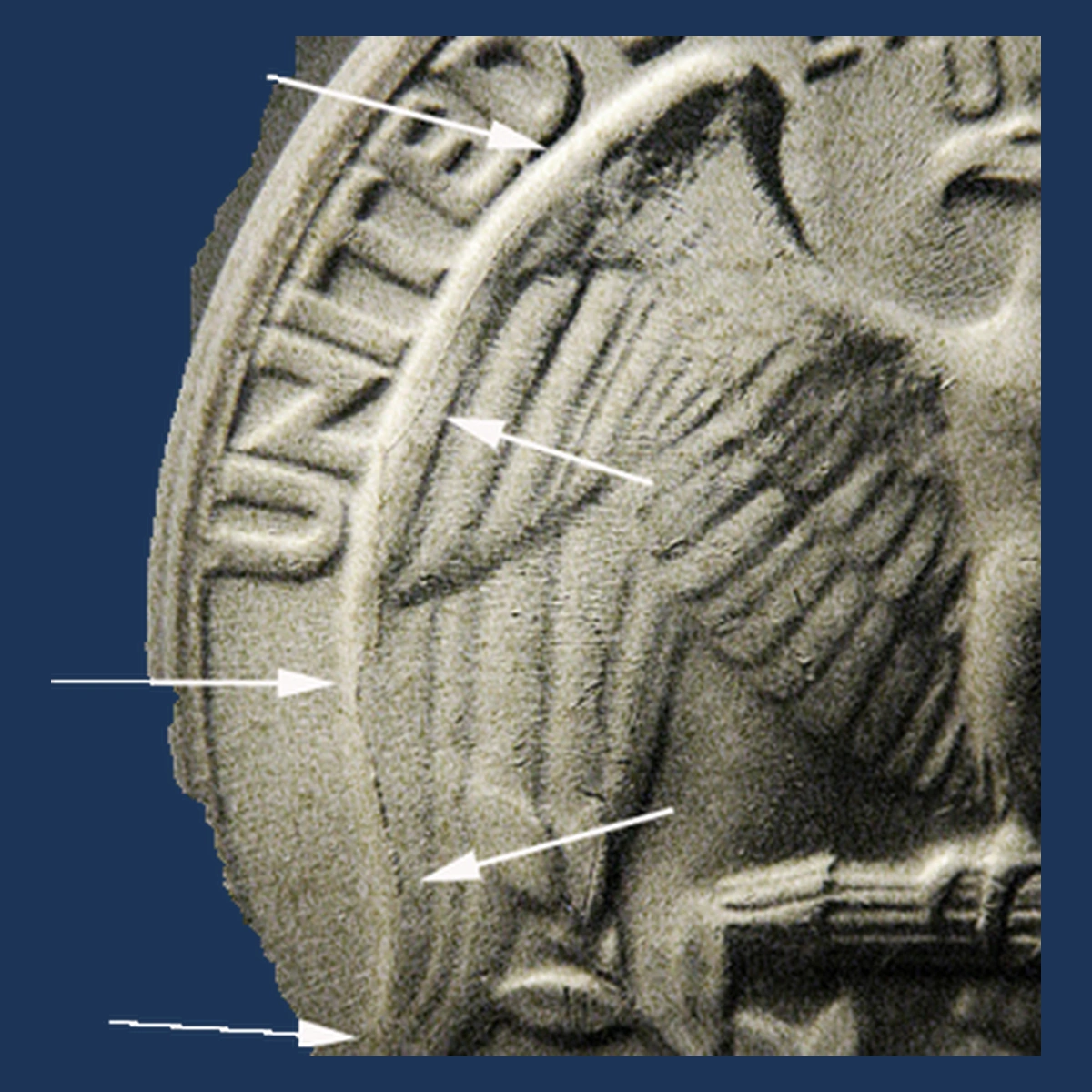
A raised line or lump can form when part of the die, the steel stamping tool, cracks or breaks. Metal enters the damaged area during striking and leaves an extra shape on the coin.
Reports include ordinary cracks, larger breaks, and a letter-gap lump described as BIE. That name refers to an I-like shape appearing between the B and E of LIBERTY, not an added letter deliberately placed in the design.
The exact feature still needs inspection. A scratch, dirt, or metal pushed up by a later hit can imitate a small raised defect.
Estimated Value
Estimate $15–$150 for modest confirmed 1957 raised defects, including clear letter-gap breaks. This is the whole silver coin’s estimated value, with larger or more recognizable features generally attracting stronger interest.
A 1970-D nickel with two raised rim breaks sold for $63 in October 2022. That different coin provides a modest comparison, while a tiny lump that is difficult to distinguish from damage may add little to the value of a 1957 quarter.
How to Identify
Use a 10× magnifier to decide whether the unusual mark is original raised metal or something resting on the surface. Do not pick at it to find out; dirt and residue should not be scraped away from a collectible coin.
For the reported BIE appearance, inspect the gap between B and E rather than assuming every thick letter is a broken-tool variety. An I-like lump needs a natural connection to the struck surface.
Follow any crack across nearby design details and check for a dent beside a suspected raised lump. A later impact can push metal upward, while a genuine broken-tool feature forms as part of the original impression rather than cutting through it afterward.
2. 1957 Washington Quarter Clipped Blank
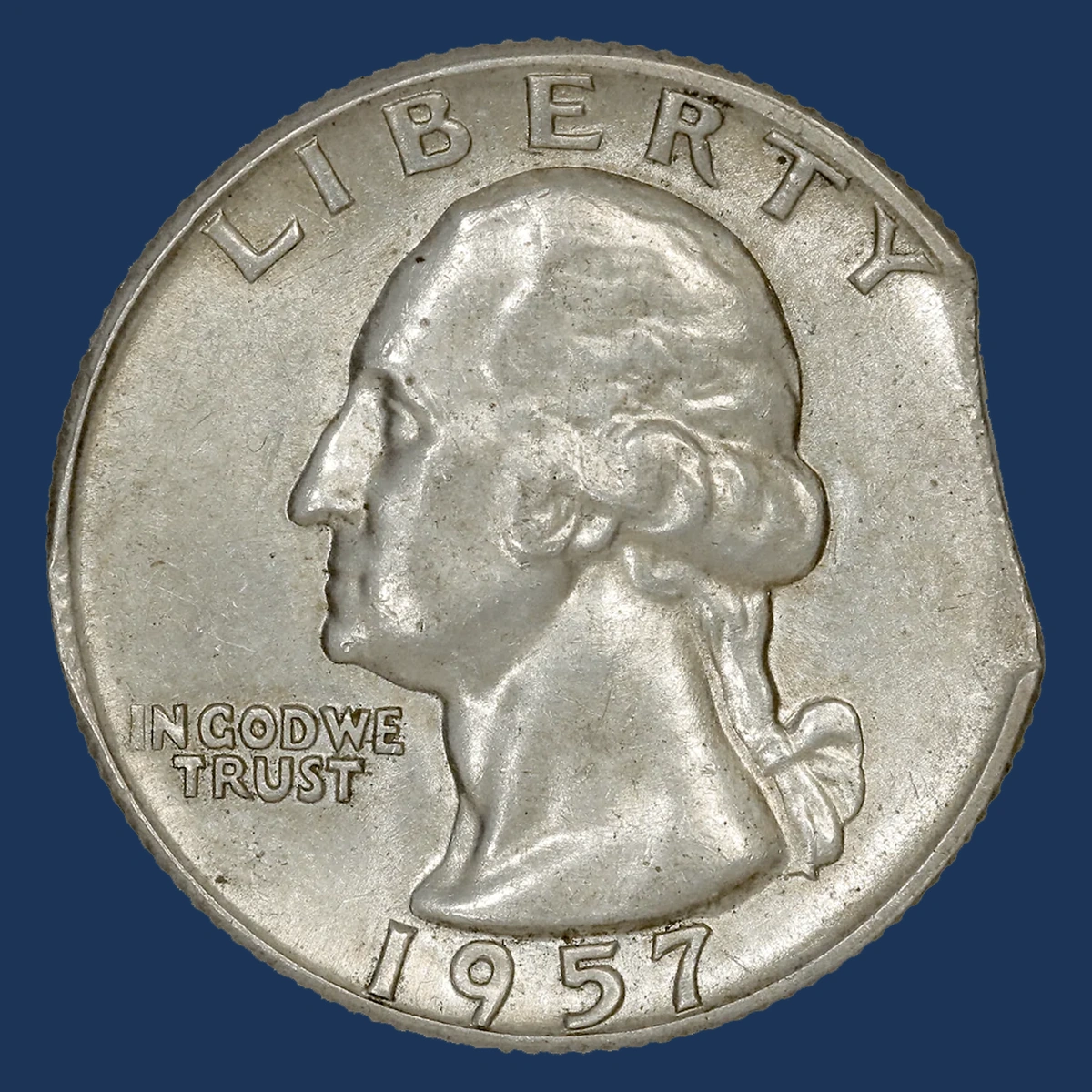
A curved gap can begin before the quarter is struck. If the blank-cutting machine overlaps an earlier hole in the silver strip, the next metal disk can emerge with part of its edge missing.
Washington’s design is then struck around the incomplete outline. The nearby rim or lettering can show how the metal flowed beside the original gap.
This clipped-blank error is reported for 1957. A finished quarter cut or broken later can also have a missing section, so the shape alone does not prove that the problem began at the Mint.
Estimated Value
An estimated $25–$300 covers genuine 1957 curved clips across typical collectible conditions. The missing area, readable date, and absence of later damage influence the price more than the name alone.
For a different-year comparison, a 1978 quarter with three curved clips sold for $180 in March 2025. That later piece has different metal and several gaps, while a modest single clip on a worn silver quarter generally merits a more restrained estimate.
How to Identify
Weigh the coin and record the reading, but do not let a low weight decide the identification. A normal 1957 quarter is about 6.25 g, and both an original clip and a later cut remove silver.
Inspect the curved boundary under a 10× magnifier for a natural transition into the rim and lettering. Fresh saw marks, file strokes, or a sharp channel through finished details point toward alteration.
Use calipers across the remaining full diameter to compare with about 24.3 mm. The surviving edge normally has grooves, while the curved gap needs its own close inspection.
Check whether nearby design and metal flow fit a missing section that existed before striking, rather than a finished coin cut down afterward.
3. 1957 Washington Quarter Partial Collar
An edge step can form when the blank sits only partly inside the steel ring around the press. The held portion stays narrow while the exposed part spreads farther during striking.
This partial-collar error is reported for 1957 quarters. The source describes unusual rim areas on the front and toward the top of the back, but an edge view is needed to understand the shape.
A raised or uneven face rim alone is not enough. Later squeezing, impact, or ordinary uneven striking can affect a rim without producing the two-level edge of a partial collar.
Estimated Value
Estimate $40–$350 for a genuine 1957 partial collar, with a clear edge step and original surfaces supporting the stronger end. A small, hard-to-see edge change may add only modest interest.
For comparison, a 1990-P nickel with a partial collar sold for $99 in June 2025. That different denomination provides a recent price example for the same general mechanism, while the silver quarter’s condition and the extent of its edge feature still need individual assessment.
How to Identify
Look from the side first, rotating the quarter until the suspected edge step becomes visible. The change should separate metal restrained by the ring from a wider section that escaped it.
Compare several points around the circumference rather than judging one dent. A 10× magnifier can show where normal grooves stop or change across the two levels.
Calipers can measure the narrower and wider sections against the ordinary 24.3 mm diameter. Weight may remain near 6.25 g because the metal spread rather than being removed.
Inspect the unusual face rim afterward and relate it to the edge structure. The decisive feature is a naturally formed step around the edge, not a high rim or a flattened spot by itself.
4. 1957 Washington Quarter Broadstrike
A quarter can become wider than normal when its blank is not confined by the surrounding collar during striking. The metal spreads outward as the design is pressed into it.
This broadstrike is reported for 1957. The edge can lack its usual grooves, and the design may sit unevenly inside a broad area of excess metal.
What matters is how much design remains on the coin. A broadstrike can retain the full outer lettering, whereas an off-center strike loses part of that design beyond the blank’s edge.
Estimated Value
Estimate $50–$400 for a confirmed 1957 broadstrike, depending on how far the metal spread and how well the original surface survives. A bold expanded outline is usually easier to sell than a subtle rim difference.
A 1965 Type One blank broadstrike graded PCGS MS61 sold for $192 in June 2024. That later copper-nickel coin is a useful broadstrike comparison, while the 1957 example’s silver composition and own condition must remain part of the assessment.
How to Identify
Compare the whole coin with a normal quarter before focusing on a narrow rim crop. Calipers can show where the outline exceeds the normal diameter of about 24.3 mm, while a scale should remain near 6.25 g.
Trace the outer lettering under a 10× magnifier to see whether the design stays on the available metal. An unevenly placed but complete design can still be broadstruck; missing letters at one boundary require a closer off-center comparison.
Check the edge for incomplete grooves and natural spread, then inspect Washington’s portrait for signs of later flattening. A widened coin with crushed detail is not the same as an originally struck design surrounded by unconfined metal.
5. 1957 Washington Quarter Doubled Front or Back Design
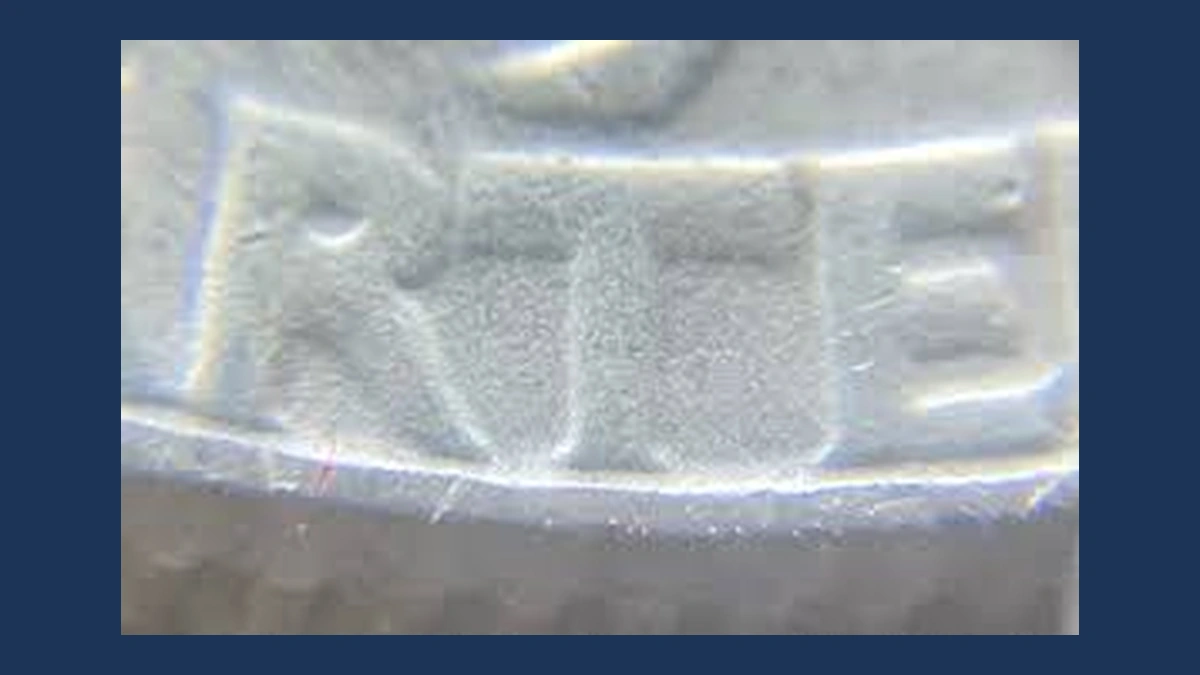
A rounded extra outline can appear when the stamping tool carries a doubled design before it strikes the coin. Collectors call this a doubled die, rather than a coin that received two separate blows.
Reports for 1957 include both front and back features. Denver back doubling is specifically mentioned, with QUARTER DOLLAR and eagle-wing details suggested as areas to inspect.
Those locations do not establish one combined pattern on every coin. The front report and the Denver back report need separate comparisons, and flat shelves beside letters can have a different cause.
Estimated Value
Use an estimated $30–$600 for confirmed 1957 doubled-die quarters, depending on the strength of separation and the exact variety. Slight doubling on a worn coin belongs well below a strong, clearly matched example.
As a related but different-year comparison, a 1969-S FS-101 Proof graded PR67 was reported sold for $312 in March 2018. That known Proof variety provides context without proving a catalog number, grade, or identical price for the reported 1957 features.
How to Identify
Decide which face is being claimed before comparing enlarged photographs. The Denver back report concerns the eagle side, while the separate front report must be judged from its own repeated details.
Under a 10× magnifier, follow the outlines of QUARTER DOLLAR and the wing area for the back claim. Look for rounded separation or split corners that remain visible when the direction of light changes.
A broad, flat shelf or simple thickening can result from movement during striking instead of a doubled tool. Damage can also distort one letter without repeating a consistent pattern elsewhere.
Match several connected details to one documented 1957 example. Do not assemble the strongest front and back features from different photographs into a single imagined variety.
6. 1957 Washington Quarter Struck Through Material
Something between the blank and a stamping tool can leave part of the design weak or absent. The resulting hollow or interrupted area is called a struck-through error.
Reports include this type for 1957 and a specific Proof with the error on the front. That collector coin was graded NGC Proof 68 Cameo, with Cameo describing contrast between the portrait and reflective surroundings.
The grade describes preservation, not the size or value of the error. The blocking substance is not identified here, so the mark should not automatically be called cloth, wire, or retained debris.
Estimated Value
Estimate $40–$700 for confirmed 1957 struck-through errors, allowing for finish, the size of the interruption, and surface preservation. A conspicuous feature on a clean Proof may bring more interest than a weak mark on an ordinary coin.
A different-denomination comparison is the 1986-P nickel struck-through error sold for $204 in June 2023. That result gives a general price reference, while the Proof quarter’s own mark needs to be evaluated independently of its high numerical grade.
How to Identify
On the recorded Proof, start with the front and follow the design into the abnormal area. A letter or portrait detail that weakens at the boundary can show how something blocked the original impression.
Turn the coin beneath soft light and use a 10× magnifier to distinguish a natural depression from a scratch or rubbed patch. Sharp cuts, displaced metal, and nearby polishing marks can suggest damage after striking.
Compare the surface inside the patch with the reflective surface around it, without touching or cleaning either area. The evidence should show an interruption created while the design formed, rather than a missing detail removed from an already finished coin.
7. 1957 Washington Quarter Type B Back Design
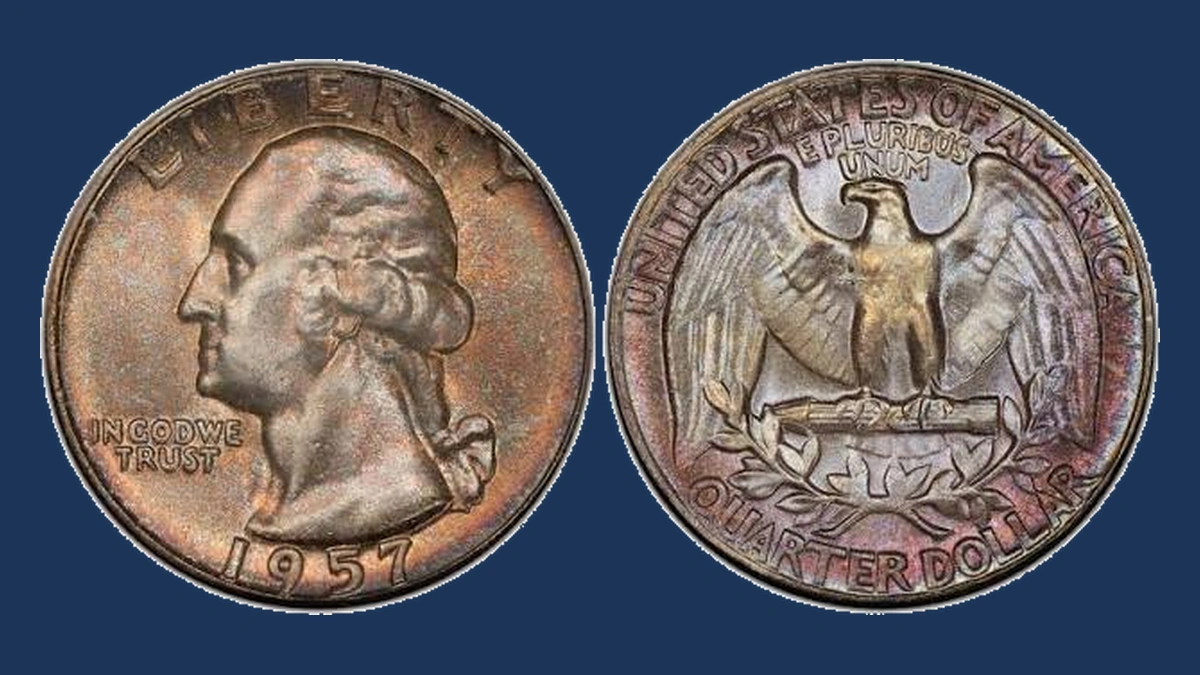
The gap between E and S at the end of STATES can separate the Type B back from the normal circulation design. Type B leaves those letters apart, while the usual version places them very close together.
This back design was intended for Proofs, the specially made collector coins. Some ordinary Philadelphia quarters received it instead, creating the variety known as FS-901.
The recognized 1957 example is an ordinary circulation strike, not simply any Proof with separated letters. Its identity depends on the design and the kind of coin carrying it, rather than a striking accident that changed its shape.
Estimated Value
A typical collectible 1957 Type B has an estimated value of $20–$300, with exceptional examples reaching an estimated $300–$1,000. Much of that difference comes from preservation rather than the spacing between two letters alone.
PCGS records an MS67 example sold for $423 in January 2015. That actual high-grade result is a comparison for a particularly well-preserved coin, while a worn Type B can be much less expensive even when its back is easy to identify.
How to Identify
Look directly at the end of STATES under a 10× magnifier. A clear gap between E and S is the first useful comparison with a normal circulation-design coin.
Keep the entire back visible, and compare the surrounding artwork with a confirmed Type B photograph. A blurred close-up or a hit on one letter can make spacing hard to judge.
Next establish that the coin is an ordinary Philadelphia issue, without a Denver D below the eagle. A Proof with its normal expected back design is not the same circulation-strike variety.
The surface should fit that ordinary identity rather than a polished coin made to resemble a Proof. Verify both the separated letters and the correct coin type before applying the FS-901 name.
8. 1957 Washington Quarter Off-Center Strike
A blank can sit to one side of the striking area, leaving part of the intended quarter design off the metal. The opposite side remains unstruck as a crescent-shaped blank area.
Off-center examples are reported for 1957, without one fixed percentage or direction applying to all of them. A readable date matters because the displaced design may leave only part of the year.
This differs from a broadstrike that keeps its full design within expanded metal. It also differs from a normal coin with an uneven rim on just one face.
Estimated Value
Estimate $100–$1,200 for genuine 1957 off-center quarters with recognizable identity. Greater displacement can add appeal, but surface damage or an unreadable date can reduce it.
As a different-year comparison, a 1965 quarter struck 25% off center sold for $180 in December 2025. That later piece is copper-nickel rather than silver, so its result illustrates interest in a clear displacement while the 1957 coin’s preservation and remaining design still guide the estimate.
How to Identify
Check the surviving year before estimating how much of the design is missing. If the mint-mark area on the back falls outside the struck portion, do not use the absence of a D to identify Philadelphia.
Turn the coin over and compare where each face ends at the edge. The two designs should fit the same misplaced blank, with unstruck metal explaining the lost outer details.
Use a 10× magnifier along the transition to look for hammering or a cut made after striking. Weight should usually remain near the normal 6.25 g because the original blank’s metal is still present.
An original blank crescent has no finished design to remove. Trace that natural boundary rather than accepting any flattened or blank-looking area as proof of an off-center strike.
9. 1957 Washington Quarter Misplaced or Repunched D
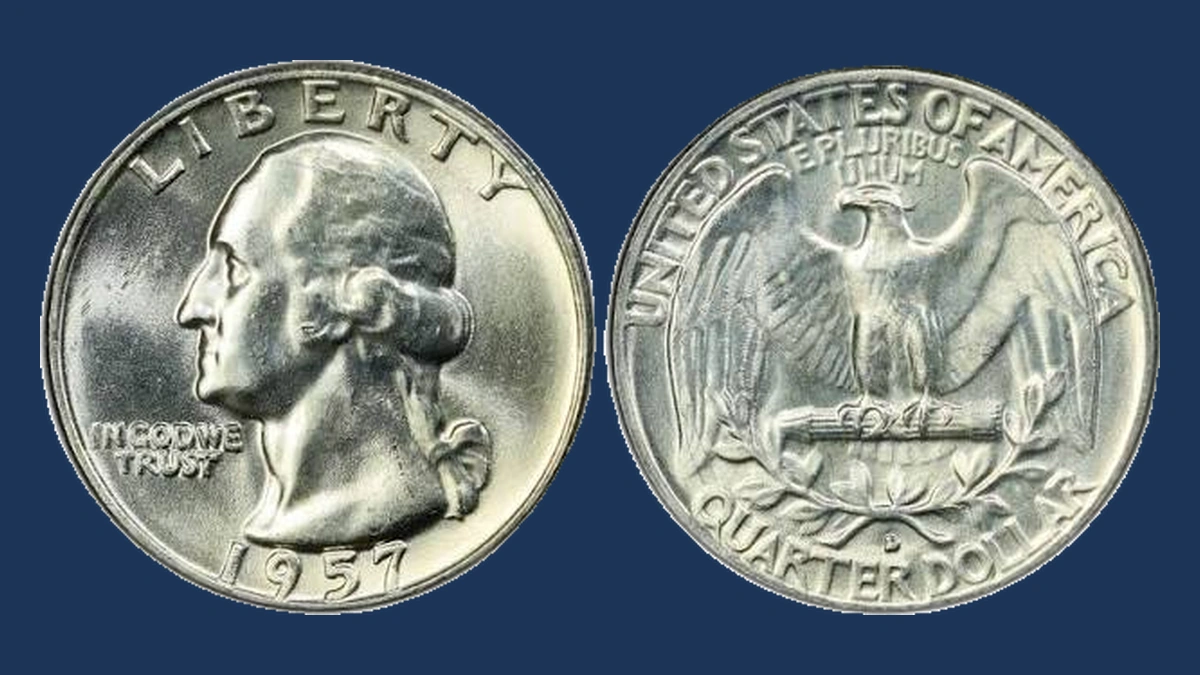
An unusually positioned D and a doubled D are related to the way mint letters were added to stamping tools, but they are different features. One concerns placement; the other concerns repeated punch impressions.
PCGS recognizes a 1957-D misplaced mint mark as FS-501. Separate reports describe repunched D outlines, which need their own matching examples.
The D is on the back below the eagle. Small normal placement differences do not all become the recognized variety, and a scratch near a mint letter should not be mistaken for an extra punch impression.
Estimated Value
Estimate $25–$2,000 across these confirmed mint-mark features, with modest repeated-D examples generally much lower than a superb recognized misplaced-mark coin. The specific variety and grade must stay attached to the price.
PCGS records a misplaced FS-501 graded MS66+ sold for $1,860 in July 2021. That exceptionally preserved example does not set the value of an ordinary worn coin whose D merely looks a little different from another quarter’s mint mark.
How to Identify
Locate the D on the back and compare its position with nearby fixed design details, not just the outer rim. For the misplaced variety, the complete spacing relationship must match a confirmed FS-501 example.
If the claim is repunching instead, inspect the letter under a 10× magnifier for part of a second recognizable D. A short flat ledge or a gouge is not enough.
Change the light to check that the extra shape remains part of the original raised letter. Look nearby for dents that could have pushed metal into its outline.
Keep the two claims separate as you compare photographs. Match either the recognized placement or a documented repeated-letter pattern, rather than treating every variation in a hand-punched D as the same error.
10. 1957 Washington Quarter Re-engraved Tail Feathers
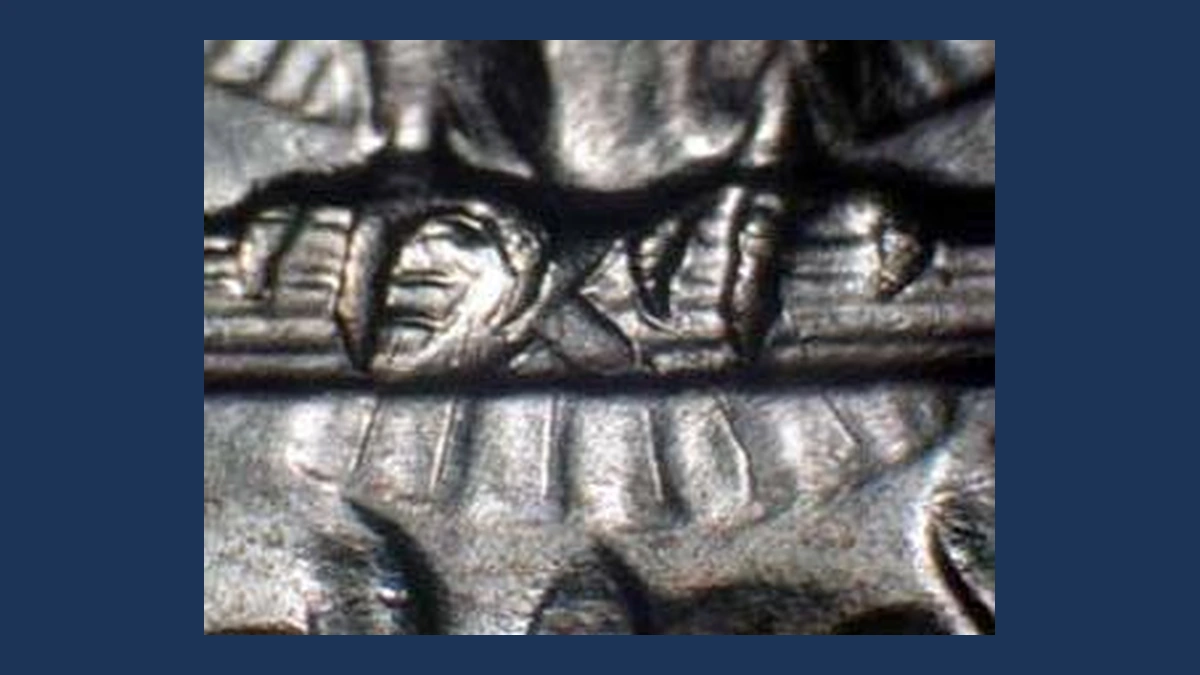
Extra lines in the eagle’s tail can reflect work done to the stamping tool rather than damage to the coin. The 1957-D re-engraved tail-feather variety is recognized as FS-901.
Re-engraving means that details were recut on the tool to change or strengthen the design. Coins made afterward could carry those altered lines along with the rest of the eagle.
The important distinction is where the work happened. Scratching extra feathers into a finished quarter does not make this variety, even if the new lines roughly follow the eagle’s tail.
Estimated Value
Estimate $40–$2,500 for a correctly identified 1957-D re-engraved tail-feather coin, with preservation and the clarity of the altered details strongly affecting value. Worn examples usually sit far below exceptional collector pieces.
PCGS records an MS64 eBay result of $2,200 in October 2021. That recorded sale is a high comparison, not a routine price for every extra line in the eagle’s tail or for an ordinary unconfirmed quarter.
How to Identify
Set a normal 1957-D back beside the candidate and inspect the eagle’s tail under a 10× magnifier. Compare where the extra lines begin and end, not simply which coin has sharper-looking feathers.
Look at the surrounding silver for fresh cuts, bright scraped edges, or damage continuing beyond the tail. Extra detail cut into a finished coin is different from a repeated change made to the stamping tool before it produced the coin.
Turn the light across the tail and compare the actual lines with a confirmed FS-901 photograph, keeping nearby artwork visible. Match their placement and shape rather than identifying every sharply struck eagle or rough scratch as re-engraved feathers.
11. 1957 Washington Quarter Struck on a Silver Dime Blank
Washington’s quarter design looks crowded when it lands on a silver dime blank. The smaller disk cannot hold the full outer design, so letters and other details may run beyond the available metal.
A recorded 1957 example weighs 2.5 g and was graded NGC MS64, an unworn grade. Its metal is still silver, making size and weight more useful first clues than color.
A normal quarter blank begins much heavier at about 6.25 g. A finished quarter cut down to dime size can imitate the outline, but not the natural way the larger design was struck on a small blank.
Estimated Value
The NGC MS64 dime-blank example sold for $1,920 in December 2023. Estimate $800–$3,000 for comparable authenticated pieces, depending on preservation, visible identity, and the amount of recognizable quarter design.
This is a price for the entire wrong-blank coin rather than its silver content. A clipped or cut-down ordinary quarter does not gain the same premium simply because it is small and light or weighs close to a dime.
How to Identify
Start with the scale reading. The recorded coin weighs 2.5 g, compared with about 6.25 g for a normal 1957 silver quarter.
A silver dime blank begins near 17.9 mm across. Record the final width with calipers, allowing for metal spreading when the larger quarter design was struck.
Use a 10× magnifier around the edge to search for filing, fresh cuts, or added metal. Cutting down a normal quarter can make it both small and light.
Now follow the quarter design to where it naturally runs beyond the small metal disk. The surviving date must fit the claimed 1957 identity.
Confirm a silver-dime-sized blank with an original quarter impression and an unaltered boundary, rather than relying on weight alone.
Conclusion
Estimated 1957 quarter error prices run from $15–$3,000, covering small raised defects through rare wrong-blank pieces. Condition can also push recognized design varieties well above ordinary examples.
Compare a specific feature rather than a dramatic name. Check the whole back for Type B, and match the exact D for mint-mark varieties.
If a quarter may have been struck on a dime blank, measure its weight and size and inspect its original edge.