1888 Dime Error List with Pictures

An 1888 dime struck on an unfinished blank has an empty crescent beside its shifted design. For a nearby auction comparison, a different 1886 off-center dime brought $1,955 in July 2004.
This 1888 dime error list also covers extra date digits, a repeated S, peeling silver, and other unusual features. Estimated whole-coin values run from $25–$2,500.
Follow the pictures and simple checks below to see what each feature means.
1. 1888 Liberty Seated Dime Lamination or Peeling Silver
A peeling patch on the front can begin inside the silver alloy. A weak layer separates, leaving a flap or an irregular shallow opening when part of it falls away.
Collectors call this lamination. A seller describes an 1888 dime with a front lamination and rates its condition AU53, meaning light wear.
That is a seller’s description of a coin outside a grading holder. The listing does not establish its mint or whether it is an ordinary strike or Proof, a specially made collector coin.
Estimated Value
The 1888 front-lamination listing asks $75; this is not a completed-sale result. An estimated $30–$150 suits modest examples with comparable wear and an identifiable natural separation.
An intact flap can explain the defect more clearly than a rough missing patch. Cleaning, corrosion, and damage beside the peel affect the whole coin’s appeal, while an independently assessed grade would make comparisons easier.
How to Identify
Leave any attached layer alone. Lifting it can destroy the very connection that explains how the surface separated.
Use a 10× magnifier and low side lighting to examine where sound silver meets the opening. Look for a thin layer continuing into the coin rather than deep scrape marks crossing the design.
A scale can help if silver has fallen away: the normal dime weighs 2.50 g. A retained flap may leave the weight close to normal.
The listing places the flaw on the front but gives no precise position. Examine the actual boundary, where original struck detail may continue across the separated layer.
2. 1888 Liberty Seated Dime Clashed Designs
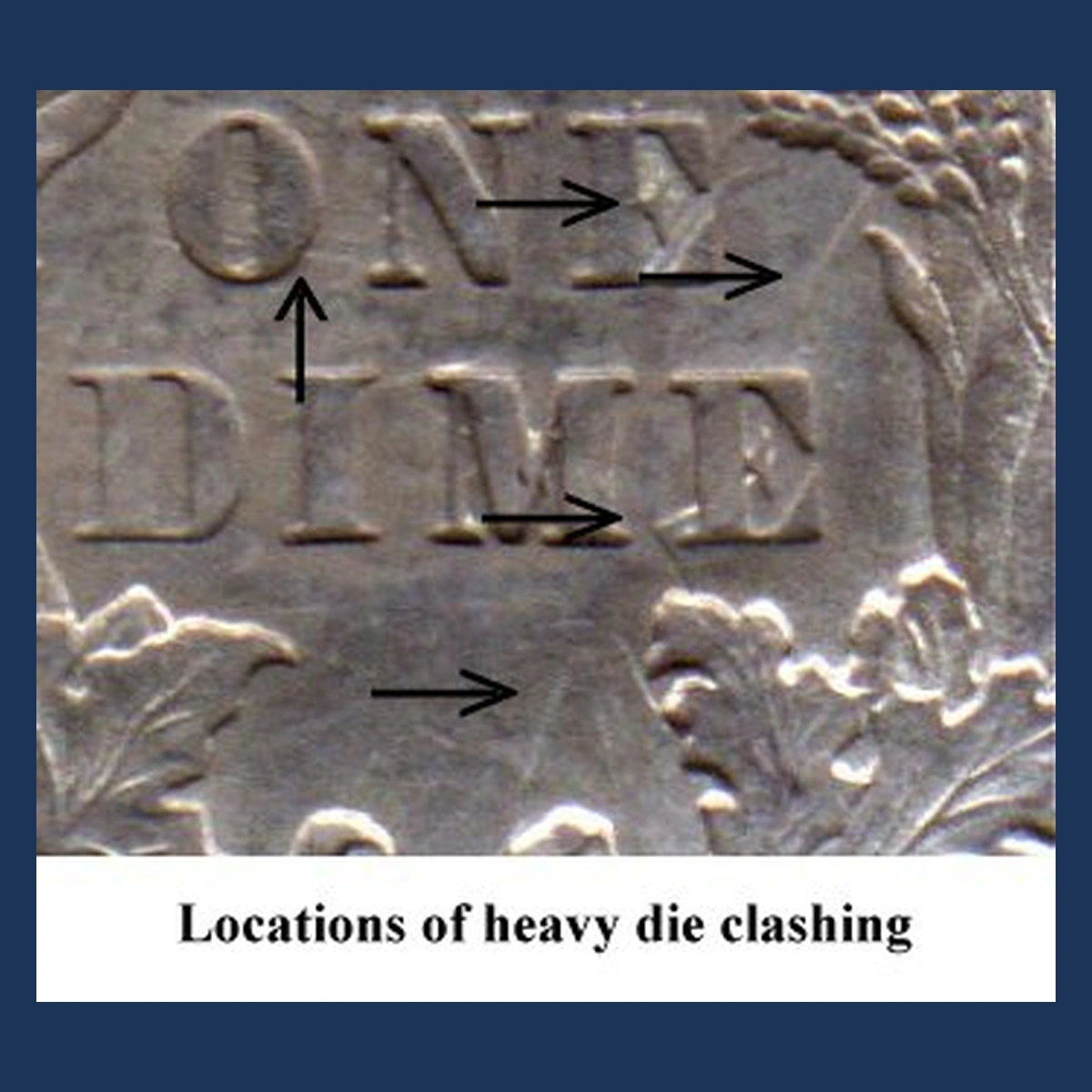
Faint shapes that seem to belong on the other face can appear beside Liberty or the reverse wreath. They form when the stamping tools meet without a blank between them.
A die is one of those steel tools. Contact can mark its surface, and later coins can carry traces of the opposite design.
Gerry Fortin’s 1888 gallery records several Philadelphia examples with clashed designs on both faces. The marks vary between examples, so a random line near Liberty is not enough to identify a particular coin.
Estimated Value
Visible but modest clash marks fit an estimated whole-coin range of $40–$200 for worn through lightly worn examples. This estimate compares similar Seated dime clashes, rather than claiming a recorded sale for every 1888 pattern.
Collectors need to see what the extra lines represent. Distinct outlines beside otherwise clear design are more convincing than faint marks lost in wear or cleaning scratches; an unworn coin may also carry substantial value from condition alone.
How to Identify
Lay enlarged photographs of the front and back beside each other. Search for a recognizable piece of the opposite design, not simply an extra raised line.
Light from one side, then the other, using a 10× magnifier to follow the faint shape. Scratches may have a hollow center or cut through nearby details without following any opposite-side design.
The position of Liberty and the wreath matters more than the coin’s weight for this check. Compare the suspected outline with a photographed 1888 clash example, keeping the full coin visible.
One shared curve is a starting clue. Several connected features that fit the opposite design make the explanation much stronger.
3. 1888 Liberty Seated Dime Doubled Front or Back Design
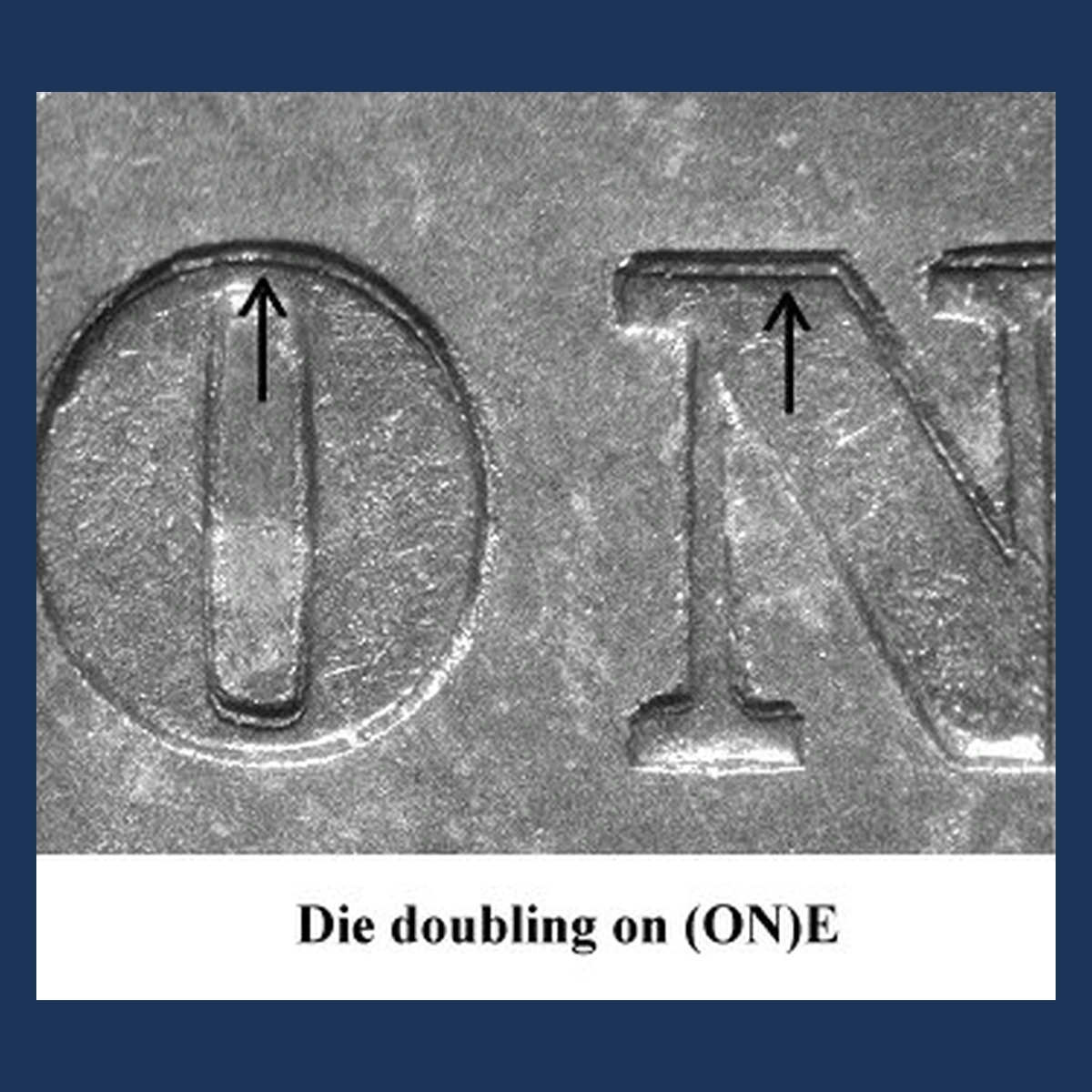
The right side of Liberty’s shield can show an extra outline on a Philadelphia dime. Fortin’s gallery describes this specific doubled shield edge for 1888.
The San Francisco gallery separately lists a doubled reverse design. Those are different coins, and the S example does not automatically share the Philadelphia shield feature.
A doubled die carries a repeated design in the stamping tool itself. Each coin struck from it can repeat that pattern without receiving two separate blows, unlike a double-struck coin with overlapping whole pictures.
Estimated Value
Allow an estimated $50–$350 for a modest, clearly matched doubled-design example in worn to attractive lightly worn condition. A nearby comparison is an 1889 Philadelphia F-104 dime graded MS63, meaning unworn with noticeable marks.
That coin brought $223 in 2017 and combined a repunched date with reverse doubling. Its whole-coin price is a comparison, not two separate premiums, and it does not establish a price for the different 1888-S pattern.
How to Identify
The mintmark separates the two checks. With no S below the reverse wreath, examine the right shield edge on the front through a 10× magnifier.
Look for a second rounded edge beside the main outline, then compare it with a normal shield. A low, flat shelf may come from movement during striking instead.
For an S-mint coin, use photographs of the listed 1888-S doubled reverse. The year listing alone does not locate the precise repeated letters or wreath details.
Do not transfer the Philadelphia shield feature to the S coin.
A matching repeated shape should stay visible as the light moves. Mere thickness or one bright reflection does not show a second design.
4. 1888 Liberty Seated Dime Repunched or Misplaced Date Digits
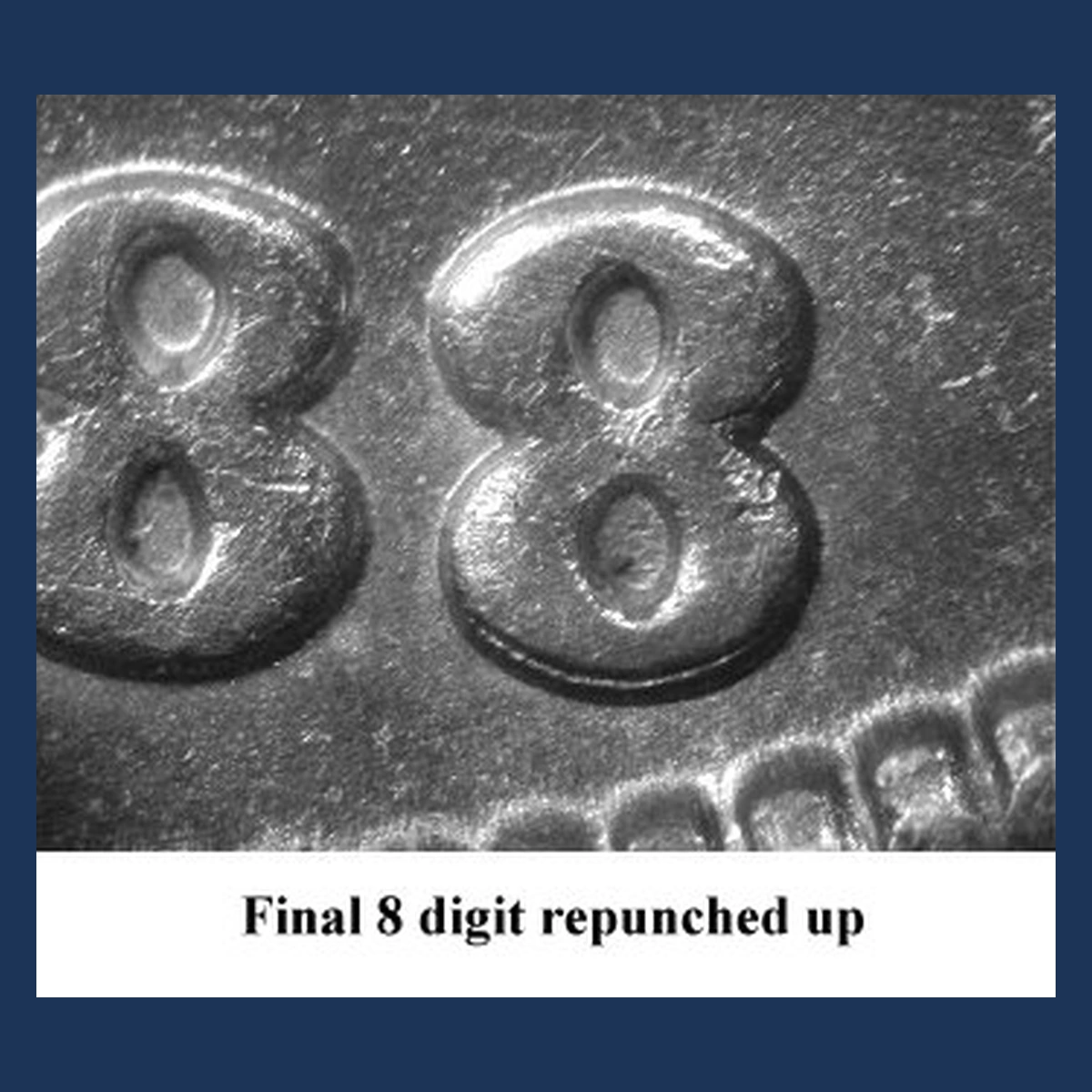
Extra pieces of a 1 or 8 may sit beside the date or higher in Liberty’s design. Their location helps explain what happened when the date was punched into the tool.
A repeated punch near the intended date can leave extra serifs or loops. A misplaced punch can instead leave a digit in the gown, shield, base, or near the ribbon end.
The 1888 variety gallery illustrates several Philadelphia patterns. Separate San Francisco examples include an 8 in the gown or base; these positions do not all belong to one dime.
Estimated Value
Estimated values of $40–$500 cover recognizable date-punch varieties with wear through attractive lightly worn surfaces. A tiny digit remnant can be difficult to see, while a strong misplaced curve is easier to show.
An unworn 1886 repunched-date dime graded MS66+ was described in a 2015 auction catalog as recently selling for $1,116. That exceptional whole-coin comparison includes high-grade value and should not be treated as a standard price for every extra 1888 digit.
How to Identify
Choose the suspected digit’s location before increasing magnification. Near the date, compare the 1’s ends and base, the lower 8 loops, and the space beneath the last 8.
Use a 10× magnifier to trace a possible extra stroke into a recognizable curve or straight digit edge. Higher in the design, compare the gown, shield, and base with a normal same-year dime.
A misplaced digit can blend into those details, so keep nearby folds or shield lines in the photograph. Check the reverse for an S before matching a catalog picture, since the two mints have different examples.
An extra 8-shaped curve is relevant here. It does not by itself establish an 1888-over-7 date.
5. 1888 Liberty Seated Dime Repunched S Mintmark
A second S outline can peek from the medium-sized mintmark below the wreath. The main letter and the smaller remnant began with separate impressions of the mintmark punch.
The punch entered the stamping tool more than once in slightly different positions. Coins struck afterward inherited both impressions, creating what collectors call a repunched mintmark.
Fortin lists the 1888-S Medium S Over S variety. The name describes the repeated letter, not two coins struck together, and a naturally broad S should not be mistaken for the smaller repeated outline.
Estimated Value
A matched S-over-S example supports an estimated $80–$600 whole-coin range, depending on wear and the visibility of the repeated letter. The upper end assumes clear details and appealing original surfaces.
This is an estimate for a recognizable Seated dime mintmark variety. A weak possible curve carries less weight than a strong match, while a high-grade 1888-S coin can command extra money for condition even without the repunched letter.
How to Identify
Find the single S below the wreath first. Photograph the whole reverse so the letter remains tied to the 1888-S design.
Now enlarge the mintmark with a 10× magnifier or a close photograph. Trace the main S from its top curve to its lower curve.
The suspected second stroke should fit part of another S. Compare it with the Medium S Over S photographs rather than assigning a direction from a shadow.
Change the light angle to inspect the stroke’s shape and height. A scratch, surface bump, or flat shelf can imitate an extra letter in one photograph.
The useful match is the secondary curved outline beside the complete main S, not simply an unusually wide mintmark.
6. 1888 Liberty Seated Dime Die Cracks and Rim-Connected Breaks
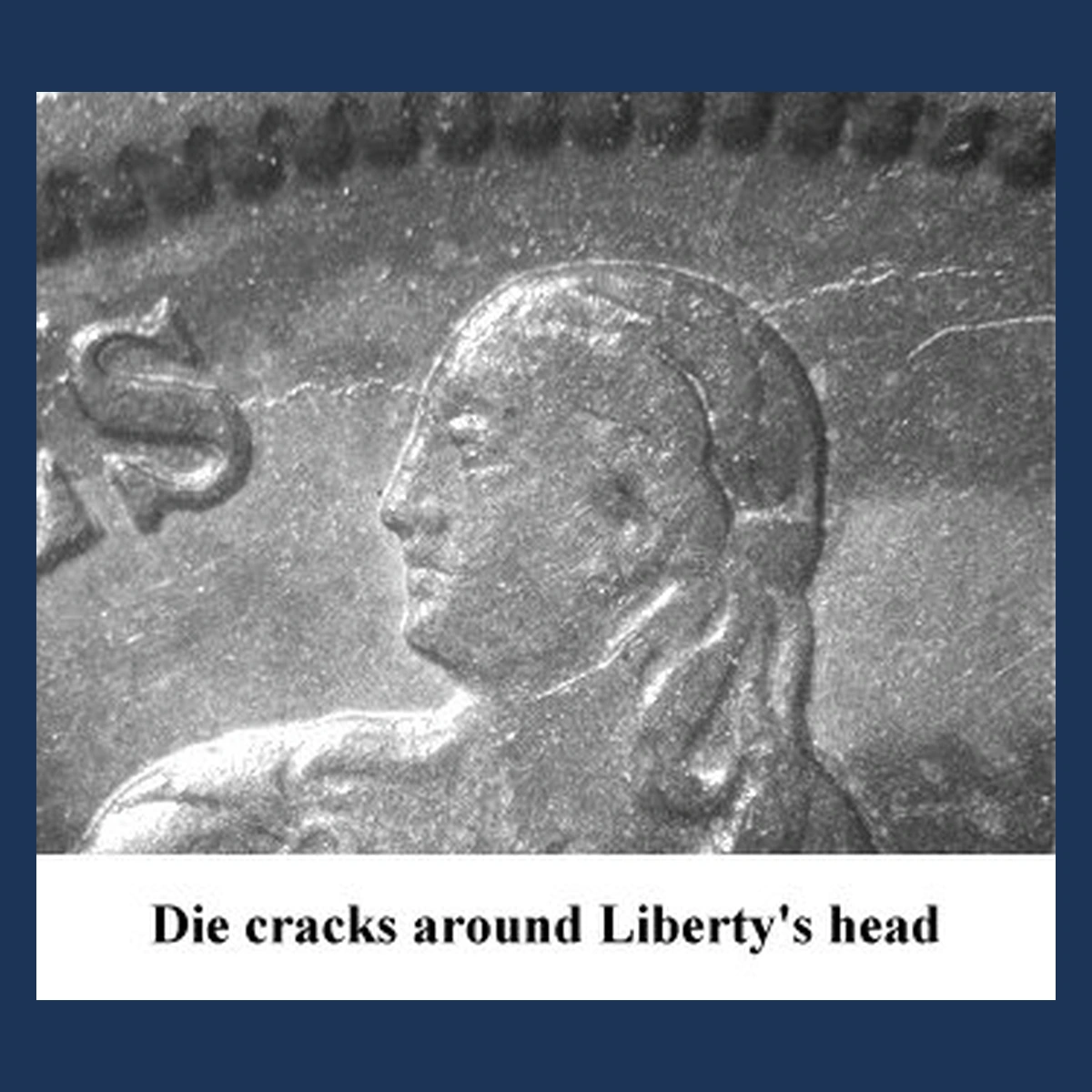
A narrow raised line can cross Liberty or the wreath when silver fills a crack in the stamping tool. If a piece breaks away at the tool’s edge, a larger raised patch can join the rim.
That rim-connected patch is called a cud. The Philadelphia gallery lists one on the reverse between 9 and 10 o’clock.
Other Philadelphia examples have head or reverse cracks. San Francisco examples include a line from the right end of Liberty’s base toward the rim and a separate reverse crack near 9:30.
Estimated Value
Small visible cracks have an estimated whole-coin range of $25–$150, with preservation and the underlying dime’s value setting much of the price. A clearly formed rim cud can support an estimated $150–$700.
The larger estimate assumes an original connected break, not impact damage at the edge. Its size, surviving nearby detail, and visibility in ordinary lighting matter more than a seller simply calling any raised bump a rare cud.
How to Identify
The reverse cud has a specific place to inspect: the left rim between 9 and 10 o’clock. Under side lighting, follow the raised patch into the rim and examine the nearby wreath.
Use a 10× magnifier to check for a natural continuous surface. A dent may push metal upward, but it can also leave crushed edge grooves, scrape marks, or a hollow beside the raised metal.
For the narrower cracks, follow the entire line instead of examining one bright point. Compare the Philadelphia head or reverse pattern separately from the San Francisco base-to-rim and reverse examples, since they belong to different tools and coins.
7. 1888 Liberty Seated Dime Rotated Reverse
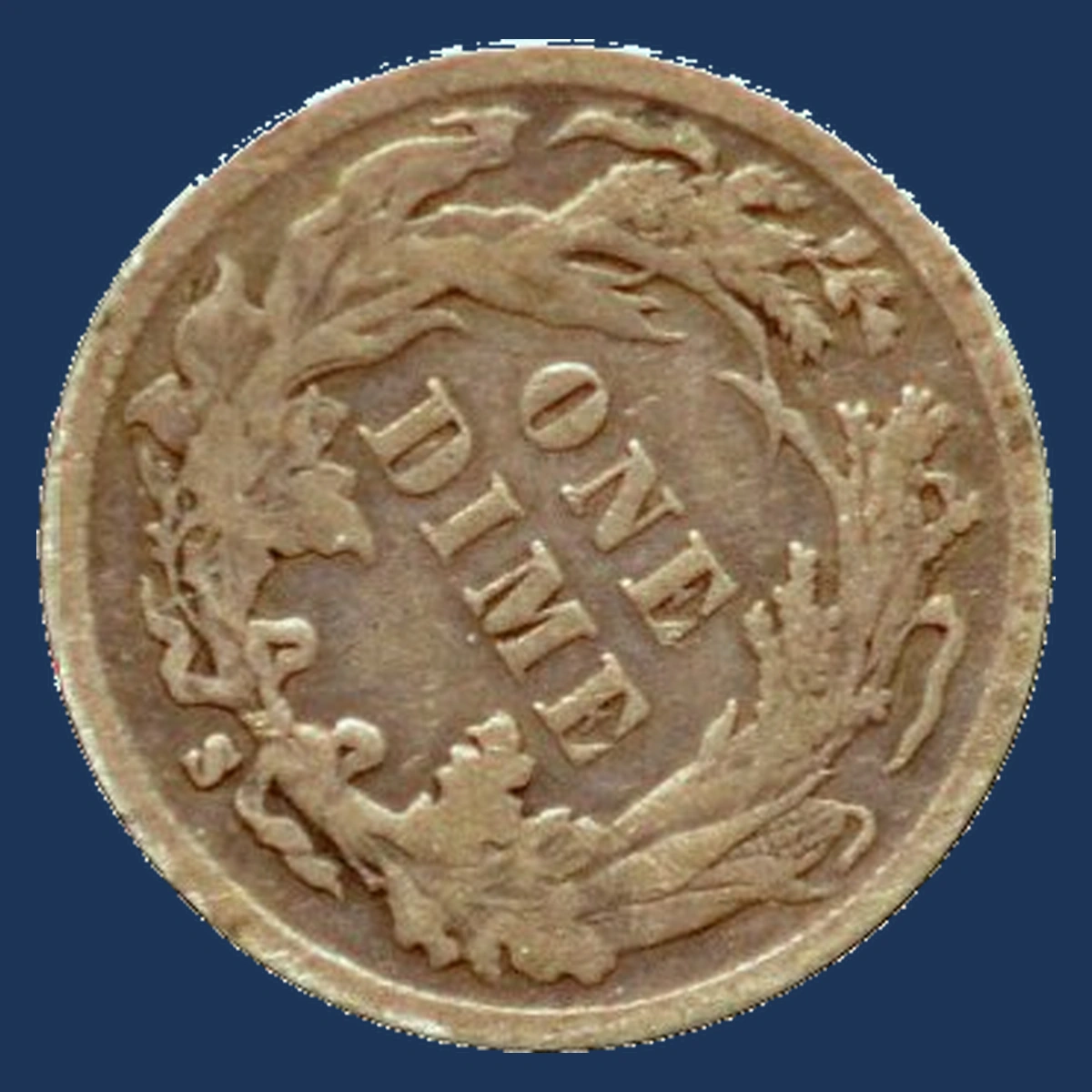
The wreath should line up normally after the upright coin is flipped from top to bottom. On the recorded 1888-S example, the reverse is turned 55 degrees left instead.
Fortin’s rotation index credits this discovery to Jason Feldman in 2013. The angle belongs to that example, not every dime made in San Francisco that year.
A stamping tool sat at the wrong angle relative to its partner. Both designs can look sharp and complete, so a photograph of either face alone may hide the feature entirely.
Estimated Value
For a verified example with a substantial rotation like 55 degrees, an estimated whole-coin range is $100–$800. This compares similar rotated Seated dimes rather than treating the discovery report as an auction record.
Wear, surface quality, and the strength of the demonstrated angle affect the comparison. A slight tilt can be far less noticeable, and a seller’s sideways photograph does not show that the two coin designs actually sit at different angles.
How to Identify
Hold Liberty upright, with the date level. Turn the coin top to bottom without also twisting it sideways, then observe the wreath’s position.
A transparent holder with straight reference lines can make this easier. Keep the holder still and turn the whole holder in the same way, rather than opening a grading case.
Use a protractor against a straight photograph to measure the reverse’s departure from its normal upright position. Record the direction as well as the angle.
The listed 1888-S example turns 55 degrees left. Repeat the flip several times: the same wreath tilt should return each time, even when the camera is kept straight.
8. 1888 Liberty Seated Dime Reported Broadstrike Candidate
A broadstrike can leave a complete picture surrounded by an unusually wide, spread-out margin. It happens when the collar, the metal ring controlling the blank’s edge during striking, does not contain it normally.
The silver can flow outward under pressure. The edge grooves may also fail to form as expected.
A year guide discusses this category for 1888 without establishing a specific confirmed example. A candidate therefore needs its full design, diameter, and edge examined together; an uneven border on its own can have a different explanation.
Estimated Value
If an 1888 dime is confirmed as a genuine broadstrike, estimate $300–$1,500 for worn through attractive examples. This conditional comparison uses the market for broadstruck Seated silver dimes, not a documented sale of an identified 1888 specimen.
A visibly expanded margin with complete design makes the error easy to understand. Altered edges, polishing, or a partly missing design would change the comparison and may point to another process altogether.
How to Identify
Calipers can record the widest and narrowest diameters of a loose candidate against the normal 17.91 mm. An enlarged measurement is only a clue, because pressure or hammering after minting can also spread a coin.
Inspect the entire edge with a magnifier, looking for disturbed grooves or signs of later flattening. Then check whether the front and back designs are complete.
A scale reading near the normal 2.50 g helps show whether the original silver remains. Do not remove a certified coin from its case just to measure it.
The key combination is original outward metal flow, abnormal edge formation, and complete designs rather than a rim that merely looks wide.
9. 1888 Liberty Seated Dime Off-Center Strike on an Unprepared Blank
The documented 1888 Philadelphia dime leaves part of its silver blank beside the shifted design. PCGS graded the coin AU55, indicating light wear, and described a 10% off-center strike.
It was also struck on a Type One blank. Here that term means a disc that had not received its raised rim before striking.
It does not mean an earlier Liberty Seated design. The unfinished blank and the displaced strike belong to the same coin, so the plain crescent and remaining edge help explain one combined minting mistake.
Estimated Value
A genuine dated 1888 example of this kind fits an estimated $500–$2,500 range. For comparison, an 1886 dime struck 5% off center sold for $1,955 in July 2004.
That different coin was PCGS MS62, with no circulation wear but noticeable marks and cataloged residue. The 1888 AU55 coin has light wear and a different blank history, so the comparison supports a broad estimate rather than an identical price.
How to Identify
The plain crescent deserves as much attention as Liberty’s shifted picture. Under a 10× magnifier, look for original blank texture rather than scratches from removing the design.
Compare full photographs of both faces. Their displaced designs should fit the same blank, with part of the intended picture falling beyond its edge.
The AU55 example’s Type One label concerns its unfinished rim. Inspect that edge against a normally prepared blank without confusing the term with a different historical dime design.
For a loose coin, record its weight with a scale against 2.50 g. Displacement alone does not remove silver.
The readable 1888 date beside the unstruck crescent ties the visible minting error to this year.
Conclusion
Estimated values span $25–$2,500, from modest tool cracks to an off-center strike with a readable date. The 1888 peeling-silver example has a seller’s asking price, while the $1,955 auction comparison belongs to 1886.
Look closely at the feature that changes the coin. An extra curved digit, a repeated S, or original blank metal tells you more than an unusual-looking surface alone.