2003 Quarter Error List with Pictures

An Arkansas quarter sold for $5,640 on August 16, 2024, even though its date missed the metal completely. Its state design identified the year, and an older dime design helped explain the error.
Most 2003 quarter errors are less dramatic: a raised line, an uneven edge, or a small area of missing detail. Estimated values in this guide span $2 to $8,000.
Explore the five states below, with close-up checks for both modest finds and major striking mistakes.
1. 2003 State Quarter Uneven Rim Burr
A reported Philadelphia Illinois quarter has a rough projection along its rim. This kind of sharp, uneven lip is often called a burr.
The report names the shape but does not establish when it formed. Metal can develop an irregular edge during manufacture, and later impacts can also push a thin lip outward.
That difference matters because an ordinary damaged rim is not a valuable mint error. The surrounding design and the base of the projection need examination.
A side photograph can reveal more than its shiny appearance from above.
Estimated Value
For a confirmed mint-made rim irregularity, allow an estimated $5 to $75. A tiny rough edge has limited display value, while a larger intact projection is easier to appreciate.
A later scrape or impact may leave the coin worth only ordinary quarter value. It should not receive the error estimate merely because the lip feels sharp.
Condition around the feature matters as much as its height, particularly when dents suggest later damage.
How to Identify
Avoid running a finger along the rim. A sharp projection can scratch skin or bend under pressure.
Place the coin so the edge can be photographed without squeezing it. Show where the lip joins the rim and include the adjacent lettering.
Look for an impact dent opposite the raised metal. A blow can push material outward and create a convincing but later-made burr.
Compare several lighting angles to distinguish a thin attached lip from a reflection along the edge. Check whether the neighboring design is crushed or scraped.
Until its origin is established, keep the quarter intact rather than filing the projection flat or assigning it a specific minting cause.
2. 2003 State Quarter Misaligned Design
An Alabama report describes a Denver quarter with a displaced image and a distorted edge. The image position and edge damage need to be judged separately.
A genuine misaligned die occurs when one steel stamping tool sits out of place. One face can move toward the edge while the opposite face stays centered.
A battered rim can instead make the design appear uneven after minting. That is why a chewed-looking edge alone cannot establish this error.
The reported coin needs a straight-on comparison of both faces.
Estimated Value
A clear one-face misalignment has an estimated value of $5 to $100. Small differences in rim width generally attract less interest than an obvious shift crowding part of the lettering.
The Denver Alabama report also describes edge distortion, which may reduce appeal or indicate later damage. Judge that condition before using the higher end.
The range concerns a genuine displaced-tool strike, not the value of a normal quarter with a damaged rim.
How to Identify
Ignore the worst dent at first and compare the circular design boundaries on both faces. Is the portrait or state scene shifted across the entire face?
A camera held at an angle can create a false difference in rim width. Take new photographs with the lens directly above the flat coin and compare the gaps around the lettering.
If both designs miss the same part of the blank, consider an off-center strike instead of one misplaced tool. If only a dent changes the outline, later damage may explain the appearance.
Finally return to the distorted edge and look for crushed details or pushed metal. The unaffected portions should still support the claimed one-face displacement.
3. 2003 State Quarter Partial Collar Strikes
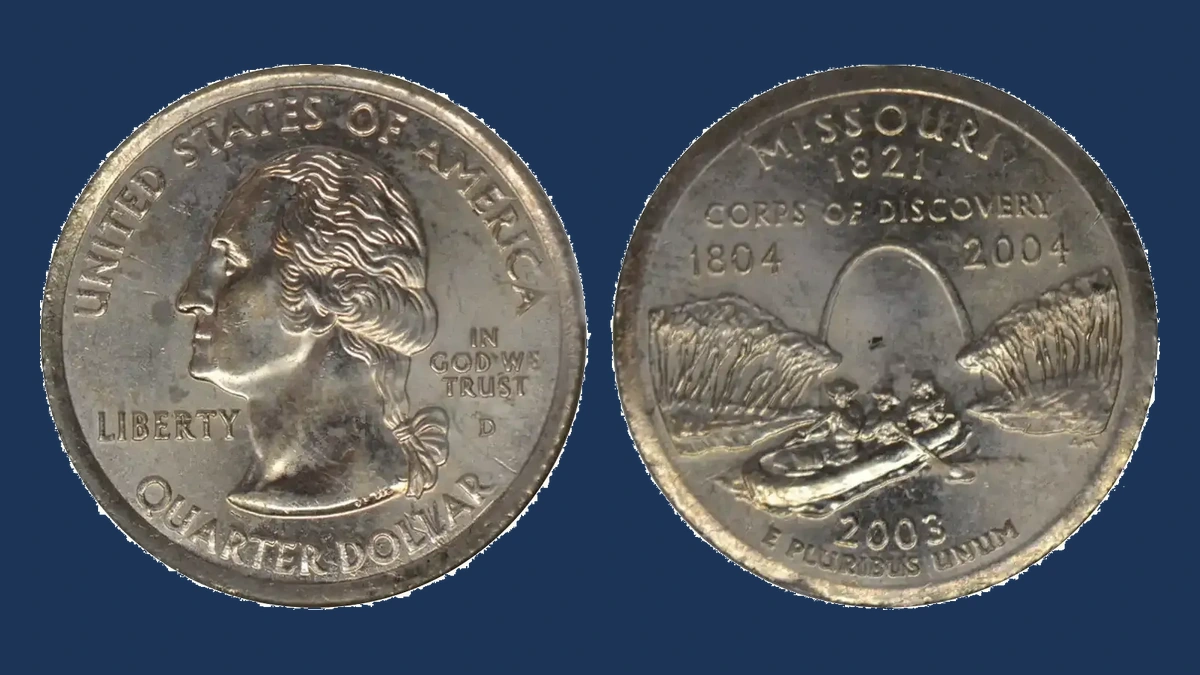
A step along the edge can mark where the collar contained only part of the coin. The collar is the ring that limits sideways metal flow and forms the quarter’s edge grooves.
Philadelphia Illinois, Alabama, Missouri, and Arkansas examples appear in a specialist dealer list. A Denver Missouri example is also reported separately.
Part of the edge stays grooved while another portion can spread outside the ring. Collectors sometimes call the result a railroad rim.
The nickname describes an edge structure, not a line printed within the state design.
Estimated Value
Historical dealer asking prices were $15 for Philadelphia Alabama and $25 each for Illinois, Missouri, and Arkansas. They provide a modest starting point for these particular edge errors.
A practical estimated range is $15 to $150, depending on visibility and preservation. A strongly stepped, clean edge can be more appealing than a slight irregularity.
The Denver Missouri report needs its own comparison; it is not the same coin as the Philadelphia listing.
How to Identify
View the edge around the whole circumference, rather than judging one photograph of the front. The interesting feature lies between the grooved band and the expanded portion beside it.
Rotate a loose coin gently while keeping the light fixed. Watch whether the height of the step changes as you move around the rim.
File marks, flattened lettering, or a local dent can indicate later alteration. A genuine collar effect should make sense as part of the coin’s original shape.
Photograph both faces after the edge view, including the mint letter. This keeps the four Philadelphia state examples separate and prevents a Denver Missouri coin from inheriting the wrong comparison.
4. 2003 State Quarter Coppery Color from Heat Treatment
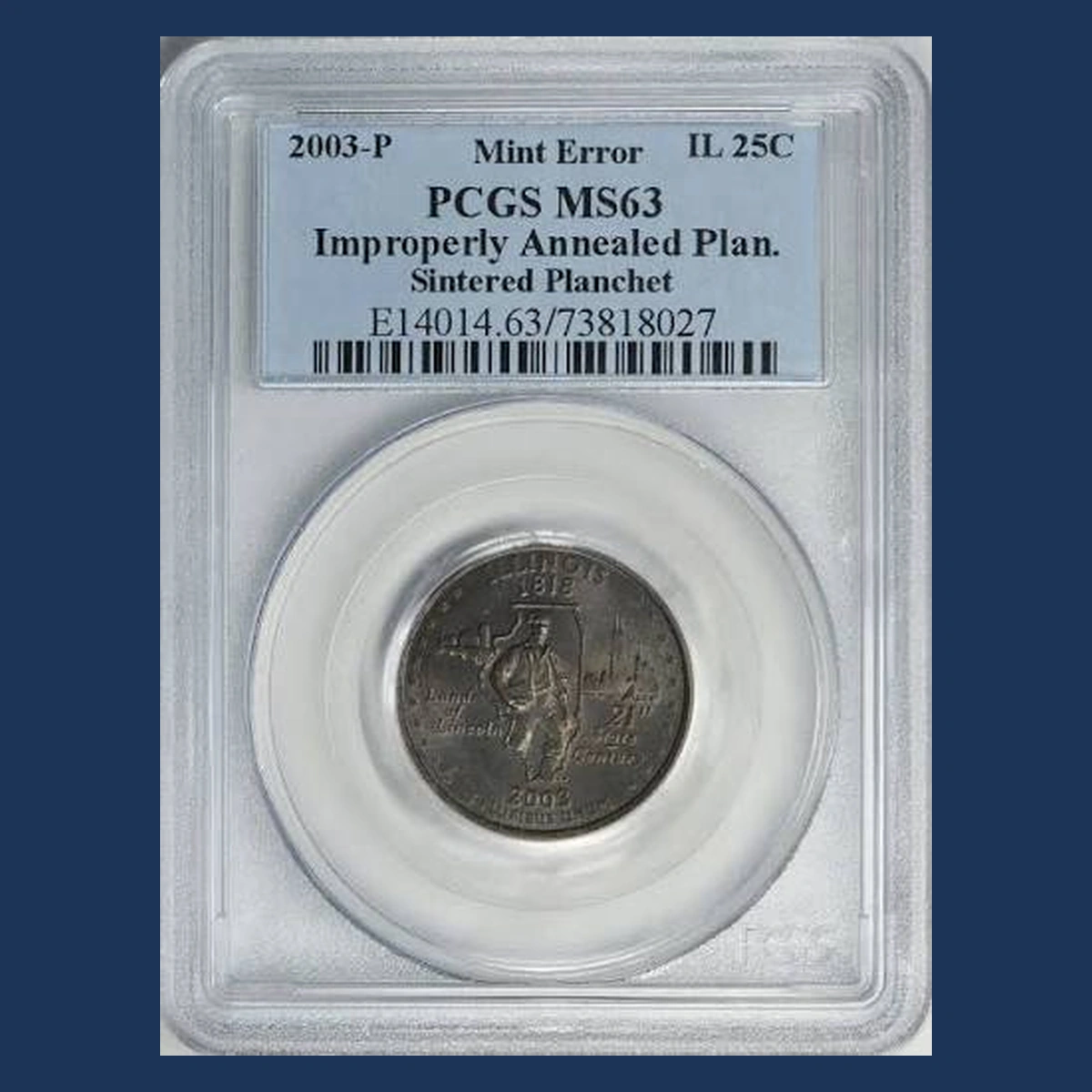
A coppery film can cover a quarter without an outer layer being missing. Collectors often call this appearance copper wash.
Reports include Philadelphia Maine, Arkansas, and Denver Missouri coins. Heat treatment during manufacture is one proposed explanation for the unusual surface color.
The process can change how copper appears at the surface while leaving the layered blank intact. It differs from exposing the copper center by losing a layer.
Later staining or heating can produce similar colors, so the appearance needs more than a color-based identification.
Estimated Value
Confirmed mint-made color changes of this kind have an estimated range of $20 to $200. An even, clearly unusual appearance on a well-preserved coin supports stronger interest.
A dark, stained, or environmentally damaged quarter may receive no error premium. The same caution applies to a coin heated after it left the Mint.
Use the range for identified manufacturing-related color, rather than applying missing-layer prices to a copper-colored coin with normal structure.
How to Identify
Look at the edge before studying the colored faces. Can you still see the normal layered structure, including pale outer bands beside the copper center?
For a loose coin, record its weight against the normal clad standard of about 5.67 grams. A near-normal weight supports intact metal but does not prove the color formed at the Mint.
Compare protected areas with exposed surfaces for residue, uneven stains, or heat damage. Photographs should show whether both faces share the color or only one patch is affected.
Do not polish away the film. A material specialist can examine its surface while the original color remains, helping separate a manufacturing effect from later treatment.
5. 2003 State Quarter Broadstrikes
The design can sit off to one side while still fitting entirely on the coin. If the metal spread outside the collar, that combination can be an uncentered broadstrike.
A specialist dealer listed Philadelphia examples from Alabama, Maine, Missouri, and Arkansas. They should not automatically be renamed off-center strikes.
The difference is whether the main design remains on the metal. A broadstrike expands beyond the usual outline because the surrounding ring did not contain it properly.
Its border and edge therefore need to be viewed together.
Estimated Value
The dealer’s historical asking prices were $30 for Alabama, $40 for Maine and Missouri, and $60 for Arkansas. These were prices offered to buyers, rather than reported auction results.
Use an estimated $30 to $300 range for comparable simple broadstrikes. More conspicuous spread and cleaner surfaces can support the higher end.
The word uncentered does not by itself create a large premium; the amount and quality of visible expansion still matter.
How to Identify
Place a normal quarter beside the candidate and compare their outlines. A loose broadstrike should show measurable expansion beyond the usual 24.26-millimeter diameter.
Trace the outermost letters and state details. If the main design fits despite its uneven placement, an uncentered broadstrike remains a reasonable explanation.
Now inspect the edge for the collar’s effect. A broad empty area with part of the intended design missing calls for an off-center comparison instead.
Damage can also flatten and enlarge a coin. Check whether the lettering is crushed, the faces are scraped, or the edge has been worked.
Include the full border in photographs so its relationship to the complete design stays visible.
6. 2003 State Quarter Doubled Designs and Mint-Letter Lookalikes
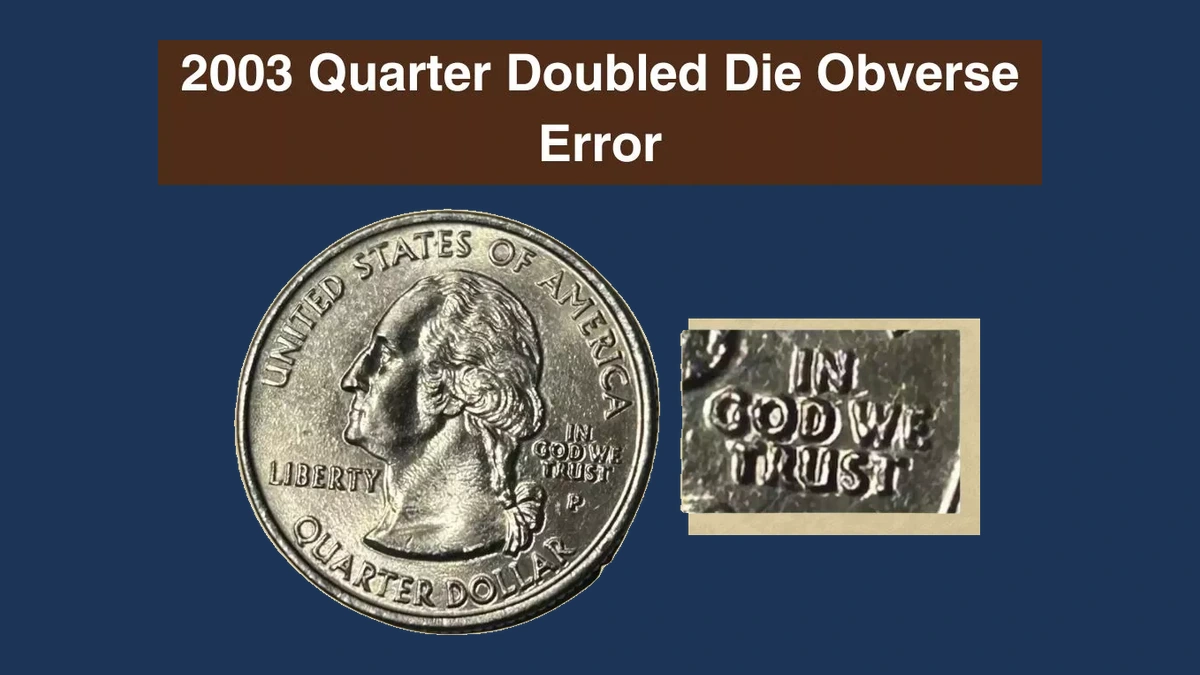
A second rounded outline may repeat a letter or design detail without repeating the whole coin. A doubled die carries that extra image before it strikes the metal.
Reports include front lettering or portrait details, plus Maine, Illinois, Alabama, and Arkansas back designs. Illinois examples require comparisons of Lincoln, the skyline, or lettering.
An old Illinois claim calls its mint letter repunched. By 2003, mint letters were no longer individually punched into working tools.
That claim therefore needs a different explanation, such as strike movement or tool damage.
Estimated Value
For an identified, visible doubled-die feature, estimate $5 to $300. Bold rounded separation on an attractive coin generally brings more interest than slight thickening on a worn one.
Flat mechanical doubling or an ordinary mint-letter irregularity often adds nothing beyond about $0.25 to $2. The older repunched-mintmark label does not justify a separate premium.
Compare the exact state and feature before using the upper range, rather than buying on a doubling label alone.
How to Identify
Work with one face at a time. LIBERTY, IN GOD WE TRUST, and Washington’s eye or ear belong to front-side checks; the 2003 date is on the back.
On Illinois, compare the same Lincoln, skyline, or lettering details against a normal state quarter. Alabama’s date and words need a different back-side photograph.
Rounded second edges and split corners can support a doubled tool image. Flat shelves, stretched outlines, or corrosion around one letter call for other explanations.
For an Illinois mint-letter claim, inspect the surrounding surface as well as the letter itself. A bright rim or a small bump is not evidence that a worker punched the modern mint letter twice.
7. 2003 State Quarter Die Cracks, Chips, and Cuds
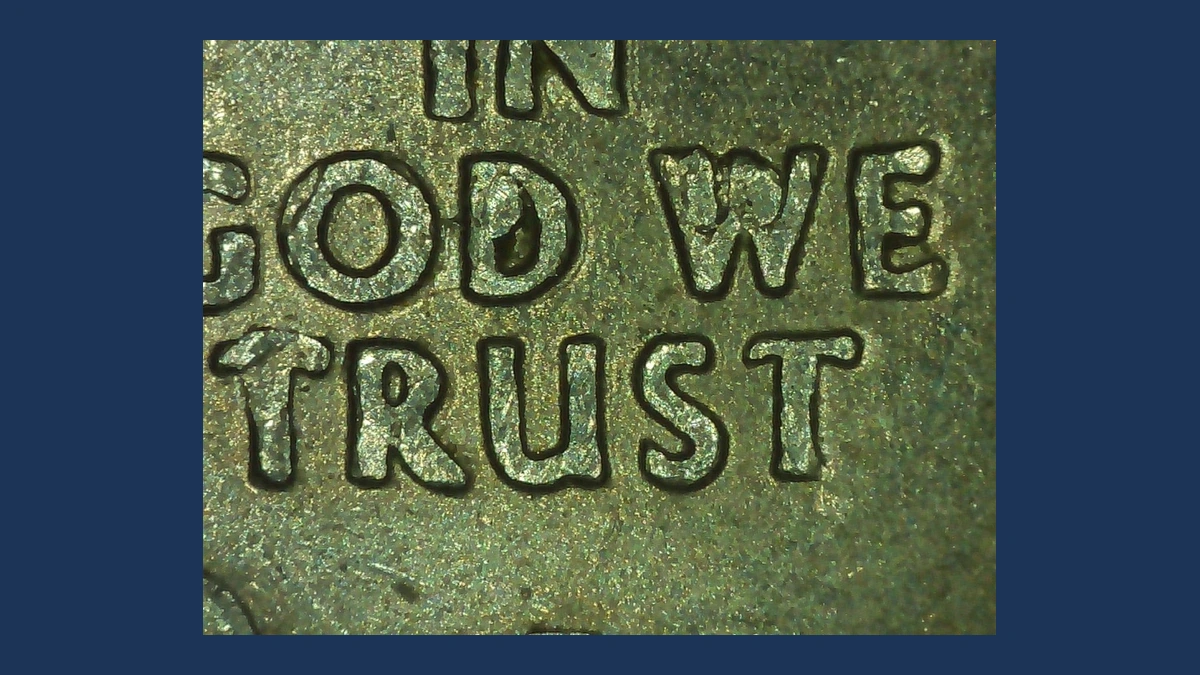
Extra raised metal can record a crack or missing piece in a stamping tool. A thin line comes from a crack; a larger rim-connected patch is called a cud.
Reports cover Maine’s cliff area, Illinois near IN, and Alabama near the chair or raised Braille dots. Maine and Alabama also have cud reports.
Denver Missouri has reported rim cracks. Arkansas includes ordinary Philadelphia and Denver reports plus a separately documented San Francisco clad Proof back-side crack.
The Proof is a specially prepared collector coin, not an ordinary circulation example.
Estimated Value
For ordinary coins, small cracks and chips fit an estimated $2 to $40 range. Larger genuine cuds can reach an estimated $40 to $300.
An Arkansas clad Proof with a clear original crack belongs in a separate estimated $100 to $500 range. Its finish and preservation contribute to that value.
A raised spot among Alabama’s normal Braille dots needs careful comparison before receiving any error premium; those intentional dots are part of the design.
How to Identify
Alabama’s raised Braille dots are supposed to be present. Compare their normal pattern before treating an extra-looking bump near Helen Keller as a chip.
On Maine or Illinois, follow a suspected raised line across the neighboring design. Lighting from opposite directions helps separate a ridge from a scratch cut into the surface.
A cud must join the rim and replace detail within that connected patch. An isolated internal blob has a different shape, even if a seller uses the same name.
Keep the Arkansas Proof comparison separate from ordinary P and D examples. Its reported back crack does not establish the location of a line on Washington’s portrait or another state’s coin.
8. 2003 State Quarter Peeling Metal and a Reported Combined Defect
A thin flap or a peeling boundary can reveal a weakness in the coin’s metal. Philadelphia Maine appears in a published list of these layered-metal defects.
A separate Denver Illinois report combines peeling, a depressed area, and an edge feature. Those descriptions concern one reported coin rather than several confirmed examples.
A depression should not be called a cud, which is raised metal connected to the rim. Each part of the Illinois combination needs its own physical explanation.
Neither report establishes that an entire outer layer was missing.
Estimated Value
For a genuine original peel or partial separation, estimate $25 to $600. A small shallow patch lies nearer the low end than a broad attached flap with readable design.
The Denver Illinois combination must be valued as one coin. Its separate-looking marks do not justify adding several whole-coin error prices.
Preservation is especially important when metal remains attached; bending, cleaning, or tearing a flap can lower both its appeal and the evidence available for identification.
How to Identify
Study a peeling boundary without moving the loose metal. Look for the original design continuing onto a thin flap or stopping at an exposed interior surface.
Photograph the Maine and Illinois examples separately. The Illinois report adds a depression and an edge feature that should not be assumed to share the peel’s cause.
For a loose coin, record its weight only if it can be handled without disturbing the flap. Loss of metal may lower the usual 5.67-gram clad weight, but attached material may not.
A raised rim-connected patch, a sunken dent, and a lifted sheet have different shapes. Map those shapes on photographs before assigning a combined explanation or a price.
9. 2003 State Quarter Struck-Through Areas and Missing Letter Strokes
Missing detail can form when grease or another material prevents a stamping tool from reaching the blank. Reports include Maine, Philadelphia Missouri, Denver Alabama, and both Philadelphia and Denver Arkansas examples.
A Maine-related nickname reads “IN COD WE TRUST” because the G’s short bar appears absent. It is not a newly engraved word.
Philadelphia Arkansas also has a granular back-side impression discussed by error specialist Mike Diamond. Fine tool lines extend into some affected areas.
That appearance differs from simply calling every scratch or weak letter a grease error.
Estimated Value
Minor missing strokes and grease weakness fit an estimated $2 to $30 range. Larger, clearly original impressions or granular areas can bring an estimated $30 to $800.
A readable boundary beside strong normal detail is more useful than a generally worn design. The precise material need not be guessed to judge the visible effect.
Condition and the amount of interrupted design influence the price; a damaged letter does not automatically qualify for the error range.
How to Identify
For the COD nickname, inspect the G under changing light and compare its short inner bar with a normal coin. Look at nearby letters to judge whether wear could explain the missing stroke.
The Arkansas granular example needs a different close-up. Follow the fine raised tool lines toward the small depressed areas and check their relationship at the boundary.
Mike Diamond’s discussion links this texture to material caught during striking, rather than later scratches. The exact texture matters more than a general greasy appearance.
On Missouri or Alabama, compare the weak patch with the correct state design. Do not scrape a depression or clean away material that might explain how it formed.
10. 2003 State Quarter Clipped Blank
Part of a metal disk can be missing before the press gives it a design. The finished coin then carries a gap inherited from that incomplete blank.
Alabama has a published clipped-blank report for 2003. The report does not fix the gap’s shape, position, or percentage.
Those details must come from the actual quarter. A later cut can remove the same amount of metal without creating the same kind of error.
The design near the opening and the surface through the gap help explain when the loss occurred.
Estimated Value
A genuine Alabama clip has an estimated range of $25 to $800. A small edge loss falls toward the lower end, while a dramatic opening with a readable year can draw stronger interest.
The missing area is only one factor. Original surfaces, a clean boundary, and enough surviving Helen Keller detail help identify and display the coin.
Sawed or otherwise cut quarters belong outside this range, even when their missing section is large.
How to Identify
Examine the opening from the edge as well as from both faces. Follow it through the coin’s thickness instead of judging only its outline.
Look for softened design near the gap, where metal could have flowed differently during striking. A weak rim opposite the opening can support a clip, although it is not required on every example.
Later cuts can leave sharp burrs, file lines, or lettering sliced through abruptly. Record those signs before trying to estimate the size of the missing area.
For a loose coin, compare its weight with the normal 5.67 grams. Keep the actual 2003 date visible in photographs rather than using Alabama’s admission year to identify it.
11. 2003 State Quarter Off-Center Strikes
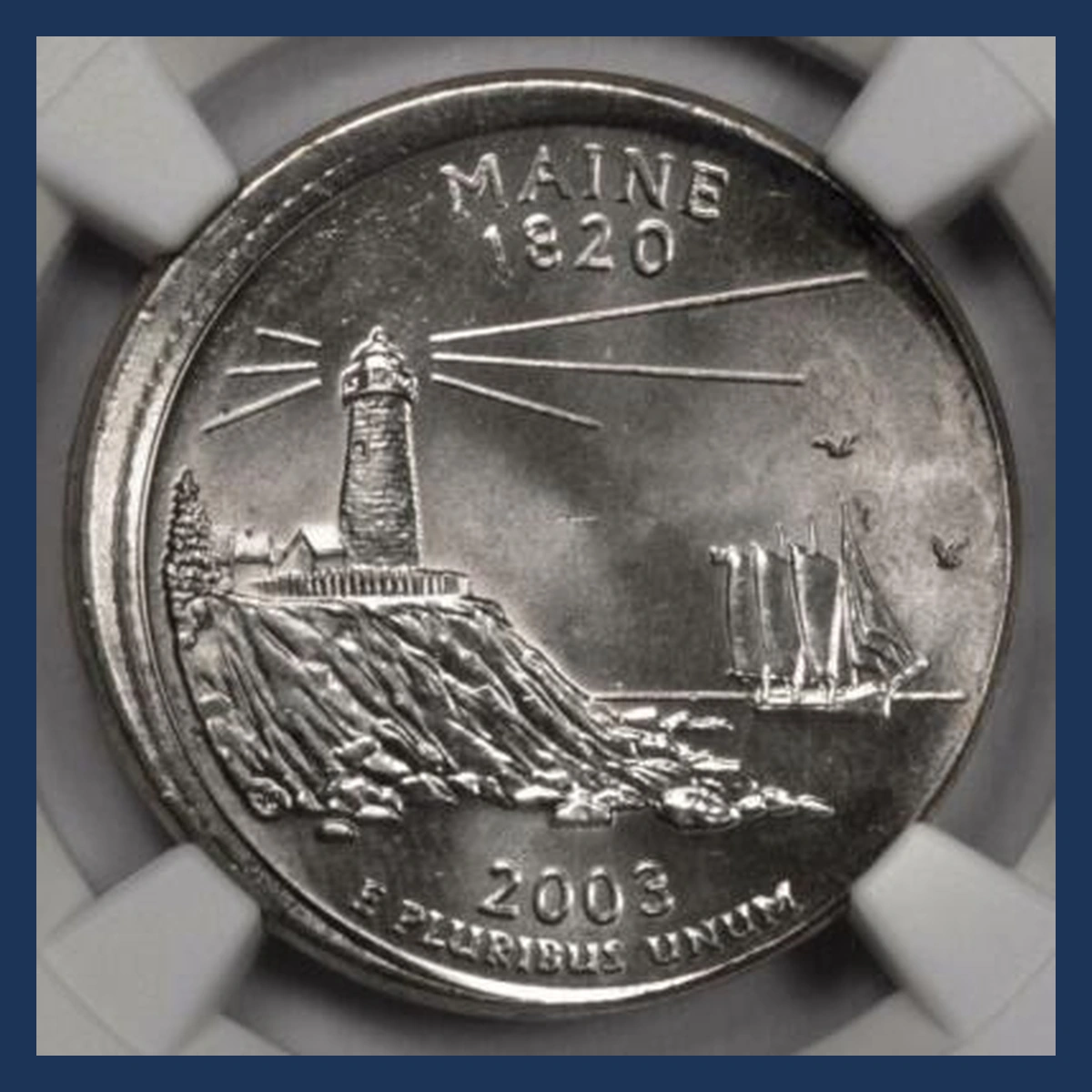
An empty crescent beside a partly missing design can show that a blank entered the press off center. Both faces should reflect that misplaced blank.
Maine, Illinois, Alabama, and Arkansas have published reports for 2003. A Philadelphia Maine description specifies a modest shift of about five percent.
The other reports do not establish a direction or percentage. Each coin needs its own full-face photographs.
A broadstrike can also look uneven, but keeps the main design on expanded metal rather than losing part of it beyond the edge.
Estimated Value
Modest genuine shifts can fit an estimated $30 to $150 range. Larger off-center strikes with a readable date can reach an estimated $150 to $1,000.
The reported five-percent Maine example belongs with small displacements. It should not inherit the price of a much more dramatic Arkansas or Alabama coin.
Original surfaces and identifiable state details help support stronger values, while heavy damage can reduce interest even in a large shift.
How to Identify
Read the state name and locate the actual 2003 date before estimating the displacement. The older admission year near the state name serves a different purpose.
Trace the edge of the struck design on each face. A genuine off-center strike leaves a corresponding unstruck region while other intended details run beyond the metal.
If the whole main design fits inside a wide border, compare it with a broadstrike instead. If only one face is shifted, examine whether a stamping tool sat out of place.
For the slight Maine report, use straight-on photographs of the entire outline. A cropped rim image can exaggerate a small difference and conceal the opposite face’s position.
12. 2003 State Quarter Missing Outer Clad Layer
A quarter can expose its copper center when an outer layer is absent. Denver Maine has a partial-loss report, while Philadelphia Alabama is reported with its front layer missing.
A documented Philadelphia Arkansas example lacks its back layer. A Denver Illinois coin missing the front layer was recorded at 4.71 grams.
These are different specimens, so one face or measurement should not be assigned to every state. Copper wash can change color without removing a whole layer.
San Francisco silver Proofs also need a different metal comparison.
Estimated Value
A practical estimate is $100 to $1,500 for genuine partial or whole-layer losses among these issues. Larger exposed areas with clear original design often make stronger display pieces.
A missing state-side layer may appeal to someone collecting different copper-colored state designs. A small patch generally offers a less dramatic example.
The known Illinois weight helps describe that particular coin, but it does not set a price by itself or establish the weight of an Arkansas specimen.
How to Identify
Identify which face lacks metal, then photograph the edge beside it. A normal clad quarter shows pale outer layers with copper between them.
The Denver Illinois example has a recorded weight of 4.71 grams. That is below the ordinary clad standard of 5.67 grams, consistent with a missing layer.
Weigh a loose candidate and inspect its exposed design for scraping, residue, or chemical attack. Color alone cannot distinguish missing metal from surface treatment.
Before comparing an S coin, establish its composition. A normal ninety-percent silver Proof weighs 6.25 grams and has no copper-core stripe, so that edge appearance is not an error.
13. 2003 State Quarter Illinois Design on a Nickel Blank
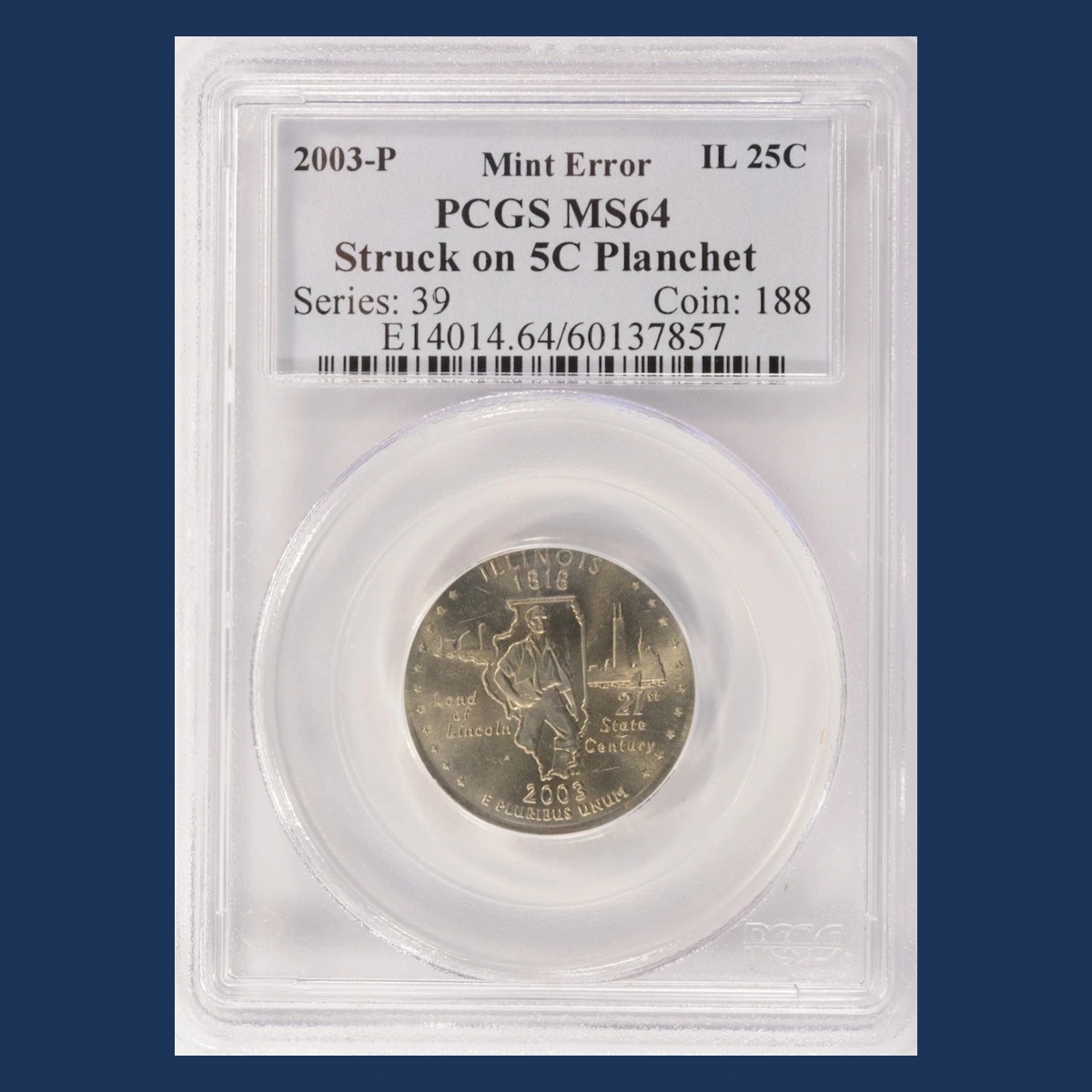
The Illinois design can appear too large for the metal carrying it. In documented Philadelphia examples, a nickel blank entered the quarter press.
The smaller disk could not receive the entire quarter design. Its metal also differs from a normal layered quarter blank.
A PCGS MS65 example sold in 2026, and a dealer has described a separate MS64 example. Those grades indicate unworn coins with differing amounts of visible marks.
Neither description requires an older Jefferson design underneath; these are reported as strikes on blank nickel metal.
Estimated Value
The PCGS MS65 Illinois example brought $793 at Heritage on March 23, 2026. That sale shows what one well-preserved example brought.
An estimated $600 to $2,000 range covers comparable Illinois nickel-blank errors across different preservation and visibility. Stronger surviving state detail can make one easier to recognize.
A different grade or a dealer listing should not automatically inherit that sale price, especially if the rim or surfaces show additional damage.
How to Identify
A loose candidate should first be weighed and measured. A nickel blank normally weighs 5 grams and starts near 21.2 millimeters across, compared with a quarter’s 5.67 grams and 24.26 millimeters.
The strike can alter its final diameter, so use the measurements together with the design. Look for quarter lettering or other outer details that could not fit on the smaller disk.
Inspect the edge for uniform nickel-alloy color rather than the normal quarter’s copper-core stripe. Then search both faces for a surviving older coin image.
If Jefferson or Monticello remains beneath the quarter design, that would describe a finished nickel used as the host, a different error from a plain nickel blank.
14. 2003 State Quarter Double and Triple Strikes
Two displaced designs can show that a coin received another blow after moving inside the press. Alabama has a published double-strike report for this year.
Philadelphia Illinois also has a triple-strike report. The exact directions and spacing of those blows were not established in the description.
A repeated portrait, date, or rim helps reveal the separate positions. Closely overlapping impressions can be harder to follow than a large second strike.
This differs from a doubled die, where one tool already carries a repeated detail before touching the blank.
Estimated Value
Use an estimated $300 to $3,000 range for genuine repeated strikes of these reported types. Clear separation between images and readable dates support stronger interest.
A third blow does not guarantee a higher price than a second. The final appearance, original surfaces, and amount of surviving design matter more than the count alone.
Apply the range after confirming separate strikes; flat doubled lettering or a damaged rim does not have the same cause or market.
How to Identify
Choose one recognizable image and trace it on a large photograph. Next locate another portrait edge, date, rim, or state feature that belongs to a different position.
On an Alabama candidate, keep Helen Keller’s normal outline in view while following the proposed second image. For Illinois, map each claimed strike separately rather than counting bright lines near Lincoln.
The front should also help explain the coin’s movements. A repeated back detail alone may instead belong to a doubled stamping tool.
Do not assign angles or a precise sequence from a short description. A convincing multiple strike lets you connect several displaced features into each separate impression without treating ordinary design lines as extra blows.
15. 2003 State Quarter Arkansas Design Struck over a Finished Dime
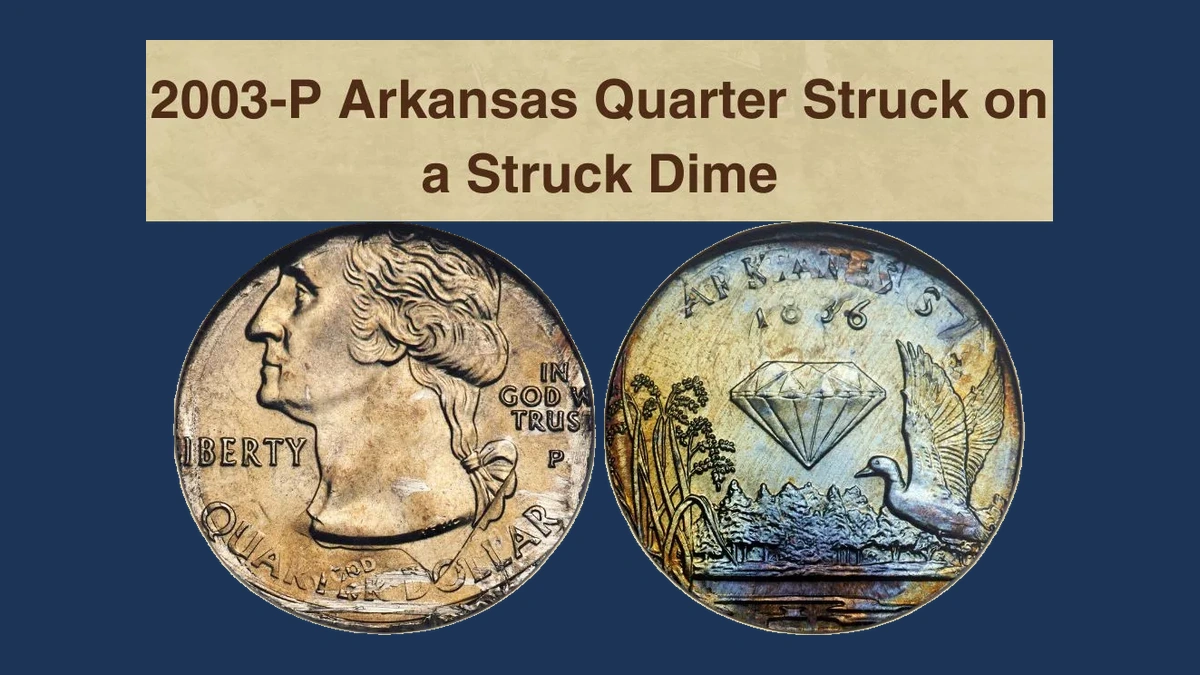
An Arkansas quarter design sits on metal that already carried a dime’s images. The finished dime entered the quarter press and received another denomination’s design.
The documented Philadelphia example is too small to show the quarter’s date. Its Arkansas design identifies the issue as 2003, while the P remains visible.
Earlier dime details distinguish this overstrike from a quarter on a plain dime blank. The coin received an NGC MS64 grade, an unworn condition with some marks.
Its layered images explain the unusual shape and the strong collector interest.
Estimated Value
This Arkansas-over-dime example sold for $5,640 on August 16, 2024. The result includes the auction buyer’s premium.
An estimated $3,000 to $8,000 range suits comparable authenticated pieces, depending on preservation and how clearly both designs remain. The missing quarter date does not prevent identification when the state design and mint letter establish the issue.
Value the complete overstrike once; the dime and quarter images are not separate coins to price.
How to Identify
Find the Arkansas design first, then locate the surviving P mint letter. Do not search for a clear quarter date on the documented example; it fell beyond the available metal.
Under magnification, separate traces of Roosevelt or the dime’s torch from the newer state-quarter details. The earlier design may be flattened or partly hidden by the later strike.
A plain dime blank has no older image to preserve. That distinction is more important than the coin simply looking small.
Use full-face photographs alongside close-ups so the surviving host details remain connected to the Arkansas scene. A professional identification should describe the coin as struck over a finished dime, rather than only naming a small blank.
Conclusion
Small defects and major mixed-design errors need different comparisons. Estimated values range from $2 to $8,000, with the Arkansas-over-dime sale illustrating the stronger end of this year’s market.
Use the state picture to keep examples separate, and read 2003 rather than the state’s admission year. A coppery color alone proves little.
Good photographs should connect the unusual feature to the whole coin, especially when the date or part of the design is missing.