1982 Quarter Error List with Pictures

Some doubled-looking 1982 quarters share a common feature inherited from an early design tool. A much different mistake put a quarter design on a nickel blank, and one example sold for $234 in January 2023.
This 1982 Washington Quarter error guide separates those appearances across an estimated $0.25–$2,000 range. The lowest end includes common doubling with little special premium.
Continue below for the visible differences between doubled tools, missing metal, blocked details, and a genuinely wrong blank.
1. 1982 Washington Quarter Doubled Designs and Common Inherited Doubling
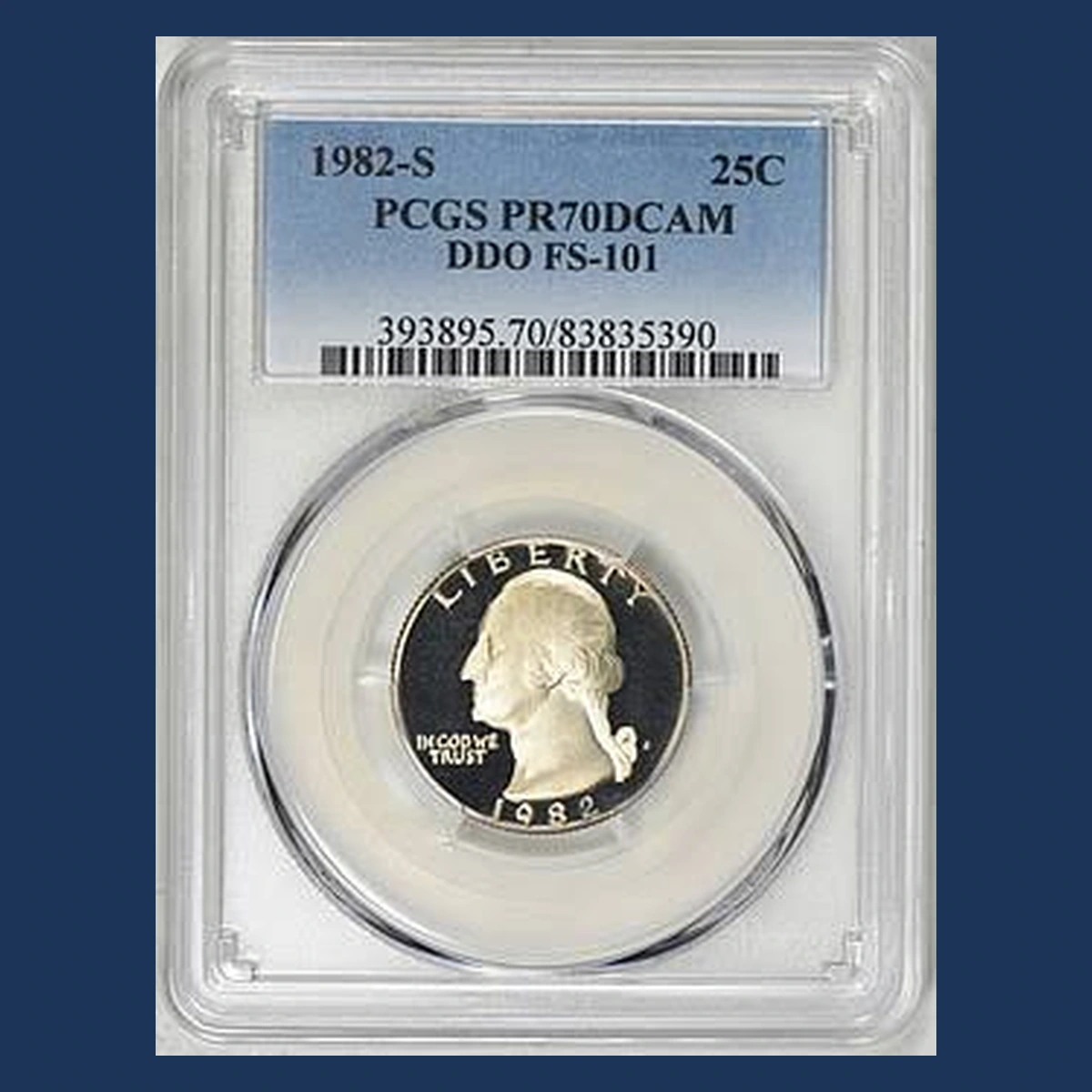
Thickened motto letters and slight date doubling occur across P, D, and S coins. Wexler identifies this as a shared master-die feature, inherited from an early tool used to make later stamping tools.
It is not automatically a rare individual-tool error. The S version has also carried the FS-101 name, which PCGS still lists despite the different catalog treatment.
A separate P back variety, WDDR-001, has very close inward doubling on DOLLAR and the RICA of AMERICA. Other reports concern P front lettering and D back details.
Those reports need their own matching patterns.
Estimated Value
Common master-die doubling adds little special premium; an estimated $0.25–$25 covers ordinary examples with differing wear and finish. Exceptional normal-coin grades need separate comparisons.
For a genuinely matched separate working-tool variety, estimate roughly $15–$150. The close P back doubling belongs in a different comparison from widespread motto thickening.
Do not pay a rarity premium for the FS-101 name alone. The actual pattern, its distribution, and the condition of the coin matter more than a familiar number on a label.
How to Identify
Put ordinary same-year coins beside the candidate before assuming thick motto letters are rare. Common master-die doubling can repeat across different mintmarks.
At 10×, compare DOLLAR and the RICA ending with Wexler’s P back catalog. Its close inward doubling differs from a reported P front or D back pattern.
A scale and calipers check a loose clad coin, made from bonded layers, against 5.67 grams and 24.26 millimeters. Inspect the edge grooves for alteration.
Normal measurements do not identify the doubled tool.
Match the particular repeated outline first, then decide whether it belongs to common inherited doubling or a separate working-tool variety.
2. 1982 Washington Quarter Faint Opposite-Side Designs
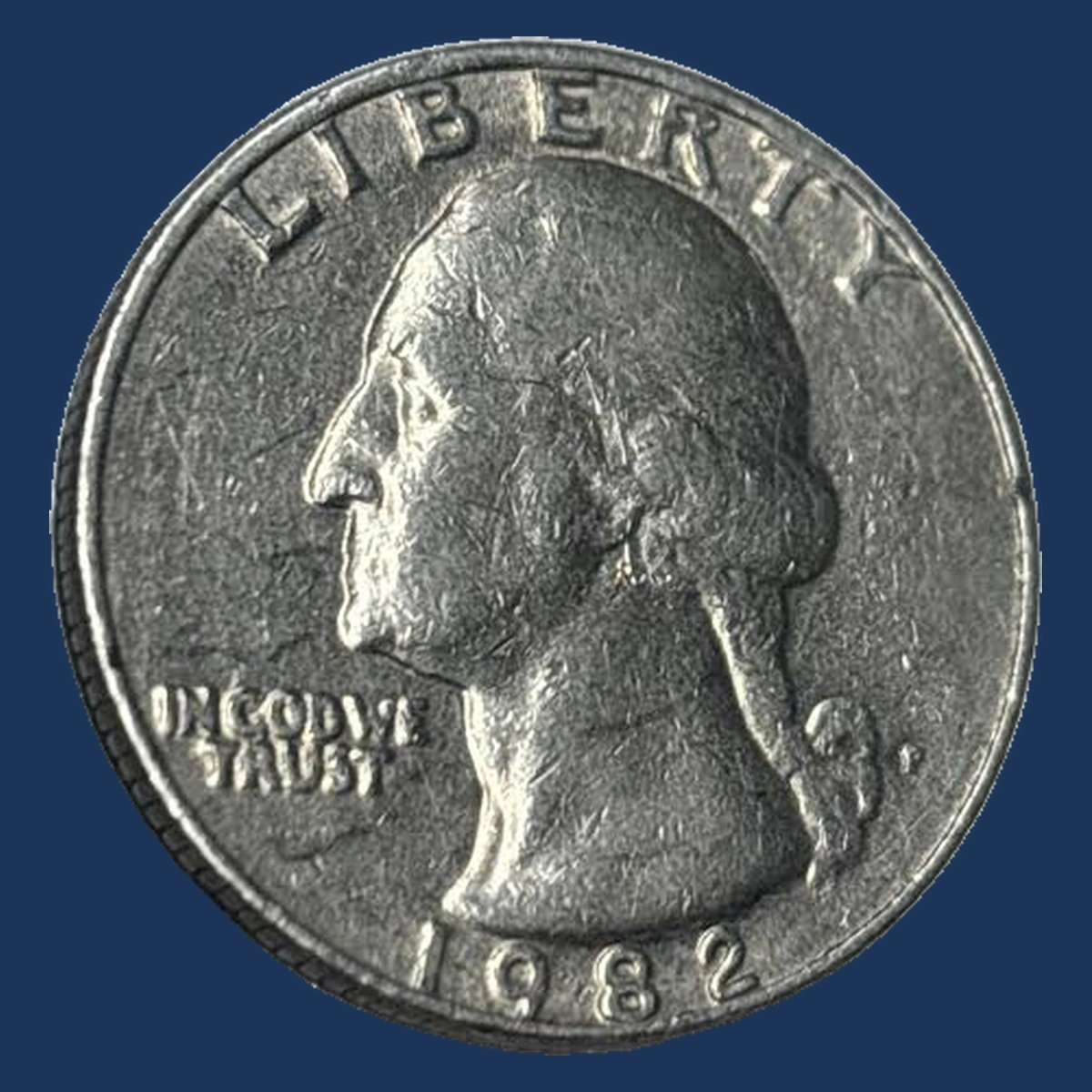
A faint part of the eagle can appear near Washington’s portrait after the two stamping tools touch without a blank between them. The tools mark each other and pass those traces to later coins.
This is called a die clash. The 1982-P report suggests examining the neck or cheek area and the spaces beside the eagle on the back.
Those locations are only starting points. The faint shape needs to fit an actual part of the opposite design.
A random scratch or stain may look suggestive without sharing the correct position or outline of a transferred feature.
Estimated Value
Estimate $10–$200 for a genuine clash on an ordinary 1982-P quarter. Clear transferred detail on clean surfaces is easier to explain and collect than a vague mark visible only at one angle.
The estimate requires an actual design match. A scratch does not gain value simply because it resembles a feather or a face.
Preservation still matters. Wear can erase a faint trace, while marks may hide it among other lines and reduce the appeal of an otherwise genuine example.
How to Identify
Photograph both sides straight on, then compare a faint trace with a reversed outline of the opposite design. A useful match should explain its position as well as its general shape.
With a 10× magnifier, follow the line for evidence of a fresh cut or displaced metal. Look for more than one connected feature if the trace is weak.
A normal loose clad quarter should remain near 5.67 grams and 24.26 millimeters on a scale and calipers. Inspect the grooved edge for later damage, then confirm that the faint mark fits the actual opposite-side design rather than an imagined shape.
3. 1982 Washington Quarter A Step in the Edge
A smooth expanded part of the side can meet a narrower grooved part as a distinct step. The blank sat only partly within the collar ring that normally controls the coin’s edge.
This is called a partial-collar strike. The transition may run level around the coin or slope when the blank sat tilted.
A 1982-P example is reported, but its exact stepped section needs to be checked on the individual coin. A face-on photograph can hide much of this feature.
An uneven rim around Washington alone cannot establish a partial collar without the corresponding side structure.
Estimated Value
A clear genuine partial-collar quarter is estimated at $25–$200. The stronger end calls for an easy-to-see natural step and attractive original surfaces.
A 1990-P nickel with this error sold for $99 in June 2025. That later-year, different-denomination sale offers a comparison for an edge error, not a price assigned to the 1982 report.
A crushed rim or a ledge cut after minting should not receive the same premium. The side structure and condition must support the explanation together.
How to Identify
Hold the coin carefully sideways and locate the visible meeting line between grooves and smooth expanded metal. Follow it around the side before deciding whether the transition is level or tilted.
Measure several spans with calipers against 24.26 millimeters and weigh a loose coin against 5.67 grams. Metal can move outward without a corresponding loss of weight.
At 10×, inspect the line for machining, fresh cuts, or crushed grooves. Compare both faces for damage caused by later pressure; a naturally struck step joining the constrained grooved section to an expanded smooth section is the feature that establishes the partial-collar explanation.
4. 1982 Washington Quarter A Missing Section of the Blank
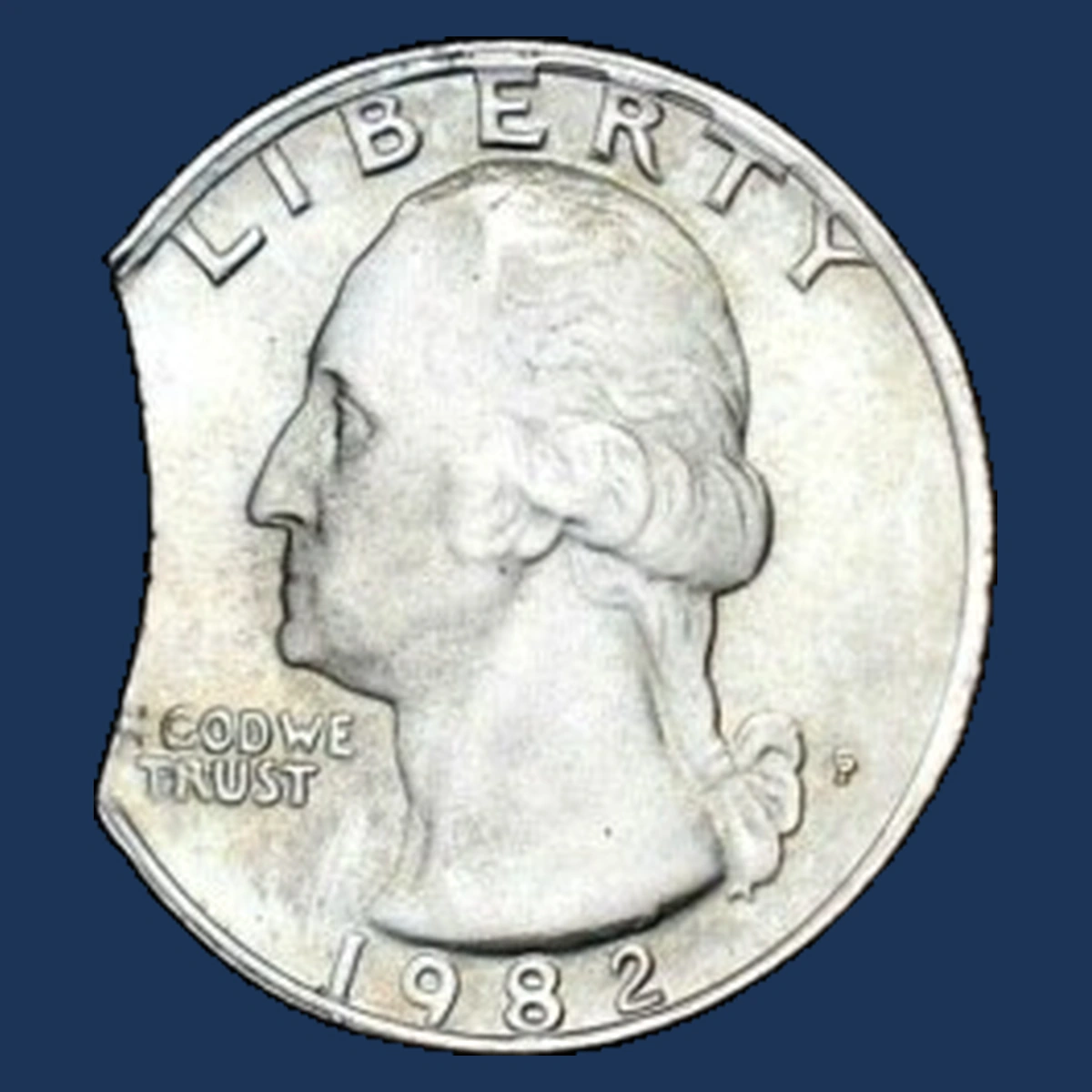
A bite-shaped missing section may begin when a blank is cut from an incomplete part of the metal strip. The design is then struck onto the remaining metal.
The 1982 report includes clipping without fixing a mintmark, gap size, or clock position. Those details must come from the coin itself.
The rim opposite a genuine clip can sometimes be weak because the missing section changes how the blank is prepared. That clue is helpful but not always present.
A saw cut or filed notch after striking can copy the outline without the same original boundary and neighboring design.
Estimated Value
Estimate $25–$250 for genuine clipped quarters, depending on the missing area, wear, and remaining date. Natural boundaries and attractive surrounding design support the stronger end.
A 1999-D Pennsylvania quarter with overlapping clips sold for $74 in December 2024. It provides a different-year comparison rather than a measurement or value for the unspecified 1982 example.
Low weight alone cannot establish a clip. Later cutting also removes metal, so the original strike near the gap must support the minting explanation.
How to Identify
Inspect where the missing section meets each face rather than starting with its size. At 10×, look for original cut-and-break texture and the way nearby design was struck beside it.
Fresh saw tracks or burrs suggest later cutting.
Weigh the loose candidate against 5.67 grams and use calipers on its intact spans against 24.26 millimeters. Record the actual results without assigning a mintmark from the shape.
Follow the surviving edge grooves around to the opposite rim. Weakness opposite the gap may help, but its absence does not settle the question.
The decisive visible check is a natural missing boundary that joins the original struck surfaces without signs of later filing.
5. 1982 Washington Quarter An Expanded Strike
A coin can spread beyond its intended diameter when the surrounding ring does not hold the edge during the blow. The complete design may still fit within the widened outline.
Collectors call this a broadstrike. The 1982 reports include Philadelphia, while some descriptions leave the mint unspecified.
An expanded coin may be unevenly shaped. That is different from a strike that cuts off part of the design beyond one side of the blank.
The side also needs inspection for its original relationship to the ring. A widened appearance caused by hammering a finished coin is not the same minting error.
Estimated Value
Genuine ordinary broadstrikes are estimated at $30–$300. Noticeable natural expansion with readable design is more appealing than a barely widened border on a worn coin.
Two 1990-P ANACS MS63 broadstrikes sold together for $101 in July 2021. That later-year lot total is not a separate sale price for either individual coin.
Use the comparison alongside the actual shape and condition. Later flattening or grinding should not be valued as a broadstrike simply because it makes the diameter larger.
How to Identify
Compare the complete outermost lettering with a normally struck quarter and determine whether the entire intended design remains. Losing part of it beyond one side suggests an off-center feature instead.
Use calipers in several directions against the normal 24.26 millimeters, then a scale against 5.67 grams for an intact clad coin. Expansion moves metal rather than removing a large portion.
Under a 10× magnifier, examine the wider border and edge for hammer marks, grinding, or altered grooves. The useful combination is a complete naturally struck design inside genuinely expanded metal, not a wide border or reduced edge detail considered alone.
6. 1982 Washington Quarter Filled Mintmark Centers and Rim Breaks
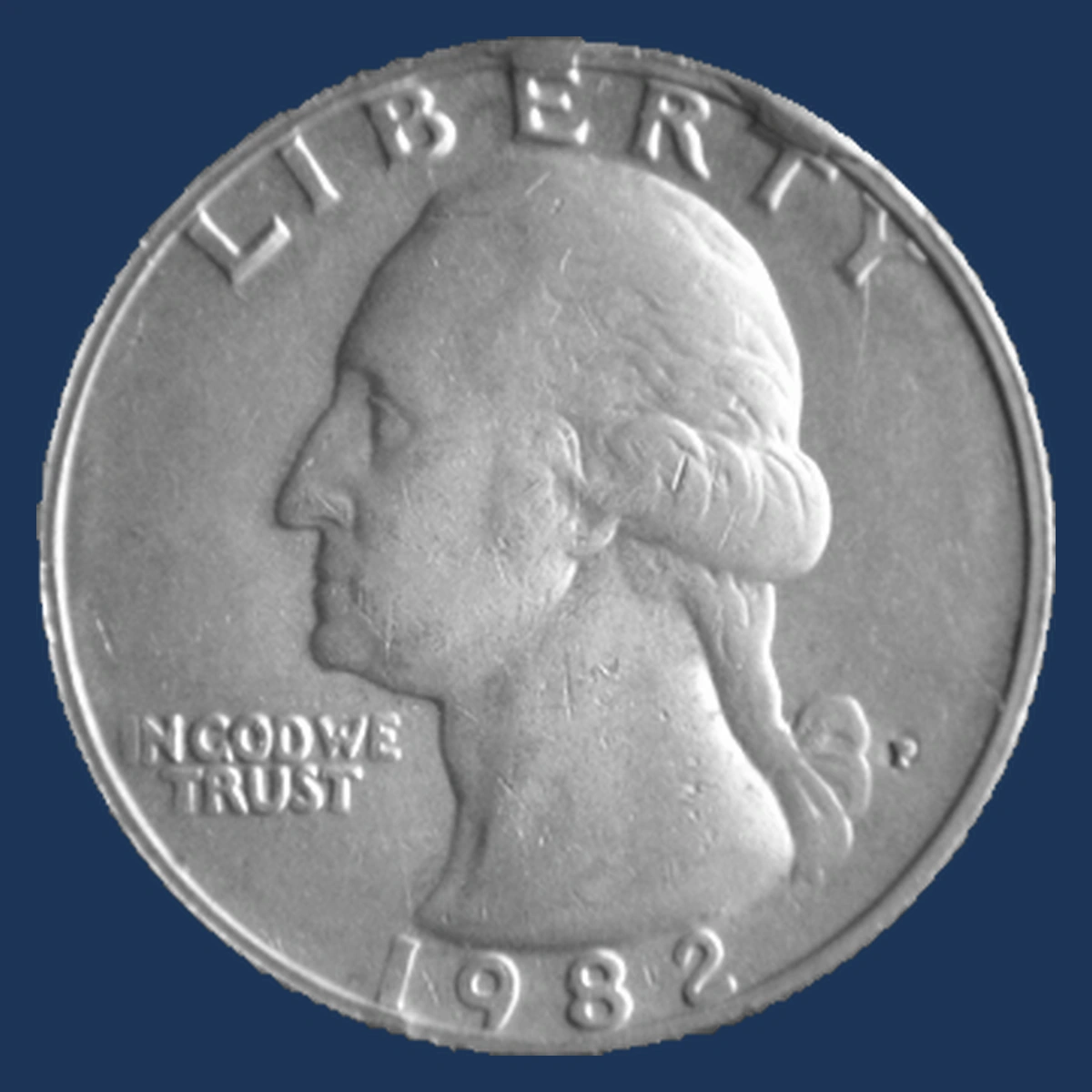
A raised plug can fill the enclosed center of a P or D mintmark. It differs from a weak or missing entire letter caused by blocked design transfer.
A small tool break is one possible explanation for raised filling, but the individual coin must establish the cause. Dirt lodged inside a letter can look similar.
Larger missing pieces of the stamping tool leave raised patches attached to the rim, called cuds. Cataloged 1982-P examples include two front-side and three back-side listings.
Each has its own outline. A small filled mintmark is not automatically one of those larger rim breaks.
Estimated Value
A genuine small raised mintmark filling is estimated at $2–$30. Clear rim-connected cuds can be estimated around $30–$400, depending on size and condition.
A 1970-D nickel with two cuds sold for $63 in October 2022. That different-year result offers a comparison for tool breaks, not a sale of a particular 1982 quarter variety.
The extra metal must be part of the original strike. Attached dirt, solder, or an impact that pushed the rim upward should not receive these mint-error premiums.
How to Identify
Examine the mintmark’s center at 10× before deciding what the word filled means. A raised plug inside the letter differs from an entire weak or missing letter.
Leave any material in the hole untouched. Its surface must be judged for a natural struck appearance rather than scraped away during inspection.
For a larger cud, start at the rim and follow the raised patch inward into the design. A scale and calipers should leave a loose clad coin near 5.67 grams and 24.26 millimeters; inspect the adjoining edge grooves for squeezing or added metal.
A naturally struck patch replacing detail and joining the rim establishes the cud feature, unlike an isolated filled-letter center.
7. 1982 Washington Quarter Off-Center Strikes
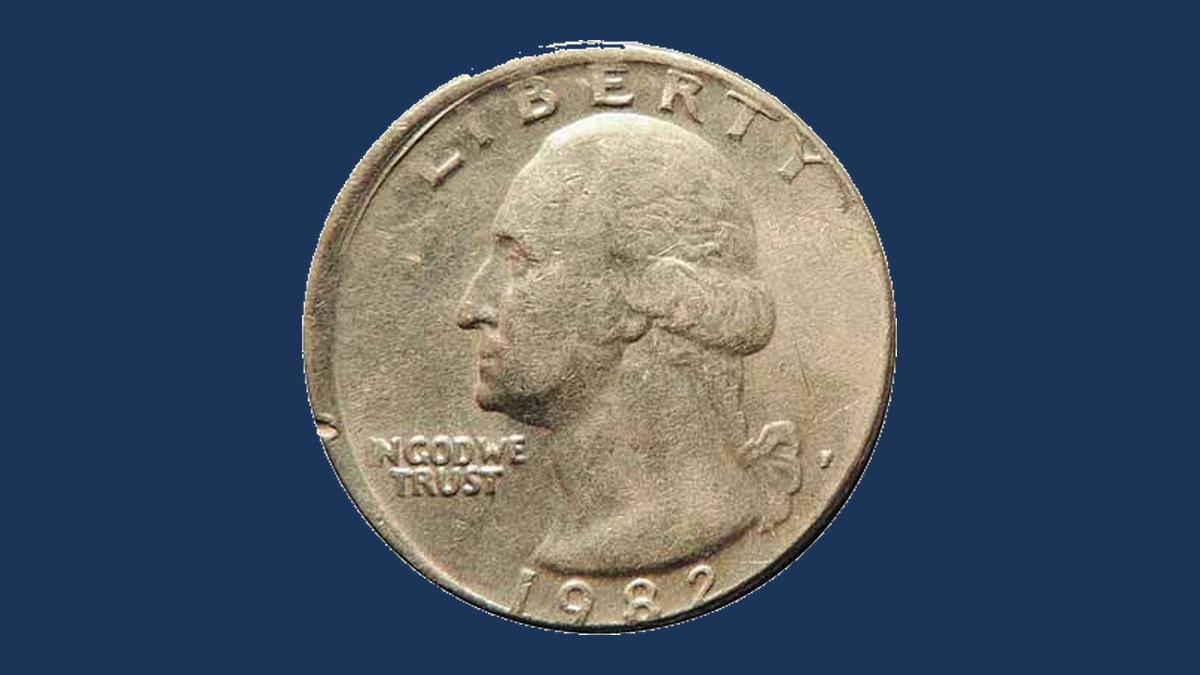
A blank that enters the press off center receives its design on only part of the available metal. A plain crescent remains opposite the design cut off beyond the edge.
Both Philadelphia and Denver examples are reported for 1982. Their mintmarks, directions, and amount of displacement must be determined separately.
A shifted design on just one side can result from a misaligned stamping tool instead. An off-center blank affects the relationship of both designs to the same metal disc.
The plain crescent is still part of the coin. It should not be confused with an actually missing clipped section.
Estimated Value
Estimate $50–$500 for genuine dated off-center examples, according to displacement, surfaces, and readable design. Smaller shifts on worn coins generally attract less interest.
A 1990-P quarter struck 40% off center sold for $109 in January 2022. That later-year result is a comparison, not a 40% measurement for either 1982 mint.
A large shift is not automatically more valuable. Enough surviving date detail to identify the coin, together with original untouched metal, can matter more than the plain area’s size.
How to Identify
Read the actual date and mintmark before comparing the shape with a reported example. If those details are missing, keep reliable identification with the coin rather than assuming a mint from the blank area.
Inspect both faces for corresponding design displacement. At 10×, examine the plain crescent and its boundary for scraping or grinding.
A loose intact clad blank should remain near 5.67 grams on a scale. Calipers compare the outline with 24.26 millimeters, while the edge grooves can reveal later alteration.
Find unused original metal opposite cut-off design on both sides; that shared relationship distinguishes an off-center blank from a shift confined to one tool.
8. 1982 Washington Quarter A Missing Outer Metal Layer
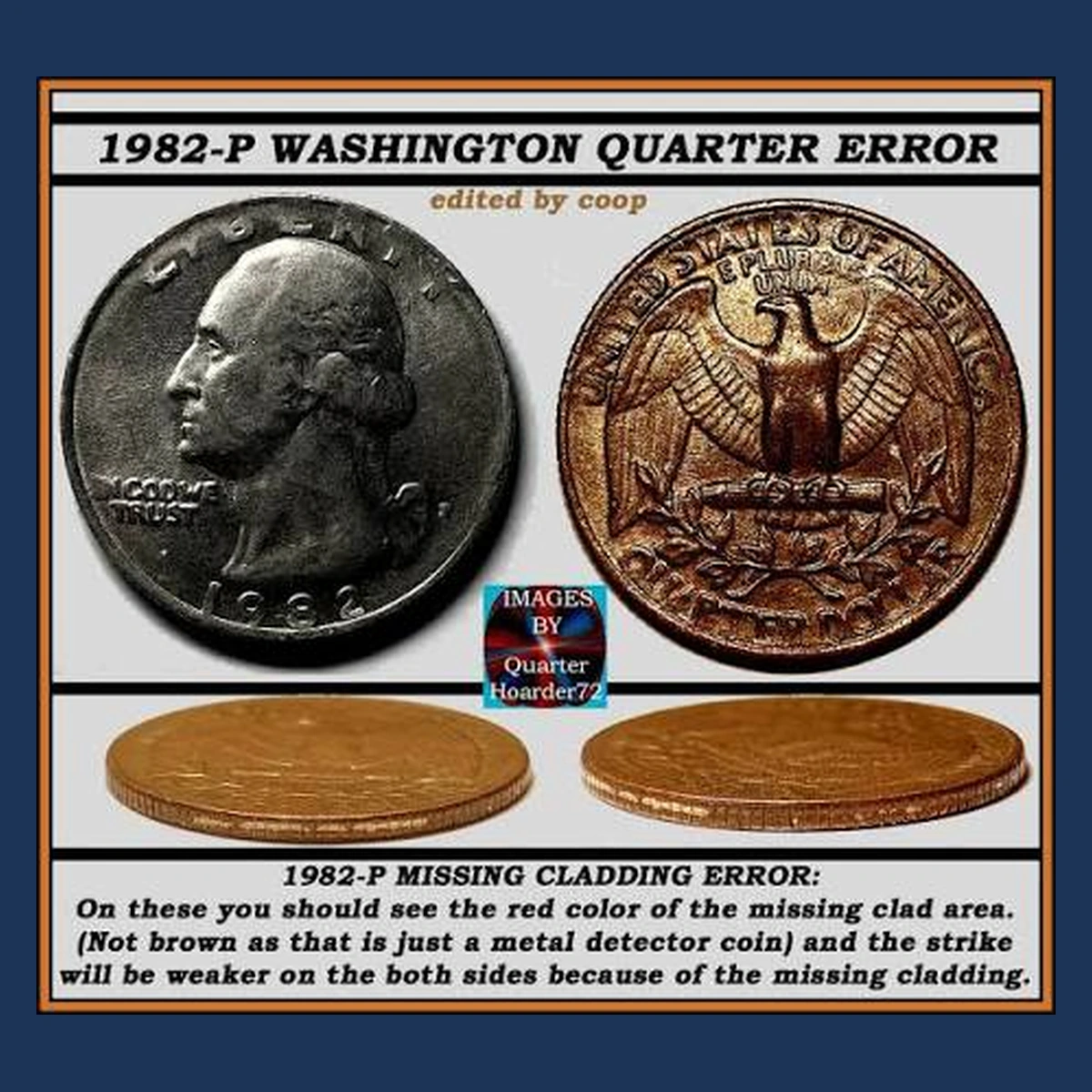
A copper-colored face can appear when a quarter lacks one of its outer copper-nickel layers. The normal coin has those layers bonded to a copper core.
The 1982-P report does not establish which face is missing or give a measured weight. Those facts must belong to the actual specimen.
An exposed copper surface can still carry design if the missing layer was absent when the coin was struck. Staining or added copper plating can imitate its color without the same construction.
The edge and the weight therefore matter as much as the appearance of the portrait or eagle.
Estimated Value
A genuine missing outer layer is estimated at $50–$600. A clean naturally struck exposed face can attract more interest than one with corrosion or heavy later damage.
A 1986-P quarter lacking its front layer, graded PCGS AU55, sold for $62 in September 2024. It provides a nearby-year comparison while leaving the affected side of the 1982 report unspecified.
The range requires missing metal, not simply copper color. Plating, chemical stripping, and stains should not receive the same mint-error premium.
How to Identify
Start where the copper-colored face meets the edge, not at its brightest patch. Under a 10× magnifier, inspect the surviving layers and grooves for grinding, chemicals, or an added coating.
Weigh the loose coin against 5.67 grams and use calipers against the normal clad diameter of 24.26 millimeters. A missing face can reduce weight while leaving diameter nearly unchanged, but no specimen reading is supplied for this report.
Compare the design on the exposed copper with the opposite face for natural striking. The weight reduction and undisturbed layer boundary should explain the same loss of metal; orange color alone cannot establish it.
9. 1982 Washington Quarter Blocked Letters and a Textured Proof Face
A weak or absent T in TRUST can leave a motto that appears to read WE RUST. P and D reports attribute this to material blocking the stamping tool, though the material itself is not established.
A separate S Proof has a much broader effect. Its entire front shows a granular, uneven texture, while the back retains normal reflective areas and frosted design.
That NGC PR68 coin was cataloged as struck through material. It is not simply another missing-T example.
The contrast between its two faces helps distinguish the minting effect from ordinary overall wear or staining.
Estimated Value
A genuine weak-T error is estimated at $5–$75. For a clear Proof with the reported full-front texture, an estimated $150–$1,000 reflects the much larger affected area and preservation.
The 2008 auction offering of the NGC PR68 Proof did not sell, so it provides no realized price. A different 1986-P nickel struck-through error sold for $204 in June 2023.
That ordinary nickel is only a broad comparison. Original Proof surfaces and a convincing strike-through boundary remain essential to the stronger range.
How to Identify
Keep the Proof sealed if it is graded. Compare its granular front with the normally reflective and frosted back before inspecting isolated marks.
At 10×, look for an untouched surface change rather than scratches or corrosion affecting both faces. The appearance does not establish that the blocking material was grease.
The missing-T reports need a separate check: compare TRUST with nearby lettering and portrait wear.
For loose examples, a scale and calipers compare the normal clad standards of 5.67 grams and 24.26 millimeters. Inspect the grooved edge without rubbing either face.
On the Proof, the naturally altered whole front against its normal back is the distinguishing combination.
10. 1982 Washington Quarter Designs on Other Denominations’ Blanks
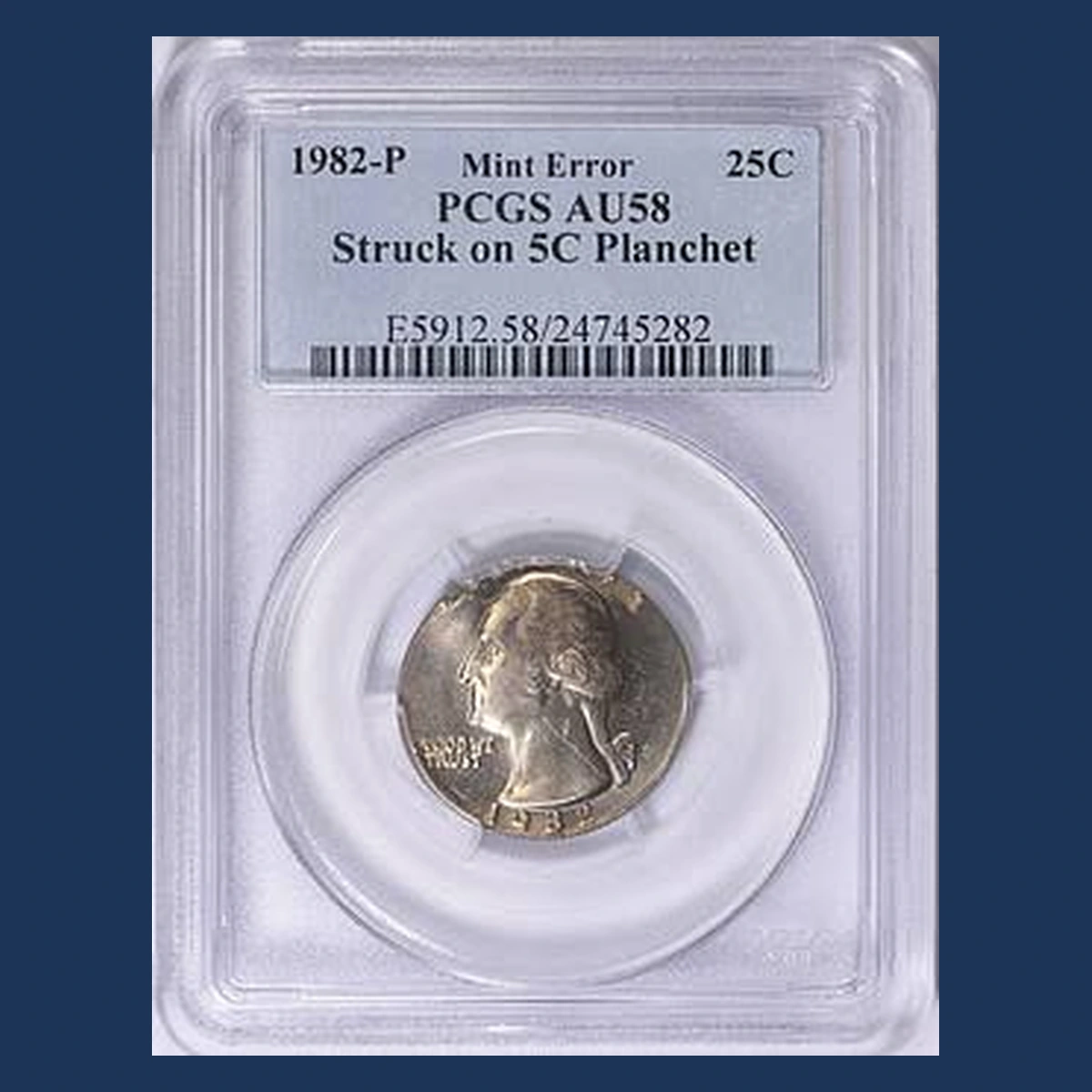
A smaller blank gives a quarter design less room, leaving some outer lettering beyond the metal. The wrong disc entered the quarter press before receiving any design.
A documented 1982-P nickel-blank quarter was graded NGC MS64 and weighs 5.0 grams. A separate Denver nickel-blank report has no actual measurement here.
Philadelphia reports also include dime and bronze-cent blanks. Their different metals and smaller dimensions need separate identification.
The nickel coin’s measured weight cannot identify those other types. A quarter stained brown or reduced by grinding can imitate one clue without matching the full wrong-blank explanation.
Estimated Value
The P nickel-blank coin sold for $234 in January 2023. Estimate $150–$700 for genuine nickel-blank examples.
For an authenticated dime-blank quarter, estimate $350–$1,200; a verified bronze-cent-blank example can be estimated at $500–$2,000. Their material and visible design must justify their own ranges.
A different-year 1994-P dime-blank quarter sold for $504 in April 2022. The 1982 reports do not inherit its measured weight, minting arrangement, or exact price.
How to Identify
Use a scale and calipers to record a loose coin’s actual weight and outline. Compare with nickel standards of 5 grams and 21.2 millimeters, or clad dime standards of 2.268 grams and 17.91 millimeters.
A bronze cent blank instead starts near 3.11 grams and 19.05 millimeters. These are standards, while the documented P nickel-blank coin has an actual 5.0-gram measurement.
At 10×, inspect the edge and any grooves for grinding that reduced a normal 5.67-gram, 24.26-millimeter quarter. Striking can expand the smaller blank beyond its starting size.
Have the metal identified without scratching it, and confirm that its measurements and naturally cropped quarter design fit the same blank type.
Conclusion
Estimated values run from $0.25–$2,000, with common inherited doubling at the low end and unusual wrong blanks toward the high end. A familiar variety name does not by itself establish rarity.
Check the coin’s metal and actual features before comparing prices. Preserve original layers and edge shapes, keep ordinary and Proof examples separate, and distinguish extra raised metal from missing detail.