2012 Quarter Error List with Pictures

Look behind the sheep’s neck on a Denali quarter. A small extra outline can be more interesting than a large scratch.
These 2012 quarter errors include doubled details, missing metal, and incomplete designs, with estimated values of $2–$2,500. For a real market comparison, a 2000-P South Carolina quarter missing its reverse outer layer sold for $336 in September 2024.
That sale involved a different year. Read on to see which features matter on each 2012 design.
1. 2012 America the Beautiful Quarter Weak Building Details
Some Chaco Culture quarters have faint lines across the upper buildings. The rest of the scene may appear clearer, making the missing detail noticeable beside a normal coin.
A weak strike means the design did not form fully when the coin was made. However, wear, a worn stamping tool, or material blocking that tool can produce similar results.
The reported Chaco example has not been tied to one of those causes. Its mint is also unspecified, so this feature should not be expected on every Philadelphia or Denver coin.
Estimated Value
Allow an estimated $2–$25 for a genuine, noticeable weakness on a coin with little circulation wear. A slightly soft building outline usually belongs near the lower end.
An attractive coin with a broad, clearly defined weak area may bring more interest than a dull, worn example. Regular wear adds no error premium, and a seller’s description of “missing buildings” does not establish how the detail disappeared.
How to Identify
Place a normal Chaco quarter beside the suspect coin, with both facing the same way. Compare the upper building lines under a desk lamp before using magnification.
Now tilt both pieces slowly. A reflection can hide thin lines in one photograph, while a real weak area stays soft as the light moves.
Use a 5× or 10× magnifier to examine nearby stonework and Washington’s cheek on the front. Worn high points will look flattened and may have small scratches from circulation.
Keep grease-filled details separate from a simple weak strike unless the surface supports that cause. A sharply detailed surrounding design beside consistently faint upper building lines is the useful first clue.
2. 2012 America the Beautiful Quarter Reported Date Anomaly
A Hawaii Volcanoes quarter has been described online as showing “2112/2012,” with an extra digit at the zero. Treat that name carefully.
The date is on the back of this quarter, and modern dates were not individually punched into each stamping tool. The old explanation of a worker punching a one over a zero does not fit this issue.
An added line could instead be a small tool break, damaged metal, or dirt. This reported feature remains a date anomaly to examine, rather than an established overdate.
Estimated Value
For a small, genuine Mint-made raised feature around the date, a working estimate is $5–$50. That range concerns the visible defect, not a recognized 2012 overdate variety.
A crisp extra line on an unworn coin would be more appealing than an indistinct mark on a scratched example. Carving, dirt, or metal pushed across the zero carries no error premium, regardless of an impressive “2112” label attached to the coin.
How to Identify
Read the entire reverse first: HAWAII VOLCANOES, HAWAII, and 2012 should identify the design. The P mintmark belongs on the front, separate from the date.
Enlarge the zero with a 10× magnifier and lighting from opposite directions. A raised line casts a changing shadow, while a cut sinks below the surrounding surface.
Look at the edges of the mark. Sharp grooves with metal pushed up beside them suggest later damage rather than an extra digit formed during striking.
Do not scrape the area to test for dirt. Take clear photographs of the whole date and both sides, then seek an error specialist’s opinion.
The immediate question is whether the extra feature rises naturally from the coin or cuts into an otherwise normal zero.
3. 2012 America the Beautiful Quarter Doubled Design
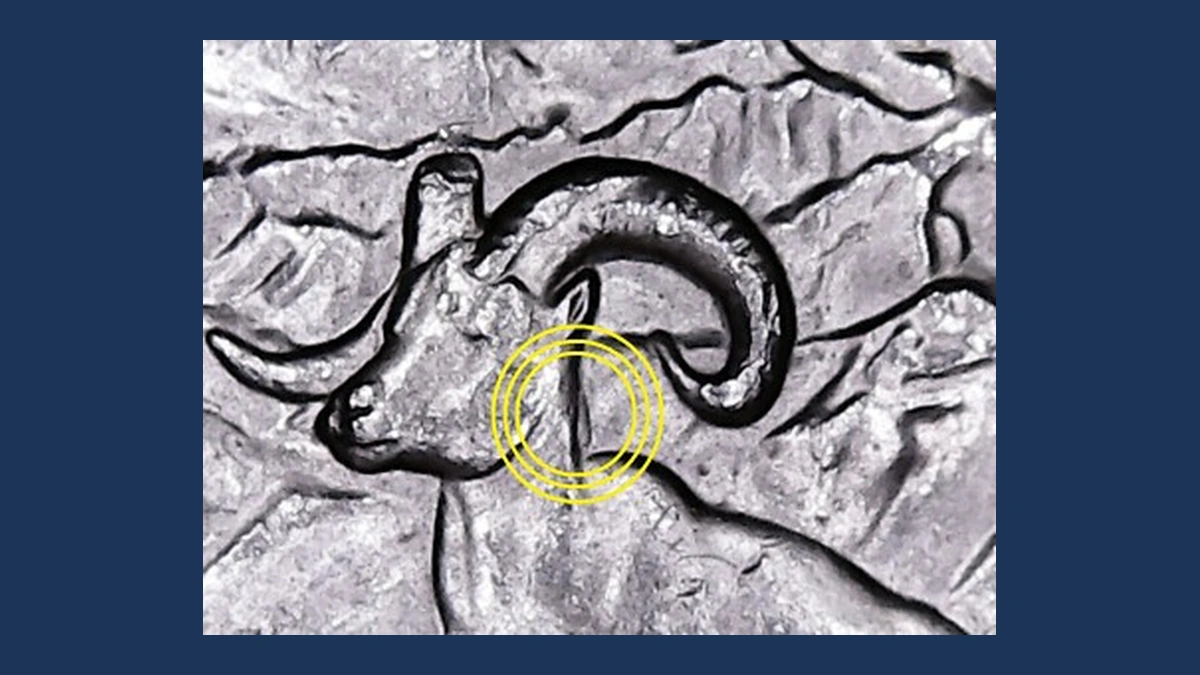
The useful Denali doubling is behind the Dall sheep’s neck. An extra outline there can be much smaller than the bold doubled lettering collectors sometimes expect.
A doubled die is a stamping tool that carries a doubled part of the design. Coins struck from it repeat that feature in the same place.
Front-side doubling has also been reported on Philadelphia Hawaii Volcanoes and Denali quarters, around LIBERTY or IN GOD WE TRUST. Those reports need separate matching, because flat strike doubling and worn-tool effects can resemble a doubled design.
Estimated Value
Small Denali neck doubling is estimated at $10–$75, with sharp, unworn examples favored. Stronger front-side doubling, if matched to a genuine doubled tool, could reasonably fall within $20–$100.
Visible separation matters more than a high asking price attached to a blurry photograph. Normal sheep fur, a flat shelf beside a letter, or broad swelling from tool wear should not receive the same premium as a clearly repeated design feature.
How to Identify
Find the sheep before examining the lettering. On a P Denali quarter, use a 10× magnifier to inspect the back edge of its neck.
The Wexler Denali listings show the relevant doubled detail. Match its shape and position rather than treating every extra tuft of fur as an error.
For a suspected front-side example, compare LIBERTY and IN GOD WE TRUST with a normal quarter of the same design. Tilt the coin so the edges of each letter become clear.
A thin, flat shelf can result from movement during striking. Broad, stretched outlines can come from a worn tool, so look for the specific repeated neck feature before paying a doubled-die premium.
4. 2012 America the Beautiful Quarter Clashed Design
Faint curves around Washington can look out of place on a Chaco Culture quarter. They may echo parts of the buildings on the opposite side.
This can happen when the two stamping tools hit each other without a coin blank between them. Damage from that contact may then leave traces on later coins, an effect called a die clash.
A Philadelphia Chaco example is reported, but its exact pattern needs matching. The reverse shows Chetro Ketl’s double kiva structures, so comparisons should use that scene rather than another ruin.
Estimated Value
A recognizable Chaco clash is estimated at $15–$125. The lower portion suits faint traces that require magnification, while stronger shapes visible in ordinary lighting could attract more interest.
Condition also matters: scratches can hide the very lines a collector wants to see. Two or three faint marks do not automatically make an important clash, and random lines around Washington should not be priced as transferred building details without a convincing match.
How to Identify
Take clear photographs of both sides, then compare the stray curves around Washington with the reverse buildings. Flip one phone image horizontally to see whether several nearby shapes fit the opposing design together.
On the coin itself, move a lamp around the suspect area while viewing it through a magnifier. A sharp trench with pushed-up edges suggests a scratch, and copied details from another coin can also result from damage.
Clash marks should make sense as a group, rather than requiring a different angle for every individual line. Matching two or more adjoining shapes to Chaco’s building outlines gives a stronger starting point than finding one suggestive curve.
5. 2012 America the Beautiful Quarter Unusual Color from Blank Heating
A Denali quarter may have an unusually dark or uneven surface instead of its familiar silver-gray appearance. One Philadelphia example has been described as an annealing error.
Annealing is heating that softens the blank before striking. Problems during that treatment can affect the surface, but a dark color alone cannot show when it developed.
Coins also change color in soil, in chemicals, or when heated after leaving the Mint. The reported MS63 example is described as unworn with noticeable marks, but the heating explanation still needs examination of the coin.
Estimated Value
Estimated value is $20–$150 for a genuine blank-heating error with an otherwise attractive surface. Strong, even discoloration that clearly belongs to the manufacturing process can draw more interest than a small dull patch.
This estimate does not apply to coins darkened by storage, fire, or chemicals. A clear grading-service error description can help buyers judge the cause, especially when photographs show only color and reveal little about the original surface.
How to Identify
Color should lead to closer inspection, not an immediate error label. View the coin in neutral daylight beside a normal Denali quarter, avoiding colored lamps and phone filters.
With a 10× magnifier, look for pits, crust, scratches, or residue. These can point toward environmental damage, while an intact struck surface deserves further attention.
Check the edge and weigh an unencapsulated coin on a 0.01-gram scale. A normal clad quarter weighs about 5.67 grams, and its copper-colored edge stripe is normal.
Never heat or polish a coin to compare colors. For this type, an expert’s examination of intact original surfaces is far more useful than deciding that a brown or black quarter must be a Mint error.
6. 2012 America the Beautiful Quarter Cracks, Chips, and Rim Cuds
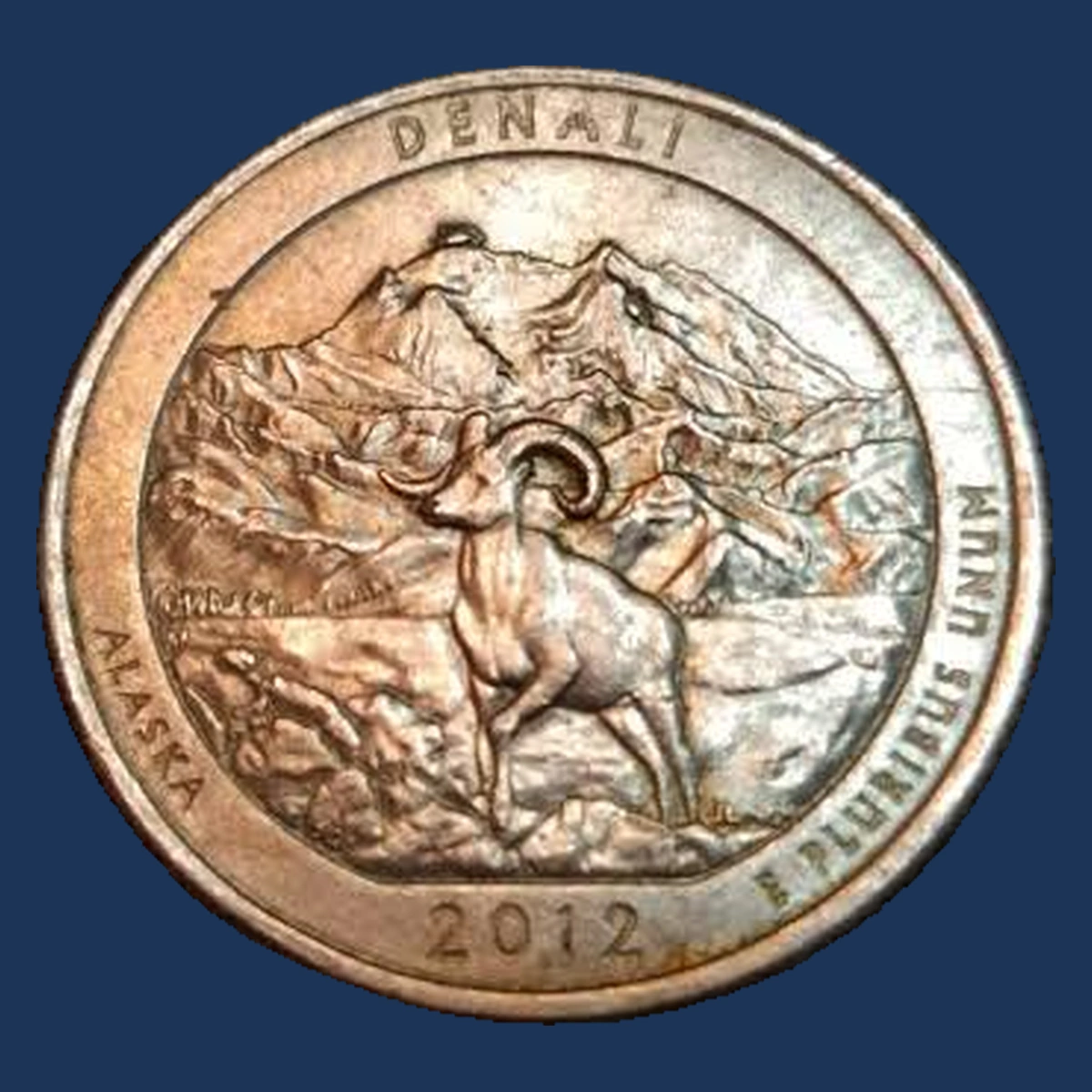
Extra metal can appear as a thin raised line, a small lump, or a larger patch joined to the rim. These features come from cracks or missing pieces in a die, the tool that stamps the coin.
Reports cover Denver El Yunque and Denali pieces, Philadelphia Hawaii Volcanoes pieces, and Chaco Culture quarters with unspecified mints. Exact positions differ and should be checked on each coin.
A Denver Acadia example is described as having a rim-connected break extending into the lighthouse and coastal scene. That larger connected patch is called a cud.
Estimated Value
Tiny raised cracks or chips are estimated at $2–$40. A larger, clearly formed lump can reach roughly $40–$100, while a substantial Acadia rim cud is estimated at $75–$250.
The size and location of the extra metal drive interest. A break that removes a clear part of the scene is usually easier to appreciate than a hairline crack hidden among rocks, and clean surfaces help the feature stand out.
How to Identify
Follow the Acadia patch toward the rim before deciding whether it is a cud. A cud joins that edge and replaces some of the intended design.
An isolated raised lump is a chip instead. With a 5× magnifier, move a lamp across the patch to see whether it rises above the surrounding surface.
For thin lines, inspect their edges for a scratch trench or metal pushed up by an impact. A crack in the stamping tool leaves a raised line on the coin.
Hawaii’s lava and Denali’s rocks already contain many irregular shapes, so keep a normal example beside the suspect coin.
The useful distinction is extra metal absent from the normal design, with a continuous edge connection where a cud is claimed.
7. 2012 America the Beautiful Quarter Clipped Blank
A clipped blank has a piece missing before the coin receives its design. During blank production, an overlapping cut or a cut near the metal strip’s edge can leave an incomplete disk.
The later strike places the design on what remains. This differs from somebody cutting a finished quarter with a tool.
Chaco Culture quarters are reported with this error, but the particular shape, size, and mint have not been established. A curved bite is one possibility, not a detail that should be assigned automatically to the reported coin.
Estimated Value
For a genuine Chaco clipped blank, estimate $30–$300, depending on the missing area and condition. A small edge loss is generally less dramatic than a strongly incomplete outline.
A useful different-year comparison is the 2000-P New Hampshire elliptical clip graded PCGS MS66, sold for $288 in September 2024. That coin was unworn with few marks; its price does not establish the shape or value of the reported Chaco example.
How to Identify
An edge cut made after striking often leaves burrs, tool scratches, or a sharp wall through completed details. Check that boundary first with a 10× magnifier.
On a Mint-made clip, lettering or rim details near the missing area may taper or stretch. The opposite rim may also be weak, although that feature is not required on every example.
For a loose clad coin, a 0.01-gram scale can show a weight below the normal 5.67 grams. Weighing supports the missing-metal observation but cannot tell when the metal was removed.
Photograph the edge from the side as well as face-on. Softly formed details beside the gap provide a better initial test than the outline of the missing piece alone.
8. 2012 America the Beautiful Quarter Missing Outer Layer
A normal clad quarter has silver-colored outer layers bonded to a copper center. If one outer layer is missing before striking, the exposed face can look copper-colored while still carrying the design.
This differs from the ordinary copper stripe visible along a quarter’s edge. That stripe is part of normal construction.
Missing-layer errors are listed among possible 2012 finds, but no specific park design or mint is established here. A candidate therefore needs checks of its surface and weight before being treated as a genuine missing-clad quarter.
Estimated Value
A confirmed one-sided missing-layer error can be estimated at $100–$400, with an intact, attractive copper face favored. A partial missing patch may fall lower, depending on its size.
For comparison, a 2000-P Maryland quarter with its reverse layer missing sold for $149 in September 2024. Another 2000-P South Carolina example brought $336 that month; these different-year sales support a range, not a claimed 2012 transaction.
How to Identify
Check the normal version before testing for missing metal. A 2012 S mintmark can identify a clad coin or a 90% silver specially made collector Proof weighing 6.25 grams.
For a clad candidate, weigh the loose coin on a 0.01-gram scale. Its normal weight is about 5.67 grams, so a missing outer layer should reduce that weight.
Use a magnifier to follow the edge layers around the copper-colored face and compare them with the other side.
The affected face should still carry a struck design, without deep grinding marks or peeled, scraped edges.
Acid can remove weight while leaving rough, eaten surfaces. Match a naturally struck copper face to an absent edge layer rather than relying on brown color alone.
9. 2012 America the Beautiful Quarter Struck Through Material
A hollow or a missing part of the design can form when material gets between the blank and a stamping tool. Collectors call this a struck-through error.
A 2012-S El Yunque Proof, a specially made collector coin, is cataloged with material struck through its front. It was graded NGC Proof 69 Ultra Cameo, meaning almost flawless surfaces with strong contrast between frosted designs and mirrorlike backgrounds.
Reports also describe a Philadelphia Denali MS65 example and effects on the other park designs. Grease may blur details, while harder objects can leave sharper impressions.
Estimated Value
Small missing details are estimated at $10–$60, while larger, clearly formed impressions can range around $60–$500. A high-grade Proof or a distinctive object-shaped impression may appeal to a different group of buyers.
The El Yunque Proof listing records a June 2013 sale but does not display its final price. As a separate comparison, a 2020-P Samoa reverse struck-through quarter graded AU58 sold for $104 in September 2024.
How to Identify
On the El Yunque Proof, examine the front rather than assuming the error is near the frog or parrot. Handle an unencapsulated Proof only by its edge; fingerprints can harm the mirrored surface.
For a Denali or another park design, locate the missing detail before deciding what caused it. Use a magnifier and side lighting to check the boundary of the hollow.
A strike through grease may leave soft, incomplete details without a deep hole. A harder object can leave a sharper depression, but its exact material should not be guessed from shape alone.
Later dents commonly push metal up around their edges. A struck-through impression instead interrupts the original design without the battered rim of a fresh impact.
10. 2012 America the Beautiful Quarter Off-Center Strike
An off-center quarter has part of its design missing and an unstruck area beside the remaining image. The blank was not properly centered between the stamping tools when they struck.
Both faces should tell the same story. A front design shifted toward one edge while the back remains centered may involve a different alignment problem.
A Denver El Yunque quarter is reported as 30% off-center, while a Chaco Culture report gives no percentage or mint. Those descriptions concern separate coins, so the El Yunque figure should not be carried across to Chaco.
Estimated Value
Estimated value is $50–$600, with the amount of displacement, condition, and readable date shaping the price. An attractive coin missing a large part of its design usually draws more attention than a slight shift.
A different-year comparison is a 2000-P Virginia quarter graded NGC MS64, sold for $154 in September 2024 with a 20% off-center strike. That sale provides context for modern quarters without pricing the reported 2012 Denver example as a proven auction result.
How to Identify
The reverse date and front mintmark identify the coin, so begin with photographs that show both sides rather than Washington alone. Then compare the unstruck area on each face: a true off-center strike cuts off part of both designs.
Examine the blank arc through a magnifier for grinding or file marks that could explain missing details. An uneven raised rim by itself is not the same as a smooth, unstruck area beside an incomplete scene.
Weigh a loose candidate on a 0.01-gram scale; displacement does not remove metal from a clad blank normally weighing about 5.67 grams. Let the incomplete design and blank crescent guide identification, rather than one letter’s distance from the edge.
11. 2012 America the Beautiful Quarter Reported Die-Cap Error
A coin that sticks to a stamping tool can become a cap over its face. Further strikes may stretch that stuck coin into a cup.
The coins struck beneath that cap are different objects. They may show a soft, distorted, or partly hidden design where the cap blocked the tool.
A Denver Denali quarter has been reported under the name “capped die,” without enough detail to choose between these two results. A flat weakly struck coin should therefore not be described as the cup-shaped cap itself merely because that label was used.
Estimated Value
If examination shows a coin struck beneath a cap, estimate $100–$700, depending on how strongly the design is affected. A genuine cup-shaped cap could fall around $500–$2,500.
These are conditional estimates for different physical results, not two prices for one confirmed Denali specimen. A deep cup with clear original details generally offers more visual appeal than a shallow distorted piece, while bending after manufacture adds no Mint-error value.
How to Identify
Photograph the coin’s side profile on a clean padded surface, without pressing it flat or trying to straighten it. A stretched cup and a flatter coin with a blocked design call for different examinations.
For a cup, use a magnifier to inspect the wall and interior for stretched metal, original details, and possible plier marks. On a flatter piece, compare the two faces instead, looking for a softened design opposite a sharper one.
Ordinary weakness alone does not prove that a cap covered the stamping tool, so an unusual candidate needs an error specialist’s examination. The side view provides the immediate distinction between a possible cap body and a coin struck beneath one.
Conclusion
The five 2012 quarter designs offer very different places to look for errors. Examine Denali’s sheep, Chaco’s buildings, and the edges of each coin before judging small marks.
Estimated values run from $2–$2,500, depending on the error and condition. Large missing pieces or a genuine cap can be valuable, while ordinary wear and scratches add nothing.
Keep unusual coins uncleaned and photograph both sides.