2014 Quarter Error List with Pictures

Check the park name before pricing a 2014 quarter error: an extra rock at Arches and a weak letter at Shenandoah tell different stories. The ordinary clad coins discussed here have estimated error values from $2–$800.
For perspective, a different-year Georgia quarter struck 40% off center brought $192 at Heritage in December 2024. Read on to compare the five 2014 designs, keeping ordinary bonded-layer coins separate from 90% silver collector versions.
1. 2014 America the Beautiful Quarter Reported Feeder Marks
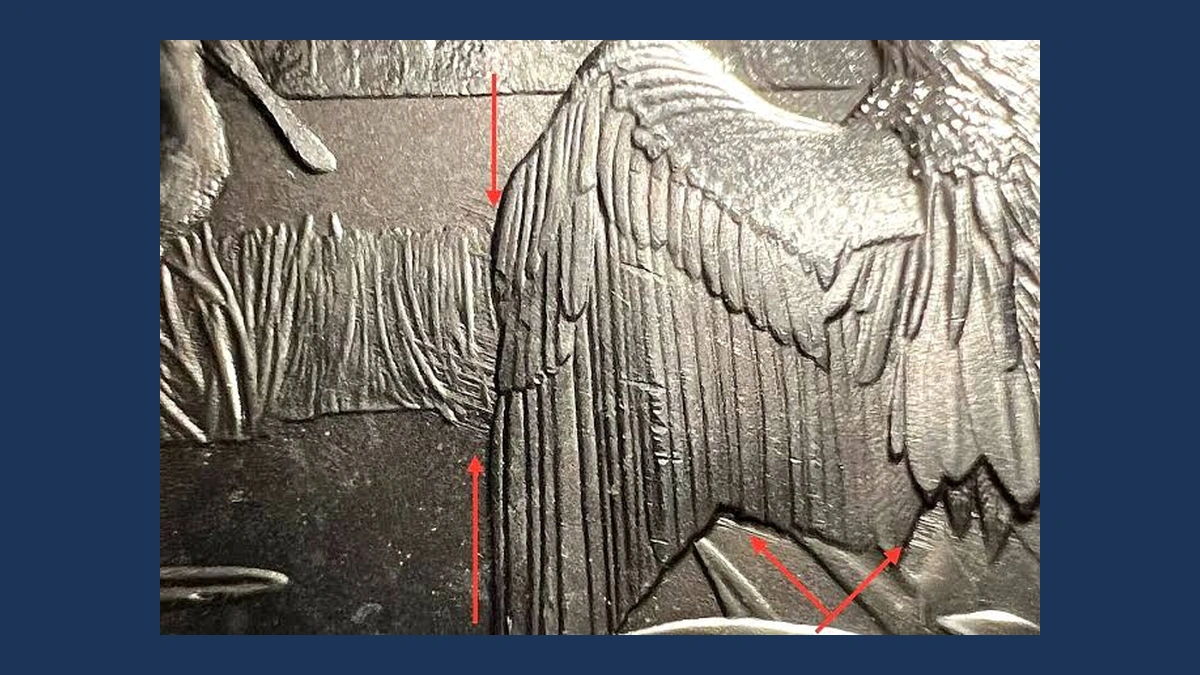
A line across the surface may be described as a mark from the machine part that feeds blanks into the press. An Everglades Philadelphia seller report uses that explanation.
The feeder can damage a stamping tool, leaving raised lines on later coins. Direct contact with a coin can instead produce a scrape, so the actual surface needs examination.
A seller’s label alone does not establish which event happened. The reported coin’s exact line position is not fixed here.
Scratches acquired in circulation can resemble machine-contact marks. Their shape and relationship to the struck design must support a mint origin.
Estimated Value
Estimate $2–$40 for a small, demonstrably mint-made feeder-related mark on an ordinary clad coin. A later scratch should receive no such error premium.
A stronger, repeatable tool mark is easier to explain to buyers than one unexplained scrape. Clear photographs should show both the line and nearby design, helping a collector judge whether it formed during striking.
The nickname does not establish rarity. The surface itself needs to show why the mark belongs to the minting process.
How to Identify
Examine the line under a 10× magnifier with light crossing it from both directions. Establish whether it is a raised ridge, a recessed scrape, or a cut with displaced metal along its sides.
A repeated raised pattern on other coins can support a damaged-tool explanation. An isolated groove needs more evidence before it can be tied to the feeder.
For a loose ordinary clad quarter, a scale and calipers should show near 5.67 grams and 24.26 millimeters. Inspect the grooved edge for impact damage as well, then compare the line’s interaction with the design rather than accepting the seller’s label alone.
2. 2014 America the Beautiful Quarter One Shifted Stamping Tool
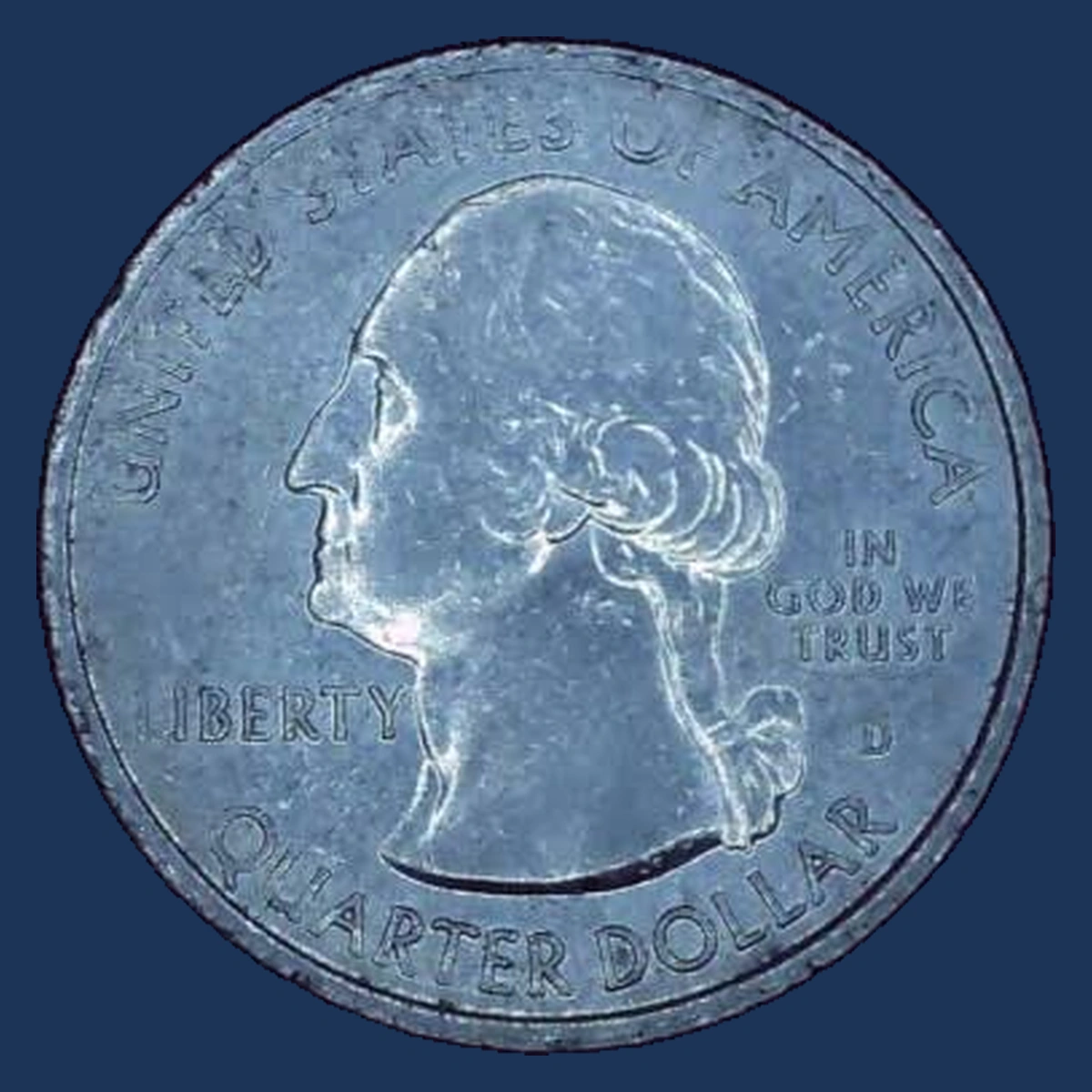
One face can have a wide border on one side and a narrow border on the other. The opposite face may remain normally centered.
That pattern can result when one stamping tool sits out of alignment with the blank. It differs from an entire blank entering the press off center.
Reports include Shenandoah, Arches, and a Denver Great Sand Dunes coin. Each needs a view of both faces before its displacement can be classified.
A photograph taken at an angle can also make borders look uneven. A single tilted image should not establish this error.
Estimated Value
Small genuine one-tool shifts on ordinary clad quarters are estimated at $2–$50. More obvious examples with clear one-sided displacement and attractive surfaces can fall around $50–$75.
A complete design with slightly uneven borders usually draws less interest than a major shift. Clean surfaces help show whether the difference comes from the strike or later damage around the rim.
A slightly uneven border can attract little interest. The degree of visible displacement matters more than calling every offset a major error.
How to Identify
Set the coin flat and photograph each face straight on. Compare Washington’s rim spacing with the spacing around the park design, avoiding a camera angle that could make either look off center.
A 10× magnifier can show whether the design is cut off or simply closer to one edge. If both faces shift together, investigate an off-center blank instead.
Calipers should place a loose ordinary clad coin near the normal 24.26-millimeter diameter, and a scale near 5.67 grams. Examine the grooved edge for squeezing or impact damage; one centered face paired with one shifted face is the useful first sign of a misplaced tool.
3. 2014 America the Beautiful Quarter Rotated Design Alignment
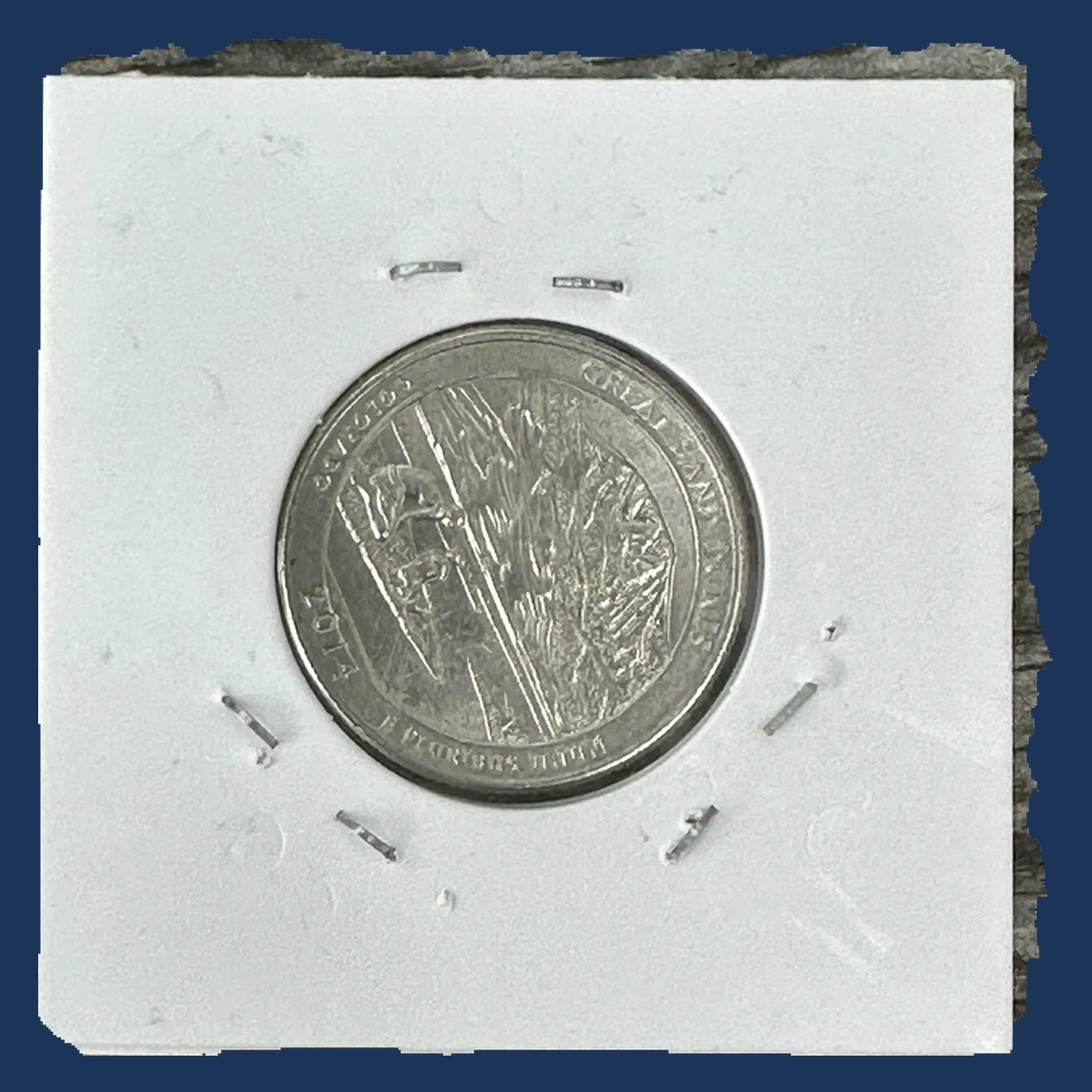
A back design can appear tilted even when both faces are centered within their rims. One stamping tool may have turned relative to the other.
This changes the angle between the two pictures, rather than moving a picture sideways. The 2014 rotation reports do not establish a specific measured angle here.
To compare the two faces, hold Washington upright and flip the coin top to bottom without a sideways twist. A normal quarter turned the same way provides the reference.
A casual flip between fingers can introduce its own twist. That can make an ordinary coin look rotated.
Estimated Value
Estimate $10–$100 for a genuine, clearly measurable rotation on an ordinary clad coin. Greater visibility and attractive condition can increase interest within that range.
A different-year 2015-D nickel with a 90-degree counterclockwise rotation sold for $79 in October 2021. That figure provides a comparison, not a measured angle or transaction for a 2014 quarter.
Repeat the alignment check before valuing it. A crooked photograph does not establish a rotated stamping tool or an error premium.
How to Identify
Photograph Washington upright while marking the coin’s top position outside the coin. Flip it top to bottom without a sideways twist and photograph the park design.
Repeat with an ordinary quarter held identically. Compare the two back images, rather than measuring from a casually tilted handheld view.
A loose ordinary clad coin should measure around 24.26 millimeters with calipers and weigh near 5.67 grams on a scale. Those figures do not establish rotation.
Inspect the rim and grooved edge with a 10× magnifier for damage that makes the coin sit unevenly. Repeat the controlled flip.
A stable back-design angle across several attempts supports rotation. A different angle each time points first to handling.
4. 2014 America the Beautiful Quarter Dark Color from Blank Heating
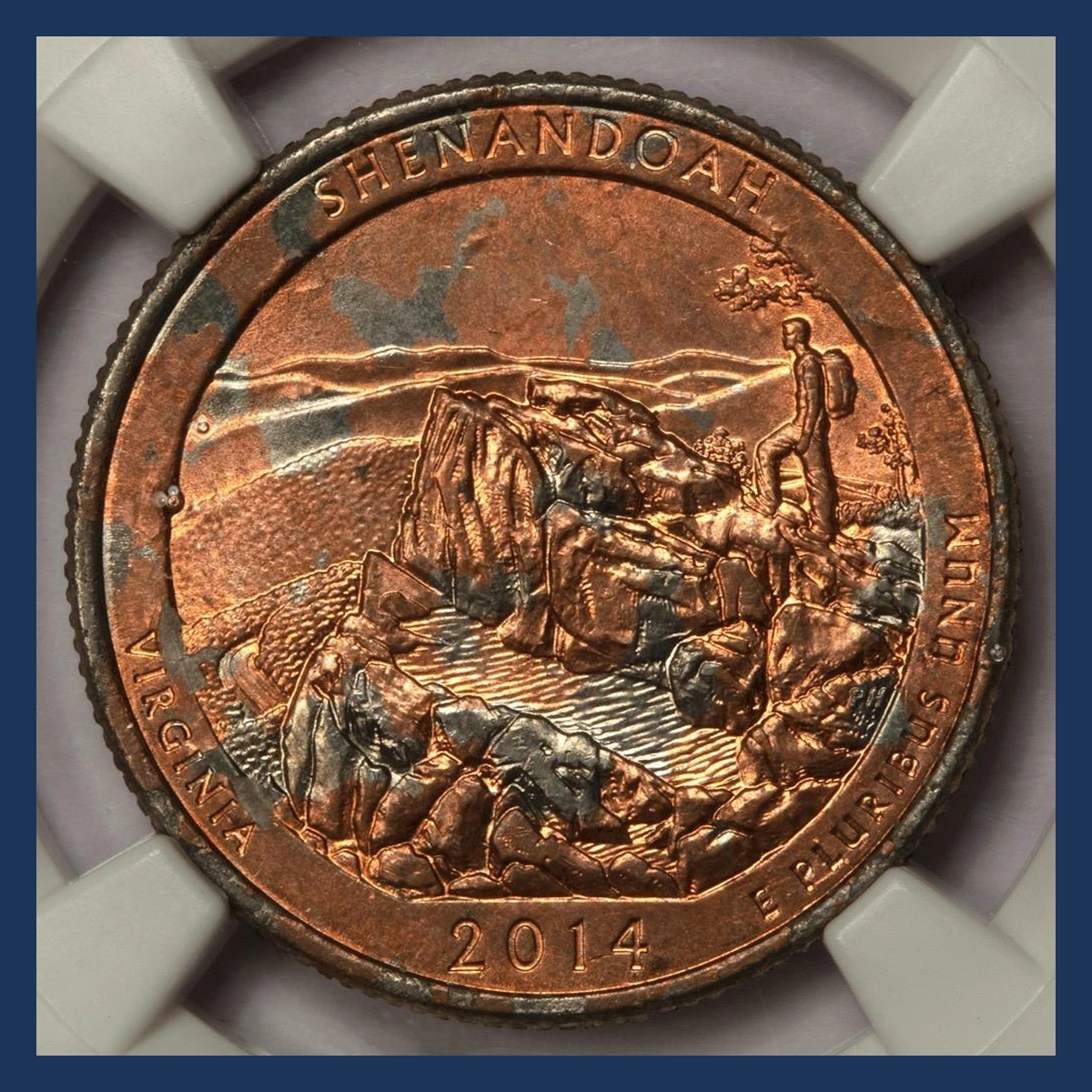
A Shenandoah quarter may show unusually dark color and be offered under the nickname “Black Beauty.” That name describes an appearance rather than proving its cause.
Blanks are heated during preparation to help the metal strike properly. This process, called annealing, can sometimes leave an abnormal surface when conditions are wrong.
The reported Shenandoah example is described as MS64, an unworn grade. Its color still needs to be distinguished from chemicals, stains, or heating applied after minting.
Dark color does not establish that an outer metal layer is missing. The normal layered construction must be considered separately.
Estimated Value
A genuine heating-related surface error on an ordinary clad quarter is estimated at $20–$150. The range assumes the color formed during preparation at the Mint.
For a different-year comparison, a 2005-P dime with an annealing error sold for $74 in April 2015. The Shenandoah quarter needs its own surface assessment before receiving a similar premium.
An unworn grade does not identify the cause of dark color. Later chemical treatment or environmental staining should not be priced as this error.
How to Identify
Weigh a loose coin before linking its color to missing metal. The normal ordinary clad quarter is about 5.67 grams and measures 24.26 millimeters with calipers.
Under a 10× magnifier, inspect the color across both faces and the grooved edge. Look for residue, coating boundaries, burn patterns, or disturbed surfaces that suggest later treatment.
Compare the surface texture with an authenticated heating-error example, not simply another dark coin. The 2014 silver collector version weighs 6.25 grams and should not be compared as if it had ordinary clad layers.
A preserved original surface accompanying the unusual color provides more useful evidence than the “Black Beauty” nickname alone.
5. 2014 America the Beautiful Quarter Raised Cracks and Broken-Tool Lumps
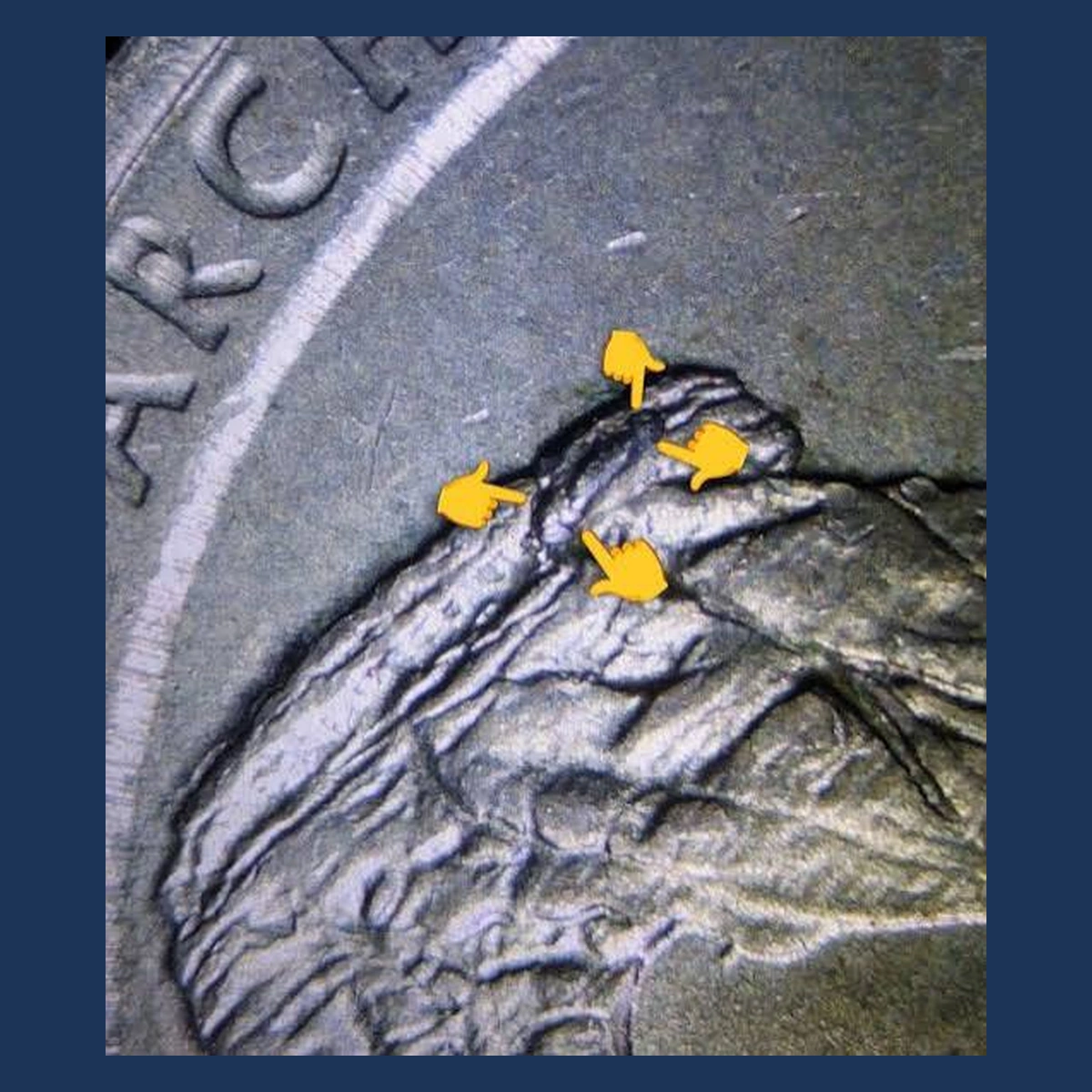
A raised line can follow a crack in a stamping tool, while a chipped-out area can leave a lump. Both add marks that the normal design does not contain.
Arches reports include an “Extra Rock” near the base and a mark near the top. Shenandoah reports include lumps in the two U letters of UNUM.
Great Sand Dunes includes a reported front rim break, while Everglades has a back-side broken-tool report. Its birds are an anhinga and a roseate spoonbill.
A lump inside a design is not automatically a cud. That larger type of break must connect to the rim.
Estimated Value
For ordinary clad coins, small cracks and chips are estimated at $2–$35. Stronger raised breaks, especially clearly rim-connected examples, can fall around $35–$200.
A 1970-D nickel with two cuds sold for $63 in October 2022, providing a different-year and different-denomination comparison. Its result does not price every park’s extra lump.
The actual size and lost detail matter more than the nickname. Several raised features on one quarter still receive a single whole-coin value.
How to Identify
Identify the park and the claimed feature before comparing photographs. Arches’ extra-rock reports concern different positions, while a Shenandoah example may show extra metal inside UNUM’s two U letters.
A 10× magnifier with side lighting reveals whether the feature rises above the design. A scratch instead cuts downward, though displaced metal can rise along its sides.
Check an ordinary loose clad coin with a scale and calipers against 5.67 grams and 24.26 millimeters. A broken tool need not remove any coin metal.
For a claimed cud, follow the raised patch to the grooved edge and inspect for crushing. Naturally struck metal replacing design and joining the rim distinguishes a cud from an interior chip.
6. 2014 America the Beautiful Quarter Peeling Surface Metal
A thin flap or shallow missing patch can interrupt the surface of an Arches quarter. The reported mechanism is lamination, a separation within the metal.
Ordinary quarters have a copper core and bonded copper-nickel outer layers. A localized peeling flaw should be distinguished from the loss of an entire outer layer.
The Arches report does not establish an exact peeling location or the amount of missing metal here. Those details must come from the actual example.
A later scrape can imitate a missing patch, and forcing a flap open can damage a natural defect. The layer boundary needs close examination.
Estimated Value
A genuine localized lamination on an ordinary clad Arches quarter is estimated at $15–$250. Small patches fit lower than large, attractive flaws with a surviving natural flap.
An attached flap makes the separation easier to understand and should remain undisturbed. A complete missing outer layer belongs to a different comparison because it changes the surface across an entire face.
The coin’s condition and the flaw’s visibility both matter. Later scraping or forced separation reduces its value as a natural error.
How to Identify
Do not lift a flap to see whether it comes away. Preserve the attached metal and examine its boundary with a 10× magnifier instead.
Look for a thin layer separating naturally along the surface. A deep gouge with metal piled up around it suggests a different cause.
Weigh a loose ordinary clad coin against the normal 5.67 grams, using a scale sensitive enough to detect a small loss. Measure an intact diameter against 24.26 millimeters with calipers.
Inspect the edge grooves for cutting or peeling that continues inward. A natural layered boundary interacting with the design is stronger evidence than a rough or discolored patch alone.
7. 2014 America the Beautiful Quarter Weak Detail from a Blocked Strike
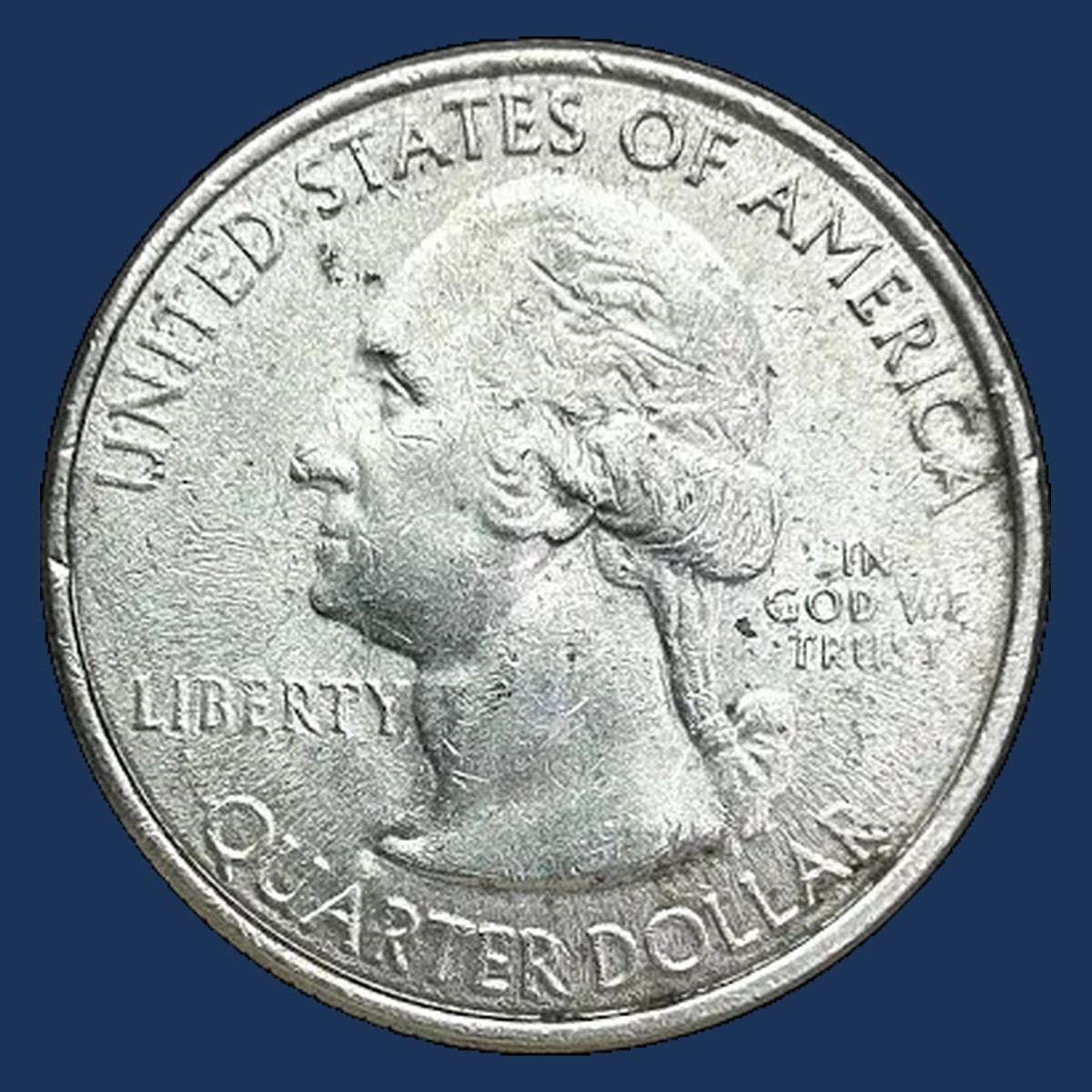
Grease or other material can fill a stamping tool and keep a letter or design area from forming. The result may look smooth or weak rather than deeply dented.
Arches reports mention the arch and nearby lettering, while Shenandoah and Great Sand Dunes also have blocked-strike reports. Each needs its own location and surface comparison.
A Great Smoky Mountains report describes a weak or absent P mintmark. That can fit a blocked strike, but does not establish a separate collectible “No P” tool variety.
Wear and damage can also remove detail. The missing feature alone cannot identify the cause.
Estimated Value
Genuine small blocked-strike errors on ordinary clad coins are estimated at $5–$50. Larger, clearer affected areas on attractive coins can fall around $50–$300.
For comparison, a 1986-P nickel struck through material sold for $204 in June 2023. Its impression does not establish the object or value of any 2014 quarter report.
A weak P should be valued for the proven striking feature, not assigned a rare “No P” premium. Ordinary wear does not earn the error estimate.
How to Identify
Compare the weak area with nearby detail under a 10× magnifier. A single faint letter amid sharp neighboring letters suggests a different explanation from broad circulation wear.
On Great Smoky Mountains, inspect the front’s normal mintmark position. A weak P does not establish a special missing-P variety.
A loose ordinary clad coin should remain near 5.67 grams on a scale and 24.26 millimeters with calipers. Missing design is not necessarily missing metal.
Turn to the other face and the grooved edge, looking for a blow that could have flattened the suspect area. Check for scraping as well.
Smooth weak detail within an otherwise naturally struck surface supports blockage more clearly than a letter cut out after minting.
8. 2014 America the Beautiful Quarter Stepped Edge from Partial Ring Contact
A step along the coin’s edge can separate a grooved band from a wider, smoother band. Part of the blank escaped the ring that normally holds it in place.
The ring is called a collar. It limits the coin’s diameter and forms the grooves around its edge during striking.
Shenandoah and Great Sand Dunes reports include partial contact with this ring. The feature needs an edge view rather than a circular line on the front.
The step can vary around the circumference. It does not need to make the whole coin look strongly tilted or oval.
Estimated Value
Estimate $25–$350 for a genuine partial-collar error on an ordinary clad quarter. A clear step, attractive surface, and readable design support a stronger price.
A 1990-P nickel with partial ring contact sold for $99 in June 2025. That different-denomination result provides a comparison rather than a sale price for either 2014 park design.
A filed or crushed edge should not receive the same estimate. A clear side-view photograph helps establish what buyers are actually seeing.
How to Identify
View the full edge through a 10× magnifier, rotating the coin slowly. Look for the boundary between the grooved area held by the ring and the metal that spread above it.
Use calipers in several directions to compare the outline with 24.26 millimeters. A normal ordinary clad blank should remain near 5.67 grams on a scale because the error does not require missing metal.
Check for filing that cuts across the grooves or a later blow that flattened the edge. The 2014 silver collector version has a 6.25-gram standard instead; a naturally struck stepped profile is the useful distinction, not a line on the coin’s face.
9. 2014 America the Beautiful Quarter Doubled Design Details
A small repeated shape can form when a stamping tool already carries doubled detail. The tool can then reproduce that same feature on multiple coins.
Arches has a back-side doubling report, while Everglades reports include front and back claims. The Great Sand Dunes seller report points to a person’s shoulder on the back.
These reports do not establish one common pattern or a complete set of catalog numbers. Each coin needs comparison with its own claimed doubled area.
The 2014 date is on the back of these quarters. A front-side doubling claim must concern front details rather than that date.
Estimated Value
If tool doubling is established, estimate $15–$400 for an ordinary clad example. Strong, clearly matched detail on an attractive coin supports the higher end.
Weak thickening attracts less interest than a distinct recognized variety. Wear may blur the extra shapes, while scratches crossing the affected area can make a promising example harder to identify.
Flat shelf-like edges can result from movement during striking. They should not receive a doubled-tool premium merely because a seller labels them “DDO” or “DDR.”
How to Identify
Check the park name and choose the claimed face before inspecting the small repeated shape. An Arches back report, Everglades front report, and Great Sand Dunes shoulder need different comparison photographs.
Use a 10× magnifier to trace the extra outline. Its shape should follow a real design element instead of forming an unrelated ridge.
An ordinary loose clad coin should be near 5.67 grams and 24.26 millimeters on a scale and calipers. Inspect the grooved edge for squeezing that might distort nearby details.
Now compare the candidate with a clearly identified example of the same variety. Matching raised detail supports the claim, while a flat shelf beside a letter does not establish a doubled tool.
10. 2014 America the Beautiful Quarter Missing Pieces of the Blank
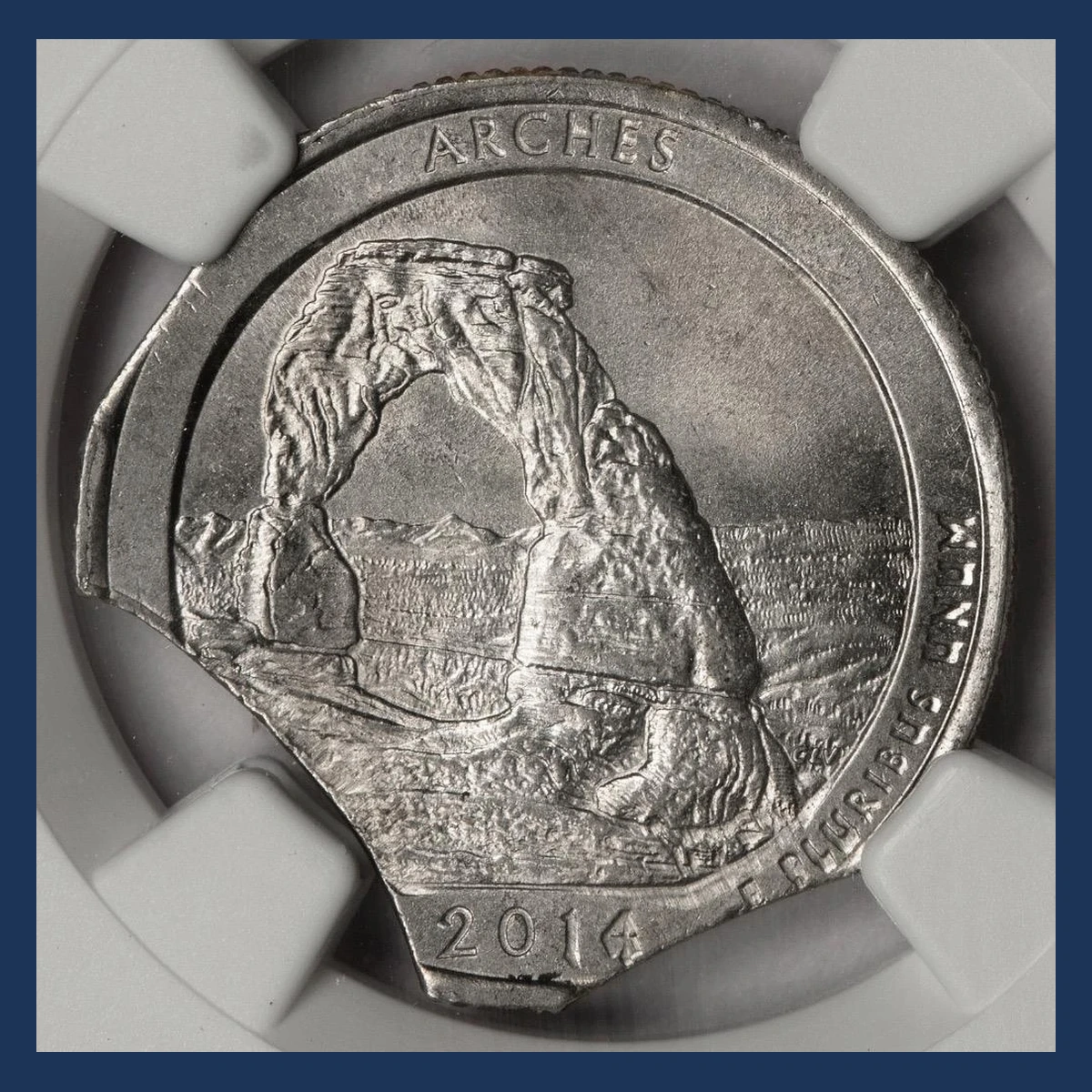
A straight or curved section can be absent before the quarter is struck. The blank-cutting press may reach the end of a metal strip or overlap an earlier hole.
A Shenandoah report describes a straight clip affecting about 15% of the coin, graded AU58 for light wear. Another 2014-P clip report does not establish its park design.
That second report should not automatically be called an Arches example. The visible scene on the actual coin must identify it.
Cutting a finished quarter can imitate the missing outline. A genuine clip needs evidence that the metal was absent during striking.
Estimated Value
Estimate $25–$450 for genuine clipped ordinary clad quarters. Small clips on worn coins tend toward the lower end, while larger natural cuts on attractive pieces can bring more.
A 1999-D Pennsylvania quarter with overlapping curved clips sold for $74 in December 2024. Its shape differs from the reported straight Shenandoah clip, so it is only a comparison.
The missing boundary should retain its original surfaces. A later saw cut or filed edge does not earn a mint-error premium.
How to Identify
Weigh a loose candidate before estimating the missing percentage. An ordinary clad blank begins near 5.67 grams, so genuine missing metal usually lowers that reading.
With calipers, measure an intact direction against 24.26 millimeters. Size and weight alone do not distinguish a mint-made clip from a later cut.
Read the surviving park name and inspect the scene. The roughly 15% straight-clip report names Shenandoah, while the other 2014-P report does not establish Arches.
Under a 10× magnifier, examine the missing boundary and surviving edge grooves for saw marks or filing. Look opposite the cut for possible rim weakness.
A natural cut-and-break boundary interacting with the struck design is the important evidence, rather than the missing outline alone.
11. 2014 America the Beautiful Quarter Expanded Strike Outside the Ring
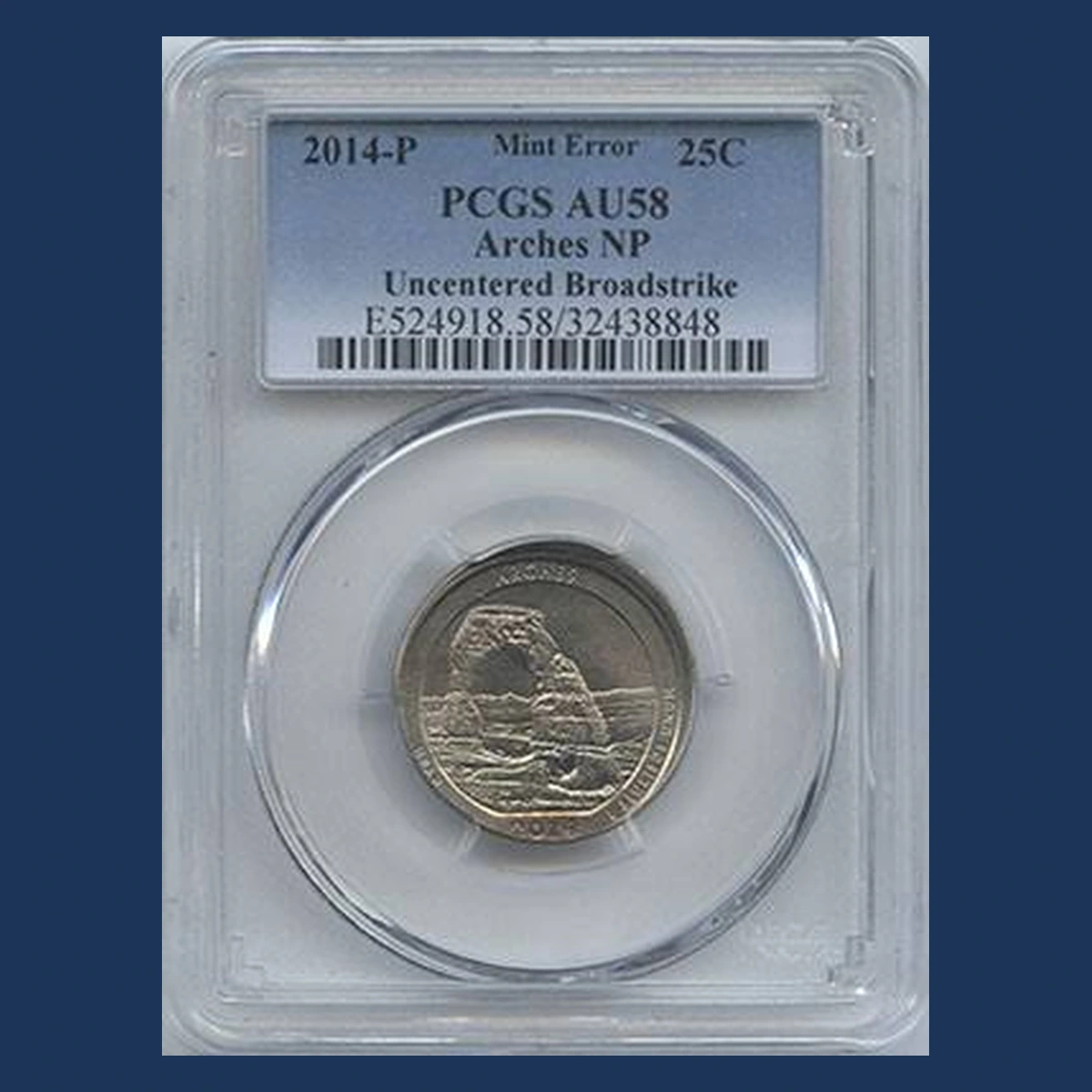
The metal can spread into a wider border while retaining the complete design. This happens when the retaining ring fails to restrain the blank during striking.
Collectors call the result a broadstrike. The design can sit off to one side within the expanded coin without being cut off.
An Arches collector record specifically describes an uncentered broadstrike. Great Smoky Mountains has a separate expanded-strike report described as MS60, an unworn grade.
The two examples should not share a guessed diameter or amount of expansion. A flattened coin can also become wider after minting, so the surface must support the diagnosis.
Estimated Value
Genuine broadstruck ordinary clad quarters are estimated at $40–$500. Wider natural expansion and attractive, complete designs can support stronger prices.
A different-year 1988-P dime with overlapping strikes and expansion sold for $80.50 in May 2005. The smaller denomination and additional strike make it an imperfect comparison.
A clean expanded border makes the error easier to display and compare. Later hammering can enlarge a quarter, but damage that flattens the design does not qualify for the same premium.
How to Identify
Calipers should establish whether the coin extends beyond the normal 24.26-millimeter diameter. Measure several directions because an uncentered broadstrike can spread unevenly.
Use a scale to compare a loose ordinary clad coin with 5.67 grams. Its width can increase without a corresponding gain or loss of metal.
Under a 10× magnifier, inspect both designs and the edge grooves for evidence of a natural strike. Hammering commonly flattens details or leaves impact marks.
Check whether all major design elements remain on the metal. Complete designs within freely expanded borders support a broadstrike; a genuinely cut-off design calls for an off-center assessment instead.
12. 2014 America the Beautiful Quarter Off-Center Strikes
A blank crescent beside a cut-off design can show that the entire coin sat wrongly beneath the tools. Part of the metal missed the strike.
Arches and Great Smoky Mountains have year-specific off-center reports. The latter is described as MS64, an unworn grade, but no exact shift percentage is established here.
Both faces should show the corresponding displacement. A front-only shift may instead come from a misplaced stamping tool.
The readable park scene and 2014 date help connect an error to the correct issue. No direction or mintmark should be guessed from a generic example.
Estimated Value
Estimate $75–$600 for genuine off-center ordinary clad examples. Readable dates, stronger shifts, and attractive surfaces can support prices toward the upper end.
A 1999-P Georgia quarter struck 40% off center sold for $192 in December 2024. That different-year MS66 example supplies a comparison, not a measured percentage or transaction for 2014.
A slight one-sided rim difference should not receive the major off-center estimate. Both faces need to establish the same misplaced strike.
How to Identify
Read the park name and date before trying to measure how far the strike shifted. Compare blank areas on both faces and check that the missing design corresponds to the same misplaced blank.
A scale should show roughly 5.67 grams for a complete ordinary clad blank. Calipers compare its outline with the normal 24.26 millimeters, allowing for uneven spread at the struck area.
Use a 10× magnifier to examine the edge grooves and transition from design to blank metal. Filing or hammering after striking should leave a different surface, while matching untouched areas on both faces provide the useful first confirmation.
13. 2014 America the Beautiful Quarter Possible Repeated Strike
Two displaced portions of a design can indicate that the same coin received more than one blow. The coin must move or turn between strikes for the extra impression to show.
A Great Smoky Mountains image caption reports a double strike, without a firmly established specimen here. The claim therefore needs evidence of two actual struck impressions.
A doubled stamping tool can instead repeat small details in the same position on many coins. That is a different mechanism.
Two shiny edges beside a letter are not enough. The positions and overlap of the designs must tell a consistent striking story.
Estimated Value
For a confirmed double-struck ordinary clad Great Smoky Mountains quarter, use a conditional estimate of $100–$700. The visibility of both impressions and the coin’s condition influence the price.
A 2001-P dime with a second strike 75% off center sold for $114 in October 2021. That different-year and different-denomination result is only a comparison.
The 2014 caption claim does not inherit that coin’s percentage or certification. A second genuine impression must be established before applying a repeated-strike premium.
How to Identify
Find two actual design positions before naming a double strike. Under a 10× magnifier, examine where the later impression overlaps the first and check the corresponding area on the other face.
Both changes should fit the same sequence of blows. Two shiny edges beside one letter are insufficient.
Use a scale and calipers on an ordinary loose clad coin against 5.67 grams and 24.26 millimeters. A displaced second strike can change the outline without removing the original metal.
Inspect the edge grooves for damage and confirm the Great Smoky Mountains design and 2014 date. Matching struck impressions on both faces provide stronger evidence than the original picture caption.
14. 2014 America the Beautiful Quarter Both Outer Layers Reported Missing
Both sides of a clad quarter can look copper-colored if the outer layers are absent. The normal coin has a copper center bonded between two copper-nickel surface layers.
A 2014 report describes a coin graded MS60 with both outer layers missing. Its actual weight and park identity are not established here.
The exposed center should be distinguished from an ordinary coin that was plated, chemically stripped, or discolored afterward. Color by itself cannot show when the layers disappeared.
The silver collector quarter is a different construction. It does not have the same copper center beneath bonded outer layers.
Estimated Value
For a genuine ordinary clad quarter missing both outer layers, use a conditional estimate of $200–$800. An authenticated original strike and attractive condition support stronger prices.
A different-year 1999-D Connecticut quarter missing only its back layer sold for $149 in December 2024. That one-sided error does not establish a sale price or a measured weight for the 2014 report.
The larger estimate requires both layers genuinely to be absent from the original strike. Later stripping should not receive that premium.
How to Identify
Weigh the coin before judging its copper color. An ordinary clad quarter begins near 5.67 grams, so two genuinely missing outer layers should produce a substantial measured reduction.
Do not copy another coin’s low weight as this coin’s measurement. Calipers should compare the remaining diameter with 24.26 millimeters.
The 2014 silver collector coin is different, with a normal 6.25-gram weight and no comparable copper core. Establish which construction you are examining.
Use a 10× magnifier on both faces and the grooved edge. Look for plating, chemical stripping, scraping, or other later alteration.
A design naturally struck on the exposed metal, together with measured layer loss, supports the error more strongly than copper color alone.
Conclusion
Estimated values of $2–$800 cover the ordinary clad errors described here, with strong striking and layer-loss errors generally above small surface marks. These prices apply to whole coins, not to each unusual feature separately.
Photograph the park design, Washington’s portrait, and the edge before comparing examples. Establish the cause of the mark first, and keep later damage, silver collector finishes, and uncertain seller descriptions separate from a confirmed mint-made error.