2018 Quarter Error List with Pictures

A copper-colored stripe, an extra lump on a tree, or a tilted back design can each have a different cause. This 2018 America the Beautiful Quarter error guide covers the five park designs, with estimated ordinary-coin values from $2–$600.
As a different-year comparison, a 1999 Connecticut quarter missing its back outer layer sold for $149 in December 2024. Read on to see how metal flaws differ from marks made by damaged stamping tools.
1. 2018 America the Beautiful Quarter Raised Tool-Scratch Lines
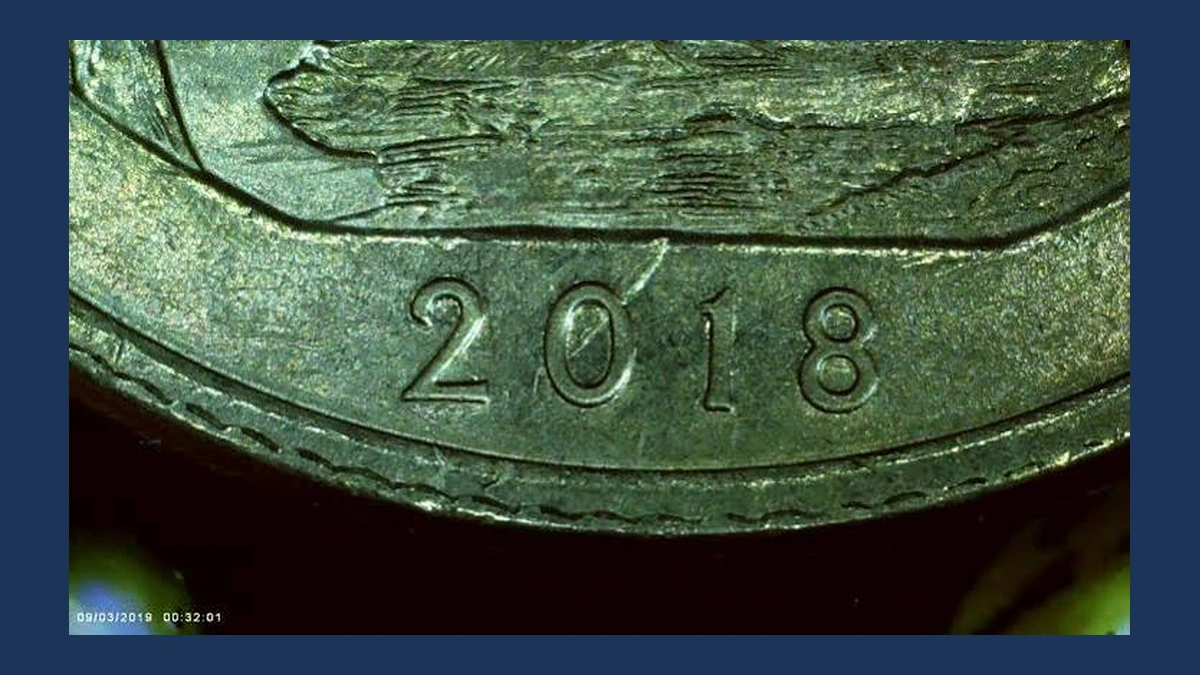
An extra raised line near Chapel Rock can be copied from damage to a stamping tool. A scratch or gouge cut into the tool fills with metal as a coin is struck.
The finished quarter then shows a raised copy of that recessed mark. Collectors call the tool a die and may describe the extra line as a die gouge.
The Pictured Rocks design has a report of this feature, without one established nickname or exact direction here. Its normal rock edges and tree details provide the necessary comparison.
A scratch on the finished coin usually cuts downward instead.
Estimated Value
For an ordinary clad example, estimate $2–$30 for a small recognizable tool-gouge mark. A stronger, clearly mint-made line on an attractive coin may reach roughly $50.
The feature’s shape and surface matter when comparing estimates. A clear line standing apart from the rock design is easier to recognize than a faint mark hidden among rough details.
A post-mint scratch or damage around the rock should not receive the same price simply because it catches the light.
How to Identify
Compare Chapel Rock with a normal Pictured Rocks quarter before examining the extra line. The design already contains uneven rock surfaces that should not be mistaken for damage to the tool.
Use a 10× magnifier and side lighting to decide whether the mark rises above the surface. Check for a cut groove with displaced edges that could make a later scratch appear raised.
A loose ordinary coin should weigh about 5.67 grams and measure 24.26 millimeters on a scale and calipers, with a grooved edge. The silver collector version uses a 6.25-gram standard; a raised line separate from the intended rock design is the first useful distinction.
2. 2018 America the Beautiful Quarter Rotated Back Design
The Block Island scene may sit at an angle when the coin is turned over in the normal way. The night heron and lighthouse make the change easy to compare with another quarter.
One stamping tool can rotate relative to the other inside the press. This changes the relationship between the two pictures without shifting their centers sideways.
Reports include Philadelphia and Denver examples, but a specific measured angle is not established here. The coin must be turned over consistently before measuring anything.
Twisting it between the fingers during the flip can create a false appearance of rotation.
Estimated Value
A genuine, clearly visible rotation on an ordinary clad coin is estimated at $10–$100. The size of the measured turn and the coin’s condition affect collector interest.
For a different-denomination comparison, a 2015-D nickel rotated 90 degrees counterclockwise sold for $79 in October 2021. That result does not establish an angle or a sale for the Block Island quarter.
Do not assign a premium from a casual hand flip. A repeatable comparison with normal alignment is needed.
How to Identify
Hold Washington upright and mark the coin’s top position on a photograph. Flip the coin top to bottom without a sideways twist, then photograph the Block Island scene.
Repeat with an ordinary quarter held the same way. A stable difference between the two back designs can then be measured.
Inspect the rims and grooved edge with a 10× magnifier for damage that could make the coin sit unevenly. Calipers should show about 24.26 millimeters across a normal piece.
A loose clad quarter weighs near 5.67 grams on a scale, compared with 6.25 grams for silver. Those figures do not measure rotation.
Repeat the controlled flip: a consistent tilt is useful evidence, while a changing angle points to handling.
3. 2018 America the Beautiful Quarter Unusual Color from Metal Heating
Brown, reddish, or dark areas can cover a quarter before it ever reaches circulation. Heating the blank during preparation can sometimes leave unusual surface color.
This process is called annealing: the metal is heated so it will strike properly. Incorrect conditions can affect the surface, but color alone cannot establish the cause.
Reports include a Denver Apostle Islands example and a Philadelphia Pictured Rocks example. They should not be treated as one coin or given identical patches.
Environmental stains, chemicals, and heat applied later can look similar. An oddly colored coin does not automatically have a missing outer layer.
Estimated Value
For a genuine heating-related color error on an ordinary clad coin, estimate $20–$150. The estimate assumes that the unusual surface developed during preparation at the Mint.
A different-year 2005-P dime with an annealing error sold for $74 in April 2015, offering a modest comparison across denominations. It does not authenticate either reported 2018 quarter.
Staining or deliberate heating after minting removes that proposed error premium. Attractive condition matters only after the surface’s cause is properly assessed.
How to Identify
Weigh the coin before assuming the copper-colored area means an outer layer is gone. Ordinary clad quarters start near 5.67 grams, while 2018 silver collector coins use 6.25 grams.
Use a 10× magnifier to examine the color across both faces and the grooved edge. Look for coating boundaries, burns, residue, or other signs of later treatment.
Calipers should show about 24.26 millimeters across a normal quarter. A heating-related color change does not by itself mean that metal is missing or that the coin has changed size.
Compare the entire surface with an authenticated example rather than one similarly colored photograph. Original surface texture accompanying the color is more useful than brown or red color by itself.
4. 2018 America the Beautiful Quarter Raised Cracks, Chips, and Rim Breaks
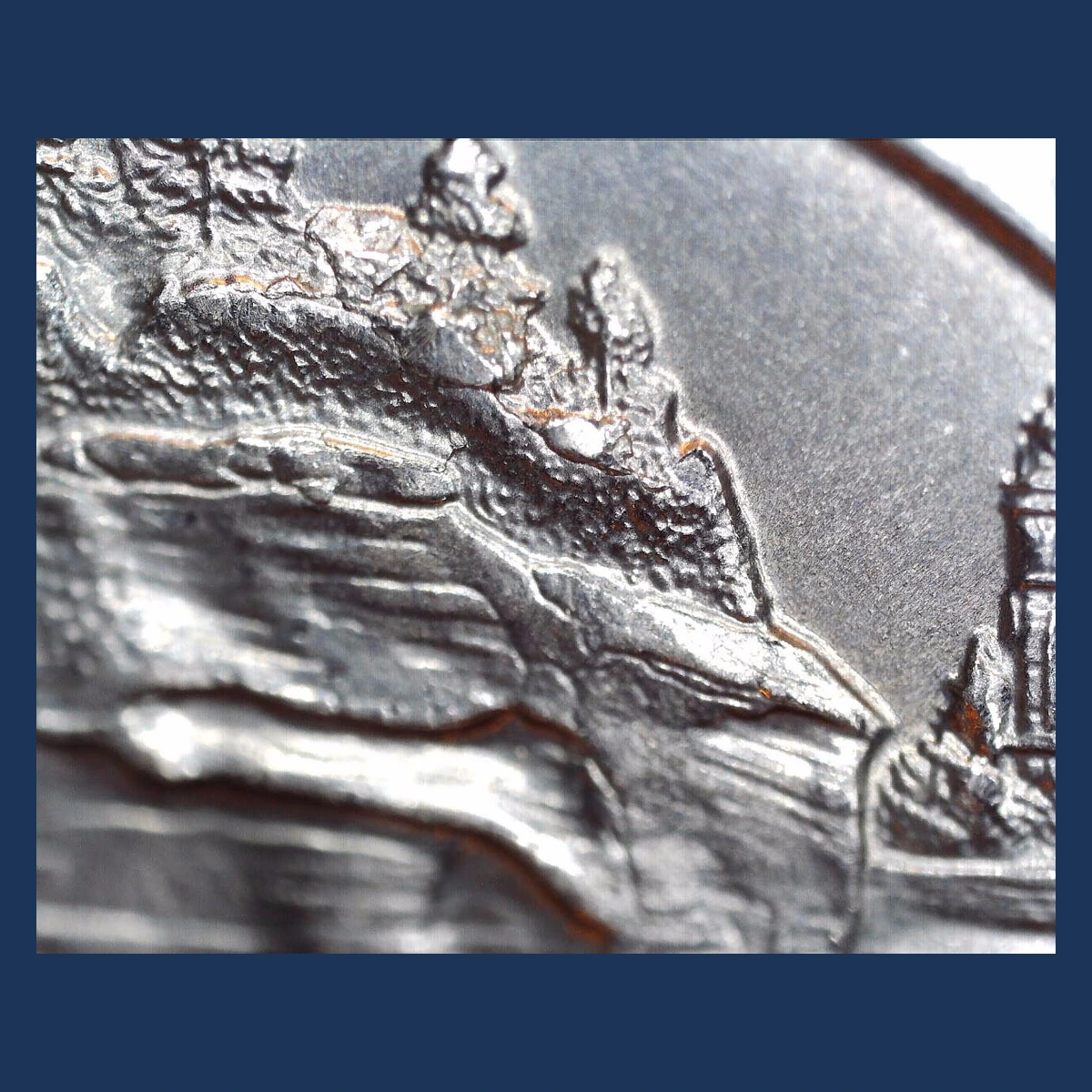
A raised ridge or lump can appear beside an Apostle Islands cave, on a Pictured Rocks tree branch, or elsewhere in the design. A damaged stamping tool transfers these extra shapes to the coin.
A narrow tool crack produces a raised line. A small chipped-out area makes a lump, while a larger break touching the rim can create a cud.
Voyageurs and Cumberland Island also have cataloged rim-break reports. Match each park’s bird scene before comparing the raised marks.
These features belong to separate park designs and separate coins. They should not be combined into one supposedly complete error pattern.
Estimated Value
Small chips and cracks on ordinary clad quarters are estimated at $2–$30. Stronger rim-connected breaks can fall around $30–$200, depending on how much design is replaced.
A different-year 1970-D nickel with two cuds sold for $63 in October 2022. That modest result shows why a raised lump does not automatically make a coin highly valuable.
Each quarter needs its own assessment of size, condition, and mint origin. Several marks on one coin still receive one whole-coin price.
How to Identify
A scale and calipers provide a basic check before inspecting the extra metal. An ordinary clad quarter should remain near 5.67 grams and 24.26 millimeters, or 6.25 grams for the silver collector version.
Choose a photograph of the same park and the same reported feature. Pictured Rocks examples include a branch lump and a front mark near the designer’s initials.
View the feature through a 10× magnifier with light coming from the side. A raised ridge differs from the depression left by a scratch or impact.
For a claimed cud, follow the patch to the rim and inspect the adjacent edge grooves for crushing. A natural rim-connected patch replacing design supports a broken tool; a dent pushing metal upward does not.
5. 2018 America the Beautiful Quarter Stepped Edge from Partial Ring Contact
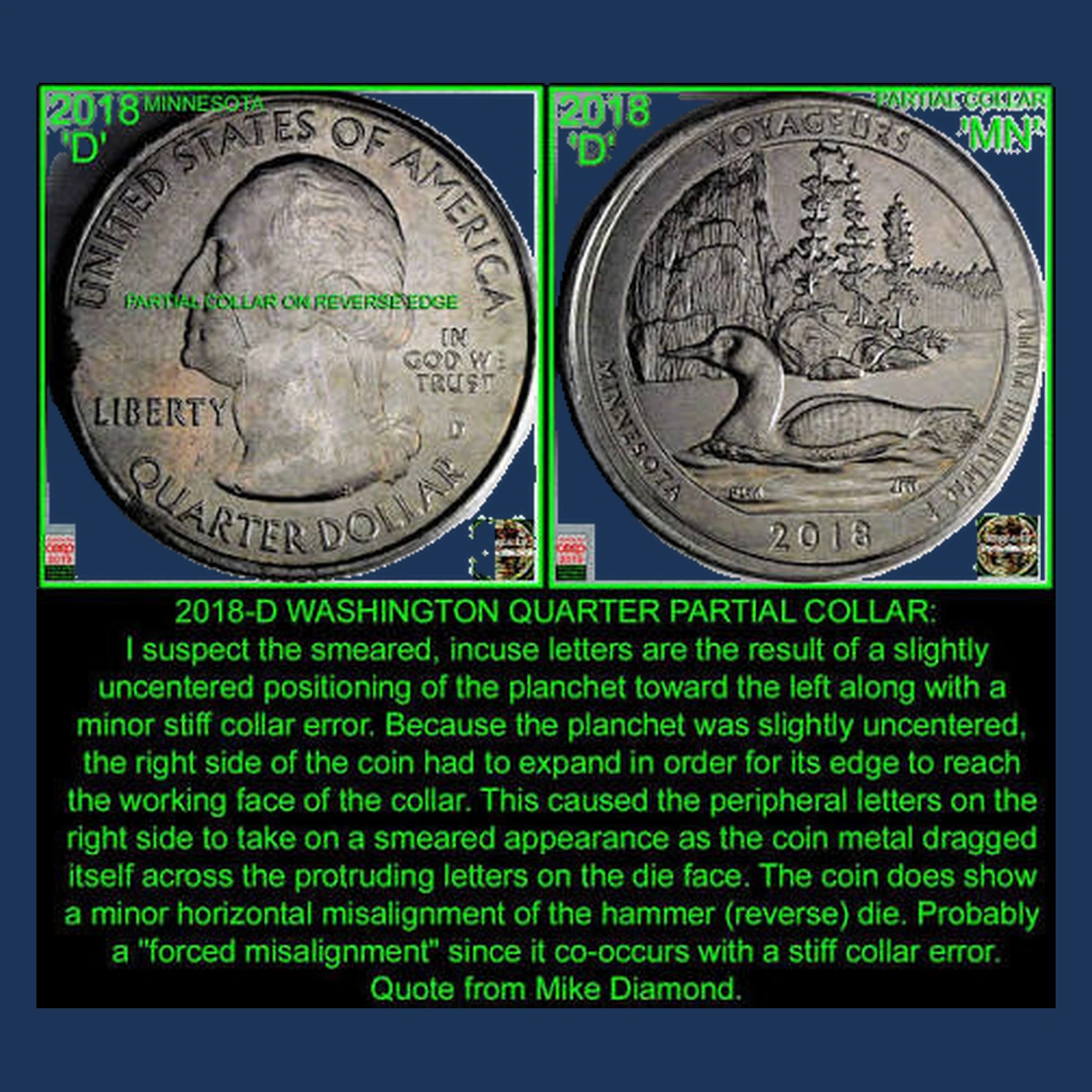
The edge can show a step between a normally grooved band and a wider, smoother band. The coin sat only partly inside the ring that usually holds its shape during striking.
Collectors call this a partial-collar error. The collar is the metal ring that restrains the blank and forms the edge grooves.
Apostle Islands has a report of this edge feature. The step can be level or uneven, depending on how the coin met the ring.
The familiar “railroad rim” nickname describes its appearance. It does not mean that every example was tilted at exactly the same angle.
Estimated Value
A genuine partial-collar error on an ordinary clad Apostle Islands quarter is estimated at $25–$250. A clear, substantial step on an attractive coin supports the higher part of the range.
For a different-year comparison, a 1990-P nickel with a partial-collar error sold for $99 in June 2025. Its different size and design limit the comparison.
A damaged or filed quarter edge does not receive this estimate. Good side-view photographs help buyers see what is actually present.
How to Identify
Turn the Apostle Islands coin edge-on under a 10× magnifier. Follow the boundary between the normally grooved band and the area that spread outside the retaining ring.
The step need not remain at the same height all the way around. An uneven step can still result from partial ring contact.
Measure several directions with calipers against the normal 24.26-millimeter diameter. A complete clad blank should weigh near 5.67 grams on a scale, or 6.25 grams for silver.
Look for scratches from filing across the grooves. Metal deliberately removed after minting can imitate a stepped profile.
A naturally struck transition between grooved and expanded metal identifies this error more directly than a raised border on the coin’s face.
6. 2018 America the Beautiful Quarter Doubled Front Details
Letters may look thicker than usual because a stamping tool carried an altered or doubled design. A true doubled tool can repeat that same feature on more than one coin.
The Philadelphia Pictured Rocks report describes thickening around LIBERTY and IN GOD WE TRUST. It should not automatically be described as widely split lettering.
A smaller front-side doubling report also exists for Denver Apostle Islands. Its exact letter pattern needs a matching example rather than borrowing the Pictured Rocks pattern.
The 2018 date appears on the back of these quarters. It cannot serve as a location for front-side doubling.
Estimated Value
For genuine, identified front-side doubling on ordinary clad examples, estimate $15–$300. Weak thickening belongs lower than a clear, recognized variety on an attractive coin.
The Philadelphia and Denver patterns may draw different collector interest. Photographs should show extra raised detail in the correct location, with enough surrounding lettering to compare against a normal coin.
Mechanical movement can also leave flat shelves beside letters. That appearance should not receive the same variety premium simply because it is called “double.”
How to Identify
Read the park name and mintmark before choosing a comparison. Pictured Rocks Philadelphia and Apostle Islands Denver are separate reports, even though both use Washington’s front portrait.
The normal diameter is 24.26 millimeters, with a grooved edge. Check a loose coin using calipers and a scale against 5.67 grams for clad or 6.25 grams for silver.
With a 10× magnifier, compare the thickness of LIBERTY and the motto on the Philadelphia report. Avoid expecting split corners when the described effect is thickening.
For the Denver report, require a matching close-up of its own pattern. A repeated raised shape in the correct location is more useful than one flattened letter edge.
7. 2018 America the Beautiful Quarter Design Blocked During Striking
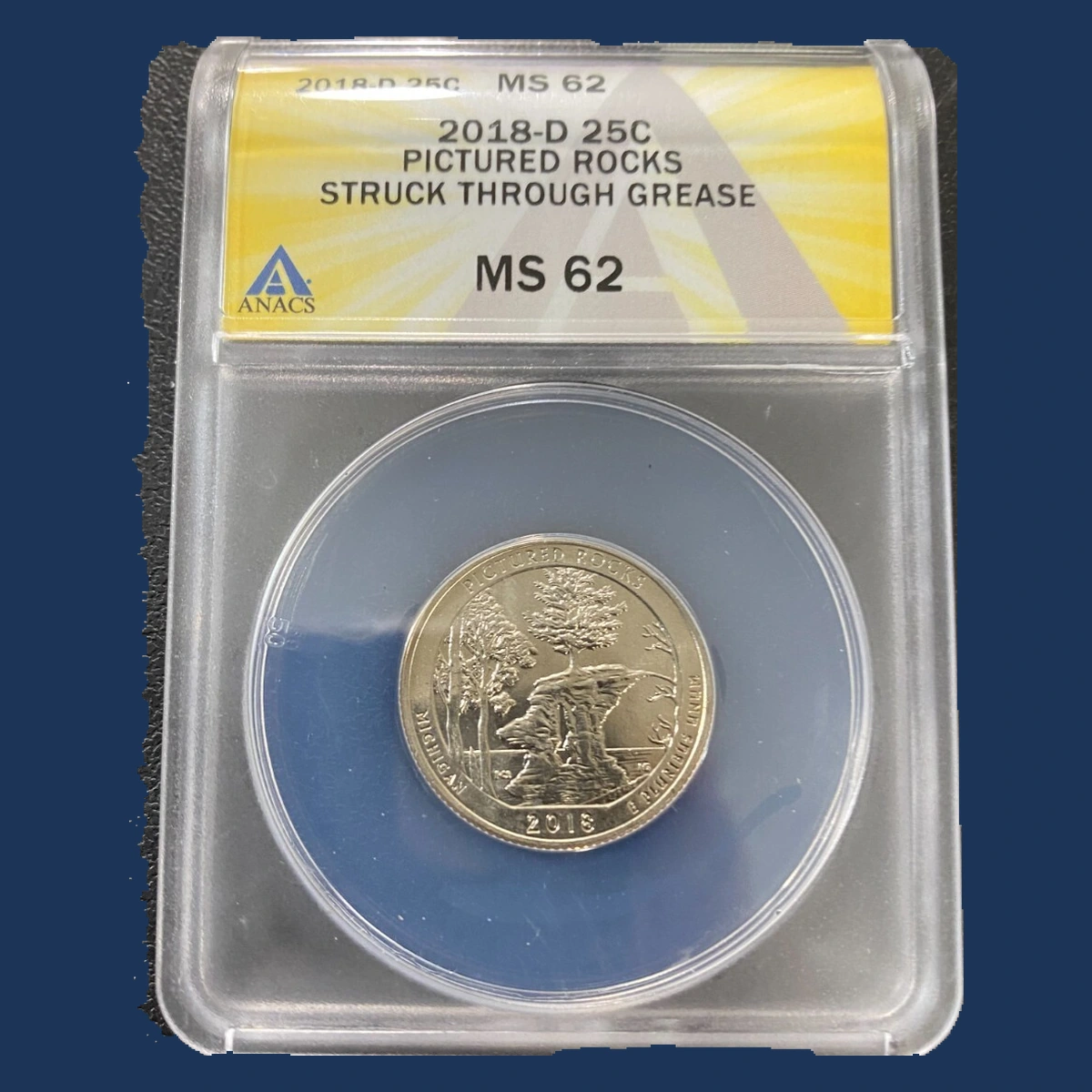
A depressed patch or missing detail can mark the place where material blocked the strike. An object between the blank and its stamping tool prevents the normal design from forming fully.
Reports cover Washington’s face on Block Island, front lettering on Cumberland Island, and weak areas on Pictured Rocks. Apostle Islands reports include the kayak and surrounding water.
A Pictured Rocks coin described as peeling metal was reported as a grease-blocked strike. Those are different mechanisms.
The separate examples do not establish one common object or impression shape. A “starburst” nickname also needs a clear view of the actual coin.
Estimated Value
Genuine blocked-strike errors on ordinary clad examples are estimated at $10–$350. A small weak patch fits near the bottom, while a large, clear impression on an attractive coin can bring more.
A different-year 1986-P nickel struck through material sold for $204 in June 2023. The size and shape of that impression need not match a 2018 quarter.
The range applies to mint-made impressions. Surface wear, scraping, or an unsupported nickname cannot establish the same premium.
How to Identify
A Pictured Rocks weak patch should be checked for missing metal before calling it peeling. Under a 10× magnifier, a blocked strike may lack design without exposing a lifted layer.
For the other parks, inspect the actual depression and its transition into the normal design. Do not transfer a Block Island face impression to an Apostle Islands kayak.
Check the opposite face and the grooved edge for damage from a later blow. Weigh and measure a loose quarter with a scale and calipers against 5.67 grams and 24.26 millimeters, or 6.25 grams for silver.
A smooth struck boundary without torn or pushed-up damage helps distinguish an original blockage from an ordinary dent.
8. 2018 America the Beautiful Quarter Clipped Coin Blank
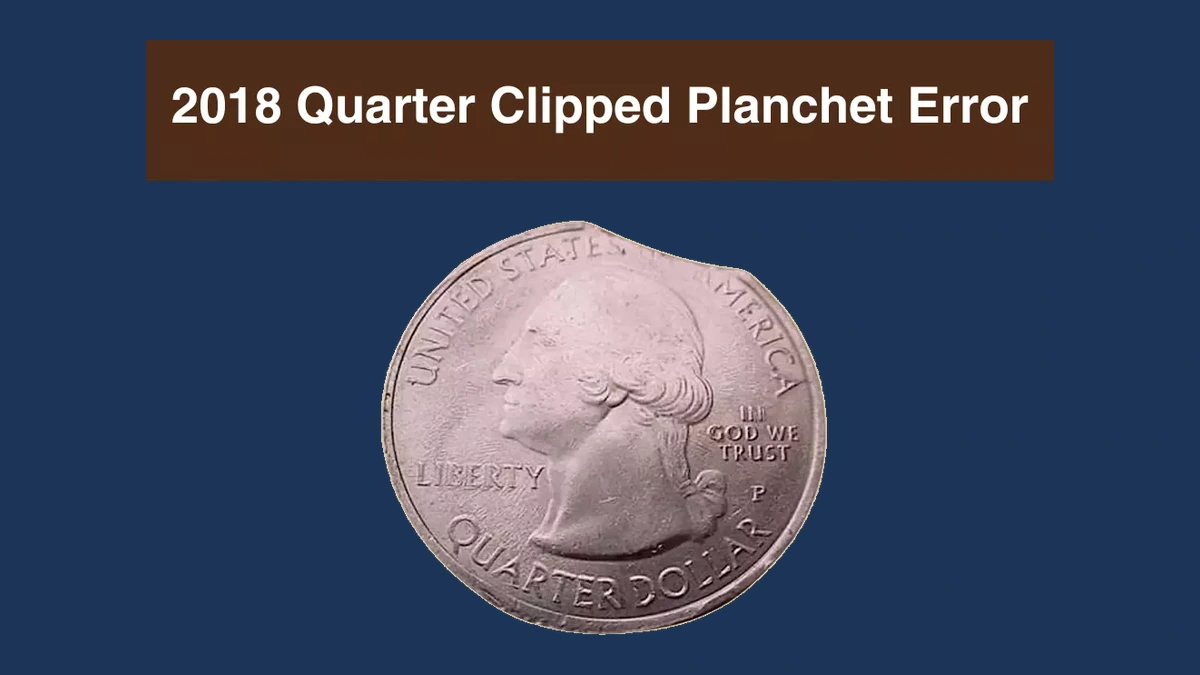
A curved bite can be missing from the coin before any design is struck. The cutting press may overlap a hole left by an earlier blank.
The resulting incomplete disk enters the coin press and receives the quarter design around its missing section. Collectors call the result a clipped planchet; a planchet is the prepared metal blank.
The 2018 report includes curved clips without establishing the exact park, mintmark, or missing percentage here. Those details must come from the actual coin.
A cut made after minting can imitate the outline, so the curved shape alone is not enough.
Estimated Value
Estimate $20–$400 for a genuine clipped ordinary clad quarter. Small clips on circulated coins sit lower than larger, clearly natural missing sections on attractive pieces.
A different-year 1999-D Pennsylvania quarter with overlapping curved clips sold for $74 in December 2024. Its two overlapping cuts are not the same shape as every reported 2018 clip.
The price here belongs to the complete error coin. A sawed or filed missing section should not receive a mint-error premium.
How to Identify
Weigh a loose clipped candidate and compare it with the normal 5.67-gram clad standard. Missing metal usually lowers the result, while the silver version begins near 6.25 grams.
Use calipers across an intact direction to compare with 24.26 millimeters. Neither a small diameter nor a low weight alone proves a mint-made clip.
Under a 10× magnifier, inspect the missing boundary for a natural cut-and-break surface. Saw marks or fresh filing suggest a later cut instead.
Follow the surviving edge grooves toward the opening and examine the rim opposite it. Opposite-side weakness can help when present, but the natural boundary’s interaction with the struck design remains the stronger check.
9. 2018 America the Beautiful Quarter Expanded Strike Outside the Ring
A quarter can spread wider than normal when the retaining ring fails to hold it during the strike. Both designs may remain complete inside the expanded borders.
The result is called a broadstrike. Its extra width differs from an off-center strike, which leaves part of the design missing.
A 2018 broadstrike is reported without a park or mint assignment here. The example should be identified from its surviving design rather than assigned to all five parks.
Uneven expansion can leave the pictures off to one side within the wider outline. That alone does not change it into an off-center coin.
Estimated Value
Use an estimated $40–$450 for a genuine broadstruck ordinary clad quarter. The amount of expansion, retained detail, and surface condition influence the price.
For comparison, a different-year 1988-P dime with overlapping strikes and expansion sold for $80.50 in May 2005. That smaller coin also had a repeated strike, so it is only a broad market comparison.
A hammered quarter can become wider without becoming a mint error. Original struck detail is essential before applying the estimated range.
How to Identify
Measure the coin with calipers before focusing on an uneven border. A broadstrike may exceed the normal 24.26-millimeter diameter in one or more directions.
Weigh it on a scale: a complete clad blank should stay near 5.67 grams, while a silver collector version starts near 6.25 grams. Expansion alone does not add metal.
Inspect the edge with a 10× magnifier for missing or incomplete grooves where the ring failed to restrain it. Check both designs for flattened details or hammer marks that could explain later spreading.
All major design elements should remain on the coin for a straightforward broadstrike. A complete, naturally struck picture inside wider borders provides the clearest first distinction.
10. 2018 America the Beautiful Quarter Off-Center or Shifted Designs
A displaced design can leave blank metal along one side and cut off part of the picture on the other. When the entire blank sits wrongly, both faces show the corresponding shift.
Denver Voyageurs and Denver Apostle Islands off-center examples are reported. The Voyageurs back shows a loon and its surrounding scene.
A Philadelphia Apostle Islands report describes only slight misalignment. That may mean one stamping tool moved while the coin itself stayed centered.
The two explanations require different evidence. A general 30% or 40% figure for another 2018 quarter should not be assigned to these specific reports.
Estimated Value
Genuine off-center ordinary clad quarters are estimated at $50–$500, with readable dates and clearer shifts supporting stronger prices. A small single-tool misalignment is more modestly estimated at $2–$20.
A 1999-P Georgia quarter struck 40% off center sold for $192 in December 2024. That different-year result does not establish the percentage or price of either 2018 park example.
The coin must first be classified correctly. An uneven front rim alone does not justify the larger off-center range.
How to Identify
Keep the front upright and compare its rim spacing with the back. If only one face shifts, investigate a moved stamping tool before calling the coin off center.
For a claimed off-center example, find corresponding unstruck areas and cut-off design on both sides. Verify the park scene and readable 2018 date on the back.
A 10× magnifier can show the boundary between blank and struck metal, including the nearby edge grooves. Later grinding should leave a different surface.
A complete clad blank normally weighs about 5.67 grams on a scale; silver versions use 6.25 grams. Calipers compare the shape with 24.26 millimeters, but matching displacement on both faces remains the decisive first observation.
11. 2018 America the Beautiful Quarter Missing or Defective Outer Metal Layer
A broad copper-colored face can reveal that the outer layer failed to bond to the core. Ordinary quarters use a copper center between two copper-nickel outer layers.
This construction is called clad. If an outer layer is missing before striking, the exposed core can receive the design directly.
Cumberland Island reports include a missing back layer and a separate Denver example described as defective clad. The Denver coin has a diagonal copper-colored band rather than a proven completely missing face.
These are different pieces. Their actual weights and the extent of layer loss must not be borrowed from one another.
Estimated Value
For a genuine partial outer-layer defect on an ordinary clad coin, estimate $30–$200. A clearly missing full outer layer can fall around $100–$600, depending on condition and completeness.
A different-year 1999-D Connecticut quarter missing its back layer sold for $149 in December 2024. That was a complete coin graded MS62, an unworn grade.
The diagonal band on the 2018-D Cumberland example should not automatically receive the full-layer estimate.
How to Identify
Determine the metal type before interpreting a copper-colored stripe. A 90% silver collector quarter has no copper core like an ordinary clad coin.
For a loose clad example, compare the scale reading with the normal 5.67 grams. A whole missing outer layer should reduce weight, but the actual loss must be measured on that particular coin.
Check diameter with calipers against 24.26 millimeters. A change in color alone does not require a change in size.
Inspect the grooved edge and layer boundary with a 10× magnifier. Plating, chemical stripping, or scraped metal may explain a misleading surface.
Match a natural exposed-core boundary with the measured loss before identifying a whole missing layer. The diagonal Denver band needs its own assessment.
Conclusion
The estimated $2–$600 range covers genuine errors on ordinary clad 2018 quarters, from small raised marks to stronger metal and striking mistakes. Clad means the coin is made from bonded metal layers.
Identify the park before comparing an error photograph, and check both faces and the edge. Keep 90% silver collector versions separate, and remember that damage or an appealing nickname cannot establish a mint-made error.