1986 Dime Error List with Pictures

With 95% of its design missing the blank, a 1986-P dime brought $528 in January 2022. Almost all the metal stayed untouched, making the tiny struck portion especially important for identification.
This 1986 dime error list includes both documented coins and reported types that need clearer examples. Estimated values range from $5 to $8,000, with the upper end reserved for a confirmed wrong-blank error.
Compare the visible marks below before deciding which category fits your coin.
1. 1986 Roosevelt Dime Repunched D Mintmark
A second edge on the D can suggest that the mint letter was punched into the stamping tool more than once. Collectors call this a repunched mintmark.
The extra impression should belong to the letter itself, rather than a scratch beside it. Its shape may reveal part of an earlier position.
A 1986-D example is reported in a year guide, but a matching specialist listing has not been established for that report. Inspect the actual extra stroke carefully, since wear and damage can also change the shape of a small mint letter.
Estimated Value
An estimated $15–$45 follows the modest range given for a properly identified Denver repunched mintmark. Apply it to a confirmed feature rather than any thick-looking D.
A separate curve or stem that remains clear under a magnifier is more useful than a tiny reflective edge. Wear can blend those details together, and damage around the mint letter weakens the comparison even if the rest of the coin looks attractive.
How to Identify
Find the D first and photograph it straight on through a 10× magnifier. Compare its inner opening and outer curve under light from several directions.
A repunched letter needs an extra part that fits the shape of another D. A flat shelf or a rough, swollen outline can have other causes.
For a loose coin, check the ordinary dime specifications with a scale and calipers: about 2.268 g and 17.91 mm. These establish the basic coin, not the cause of the extra edge.
Do not assign a punch direction from a vague shadow. Look for a distinct second stem or curve that can be matched to an identified Denver example.
2. 1986 Roosevelt Dime Doubled Die on the Front or Back
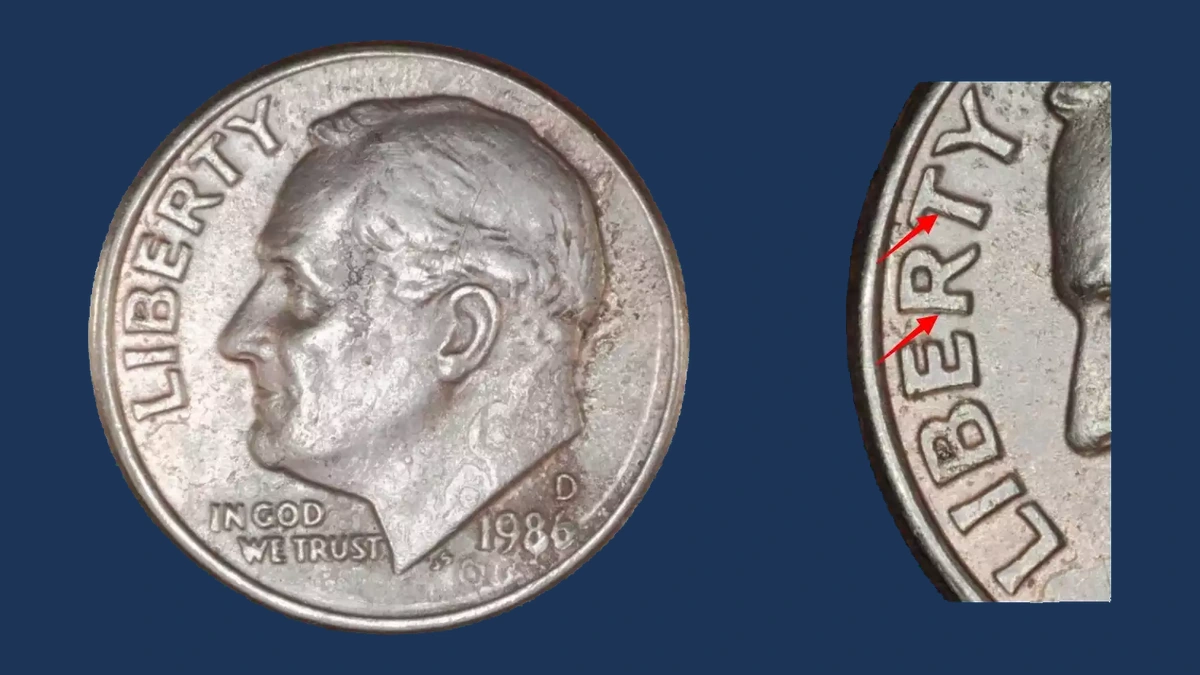
The design can carry a second outline even though the coin received only one blow. That happens when the die, the steel stamping tool, already has a doubled design.
Year reports mention both front and back doubling for 1986. Suggested areas include LIBERTY, the date, the motto, the torch, and reverse lettering.
Those reports do not establish a particular mint, finish, or cataloged variety. The locations are places to inspect, not proof that every thick letter belongs to a known doubled die or that both faces doubled on one coin.
Estimated Value
For genuine minor doubled dies, a useful estimated range is $15–$100. It reflects the market for modest modern dime doubling rather than a claimed auction record for a named 1986 variety.
Clear separation gives a buyer something repeatable to compare. A worn or blurred feature belongs lower, while striking-related flat doubling usually adds little; a large close-up does not turn an ordinary flat shelf into a valuable second design.
How to Identify
Make separate photographs of the front and back, and mark the area that actually looks doubled. Do not expect both faces to show the same effect.
Under a 10× magnifier, compare letter corners, torch edges, and the date with a normal dime. Distinct rounded outlines or split corners are more useful than uniform thickness.
Tilt the lamp rather than rotating the coin constantly. A shadow that changes position can create a false extra edge.
P and D circulation coins and S Proofs, specially made collector coins, normally weigh 2.268 g and measure 17.91 mm. Use a scale and calipers on loose coins, leaving sealed examples protected.
Match the separated design itself to a documented example before applying a variety name.
3. 1986 Roosevelt Dime Misaligned Front Die
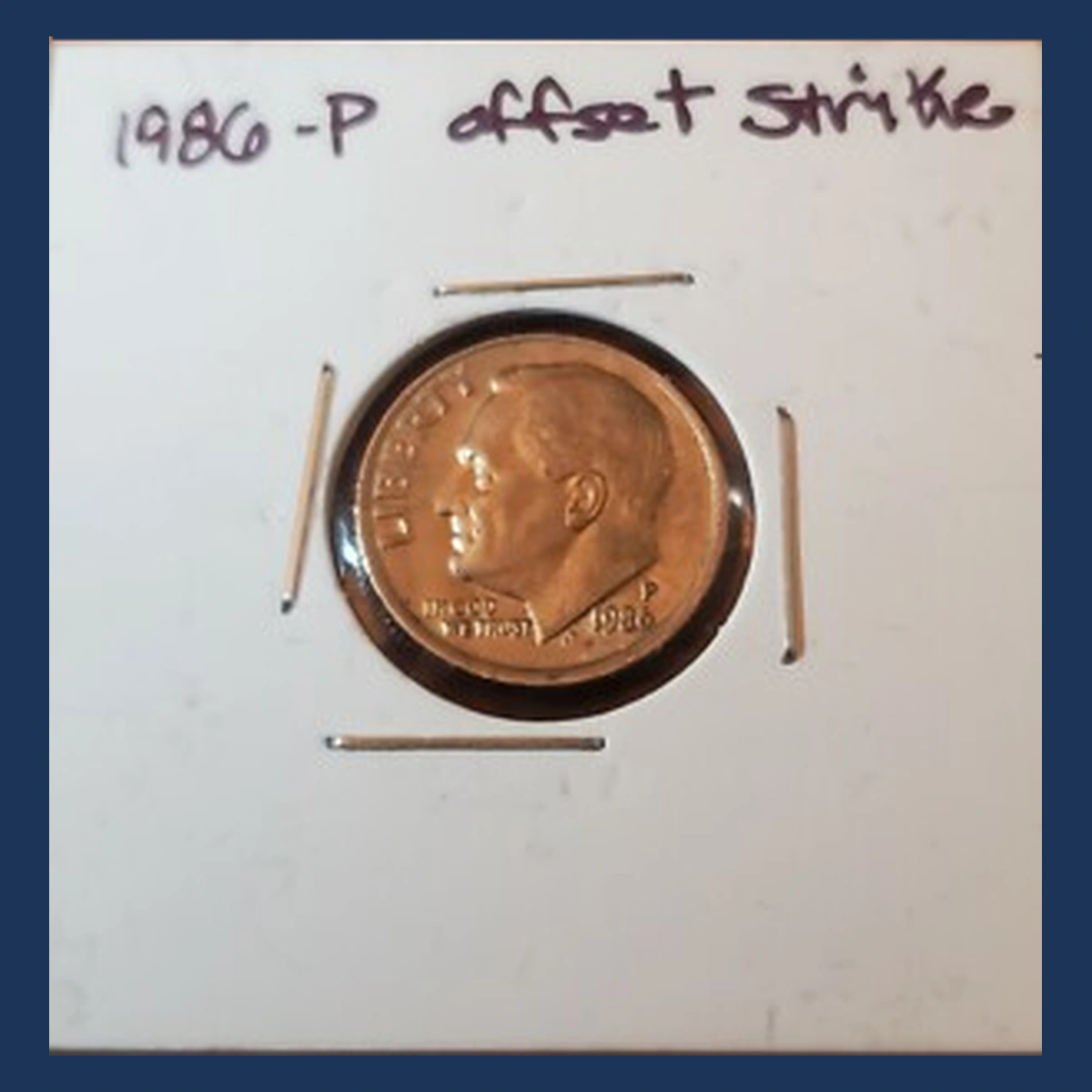
One face can have a very narrow border on one side and a wide border on the other. If the reverse stays normally centered, the front stamping tool may have shifted sideways.
This is a misaligned die, rather than a whole blank sitting off-center between both tools. The edge comparison is essential.
A seller listing describes a 1986-D example as ANACS AU58, or lightly worn, with a misaligned front. The precise shift and holder details still need matching to that coin, so no direction or percentage defines the reported example here.
Estimated Value
Small confirmed shifts fit an estimated $5–$100 range. A slight uneven rim may attract little interest, while a stronger shift that removes front detail can be easier to demonstrate.
The seller’s AU58 description is a condition claim, not a sale price. Compare the actual front and reverse borders before paying a premium; later rim damage or a tilted photograph can make a normal coin appear more displaced than it is.
How to Identify
Place photographs of both faces beside each other at the same size. Follow the front border around the coin, then compare the reverse border without relying on one close crop.
A 10× magnifier helps show whether lettering actually approaches or runs into the edge on the shifted face. If both designs move together beside a blank crescent, consider an off-center strike instead.
Check a loose example near 2.268 g on a scale and 17.91 mm with calipers, looking for flattening or cut edges. The practical distinction is an uneven front design paired with a normally centered back, rather than a coin merely photographed at an angle.
4. 1986 Roosevelt Dime Clipped Blank
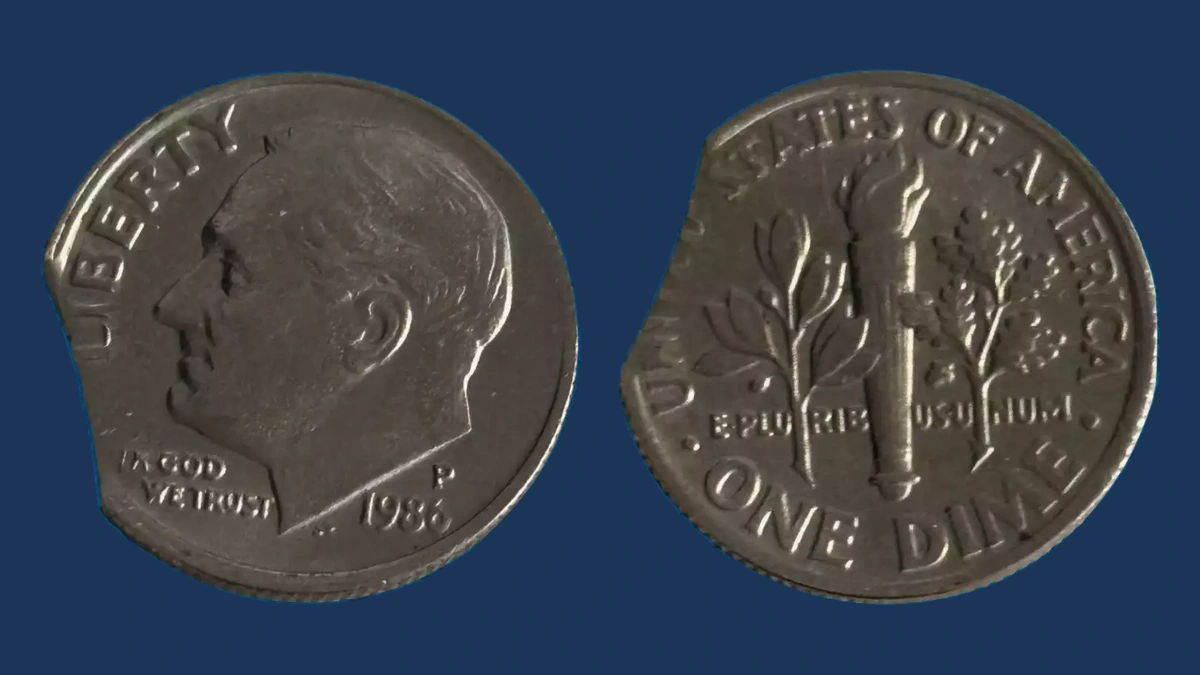
A piece can be absent before the dime ever reaches the coin press. The blank-cutting punch may overlap an earlier hole or reach an unfinished edge of the metal strip.
The resulting gap can be curved, straight, or irregular, depending on where the blank was cut. The remaining metal receives the normal design.
Clips appear in the 1986 year listing without a specific mint, shape, or missing percentage tied to an identified coin. A later cut may imitate the outline, but it will not necessarily preserve the same original edge surfaces.
Estimated Value
Genuine clips can be estimated at $15–$125, with larger clear gaps and better condition supporting the stronger end. This is a modern clad dime comparison, not a reported sale of one identified 1986 clip.
A readable date and natural surfaces around the opening help buyers judge the coin. A very small notch on a worn dime usually has less appeal, while filing or corrosion can make an apparent bargain difficult to identify.
How to Identify
Inspect the two ends of the missing section before studying its overall shape. Through a 10× magnifier, check whether the struck surface meets the opening naturally or has been cut through later.
Weigh a loose example against the full dime standard of 2.268 g, since genuine missing metal should reduce weight. Calipers across an intact span provide a comparison with the normal 17.91 mm diameter.
The rim opposite a clip may show weakness from earlier rim preparation, but that clue is not present on every example. Follow the exposed edge for original surfaces; sharp tool tracks or displaced cutting burrs need a different explanation from blanking.
5. 1986 Roosevelt Dime Broadstrike
The dime’s full design can sit inside an unusually wide border. A broadstrike forms when the collar, the surrounding metal ring, fails to hold the blank at its normal size.
Metal spreads outward during the blow instead of stopping at the usual edge. That spread can be uneven even though the design remains complete.
A plain broadstrike is reported for 1986, separately from the documented broadstruck coins with dents or backward impressions. A larger outline by itself does not explain those extra features, and an uneven border is not automatically an off-center strike.
Estimated Value
An estimated $20–$150 covers modest through clearly expanded modern broadstrikes. As a nearby-year comparison, a 1995-P high-grade broadstrike sold for $45.
The amount of spread and the condition of the design both matter. Smooth original surfaces and readable outer lettering support a stronger price.
Later flattening can make a dime wider while spoiling its details. An appealing original border matters more than width gained through damage.
How to Identify
Lay an ordinary dime next to the candidate, with both faces level. Check whether the extra width surrounds a complete portrait, date, motto, and reverse lettering.
Use calipers in more than one direction, comparing with 17.91 mm. An uneven broadstrike may be wider along one axis.
A scale should remain near 2.268 g because spreading does not itself remove metal. A noticeably lighter piece requires another explanation as well.
Examine the portrait and expanded edge through a 10× magnifier for flat hammer damage or grinding. Leave a graded example in its holder and look for intact design inside the naturally expanded border, rather than width alone.
6. 1986 Roosevelt Dime Struck-Through Error on the Front
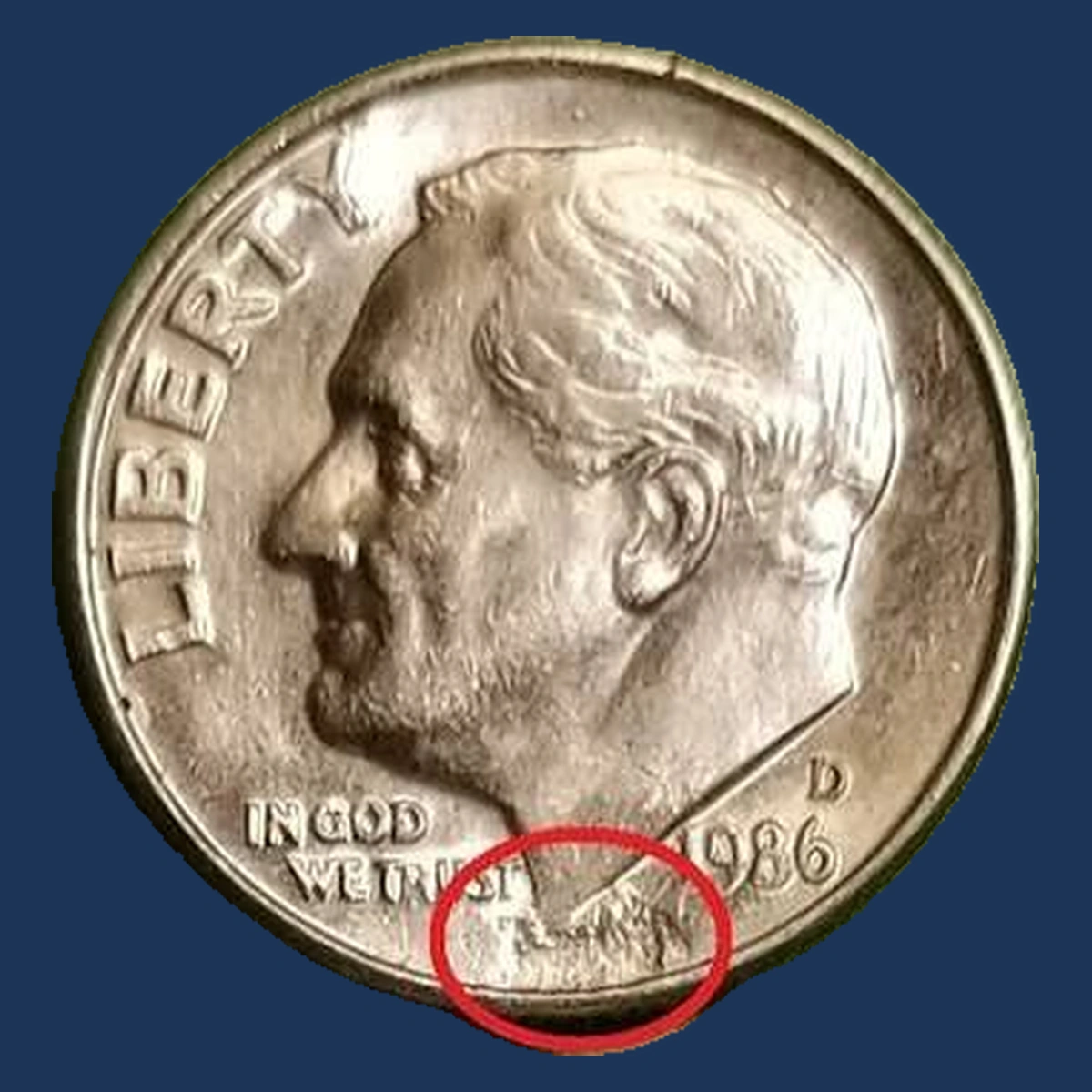
A patch of the front can show a depression or incomplete design when material blocks the strike. The object may fall away, leaving only its impression.
Soft material can weaken fine detail, while firmer debris may leave a clearer shape. The missing design reflects an interrupted strike rather than ordinary circulation wear.
A marketplace listing reports a 1986-D front strike-through, but it does not establish the material or exact location. The area must therefore be judged from its surface and surroundings, without assuming that every line came from a wire.
Estimated Value
Estimate $5–$200 for confirmed examples, from modest weak detail to a larger recognizable impression. The reported 1986-D listing carried a $4.50 asking price, not an auction result.
A well-defined shape with undamaged surrounding design is easier to explain than a faint patch. Size alone is insufficient: a deep dent made after minting can look dramatic but does not deserve the same error premium as an original interrupted strike.
How to Identify
Study the nearest undamaged letters and portrait details first. If they remain sharp while one patch loses design, photograph the boundary at several lighting angles.
Use a 10× magnifier to look for an original pressed surface rather than parallel scratches or a sharp impact lip. An empty groove does not identify the object that made it.
Check the back and edge for a matching hammer dent. A loose dime should be compared with 2.268 g on a scale and 17.91 mm using calipers.
Keep any trapped material untouched. The strongest visible clue is a local interruption that fits the strike while the neighboring design remains normally formed.
7. 1986 Roosevelt Dime Missing Front Clad Layer
The front of the documented Denver dime is deep reddish brown with darker streaks. Its reverse remains bright, though the lower-right area is weakly struck.
The front’s outer copper-nickel layer was missing, exposing the copper center when the coin received its design. Collectors call this a missing clad layer.
The coin was graded PCGS MS63, an unworn grade with visible small marks. Its copper-colored face is supported by the missing-layer identification, rather than color alone; ordinary staining can also turn a dime brown without removing an entire layer.
Estimated Value
The PCGS MS63 example brought $58.65 in November 2003. An estimated $60–$350 allows for the condition and visible strength of comparable missing-layer errors.
For a later comparison, a 1995-P dime lacking its front layer sold for $75 in July 2022. That separate result helps show the category’s price scale, while clean exposed copper and an undamaged design remain more useful than simply having the darkest possible surface.
How to Identify
The documented coin offers a useful contrast: its front is reddish brown, while the bright reverse is weak at the lower right. Inspect both faces under a 10× magnifier before deciding that a brown surface means missing metal.
Follow the edge to compare the remaining outer layer with the exposed copper center. Staining can change the color without removing that layered structure, and rough etched surfaces may indicate chemical damage.
A whole missing layer should bring a loose coin below the normal 2.268 g on a scale, with calipers providing the 17.91 mm size reference. Keep graded coins sealed and check for original struck copper joining an edge where the front outer layer is absent.
8. 1986 Roosevelt Dime Broadstrike with an Indentation
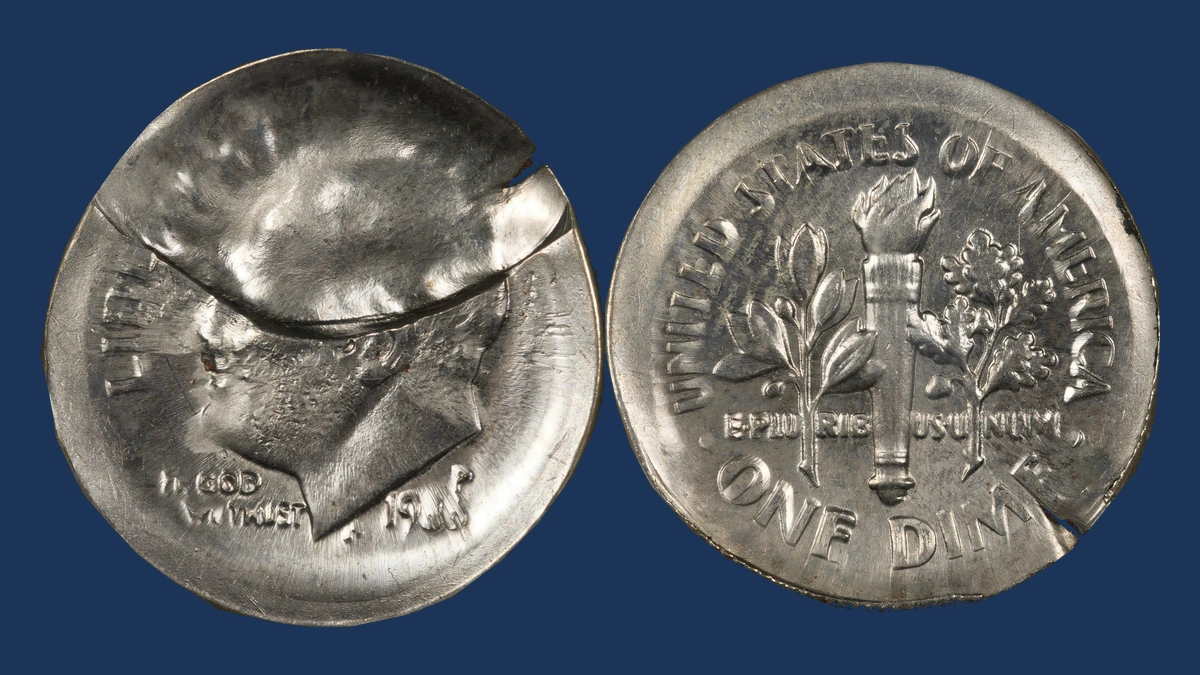
A broad outline and a smooth dent can form together when another blank overlaps a dime during striking. The extra blank blocks part of the design and presses into the metal beneath it.
The dime can also spread beyond its usual width when the collar does not restrain it. These two effects appear on a 1986-P example graded ANACS MS62 in the Calkins collection.
The published description does not place the dent at a specific clock position. A depression without recognizable backward design should not be renamed a brockage simply because another coin caused it.
Estimated Value
A combined broadstrike and indentation can be estimated at $75–$400. The range covers comparable modern dime combinations, with stronger prices for original surfaces and a clear indentation that is easy to distinguish from damage.
The best examples show both the outward spread and the dent’s boundary clearly. A readable date helps, but a tiny indistinct dent or heavy scratches can reduce appeal; the two visible effects receive one whole-coin value rather than two separately added premiums.
How to Identify
Trace the dent’s boundary on a full photograph before magnifying it. The interruption should fit an object pressed against the coin during the same blow that formed the surrounding design.
With a 10× magnifier, check whether the hollow is blank or carries readable reversed details. A plain indentation and a mirror-image impression explain different kinds of contact.
Calipers can document outward spread beyond the usual 17.91 mm. A scale should be near the ordinary 2.268 g unless a separate loss of metal is present.
Inspect the edge for later squeezing, and keep sealed coins protected. Follow the original struck design into the dent boundary to connect the indentation with the expanded coin.
9. 1986 Roosevelt Dime Broadstrike with a Partial Brockage
Backward coin details pressed into the front distinguish this error from a plain dent. A previously struck coin overlapped the blank and acted as a second stamping surface.
Collectors call the resulting sunken mirror image a brockage. The reported 1986-P coin also has a large, uneven broadstrike.
A dealer described its front brockage as covering about 40% near eleven o’clock. The same description appears in more than one catalog, so repeated listings do not establish multiple different coins or change that percentage into a measure of off-center striking.
Estimated Value
Estimate $100–$600 for a similar clear partial brockage combined with a broadstrike. The dealer catalog listed a $59 minimum bid, which is not evidence of the final amount paid.
Readable backward details help show how the coin formed and distinguish it from an ordinary indentation. Large spreading can add visual interest, but marks, weak mirror-image detail, or an unclear date can hold the price below a cleaner example.
How to Identify
Identify at least one backward letter or reverse feature within the sunken patch near eleven o’clock. Side lighting and a 10× magnifier make it easier to see that the image goes into the surface.
Compare it with the normal reverse design to check the mirror relationship. A simple hollow without recognizable design is not enough to establish a brockage.
For a loose coin, weigh against 2.268 g and measure its spread with calipers against the usual 17.91 mm diameter. Normal weight does not rule out later squeezing between finished coins.
Examine nearby metal for original striking flow rather than crushed edges. The backward, sunken design must belong to the same original strike as the expanded outline.
10. 1986 Roosevelt Dime Double Strike with a Blocked Second Impression
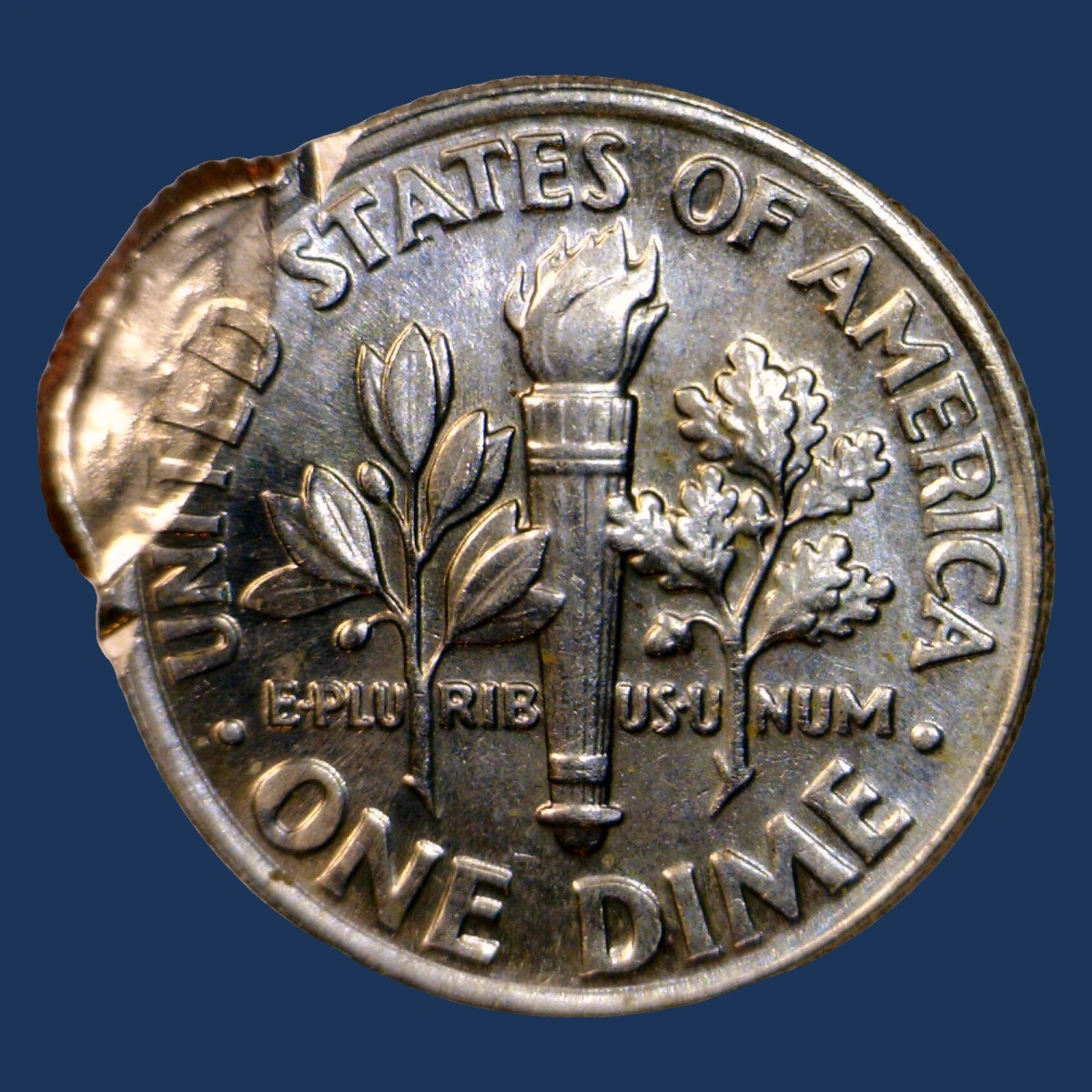
The first strike left a normal dime design, but the coin did not leave the press cleanly. It moved and received another blow 70% off-center.
That second blow was also uniface: one side was blocked from receiving its normal impression. The original design and displaced second design remain parts of one coin.
The documented 1986-P piece was graded ANACS AU58, meaning it shows only slight wear. Its repeated design comes from two separate blows, unlike small doubled lettering made by one stamping tool that already carried an extra outline.
Estimated Value
This coin realized $288 in April 2022. Comparable dated double strikes can be estimated at $150–$750, depending on how clearly the two impressions and blocked area can be read.
A second date or obvious repeated design makes the sequence easier to understand. Very heavy overlap, scratches, and wear may hide that story, while the uniface part adds interest without becoming a second coin or receiving a separate full price.
How to Identify
Choose one feature in the first strike and another in the displaced impression, then map them on photographs. Keep the same orientation when turning to the back.
Look through a 10× magnifier for the boundary where the later blow crosses the earlier design. Part of the second strike should lack a normal opposite-side impression.
The word uniface does not mean the entire finished coin must be blank on one side. Check the affected second-strike area specifically.
A scale should relate to the starting dime weight of 2.268 g; calipers record changes from the normal 17.91 mm outline. Leave the holder closed on a graded example.
The overlap between two separate design positions shows the repeated blow.
11. 1986 Roosevelt Dime Off-Center Strikes from Philadelphia and Denver
A tiny strip of design can be all that remains on a severely misplaced blank. The 1986-P example graded ANACS MS64 was struck 95% off-center toward 10:30.
Most of that blank never touched the design areas of the tools. Its year and mint identity should stay connected with the grading label.
A separate 1986-D coin graded ANACS MS66 was struck 50% off-center toward one o’clock. The two coins illustrate different amounts of the same error: the blank was misplaced, leaving a struck portion beside a large untouched area.
Estimated Value
The Philadelphia 95% off-center coin sold for $528 in January 2022 at Heritage. Estimate $30–$800 across minor through dramatic dated examples.
The Denver 50% example shared a $552 lot with a 1989-D dime at the same auction. That is a two-coin total, not the Denver coin’s individual price; date visibility, original surfaces, and the strength of the displacement all affect a single example’s value.
How to Identify
On a nearly blank example, inspect the small struck area without filling in missing digits from memory. Compare it with the full grading label and original auction photographs.
A 10× magnifier can reveal which date and mint details actually survive. The label should stay with the coin when so little design is available.
For less extreme shifts, compare both faces for the corresponding unstruck area. A displaced front with a centered reverse is a different problem.
The normal blank is 2.268 g and 17.91 mm; use a scale and calipers only on loose coins. Look for original untouched metal beside design cut off by the blank’s edge, rather than metal ground away after striking.
12. 1986 Roosevelt Dime Strike on a Wrong Blank
A dime design on a cent blank would combine the wrong metal and size with Roosevelt’s portrait. The blank is the unstruck disk placed into the coin press.
The year guide mentions this possibility for 1986, but a matching certified specimen has not been established from that report. It remains a category requiring identification of the actual metal.
A normal 1986 cent blank is larger than a dime blank and has a copper coating over zinc. A Lincoln cent struck on a dime blank is the reverse combination, not evidence of this proposed dime error.
Estimated Value
If confirmed as a dime struck on a cent blank, an estimated $1,500–$8,000 is appropriate for comparison. A documented 1999-D dime on a cent blank, also broadstruck, brought $6,325 in April 2006.
That later coin provides a price reference rather than proof of a 1986 example. Clear dime design, identified metal, and preservation would determine where a genuine candidate belongs; copper color alone cannot support this range.
How to Identify
Record weight before drawing a conclusion from the color. A normal 1986 dime is 2.268 g, while a normal cent blank is 2.50 g.
Use calipers as well: the dime standard is 17.91 mm, compared with 19.05 mm for a cent blank. Striking can alter the outline, so no single measurement settles the identity.
Inspect the edge and both faces with a 10× magnifier for plating, chemical damage, or traces of an earlier finished coin. A missing outer dime layer can also expose copper, usually with reduced weight.
Leave certified pieces sealed and use their recorded measurements. The required match is a genuine dime design on identified cent material, rather than a brown dime or a cent struck over a dime.
Conclusion
The estimated $5–$8,000 range covers small striking faults through a conditional wrong-blank category. Among documented 1986 coins, the 95% off-center dime brought $528 and the double strike brought $288.
Read both faces before judging a strange outline. A blank dent differs from a backward coin impression, while a copper-colored face needs evidence of missing metal.
Give the documented shape and material more weight than an impressive seller title.