2021 America the Beautiful Quarter Error List with Pictures

The tower, airplanes, and pilot offer several places to inspect on a 2021 Tuskegee Airmen quarter. Estimated error values below run from $2–$500 for ordinary clad coins, made from bonded metal layers.
For a different-year comparison, a 1999 Georgia quarter struck 40% off center sold for $192 in December 2024. Continue below to separate genuine raised marks from scratches and decide what the reported “Burning Building” appearance actually shows.
1. 2021 America the Beautiful Tuskegee Airmen Quarter Parallel Raised Lines
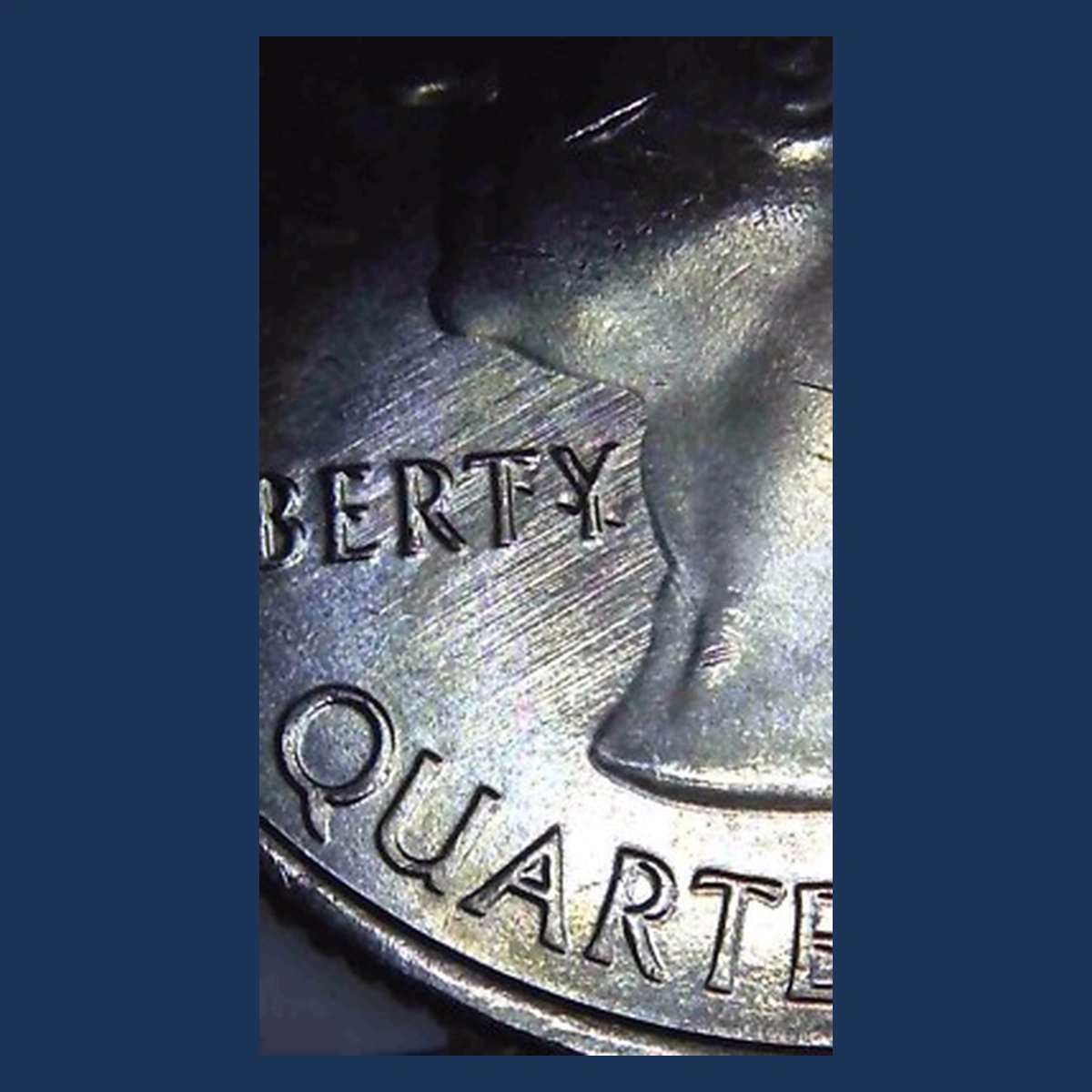
Fine parallel lines can cross the open sky or ground around the design. Raised examples are reported as marks transferred from a scratched stamping tool.
A feeder finger moves blanks into the press. If it contacts and scratches the tool, later coins can receive raised copies of those scratches.
The steel stamping tool is called a die. Its recessed grooves produce raised lines on the finished coin.
This differs from someone dragging an object across a quarter after minting. Later scratches cut into the coin, although their displaced edges can also catch the light and look deceptively bright.
Estimated Value
For ordinary clad coins, estimate $2–$25 for visible feeder-related tool marks. A clearer, attractive example with a strong repeated pattern may approach $50.
These are estimates for a minor tool-damage feature rather than a verified sale of one cataloged Tuskegee variety. Fine lines often attract little premium, especially when they are difficult to photograph.
Cleaning scratches do not receive that error value. A seller’s high asking price does not establish a completed transaction.
How to Identify
Move a single light from side to side while viewing the lines through a 10× magnifier. Determine whether their centers rise above the surface or form cut grooves.
Parallel raised lines support transfer from a scratched tool. A recessed scratch with pushed-up sides can imitate that appearance, so examine its full width.
Check the date and Tuskegee design on the back before comparing another coin’s pattern. Matching lines on separate examples can help establish that the marks came from a shared tool.
A loose clad quarter should weigh near 5.67 grams and measure 24.26 millimeters on a scale and calipers, with a grooved edge. The 2021 silver Proof standard is 6.343 grams; the raised-versus-recessed test remains the first distinction.
2. 2021 America the Beautiful Tuskegee Airmen Quarter Faint Opposite-Side Design Marks
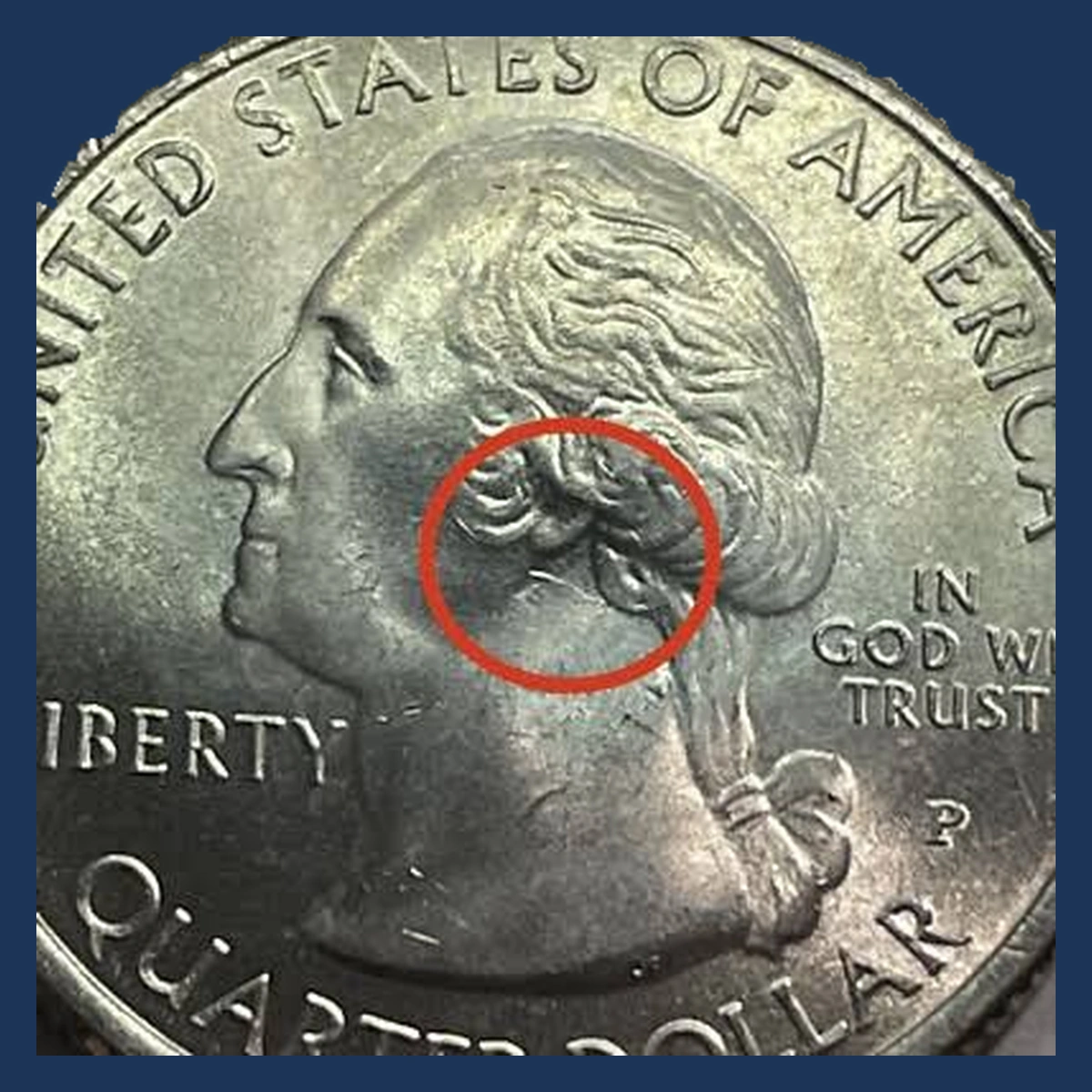
An extra faint shape can appear where the design normally leaves open space. A clash happens when the two stamping tools meet with no coin blank between them.
Parts of each design can mark the opposite tool. Coins struck afterward may carry traces of those unwanted shapes.
Clashing is reported for the Tuskegee quarter, but no single exact outline or position is established here. A particular wing, tower, or face shape should not be assumed without a matching example.
The marks must fit the opposing design. Random scratches on both sides do not establish a clash.
Estimated Value
A genuine faint clash on an ordinary clad example is estimated at $5–$30. A clearer, easily recognized transfer on an attractive coin can fall around $30–$100.
The range is an editorial estimate for modern quarters, not a documented sale of a specific 2021 clash. Weak marks can be difficult to separate from ordinary tool wear.
The value applies after the extra shape is tied to the opposite design. An unexplained line alone carries no established clash premium.
How to Identify
Place an ordinary Tuskegee quarter next to the candidate and compare the open surfaces. The normal design contains many fine lines, so first establish that the extra shape does not belong there.
Use a 10× magnifier and a photograph of the opposite face to test what could have transferred. Do not assign a clash merely because a mark vaguely resembles an airplane.
A scale and calipers should show a loose clad coin near 5.67 grams and 24.26 millimeters, with grooves around the edge. A silver Proof has a 6.343-gram standard instead; for either metal, a recognizable opposite-design fragment is the useful first confirmation.
3. 2021 America the Beautiful Tuskegee Airmen Quarter Raised Cracks and Chips
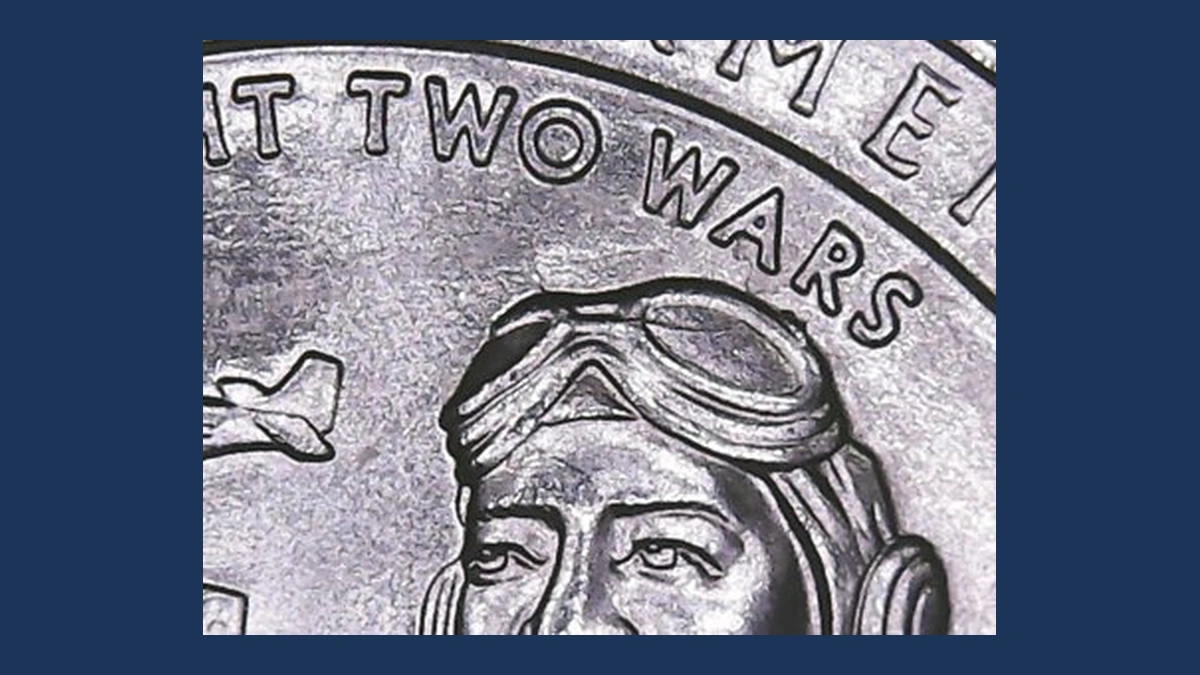
A small raised dot or line can interrupt the tower, an airplane wing, or the pilot’s goggles. Other reported examples have extra metal in Washington’s hair on the front.
A crack in a stamping tool leaves a raised line on the coin. A chipped-out part of the tool can leave a thicker lump instead.
These locations describe different coins or stages of tool wear. They should not be combined into one expected pattern.
A larger missing tool piece at the rim can create a cud, but an isolated dot in the design is simply a chip.
Estimated Value
Small genuine chips and thin cracks on clad quarters are estimated at $2–$25. A stronger, readily visible broken-tool feature may fall around $25–$150.
For comparison, a different-year 1970-D nickel with two rim breaks sold for $63 in October 2022. That different denomination does not set a fixed price for a Tuskegee chip.
Condition and visibility matter, but a large name for a tiny bump does not make it a major error.
How to Identify
Check the coin’s general condition before inspecting the bump. A loose clad example normally weighs 5.67 grams and measures 24.26 millimeters; use a scale and calipers, and keep silver Proofs separate at 6.343 grams.
Under a 10× magnifier, follow the raised feature into the surrounding design. A naturally struck chip should not have the fresh impact crater that could explain metal pushed upward.
Look at the grooved edge if a raised area touches the rim. Crushing there may explain a false cud.
Compare only the reported location that your coin actually shows. A bump in the pilot’s goggles need not accompany a mark in Washington’s hair.
A continuous raised ridge supports a crack, while a naturally struck lump replacing detail supports a tool chip.
4. 2021 America the Beautiful Tuskegee Airmen Quarter “Burning Building” Appearance
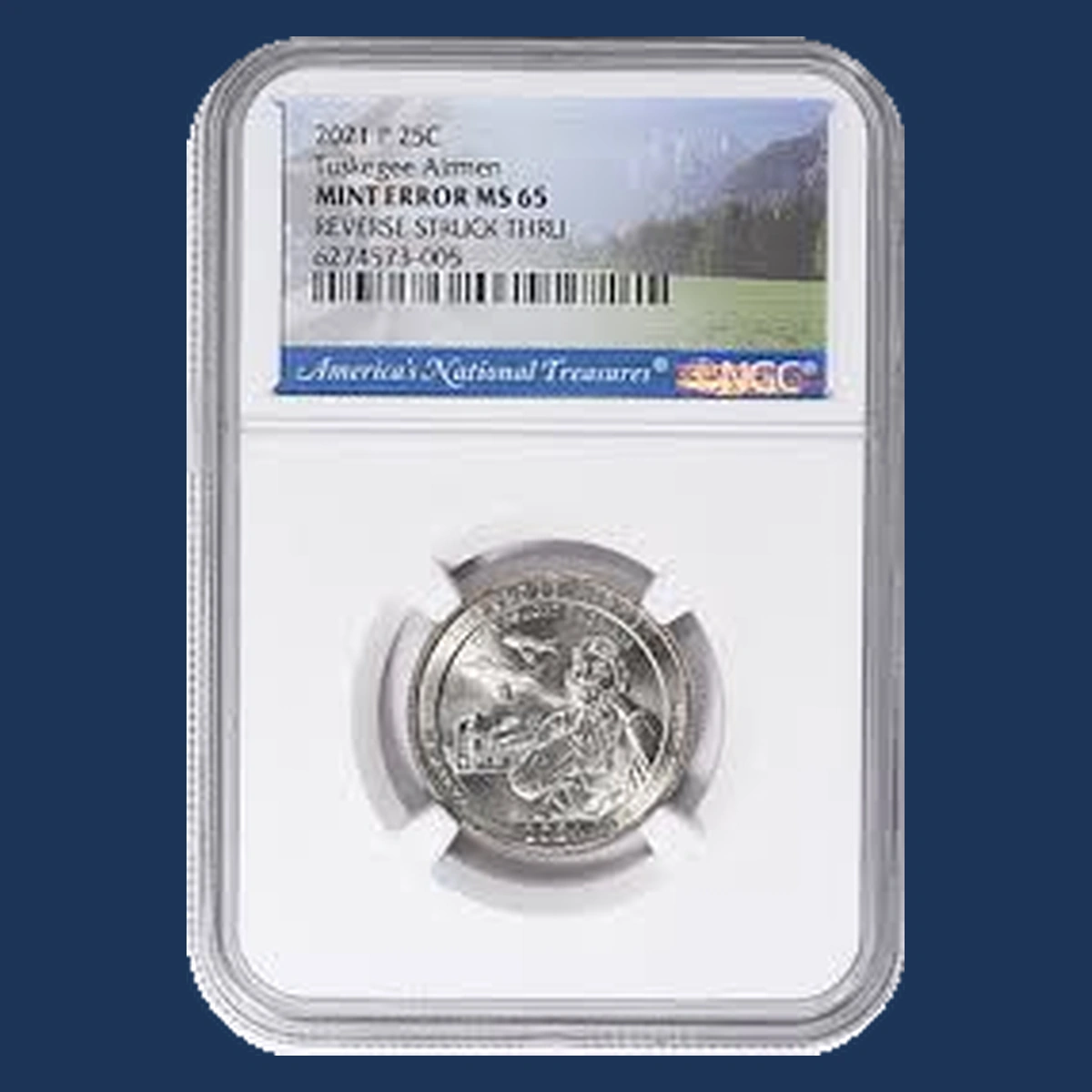
Lines around the tower can make it appear to be smoking or burning. “Burning Building” is a collector nickname for that appearance, not a diagnosis by itself.
Some reports describe material blocking the strike, while raised lines may instead come from damage to the stamping tool. The height and shape of the marks help distinguish those explanations.
A true struck-through impression forms when an object lies between the metal and the tool during striking. It can leave a depressed or weak area.
The nickname should therefore stay separate from any claim that a particular object caused the marks.
Estimated Value
For an ordinary clad coin with a clear mint-made “Burning Building” appearance, estimate $10–$150. Faint lines belong near the lower end, while stronger, attractive examples may bring more.
The price depends on the original marks and the coin’s condition. Clear close-ups should show what forms the smoke-like pattern before a buyer pays extra for the nickname.
A later scratch or stained surface should not receive the same premium merely because it resembles smoke.
How to Identify
Ask what physically happened around the tower before accepting the nickname. Under a 10× magnifier, compare the marks with the normal building edges and surrounding open surface.
Raised parallel ridges favor a scratched-tool explanation. A smooth pressed depression interrupting the design can support an object blocking the strike instead.
Check the adjoining edge grooves for damage and weigh a loose coin with a scale. The ordinary clad standard is 5.67 grams, versus 6.343 grams for a 2021 silver Proof.
Calipers should show about 24.26 millimeters across either normal-sized version. Record whether the “smoke” rises or sinks into the surface: that observation is more useful than the nickname for choosing between the proposed causes.
5. 2021 America the Beautiful Tuskegee Airmen Quarter Possible Doubled Front Design
A letter can appear to have a second edge because of the stamping tool, movement during striking, or later damage. Only the first cause can support a doubled-die variety.
A doubled die is a tool carrying a repeated part of the design before it strikes coins. Raised repeated outlines may then appear in the same place on multiple examples.
Front-side doubling is included here as a candidate, without a secure Tuskegee-specific catalog match. The other 2021 quarter, Washington Crossing the Delaware, has a different design.
An error claimed for that coin should not automatically be assigned to Tuskegee.
Estimated Value
If genuine front-side tool doubling is established, estimate $15–$250 for an ordinary clad example. Clear separation and a recognized variety would support the stronger end.
This is a conditional estimate, not a claim that a certified Tuskegee doubled-die coin sold within that range. Flat mechanical doubling commonly brings little or no special premium.
A catalog match matters before paying more. The normal collector value of a silver Proof should also be kept separate from any supposed doubling premium.
How to Identify
Confirm the reverse design first: Tuskegee has the pilot, tower, and aircraft. Its 2021 date is on that back design, so a claimed front-date error belongs to a different comparison.
Use a 10× magnifier on LIBERTY and IN GOD WE TRUST on the front. Look for raised repeated detail rather than a flat, shaved-looking shelf beside a letter.
Compare the same area on another Tuskegee example. A catalog photograph of the Crossing the Delaware quarter cannot establish this variety.
For a loose coin, use a scale and calipers against 5.67 grams for clad or 6.343 grams for silver Proof, and 24.26 millimeters across. Inspect its grooved edge for alteration, then match the repeated letter shape rather than an isolated thick edge.
6. 2021 America the Beautiful Tuskegee Airmen Quarter Off-Center Strike
A crescent of blank metal beside an incomplete picture can show that the coin entered the press off center. Part of the blank missed the stamping tools.
A year-and-design report describes a Tuskegee quarter struck about 15% off center. The particular mintmark, direction, and certified grade are not established here.
Both faces should reflect the coin’s misplaced position. A single shifted tool can produce an uneven border on one face without the same blank crescent on the other.
The date and Tuskegee design are important because two different quarter designs were issued during 2021.
Estimated Value
Estimate $75–$500 for a genuine Tuskegee off-center quarter, with the upper end requiring a clear error and attractive condition. A readable date and identifiable design help.
A different-year comparison is the 1999-P Georgia quarter struck 40% off center, sold for $192 on December 23, 2024. It was graded MS66, an unworn grade.
That sale does not authenticate the reported 2021 piece or give its 15% shift the same price.
How to Identify
Compare both faces for matching blank areas before estimating the percentage. Read the 2021 date on the back and confirm enough of the Tuskegee design survives to identify the issue.
A complete clad blank should remain near 5.67 grams on a scale, while the silver Proof standard is 6.343 grams. Calipers can compare the outline with 24.26 millimeters, allowing for uneven spreading where the strike landed.
Inspect the transition into blank metal with a 10× magnifier and follow the edge grooves nearby. Matching unstruck areas on both faces, rather than one uneven border, provide the clearest first test for an off-center coin.
Conclusion
The estimated $2–$500 range here applies to genuine errors on ordinary clad Tuskegee Airmen quarters. Small chips and faint marks usually cost less than a clear off-center strike.
Begin by confirming the design, then check whether the unusual feature is raised or recessed. Keep silver collector coins separate from ordinary clad examples, and use the visible evidence rather than a seller’s nickname to identify the cause.