1995 Dime Error List with Pictures

Lincoln on the front and a dime torch on the back brought $57,500 in January 2010. That unusual 1995 coin joined two designs that were never meant to share a coin.
This 1995 dime error list also covers more affordable finds, with estimated values from $15 to $75,000. Missing metal, extra strikes, and a trapped wire each tell a different story.
Read on to compare the visible clues and see which prices belong to individual coins or whole auction groups.
1. 1995 Roosevelt Dime Doubled Die
Two outlines around a letter can make a dime look special. A doubled die is a stamping tool that carries a doubled design before it strikes coins.
The same extra outline can then appear on many coins from that tool. It differs from a second blow to one loose coin.
For 1995 dimes, a major named example has not been established in the cited year guide. Treat eye, ear, or lettering doubling as a feature to examine, rather than proof of a known variety.
Estimated Value
A confirmed minor doubled die can be estimated at $15–$100, using the usual market for modest modern dime doubling. This range applies after the feature has been identified as genuine die doubling.
Clear, separate outlines and an unworn surface would support the stronger end. Flat strike-related doubling generally adds little, even when it looks dramatic under magnification, so magnified size alone does not justify the estimate.
How to Identify
Take sharp photographs before deciding what the extra line means. A 10× magnifier and a movable lamp help separate a rounded second outline from a flat shelf.
Compare several letters rather than one bright edge. Rotate the light; a reflection that changes sides is not an extra design.
Check the coin itself with a scale and calipers: ordinary P and D dimes should be about 2.268 g and 17.91 mm. An S silver Proof, a specially made collector coin, should be about 2.50 g at the same diameter.
Those measurements establish the version, not the doubling. Seek a matching published dime example with the same separated details; the famous 1995 doubled Lincoln cent is a different coin.
2. 1995 Roosevelt Dime Broadstrike
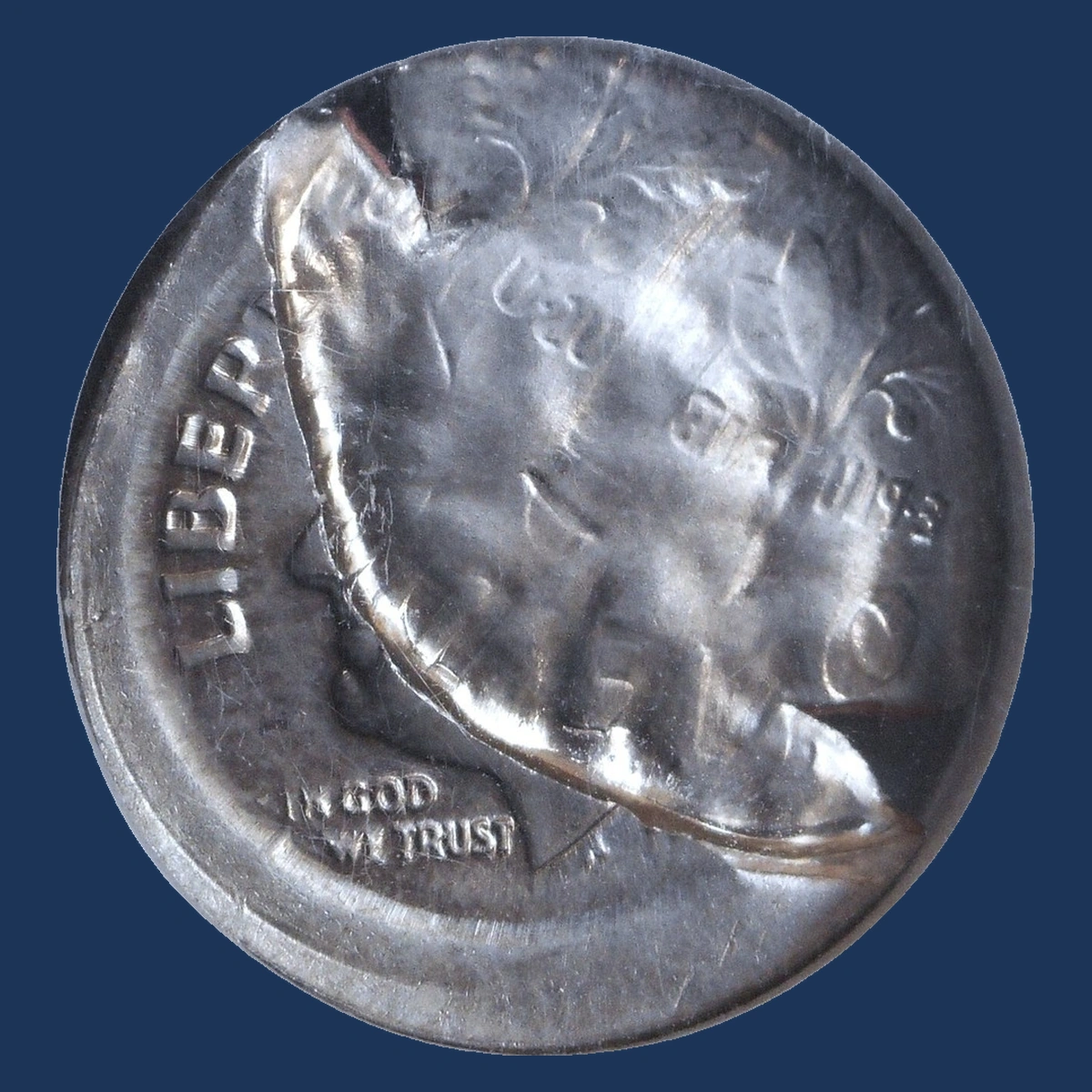
The design fits on the coin, but the metal spreads beyond its usual edge. This is a broadstrike: the surrounding metal ring, called the collar, did not hold the blank normally.
Without that restraint, striking pressure pushes metal farther outward. The border can be even or wider on one side.
A 1995-P example was graded NGC MS66 with Full Bands, meaning the horizontal torch bands remain clearly separated. An uneven border alone does not make it off-center; that error cuts part of the design off the coin.
Estimated Value
Broadstruck 1995 dimes are estimated at $20–$150. A high-grade 1995-P example brought $45, as recorded by PCGS.
A wide, attractive border helps, but the amount of spread is not the only factor. Scratches and bent metal reduce appeal, while clear torch bands and clean surfaces can strengthen the price; a small increase in width does not automatically make a coin rare.
How to Identify
Set the coin beside an ordinary dime and follow the entire design around both faces. Every intended letter should remain on the blank, even where the outer border becomes unusually wide or uneven.
Calipers can show how far the coin spread beyond the normal 17.91 mm diameter. A scale should still read near 2.268 g because the strike moves metal outward rather than removing a piece of it.
Inspect both faces and the edge with a 10× magnifier, leaving a graded coin sealed in its holder. An expanded border surrounding a complete, undamaged design supports broadstriking; flattened portraits and scraped metal instead suggest later hammering or grinding.
3. 1995 Roosevelt Dime Off-Center Strike
A smooth crescent sits beside a design that runs off the opposite side. The blank was partly outside the striking position when the press came down.
Both faces were struck in the displaced position. This leaves missing design at one side and untouched metal at the other.
A 1995-P dime graded NGC MS64, an unworn coin with noticeable small marks, shows a 20% off-center strike. Denver examples are also reported, but their shift should be measured from each actual coin rather than copied from the Philadelphia example.
Estimated Value
The 20% off-center 1995-P dime sold for $52 in August 2015. A working range of $30–$200 covers many clear, dated examples.
Buyers usually prefer enough displacement to see easily without losing the date. Wear, scratches, and a tiny shift pull the price down.
Larger, attractive errors with complete dates can reach higher levels, especially when their shape and original surfaces remain easy to examine.
How to Identify
Follow the border around both faces. The blank crescent should agree with the displaced strike, and some of the intended design should be missing at the opposite edge.
If only one face has a narrow rim, compare the other face before calling it off-center. A shifted stamping tool can create an uneven border without moving the whole blank.
Use a 10× magnifier to check that 1995 and the mint letter belong to the original strike. An ordinary clad dime starts at 2.268 g and 17.91 mm; a scale checks retained metal, while calipers record any outward spreading.
The untouched crescent and cut-off design together show the shift more clearly than rim width alone.
4. 1995 Roosevelt Dime Improper Annealing
A dime can leave the Mint with an unexpected surface color even though its design looks normal. Annealing is the heating step used to soften metal before striking.
Problems during that step can change the surface and produce brown, dark, or copper-like tones. A collector registry specifically lists a 1995-P dime as improperly annealed.
Color by itself does not prove this error. Dimes also change color in soil, chemicals, or heat after they leave the Mint, so the cause matters more than the shade in a photograph.
Estimated Value
For a professionally confirmed example, use an estimated range of $30–$300. This is a comparison-based allowance for modern dime annealing errors, rather than a claimed sale of the registry coin.
Strong original color and an unworn design make the effect easier to display. Corrosion, cleaning, or a weak explanation for the color lowers confidence and price; a stained pocket-change dime does not receive this range simply because it looks brown.
How to Identify
Photograph both faces in neutral daylight, without a colored filter. Include an ordinary dime beside it so the camera does not turn every surface warmer or darker.
Look through a 10× magnifier for pits, crust, peeling paint, and scratches from cleaning. These can explain an unusual color without a Mint heating error.
Keep the surface untouched. Cleaning could remove the very color you are trying to understand.
A loose 1995-P dime should measure near 2.268 g on a scale and 17.91 mm with calipers. Normal measurements rule out some missing-metal problems but do not prove improper annealing.
Compare it with a professionally identified example whose holder names improper annealing, not merely natural toning.
5. 1995 Roosevelt Dime Off-Center Strike on a Clipped Blank
A bite-shaped gap and a blank crescent can occur on the same dime. They come from two separate stages of production.
The gap begins when a blank is punched from an area where metal is already missing. Later, that incomplete blank lands partly outside the striking position.
A 1995-P example graded NGC MS64 Full Bands has both features. A separate MS62 coin was struck 30% off-center on a curved-clipped blank; its percentage describes that second coin, not every 1995 dime with this combination.
Estimated Value
Two sales show how affordable this combination can be: the MS64 Full Bands coin brought $79 in December 2020. The separate 30% off-center MS62 example sold for $139 in July 2022.
Estimate $60–$350 for comparable coins. A visible curved gap, readable date, and clear displaced design work together; pricing the clip and off-center strike separately would count two features of the same coin twice.
How to Identify
First distinguish missing metal from unstruck metal. The curved clip removes part of the blank, while the off-center crescent remains physically present.
Examine the curved edge with a 10× magnifier and side lighting. A smooth transition into the struck surface is more convincing than saw marks or a freshly filed edge.
Check the opposite rim for weakness that can accompany a genuine clip. That clue helps, but it is not required on every complicated strike.
For a loose coin, compare its scale reading with the normal clad weight of 2.268 g. Calipers provide a size reference against the usual 17.91 mm, though the distorted outline will not be perfectly round.
Trace the empty gap and solid blank crescent separately to see both errors.
6. 1995 Roosevelt Dime Missing Clad Layer
One face can look copper-colored while the other keeps its usual silver color. A modern dime contains a copper center between two outer copper-nickel layers.
When an outer layer separates before striking, the design is pressed into the exposed copper beneath it. A partial loss leaves a boundary between covered and uncovered metal.
The 1995-P examples include a fully missing front layer on a 1.9 g coin graded NGC MS64. A different coin, graded MS63, has only part of its front layer missing.
Estimated Value
The full front-layer example sold for $75, while the partial example brought $384, both in July 2022. These results appear in Greysheet’s auction records.
An estimated range of $60–$450 allows for the different appearances. Partial loss can create a striking two-color pattern, so a larger missing area does not always bring more money; scratches, staining, and the clarity of the layer boundary also matter.
How to Identify
Weigh a loose copper-faced dime before trying to explain its color. The fully missing 1995-P example weighs 1.9 g, below the ordinary clad standard of 2.268 g.
A coin that is merely stained can retain its full weight. Calipers should place an otherwise normally struck example near the standard 17.91 mm diameter.
Use a 10× magnifier to inspect the portrait and any boundary between the two colors. The design should flow through the exposed area, rather than end at a scraped or carved patch.
Check the edge and reverse for remaining outer layers, leaving any graded coin sealed. On a partial-loss example, follow the actual metal step at the color boundary; color alone cannot show that a layer is absent.
7. 1995 Roosevelt Dime Wire Struck into the Front
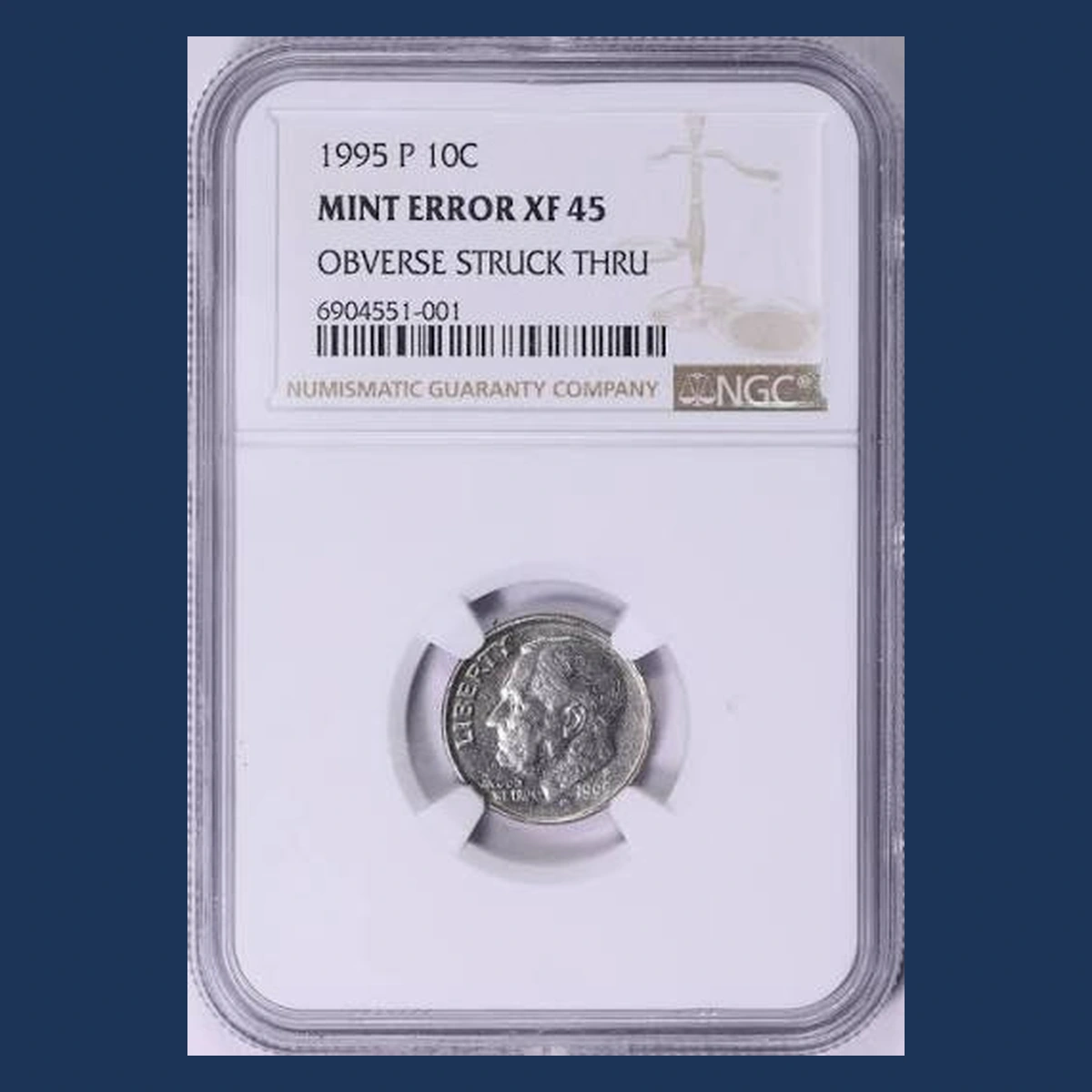
A thin piece of wire can become part of a coin when it enters the press with the blank. The strike forces the wire into the surface instead of leaving a normal patch of design.
A 1995-P dime graded PCGS AU58, meaning only slight wear, was cataloged with wire struck into its front. The wire remained in the coin.
This differs from an empty groove left after an object fell away. It also differs from a scratch cut into a finished dime, which moves metal after the design is complete.
Estimated Value
The AU58 wire example realized $432 in July 2022. Comparable pieces can be estimated at $200–$600, depending on how clearly the retained wire and surrounding strike can be seen.
Keeping the original wire in place matters. A faint empty line usually tells a less complete story.
A loose or glued addition cannot command the same value. Cleaning around the wire can also damage the evidence buyers want to examine.
How to Identify
Do not pull on the wire or probe it with a sharp tool, since its contact with the coin is evidence. If safe to handle, a scale and calipers provide the normal dime references of 2.268 g and 17.91 mm.
Use a 10× magnifier and low side lighting to follow the wire across the front, keeping a graded example sealed. Check whether nearby design was interrupted during striking or remains complete beneath an object resting on the surface.
Fresh raised burrs and scraped channels suggest later work, while glue may show around an added wire. Examine the embedded ends for original struck metal holding them in place, rather than judging only the most visible middle section.
8. 1995 Roosevelt Dime Double and Multiple Strikes
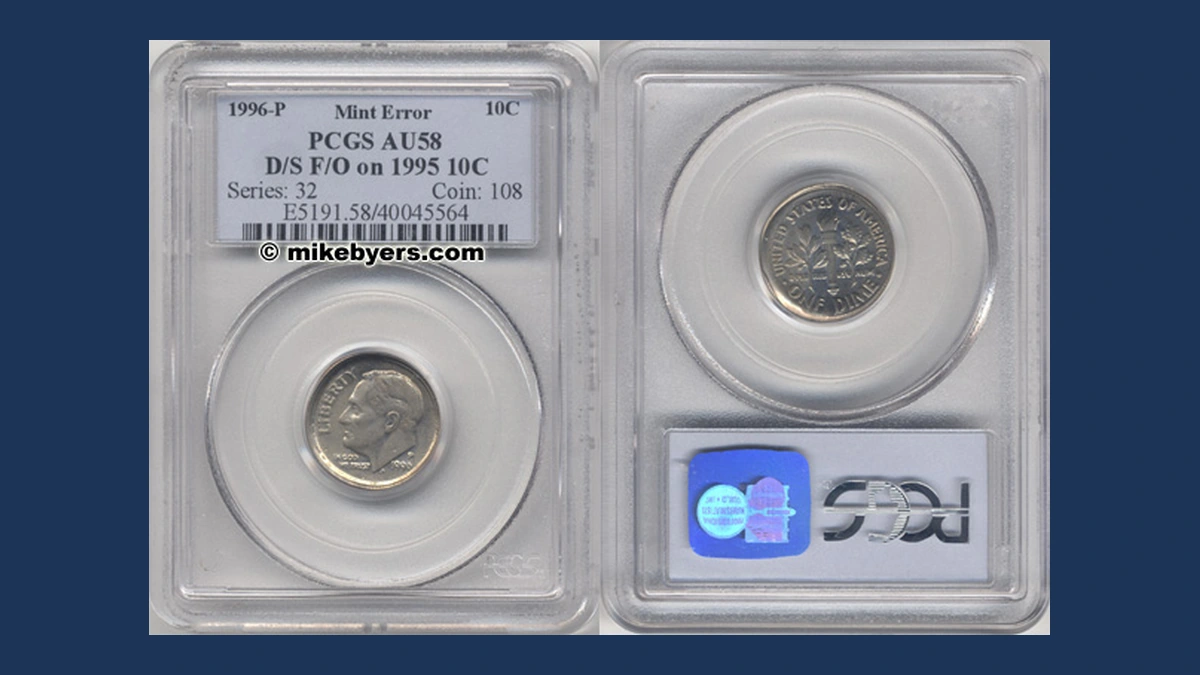
Two sets of design can overlap when a dime stays in the press for another blow. One 1995-P example received its second strike 75% off-center and also has an indentation on the front.
That dent records contact with another object during striking. It should not be called a mirror-image impression unless reversed coin details are actually present.
Another 1995-P dime was both broadstruck and struck multiple times. Its widened shape and repeated design belong to one coin, but the number of blows cannot be counted from the name alone.
Estimated Value
The double-struck coin with the front indentation sold for $124 in July 2022. Estimate $100–$750 for comparable multiple-strike 1995 dimes, with clearer overlapping designs supporting stronger prices.
The broadstruck MS65 example appeared with a 1997-P MS66 dime in a two-coin lot that brought $132 in December 2020. That amount covers both coins, so it cannot be assigned to the 1995 piece alone.
How to Identify
Map the repeated design on photographs of both faces. Choose a recognizable letter, portrait edge, or torch feature and follow each separate impression outward.
On the double-struck example, the second impression should reach the displaced area beside the earlier strike. Inspect the front dent with a 10× magnifier without assuming it contains reversed lettering.
A broadstruck multiple-strike coin needs repeated design, not simply stretched letters. Compare the outlines for separate positions rather than trying to count blows from the width of the coin.
Use calipers to record the expanded shape against the normal 17.91 mm diameter. A scale can check against 2.268 g, since extra blows do not themselves add metal; distinct overlapping impressions establish the multiple strikes.
9. 1995 Roosevelt Dime Overstruck with a Cent Design
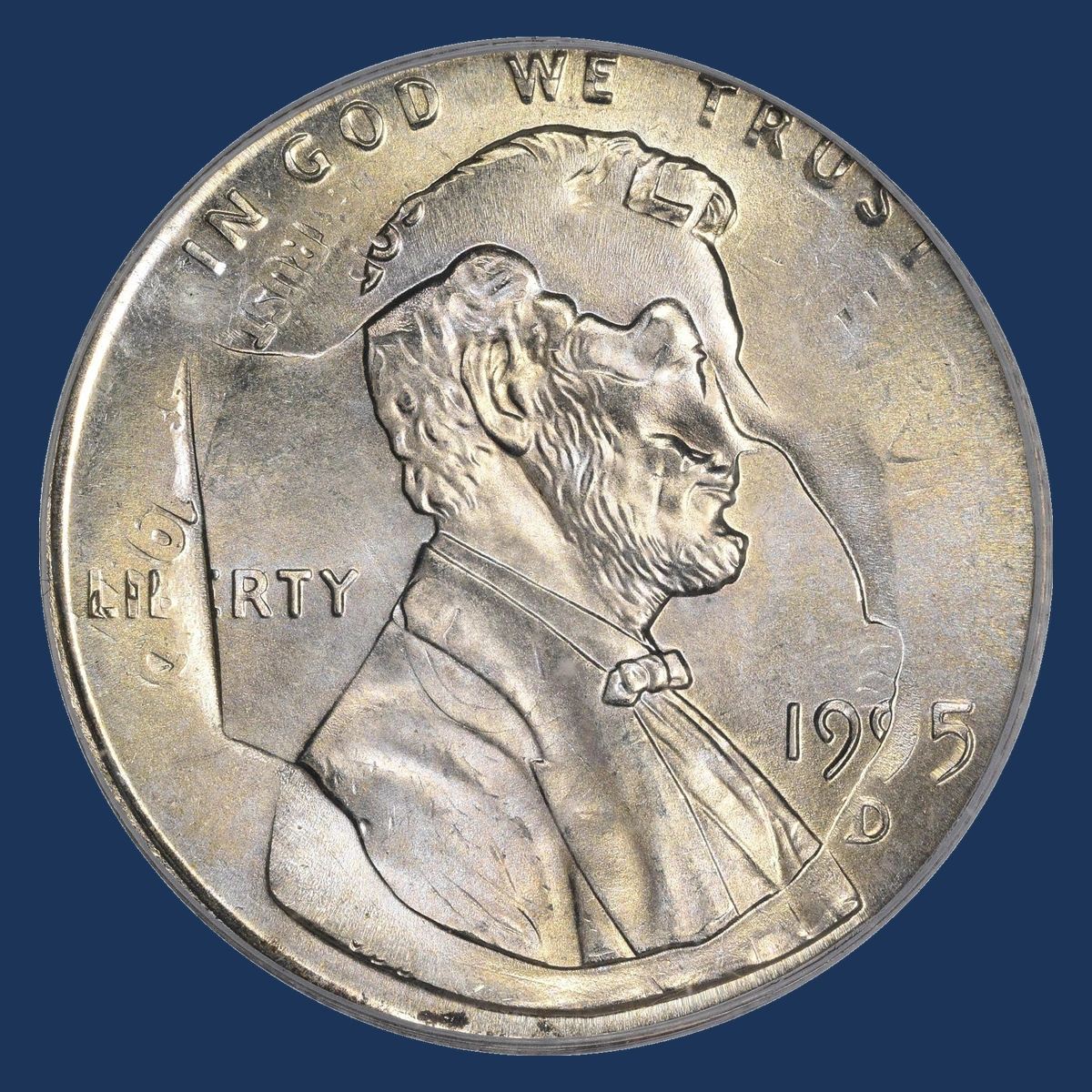
Lincoln and parts of a dime can appear together because one finished coin went through another coin’s press. Here, an already minted 1995-P dime received a 1995 Lincoln cent design.
The newer strike flattened some old details while leaving others visible underneath. A surviving portion of the dime reverse appears on the newer cent front.
This is called a double-denomination error because two denominations were struck onto the same piece. Unlike the mule below, it contains traces of an earlier finished dime rather than only two mismatched designs.
Estimated Value
An NGC MS67 example, an unworn coin with very few marks, sold for $1,440 in December 2023. Estimate $1,000–$3,000 for similarly clear 1995 cent-over-dime pieces.
Readable dates and visible remnants of the original dime help explain the unusual sequence. Heavy overlap can hide those clues, while damage lowers appeal; the price covers one coin with two designs, not the combined values of an ordinary cent and dime.
How to Identify
Find an older dime detail beneath the Lincoln cent design. A torch fragment or dime lettering is more useful than an isolated, unexplained ridge.
Enlarge photographs of both faces and follow the crossing designs with a 10× magnifier. The newer strike should flatten parts of the earlier image.
Look separately for the two dates and the original P mint letter, where they survive. Their positions can help explain which design came first.
A starting dime was 2.268 g and 17.91 mm; a 1995 cent was 2.50 g and 19.05 mm. Use a scale and calipers on loose candidates, remembering that another strike can change diameter.
Leave certified coins sealed and seek visible dime remnants under the cent impression, rather than a clean two-design pairing.
10. 1995 Roosevelt Dime Lincoln Cent Front and Dime Back Mule
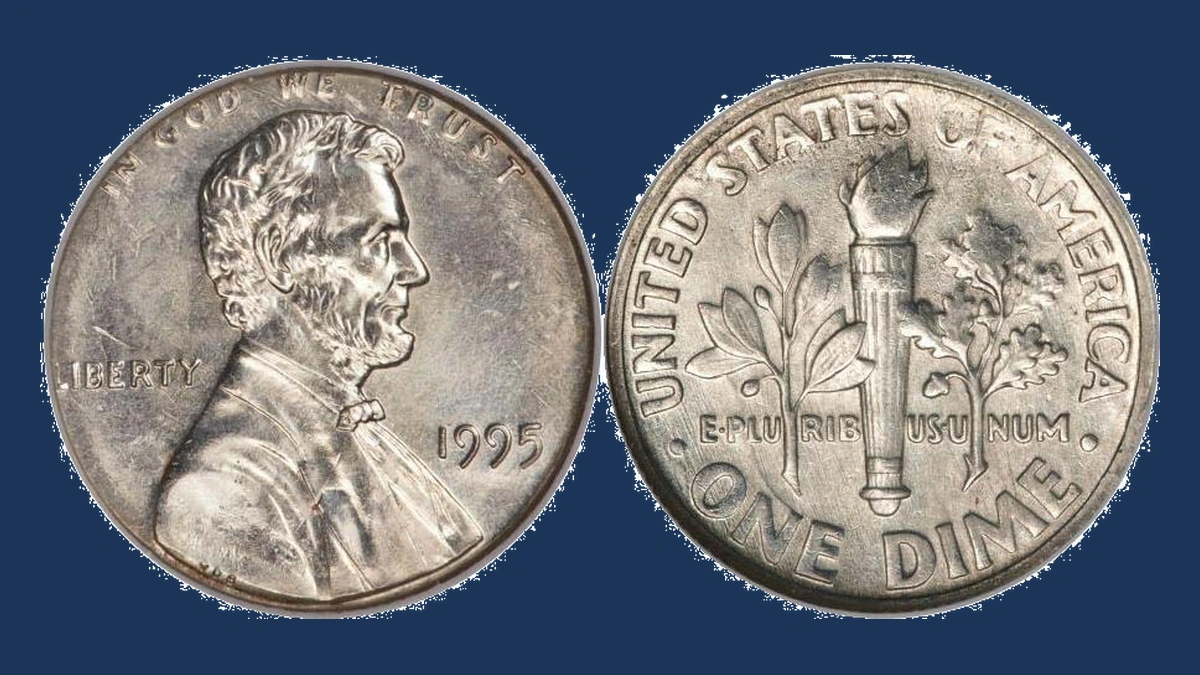
Turn this coin over and the denomination changes before your eyes. Lincoln and the 1995 date occupy the front, but the reverse carries a dime’s torch and ONE DIME.
The press paired a cent front die, or stamping tool, with a dime reverse die. Collectors call this mismatch a mule.
It was struck on a dime blank inside a dime collar. The larger cent design crowds the smaller space, bringing parts of the front lettering against the edge; no earlier Roosevelt portrait is needed underneath.
Estimated Value
The NGC MS64 mule sold for $57,500 on January 7, 2010 at Heritage Auctions. A broad estimate of $40,000–$75,000 reflects the rarity and strong appeal of this particular design pairing.
Authentication is central to that price. Joined coin halves and altered pieces can imitate an odd pairing, while surface damage affects genuine examples; this exceptional result does not set the value of ordinary 1995 dimes.
How to Identify
Lincoln must face a reverse bearing the dime torch and ONE DIME, with the 1995 date belonging to the cent design. A scale and calipers should place a loose candidate near the dime standards of 2.268 g and 17.91 mm.
Keep the known certified example sealed, and inspect its edge through the holder with a 10× magnifier. Seams, glue, or a sudden change in thickness can indicate joined coin halves rather than one original piece.
Compare the crowded front lettering, especially IN GOD WE TRUST and LIBERTY, with photographs of the documented mule. The larger cent design presses against the small dime border, providing a visible check beyond simply finding different denominations on the two faces.
Conclusion
Estimated values for these 1995 dime errors run from $15 to $75,000. The $57,500 mule stands far above common broadstrikes, while missing layers and extra strikes offer more affordable examples.
Keep the two Lincoln combinations separate: a mule joins mismatched designs, while an overstrike leaves older dime details underneath. Inspect both faces, preserve any trapped wire, and compare the exact coin before applying an auction price.