1835 Dime Error List with Pictures

An 1835 dime with no circulation wear but cleaned surfaces sold for $966 in October 2025. That sale was not identified as an error, but it shows why the coin’s condition matters alongside any unusual mark.
This 1835 Capped Bust dime error list covers a reported raised X and breaks connected to the rim. Estimated whole-coin prices run from $50 to $5,000.
Read on to learn what the marks can tell you.
1835 Capped Bust Dime Reported Raised X (Estimated Up to $600)
Two raised lines crossing like an X have prompted an unusual suggestion: a cancelled stamping tool. Such a tool would have been marked to stop it being used again.
A cut in a die, the steel tool that stamps coins, can leave a raised line on the coin. But an X shape alone does not establish that story.
Cracks in the tool can also cross. Later scratches may push metal upward beside their grooves.
The reported feature is therefore the raised X itself, without a proven cancelled-die explanation.
Estimated Value
Estimate $50–$600 for a circulated coin with this reported feature. That is the value of the whole dime, without a special premium for an unproven cancelled tool.
A normal 1835 JR-9 graded PCGS XF40 sold for $252 in October 2025. XF40 means the coin shows wear but retains much of its detail.
Original surfaces help its value. Scratches or other damage can reduce the price, even when the marks make an interesting shape.
How to Identify
Move a lamp from one side of the X to the other while using a 10× magnifier. Check whether each line is fully raised or merely has a raised lip beside a scratch.
At the crossing, look for one groove cutting through the other. Also follow each line into the nearby picture to see whether it was struck together with that detail.
A scale and calipers should give roughly 2.70 grams and 18.5 mm, allowing for wear. Inspect the grooves around the edge for filing or mounting damage.
Do not polish the lines. Start by looking for a sunken scratch beside each raised edge, since the X shape by itself proves little.
1835 Capped Bust Dime Cuds and Retained Die Breaks (Estimated Up to $5,000)
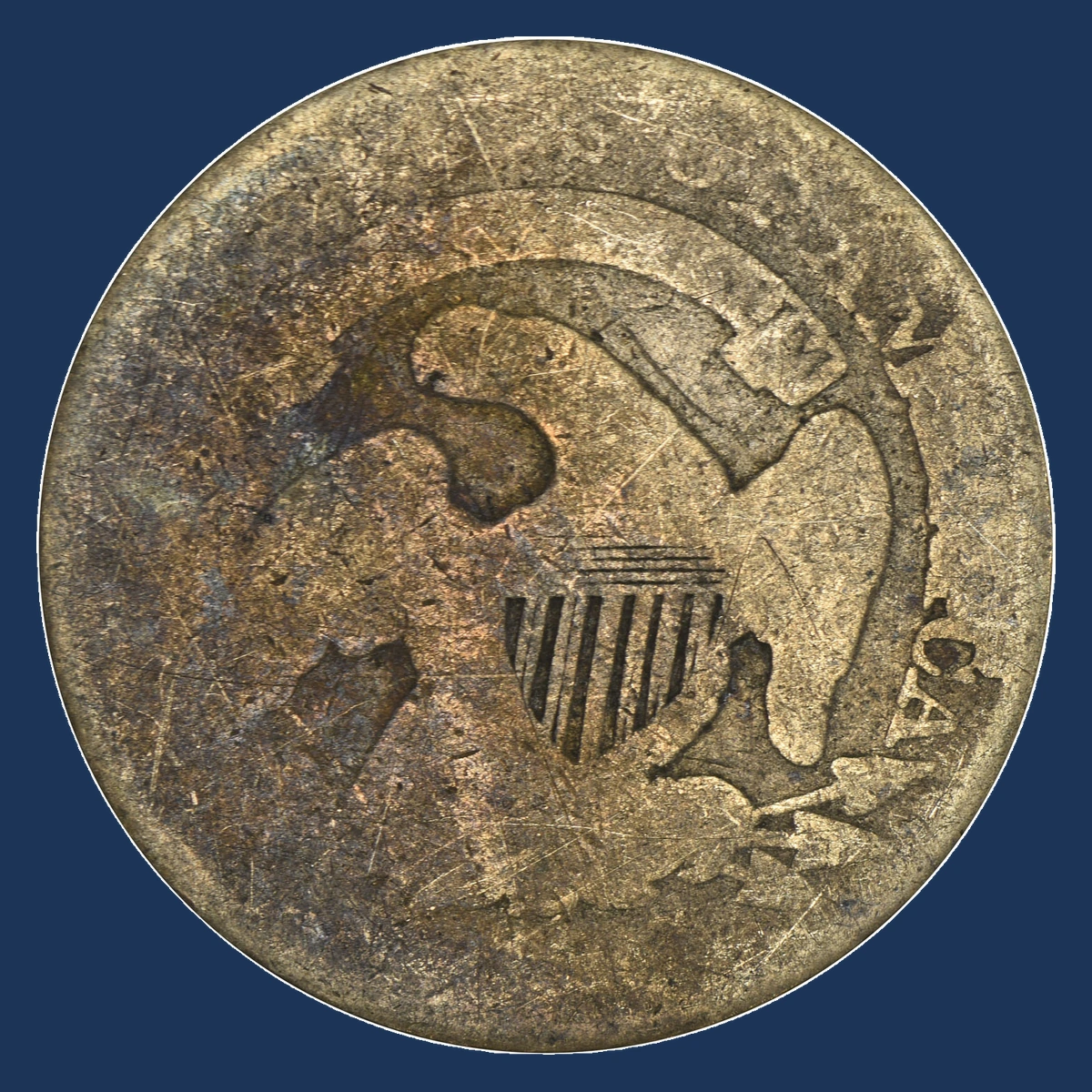
A raised patch touching the rim can show where a stamping tool broke. If the broken piece stays in place, some of its picture may still appear inside the patch.
Collectors call that a retained die break. When the fragment moves or falls out, later coins can show a larger raised area with less detail.
Reported 1835 examples include the arrows on the back of JR-1 coins and MERIC on JR-2 coins. JR numbers distinguish the tools used to strike different varieties.
Other reported breaks occur on JR-3 and JR-4, with their own shapes and positions.
Estimated Value
The estimated whole-coin range is $100–$5,000 for worn through lower-grade unworn examples. A cleaned 1835 JR-1 with no circulation wear sold for $966 in October 2025, without an identified matching break.
For comparison, an 1831 dime with a retained break sold for $8,812.50 in 2013. It was an exceptionally preserved PCGS MS65 CAC coin.
That older, different-year sale sits above this range. A worn 1835 dime with a smaller break needs a lower comparison.
How to Identify
Locate the arrows or affected letters first, then compare the same area in the JRCS dime illustrations. Match the variety before comparing the break’s size.
With a magnifier, trace the boundary toward the rim. Look for surviving picture details inside it, which can help show that a broken tool fragment remained in place.
A dent from later damage may flatten the rim without producing the same raised patch. Check the opposite face and the grooves around the edge for that damage.
Use a scale and calipers against about 2.70 grams and 18.5 mm. To check the break quickly, match its rim connection and outline to the same variety’s illustrated example.
Conclusion
Estimated prices for these 1835 dimes run from $50 to $5,000 for the whole coin. The raised X needs close inspection before anyone gives it a cancelled-die story.
For a rim break, compare the patch with the correct illustrated variety. Wear, cleaning, and the strength of the feature all affect value, so preserve the surfaces and judge the entire dime rather than the unusual mark alone.