1872 Dime Error List with Pictures

An 1872 dime with strong doubling on the back sold for $3,360 in April 2025. PCGS graded it MS63, meaning unworn with noticeable marks.
This 1872 dime error list spans estimated whole-coin values of $30–$4,000. It includes changed letter shapes, raised cracks, extra date pieces, transferred designs, and the striking doubled wreath variety.
Look closely at where each mark appears: an extra numeral beside the date has a different history from one hidden in Liberty’s gown.
1. 1872 Liberty Seated Dime Partially Filled E (Estimated Up to $300)
The spaces between the horizontal strokes of E look partly closed on reported 1872 examples. Fortin’s gallery shows this feature on more than one front-and-back pairing.
That description identifies the letter’s appearance, rather than proving grease caused it. Raised metal, missing detail, or material stuck to the coin can each change how an opening looks.
The surrounding letter and surface help distinguish those possibilities. A worn E can look different without matching the listed feature.
Compare the whole back and its matching front. One filled-looking space on an otherwise worn coin is not enough to establish the same variety.
Estimated Value
The estimated whole-coin range is $30–$300 for worn through lightly worn examples with the matching E. It assumes the feature belongs to the coin as struck, rather than dirt or later damage.
No auction price is attached to the illustrated examples. Visibility and the rest of the coin’s condition guide the estimate.
The more valuable doubled-back variety appears later in this article. Its prices should not be transferred to a partly closed E just because both affect DIME.
How to Identify
Compare E with a normal 1872 dime using a 10× magnifier. Concentrate on the spaces between its horizontal strokes.
Move the light and determine whether you see raised metal, missing detail, or something resting on the surface. Do not scrape or clean the letter to test it.
Keep all of DIME and the nearby wreath in view. Then check that the front agrees with the matching catalog picture.
When safely accessible, use a scale and calipers against about 2.49 g and 17.9 mm. The dime is 90% silver and has grooves around its edge.
A matching letter shape within the correct complete design is the useful check. A partly closed opening alone does not explain what caused it.
2. 1872 Liberty Seated Dime Wreath Die Cracks (Estimated Up to $400)
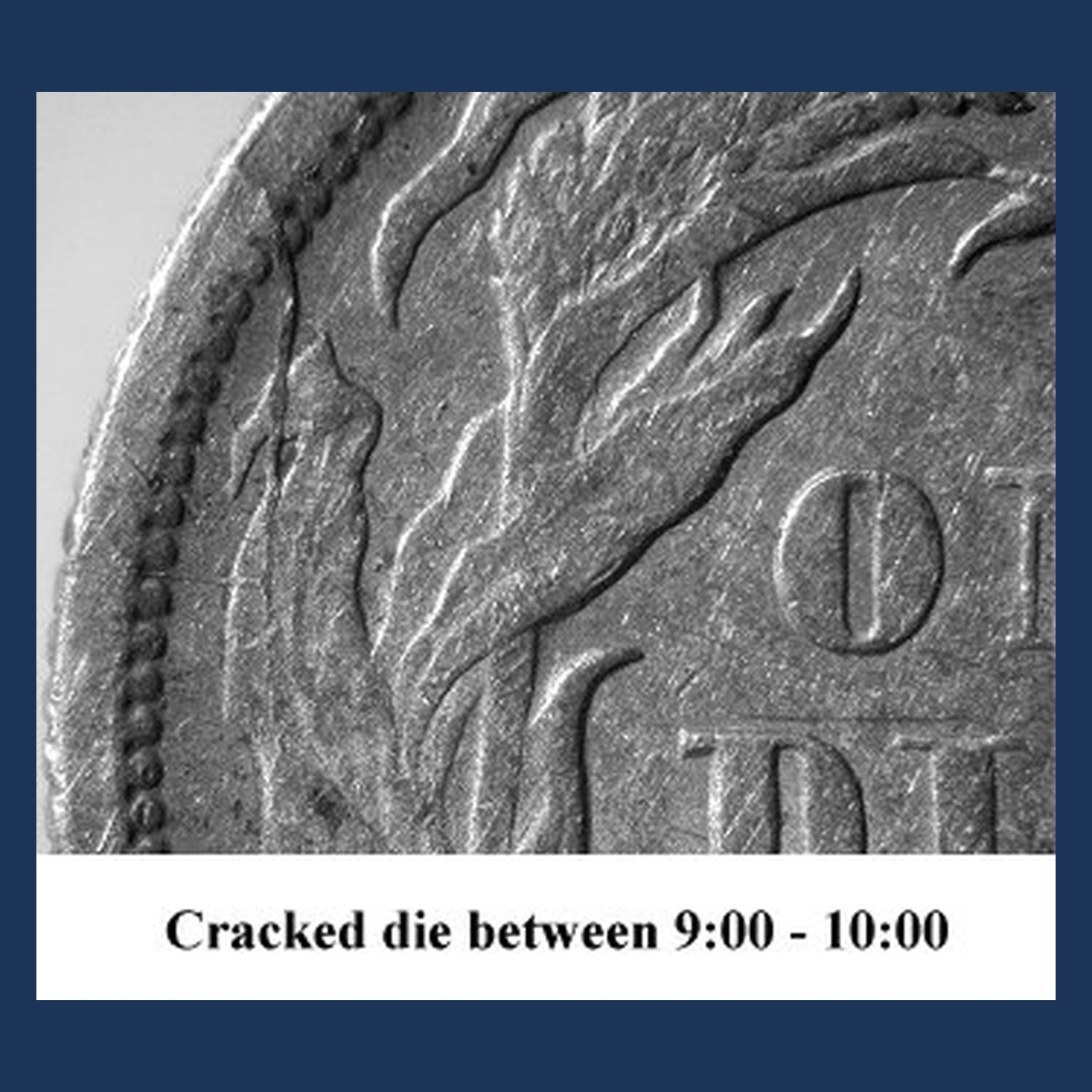
One recorded crack runs through the lower-right wreath. Another example has stronger cracks on the left around nine to ten o’clock.
These are separate patterns on different examples, not one continuous line across every 1872 dime. Each needs its own photograph for comparison.
The cracks began in the die, the steel tool that stamped the design. Silver entered the openings and became raised lines on the coin.
A branching line can show the tool breaking down further. It does not automatically mean a large piece fell away from the rim, and it does not mean the silver blank split.
Estimated Value
The estimated range is $30–$400 for worn through lightly worn Philadelphia examples with matching wreath cracks. A clear network may interest collectors more than a very faint line.
These are whole-coin estimates, not recorded auction amounts for the pictured backs. The surrounding wreath’s condition matters too.
A thin crack almost lost in wear may add little to the coin’s value. A continuous raised pattern with readable nearby detail makes the error easier to appreciate and compare.
How to Identify
Hold DIME upright and choose the matching region before following a line. Is it in the lower-right wreath, or on the left around nine to ten o’clock?
Use a 10× magnifier with light from the side. Follow the ridge through leaves and any branching points rather than focusing on one bright segment.
A scratch cuts inward and need not follow the pictured pattern. Check the whole route against the correct example.
Use a scale and calipers when safely accessible against 2.49 g and 17.9 mm. Inspect the edge grooves of this 90% silver dime.
The positive match is a raised line along the recorded route, with the surrounding leaves confirming its position. One unrelated scratch beside the wreath is not enough.
3. 1872 Liberty Seated Dime Repunched Date (Estimated Up to $2,000)
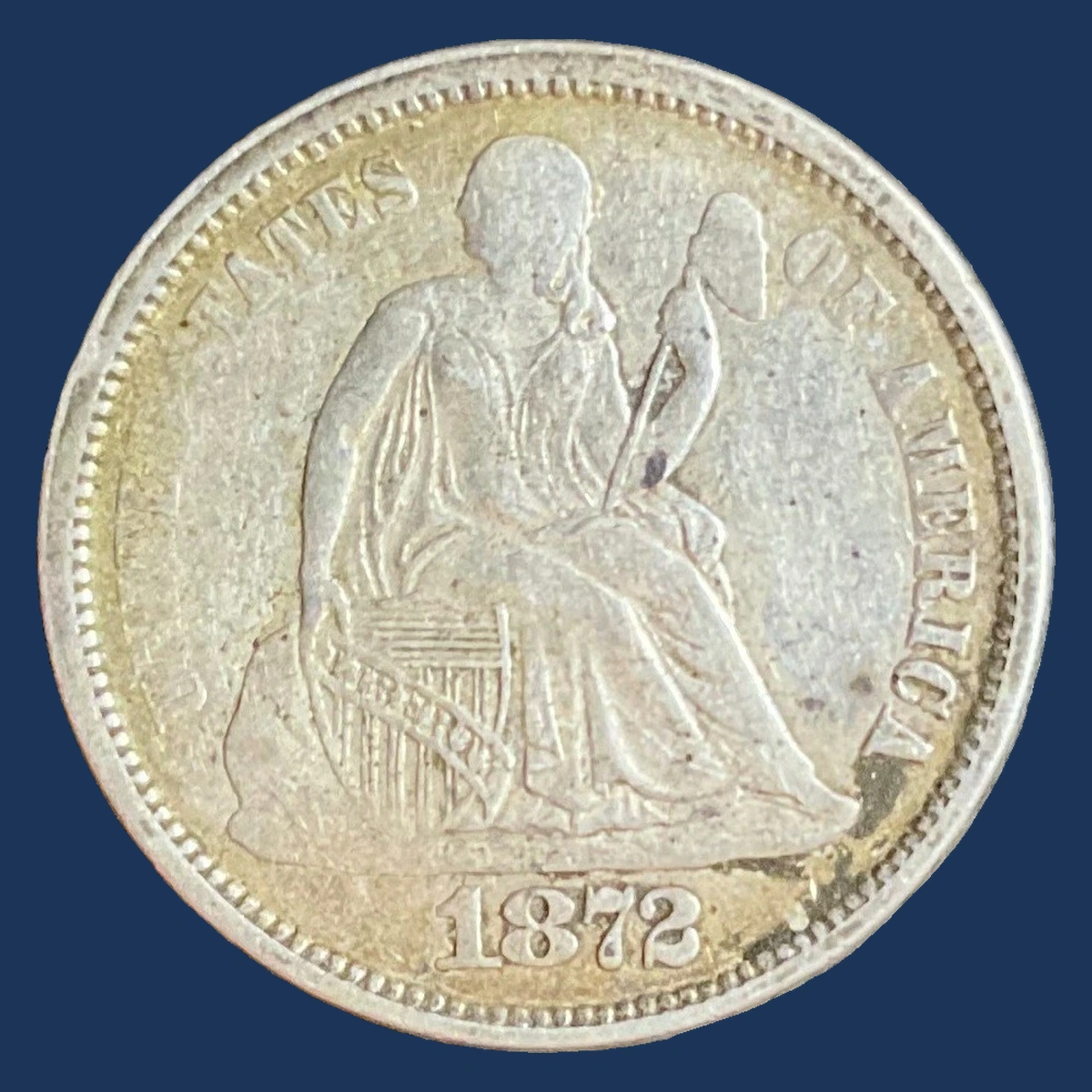
The final 2 can show traces of several date-punch positions. Some regular 1872 examples are described as triple-punched 2 varieties, while others show repeated marks on 72.
The punch placed the date into the stamping tool. Earlier pieces remained beside the final position and were copied onto later coins.
Proofs, specially made collector coins, also occur with repeated 72. Their pictures should remain separate from coins made for everyday use.
These remnants sit at the intended date position. A stray numeral in the gown or base above it is a misplaced date, even when both features share one coin.
Estimated Value
Estimated whole-coin values are $50–$1,000 for worn through lower unworn regular strikes and $600–$2,000 for matching collector Proofs. The different methods of manufacture need separate comparisons.
Some fronts also carry misplaced numeral pieces elsewhere in the design. Do not add a second full value for another feature on the same coin.
The MS65+ sale in the next section concerns such a combined-feature variety at a higher grade. It does not set a bonus for every repeated 2.
How to Identify
Photograph all four digits and the base above them. Use a 10× magnifier on the 2 or 72 to look for raised pieces of earlier numeral shapes.
Several placements should resemble parts of numbers. Flat edges and scratches following a digit can have different causes.
Choose the picture for the same front and for the correct collector Proof or regular coin. A cleaned reflective surface does not prove Proof manufacture.
Check an accessible coin with a scale and calipers against 2.49 g and 17.9 mm. Inspect the edge grooves of the 90% silver dime.
Keep stray marks in the gown separate from the date itself. Matching repeated contours beside the normal 2 or 72 establish the date-punch feature described here.
4. 1872 Liberty Seated Dime Misplaced Date Digits (Estimated Up to $2,500)
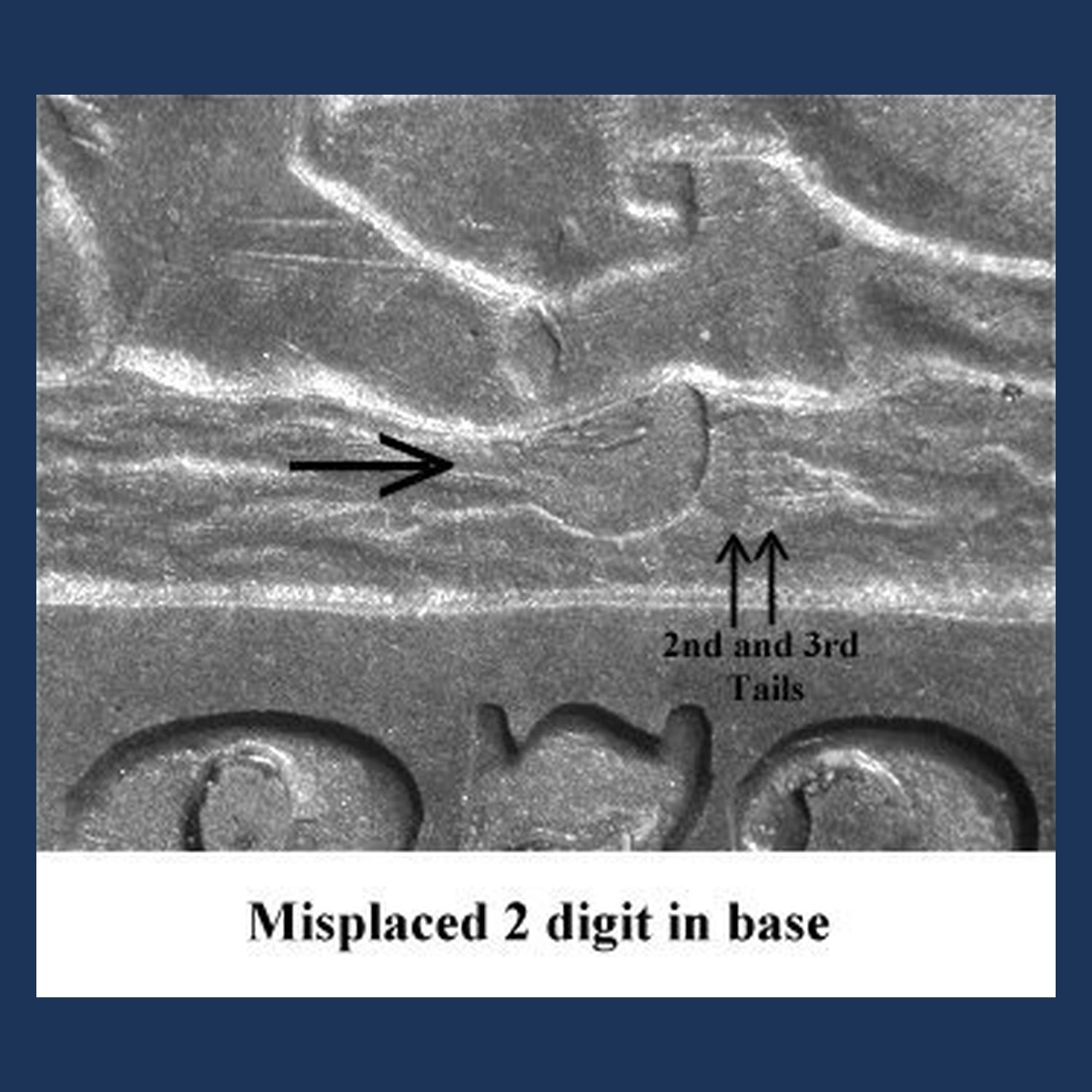
A piece of a number can appear where the design should show clothing or the base. The date punch entered the stamping tool in the wrong place before production.
The auctioned F-102 has faint numeral pieces in the gown near the end of the shield ribbon. A different front has an extra 2 in the base below the pendant.
That second front is known on collector Proofs and regular coins. Other reported examples have a misplaced 8.
Each location needs its own comparison. A numeral away from the intended date is different from a repeated stroke beside the normal numbers.
Estimated Value
An NGC MS65+ F-102 with CAC quality approval sold for $1,116.25 on February 5, 2016. That grade describes a well-preserved unworn coin.
The estimated whole-coin range is $75–$2,500 across worn, unworn, and collector Proof examples. Compare each within the same kind of manufacture and condition.
The sale belongs to the gown-fragment variety. A misplaced 2 or 8 elsewhere does not inherit that coin’s grade or its exact auction result.
How to Identify
Locate the shield ribbon and the small pendant before examining extra marks. For F-102, inspect the gown near the ribbon’s end with a 10× magnifier.
For the separate extra 2, inspect the seated base below the pendant. Compare nearby normal clothing folds so they are not mistaken for parts of numbers.
A reported misplaced 8 requires its own full-front picture. Do not assume it sits where the extra 2 appears.
Confirm ONE DIME on the back. Use a scale and calipers when safely accessible against 2.49 g and 17.9 mm, and inspect the edge grooves of the 90% silver coin.
Match the raised numeral piece in its particular location, while keeping collector Proof and regular examples separate.
5. 1872 Liberty Seated Dime Clashed Dies (Estimated Up to $3,500)
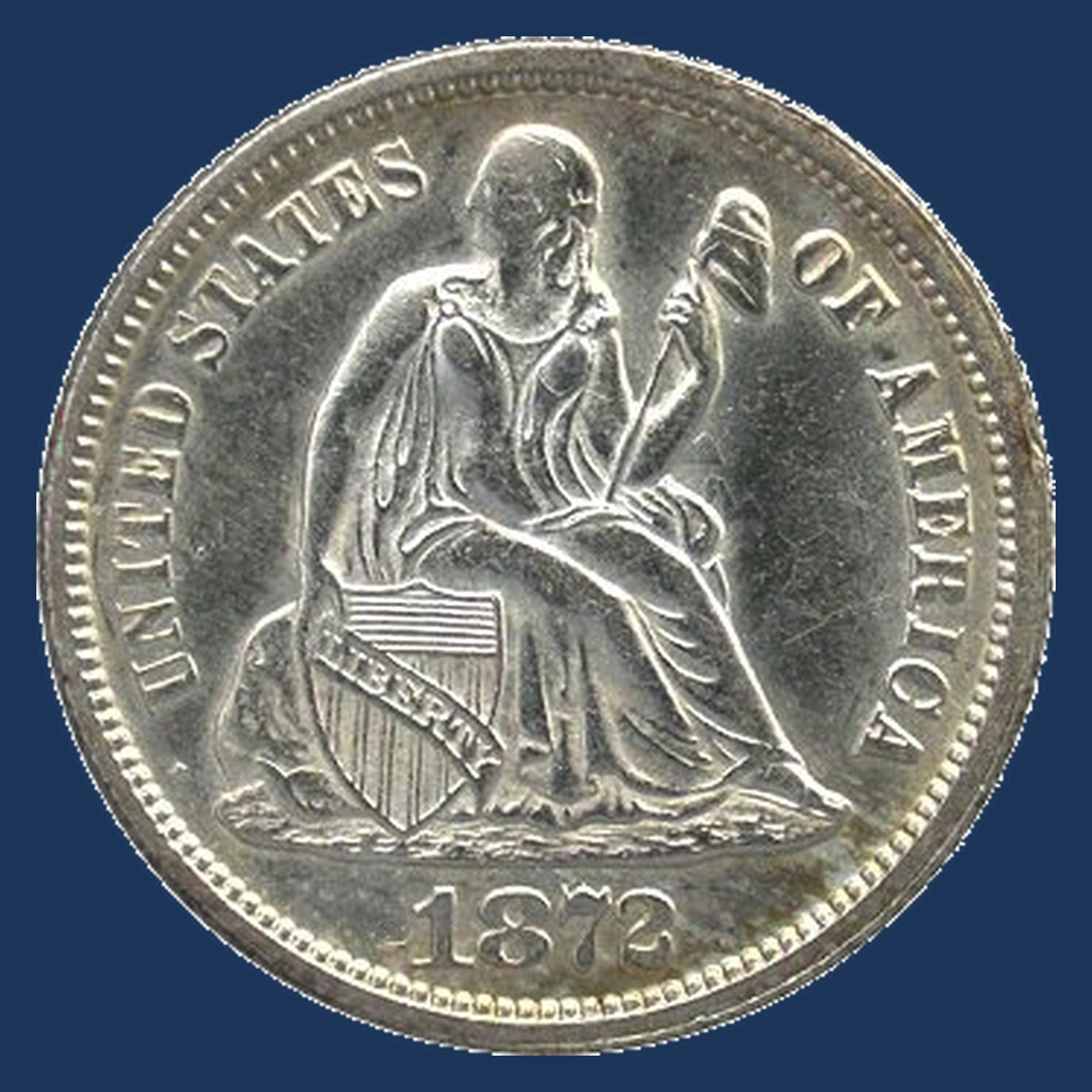
A second kind of design appears on the F-105 coin alongside its doubled back. Strong clash marks occur on both sides.
A clash begins when the stamping tools hit each other without a blank between them. They can pick up traces of the opposite design and copy them onto later coins.
An earlier use of the doubled back with a different front lacks those clash traces. The paired front therefore matters.
The crowded area between E and the right wreath belongs to the doubled design, not the clash. Counting all extra shapes as clash marks would mix two different events.
Estimated Value
The estimated whole-coin range is $500–$3,500 for the clashed F-105 combination, from worn examples through attractive lower unworn grades. Its doubled back contributes much of the collector interest.
The PCGS MS63 result of $3,360 in 2025 is a comparison for that doubled-back variety. It does not price the clash by itself.
If one coin has both features, assess it once. Adding the full doubled-die value to another full clash value would count the same specimen twice.
How to Identify
Start near the seated base on the front and in the open areas on the back. Compare the extra shapes with the opposite side’s normal design using a 10× magnifier.
Leave the crowded E-to-right-wreath area out of this test. That is part of the doubled design, rather than the clash evidence.
A weak or flat head alone also does not prove a clash. Compare both complete faces with F-105, not the earlier unclashed pairing.
Use a scale and calipers when safely accessible against 2.49 g and 17.9 mm. Check the edge grooves of the 90% silver dime.
The useful clash match is a recognizable shape transferred from the other side, appearing in the pictured position on the correct front-and-back combination.
6. 1872 Liberty Seated Dime Doubled Die Reverse (Estimated Up to $4,000)
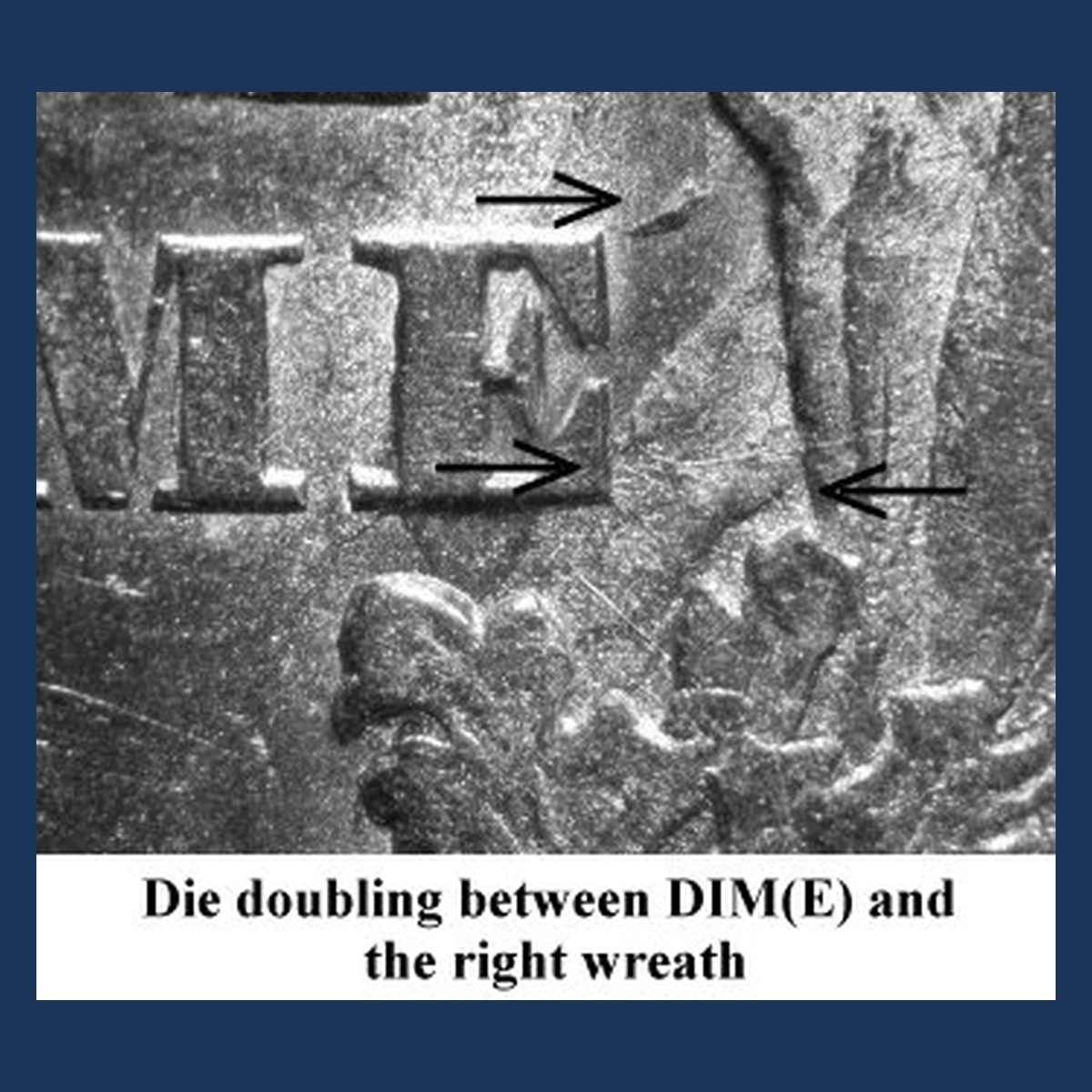
A master stamp impressed the back design into the working tool twice, at angles about 175 degrees apart. That near-half-turn difference created the dramatic doubled design.
Extra raised detail appears between E and the right wreath, inside D, and above NE. The finished tool later struck coins with more than one front tool.
The 175-degree figure describes preparation of the tool. It does not mean the finished coin’s front and back sit at that angle.
Collector Proofs have a separately reported doubled left wreath. Those coins need their own comparison rather than being grouped with this dramatic regular-strike pattern.
Estimated Value
The PCGS MS63 F-105/FS-801 sold for $3,360 on April 6, 2025. Estimated whole-coin values are $500–$4,000 for worn through attractive unworn examples of the pronounced variety.
For the separate collector Proof with left-wreath doubling, the estimate is $600–$2,000. That range covers collectible lower through well-preserved Proof grades.
The Proof has its own design feature and manufacture. The regular-strike auction result should not be assigned to it as though both were the same variety.
How to Identify
Enlarge DIME and the right wreath together. With a 10× magnifier, compare the extra detail beside E, inside D, and above NE with Fortin’s F-105 picture.
All three areas should form the matching arrangement. Flat shelves, isolated bumps, and clash marks do not reproduce the full pattern.
Do not try to measure 175 degrees by flipping the coin. That angle concerns the tool’s preparation.
For a collector Proof with left-wreath doubling, use its separate picture. Check an accessible dime with a scale and calipers against 2.49 g and 17.9 mm, and inspect its edge grooves.
The 90% silver coin must match the correct doubled areas: the combined E, D, and NE details for the dramatic regular variety, or the Proof’s left wreath.
Conclusion
Estimated whole-coin values for these 1872 features run from $30 to $4,000. A partly closed letter, a repeated date stroke, and a numeral in the gown are different observations.
Match their positions carefully, and keep collector Proofs separate from regular coins. The dramatic doubled back can also occur with clash marks, but those features do not need separate full prices.
A photograph showing the surrounding design makes every small detail easier to compare.