1885 Dime Error List with Pictures

An ordinary 1885 Proof dime graded PCGS PR64 Cameo with CAC approval sold for $840 in April 2025. That collector coin gives a condition comparison, rather than a price for one specific error.
The 1885 Liberty Seated dime errors below have estimated whole-coin values of $25–$4,000. Look for raised cracks, transferred picture traces, and extra digits beside or below the date.
Read on to see how those locations help separate the different mistakes.
1. 1885 Liberty Seated Dime Die Cracks (Estimated Up to $1,200)
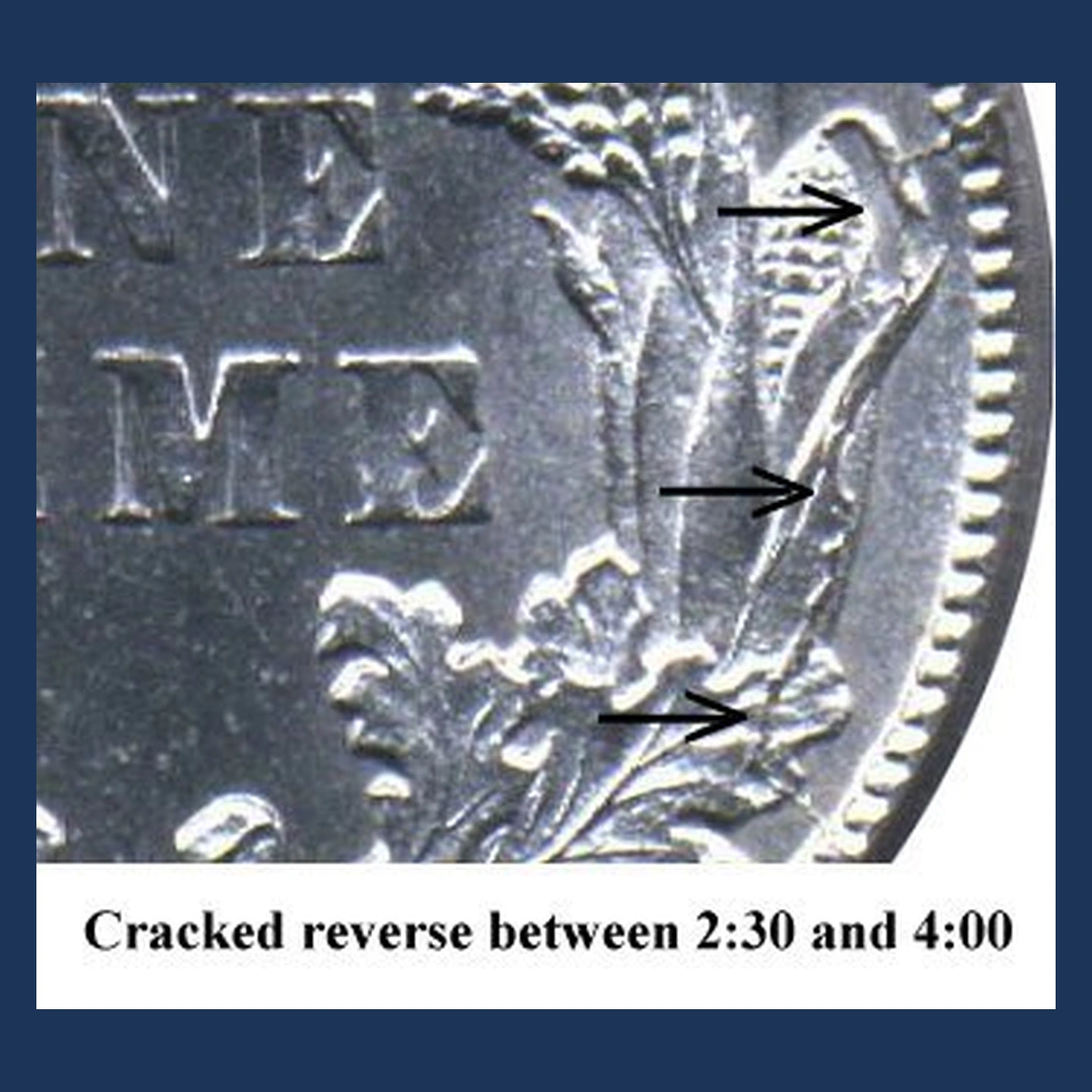
Thin raised lines appear on the right side of the back of F-102a dimes. They occupy the area from about 2:30 to four o’clock, with cracks also present on the front.
A die is the steel tool that stamps a coin. When it cracks, silver enters the opening and forms a raised ridge during the strike.
The earlier F-102 version has an uncracked back. Its variety name alone does not prove the later lines are present.
Another reported variety has cracks on both sides, so the paths need separate comparisons.
Estimated Value
Estimate $25–$1,200 for worn through lower-grade unworn coins with identifiable cracks. Clear lines can interest specialists, but original surfaces and condition remain important.
PCGS lists an F-102 graded MS63 at $469 from an eBay sale in November 2022. MS63 means unworn, though noticeable marks can remain.
That is the earlier variety, not a sale specifically matching the cracked F-102a back. It gives whole-coin price context rather than a separate value for each raised line.
How to Identify
Use a magnifier on the right side of the back while tilting a lamp across it. Between about 2:30 and four o’clock, compare each line’s route with the F-102a example.
A scratch in the correct area is not enough. The line should stand above the surface and continue naturally through the nearby design.
Check the front too, including the date position and accompanying cracks. Bright surfaces do not prove that the later cracks have developed.
Use calipers and a scale against 17.9 mm and 2.50 grams. This 90% silver issue has no mintmark; inspect its edge grooves for damage.
Start by tracing a raised right-side line along the same route as the confirmed later example.
2. 1885 Liberty Seated Dime Clashed Dies (Estimated Up to $1,200)
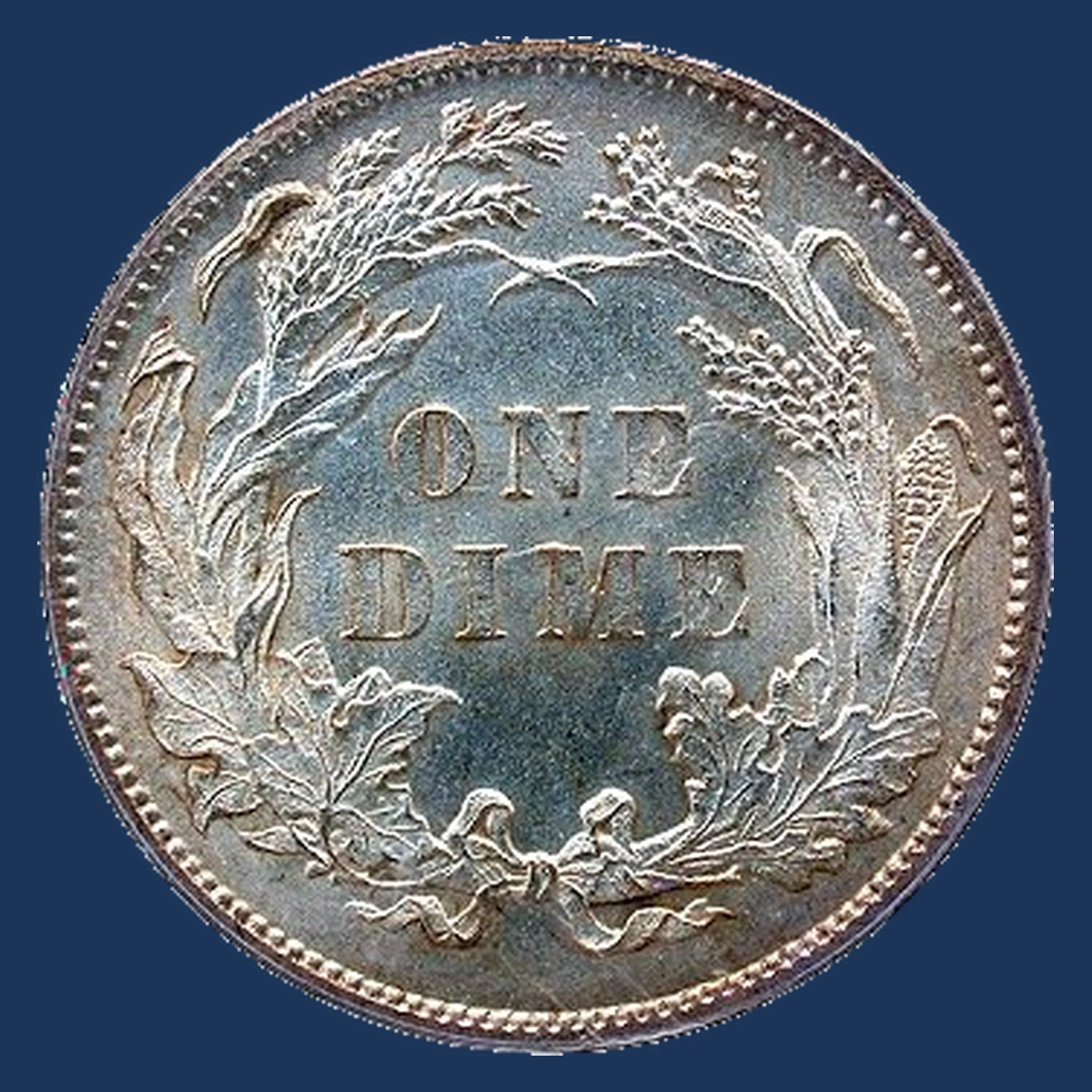
A faint piece of the opposite picture can appear where the background should be plain. This is a clash mark, made after two stamping tools struck each other without a metal disc between them.
The tools then transferred the unwanted shapes onto later coins. The extra detail comes from the opposite design, rather than a second copy of the picture already there.
F-106 has light clashing on the back. A separate variety, F-111, has marks on both faces.
Each needs its own comparison photograph, since the two descriptions do not establish one shared pattern.
Estimated Value
The estimated whole-coin range is $25–$1,200 for worn through lower-grade unworn circulation coins. A clear transferred shape may attract more interest than a barely visible mark.
The $469 MS63 F-102 sale from November 2022 is a different-variety condition comparison. It is not a sale of either clashed example.
Compare the actual surfaces and remaining detail before using that amount. Faint lines on a damaged coin do not give it the value of an original unworn piece.
How to Identify
Place pictures of the two normal designs side by side before naming an extra shape. With a magnifier, look for a fragment that could have come from the opposite stamping tool.
For F-106, begin on the back. For F-111, inspect both faces and compare with the correct variety photograph.
Random scratches and fine lines from metal spreading can crowd the background without outlining another design. Their number or darkness does not prove a clash.
Check 2.50 grams on a scale, 17.9 mm with calipers, and the grooves around the edge. For a quick test, match one unwanted contour to a recognizable part of the opposite design.
3. 1885 Liberty Seated Dime Misplaced Date in the Border (Estimated Up to $1,500)
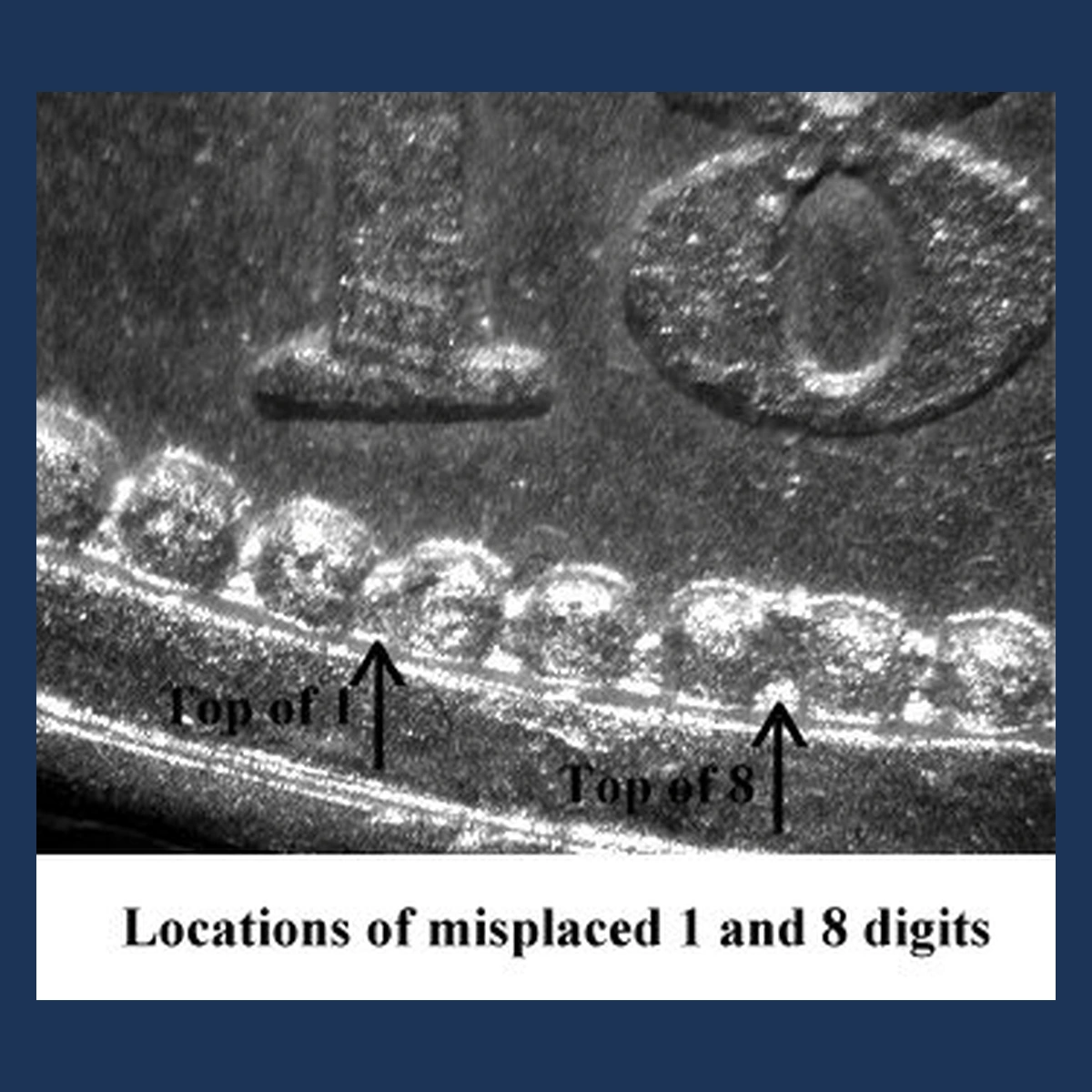
Extra parts of numbers can hide among the small teeth below the date. F-103 has fragments of 18 there, while F-104 has a separate misplaced 8.
The date punch entered the stamping tool in the wrong position. The final date was then placed normally, leaving both the intended numbers and earlier fragments on the coin.
These varieties were made in Philadelphia for circulation. The F numbers distinguish their different features.
An uneven border tooth is not enough to prove a misplaced digit; its shape and position must match the recorded example.
Estimated Value
Estimate $50–$1,500 for worn through attractive lower-grade unworn examples with recognizable misplaced digits. Clear fragments and original surfaces make comparisons easier.
An 1859 F-103 with a misplaced date sold for $118.12 at GreatCollections in October 2024, graded VF30. That is a circulated coin from a different year.
It offers a recent comparison for the same kind of mistake, not a fixed 1885 price. Rarity, wear, and how clearly the digits survive still need separate consideration.
How to Identify
Keep the complete date in view while examining the lower border with a magnifier. Compare the fragments with the matching 1885 variety photograph.
For F-103, check both the 1 and 8 together. For F-104, look for the single 8 rather than assuming another digit must be nearby.
Inspect the border for dents that flattened a tooth or pushed metal upward. Such damage can imitate a curve without preserving a punched number.
Use a scale against 2.50 grams and calipers against 17.9 mm, then inspect the edge grooves. Begin by matching the fragment’s exact position below the date and its raised numeral shape.
4. 1885 Liberty Seated Dime Repunched Date (Estimated Up to $4,000)
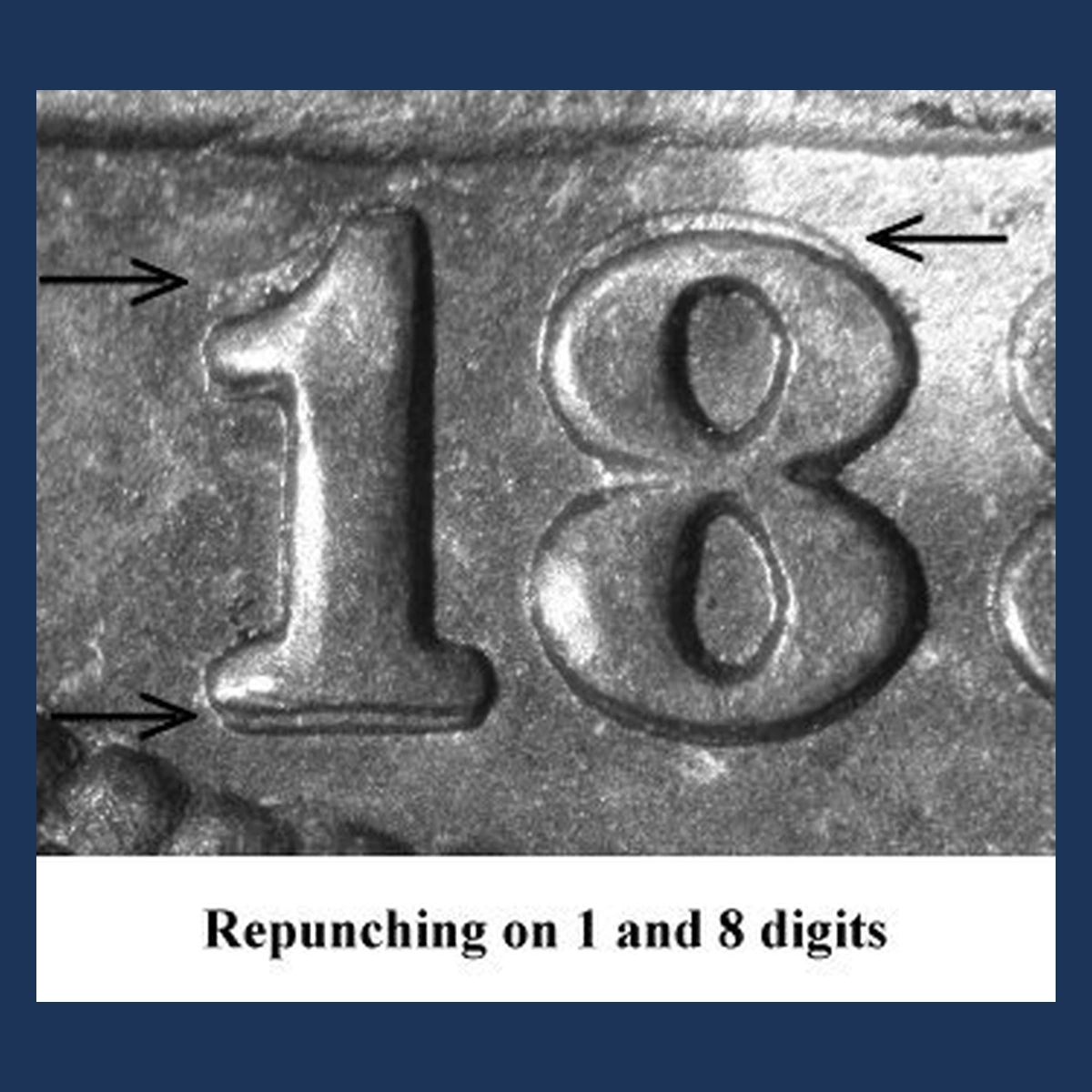
A second outline can lie close beside the normal date rather than down in the border. These traces remain from repeated entries of the date punch in the stamping tool.
The F-101 Proof has a repeated 1, also seen after the tool was used for F-101a circulation coins. Proofs are specially made coins for collectors.
Other circulation varieties show repeated 18 or 5. Those patterns belong to separate coins, not one date with every digit necessarily repeated.
A shared stamping tool does not make all its coins Proofs; the finished coin must be examined separately.
Estimated Value
Estimate $40–$1,500 for circulation coins through lower-grade unworn condition, and $400–$4,000 for collectible Proofs. These are separate whole-coin price groups.
An ordinary PCGS PR64 Cameo CAC sold for $840 in April 2025. Cameo describes contrast between the picture and background.
That lot was not identified as a specific repunched-date variety. It supplies Proof condition context, while stronger preservation and clearer repeated digits may support a different comparison for the coin being valued.
How to Identify
First assess the complete surfaces to decide whether the coin is a Proof or circulation strike. One reflective patch cannot settle that question when the same tool served both purposes.
Then use a magnifier on the reported 1, 18, or 5. Compare the correct pattern while keeping the entire date visible.
An extra rounded outline differs from a scratch, dent, or flat shelf left by movement during striking. Check that its shape follows the earlier punched number.
The normal 90% silver dime is about 2.50 grams and 17.9 mm; use a scale and calipers, then inspect the edge grooves. For a quick match, compare the repeated outline beside the specific digit shown in the correct variety photograph.
Conclusion
Estimated whole-coin values for these 1885 dimes run from $25 to $4,000. Raised cracks need a matching route, clash marks need a connection to the opposite picture, and extra digits need the correct shape and position.
Keep Proofs and circulation coins in separate price comparisons, even when they used the same tools. A small feature can identify the variety, but the whole coin’s condition still determines much of its value.