1841 Dime Error List with Pictures

A repunched-date 1841 dime brought $3,840 in June 2023, according to an auction price index. Look below the numbers: small pieces of an earlier date can remain there.
This 1841 Liberty Seated dime error list also covers a weak star, rough raised spots, and a thin raised line. Estimated prices run from $30 to $4,500 for the complete coins.
Read on to see where each feature appears and how to separate it from later damage.
1. 1841 Liberty Seated Dime Filled-Die Weak Star (Estimated Up to $500)
The seventh star on the front is weak or missing on an 1841 dime described in a coin guide. Its neighbors provide the useful comparison.
The suggested cause is a filled die. A die is the steel tool that stamps the design onto a metal blank.
Grease or other material can block a small hollow in that tool, leaving the matching star faint. This happens under pressure, without melting the silver.
Wear can also flatten stars. A weak star alone therefore does not prove that material blocked the stamping tool.
Estimated Value
Estimate $75–$500 for a circulated 1841 dime with a genuine blocked-star error. That range prices the whole coin, including its wear and surface condition.
A normal 1841 dime graded PCGS AU58 sold for an indexed $216 in January 2024. AU58 means only slight wear.
That sale was not the missing-star coin. The guide gives no grade or mint for its example, so the range remains an estimate.
How to Identify
Find the seventh star on the front, then compare its points with the neighboring stars. Check nearby parts of Liberty too.
If all these raised details look equally flat, ordinary wear may explain the missing shape. A blocked star should stand out from better-preserved details nearby.
Use a 10× magnifier and tilt the coin beneath a lamp. Scratches, a polished patch, or pushed-up metal can reveal that someone removed the star.
A normal dime weighs about 2.67 g and measures 17.90 mm across; check with a scale and calipers. Inspect its grooved edge and record any mint letter on the back.
Look for one weak star beside sharper stars, without scraping where its points should be.
2. 1841 Liberty Seated Dime Rusted-Die Texture (Estimated Up to $1,500)
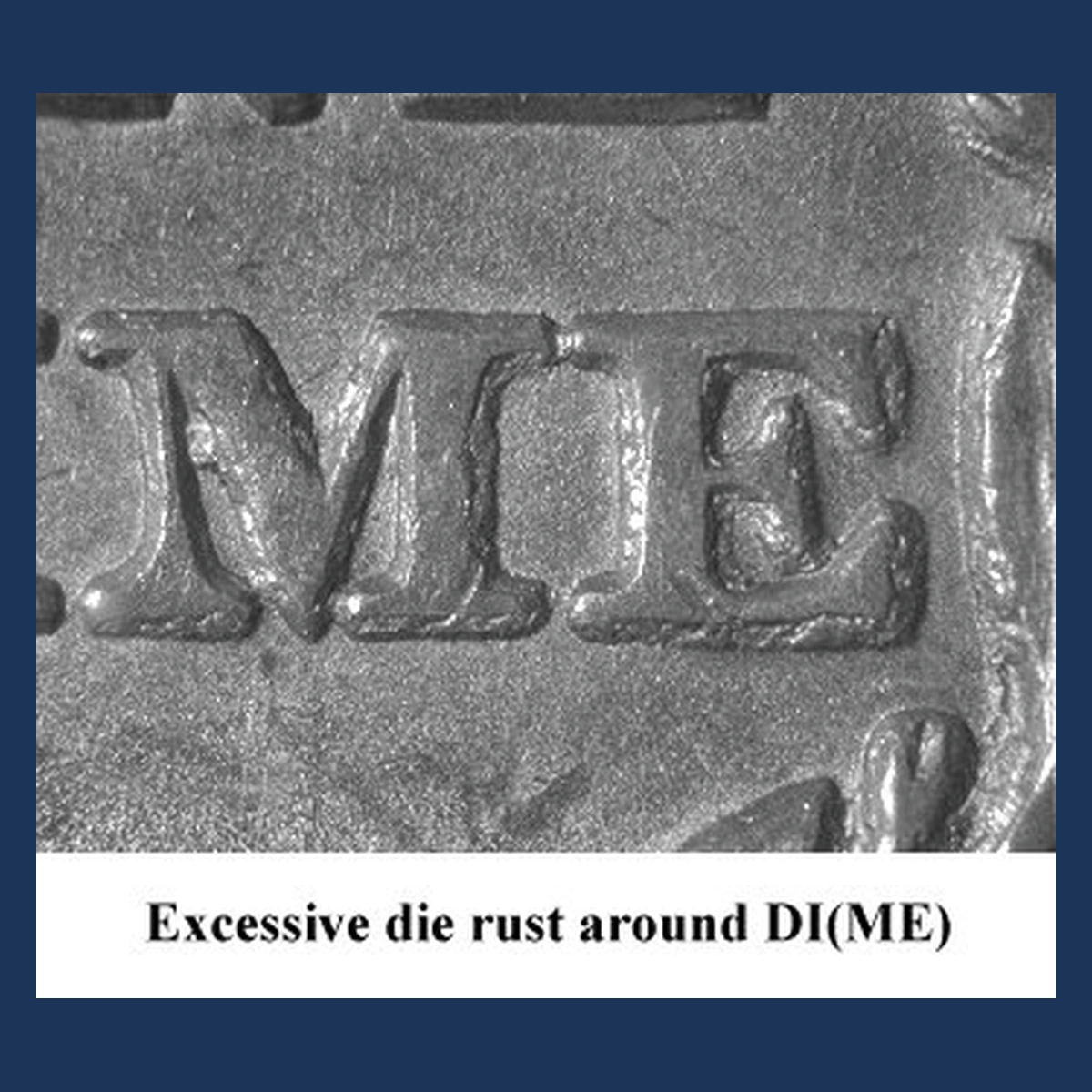
Tiny bumps around UNI in UNITED can make the back of this dime look unusually rough. On the Philadelphia variety called F-105, they came from a rusty stamping tool.
Rust ate small pits into the steel tool. Silver entered those pits when the coin was struck, leaving raised grains on the finished dime.
The difference is height. Corrosion that attacks the coin afterward removes metal and can leave sunken holes.
An old, rough surface is not enough to identify this variety. The bumps must match the known coin design.
Estimated Value
A matching F-105 dime has an estimated whole-coin range of $30–$1,500. This covers worn examples through coins with no circulation wear but some marks.
An ordinary 1841 dime graded NGC MS63 brought an indexed $720 in December 2024. MS63 indicates no circulation wear, with noticeable marks.
That result helps compare condition; it was not a recorded F-105 rust sale. Clear raised bumps may interest specialists, while actual corrosion can reduce value.
How to Identify
Tilt the coin until light falls across UNI on the back. With a 10× magnifier, decide whether the rough spots rise above the surrounding silver or sink below it.
The F-105 photographs show the matching design on both sides. The front has extra pieces beneath the 841 digits, so turn the coin over and compare those too.
Dark coloring can hide the difference between bumps and holes. Move the light rather than scraping or cleaning the surface.
Check for a 17.90 mm diameter and roughly 2.67 g weight with calipers and a scale, then inspect the edge grooves. Raised grains around UNI, together with the matching extra date pieces, are the useful combination.
3. 1841 Liberty Seated Dime Reverse Die Crack (Estimated Up to $1,800)
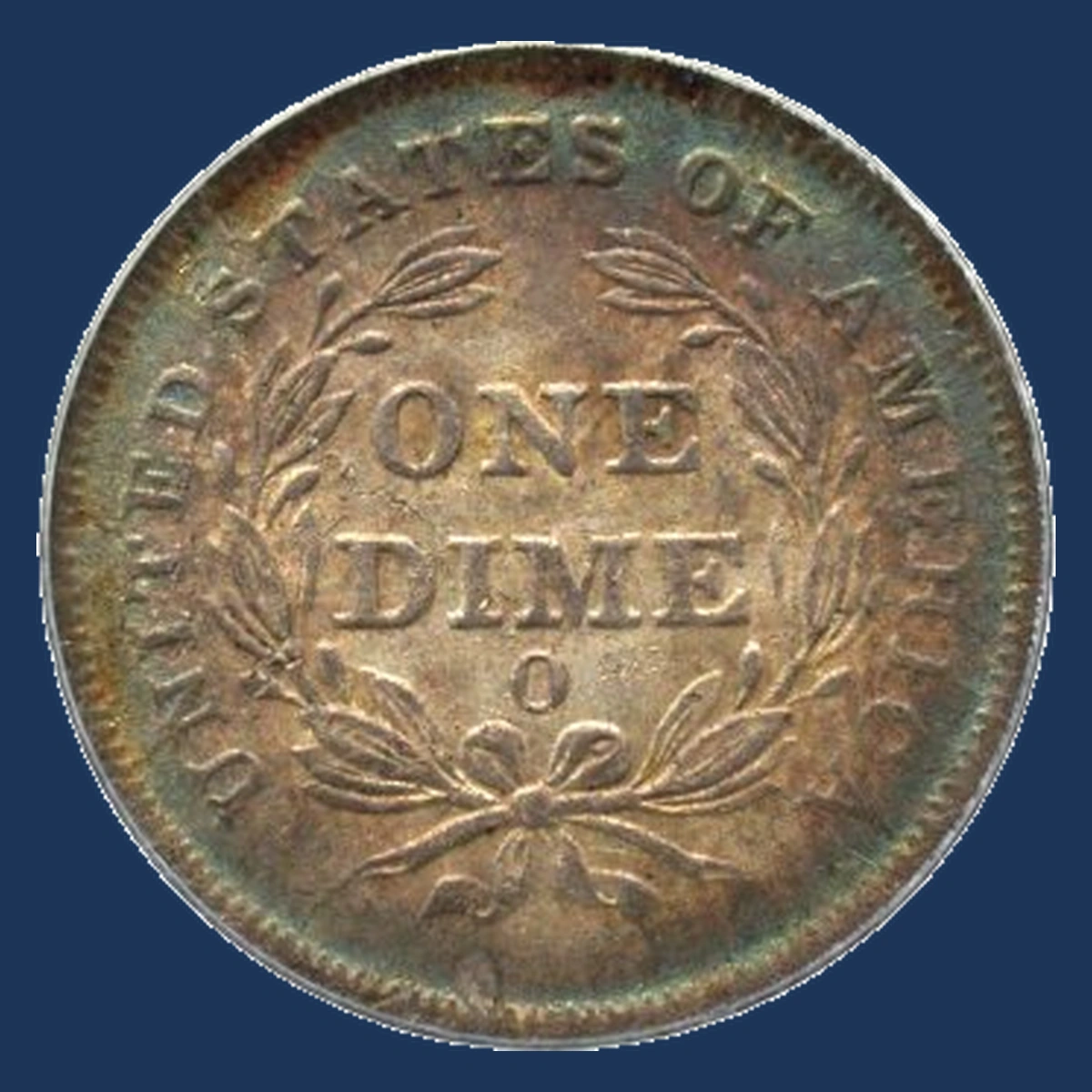
A thin raised line crosses the first S in STATES on the back of certain 1841 Philadelphia dimes. Collectors call the matching pair of stamping tools F-103.
The line formed when the rear tool cracked. Silver squeezed into the opening during striking and stayed raised on the coin.
The front also carries small extra pieces of the date. Those came from an earlier step, when a worker punched the numbers into the tool.
Both features help identify the coin. A scratch through S, however, is a cut rather than this raised line.
Estimated Value
Allow an estimated $30–$1,800 for a complete F-103 dime with a visible reverse crack. Wear, marks, and the strength of the line all affect its appeal.
A PCGS MS64 F-103 repunched-date dime appears at $1,020 in a November 2024 Stack’s Bowers auction index. That grade means no circulation wear and relatively few marks.
The sale prices the complete variety, not the crack alone. Its title also does not describe how strongly the crack appeared.
How to Identify
Start at the first S in STATES on the back. Trace the thin line through the letter with a 10× magnifier, using light from the side.
A genuine crack stands above the coin. A scratch cuts into it and may leave loose-looking ridges along its edges.
Turn to the date and look for the matching extra pieces beneath 184. They support the F-103 identification, but the back still needs its own visible crack.
Philadelphia examples have no O below the wreath. A normal dime also has a grooved edge, measures 17.90 mm with calipers, and weighs about 2.67 g on a scale.
The quickest useful distinction is simple: the line crossing S must rise above the silver, not cut into it.
4. 1841 Liberty Seated Dime Repunched Date (Estimated Up to $4,500)
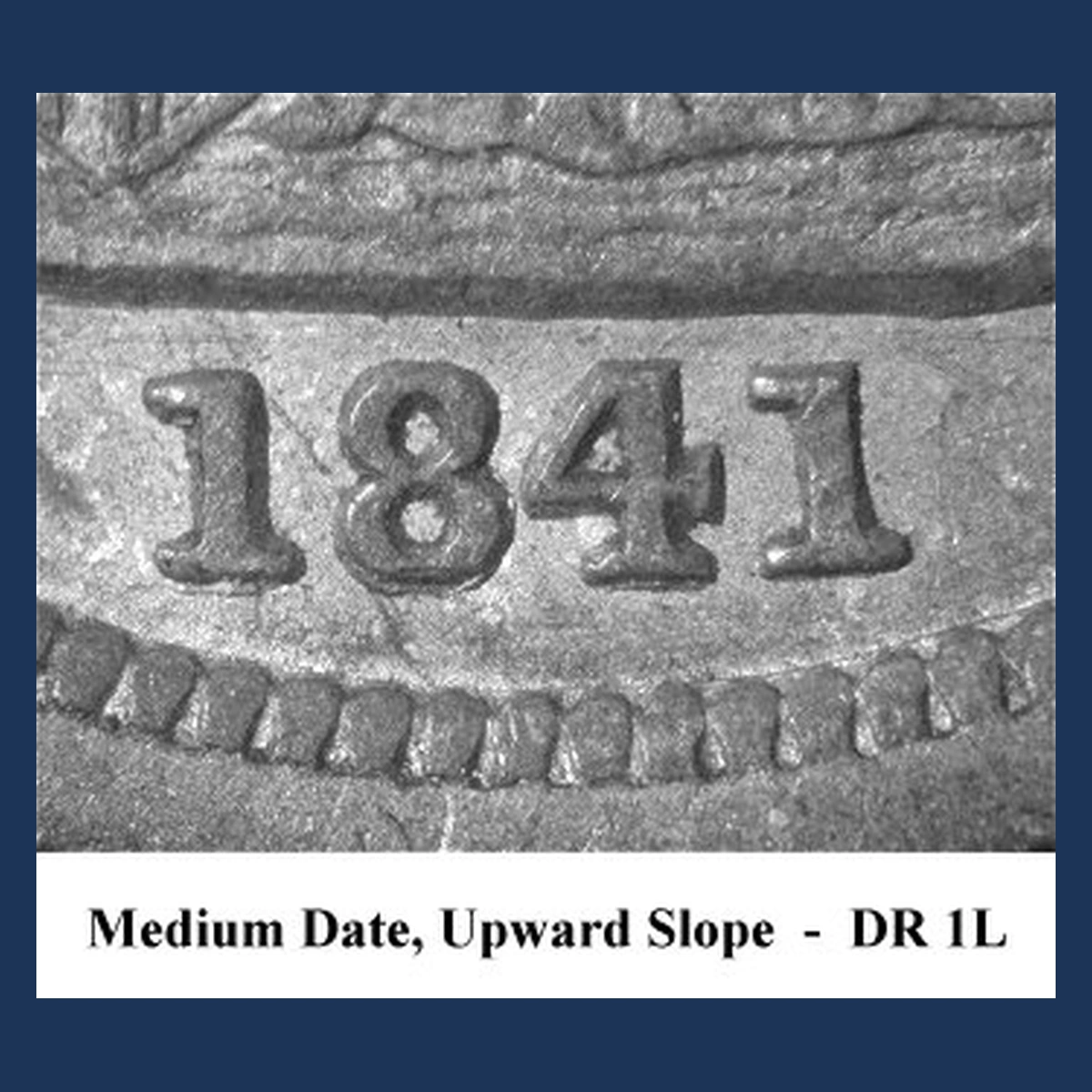
Look beneath the date numbers for small extra strokes. A worker first punched the date too low in the stamping tool, then punched it again slightly higher.
Parts of the lower numbers remained. The tool passed those shapes onto each coin it struck.
Known Philadelphia examples show extra pieces beneath 184 or beneath 841. These are different date patterns, not two descriptions of the same coin.
Only the date was punched again. Liberty and the stars did not receive a second complete image, as they might on a double-struck coin.
Estimated Value
The 1841 auction index records $3,840 for an F-104 PCGS MS65 CAC dime in June 2023. It also lists $1,020 for an F-103 PCGS MS64 in November 2024.
Both had no circulation wear, but their grades and date patterns differed. Estimate $40–$4,500 across worn through especially well-preserved examples.
Clear extra numbers help buyers recognize the variety. They do not give a heavily worn coin the value of a top-grade example.
How to Identify
A photograph of the full date helps more than one enlarged notch. Take it straight above the coin, then compare the lower edges of 184 and 841 with a known example.
Use a 10× magnifier to follow the extra raised strokes. They should fit pieces of numbers in a consistently lower position, rather than random cuts.
A flat shelf along one digit can come from movement during striking. It should not be mistaken for a fuller earlier number shape.
Check the back as well, since different front and back tools produced these varieties. Normal Philadelphia dimes have no mint letter, a grooved edge, and dimensions near 2.67 g and 17.90 mm.
Use a scale and calipers to check those measurements. Begin with the aligned extra number pieces directly below the date; those show where the earlier punch landed.
Conclusion
Estimated values for these 1841 dimes run from $30 to $4,500, depending on the feature and the coin’s condition. Start with the place you can actually see: the seventh star, UNI, the first S in STATES, or the date.
Raised bumps and lines tell a different story from holes and scratches. Compare both sides before deciding what caused a mark, and avoid cleaning away the small details that help identify it.