1842 Dime Error List with Pictures

An 1842-O dime with a network of raised cracks on the back sold for $14,100 in May 2015. Its MS65 grade describes an unworn coin with relatively few marks.
The five 1842 dime errors below cover raised metal, missing detail, repeated shallow areas, and rim breaks. Estimated whole-coin values run from $100 to $20,000.
Look at the shape of each feature before choosing its explanation, especially on New Orleans coins with worn or weakened designs.
1. 1842-O Liberty Seated Dime Index-Finger Die Gouge (Estimated Up to $1,000)
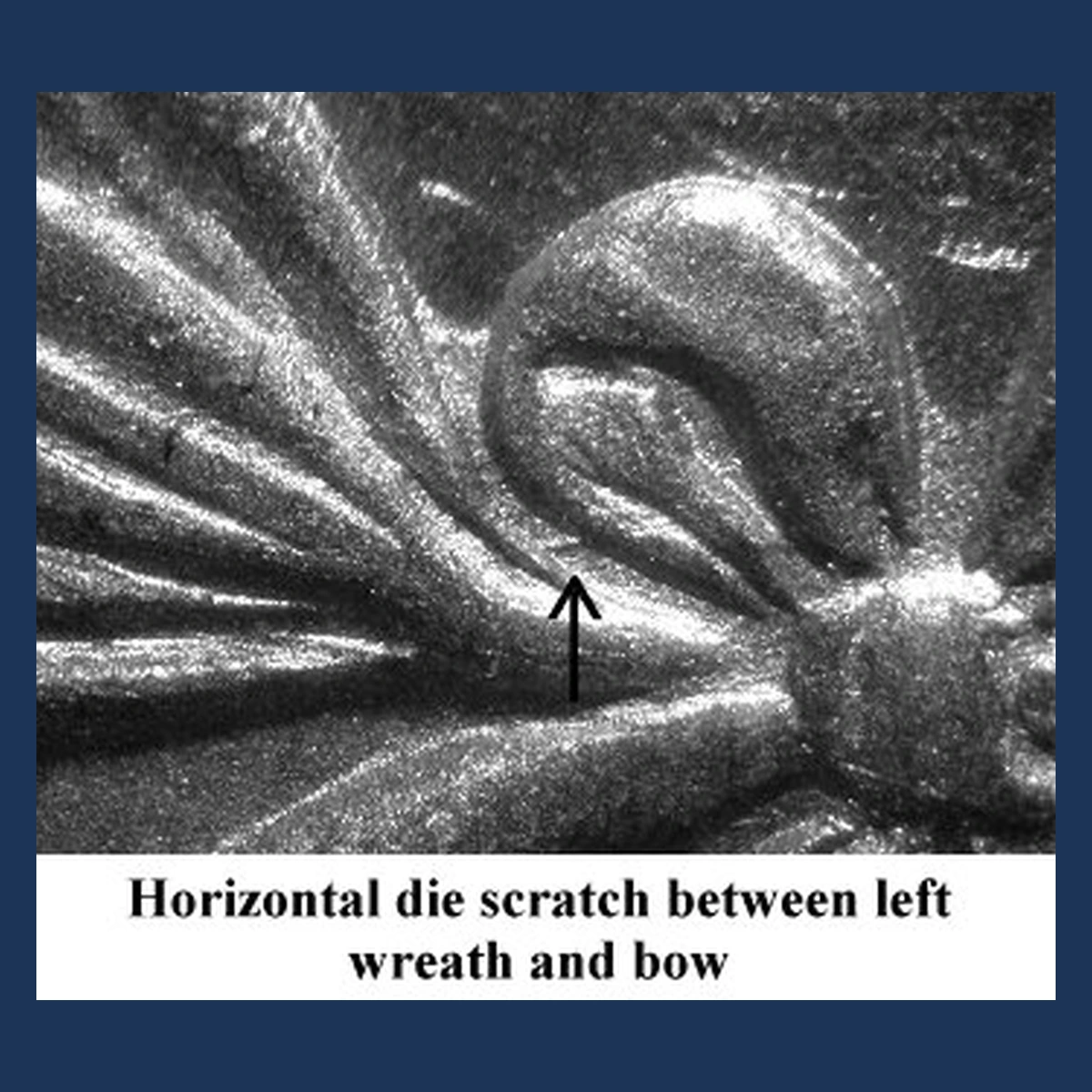
Extra metal at Liberty’s index finger can come from damage to the die, the steel tool that stamps coins. A cut into the tool leaves raised metal on the finished coin.
That is the opposite of a scratch cut directly into the silver afterward. The location and raised shape both matter.
The finger feature appears in the related F-106 and F-107 examples. A small defect at Liberty’s nose offers another point of comparison.
Look at the correct part of the hand. A random nick near the figure does not reproduce the same feature simply because it lies nearby.
Estimated Value
The estimated whole-coin range is $100–$1,000 for worn 1842-O examples with a matching finger feature. Clear detail and natural surfaces support the stronger end.
This is an estimate, not a recorded sale of the pictured example. A small mark on a heavily worn coin should be judged more modestly.
The much higher sale for a well-preserved cracked-back dime belongs to a different comparison. Its price should not be transferred to this small front-side feature.
How to Identify
Enlarge Liberty’s hand and use a 10× magnifier at the index finger. Move the light to check that the unusual metal rises above the surface.
A cut, stuck-on substance, or unrelated line needs another explanation. Compare the shape with a clear picture of the correct F-106 or F-107 example.
Check the small nose feature, the date, and the O below the back wreath as supporting details. They help keep the comparison tied to the right coin.
When safely accessible, use a scale and calipers against 2.67 g and 17.9 mm. The dime is 90% silver and has grooves around its edge.
The deciding clue is the matching raised shape at the index finger, with the nearby hand detail in the correct position.
2. 1842-O Liberty Seated Dime Excessively Lapped Dies (Estimated Up to $1,200)
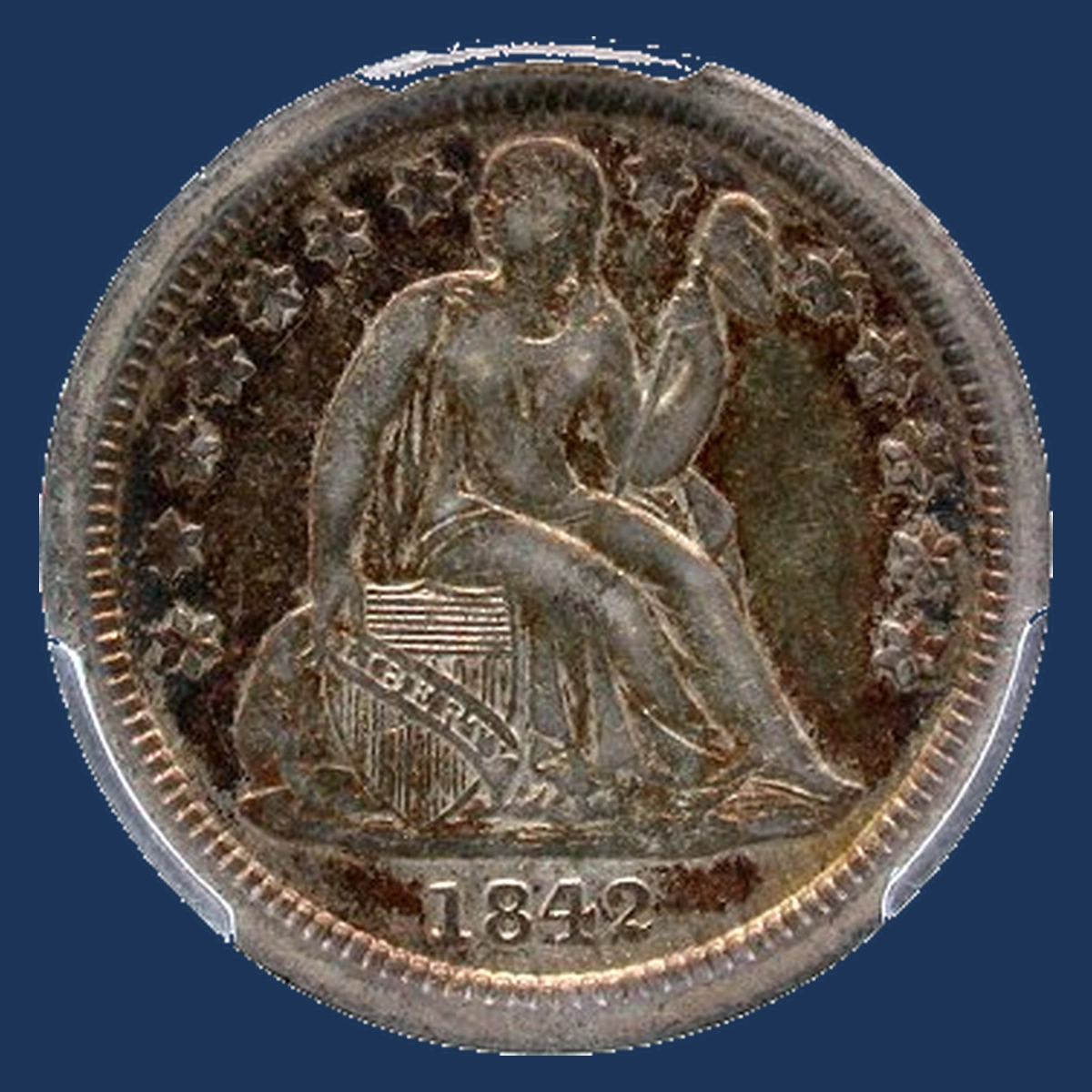
Some details look weak because the stamping tool no longer had enough design to transfer. Heavy polishing during maintenance could remove shallow parts of that design.
Collectors call the process lapping. Too much of it could reduce stars, date digits, parts of Liberty, or lettering and leaves on the back.
One recorded front shows a smaller-looking date and missing upper-body detail after the tool was polished. Other features can remain clearer.
The loss happened before the coin was struck. That differs from wear rubbing detail off a finished coin, or a local hollow interrupting one small area.
Estimated Value
The estimated range is $100–$1,200 for worn through lightly worn examples with a clear matching pattern. It includes the New Orleans dime’s value and interest in the altered tool.
Strong surviving features and original surfaces make the missing details easier to understand. They can support a better price than general weakness across the coin.
Later polishing of the coin itself is damage. It should not receive the same estimate just because its surface looks similarly smooth.
How to Identify
Compare the coin with an earlier example made by the same tool. Look for particular details becoming smaller or disappearing while other parts remain fairly strong.
The F-107 pictures show a smaller-looking date and lost upper-body detail. That pattern is more useful than calling the entire coin weak.
Inspect the surface with a 10× magnifier for later polishing. The repeated pattern across matching examples helps separate tool maintenance from treatment of one coin.
A scale and calipers can check an accessible dime against 2.67 g and 17.9 mm. It should be 90% silver with grooves around the edge.
The useful comparison is an earlier, fuller design beside the later reduced pattern, with the same remaining details linking both to the same tool.
3. 1842-O Liberty Seated Dime Reported Filled-Die Depressions (Estimated Up to $1,500)
Shallow areas repeat at the lower shield, gown, and base above the 2 on reported 1842-O coins. Those locations led a researcher to suggest material had blocked parts of the stamping tool.
The same coins also show broader missing detail from heavy tool polishing. That widespread weakness and the small depressed areas are different observations.
Specialists have debated the blocking-material explanation. No trapped object or chemically identified grease has been established.
The visible feature is the repeated pattern of shallow areas. A matching pattern can be described without turning the suggested cause into a proven grease error.
Estimated Value
The estimated whole-coin range is $150–$1,500 for an example matching the recorded shallow areas. Intact surrounding surfaces and agreement at all locations support a stronger comparison.
No verified sale is assigned to this feature here. The estimate concerns the visible pattern, not a proven grease deposit or retained object.
An isolated dent does not qualify simply because it lies near the shield. The rest of the coin and the repeated shapes must match as well.
How to Identify
Place pictures of the reported examples beside the coin. Compare the boundaries at the lower shield, gown, and base directly above the final 2.
Use a 10× magnifier to look for sharp cuts, pushed-up metal, or later smoothing. Those can point to damage after the coin was made.
Separate the local hollows from the broader weak design caused by tool polishing. A single dent in roughly the right place is not the full pattern.
When safely accessible, use a scale and calipers against 2.67 g and 17.9 mm, and inspect the edge grooves. The normal dime is 90% silver.
The helpful match is the same shallow shapes repeating at all three locations on genuine examples, rather than a guess about what material caused them.
4. 1842 Liberty Seated Dime Obverse Rim Cuds (Estimated Up to $2,000)
A raised lump joined to the rim can form when part of the stamping tool breaks away. Coin metal fills the opening where normal rim or design detail should have formed.
Collectors call that a cud. Reported 1842 examples come from both Philadelphia and New Orleans.
The Philadelphia break is near ten o’clock. New Orleans has a Small O example with a break near stars 3–6 and a separate Medium O example.
These are different coins, not several required marks on one front. A small bump inside the design or an ordinary rim bruise needs a different explanation.
Estimated Value
The estimated whole-coin range is $100–$2,000 for worn through lightly worn examples with a genuine rim break. Compare Philadelphia and New Orleans coins separately.
A large, clearly formed break can attract more interest than a tiny irregularity. Cleaning or damage elsewhere still lowers the usefulness of a high-price comparison.
No auction amount is assigned to the pictured examples here. The range estimates the entire coin according to its mint, condition, and visible break.
How to Identify
Read the back first: an O means New Orleans, while no mint letter indicates Philadelphia. Then choose the matching front photograph.
For Philadelphia, inspect the rim near ten o’clock. For the Small O example, examine stars 3 through 6 rather than expecting that break on every New Orleans dime.
With a 10× magnifier and side lighting, follow the raised patch into the rim. Check for a folded edge from a dent or for added solder.
Use a scale and calipers when safely accessible against about 2.67 g and 17.9 mm. Inspect the edge grooves of the 90% silver dime.
A convincing match follows the pictured boundary for that mint and example. Its connection to the rim matters more than how large the lump looks.
5. 1842-O Liberty Seated Dime Shattered Reverse (Estimated Up to $20,000)
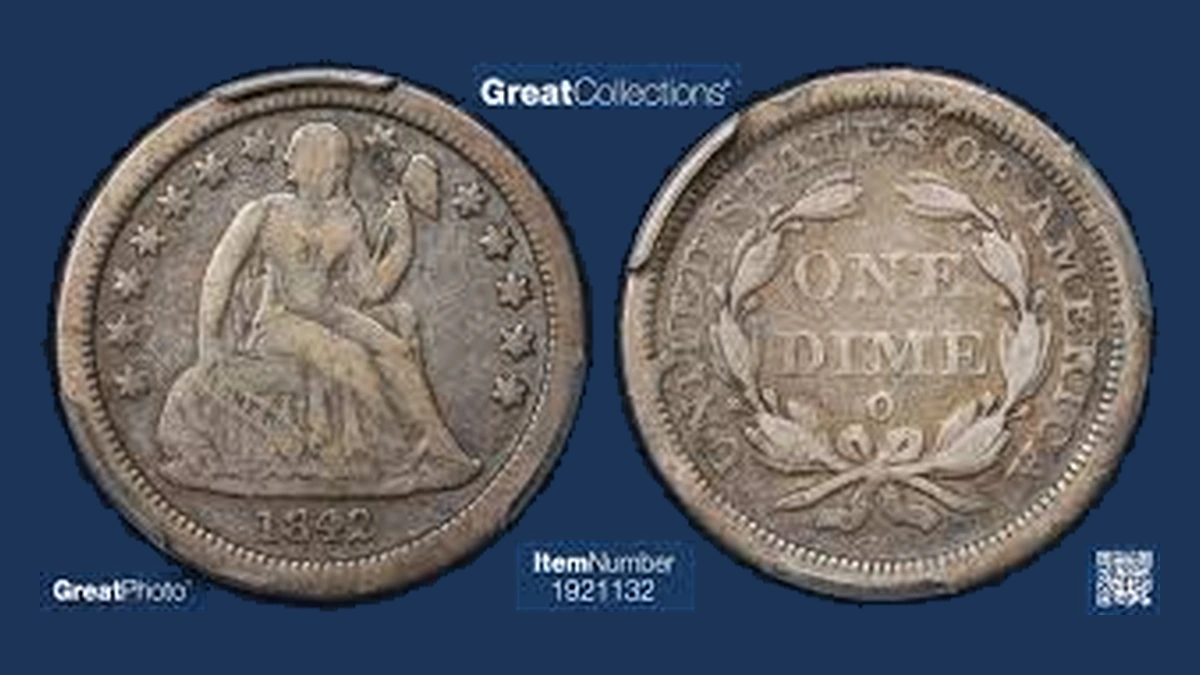
A stamping tool used for the back in 1841 was reused with an 1842 front. Its crack through ES remained visible on the later dated coins.
Other 1842-O examples have their own crack combinations around STATES and AMERICA. On F-107, the useful landmarks are ES and the beginning of AMERICA.
Collectors call an extensively cracked back a shattered reverse. The term describes the damaged tool, not a silver coin that broke into pieces.
Metal entered the cracks and left raised lines. Weak letters alone do not demonstrate those cracks, so their routes need to be followed across the design.
Estimated Value
The NGC MS65 F-103 with CAC quality approval sold for $14,100 in May 2015. Estimated ranges are $100–$1,500 for worn examples and $2,000–$20,000 for desirable unworn coins.
The high result reflects exceptional preservation as well as the variety. It prices the whole New Orleans dime.
A worn coin with faint cracks should not inherit that result just because someone calls its back shattered. Compare the actual routes and remaining detail first.
How to Identify
Follow the raised lines across the back with a 10× magnifier. Record how each passes through letters and toward the wreath.
Compare one complete network with the correct variety picture. Combining lines from different examples can create a pattern that no actual coin has.
On F-107, begin at ES and the start of AMERICA. Check the date on the front, because the back tool’s earlier use does not change the year of the coin.
When safely accessible, use a scale and calipers against 2.67 g and 17.9 mm. Inspect the edge grooves of the 90% silver dime.
The useful evidence is a connected set of raised cracks following the pictured route, not missing or weak lettering by itself.
Conclusion
The estimated $100–$20,000 range includes different 1842 features and very different levels of preservation. Raised cracks, missing detail, and shallow areas are not interchangeable observations.
Match the whole pattern before choosing a price comparison. Use the correct mint for a rim break, and keep the proposed cause of the repeated depressions separate from what is visible.
A clear photograph should show the feature and the normal design around it.