1891 Dime Error List with Pictures

Two small arcs of border teeth tell an unusual story on one 1891 dime: the press struck it twice. That PCGS AU50 example sold for $1,292.50 in November 2016.
Other 1891 Liberty Seated Dime errors need a magnifier rather than a dramatic shape. Estimated values here run from $20 to $2,500; continue below to compare misplaced numbers, extra mintmarks, and striking mistakes.
1. 1891 Liberty Seated Dime Faint Marks from Clashing Tools
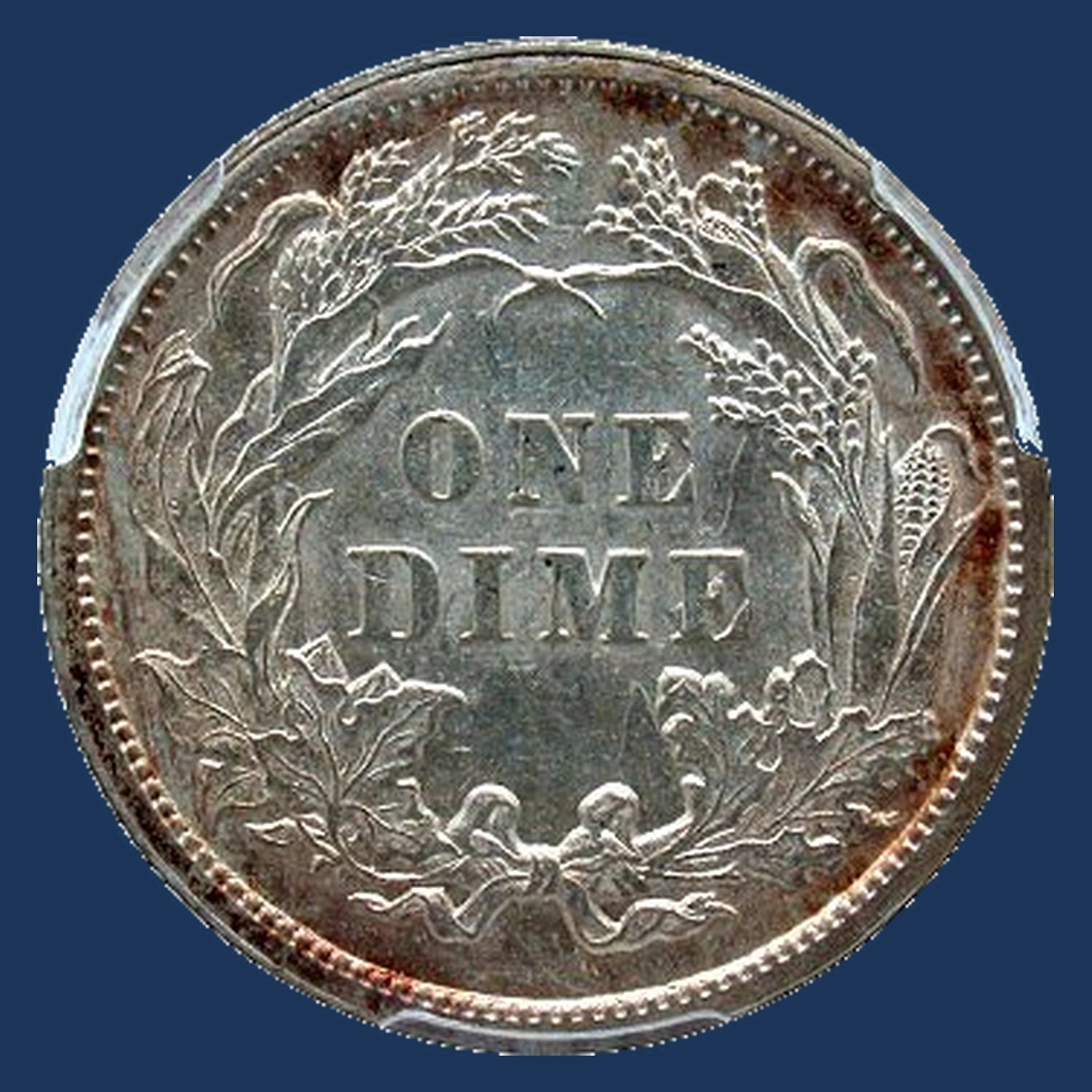
Faint shapes can appear in the open surface where no part of the normal design belongs. They may come from the two stamping tools hitting each other without a coin between them.
A tool can pick up part of the opposite design during that contact. Later coins then receive faint extra marks alongside their intended pictures.
This is called a die clash; a die is the steel tool that stamps a coin. Philadelphia and New Orleans examples are listed, including heavier New Orleans clashing.
Several contacts between tools do not mean the finished coin was struck several times.
Estimated Value
Estimate $20–$100 for modest clash marks on circulated examples. Stronger, easily recognized marks on attractive coins may fall around $100–$300.
This is a whole-coin estimate for the feature, not an exact sale price assigned to each tool pairing. Wear and tool polishing can make a once-visible clash difficult to recognize.
The coin’s ordinary date, mint, and condition value remains part of the price. Several faint marks do not create several separate premiums.
How to Identify
Put a normal dime beside the suspected clash and compare the open areas between the main designs. A 10× magnifier helps distinguish extra shapes from intended leaves, folds, or lettering.
Then look at the opposite face for the design that could have produced each mark. Random lines do not become a clash merely because they occur on both sides.
For a loose piece, check roughly 2.5 grams on a scale and 17.9 millimeters with calipers, and inspect the normal grooved edge. Those checks can reveal alteration; the useful confirmation is an extra shape that matches the opposite design in the correct tool pairing.
2. 1891 Liberty Seated Dime Peeling Layers of Silver Alloy
A thin flap can lift from the coin’s surface, or a shallow patch may fall away. Collectors call this peeling within the metal a lamination.
The dime’s silver and copper should form a sound alloy. Impurities or poorly bonded areas can create a weak layer before the coin is struck.
Peeling is included here as a type to check for, rather than a specifically established 1891 specimen. No fixed location or certified example is assigned to this year.
A deep scratch, corrosion, or a forced-open flap can look misleadingly similar. The exposed metal boundary is essential to identification.
Estimated Value
For a genuine 1891 lamination, estimate $25–$150 on a worn coin and roughly $150–$350 on a clearer, attractive example. The range is conditional on a natural mint-made metal flaw.
These are silver-dime estimates rather than a claimed 1891 auction result. The size of the peeling area and the coin’s underlying condition both matter.
Cleaning, scraping, or lifting an attached flap can lower value substantially. Later surface damage does not earn the estimated error premium.
How to Identify
Keep fingers and tools away from an attached flap. A piece that still remains joined to the coin can break off with very little force.
Examine the thin separation with a 10× magnifier, noting how the design changes at its boundary. A surface groove with metal pushed up on both sides is more consistent with a scratch.
A scale may read below the normal 2.5 grams if a layer is missing. Compare the intact diameter with 17.9 millimeters using calipers, without pressing against fragile metal.
Inspect the edge grooves for signs of cutting or peeling that continues naturally inward. A thin layer separating within the alloy is the useful feature, not simply a rough patch.
3. 1891 Liberty Seated Dime Design Blocked by an Object
A sunken shape or smooth weak patch can interrupt the portrait or wreath. Material caught between the blank and a stamping tool can keep part of the design from forming.
The blank is the round metal piece placed in the press. An object pressed against it may leave an impression without remaining attached afterward.
This mechanism is called a struck-through error. It is included as a possible type, without a specifically established 1891 example here.
Neither the object nor its position should be guessed from a general description. A later dent can create a similar-looking missing area.
Estimated Value
Use a conditional estimate of $30–$400 for a genuine 1891 struck-through dime. Small weak patches fit lower in that range than large, clear impressions on attractive coins.
A readable date and clear surrounding letters make a stronger comparison than a worn coin with vague missing detail. An original impression that visibly interrupts the design is also easier for a buyer to assess.
The estimate requires a mint-made impression. A later dent or scraped surface should be valued as damage.
How to Identify
On a loose coin, compare weight and diameter with the normal 2.5 grams and 17.9 millimeters. Use a scale and calipers without pressing into a suspected impression.
An impressed object often displaces metal instead of removing it. A normal weight therefore does not rule out this error.
Check the opposite face and the grooved edge for bending or bulging. A later impact can disturb those areas as well as the face it hits.
Study the depression with a 10× magnifier and follow its transition into the undamaged design. Avoid naming a particular object from a vague patch.
A smooth pressed boundary amid naturally struck detail supports a struck-through impression more strongly than missing lettering alone.
4. 1891 Liberty Seated Dime Repunched Date Digits
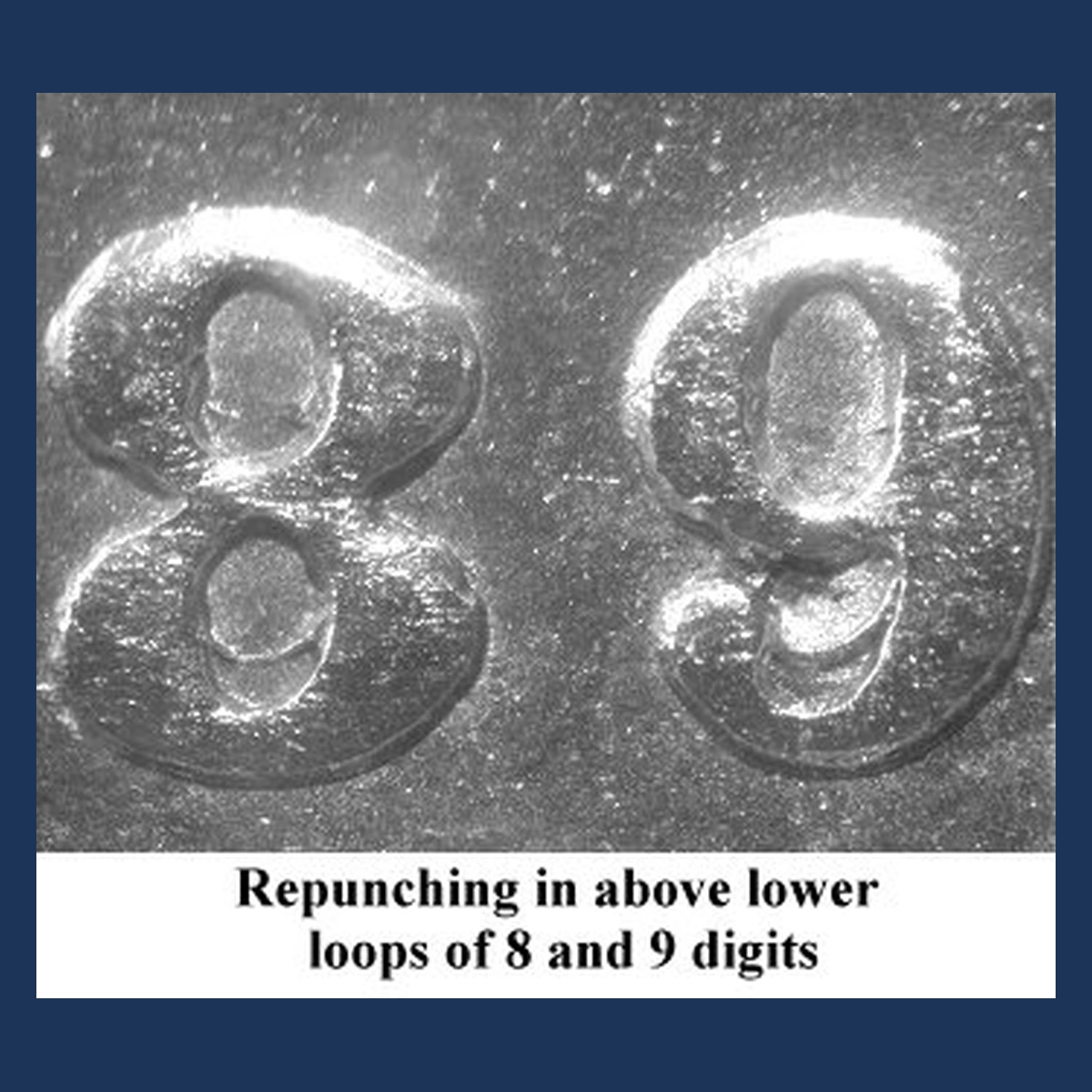
An extra curve or short line can peek out beside a date digit. In 1891, date punches could be applied to a stamping tool more than once.
If the impressions did not overlap exactly, part of the earlier number remained visible on coins. Philadelphia varieties include repunching on the first 1 and a second tail on the 9.
New Orleans examples include extra parts of 8 and 9. Their locations should be compared with the appropriate mint’s variety.
An open or closed shape in a normal 9 is not an error by itself. A separate earlier impression is required.
Estimated Value
Estimate $30–$250 for modest repunched dates, with clearer varieties on better-preserved coins reaching roughly $250–$700. These are whole-coin ranges rather than premiums to add automatically.
PCGS lists a rounded $564 Heritage result from July 2016 for an 1891-O F-106a graded MS63. That coin combines date and mintmark repunching, so the amount cannot be divided into separate prices for each feature.
Minor traces on worn coins generally attract less than bold, recognizable remnants.
How to Identify
Identify the mint first from the area beneath the wreath bow: O is New Orleans, S is San Francisco, and no letter indicates Philadelphia. Choose a date comparison for that mint.
With a 10× magnifier, trace the first 1 and the tail of 9 on Philadelphia examples. For the reported New Orleans patterns, compare the extra parts beside 8 and 9.
A normal loose dime should remain near 2.5 grams and 17.9 millimeters on a scale and calipers. Check its grooved edge for damage before blaming an odd nearby digit on a tool error.
The earlier number must have its own recognizable raised outline. A normal open or closed 9 does not supply that proof.
5. 1891 Liberty Seated Dime Doubled Design Details
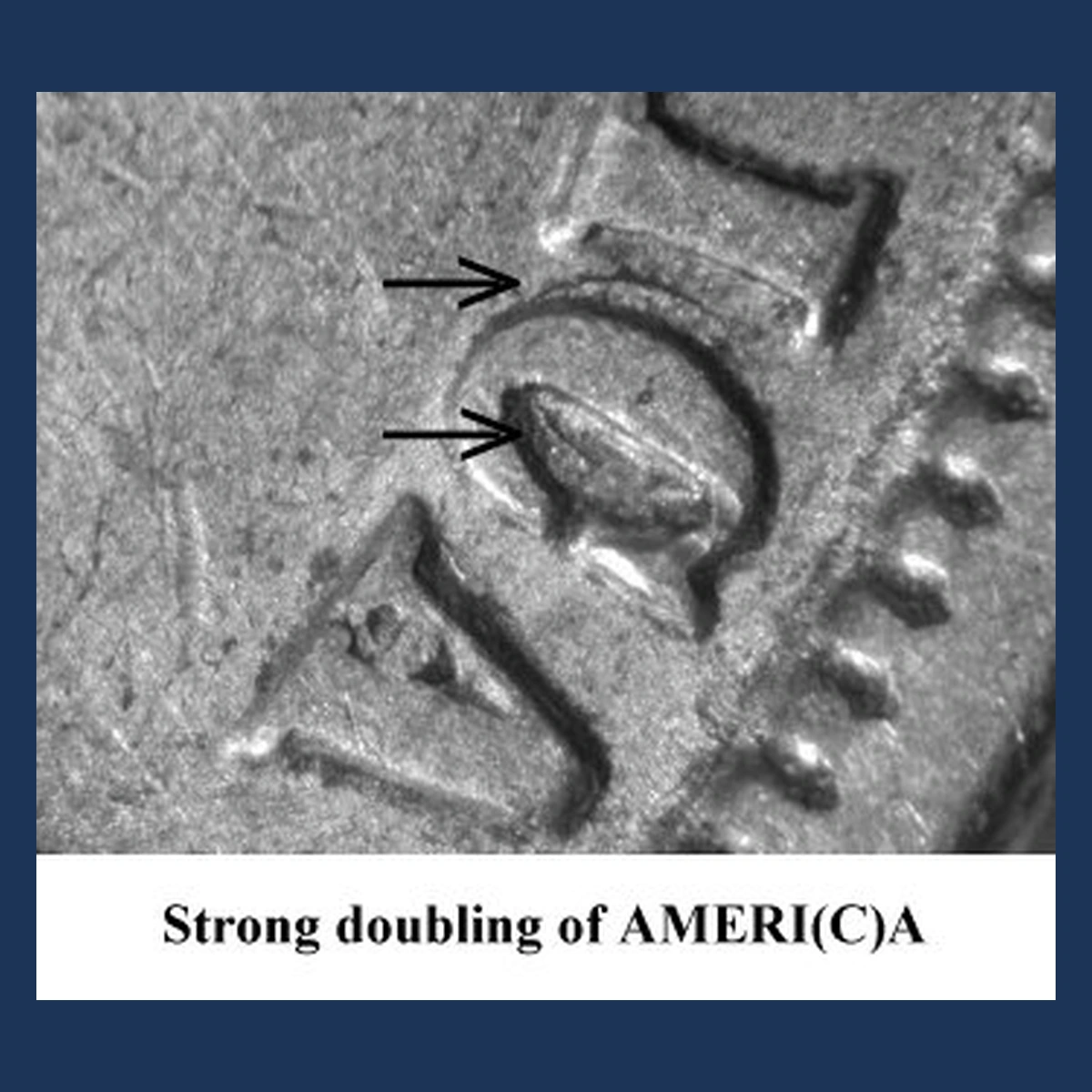
A shield line, fold, or wreath detail can have a second raised outline. If that doubled shape was already in a stamping tool, every coin struck from it can carry the same mistake.
Philadelphia front-side doubling is cataloged for the shield and drapery. San Francisco back-side doubling includes a medium-S variety with doubling on the lower-left wreath.
Another small-S example is separate and should not automatically be given the same location. The size of the mintmark helps choose the proper comparison.
This differs from a second blow to the finished coin. The normal design stays in its usual position.
Estimated Value
A reasonable estimate is $40–$800, from small identifiable doubling on worn coins to stronger varieties on attractive examples. The ordinary value of a well-preserved Seated dime is included.
Compare the same doubled pattern on coins with similar wear and surface quality before choosing a price. A minor doubled line may add only a small premium to an ordinary example.
Clear pictures and a reliable variety match help support the higher range. Flat mechanical shelves should not receive the same valuation.
How to Identify
Separate Philadelphia front-side candidates from San Francisco back-side candidates before looking for small repeated lines. A shield-and-drapery photograph cannot identify a wreath variety.
For the medium-S variety, start at the lower-left wreath with a 10× magnifier. Compare that group of leaves with a correctly identified example of the same tool.
Do not assign the same location to the small-S variety. Its matching photograph needs to establish its own pattern.
A scale and calipers should place a loose coin near 2.5 grams and 17.9 millimeters. Examine the grooved edge for squeezing or filing that might distort neighboring features.
Return to the repeated design and distinguish rounded outlines from a flat shelf. A complete match of the local pattern matters more than one thick leaf.
6. 1891 Liberty Seated Dime Date Digits Punched into the Wrong Place
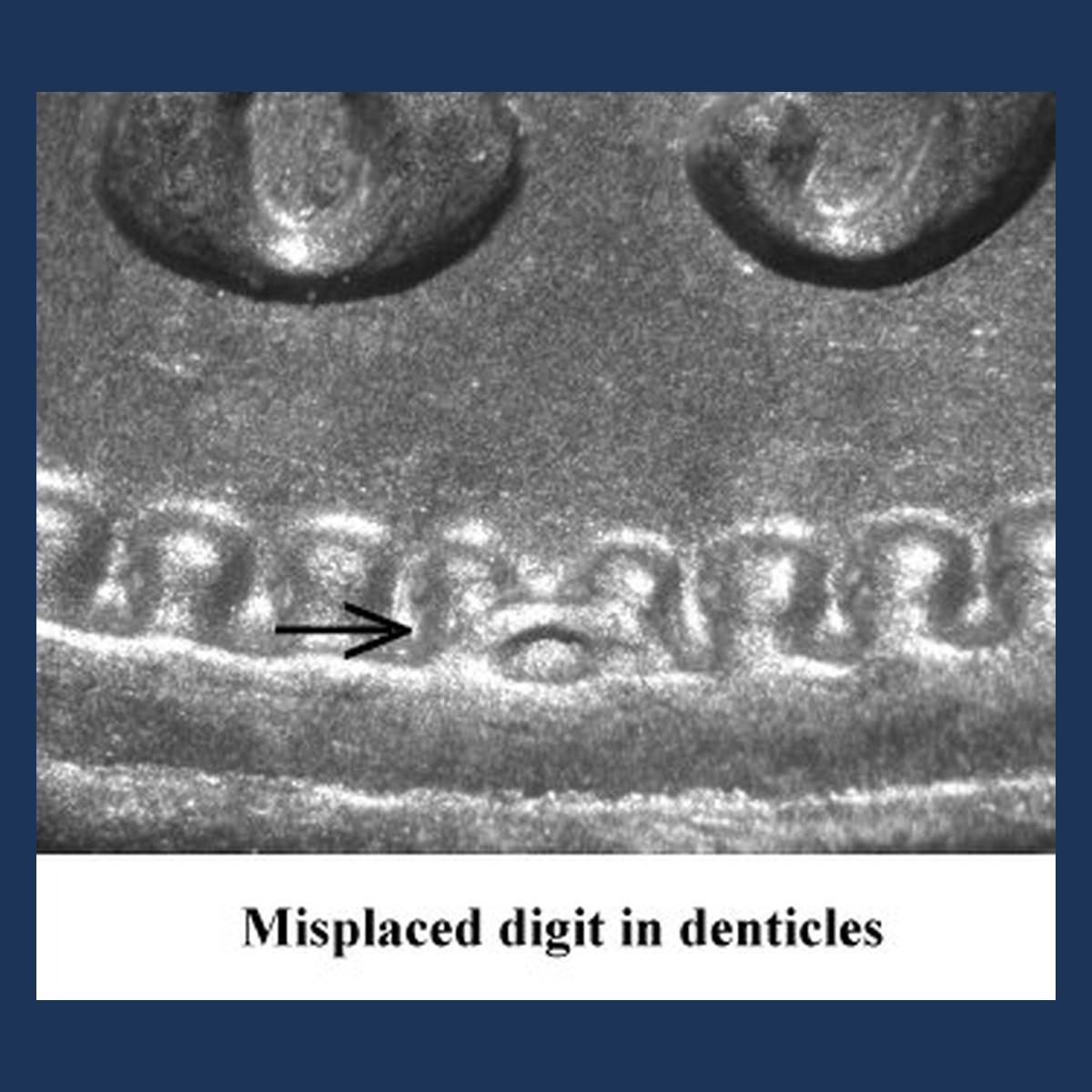
Small parts of a number can hide in the border teeth or another part of the design. They remain after a date punch was applied too far from its intended position.
Philadelphia examples include tops of 8 or 9 below the date and a 9 within the shield. New Orleans varieties include 8 and 9 remnants in the lower border and a 1 in the seated figure’s base.
These are different tool varieties, not one coin with every misplaced digit. The final readable date still appears in its usual position.
Random raised marks need not be number remnants.
Estimated Value
Estimate $50–$300 for less obvious misplaced digits on circulated coins. Clearer cataloged varieties on attractive examples can reach roughly $300–$900.
The estimate includes the Seated dime’s condition as well as interest in the misplaced number. Wear can hide a small remnant and reduce its appeal.
A small recognizable number can be more desirable than a larger mark with no clear identity. A seller’s drawing or arrow cannot turn an unrelated lump into an earlier date punch.
How to Identify
Begin below the normal date and examine the border teeth with a 10× magnifier. Look for a curved number top that interrupts their regular pattern.
If comparing the shield variety, move into the shield instead. For the New Orleans base variety, inspect the bottom of the seated figure for the misplaced 1.
Check the mintmark before combining those observations. Each position belongs to its own cataloged tool, so a coin need not show all three areas.
A loose ordinary example should be near 2.5 grams and 17.9 millimeters on a scale and calipers, with a grooved edge. Match the suspected fragment to the correct digit shape and location, rather than merely finding extra metal.
7. 1891 Liberty Seated Dime Cracks and Raised Rim Breaks
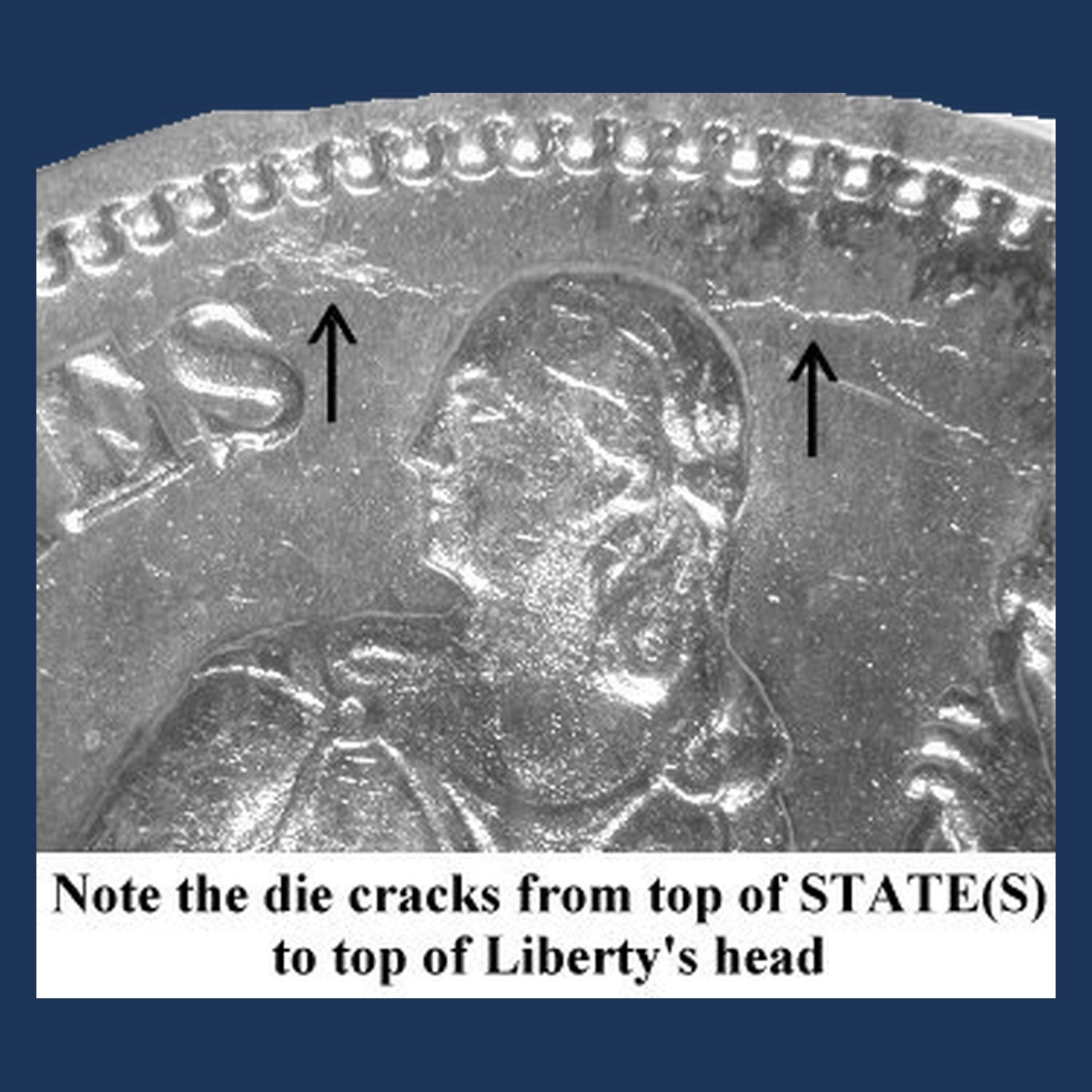
A raised line can run through Liberty’s head or cross the wreath where a stamping tool cracked. Several connected cracks can form a broken-looking network.
A larger tool fragment may remain loosely in place or fall out. A missing piece at the rim leaves a broad raised patch on the coin, called a cud.
Philadelphia examples include back-side rim breaks around 9 to 10 o’clock and retained breaks around 9 to 11. New Orleans examples include a break around 8 to 9.
Other cracks occur on separate Philadelphia, New Orleans, and San Francisco tools. Their paths should not be combined.
Estimated Value
Small raised cracks are estimated at $20–$150. Stronger broken-tool patterns and clear rim cuds can fall around $150–$1,000, depending on condition and how much design is affected.
These are whole-coin estimates for several degrees of tool failure. A narrow line touching the edge does not automatically deserve the price of a large missing tool section.
For perspective, a different-year 1970-D nickel with two cuds sold for $63 in October 2022; size and visibility remain important.
How to Identify
A loose dime with a broken-tool mark should still weigh near 2.5 grams and measure about 17.9 millimeters. Check with a scale and calipers, since the tool lost metal rather than the coin itself.
Next, direct light across the feature and examine it with a 10× magnifier. A narrow ridge records a crack, while a broad raised patch may replace part of the design.
Trace the patch to the grooved edge and look for crushing or bending. That damage could have pushed coin metal upward without a broken tool.
For the Philadelphia back examples, compare the 9-to-10 and 9-to-11 o’clock areas separately. Missing design within a naturally struck rim-connected patch supports the cud identification.
8. 1891 Liberty Seated Dime Repunched O and S Mintmarks
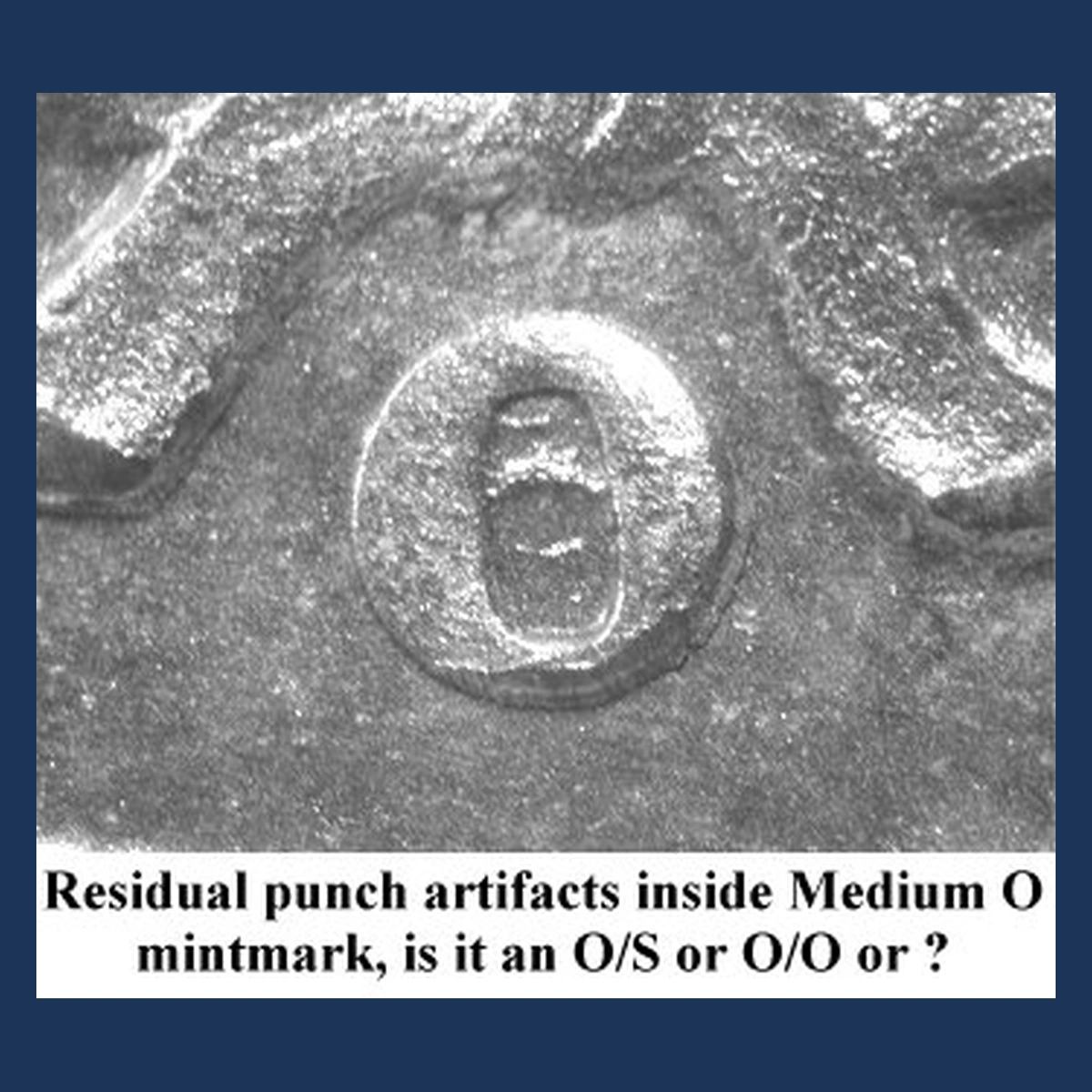
An O or S can have a second outline from an earlier mintmark punch. Workers punched the letter into a stamping tool by hand before it struck coins.
New Orleans examples include an upright O over a sideways O and other overlapping O impressions. San Francisco has a medium-sized S over a smaller S.
Different sizes or angles of the same letter still represent repunching of that mintmark. They do not, by themselves, show that one mint’s letter replaced another mint’s letter.
The sideways-O variety is listed as F-109 or FS-501. Its remnants need to match that particular pattern.
Estimated Value
Estimate $50–$400 for clearer repunched mintmarks on circulated examples. Better-preserved recognized varieties can fall around $400–$1,200.
PCGS lists a rounded $764 result for an O-over-sideways-O coin graded XF45 at Heritage in January 2016. That is a same-year comparison for one variety, not a universal O/O price.
The San Francisco medium-S-over-small-S coin and other New Orleans patterns require their own condition and variety comparisons.
How to Identify
Find the mintmark below the wreath bow and hold the entire back design upright. Under a 10× magnifier, compare the suspected sideways-O remnants with an identified F-109 example.
For an S/S candidate, compare the smaller earlier S with the medium-sized main S. Do not substitute a picture of an O/O simply because both show overlapping letters.
A loose coin should measure close to 2.5 grams and 17.9 millimeters on a scale and calipers, with grooves around its edge. Check for altered surfaces around the letter, then identify a separate earlier punch outline rather than relying on an unusually thick main mintmark.
9. 1891 Liberty Seated Dime O over an Earlier S Mintmark
A smaller letter beneath the O is described in the specialist catalog as an inverted S. This is different from an O punched over another O.
The proposed sequence places an upright New Orleans O over an earlier upside-down San Francisco S on the stamping tool. Part of the earlier letter remains visible around the final mintmark.
Collectors call one mint’s letter over another an overmintmark. The coin still bears the final O identifying New Orleans.
This interpretation requires the specific smaller S-shaped remnant. A sideways O or a misshapen normal O should not be substituted for it.
Estimated Value
For a correctly identified example, estimate $100–$500 in circulated condition and about $500–$1,500 for stronger, better-preserved pieces. These are whole-coin estimates for the cataloged O/S interpretation.
The 1891-O sideways-O variety’s rounded $764 Heritage result offers only a same-year repunching comparison. It is a different letter pattern and cannot prove an O/S sale price.
A reliable match to the inverted S is essential before applying the proposed premium. Condition still has a major effect.
How to Identify
Start by comparing the coin with an ordinary O and with the O-over-sideways-O variety. Both are useful ways to test a mistaken O/S identification.
Use a 10× magnifier below the medium-sized O, looking for the smaller inverted S described by the catalog. Its shape must fit an S, not merely an isolated curve.
Record a loose coin’s weight and diameter with a scale and calipers against 2.5 grams and 17.9 millimeters. Inspect the grooved edge and the mintmark area for cutting, added metal, or other alteration.
Then compare the entire letter arrangement with the catalog photograph. Recognizing the smaller inverted S beneath the final O is the specific test that separates this claim from ordinary O/O repunching.
10. 1891 Liberty Seated Dime Off-Center Strikes
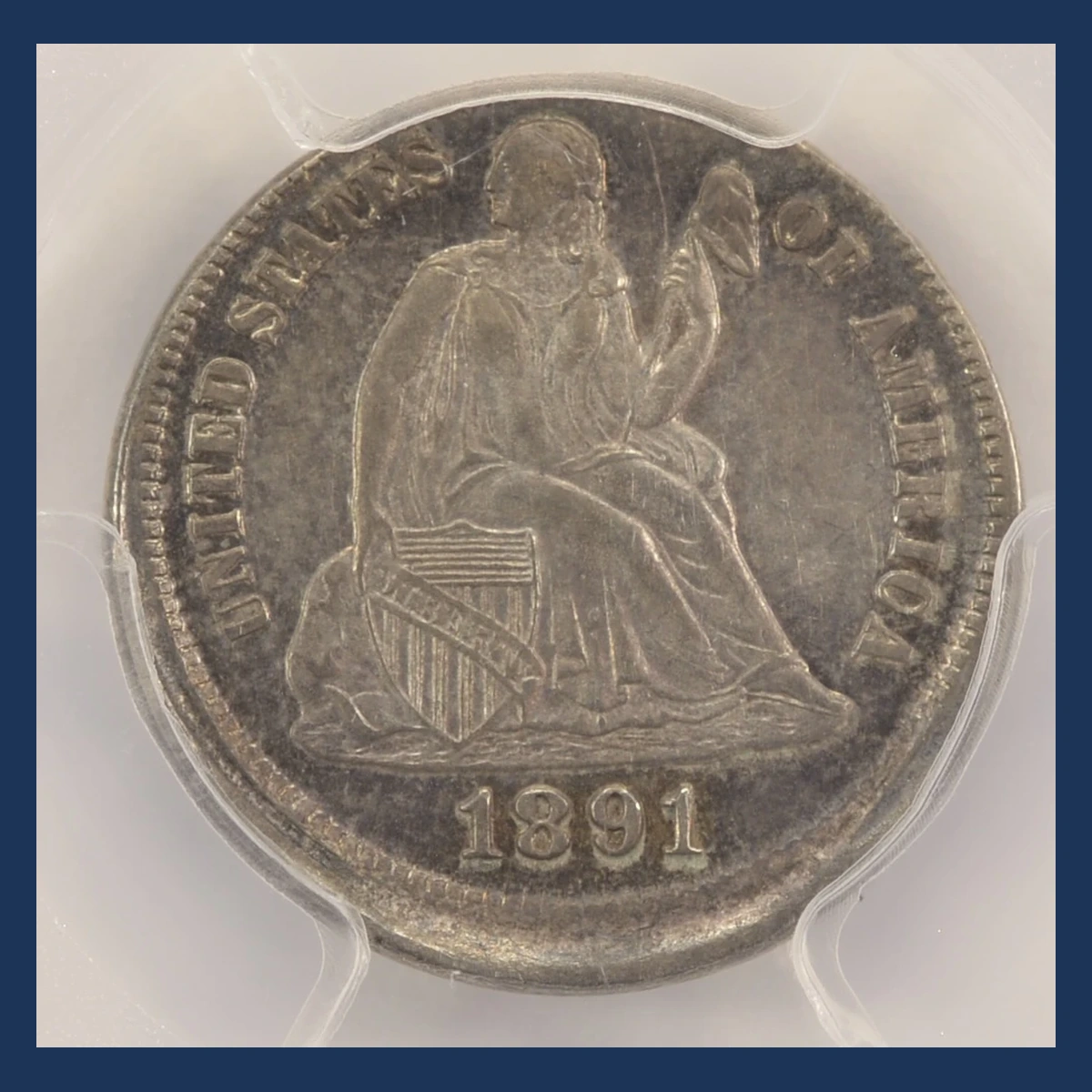
A blank crescent and a cut-off design show that the coin was not centered beneath the stamping tools. The metal entered the press in the wrong position.
A dealer offers an 1891 dime described as 5% off center and graded AU58, indicating only light wear. Specialist reports also include a 15% AU58 example and another described as 20% off toward 12 o’clock.
These are separate coins, not different measurements of the same piece. Their dates, grades, and directions should remain attached to the correct examples.
An uneven border on just one face does not establish an off-center strike.
Estimated Value
Estimate $400–$1,800 for genuine examples, depending on the amount of displacement, remaining date, and condition. A larger visible error is not the only factor collectors consider.
Sullivan Numismatics lists the 5% PCGS AU58 coin at $1,300. That is a current asking price, not a completed auction result.
The 15% and 20% reports do not inherit that exact price. Attractive original surfaces can support stronger demand even for a smaller shift.
How to Identify
Confirm the date before estimating the shift. The reported 20% example moves toward 12 o’clock, while that direction should not be assigned to the other coins.
A loose complete blank should remain near 2.5 grams on a scale. Use calipers to compare its outline with a normal 17.9-millimeter dime, allowing for spread around the struck area.
Now compare the unstruck portions of both faces. Corresponding blank areas distinguish a displaced coin from a single shifted stamping tool.
Study the boundary under a 10× magnifier. It should look like the natural meeting of pressed design and blank metal.
Check the adjoining edge grooves for later grinding or hammering. Matching untouched areas on both faces provide the clearest initial identification.
11. 1891 Liberty Seated Dime Second Strike Near the Edge
Two small arcs of border teeth remain from an extra blow near the edge. The first strike on this 1891 dime was normal.
The coin then moved, and the press struck it again with about 90% of the coin outside the tools. The second impression sits at 4:30 relative to the first design.
Only part of the toothed border from that second strike appears on each face. The coin therefore does not need two full portraits to prove repeated striking.
PCGS graded the example AU50, showing light circulation wear. The two border arcs record one coin’s two-step striking history.
Estimated Value
The PCGS AU50 double-struck coin sold for $1,292.50 at Heritage on November 1, 2016. That completed sale provides a direct comparison for this precise example.
A practical estimate for comparable genuine repeated strikes is $800–$2,500. Clarity, condition, and how much of the second design survives can move the price within that range.
The result belongs to the whole coin. It is not a separate price for each strike or each visible border arc.
How to Identify
Orient the main design upright and inspect the lower-right area near 4:30. A 10× magnifier should reveal an extra arc of border teeth there, with a corresponding second arc on the other face.
Compare those arcs with the original border rather than searching for an entire second portrait. The second blow was so far off center that little more of its design could land on the coin.
For a loose example, a scale should remain near the normal 2.5 grams unless metal is missing. Calipers and edge inspection can reveal local spreading against the normal 17.9-millimeter size and grooved edge; matching second-strike arcs on both faces provide the direct check.
Conclusion
These 1891 dime errors have estimated whole-coin values of $20–$2,500, with large striking mistakes generally above minor tool marks. A coin’s condition can still account for much of its price.
Use the date and mintmark to choose the right comparison, then study the exact extra feature. Preserve the surfaces and any fragile metal flap, and have a valuable suspected error checked before buying or selling it.