1892 Dime Error List with Pictures

An 1898 Barber dime bent into a cap during striking sold for $8,235 in January 2026. It provides a different-year comparison for a published 1892-O deep cap whose 2010 auction appearance was unsold.
The 1892 Barber dime errors below span estimated whole-coin values of $25–$20,000. They range from small surface features to that striking cup shape.
Read on to check the mintmark, date, and shape before choosing a price comparison.
1. 1892 Barber Dime Clashed Dies (Estimated Up to $500)
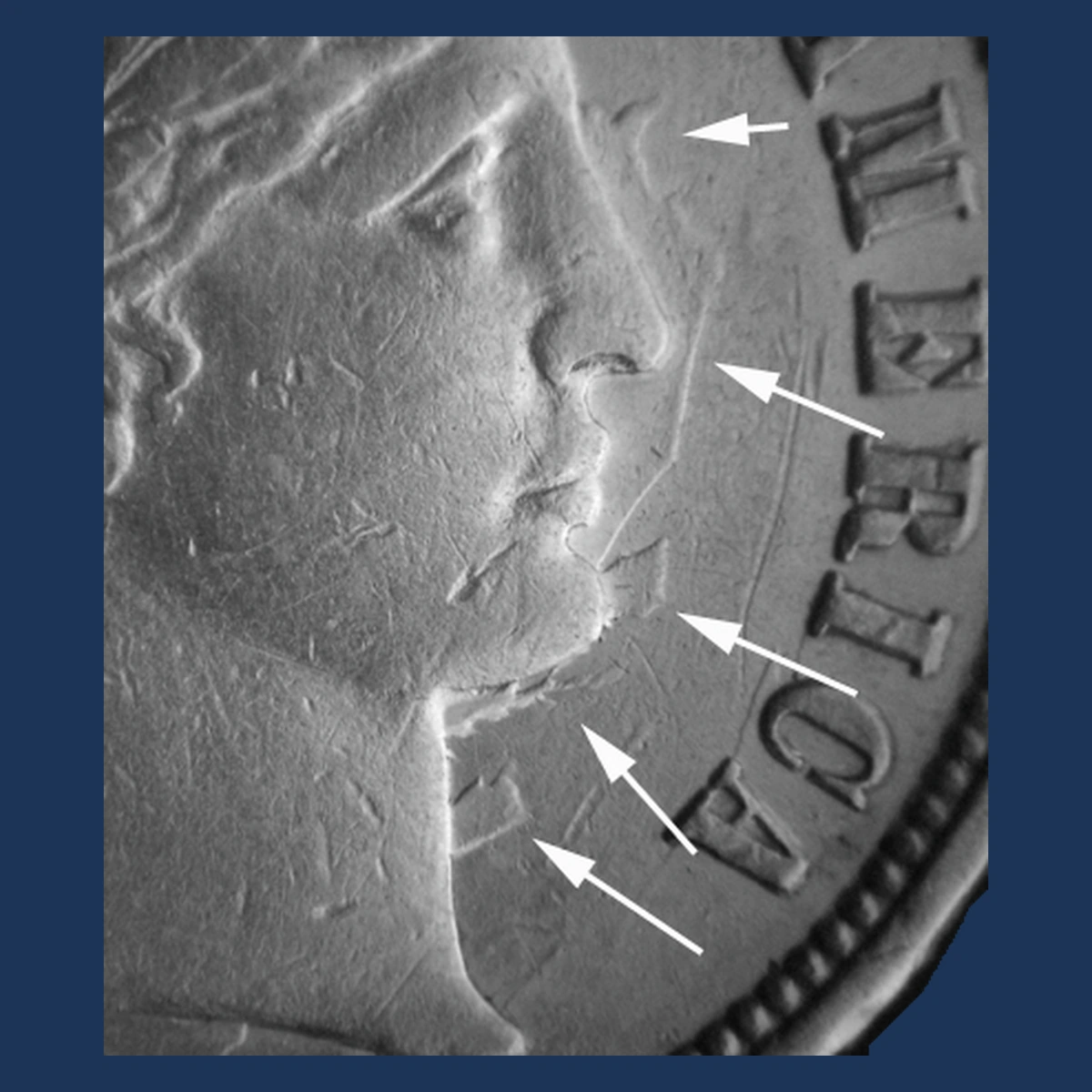
A faint part of the wreath can appear among details on the portrait side, or the reverse can happen. The extra shape comes from the opposite design.
When two dies, the steel stamping tools, collide without a coin between them, they can pick up marks from each other. Later coins receive those unwanted traces.
The 1892 report does not identify a specific mint or exact location. A suspected example therefore needs a match to its actual marks.
This differs from a brockage, where an already struck coin presses a backward picture into another coin.
Estimated Value
Estimate $25–$500 for a circulated 1892 dime with clear, genuine clash marks. The mint, surfaces, and visibility of the extra design affect that whole-coin price.
An ordinary NGC MS66 with CAC approval sold for $780 in April 2025. MS66 describes an exceptionally preserved, unworn coin.
That sale was not identified as a clash example. It shows how condition can lift a normal coin above the circulated range without assigning a separate value to faint extra lines.
How to Identify
Compare the two faces with clear pictures of the normal designs. Under a magnifier, look for an unwanted shape that matches a recognizable part of the opposite face.
Tilt the light to separate that shape from a scratch or a fine polishing line. A random line does not become a clash just because it looks unusual.
Check below the wreath for O or S, or no mintmark. The general report does not select a mint for you.
Use a scale and calipers against 2.50 grams and 17.9 mm, then inspect the edge grooves. For the first useful test, match an extra contour to the opposing design on a confirmed clashed coin.
2. 1892 Barber Dime Rim Cud (Estimated Up to $800)
A raised lump touching the rim can replace part of the normal picture. It forms when a piece breaks from the edge of a stamping tool and silver fills the opening.
This is called a cud. Its connection to the rim separates it from a small isolated raised spot inside the design.
The 1892 year guide includes this category without identifying a confirmed mint, face, or position. Those details must be checked on the actual coin.
Added metal or a crushed rim can also make a lump, so appearance alone needs careful comparison.
Estimated Value
Use an estimated whole-coin range of $50–$800 for circulated 1892 dimes with a genuine rim cud. A larger clear break and attractive surviving detail can support a stronger price.
This is an estimate, without a specific 1892 cud auction sale used here. Small irregularities or damaged coins deserve lower comparisons.
The ordinary MS66 CAC sale at $780 illustrates the value of preservation. It does not provide a fixed premium for a rim lump on a worn coin.
How to Identify
Follow the raised area to its junction with the rim under a magnifier. Look at where the normal picture ends and how the silver fills the affected area.
Then inspect the edge from the side. Solder, corrosion, or a rim folded inward by an impact can produce a false lump with different boundaries.
A genuine cud changes how the same silver flows during striking. Use a scale and calipers against the usual 2.50 grams and 17.9 mm, and examine the edge grooves.
Read the full date and actual mintmark area. Start by checking that the raised patch joins the original struck rim rather than sitting on it as added material.
3. 1892 Barber Dime Repunched Date (Estimated Up to $1,500)
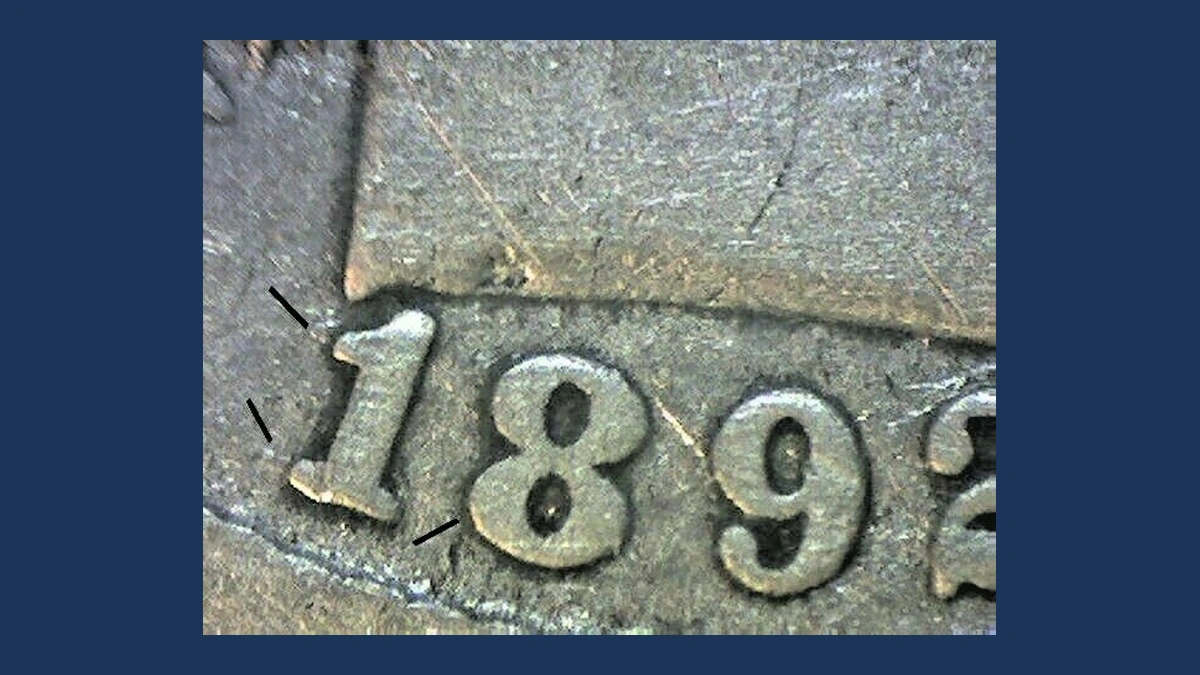
Extra raised strokes can sit beside the date while Liberty’s portrait remains single. The date was punched separately into the stamping tool, allowing part of an earlier entry to survive.
The finished coin received those outlines during striking. The feature does not require a second blow on the coin.
Philadelphia varieties are reported, and NGC recognizes the 1892-O doubled date among Barber varieties. They need different comparison images.
No single four-digit pattern should be assumed for every example. The extra strokes must match the particular mint and variety.
Estimated Value
Estimated whole-coin values are $25–$500 for Philadelphia and $50–$1,500 for New Orleans, from worn through attractive lower-grade unworn examples. Clear remnants and original surfaces help the comparison.
An 1899-O with a repunched mintmark sold for $115 in May 2023, graded AU Details. That means slight wear with an additional condition problem.
This is only a broad Barber-variety comparison. It is neither an 1892 date-error sale nor a price for an undamaged lightly worn coin.
How to Identify
Check the mint first: O below the wreath means New Orleans, while no mintmark means Philadelphia. Select a confirmed date photograph from that same issue.
With a magnifier, examine the whole date and follow the extra raised strokes. A scratch cuts into the metal, and a broad flat shelf can come from movement during striking.
Compare each remnant’s shape and position rather than deciding from one thick edge. Keep the complete date visible so the pattern remains clear.
Check about 2.50 grams with a scale, 17.9 mm with calipers, and the edge grooves for damage. For a quick match, compare the full extra-stroke pattern with the correct mint’s confirmed variety.
4. 1892-O Barber Dime Deep Die Cap (Estimated Up to $20,000)
The dime has become a deep cup instead of a flat disc. The published 1892-O example was graded PCGS AU55, indicating light circulation wear.
A coin can stick to a stamping tool and stay there during further strikes. Continued pressure drives its metal around the tool’s sides, raising the cup walls.
The stuck coin itself becomes the cap. Another coin struck beneath it may receive distorted detail without becoming a cup.
A side view is essential to see this shape. A bent ordinary dime can look cupped without sharing the same minting history.
Estimated Value
Estimate $5,000–$20,000 for a genuine deep cap comparable to the published AU55 example. Its 2010 Central States auction appearance was reported unsold, so no realized price belongs to that appearance.
An 1898 Barber cap graded PCGS MS61 sold for $8,235 in January 2026. That gives a recent same-series comparison.
It is a different date, grade, and individual cap shape. The range is therefore an estimate, not a recorded transaction for the 1892-O coin.
How to Identify
View the dime from the side without flattening it. Under a magnifier, follow the walls and surviving design to look for metal shaped by repeated striking, rather than sharp tool bends.
Compare the whole object with the published 1892-O deep cap. Check the date and New Orleans identity as well as the cup.
A normal 90% silver dime begins at 2.50 grams and 17.9 mm. Use a scale where accessible and measure gently with calipers; the altered width need not match a flat dime.
Inspect surviving edge grooves for crushing or tool marks. To start the identification, compare the cup walls and struck surfaces with the published example, rather than judging the outline alone.
Conclusion
These 1892 Barber dime errors span estimated whole-coin values of $25–$20,000. Small clash marks, rim cuds, and repeated date strokes need close comparison, while the deep cap also requires a side view.
Check the actual mint and feature before using a price. The published 1892-O cap was unsold in its cited appearance, so the recent 1898 cap sale remains a comparison rather than its own auction result.