1851 Dime Error List with Pictures

A small number beside Liberty’s shield helped identify an 1851 dime that brought $1,468.75 in 2013. That coin also had extra strokes below its normal date.
These 1851 dime errors have estimated whole-coin values of $40–$2,500. Some add detail, while others leave peeling metal, a tilted back, or an almost missing star.
Read on to find the exact place to check for each feature.
1. 1851 Liberty Seated Dime Reverse Lamination (Estimated Up to $150)
A thin split runs from between I and M in DIME toward the rim at about 6:30. A dealer described this back-side flaw on a worn VG8 dime in 2006.
The silver mixed with copper can separate along a weakness within the metal. This is called lamination, and a thin piece may peel or come away.
That is different from a raised ridge made by a cracked stamping tool. Here, look for a split or lifting layer in the coin itself.
The advertisement did not state the mint, so check the actual mintmark area.
Estimated Value
The dealer asked $25 for the VG8 dime in the July 2006 E-Gobrecht. That was an asking price, not a recorded completed sale.
Estimate $40–$150 for a comparable worn 1851 dime with an original lamination. A readable date and clear separation make a better comparison than a heavily damaged surface.
The old offer does not set today’s maximum value. Size, visibility, and the remaining condition all affect the price of the whole dime.
How to Identify
Hold DIME upright and look between I and M with a magnifier. Follow the split down toward the rim just left of its lowest point.
Look for a thin layer lifting or separating from the silver. A sharp cut or a raised crack has a different shape.
Leave any attached flap alone. Moving a lamp can reveal its boundary without lifting or breaking it.
Check the mintmark area below the wreath, since the old advertisement did not identify it. Use a scale and calipers against the original 2.67 grams and 17.9 mm, allowing for wear.
This 90% silver dime has grooves around its edge. Start with the layered split following the reported path between the letters and lower rim.
2. 1851 Liberty Seated Dime Reverse Rotated Left (Estimated Up to $500)
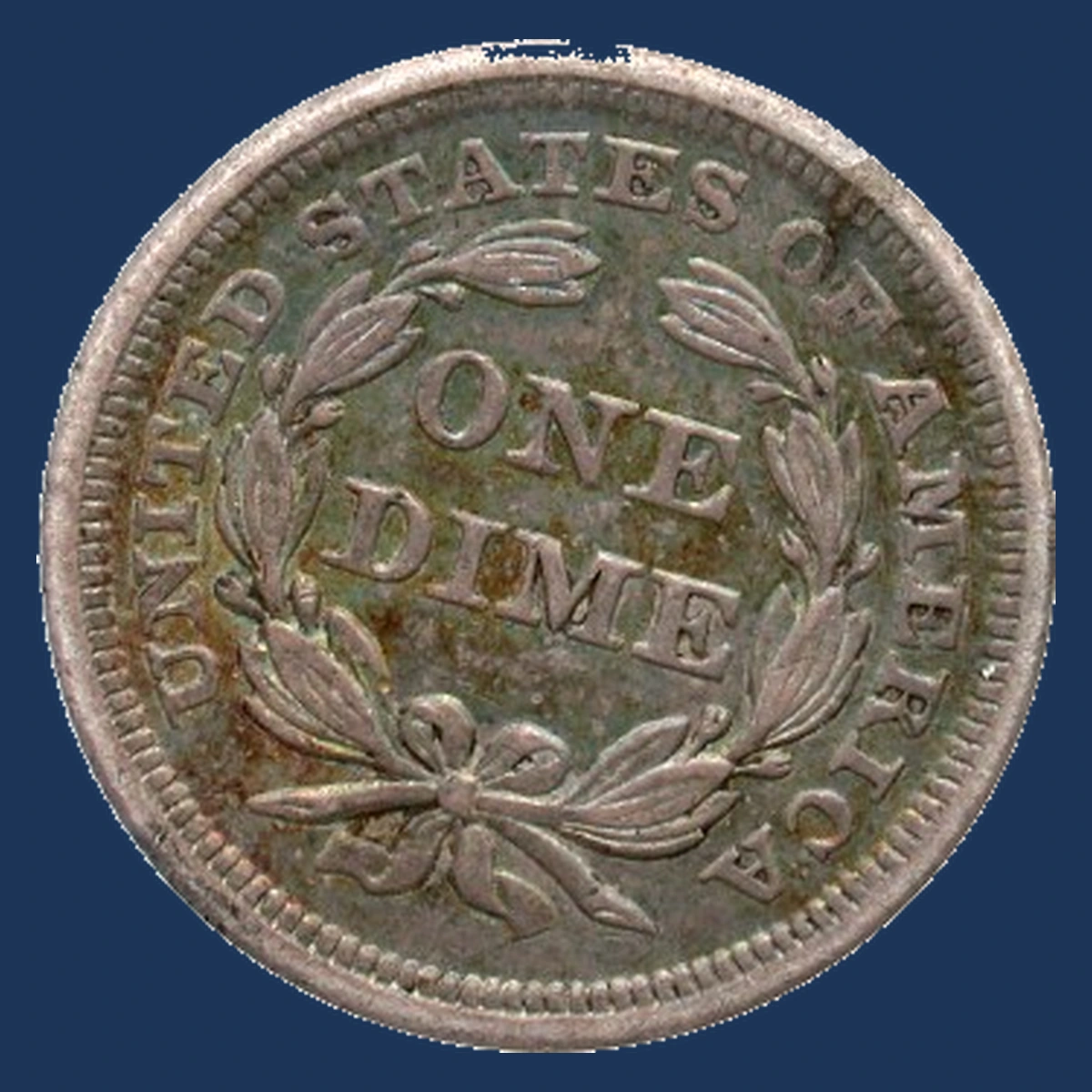
The back leans about 16 degrees left when the front is held upright and turned top to bottom. This tilt is reported for the Philadelphia variety called F-101.
The dies are the two steel tools that stamp the coin’s faces. Their alignment sets how the designs line up when you turn the finished dime.
The wreath and words turn together; they do not need to look stretched or damaged. Other 1851 dimes need not have the same angle.
A seller can straighten each photograph separately and hide this relationship. You need to compare both faces without changing their relative positions.
Estimated Value
Estimate $75–$500 for F-101 examples ranging from clearly worn to lightly worn. Surface quality and remaining detail still account for much of the whole-coin value.
A small tilt usually attracts less interest than a nearly upside-down back. This range is an estimate, not a sale recorded in the rotation table.
The higher F-105 prices below belong to a different variety with date features. They should not be used as direct prices for this tilted-back example.
How to Identify
Place Liberty upright in a transparent holder with a vertical line behind it. Turn the holder from top to bottom without twisting it sideways.
The back should now lean left instead of standing upright. Repeat the turn to check that the same tilt returns each time.
A photograph grid or protractor can help measure the angle. Do not straighten the back separately before measuring it.
Confirm the Philadelphia coin, which has no mint letter, and compare both faces with F-101. Check the edge grooves and use a scale and calipers against 2.67 grams and 17.9 mm.
Normal weight cannot prove rotation. The quickest useful test is the repeated leftward tilt after the same controlled turn.
3. 1851 Liberty Seated Dime Repunched 851 (Estimated Up to $2,000)
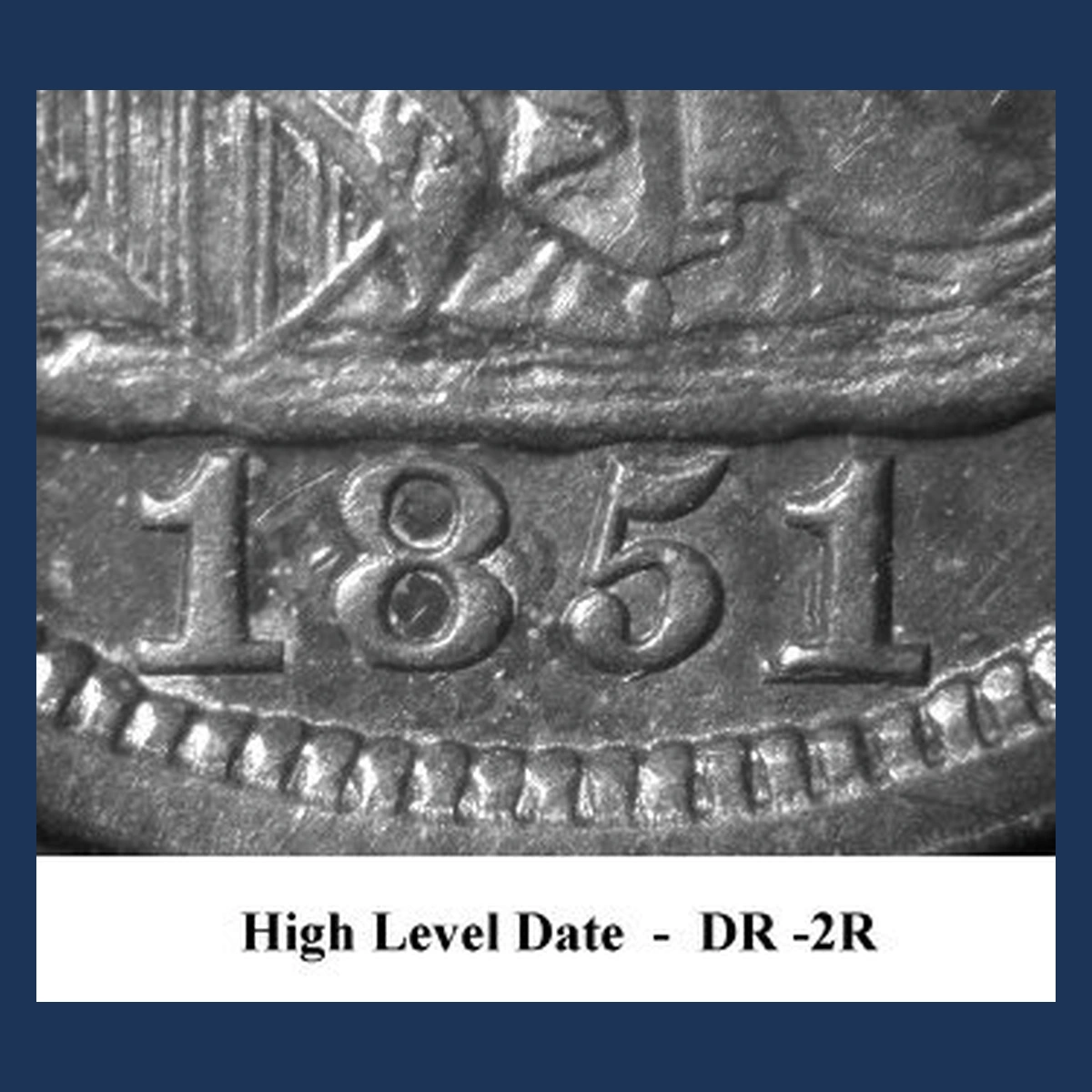
Look along the bottom of 851 for extra pieces of those same numbers. The date punch entered the steel stamping tool more than once, leaving parts of an earlier impression.
Coins struck with that tool received the main numbers and the smaller remnants together. They did not need a second blow to show both.
This Philadelphia variety is called F-105. It also has a misplaced number beside the shield, away from the normal date.
The lower date marks should follow numeral shapes. A flat shelf or a dent near one number does not establish the same repeated date.
Estimated Value
A PCGS MS64 F-105 brought $1,468.75 in 2013, with another listed appearance at $1,440 in May 2024. MS64 means unworn, though some marks remain.
Estimate $100–$2,000 for identifiable examples from worn through attractive unworn grades. The shield-side number and repeated date share one whole-coin price.
Do not add that amount again for each feature. A worn example needs a worn-coin comparison, even when its extra strokes are easy to see.
How to Identify
Keep all four date digits in the photograph before enlarging the lower edges. With a magnifier, follow the extra strokes under 8, 5, and the final 1.
Compare them with the same numbers on a clear F-105 picture. The raised pieces should fit earlier numeral shapes in matching positions.
Then check the shield-side fragment and the back design. A random scratch at one digit cannot replace that combination of features.
This 90% silver dime normally has edge grooves, a diameter of 17.9 mm, and an original weight of 2.67 grams. Use calipers and a scale where accessible.
Begin with the matching raised strokes along the bottoms of all three reported numbers.
4. 1851 Liberty Seated Dime Misplaced 1 Beside the Shield (Estimated Up to $2,000)
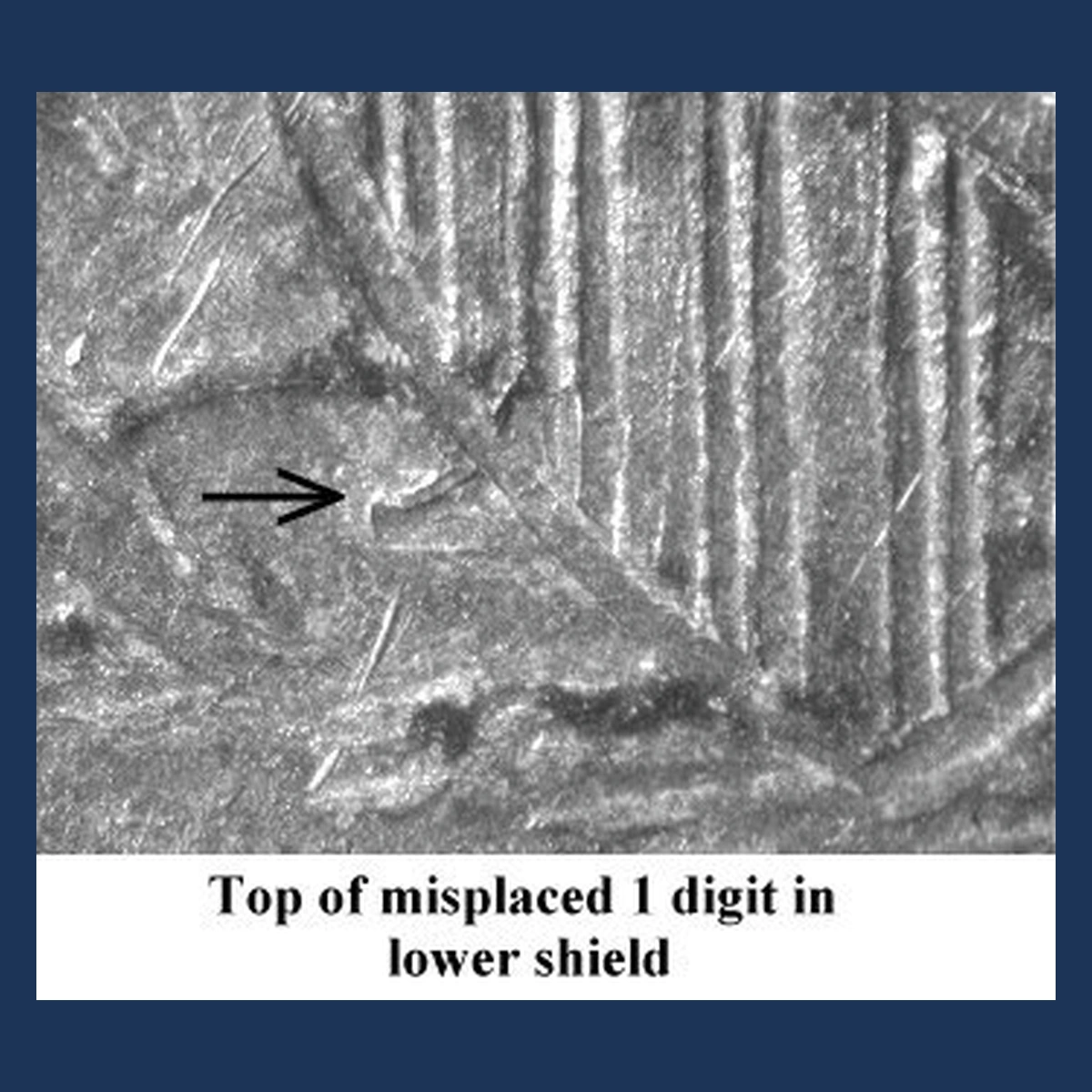
A small raised piece of a number appears beside the shield’s lower-left edge. It sits well above the normal date, where no date numeral belongs.
The specialist reference identifies it as the flag, or small top stroke, of a 1. The auction uses different wording for that same location.
A misplaced date punch left the trace in the stamping tool. This differs from the repeated 851 within the normal date below Liberty.
The auction also mentions a possible extra shape in the gown. That observation alone does not identify another number, so keep your comparison on the documented shield-side fragment.
Estimated Value
Estimate $100–$2,000 for identifiable F-105 dimes from worn through attractive unworn grades. The same MS64 variety brought $1,468.75 in 2013 and is listed at $1,440 in May 2024.
The shield fragment helps confirm the variety together with the repeated date. It does not create another coin or a separate sale price.
Clear detail and original surfaces support stronger comparisons. A small raised mark in the wrong place cannot justify the same estimate by itself.
How to Identify
Find the shield in a full view of Liberty, then follow its left edge down. Use your own left as you look at the coin, not Liberty’s left.
Magnify the little shape projecting beside the lower edge. Compare its raised outline and location with the F-105 photograph.
Check the repeated strokes below 851 as supporting evidence. Normal shield lines, a small lump, or a scratch can look number-like when viewed alone.
Examine the edge grooves of this 90% silver dime. A scale and calipers compare its original 2.67 grams and 17.9 mm, allowing for wear.
Start with the correctly placed shield-side fragment, then confirm that the lower date strokes match the same variety.
5. 1851-O Liberty Seated Dime Missing Seventh Star (Estimated Up to $2,500)
One star nearly disappears beside Liberty’s face, yet the neighboring star and face remain clear. The 1851-O discovery was graded PCGS AU50, meaning lightly worn.
Only a faint trace survives at the top of star 7. That contrast led specialist Gerry Fortin to examine the coin after its owner questioned whether it was genuine.
He identified a minting error and suggested grease had temporarily filled the star’s hollow in the stamping tool. A blocked hollow could not form the normal raised star.
The missing detail is visible; grease is the proposed explanation. General wear would also weaken nearby high points.
Estimated Value
Estimate $300–$2,500 for an 1851-O dime matching this localized missing-star effect. A clearly documented, lightly worn example belongs toward the stronger part of the range.
The estimate includes the New Orleans coin itself as well as its unusual feature. No completed auction sale is assigned to the discovery piece.
A heavily worn star on an equally worn portrait is a different comparison. The appeal here is one nearly absent star beside otherwise intact detail.
How to Identify
Count the stars in a complete front photograph and locate star 7 beside Liberty’s face. Compare its faint upper trace with the much clearer star 6 and face.
The published examination shows that contrast. Use a magnifier to check for scraping or polishing that could have removed a star later.
Look for O on the back, then compare both faces with the discovery coin. A weakly struck Philadelphia dime is not the same example.
Use a scale and calipers against about 2.67 grams and 17.9 mm, and inspect the edge grooves. This issue is 90% silver.
The key first check is nearly missing star 7 beside undisturbed neighboring detail.
Conclusion
Estimated whole-coin values for these 1851 errors range from $40 to $2,500. The peeling metal, tilted back, extra numbers, and missing star each need a different close look.
For F-105, the lower date strokes and shield-side fragment identify one variety with one price. Check both before comparing a sale.
Keep the mint and overall condition in view, and leave loose metal or small raised details untouched.