1845 Dime Error List with Pictures

An 1845 Proof dime sold for $71,300 in February 2008. It was a rare collector coin, so that price is not simply a reward for its repeated date digits.
This 1845 dime error list covers extra date marks, raised cracks, and traces of the opposite design. Estimated whole-coin values run from $30–$6,000 for ordinary issues and $7,000–$80,000 for rare Proofs.
Read on to learn which small features belong together.
1. 1845 Liberty Seated Dime Die Clash (Estimated Up to $2,500)
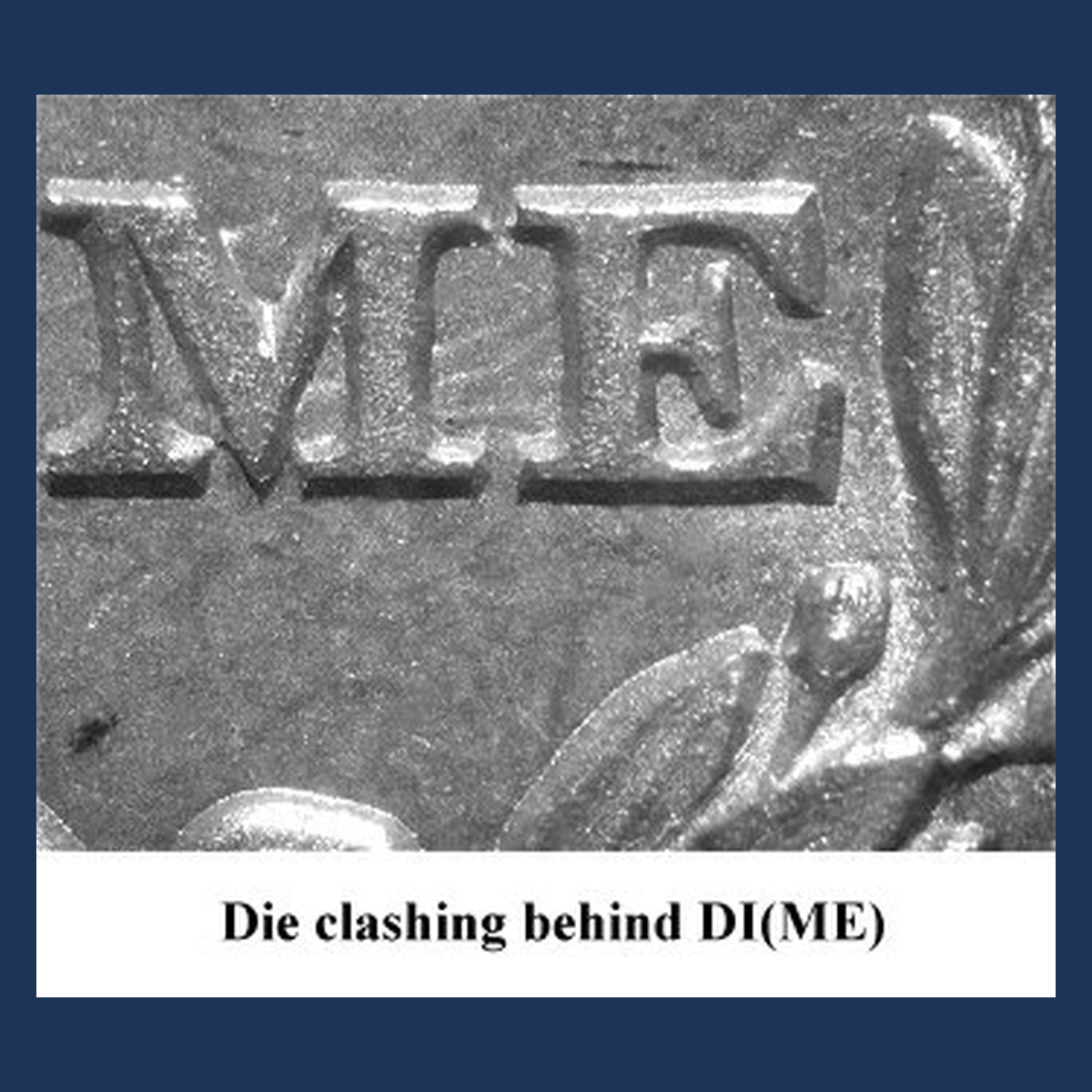
A faint extra shape can resemble part of the picture on the other side. It forms when the dies, the steel stamping tools, hit each other without a blank between them.
The collision marks the tools. Later coins can receive traces of those marks beside the intended design.
This is called a die clash. The variety named F-108 has clash marks on both faces, plus a repeated date and a raised crack through the date.
The raised crack has a different cause from the transferred shapes. Several mint-made features can appear on the same coin.
Estimated Value
Estimate $30–$2,500 for the complete coin, from worn examples to attractive unworn ones. Clear clash marks can add some interest.
An ordinary 1845 dime graded NGC MS65 sold for $1,680 in August 2025. MS65 means unworn with good surfaces.
That sale compares the underlying date and condition, not an identified F-108 clash. Cleaning can reduce the price more than a faint clash increases it, so judge the entire coin.
How to Identify
Photograph both faces and look at the extra shapes through a 10× magnifier. Compare them with the picture on the opposite side.
A clash trace should match part of that opposite picture in the right position. A second strike instead repeats the design already on that face.
On F-108, also compare the raised crack through the date. Its presence helps identify the tools, but it does not turn every nearby line into a clash.
Use a scale against 2.67 grams and calipers against 17.90 mm, allowing for wear. Inspect the edge grooves for filing.
The quickest clue is a recognizable trace of the opposite design, supported by the matching date crack.
2. 1845 Liberty Seated Dime Die Cracks and Rim Cud (Estimated Up to $6,000)
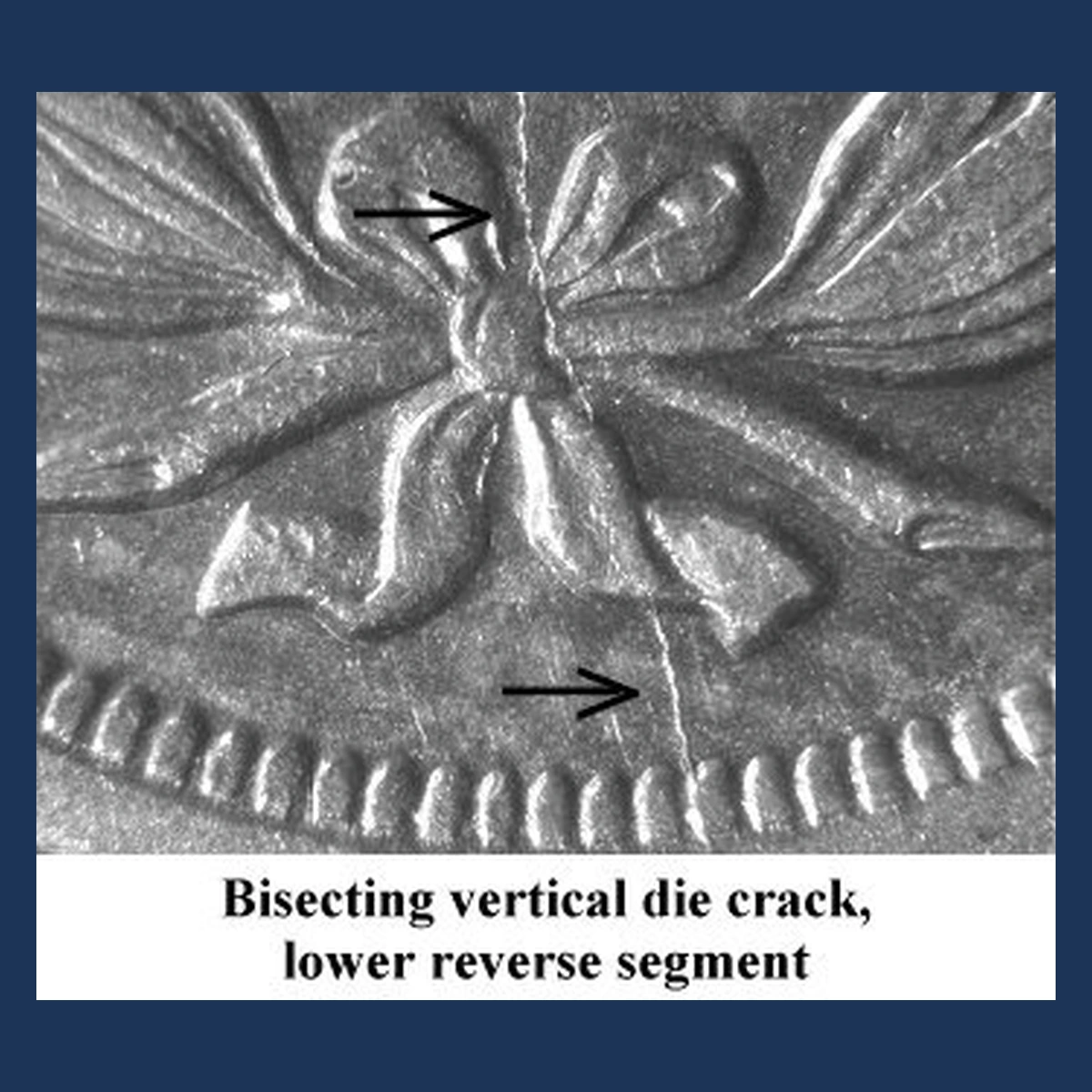
A thin raised line can pass through STATES or UNITED on the back of an 1845 dime. Metal filled a crack in the stamping tool and became a ridge on the coin.
A larger piece breaking from the tool’s edge leaves a raised patch connected to the rim. Collectors call this a cud.
The 1845 variety gallery shows the F-107a cud at 12 o’clock. Its front also has a cracked, repunched date.
Other cracks follow different routes. Do not combine all the pictured lines into one imagined example.
Estimated Value
Estimate $30–$6,000 for whole coins, from worn examples with small cracks to well-preserved pieces with obvious breaks. Tiny lines usually add little.
The upper end favors a clear cud and attractive original surfaces. A barely visible crack does not justify that price by itself.
An 1845 F-107 graded MS66 sold for $3,055 in October 2015. It provides a condition comparison, but the sale did not identify the later rim-cud stage.
How to Identify
A scale and calipers can check the normal 2.67 grams and 17.90 mm width. Inspect the edge grooves for filing or squeezing before judging an odd rim.
Use a magnifier to trace each raised line through the surrounding letters. A scratch cuts inward and may leave sharp metal along its sides.
Compare the complete back with one reference photograph at a time. Different varieties have different cracks, even when the date is the same.
For F-107a, look at the top of the back at 12 o’clock. Follow the raised patch to the rim and inspect the neighboring design.
The direct cud check is original raised metal joined to the rim where normal border detail is missing.
3. 1845 Liberty Seated Dime Repunched Date (Estimated Up to $80,000)
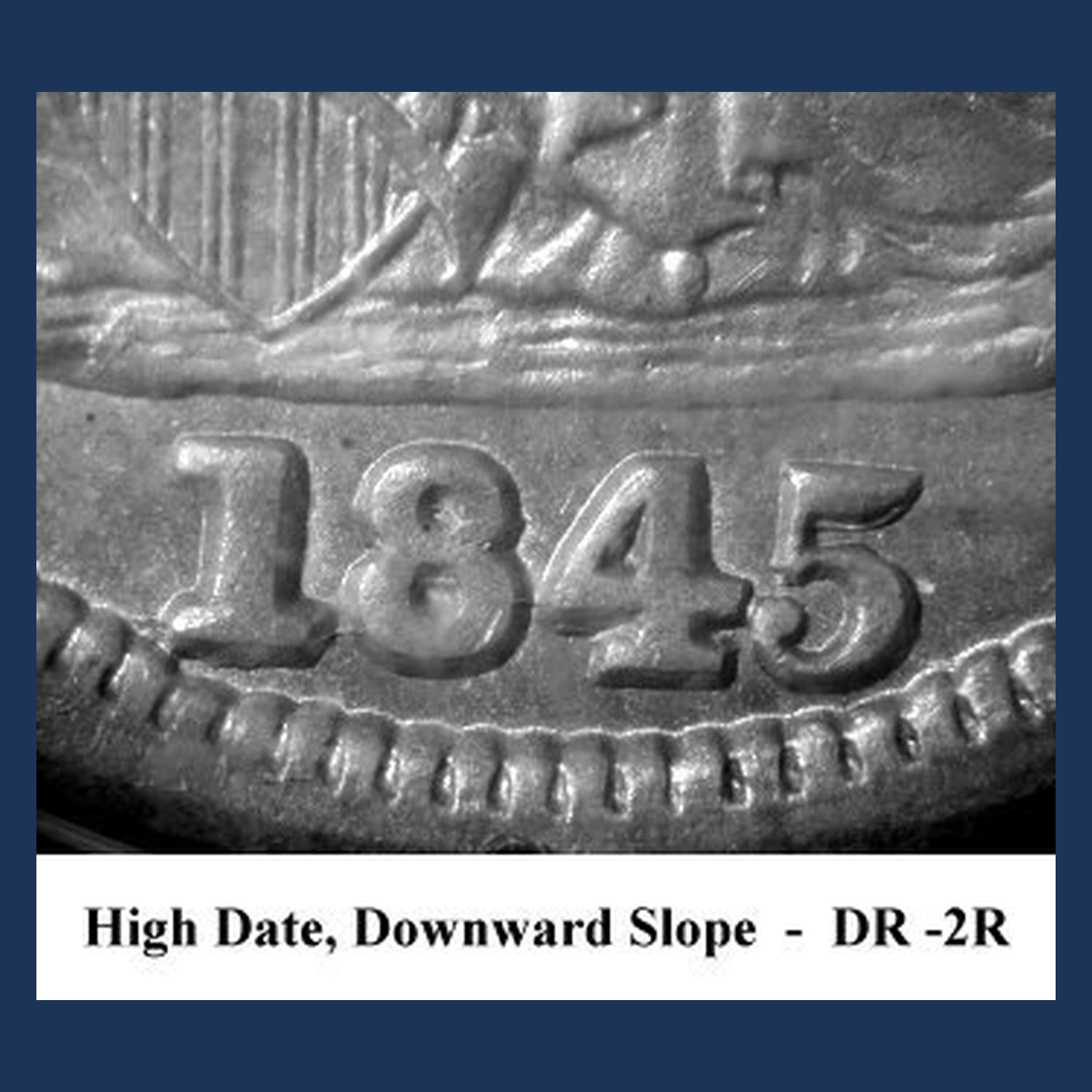
The 5 can show parts of three outlines on one recorded 1845 variety. This does not mean the coin received three blows.
Workers punched the date into the stamping tool more than once. Parts of earlier positions remained beside the final numerals and appeared on coins.
That ordinary issue also has a repunched 4. Other varieties show remnants around more digits.
A rare Proof, specially prepared for collectors, has repunching at 4 and 5 too. Its finish and rarity put it in a different price group from an ordinary dime with a repeated date.
Estimated Value
Estimate $40–$6,000 for ordinary repunched-date coins, depending on condition and visible date fragments. The F-107 graded MS66 sold for $3,055 in October 2015.
Rare Proofs have a separate whole-coin estimate of $7,000–$80,000. PCGS records $71,300 in February 2008 and $30,550 in May 2015 for two examples.
Those high prices reflect rare Proof coinage. They are not a repunching bonus to add to an ordinary dime’s value.
How to Identify
Magnify the edges and openings of 4 and 5. Look for raised fragments that follow another position of those same digit shapes.
If traces also appear near 1 and 8, compare them with the correct variety photograph. A random nick beside a number is not enough.
Choose a Proof comparison only when the finish is correctly identified. Polishing can make an ordinary coin shiny without turning it into a Proof.
Both types have the same normal measurements: 2.67 grams and 17.90 mm. Use a scale and calipers, then inspect the grooves around the edge for damage.
Start with a clearly shaped second digit fragment beside the finished 4 or 5, then match the complete date pattern.
Conclusion
Look at the date first, then trace raised cracks and any faint shapes from the opposite design. One 1845 dime can carry more than one of these features.
Estimated whole-coin values are $30–$6,000 for ordinary issues and $7,000–$80,000 for rare Proofs. Keep those groups separate, and leave the surface untouched so small date fragments and clash marks remain easy to compare.