1908 Dime Error List with Pictures

An extra curve beside a date number can be easy to miss. A 1908-D dime with a repunched date sold for $161 in January 2006.
These 1908 dime errors include small extra numbers and mint letters, plus larger mistakes that change the coin’s outline. Estimated values range from $20 to $1,500, with other-year sales clearly identified below.
Read on to find the right place to look before judging a strange mark.
1. 1908-D Barber Dime Repunched Mintmark (Estimated Up to $500)
Find the tiny D below the bow on the back. A second curved outline beside it may be part of an earlier mintmark impression.
A worker punched the D into a die, the steel tool used to stamp coins. If the punch landed again in a slightly different place, part of the first D could remain.
NGC lists repunched mintmarks for 1908-D. This means the letter was punched twice into the tool, not that someone stamped an extra D onto the finished coin.
Estimated Value
Estimate $35–$500 for a worn through lightly worn 1908-D dime with a clearly matched extra D. The amount includes the complete coin, not a separate fee for the mintmark.
For comparison, an 1899-O dime with a repunched O brought $115 in May 2023. It had slight wear and a problem noted by the grading service.
That is another year and mint. Its sale suggests modest prices are possible, but does not price this Denver variety directly.
How to Identify
Read the mint letter before looking for a second outline. An O or S below the bow belongs to a different mint, so it cannot be this D/D variety.
Take a close-up that includes the bow and the small teeth near the rim. Then compare the D with a photographed 1908-D example, using a 10× magnifier.
A normal coin measures about 17.9 mm and weighs 2.50 g before wear; use calipers and a scale. Its edge has narrow grooves.
Now return to the letter itself. A nick can push metal sideways, while movement during striking can leave a flat shelf.
Look for a rounded piece of the earlier D in the same place as the matching variety photograph.
2. 1908 Barber Dime Broadstrike (Estimated Up to $750)
A broadstruck dime spreads wider than normal, yet keeps its full design on both sides. The mistake begins with the metal ring around the blank.
That ring, called the collar, normally controls the coin’s width and makes grooves along its edge. Without that support, metal can spread outward when the tools strike.
1908 coin guides report this error type. A wide rim alone, however, is not enough to recognize it.
The important combination is extra width and a complete design. A design cut off at one side points to a different striking mistake.
Estimated Value
The 1908 guide suggests $100–$200 for circulated broadstrikes. A wider estimated range of $75–$750 allows for differences in wear, surface damage, and how far the metal spread.
These are estimates, not recorded 1908 sales. An 1899 Philadelphia broadstrike sold for $161 in June 2005.
That other-year coin had light wear, cleaning, and corrosion, with a lower adjusted grade. Its price shows how damaged surfaces can limit the value of a clear error.
How to Identify
Place the dime beside an ordinary Barber dime and compare their widths. Measure with calipers rather than judging from photographs taken at different sizes.
The normal diameter is 17.9 mm. A broadstrike should show actual outward spread, not just a design that sits slightly to one side.
Use a 10× magnifier to follow the outer lettering on both faces, then examine the edge. Look for complete designs and an edge that lacks the normal pattern made by the collar.
Weigh it against the usual 2.50 g standard, allowing for wear. Hammering can also widen a coin, but commonly flattens or disturbs its details.
A wider coin with complete, normally struck designs is the key starting point.
3. 1908 Barber Dime Misplaced Date (Estimated Up to $900)
Tiny number tops appear below the main date on a known Philadelphia example. The extra pieces of 1 and 0 sit just above the small teeth around the rim.
The Barber dime variety guide shows this misplaced date. A date punch struck the stamping tool in the wrong place.
That tool also had extra impressions beside the main date numbers. One coin can therefore show both kinds of date mistake.
Denver misplaced dates are also reported. Their extra numbers need separate matching photographs; the Philadelphia positions do not automatically apply.
Estimated Value
A clear misplaced date has an estimated range of $50–$900 from worn examples through coins with no circulation wear and some marks. Strong visible number shapes and clean surfaces help.
An 1859 Seated dime graded VF30 sold for $118.12 at GreatCollections in October 2024. VF30 means noticeable wear with much detail remaining.
That coin illustrates the same mistake on a different design and year. Two date features on one coin do not mean two separate premiums.
How to Identify
Leave the rim in your date photograph. Cropping it away removes the easiest landmark for the extra number tops.
On the Philadelphia example, inspect the narrow space between the normal date and the rim teeth with a 10× magnifier. Match the small tops of 1 and 0 to the illustrated coin.
Also check for extra shapes beside the main date, since both features occur together. Neither requires the finished coin to have been struck twice.
The usual dime weighs 2.50 g and measures 17.9 mm, with a grooved edge. A D below the rear bow means you need Denver photographs instead.
Use a scale and calipers to check those measurements. For the Philadelphia variety, begin with the recognizable number tops just above the rim teeth.
4. 1908 Barber Dime Repunched Date (Estimated Up to $1,100)
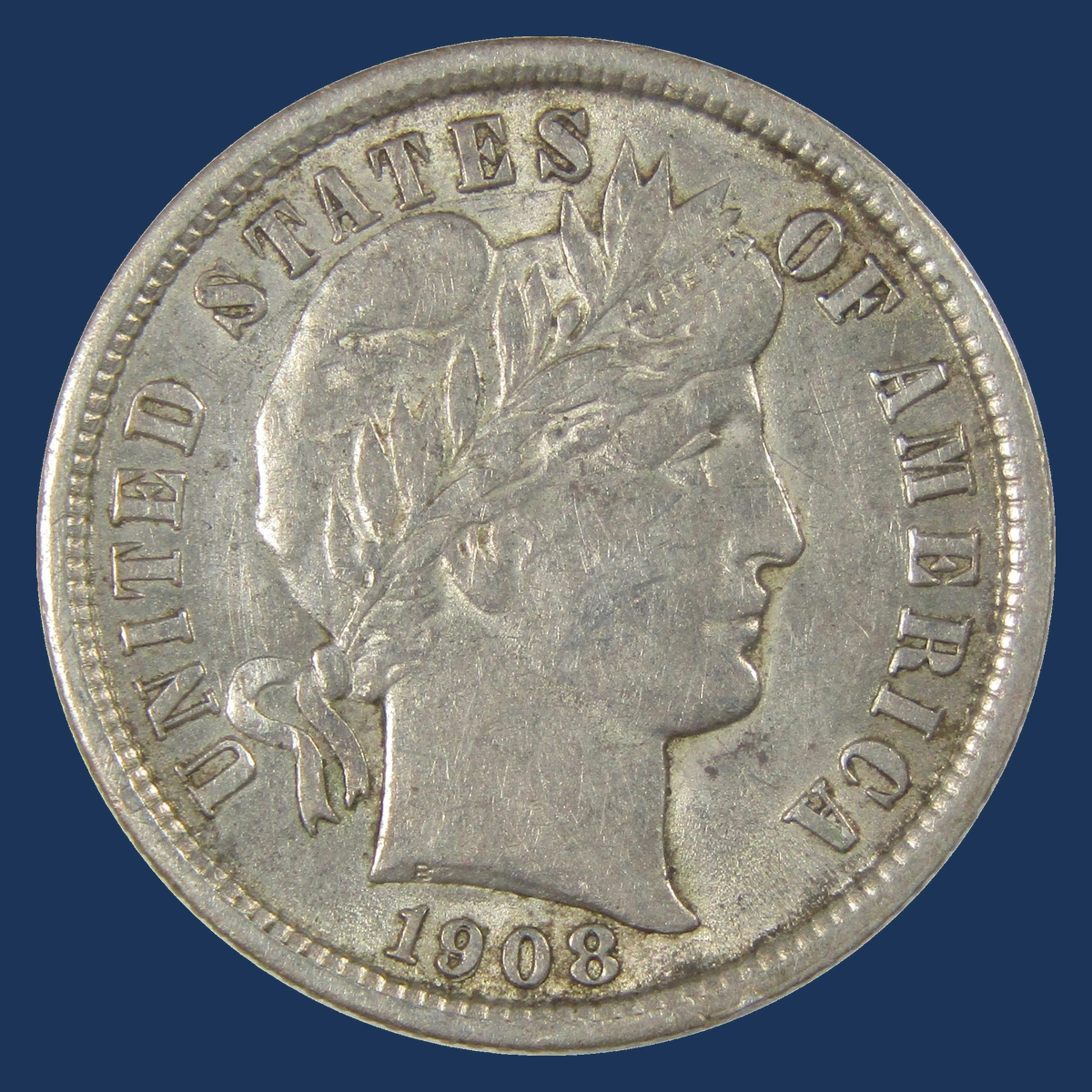
A repunched date keeps the extra number shapes close to the main date. They can look like narrow curves peeking out beside a digit.
Workers added dates to stamping tools with a punch. Moving that punch between blows could leave two partly overlapping impressions.
Known 1908 examples come from Philadelphia, Denver, and San Francisco, while an annual coin guide also reports New Orleans examples. Their extra shapes do not all point the same way.
Check the mint as well as the numbers. A thick-looking date is not enough to identify one of these varieties.
Estimated Value
A Denver FS-301 graded AU58 sold for $161 at Heritage in January 2006, as recorded by PCGS. AU58 means very little wear.
A heavily worn Philadelphia FS-301, graded G4, brought $13 at GreatCollections in June 2014. These are different varieties despite sharing the same catalog number.
Estimate $20–$1,100 for typical worn through better-preserved examples. Mint, condition, and the clarity of the extra numbers matter more than date thickness alone.
How to Identify
Begin by reading the back: D means Denver, S means San Francisco, and O means New Orleans. Philadelphia dimes have no mint letter.
Match that mint to photographs of the date variety, then examine all four numbers with a 10× magnifier. Follow each extra curve far enough to see whether it fits an earlier number shape.
Random scratches can cross a digit without repeating its outline. A thin, flat shelf can instead result from movement during the strike.
Check the coin’s grooved edge and normal size, about 17.9 mm across and 2.50 g before wear. Those measurements confirm the basic coin type, not the date variety.
Use a scale and calipers to check those measurements. The useful match is the same extra number shape in the same position on a coin from the same mint.
5. 1908 Barber Dime Off-Center Strike (Estimated Up to $1,500)
A blank crescent at one side and missing design at the other can show an off-center strike. The metal blank sat too far to one side when the stamping tools came down.
Part of the blank received no design. At the opposite side, part of the intended design missed the metal completely.
1908 guides report this error category without describing one confirmed coin’s mint, direction, or percentage. Those details must come from the actual example.
A readable date matters. A large shift can remove the numbers needed to establish that the coin is from 1908.
Estimated Value
An estimated $200–$1,500 covers readable-date examples from circulated condition through coins with no circulation wear and some marks. A larger, clearer shift can increase interest.
For a same-series comparison, an 1899 Philadelphia dime struck 10% off center reportedly brought $312 at Heritage in June 2023. Its NGC VF25 grade indicates noticeable wear.
That sale concerns an 1899 coin. It supports a comparison for a modest shift, not a confirmed sale of a 1908 example.
How to Identify
Turn the coin over before measuring the blank area. Both sides should show the misplaced strike; a problem on only one face may involve a shifted stamping tool instead.
Under a 10× magnifier, examine where the design ends and untouched metal begins. Grinding or polishing can remove a design, but leaves different surface marks.
An ordinary off-center strike does not remove metal, so compare the weight with the normal 2.50 g. Record the outline with calipers against the usual 17.9 mm diameter, and check remaining edge grooves for damage.
Keep the whole date visible in photographs. To recognize the error, look for missing outer design paired with a genuinely blank margin on both faces.
Conclusion
These 1908 dimes have estimated values from $20 to $1,500. Small extra numbers or letters need clear close-ups, while broadstrikes and off-center coins need views of the whole outline.
Always keep the mint letter with your date comparison. One coin can show two date mistakes, but its condition and visible features still determine one total price, rather than two separate amounts added together.