1944 Dime Error List with Pictures

A tiny piece of metal can preserve a valuable mistake: a 0.8-gram 1944 dime fragment sold for $1,080 in October 2022. A separate flipover double strike reached $3,450 in January 2007, although its partly hidden date was only believed to be 1944.
These 1944 Mercury dime errors have estimated ranges spanning $10–$6,000. They include subtle extra lettering, spread-out coins, and unusual fragments.
Read on to see what each shape reveals and which measurements belong to the actual example.
1. 1944 Mercury Dime Faint Traces from the Opposite Design
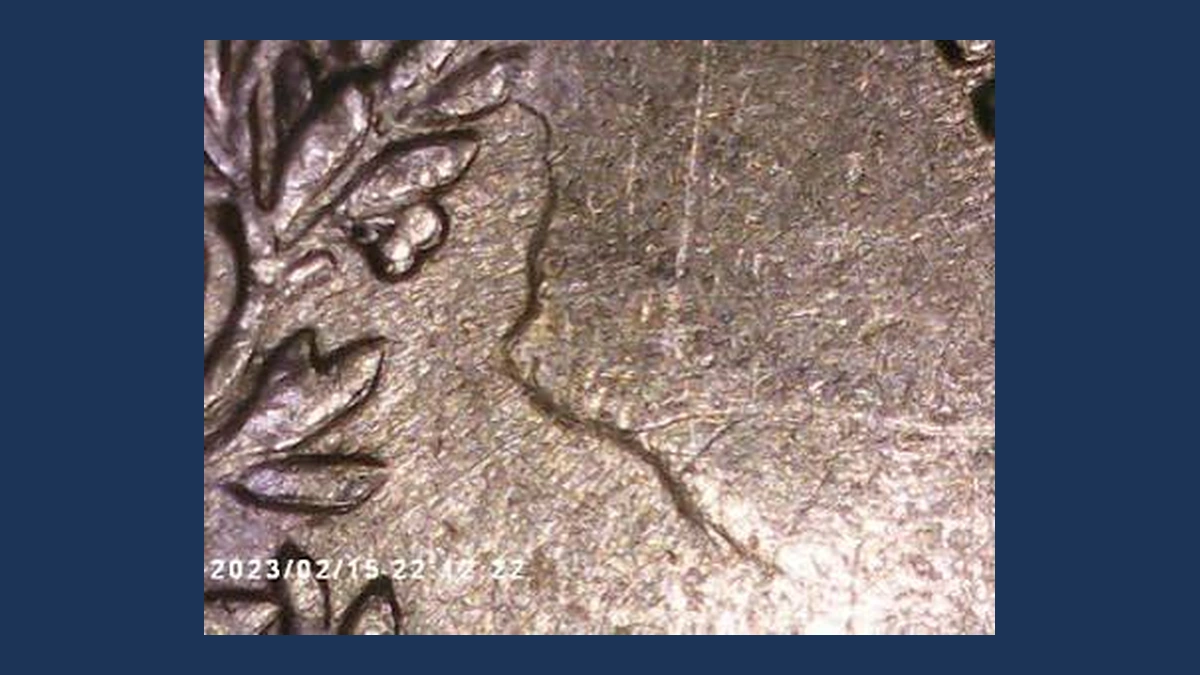
Faint outlines from the other side of the coin can appear near Liberty’s face or among the back details. They result when the two stamping tools strike each other without a blank between them.
Each tool can pick up traces of the opposite design and pass them to later coins. Collectors call this a die clash; a die is the steel tool that stamps a coin.
Reported Philadelphia examples show marks near the throat, nose, and forehead, or above the back motto and near the left branch. The patterns differ between tools and stages of use.
Estimated Value
Estimate $15–$200 for recognizable clash marks on otherwise ordinary silver Mercury dimes. Stronger traces that clearly resemble part of the opposite design are easier to show and compare.
These estimates compare similar silver-dime clashes. The reported examples also have doubled designs, so their features should not receive separate prices and then be added together.
Wear can soften the faint transferred lines. Random scratches, cleaning marks, or corrosion do not earn the same premium simply because they cross these areas.
How to Identify
Compare the faint mark with the design on the other face, rather than starting with its size. A clash should resemble transferred design detail; a random line has no such necessary relationship.
Use a 10× magnifier near the throat, nose, and forehead, then inspect above the back motto and near the left branch. Compare one cataloged example at a time because the marks do not all belong to one tool.
For a loose coin, record weight and diameter with a scale and calipers against 2.50 grams and 17.9 mm. Inspect the grooved edge and nearby surface for later disturbance.
Change the light angle to separate fine raised outlines from scratches cut into the metal. Any supporting doubled letters should match the same coin’s pattern, not a different clash photograph.
2. 1944 Mercury Dime Peeling or Missing Surface Metal
A weak layer within the silver alloy can separate before the design is stamped. The missing metal can leave a rough area and prevent some details from forming fully.
A published guide describes a 1944 Philadelphia example with this pre-strike separation. A different Denver listing describes a band of peeling metal across the center of the back.
These are called laminations, meaning separation within the blank’s metal. Neither represents a missing copper core or a peeled modern outer coating; normal 1944 dimes are made from an alloy of 90% silver and 10% copper.
Estimated Value
Genuine surface separations have an estimated range of $15–$250, from minor worn examples to clearer, attractive peels. Remaining loose metal should be preserved because it can help explain the flaw.
A different 1942 Mercury dime with major front peeling sold for $89 in March 2023. That is a nearby-year comparison, not a price for either 1944 example.
A large separation may be dramatic, but losing important design can limit its appeal. Later scraping has a different origin and value.
How to Identify
Look at how the design formed around the missing metal before deciding when the separation occurred. A pre-strike flaw can leave weakly formed detail, while a later scrape cuts across a design already stamped into the surface.
Use side lighting and a magnifier to examine the boundary, leaving any attached flake untouched. The Denver example has a band across the back’s center; that location should not be assigned to the separate Philadelphia example.
For a loose coin, use a scale against 2.50 grams and calipers against 17.9 mm, allowing for any missing metal. Photograph the grooved edge and exposed surface without pressing a loose sheet, since detaching it can remove useful evidence of the separation.
3. 1944 Mercury Dime Doubled Front or Back Designs
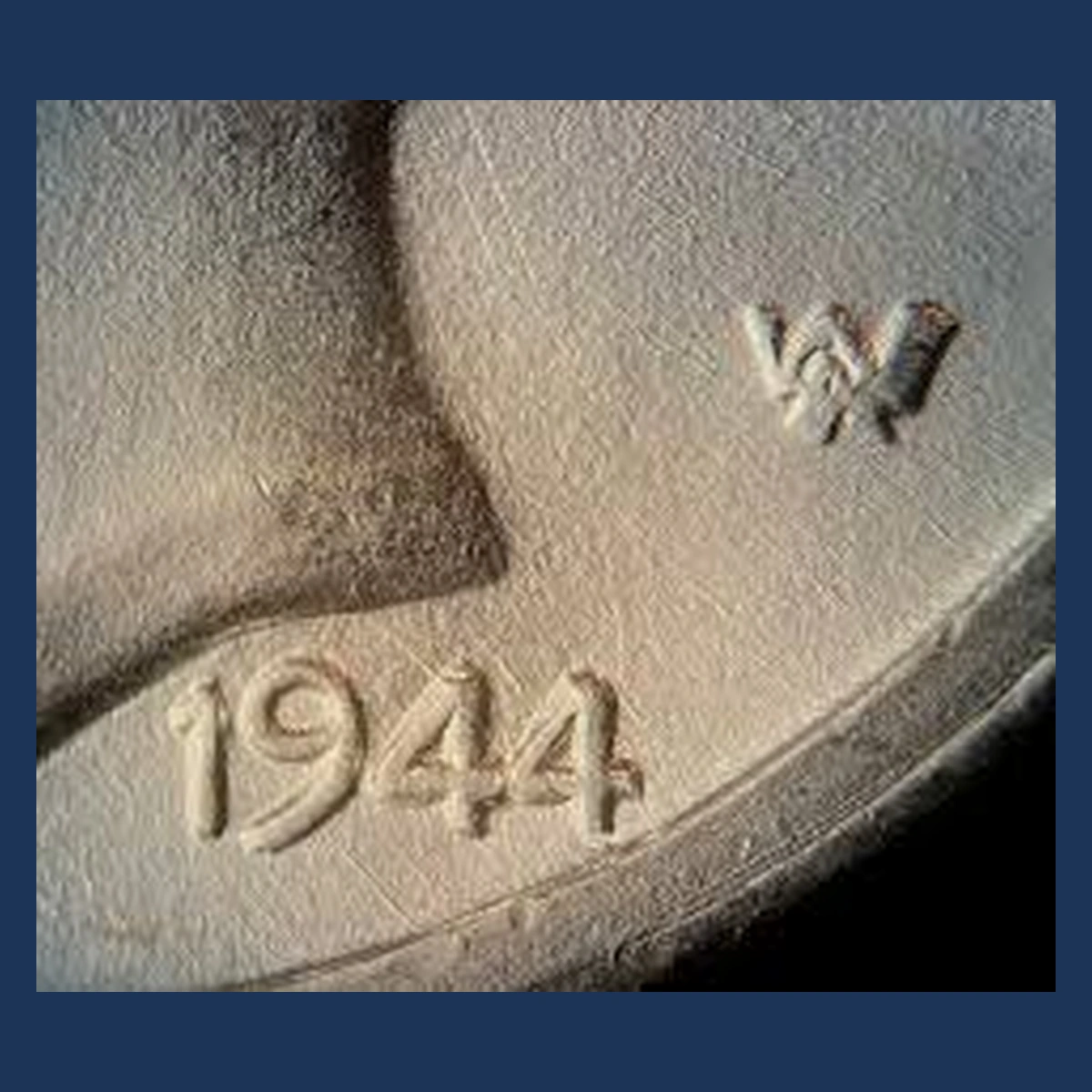
Extra outlines can affect the date, the designer’s AW initials, or nearby lettering. Different Philadelphia patterns show inward separation, rotated separation, or thicker details rather than one identical extra image.
Philadelphia back doubling can affect the lettering, stars, and lower end of the central bundle of rods. Denver examples involve the date and motto or broader thickening, while a San Francisco listing shows slight date separation.
The repeated image was formed in the stamping tool itself. It does not mean that every coin was struck twice, and one mint’s pattern should not identify another mint’s coin.
Estimated Value
For matched minor doubled designs, estimate $20–$300 across worn examples and attractive unworn coins. This range compares similar small doubled patterns on silver Mercury dimes.
Strong separation in several connected details is easier to establish than a single thick letter. The mint, exact pattern, and coin’s condition all affect the comparison.
A clash or small crack may identify the same tool, but should not receive another whole-coin price. Machine movement can also make flat shelves without the same variety premium.
How to Identify
Identify the mint before choosing a doubled-design photograph. For a loose coin, also check the usual 2.50 grams and 17.9 mm with a scale and calipers, including the grooved edge.
Examine the date with a 10× magnifier, then move to AW and the affected lettering. On a Philadelphia back example, the N in ONE and the bottom of the central rods can provide clearer comparisons than general thickness.
Keep those observations tied to one pattern. The San Francisco date example does not acquire the Philadelphia back doubling merely because both have the same year.
A flat shelf alongside a letter can come from striking movement. Look for the cataloged separation or thickness across its listed details before treating a blurred or bright edge as doubled design.
4. 1944 Mercury Dime Repunched D and S Mint Letters
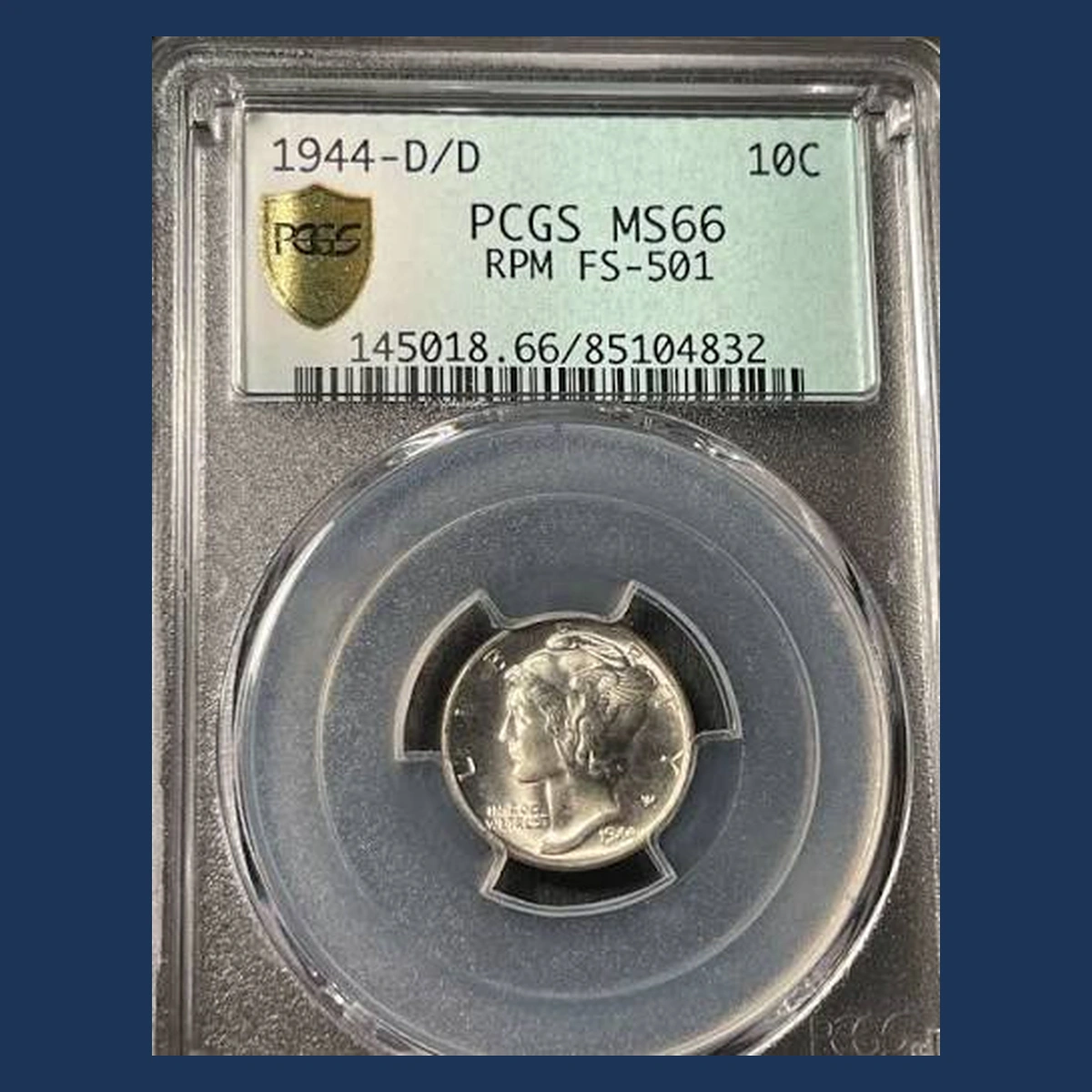
A second small D or S outline can survive beside the main mint letter. Before the coin was struck, the letter punch was applied to the stamping tool more than once in slightly different positions.
Denver patterns include extra traces above, below, southeast, or at an angle to the main D. The San Francisco example has an extra S outline to the west.
These are repunched mint letters, not extra denominations or doubled whole designs. Their small accompanying scratches and cracks help match particular tools, but the earlier letter impression is the main feature.
Estimated Value
Recognized minor D/D and S/S examples have an estimated whole-coin range of $20–$350. An attractive unworn coin with a clear extra curve is a stronger comparison than one heavily worn around the mint letter.
This estimate compares small repunched letters on silver Mercury dimes. Clear outlines are more useful than a worn or partly hidden trace.
A scratch beside D or a lumpy S needs a match before receiving the premium. Extra strokes still form one variety on one coin.
How to Identify
Photograph the mint letter below the left side of the back’s central rods, keeping the coin upright under a 10× magnifier. A southeast extra D sits below and right of the main letter, while the reported S shows its extra outline westward.
Other north, south, or rotated D patterns need their own catalog photographs, since direction is part of the identification. Compare any supporting cracks only after the earlier letter impression agrees, allowing for tool changes that can alter those supporting marks.
A loose intact coin should be checked against 2.50 grams and 17.9 mm with a scale and calipers. Inspect the grooved edge and mint area for filing or added metal that could explain an apparent extra stroke.
5. 1944 Mercury Dime Design Blocked by Scrap or Grease
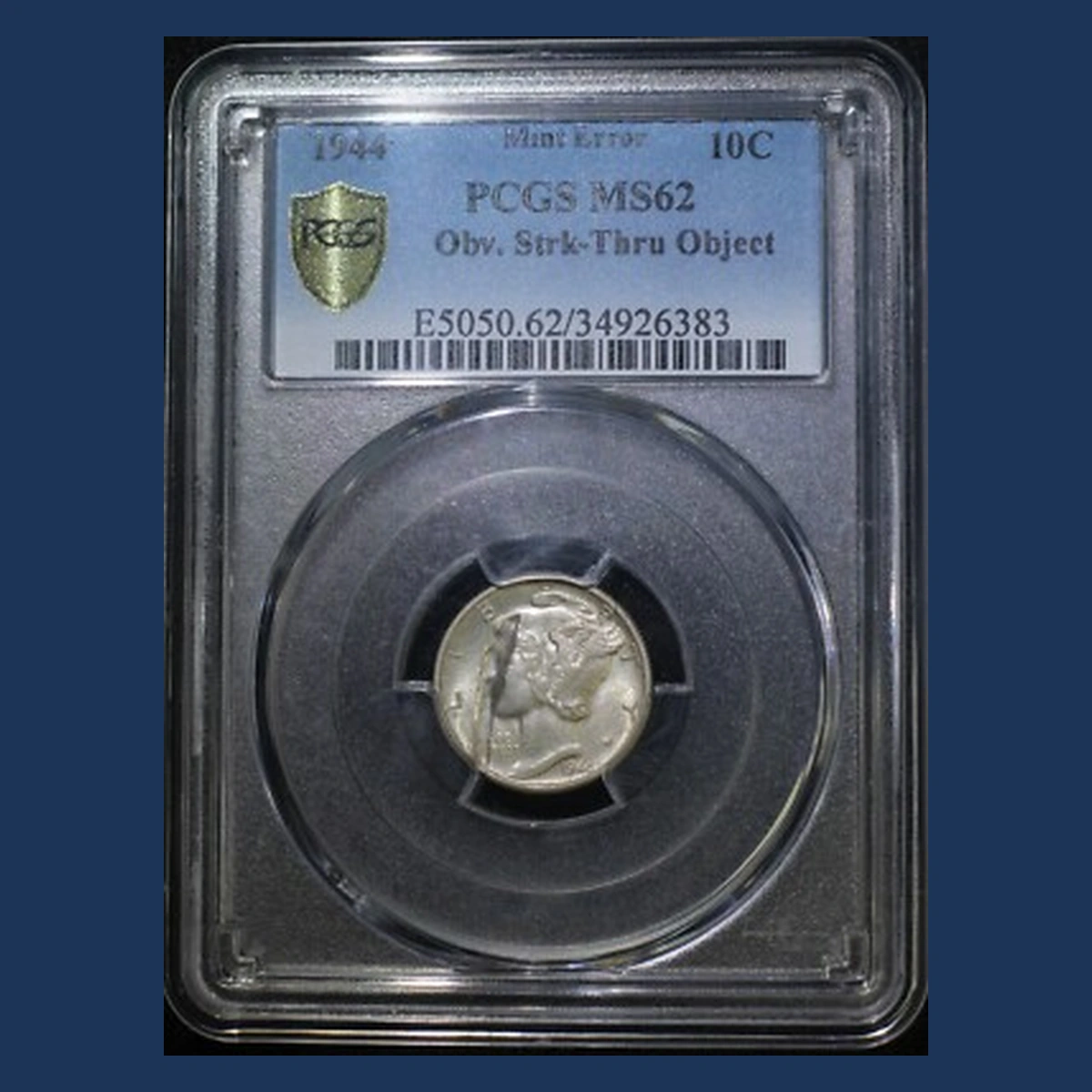
An object between the stamping tool and blank can block part of the design. A 1944 Philadelphia dime was graded PCGS VF35 with a front impression from scrap, meaning it has moderate circulation wear.
The scrap did not necessarily remain attached to the finished coin. Its impression should not automatically be called cloth, wire, or a retained fragment without matching physical evidence.
Grease-blocked detail is also reported for the year. Grease can soften or remove local design, while a solid scrap object may leave a more definite depression or boundary.
Estimated Value
The VF35 scrap-impression coin sold for $104 in January 2017. Estimate $50–$500 for comparable clear solid-object impressions, depending on size, location, and condition.
Modest genuine grease-blocked areas can fit roughly $10–$100. These are separate price comparisons for different-looking forms of obstruction.
A recognizable boundary helps distinguish a production error from ordinary wear. Severe scratches or pits can lower appeal and should not be valued as extra blocked-design features on the same coin.
How to Identify
Study the border between weak and normal design before deciding what blocked the tool. With a 10× magnifier, look for a distinct impression from a solid object or a softer transition around locally weak detail.
Check the rest of the coin for wear. If the highest points are worn throughout, a faint letter alone is not strong evidence for grease.
For a loose piece, compare the 2.50-gram weight and 17.9 mm diameter with a scale and calipers. Examine the grooved edge and any nearby dents that could explain a depression.
Follow original detail up to the affected area without scraping inside it. A later gouge can remove stamped metal, whereas an obstruction prevents that part of the design from forming normally.
6. 1944 Mercury Dime Partial Collar with a Stepped Edge
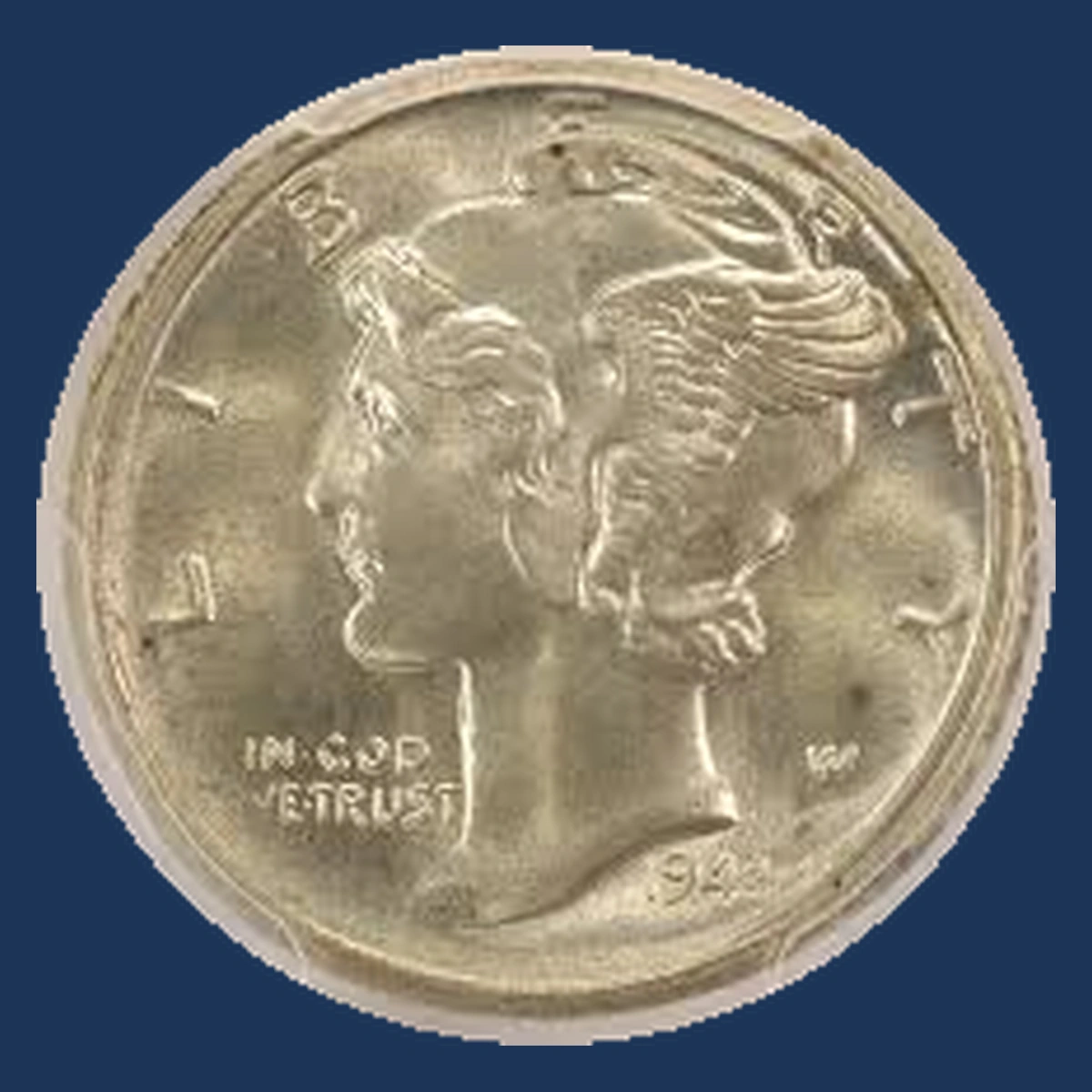
One part of the edge can look normal while another part spreads outward above it. The blank was only partly inside the collar ring when the tools struck.
The ring normally restrains the metal and forms the edge grooves. Partial contact can leave a step between the contained portion and the part that escaped outward.
Recorded Philadelphia examples include an NGC MS64 coin and a separate ANACS AU58 coin. The first is unworn with marks; the second has slight wear, and their individual edge shapes should be compared separately rather than treated as one specimen.
Estimated Value
For genuine partial-collar examples, estimate $50–$500. A clear step with original grooves is easier to display than a slight edge irregularity on a heavily worn coin.
A related 1952 silver dime with a partial collar and ragged clip sold for $144 in July 2021. That different-year result includes both features on one coin.
It is a comparison for an edge-production error, not a fixed price for every 1944 partial collar. Damage that obscures the step can lower collector interest.
How to Identify
Hold the edge level with the camera so its different heights can be compared in one side view. Under a magnifier, follow the grooved contained portion into the metal that spread beyond the ring.
For a loose example, calipers can measure widths across both portions against the usual 17.9 mm diameter. A scale reading near the ordinary 2.50 grams supports a complete blank, although it does not prove how the step formed.
Turn to the front and back to see whether the design agrees with that original edge shape. Filing can remove grooves and a rim blow can displace metal, but neither should be mistaken for the joined contained and expanded portions of a partial-collar strike.
7. 1944 Mercury Dime Broadstrike and Uncentered Broadstrike
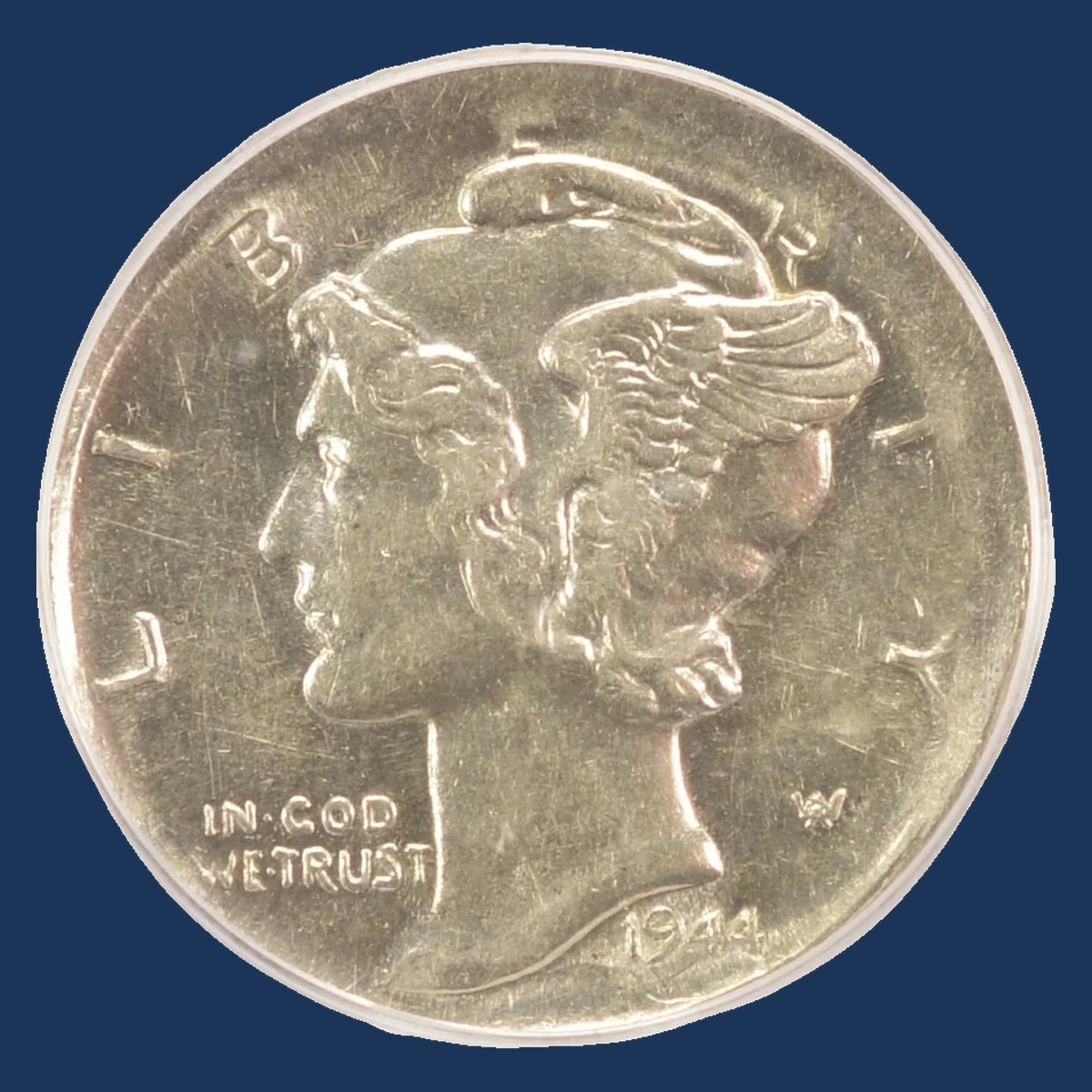
The design can remain complete while the surrounding metal spreads beyond the normal dime size. This happens when the collar ring fails to contain the blank during striking.
Examples are recorded from Philadelphia, Denver, and San Francisco. One unworn Philadelphia ANACS MS63 coin was almost a millimeter wider than normal.
Other pieces have an uncentered design that still fits on the metal. Some were struck on blanks before a raised border had been prepared, described as Type One blanks.
These forms need their own edge comparisons. An uncentered but complete design is not automatically an off-center strike.
Estimated Value
A Philadelphia MS65 broadstrike sold for $94 in October 2022. The separate ANACS MS63 example with nearly a millimeter of expansion brought $115 in July 2006.
Estimate $30–$600 across genuine broadstrikes with different condition, expansion, and blank preparation. An unworn coin with a wide natural border can show the error particularly well.
The complete design matters more than the outline alone. A hammered or ground-down dime should not be placed in this range merely because its diameter changed.
How to Identify
Use calipers to measure several spans across a loose candidate, since an uncentered broadstrike may not expand evenly. Compare the widths with 17.9 mm and its scale reading with the normal 2.50 grams.
Then follow the outer design through a magnifier. All of it should fit on the expanded metal; if lettering falls beyond an edge, consider an off-center strike instead.
Check how the edge formed where the collar did not contain the coin. The Type One examples also require comparison with blanks that lacked a prepared raised border before striking.
Later hammering tends to disturb finished detail rather than produce a fresh design inside an expanded border. Match each mint and edge form separately, rather than borrowing another specimen’s width or grade.
8. 1944 Mercury Dime Curved, Double, and Straight Clips
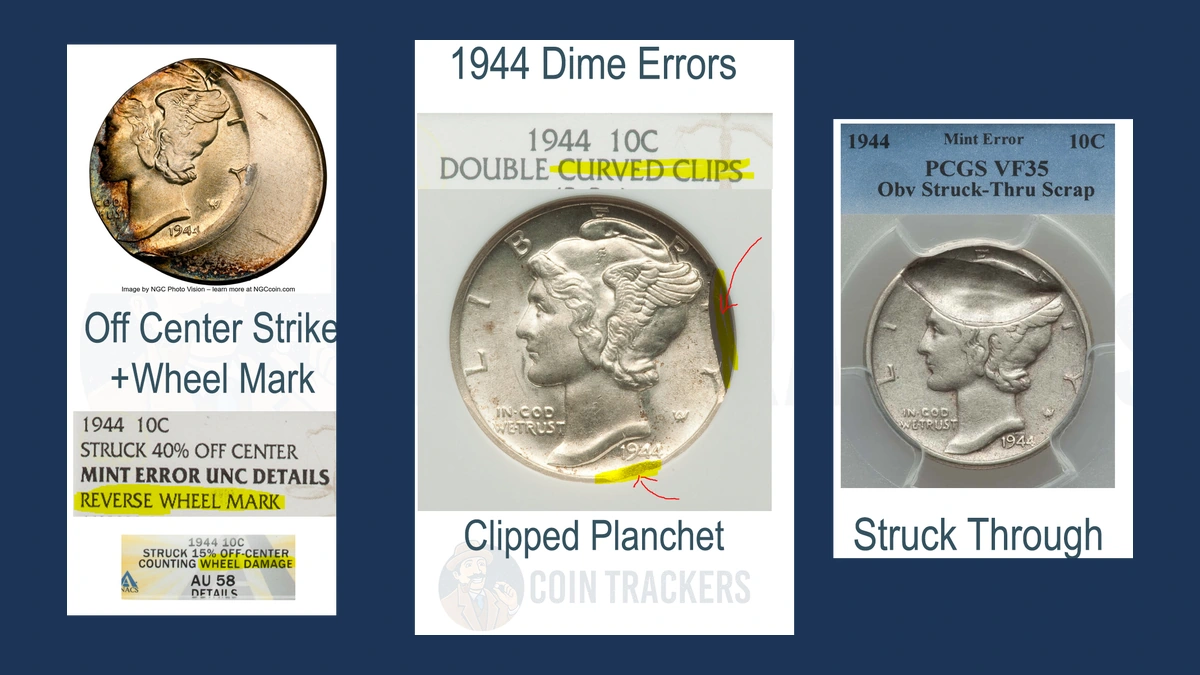
An incomplete blank can have a curved bite, two curved gaps, or a straight missing section. Those shapes relate to where the blank was cut from the metal strip.
Philadelphia examples include several clip sizes and a two-clip coin weighing 2.3 grams. A separate San Francisco example has a 5% straight clip.
Each shape needs its own comparison. The two missing areas on the 2.3-gram coin should not be copied onto a different curved-clip example.
A cut made after striking may imitate the outline but can leave different surfaces where the finished design ends.
Estimated Value
The 7% Philadelphia clip sold for $126 in July 2021. The separate 5% straight-clip San Francisco coin brought $55 in October 2022.
Estimate $30–$600 across genuine single and multiple clips, allowing for different condition and visibility. A clean gap with convincing original surfaces is more useful than a large unexplained bite.
A readable date and preserved design help collectors compare examples. Several missing sections do not mean several separately priced errors, and later cutting does not earn the same premium.
How to Identify
Identify the actual gap before using a recorded measurement. The 2.3-gram weight belongs to the Philadelphia double-clip coin, not to every 1944 clip.
A scale can compare a loose candidate with the complete dime’s 2.50 grams. Use calipers on the remaining outline against 17.9 mm, leaving the missing area out of an intact-width measurement.
Inspect each gap with a 10× magnifier. The curved and straight boundaries should show metal shaped during production rather than saw marks, sharp fresh burrs, or cut-through finished lettering.
Follow the surviving grooved edge and inspect the rim opposite a clip for supporting weakness. That weakness can help when present, but each gap still needs its own examination rather than approval from the coin’s overall shape.
9. 1944 Mercury Dime Cracks and Rim-Connected Tool Breaks
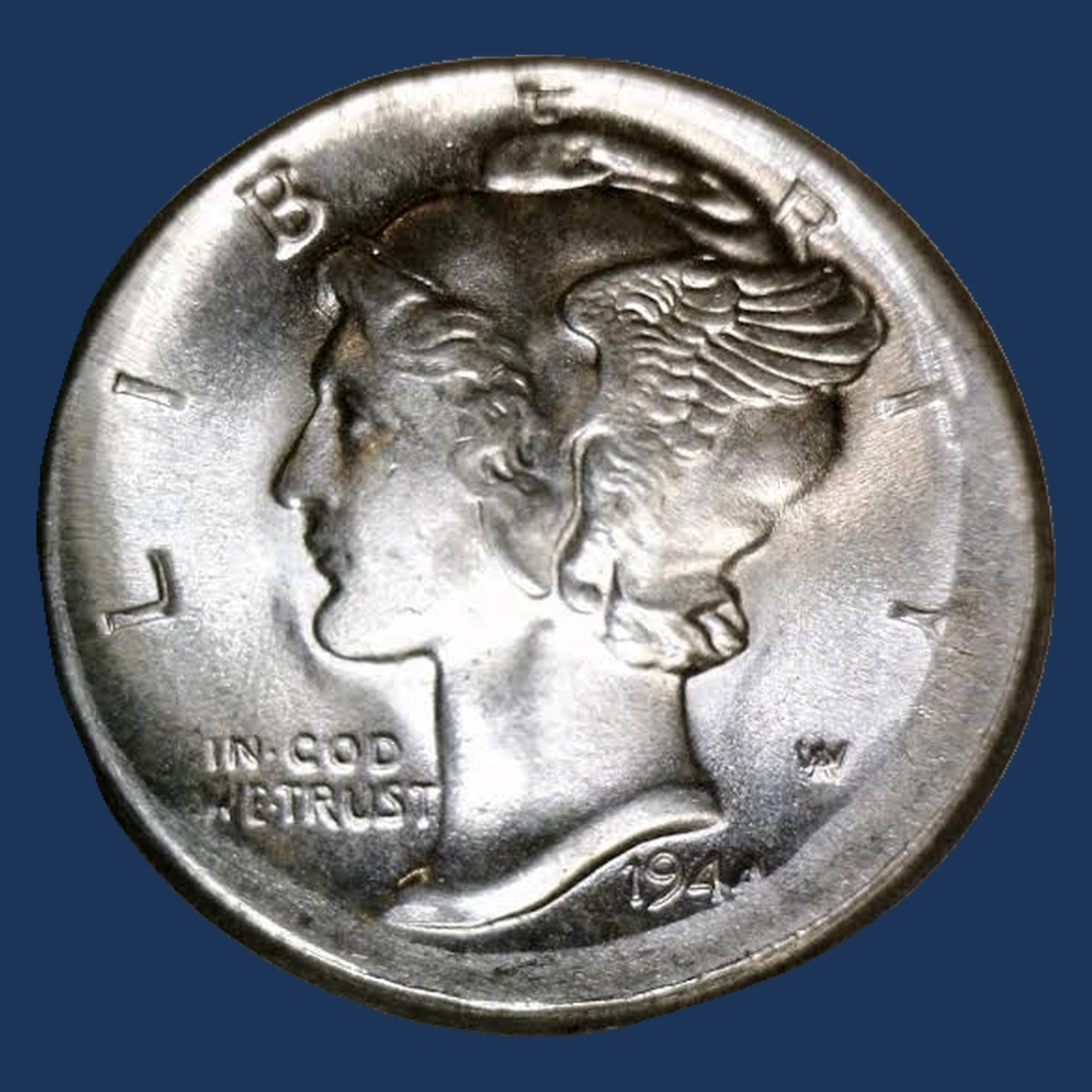
Narrow raised ridges and larger blank lumps can both come from damaged stamping tools. A crack admits a thin line of coin metal, while a missing rim section leaves a broader raised patch called a cud.
Denver records include front and back crack paths, and a San Francisco example has its own cap and back ridges. These should not be joined into one imagined line.
Philadelphia examples show several larger rim-connected patches, sometimes on the same coin. Multiple patches on one specimen remain features of that single coin, rather than separate objects.
Estimated Value
Small original cracks are estimated at $10–$100, while obvious rim-connected breaks can fit $100–$750. The ranges compare damaged-tool errors on similar silver Mercury dimes.
A broad raised patch replacing part of the design usually presents a stronger visual error than a faint line. Good preservation also helps show its original shape.
Several cuds on the same coin receive one whole-coin value. Marks from a dent, solder, or corrosion should not be priced as additional mint-made breaks.
How to Identify
Separate a narrow ridge from a larger raised blank area under angled light. With a 10× magnifier, trace the whole boundary before assigning a name.
For a cud, the patch must connect with the rim. Philadelphia photographs show different groups, including front patches around 8–10, 2–3, and 4–5 o’clock; those three occur on one illustrated coin.
Other front and back patches belong to their own photographed grouping. Do not combine the Denver and San Francisco crack paths with those Philadelphia patches.
Check a loose intact dime against 2.50 grams and 17.9 mm with a scale and calipers. Examine the grooved edge for a blow that pushed metal upward; a nearby dent can explain a raised lip without a broken stamping tool.
10. 1944 Mercury Dime Blank Cut from Thick Metal
A Philadelphia dime was struck on metal described as rolled 20% too thick. It weighs 3 grams, compared with the normal silver dime’s 2.50 grams.
PCGS graded the coin MS63, meaning it is unworn with noticeable marks. The extra metal belongs to the blank, rather than being a raised border created by later edge damage.
Its report identifies thick stock, not a cent blank or a specific foreign alloy. Weight close to another denomination’s standard does not by itself change that identity; the coin’s thickness, dimensions, and metal must agree.
Estimated Value
For an authenticated thick-stock silver dime, estimate $200–$1,000. A clearly measured weight difference and an original thick edge make a stronger comparison than a merely heavy-looking rim.
As a different-year comparison, a 1969-D dime made from quarter-thickness clad stock sold for $253 in January 2006. Its material differs from this 1944 silver example.
That result provides context for excess blank thickness, not proof of quarter stock here. Scratches or edge damage can reduce appeal despite the extra metal.
How to Identify
Weigh a loose coin on a calibrated scale before deciding that its rim looks thick. The recorded example is 3 grams, against the ordinary 2.50-gram silver-dime standard.
Check that reading again. An inaccurate scale cannot establish extra metal.
Use calipers at several points to compare thickness, then measure diameter against 17.9 mm. A hammered or rolled edge may be bulky even though the rest of the coin has ordinary thickness.
Magnify the grooved edge and both surfaces for solder, plating, or another added substance. These can raise weight after minting.
The reported 20% thick stock describes this particular example. A different candidate needs its own measurements and metal check, rather than a cent-blank label chosen merely because its weight seems close.
11. 1944 Mercury Dime Off-Center Strike, Including a Struck-Through Example
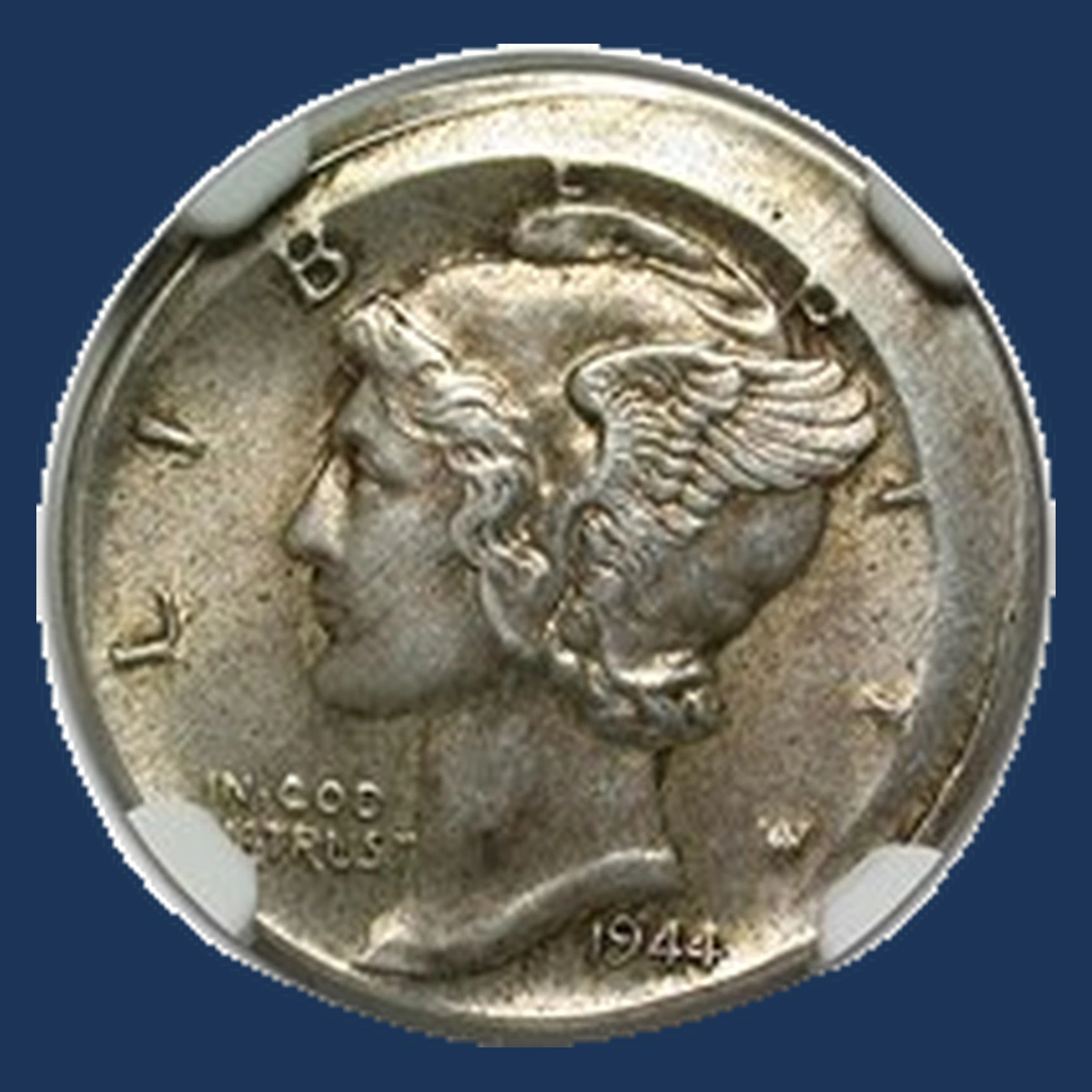
Part of the design can miss the blank when it sits off to one side during striking. This leaves untouched metal opposite the lost design.
Recorded Philadelphia examples include different offsets, such as 20% near 9:30 and 40% near 10 o’clock. Their directions and missing detail belong to separate coins.
Another 10% off-center example also has a front area blocked during striking. Its local impression is separate from the unstruck crescent left by the shift.
Neither feature should be treated as proof that every blank area on the coin has the same cause.
Estimated Value
The 40% off-center example brought $805 in July 2002. Estimate $75–$1,500 across genuine dated examples with different shifts and condition.
A different 15% coin with slight wear and counting-wheel damage sold for $89 in October 2022. That lower result shows why later damage and preservation matter alongside the percentage.
The combined 10% offset and front obstruction still receive one whole-coin price. A readable date and clear separation between the two features can make the error easier to understand.
How to Identify
Find the untouched crescent and compare both faces to see how the blank missed the design. The opposite edge should lose detail in a way that fits that same displacement.
A loose complete dime normally starts near 2.50 grams. Record weight and outline with a scale and calipers against the usual 17.9 mm diameter, including the surviving edge grooves.
Read the entire date before making a 1944 comparison. The 20% and 40% specimens have different directions, so neither supplies a clock position for the other.
On the combined 10% example, magnify the separate front impression. It lies within the affected coin’s design and records an obstruction during striking.
Keep that impression distinct from the crescent. The crescent was outside the struck area, rather than hidden behind the obstructing object.
12. 1944 Mercury Dime Struck Fragments and Repeatedly Struck Scrap
A small irregular piece of metal can receive the dime design instead of a normal round blank. One 1944 fragment weighs only 0.8 grams and has little or no normal back design.
NGC graded it MS64, an unworn grade with some marks. Its blank’s original denomination is not established by that description.
A separate published account describes scrap that stuck to the front stamping tool and was repeatedly pressed against new blanks. Its front design became strong while its back was flattened; that account does not establish that it is the same 0.8-gram object.
Estimated Value
The 0.8-gram fragment sold for $1,080 in October 2022. Estimate $500–$3,000 for genuine comparable struck fragments, depending on readable design, condition, and the clarity of their history.
A repeatedly struck piece with a strong, readable design can be especially appealing. Heavy scratches or missing date details make comparison harder.
A clear connection between the fragment and the dime design matters more than an unusual outline alone. A piece cut from a finished dime should not receive the same range.
How to Identify
Support the fragment without trying to flatten it or fit it into another coin. Photograph both faces and its entire irregular edge before handling it for measurements.
On a loose piece, record the weight with a scale and the spans with calipers. The auctioned fragment is 0.8 grams; the normal 2.50-gram, 17.9 mm dime is only a size comparison.
Use a magnifier to inspect where the stamped design meets the fragment’s boundary. A cut made after striking can slice through finished lettering and leave tool marks.
Inspect any surviving edge grooves, then compare the two faces. A flattened or nearly blank back does not automatically contain a reversed mirror image; only visible design can establish that additional feature.
13. 1944 Mercury Dime Reported Cent and Foreign Blanks
A dime design can be stamped on a blank intended for another coin. Year guides report cent-blank and foreign-blank categories for 1944 Mercury dimes, without identifying a particular certified specimen here.
A separate forum owner described a 1.65-gram dime and suggested aluminum. That weight alone does not establish the metal, because wear, corrosion, or later removal can also make a coin lighter.
The normal dime already contains 90% silver and weighs 2.50 grams. A wrong-blank claim therefore requires a physical match to different metal or dimensions, not just a surprising color.
Estimated Value
For an authenticated cent- or foreign-blank Mercury dime of this year, use a conditional estimate of $500–$4,000. The actual blank, readable date, and preservation would determine the comparison.
A different 1973-S Proof dime on a Liberian one-cent blank sold for $1,560 in November 2020. That specially prepared collector coin involved an identified foreign blank.
Its sale does not authenticate the reported 1944 candidates. In particular, the 1.65-gram forum coin needs metal identification before an aluminum-error premium can be applied.
How to Identify
Record dimensions before naming a different coin’s blank. For a loose candidate, use a scale and calipers against the normal 2.50 grams and 17.9 mm, then photograph the grooved edge.
Inspect the Mercury design and complete date with a 10× magnifier. A different denomination struck on a dime blank is the opposite error, not evidence for a dime struck on that denomination’s blank.
Check the surfaces for grinding, corrosion, or coatings that could explain a weight or color change. Keep the 1.65-gram reading tied to the forum report rather than a tested aluminum composition.
A specialist can compare the measured metal and dimensions with plausible blanks without scratching the coin. Those results need to agree before choosing the cent, foreign-blank, or aluminum description.
14. 1944 Mercury Dime Double Strikes and a Reported Flipover
Repeated design takes different forms after a coin moves between blows. One 1944 Philadelphia dime has a second strike 98% off center and broad spreading on a blank without a prepared border.
A separate published example has two impressions rotated about 90 degrees within the collar. That rotation does not mean the coin flipped over.
Another coin did flip, leaving ONE DIME near the date and cap detail across OF AMERICA. Heritage cataloged it as 194?, believed to be 1944; its final date digit is indistinct, and its back also has later counting-wheel marks.
Estimated Value
The partly dated flipover sold for $3,450 in January 2007. That is a sale of the 194? coin, not proof of its proposed final date digit.
Estimate $200–$1,500 for smaller second impressions and approximately $1,000–$6,000 for dramatic, well-preserved rotated or flipover double strikes. Readable overlapping designs strongly affect appeal.
These ranges concern complete coins. The 98% second strike and its broad first impression should not receive separate prices that are added together.
How to Identify
Trace readable letters or portrait details through each impression with a 10× magnifier. On a loose coin, also record weight and outline against 2.50 grams and 17.9 mm with a scale and calipers.
Inspect the grooved edge for effects of the repeat strike. Later wheel marks cross finished design and must stay outside the strike sequence.
The 98%-off-center second blow occupies a tiny area, whereas the separate rotated coin shows two designs about 90 degrees apart. A rotation alone does not establish a flip.
A flipover instead places front and back design on the same face. ONE DIME near the date and cap detail crossing OF AMERICA provide that evidence on the partly dated specimen.
Keep its indistinct final digit unresolved when comparing dates. Visible overlapping design establishes the flip, but cannot supply a hidden 4.
Conclusion
Estimated values extend from $10 for minor original flaws to about $6,000 for dramatic, authenticated double strikes. The $3,450 flipover sale remains a comparison with a partly hidden final date, rather than a firmly dated 1944 record.
Preserve fragile fragments and peeling metal. When a dime looks unusual, connect its design, outline, and measured weight before choosing an error name or applying a price.