1948 Dime Error List with Pictures

The small S on a 1948 dime can hide part of another S. One example with this repunched mintmark sold for $377 in November 2019.
This 1948 dime error list also covers missing metal, peeling surfaces, and designs struck out of place. Estimated prices across the ten types run from $15–$750.
A scratch and a raised crack can look surprisingly alike in a photograph. Follow the checks below to learn what each feature looks like and where to begin.
1. 1948-S Roosevelt Dime Die Crack (Estimated Up to $100)
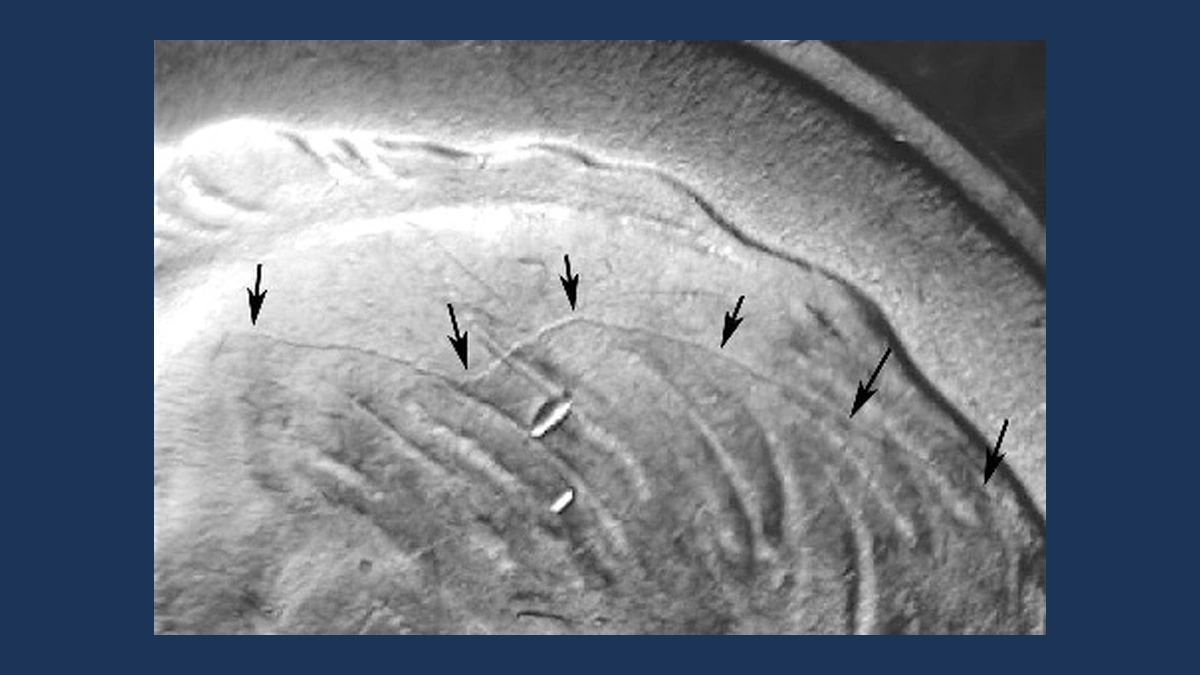
Follow the final S in STATES toward the flame. One 1948-S dime has a raised line running from the rim, through that letter, and down beside the flame’s right side.
The line came from a cracked die, the steel tool that stamps a coin. Silver pressed into the crack and formed a narrow ridge.
Wexler illustrates this path on a coin that also has a repunched mintmark. Other 1948-S coins may have different lines, so the route matters more than the mere presence of a crack.
Estimated Value
For worn through ordinary unworn coins with clear small cracks, estimate $15–$100. Similar minor cracks on nearby silver Roosevelt dates provide the comparison.
Much of that amount buys the dime itself. A faint line may add little, while a clear route through a letter is easier to display.
The range is an estimate, not a sale record for this particular crack. A coin carrying both a crack and a repunched mintmark should be priced once.
How to Identify
Place a lamp low beside the coin. Move it from left to right while watching the line through a 10× magnifier.
A raised ridge catches light differently from a scratch cut into the surface. Check the final S, then follow the same ridge toward the flame without jumping between unrelated marks.
A normal 1948 dime is 90% silver and originally weighs 2.50 grams. Use a scale and calipers to compare with its 17.9-mm diameter, then inspect the grooved edge for damage.
The coin itself should not split open along a die crack. A continuous raised line along the illustrated rim-to-flame route is the quickest useful match.
2. 1948 Roosevelt Dime Lamination (Estimated Up to $150)
A thin flap may lift from the face of a dime without taking the whole coin apart. This surface separation is called lamination.
A weak area within the original metal allows a layer to peel away. If it falls off, it can leave a rough opening with part of the design missing.
The 1948 year guide includes this type without placing it at one fixed spot. These dimes contain a silver-copper mixture throughout; they do not have the separate copper center found inside later clad dimes.
Estimated Value
A practical estimate is $15–$150 for small flakes through obvious separations on worn or modest unworn examples. This follows comparable minor flaws on silver Roosevelt dimes.
An attached flap can show the error clearly. A tiny rough spot may contribute little beyond the ordinary coin’s value.
The estimate covers the complete coin, including its condition. A deep scrape or corroded patch does not receive this premium merely because it resembles missing surface metal.
How to Identify
Do not lift the flap. Photograph it from the side so its attachment remains visible without touching the loose metal.
Under a 10× magnifier, look along the boundary for a thin layer separating within the coin. Scrape marks cutting across the opening suggest a different cause.
Weigh a loose coin on a scale and compare with the original 2.50 grams. Missing metal can reduce that reading, but wear can too.
Calipers can check the normal 17.9-mm diameter; inspect the edge grooves for filing as well. The clearest lamination clue is a thin layer still joined to the coin beside an opening in its own metal.
3. 1948 Roosevelt Dime Doubled Die Reverse (Estimated Up to $300)
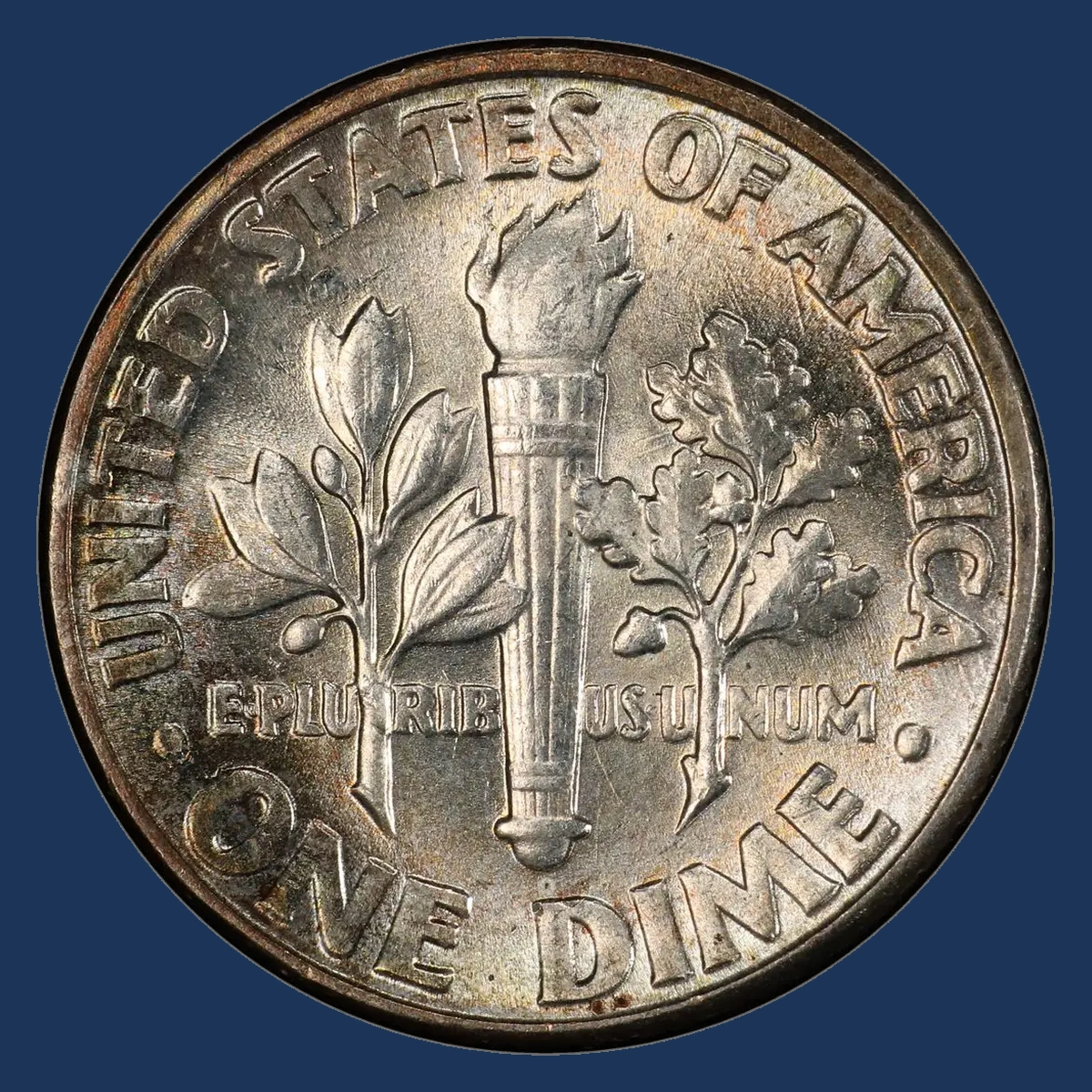
Extra raised strokes on the back can suggest a doubled die. The doubling begins in the stamping tool, so coins made from that tool can repeat the same shapes.
Reports for 1948 Philadelphia dimes point collectors toward UNITED STATES OF AMERICA and ONE DIME. They do not establish one exact letter pattern to apply to every example.
Keep the whole word in view. A thick letter, a reflection, or a flat shelf can look doubled without showing the repeated raised design needed to identify this variety.
Estimated Value
For a correctly identified minor reverse doubled die, estimate $25–$300 from circulated through attractive lower unworn grades. This is a comparison with similar silver Roosevelt varieties.
A 1947-S FS-801 graded ANACS MS65, an unworn grade, sold for $120 in May 2022. Its mint and exact doubling pattern are different.
The comparison helps set a modest range. It does not assign the 1947 catalog number or its sale price to a 1948 coin.
How to Identify
Find the date and check the back for a mintmark before enlarging the letters. The reports here concern Philadelphia coins, which normally lack a mint letter.
Examine the reverse words under a 10× magnifier with light coming from two directions. A reflection changes or disappears, while a real extra stroke remains part of the metal.
A normal silver dime weighs 2.50 grams and measures 17.9 mm, with a grooved edge. A scale and calipers can check those measurements without explaining the doubling by themselves.
Compare several nearby letters with a correctly identified 1948 example. Matching raised extra strokes in the same positions are more useful than one unusually thick letter.
4. 1948 Roosevelt Dime Cracked Planchet (Estimated Up to $350)
An actual opening in the coin is different from a raised line stamped onto it. A cracked planchet has a split in the metal blank used to make the dime.
Old specialist listings describe a 1948-S with a crack near seven o’clock. A separate 1948-D has an edge crack near three-thirty.
These are two examples, not two positions on one coin. A weak blank can open under striking pressure.
Bending a finished coin can also produce a split. The surrounding metal helps tell them apart.
Estimated Value
Estimate $50–$350 for genuine cracked blanks on collectible circulated through lower unworn silver Roosevelt dimes. The range reflects similar blank defects rather than a recorded sale of either listed 1948 example.
A visible opening and undamaged surrounding detail help explain the fault. A tiny split may attract less interest.
A coin broken by bending after minting does not qualify. The depth of a crack alone cannot justify the upper estimate without evidence that the fault began at the Mint.
How to Identify
Use the mint letter to choose the right comparison: S and D are left of the torch base. Include the entire coin when recording a crack’s clock position.
Examine the opening from both faces and the edge with a 10× magnifier. Look for bending, crushed detail, or fresh break surfaces that may point to later damage.
A scale can compare the coin with 2.50 grams, and calipers with its normal 17.9-mm width. A split can open without removing much metal, so weight alone will not settle the cause.
Leave the opening untouched. A split continuing through the coin’s own metal distinguishes this feature from a raised die-crack line.
5. 1948-S Roosevelt Dime Curved Clip (Estimated Up to $400)
A curved bite removes a large part of the edge on the documented 1948-S dime. Heritage describes a twenty-percent clip near one o’clock.
The missing metal was absent before the design was struck. The machine cutting blanks had overlapped a hole in the metal strip, producing an incomplete disc.
NGC graded the example MS63 Full Bands: unworn, with visible marks and separated horizontal bands on the torch. The bands describe quality; the missing segment is the error.
Both features can help describe the same coin accurately.
Estimated Value
A 1947-S ten-percent curved clip graded NGC MS66 sold for $104 in December 2024. That nearby-year sale offers a useful comparison, though its gap is smaller and its grade higher.
For genuine 1948 clips, estimate $50–$400 across worn and attractive unworn examples. A clear date, natural edges, and an obvious gap improve the display.
This is an estimated range. Doubling the missing percentage does not automatically double a coin’s price.
How to Identify
Study both ends of the gap, where the normal rim meets the missing segment. Use a 10× magnifier to look for natural changes in the struck rim rather than saw marks.
On the Heritage example, the gap is near one o’clock. Keep the S and date visible in the comparison photographs.
A clip should leave less than the original 2.50 grams of metal; a scale measures the loss. Use calipers across an intact span against the normal 17.9-mm diameter and inspect the surviving edge grooves.
Weakness opposite the gap can help, but need not be obvious. Start with the rim’s natural transitions into the curved opening.
6. 1948-S Roosevelt Dime Repunched Mintmark (Estimated Up to $500)
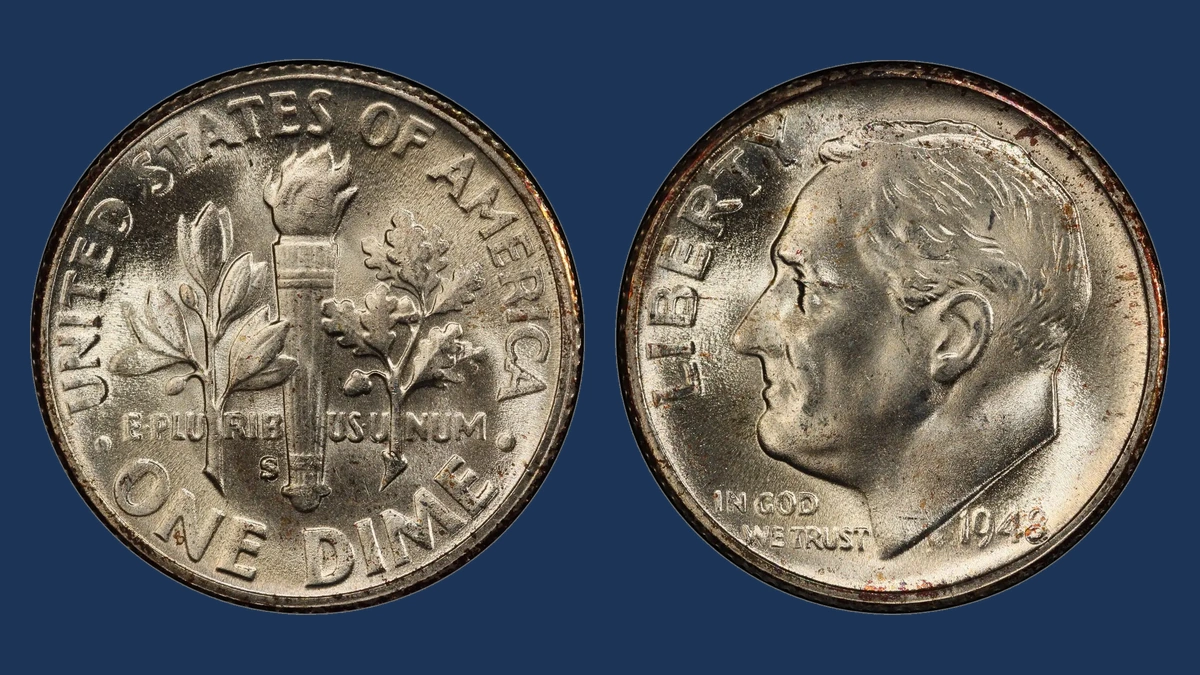
Look left of the torch base for the small S. On the FS-501 variety, parts of an earlier S sit below and to the right of the main letter.
Mint workers punched this letter into the die by hand. Slightly different placements left overlapping shapes that later appeared on the coins.
Collectors call this a repunched mintmark. FS-501 is its catalog label, useful for matching photographs rather than a separate kind of error.
Other repunched S patterns exist for 1948. They belong in this same category, but their extra curves need their own comparisons.
Estimated Value
PCGS records a $377 sale for an MS66 FS-501 on November 17, 2019. MS66 describes an unworn coin with very good preservation.
Estimate $25–$500 for correctly identified examples across worn and better unworn grades. The older sale supports the upper part of that range.
A worn extra stroke is less appealing than a clear second letter. Sharp torch bands and clean surfaces can also increase the whole coin’s price.
How to Identify
Locate the S on the back, left of the torch’s base. Photograph it with enough surrounding space to keep the letter’s orientation clear.
For FS-501, a 10× magnifier should help reveal the earlier curves below and to the right. A lump or a flat shelf does not automatically form part of another S.
The dime’s normal weight is 2.50 grams and its diameter 17.9 mm. Use a scale and calipers where accessible, then check the grooved edge for signs of alteration.
A normal weight does not authenticate an added mintmark. Matching the second S curves to the catalog photograph is the most direct check of this repunching pattern.
7. 1948 Roosevelt Dime Broadstrike (Estimated Up to $500)
A broadstrike spreads beyond the dime’s usual size while keeping the design complete. The collar, a ring around the blank during striking, failed to contain the expanding metal.
That ring normally limits the diameter and forms the edge grooves. Without proper support, the struck coin can grow wider and develop an uneven border.
A 1948 Philadelphia example appears in a Greysheet auction archive as ANACS AU58, meaning very light wear. The listing does not establish one expansion direction for every broadstrike of this year.
Estimated Value
For a genuine 1948 broadstrike, estimate $75–$500 from worn coins through attractive unworn examples. The width and visibility of the expansion affect its appeal.
A 1946 NGC MS66 Full Torch broadstrike sold for $258.50 in October 2012. That older result concerns a different year and a well-preserved coin with sharp torch detail.
It provides context, not a fixed price for the lightly worn 1948 example. Flattening a normal dime after minting does not create this value.
How to Identify
Follow the outside letters around both faces before measuring. They should remain complete even if the border is much wider on one side.
Use calipers in several directions and compare with a normal 17.9-mm dime. A scale should give a reading near the original 2.50 grams, allowing for circulation wear.
With a 10× magnifier, inspect the expanded rim and edge. The normal grooves may be absent or incomplete, but later pressure can also flatten an edge.
Look for crushed letters or a damaged portrait that might explain the wider shape. A complete struck design inside an expanded original border is the main broadstrike clue.
8. 1948 Roosevelt Dime Rim Cud (Estimated Up to $600)
A smooth raised patch joined to the rim can be a cud. It forms after a piece breaks from the edge of the die.
Silver fills that missing part of the stamping tool. The next coin receives a raised patch instead of the design that the broken piece once carried.
The 1948 year list includes this error without naming a fixed rim position. A tiny lump between letters is different from a rim-connected cud, and a blow against the finished coin can also push metal into a misleading mound.
Estimated Value
Small genuine rim breaks have an estimated whole-coin range of $50–$200. A larger clear cud on an attractive silver Roosevelt dime can fit an estimated $200–$600 range.
These are comparisons with similar rim breaks, not claimed 1948 auction results. The patch’s size and effect on the design matter.
More raised metal does not guarantee more value. A damaged edge or added solder can imitate a cud without earning any mint-error premium.
How to Identify
Keep the nearest rim in the photograph. The connection between the raised patch and the border is part of the identification, not an optional detail.
Under a 10× magnifier, check whether the normal design disappears into the patch. Added material may sit over letters that remain intact beneath it.
Examine the opposite face for weak detail, then inspect the grooved edge for a dent or crushed metal. Either can help explain a mound made after minting.
A scale and calipers can check the usual 2.50 grams and 17.9-mm diameter. The useful first sign is an original raised patch replacing the design all the way to the rim.
9. 1948 Roosevelt Dime Elliptical Planchet (Estimated Up to $650)
This dime’s outline is oval rather than round. It was struck on an elliptical planchet, an incomplete metal blank whose shape already differed before the design was added.
A GreatCollections example weighs 1.9 grams and received an NGC MS62 grade. That describes an unworn coin with noticeable marks.
Some outer design cannot fit on the smaller piece of metal. The overall shape separates it from a small curved clip, while its weight helps distinguish it from a normal dime squeezed into an oval later.
Estimated Value
Estimate $150–$650 for genuine elliptical silver Roosevelt dimes with clear dates and collectible surfaces. This range allows for stronger shape changes and differences in condition.
The listed 1948 coin weighs 1.9 grams, well below the usual 2.50 grams. Its public listing shows a $200 opening bid, which is not a completed sale price.
Nearby-year clipped-dime sales provide a broad comparison. The unusual full outline can attract interest beyond a small ordinary clip, but it does not set a fixed premium.
How to Identify
Measure the long and short axes with calipers. Record both figures instead of averaging them into a supposedly normal 17.9-mm diameter.
Weigh a loose coin on a scale and compare with the listed 1.9 grams and normal 2.50 grams. Keep a sealed example in its holder and use the recorded measurement.
Examine both faces and the edge with a 10× magnifier. Later squeezing can stretch or crush a finished design, while filing may remove completed edge grooves.
The date must remain readable to assign this year. An underweight oval blank with naturally struck boundaries, rather than a distorted completed design, is the key combination to check.
10. 1948 Roosevelt Dime Off-Center Strike (Estimated Up to $750)
An empty crescent can sit beside Roosevelt’s partly missing portrait. The metal blank was out of position between the dies, so some of the design missed it.
The unused crescent is still metal. That distinguishes an off-center strike from a clip, where part of the metal itself is absent.
The 1948 year guide includes off-center strikes without fixing one mint, direction, or percentage. Look at both faces of each coin.
If only one design is shifted, one stamping tool may have moved sideways. That can explain an uneven border.
Estimated Value
An estimated $75–$750 covers genuine examples with readable dates, from modest circulated offsets to bold, attractive strikes. A larger blank crescent can help display the error.
A 1964 silver dime graded ANACS MS65 and struck sixty percent off center sold for $134 in December 2025. It is a different-year comparison, not a 1948 sale.
That result also shows why percentage alone is a poor price guide. Condition, shape, and the amount of readable design all matter.
How to Identify
Photograph both faces with the complete outline visible. Find the 1948 date before trying to judge how far the design moved.
Use a 10× magnifier along the boundary between the design and the blank crescent. Scraping away finished detail leaves different surface marks from metal that never received a design.
A scale can compare the weight with the normal 2.50 grams. Record the outline with calipers against a normal 17.9-mm dime, then inspect the edge grooves for cutting or grinding.
Do not assign Philadelphia merely because a shifted design lost its mintmark. Matching incomplete designs beside untouched metal on both faces provide the quickest off-center check.
Conclusion
A second S is only one reason to examine a 1948 dime closely. Its outline, edge, and surface can reveal very different problems, with estimated values here ranging from $15–$750.
Begin with a full view of both sides, then choose the check that fits the feature. A raised line needs angled light, missing metal needs an edge inspection, and an oval coin needs measurements.