1950 Dime Error List with Pictures

An upside-down S can hide beneath an upright S on a 1950 dime. An exceptionally well-preserved example sold for $646.25 at Heritage in June 2016.
The 1950 dime errors below also include a thin metal disc weighing only 1.74 grams and a design that spread beyond its normal outline. Estimated values across the eight groups run from $15–$800.
Begin with the feature you can see, then follow its simple checks. A wider coin and a lighter coin can tell very different stories.
1. 1950-D Roosevelt Dime Die Crack (Estimated Up to $100)
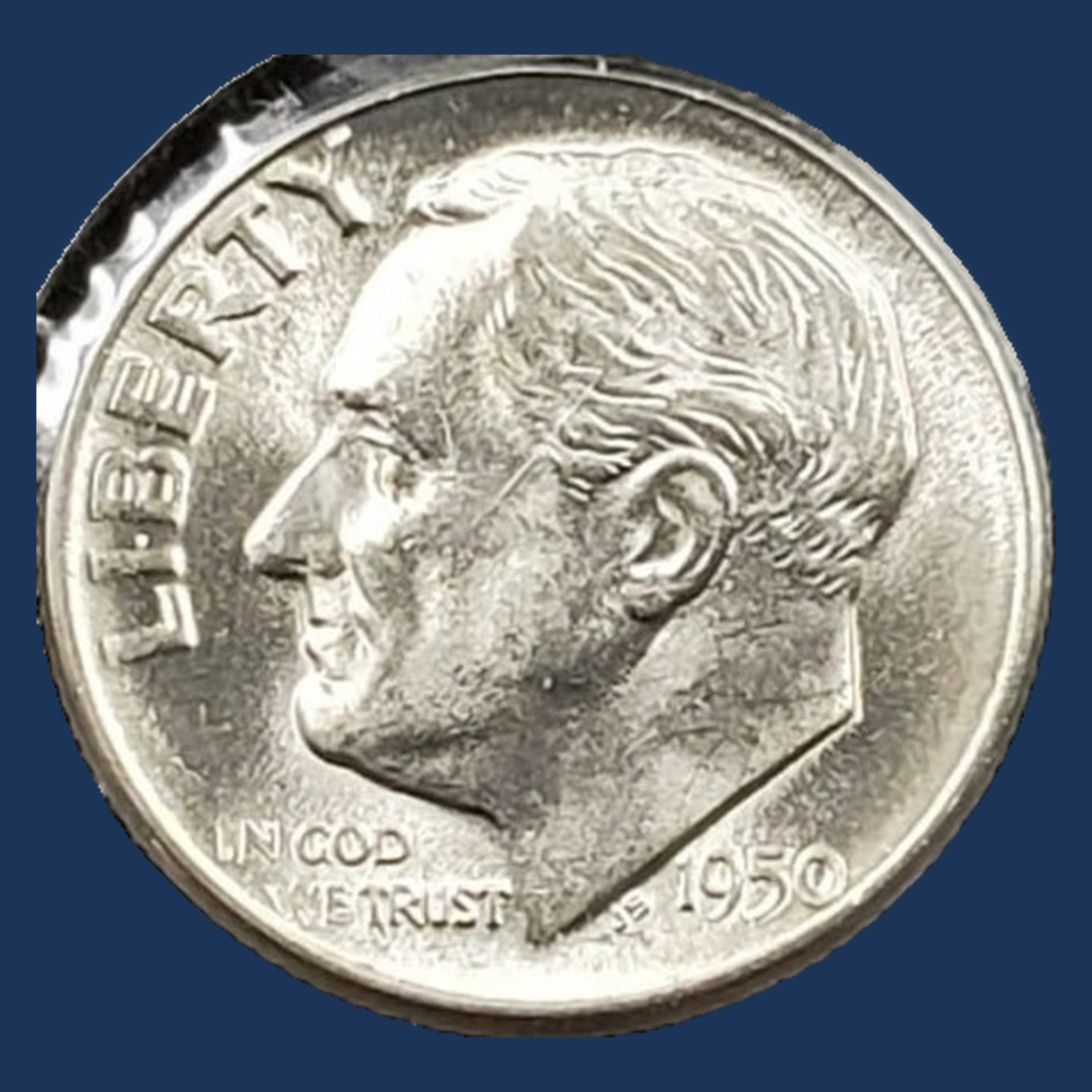
A line in Roosevelt’s hair may rise above the surrounding surface instead of cutting into it. That raised ridge can come from a cracked die, the steel tool that stamps the design.
Silver fills the narrow crack during striking. Later coins can repeat the same line as the tool continues to wear.
Reports for 1950-D mention the hair and, separately, a crack near one o’clock. Those descriptions do not establish one shared path, so compare the whole route on your coin rather than joining unrelated marks.
Estimated Value
Ordinary small cracks have an estimated whole-coin value of $15–$100, from circulated through modest unworn examples. Similar cracks on nearby silver Roosevelt dates provide the comparison.
A faint line may add little to the value of the dime. A clear ridge crossing recognizable detail is easier for a collector to appreciate.
This estimate assumes an original mint-made line. Deep scratches or a bent, split coin need a different explanation and should not receive the same premium.
How to Identify
Check the height before following the line. A 10× magnifier and a lamp placed low beside the coin help separate a ridge from a groove.
Trace the suspect mark through the hair, or around the one-o’clock area if that matches your example. Keep the surrounding design visible in photographs.
The normal 90%-silver dime weighs 2.50 grams and measures 17.9 mm. Use a scale and calipers to record those figures, then inspect the edge grooves for impact damage.
A raised crack mark should not open through the coin itself. The direct check is a continuous ridge standing above the surface, rather than a cut running below it.
2. 1950 Roosevelt Dime Struck Through on Reverse (Estimated Up to $300)
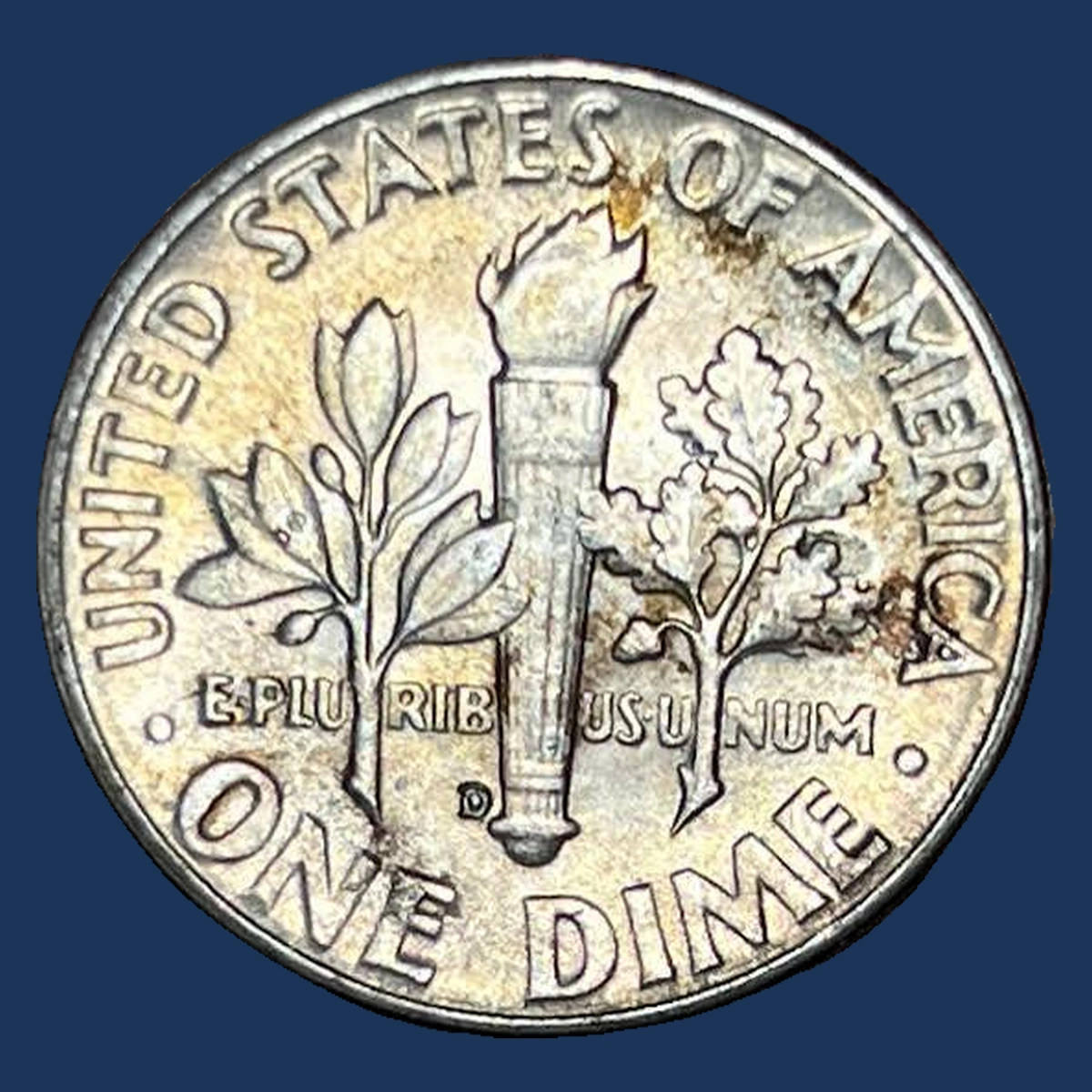
A depression or missing patch of detail on the back can record something caught in the press. Material between the die and the blank stops part of the design from reaching the metal.
Harbor Coin listed a Philadelphia example as struck through on the reverse, meaning the torch side. PCGS graded it MS64, an unworn coin with visible marks.
The brief listing does not name the trapped material or place it at one exact spot. A dent made later can look similar, but it damages an already completed design.
Estimated Value
For a small, clear strike-through on a silver Roosevelt dime, estimate $25–$100. A larger impression with attractive surrounding detail can fit an estimated $100–$300 range.
The listed MS64 coin has no completed sale price used here. These figures compare similar silver-dime errors rather than quote that dealer’s transaction.
A distinctive impression is easier to display than general weakness. Wear across the whole torch or damage from a later blow does not deserve the same allowance.
How to Identify
Use a normal dime as a map of the torch side. Find exactly which letters or details are interrupted, and photograph them with their sharp neighbors.
Examine the boundary through a 10× magnifier. Metal pushed into a lip beside a dent can suggest damage after striking.
A loose example can be weighed against the usual 2.50 grams and measured with calipers against 17.9 mm. Check the grooved edge and the opposite face for related impact marks.
Do not assume that every smooth hollow held grease or a wire. Begin with an original-looking interruption in the design whose surrounding surface shows no blow or scraping that explains it.
3. 1950-D Roosevelt Dime Broadstrike (Estimated Up to $500)
The Denver broadstrike looks wider than an ordinary dime. Its metal spread outward because the collar, the ring that normally holds the blank’s edge, did not contain it properly.
The whole design can remain on the coin despite the larger outline. This is different from an off-center strike that loses part of the picture beyond the metal.
Heritage lists a 1950-D graded NGC MS63 Full Bands. MS63 means unworn with noticeable marks; Full Bands means the horizontal bands across the torch remain clearly separated from one another.
Estimated Value
An estimated $75–$500 covers genuine 1950 broadstrikes across worn and attractive unworn condition. A clearly enlarged outline and undamaged design make the error easier to recognize.
An older comparison is a 1946 NGC MS66 Full Torch broadstrike that brought $258.50 in October 2012. Its better condition and different date must be considered.
That amount is not the recorded price of the 1950-D. A normal dime hammered wider after minting does not gain this error value.
How to Identify
Read the outside lettering all the way around both faces. A complete picture within a wider outline supports a broadstrike, even when one border is wider than the other.
Measure the coin in several directions with calipers. Compare the readings with the usual 17.9 mm rather than relying on a photograph’s apparent size.
The normal silver blank weighs 2.50 grams; a scale checks whether substantial metal is missing. Inspect the edge under a 10× magnifier for missing grooves and signs of later flattening.
Crushed letters can reveal pressure applied after minting. The clearest broadstrike combination is an expanded original border surrounding complete, naturally struck designs.
4. 1950-S Roosevelt Dime Thin Planchet (Estimated Up to $500)
At 1.74 grams, the recorded 1950-S dime is much lighter than normal. Heritage describes it as struck on a thin planchet, meaning a metal blank that was too thin.
NGC graded the example MS65, a well-preserved coin without circulation wear. The low weight belongs to that specific specimen.
Less metal between the dies can affect how fully the design forms. It does not prove that a foreign coin blank was used.
A dime made thinner by filing or chemicals may also weigh less, so weight and surface condition need to agree.
Estimated Value
A genuine thin-blank example has an estimated range of $100–$500. The weight difference, visible effect on the design, and preservation all influence the price.
A 1955-S silver dime struck on a thin blank weighing 2.1 grams sold for $107 in October 2021. NGC graded that different-year coin MS64, an unworn grade with some marks.
It provides a comparison for the type. The 1950-S weighs less, but that alone does not establish a fixed increase over the other sale.
How to Identify
Use a scale to check a loose coin, or read the recorded 1.74-gram weight if the example remains sealed in its holder. Do not open a graded holder for measurements.
For a loose dime, compare thickness at several points with calipers. Its normal diameter is 17.9 mm, while the usual weight is 2.50 grams.
Study the portrait, lettering, and edge grooves with a 10× magnifier. Filing can leave parallel cuts, and chemicals can leave rough or pitted surfaces.
A normal-looking diameter does not rule out a thin blank. Weigh the coin, compare its thickness with a normal dime, and check that filing or chemicals did not remove the metal.
5. 1950-D Roosevelt Dime Rim Cud (Estimated Up to $600)
A raised patch beneath the torch handle can cover detail next to the rim. The reported 1950-D example places this feature near six o’clock on the back.
Collectors call this a cud. A piece breaks from the edge of the die, leaving a space that fills with silver during the next strike.
The coin receives raised metal where normal design should appear. A small bump trapped between letters is a different kind of break.
The important boundary is its connection to the rim, not an arbitrary percentage of the coin’s surface.
Estimated Value
Small genuine rim cuds on circulated coins fit an estimated $50–$200 range. Clearer, larger examples with good surfaces can reach an estimated $200–$600.
These figures compare similar silver Roosevelt rim breaks. They are not a claimed sale result for the reported six-o’clock coin.
The entire dime is being valued, including its condition. A bent rim, solder, or material stuck to the back may look impressive without adding any mint-error value at all.
How to Identify
Turn the torch upright and examine the bottom rim around six o’clock. Use a 10× magnifier to follow the raised patch from the border toward the torch handle.
Check whether it replaces normal design instead of simply covering finished letters. Solder and dirt may leave a separate boundary around material added later.
View the opposite face and the edge grooves for crushing or a corresponding weak area. A rim hit can push metal upward, so the edge deserves the same attention as the patch.
A scale and calipers can check 2.50 grams and 17.9 mm. The main clue is original raised metal joined continuously to the bottom rim.
6. 1950 Roosevelt Dime Off-Center Strike (Estimated Up to $750)
A dime with a plain crescent and a partly missing design may have entered the press out of position. The dies struck only the part of the blank caught between them.
An off-center strike affects both faces. A shifted design on just one face can instead come from the position of one die.
Year guides include this error for 1950 without documenting one fixed percentage or direction. The date must remain visible to identify the year, and missing design near the mintmark can also hide where the coin was made.
Estimated Value
For readable-date silver examples, estimate $75–$300 for modest shifts and $300–$750 for bold errors on attractive coins. This is an estimated range, not a price per percentage of offset.
A 1964 ANACS MS65 dime struck sixty percent off center brought $134 in December 2025. It offers a recent different-year comparison.
That sale illustrates how widely results can vary. More missing design does not automatically mean a higher price if the date or overall appearance suffers.
How to Identify
First find the date, then keep the entire outline in photographs of both faces. Cropping tightly around the plain crescent can hide the missing part of the design.
Inspect the transition from blank metal to the picture with a 10× magnifier. Scraping finished detail away can leave lines across the supposed blank area.
Record weight with a scale and shape with calipers against the normal 2.50 grams and 17.9 mm. Inspect surviving edge grooves for cutting as well.
A clip removes metal, while an off-center strike leaves metal unstamped. The easiest distinction is an intact plain crescent beside incomplete designs on both sides.
7. 1950 Roosevelt Dime Repunched and Overpunched Mintmarks (Estimated Up to $800)
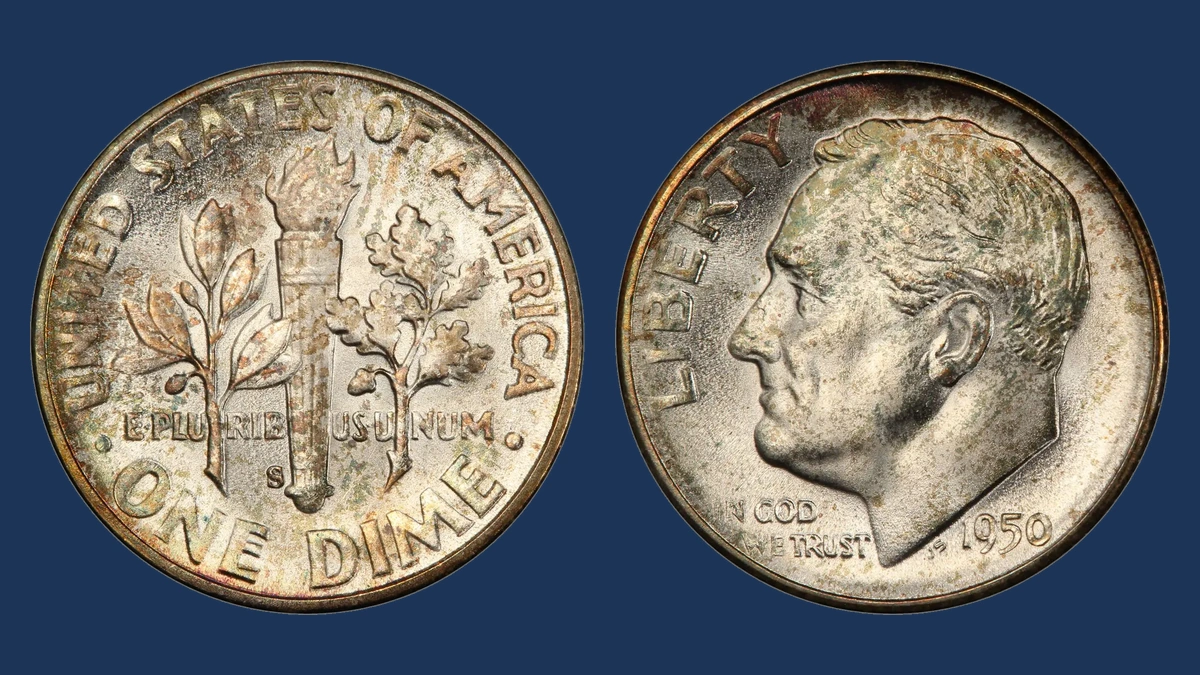
An upright S can partly cover an earlier upside-down S on a 1950-S dime. The worker corrected the letter’s position while preparing the die, leaving traces of both punches.
This variety is called S over inverted S, or FS-501. Older descriptions sometimes called it S over D, but that is not the accepted explanation for this particular S-mint pattern.
Denver reports include D/D repunching and a separate proposed D over S. These labels describe different letter combinations, so an extra bump must be traced into an actual earlier letter.
Estimated Value
An exceptional PCGS MS67+ S-over-inverted-S sold for $646.25 in June 2016. MS67+ describes unusually fine preservation without circulation wear.
Estimate $25–$250 for ordinary clear repunching and $400–$800 for comparable high-grade S examples. A separately verified Denver overmintmark has a conditional estimate of $50–$500.
The Denver range does not certify a claimed D/S. Its price requires the earlier different letter to be established, rather than assumed from the familiar S-mint variety.
How to Identify
The mintmark sits on the back, left of the torch base. Locate that letter before comparing any enlarged image.
On the S variety, use a 10× magnifier to compare the earlier inverted curves with an identified FS-501. On Denver coins, decide whether the extra shape follows another D or a different letter.
Keep random bumps and scratches separate from those recognizable curves. A famous overmintmark on a 1950 quarter cannot identify a dime.
Normal specifications are 2.50 grams, 17.9 mm, and a grooved edge; a scale and calipers check the coin itself. The decisive first match is the earlier letter’s shape beneath the correct visible mintmark.
8. 1950 Roosevelt Dime Doubled Die (Estimated Up to $800)
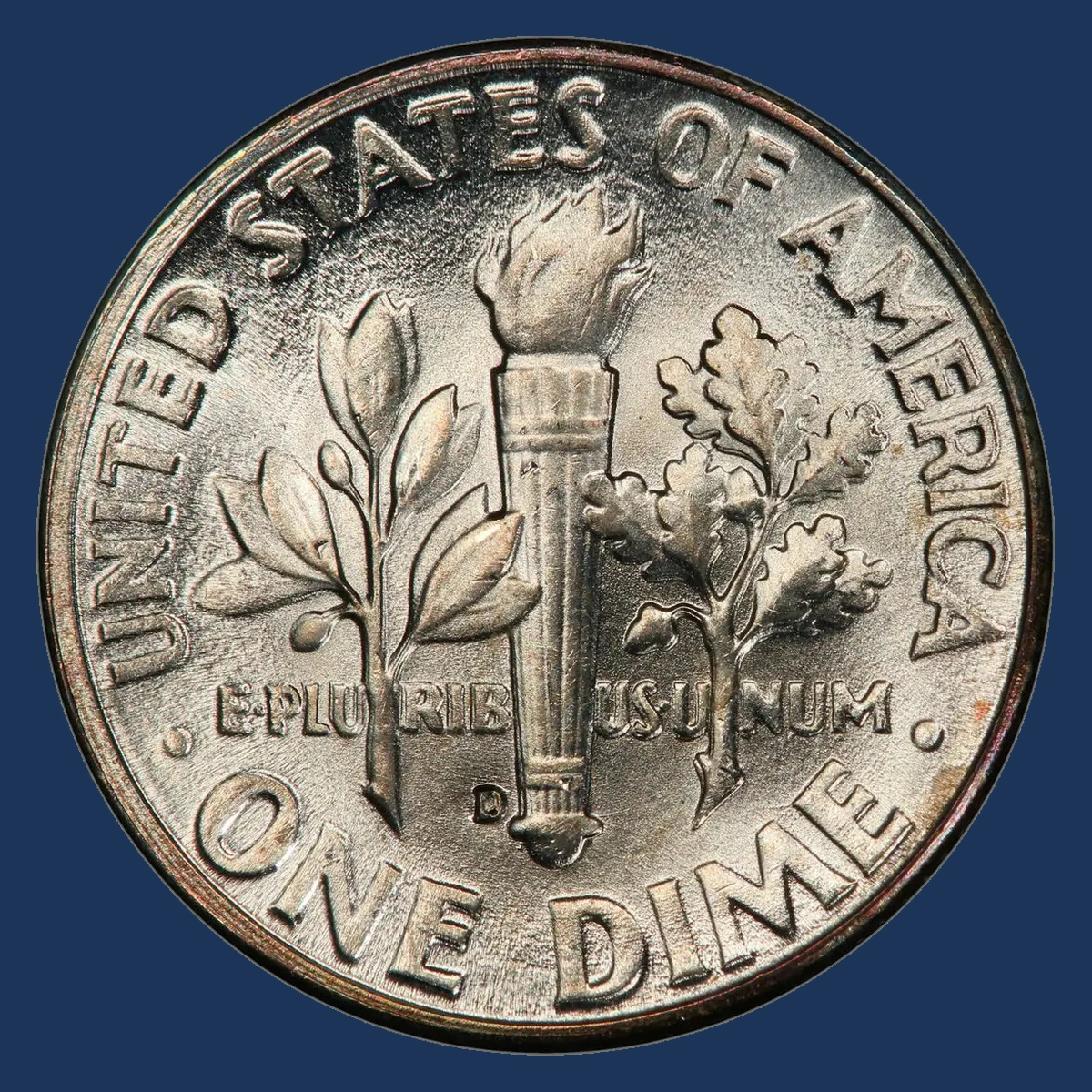
Extra outlines can appear around the back’s lettering, torch, and leaves on the Denver doubled-die variety. The die already carried this doubled pattern before it struck a coin.
The recognized Denver reverse variety is FS-801. Reverse means the back, where the torch appears.
A Philadelphia collector also reports doubling on the front of a 1950 dime. That report concerns a different tool and does not borrow the Denver coin’s catalog label or exact marks.
These are ordinary circulation issues. A specially made collector Proof has a different finish and needs its own comparison.
Estimated Value
A Denver FS-801 graded CACG MS64 brought $100.12 in February 2026. MS64 means unworn with visible marks.
Estimate $30–$300 for ordinary clear doubled dies. An NGC MS65 Denver example has a separate $712.49 eBay Best Offer record from November 2022.
That exceptional result supports an upper comparison of $600–$800, not a routine price. The owner-reported Philadelphia front doubling needs its own identification before using any variety premium.
How to Identify
For a Denver coin, study the back with a 10× magnifier. Compare the letters, torch, and leaf outlines with a properly identified FS-801, keeping several features in view.
A thin, flat ledge can come from movement during striking. It differs from extra raised detail already built into the die.
The Philadelphia report concerns the front and needs a separate matching photograph. Do not assume that both sides of one coin have doubling.
Check a loose silver dime with a scale and calipers against 2.50 grams and 17.9 mm, then inspect the edge grooves. Matching repeated outlines on several documented features is stronger evidence than a single thick letter.
Conclusion
These 1950 dimes offer several starting clues: a hairline ridge, a second mint letter, missing design, or unusually low weight. Each needs a different explanation.
Estimated ranges run from $15–$800. Compare the whole coin’s condition as well as its error, and keep ordinary grades separate from exceptional auction examples. Clear photographs of both faces and the edge will help you choose the right comparison.