1951 Dime Error List with Pictures

On one 1951 dime, the design landed 65% off center. That NGC MS63 example sold for $372 in June 2023, showing how displaced metal and readable detail can turn a familiar silver coin into a collectible error.
The 1951 dime errors below also include overlapping mint marks, raised breaks, and a back design turned at an unusual angle. Estimated values span $10–$1,000.
Use the following comparisons to check each feature without confusing a normal finish, later damage, or a faint doubled-looking outline with a stronger error.
1. 1951 Roosevelt Dime Raised Cracks and Rim Breaks
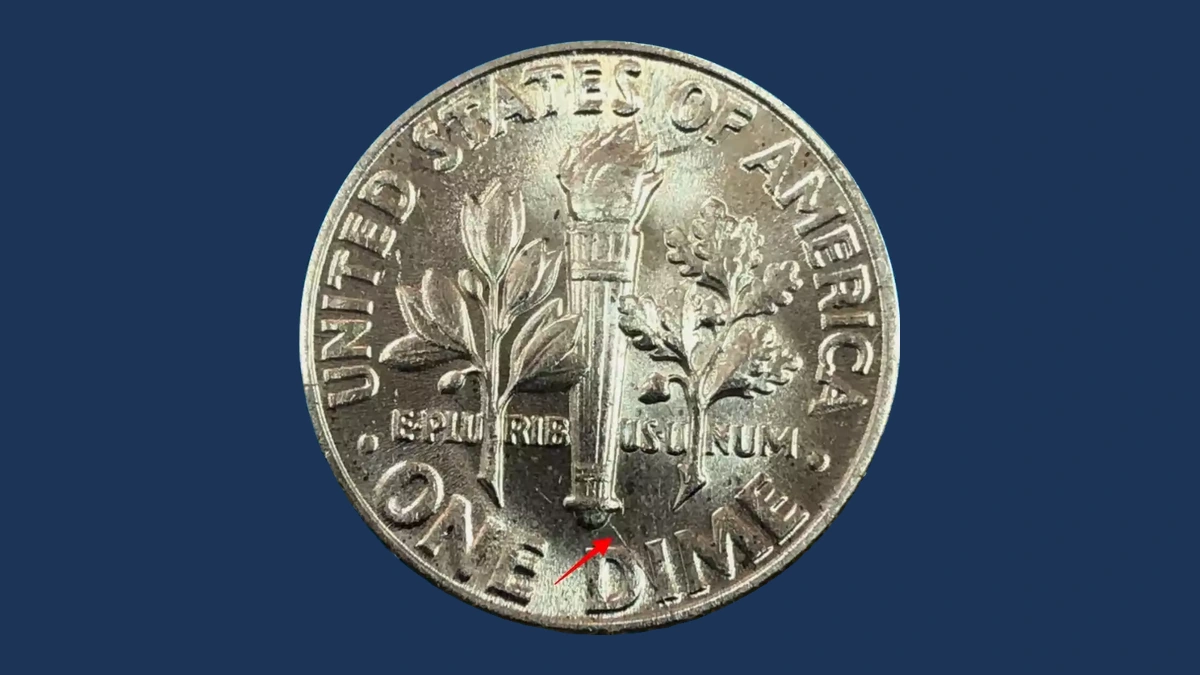
A fine raised line can show where a steel stamping tool cracked. During striking, coin metal enters the gap and copies it as a ridge.
The stamping tool is called a die. If a larger piece breaks away, the coin can instead show a raised lump where design detail should be.
A break joined to the rim is called a cud. Reports for 1951 include cracks, small broken areas, and cuds, without one exact location covering all examples.
A thin line that reaches the edge does not automatically mean a large tool fragment fell out.
Estimated Value
Small cracks and chips are estimated at $10–$50, while stronger rim-connected breaks can bring $40–$250. The estimate assumes the raised feature formed during striking.
A different-year comparison is a 1970-D nickel with two cuds that sold for $63 in October 2022. Its larger size and different design limit its use for a 1951 dime.
The coin’s normal silver value and condition also matter. Several raised marks on one piece still receive one whole-coin price.
How to Identify
Hold the coin so that light crosses the raised feature from the side. With a 10× magnifier, distinguish a ridge above the surface from a scratch cut into it.
For a claimed cud, follow the raised lump to the rim and inspect the adjoining edge grooves. A dent can push metal onto the face, but usually leaves an impact that explains the displaced metal.
A loose coin should normally remain near 2.5 grams and 17.91 millimeters on a scale and calipers. A naturally struck ridge identifies a crack, while a broad rim-connected lump with missing design supports the larger break.
2. 1951 Roosevelt Dime Clipped Metal Disk
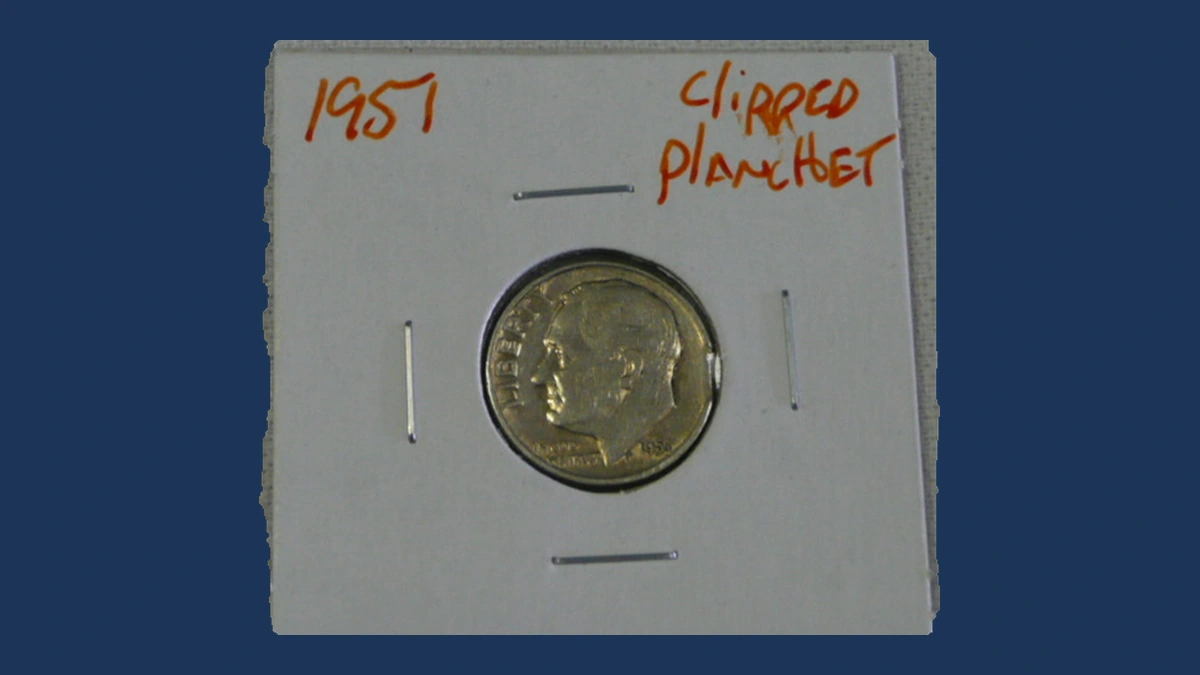
A missing part of the outline can begin before the coin receives any design. The metal disk used to make the coin is called a blank.
A curved clip may form when the cutting punch overlaps an earlier hole in the metal sheet. A straight clip can come from the sheet’s edge.
Both differ from cutting a finished coin afterward. The rim forms around an existing shortage on a genuine clipped blank.
1951 clip reports do not establish a single mint, percentage, or gap position. Those details belong to the actual coin being examined.
Estimated Value
Genuine clipped 1951 dimes are estimated at $25–$300. Larger natural shortages and clear dates can attract more than small clips on worn pieces.
For a recent comparison, a 1997-P nickel with a 20% clip sold for $124 in March 2025. It is another denomination and year, so the result does not set a specific 1951 dime price.
Sharp fresh cuts, filing, and deliberate removal of metal are later damage. Their missing shape does not earn the same mint-error premium.
How to Identify
Check weight with a scale before judging a loose coin only by its outline. A missing section should generally reduce weight below the normal 2.5 grams.
Use calipers across intact spans against 17.91 millimeters. Do not assign a percentage from a photograph taken at an angle.
Through a 10× magnifier, inspect both ends of the gap for a softly fading rim. Fresh cuts through completed letters, burrs, or file marks suggest later damage.
The remaining edge should show natural grooves, and the opposite rim may be weak.
Original rim formation beside the shortage is the direct evidence that the missing metal preceded the strike.
3. 1951 Roosevelt Dime Repunched D and S Mint Marks
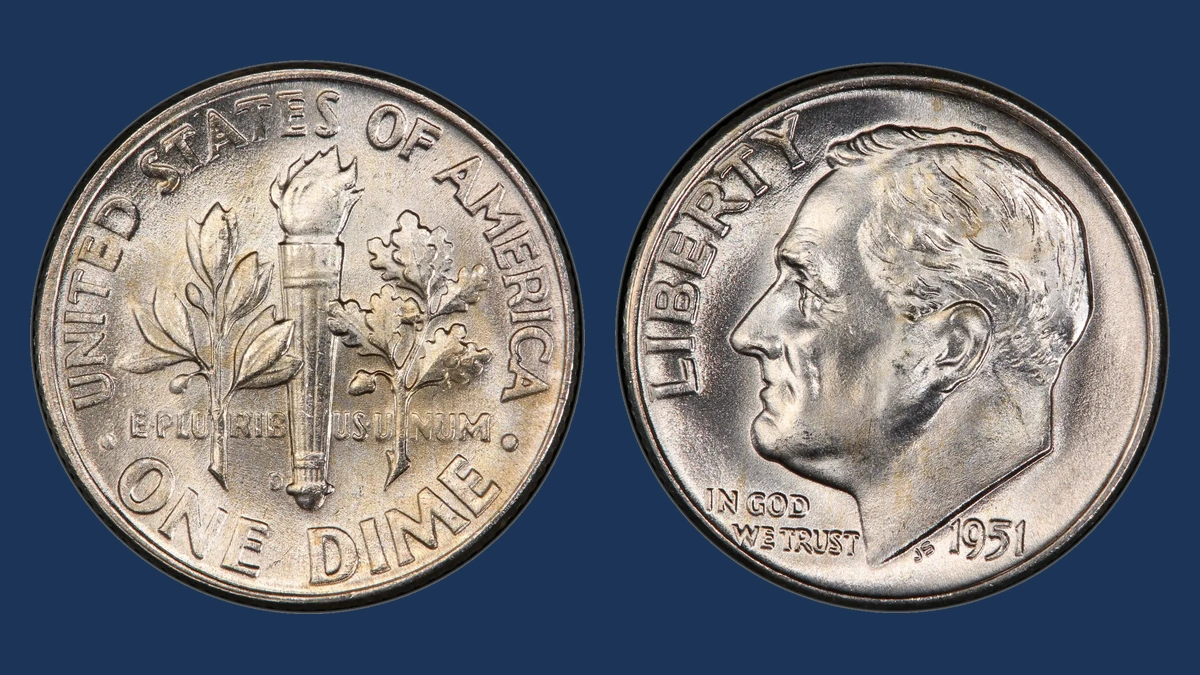
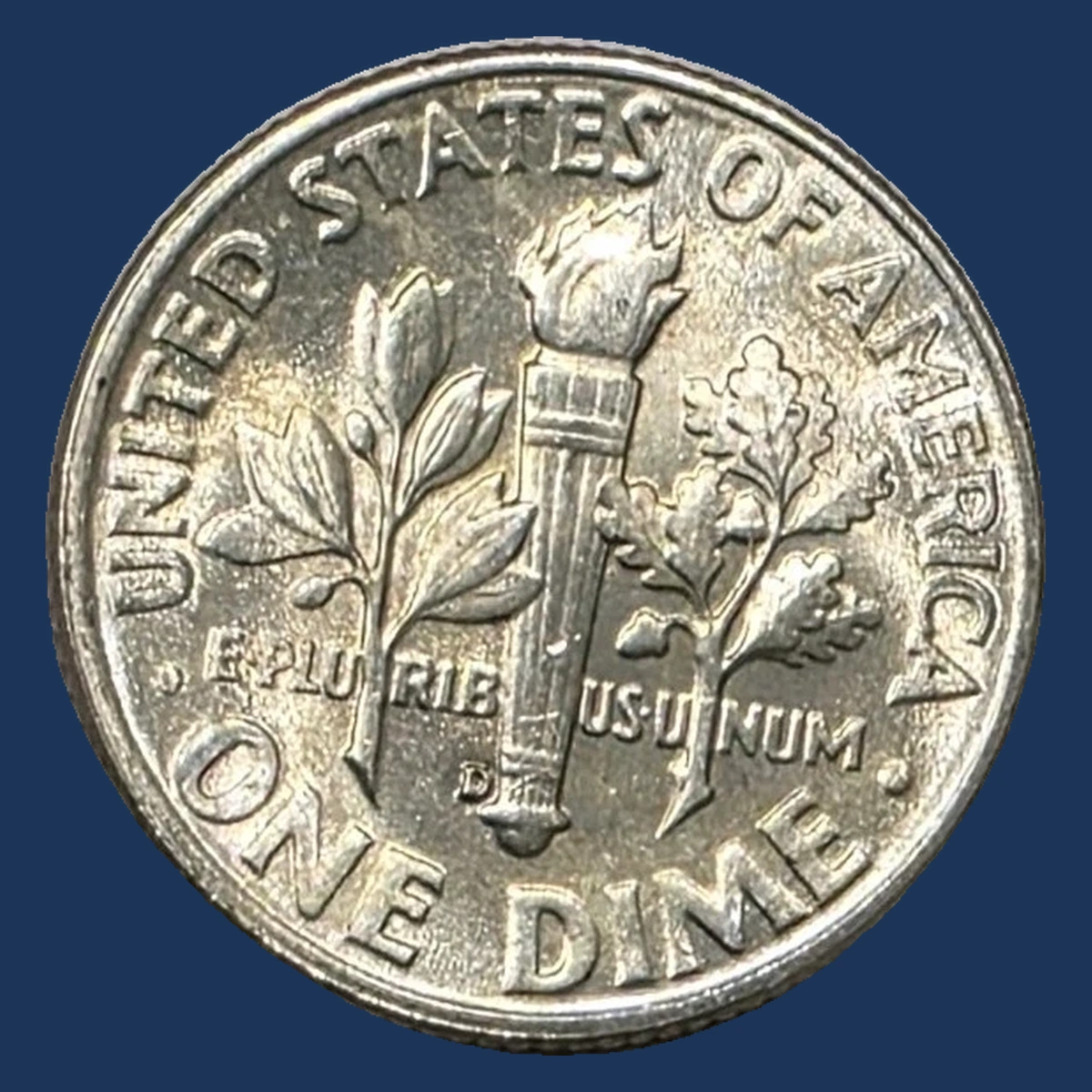
An extra piece of D or S beside the main letter can preserve an earlier hand-punched mint mark. A second punch placed in a different position left overlapping letter outlines in the stamping tool.
Denver FS-501 has an earlier D remnant at the lower left. A different Denver variety, VP-001, has earlier detail above the final D.
San Francisco also has separate VP-001 and VP-002 patterns. Their S shapes need their own comparisons rather than the Denver directions.
Full Bands on a holder describes clear torch bands. It is not another mint-mark error.
Estimated Value
Identifiable repunched marks are estimated at $15–$350, with strong patterns and attractive condition helping the price. Worn minor examples usually fall toward the lower part.
GreatCollections’ FS-501 Full Bands archive records examples in grades 63–66 at roughly $35–$115. That history applies to the named Denver pattern, not automatically to every S/S.
The estimate covers the whole coin. Separate remnants of the same earlier letter do not create several full premiums.
How to Identify
Locate the D or S on the back to the left of the torch’s base. Select the same mint and catalog pattern before examining its curves through a 10× magnifier.
For Denver FS-501, check below and left of the main D. For Denver VP-001, inspect above the final letter, where a flat extra shelf should not be counted as another punched D.
On a loose normal dime, compare scale and caliper readings with 2.5 grams and 17.91 millimeters, with grooves around the edge.
San Francisco patterns require their own enlarged images. Match recognizable earlier letter strokes, keeping flat striking movement separate from the rounded punch remnants.
4. 1951 Roosevelt Dime Repeated Design Outlines
A tiny second outline can appear beside Roosevelt’s lips or nose. Two Philadelphia listings describe rightward lip details, but their cause needs to be distinguished from changes made by polishing the stamping tool.
True doubled dies are tools carrying repeated design detail before coins are struck. Polishing can instead alter a small outline without creating a genuinely doubled design.
A separate Denver report concerns back doubling, without a fixed catalog number. It needs rounded repeated contours and split details rather than a flat shelf.
These different appearances should not be assigned the same explanation merely because all look doubled.
Estimated Value
For a confirmed doubled design, estimated values are $20–$400, depending on strength and preservation. Philadelphia lip examples explained by tool polishing instead have a modest estimated range of $10–$50.
The distinction prevents a faint altered mouth shape from receiving the price of a true doubled die. The two lip listings retain their own identifying marks.
These are conditional whole-coin estimates, not auction records for the reported patterns. Confirming the actual cause is necessary before choosing between the ranges.
How to Identify
First separate the Philadelphia mouth feature from the Denver back report. Under a 10× magnifier, trace whether the extra outline repeats a design shape or merely thickens its edge.
The first Philadelphia listing has matching diagonal lines near back lettering. The second has small tool marks and circular polishing lines on the back’s left half.
Those marks help match a tool but do not settle whether its lip outline came from true doubling.
A loose coin normally measures about 2.5 grams and 17.91 millimeters on a scale and calipers, with a grooved edge. Compare an earlier, less-polished example of the same tool to determine whether repeated detail existed before polishing changed the outline.
5. 1951 Roosevelt Dime Back Design Turned Out of Alignment
The torch can point at an unexpected angle when you turn a dime over. The two stamping tools were rotated relative to their normal positions.
On a normal American coin, the back appears upright after a top-to-bottom flip with the front held upright. A rotated tool changes that relationship.
This differs from a sideways shift of the design toward the rim. The coin may remain round and centered while its back points elsewhere.
The 1951 report gives no fixed mint or measured angle. The angle must be checked on the actual coin, without twisting it during the flip.
Estimated Value
A genuine noticeable rotation is estimated at $25–$400, with a large clear deviation generally more appealing than a slight one. Surface condition and readable identity also affect the whole-coin price.
A 2015-D nickel with a 90-degree counterclockwise rotation sold for $79 in October 2021. That is a different-year and different-denomination comparison, not a measured angle for the 1951 dime.
The estimate assumes the rotation survives a controlled flip. Turning the coin sideways by hand can create a false impression.
How to Identify
Hold Roosevelt upright and mark the coin’s top position in a photograph. Flip it top to bottom around a fixed horizontal axis, without adding a sideways turn.
Record where the torch points, then repeat the test to check that the same angle returns. A freely spinning coin in a holder can make the result misleading.
A 10× magnifier helps verify the date and mint on the same piece. Use a scale and calipers on a loose coin against 2.5 grams and 17.91 millimeters, then inspect the grooved edge for a joined seam.
The same back-angle error after repeated controlled flips is the feature that establishes rotation.
6. 1951 Roosevelt Dime Expanded Strike Outside the Ring
The coin can spread wider than intended if the restraining ring fails to hold the metal during striking. Collectors call the expanded result a broadstrike.
A 1951-D report includes this type, describing an MS62 example. The grade report does not provide a measured width or a complete edge view by itself.
A broadstrike can retain the complete design despite the larger outline. By contrast, an off-center strike loses part of the design beyond the metal.
The edge may have weak or incomplete grooves. Its actual appearance depends on how the disk met the ring.
Estimated Value
Genuine 1951-D broadstrikes are estimated at $40–$500. Greater natural expansion and original surfaces can support more than a slightly widened, heavily marked coin.
A later 1988-P dime with an expanded second strike sold for $80.50 in May 2005. Its overlapping strikes and different metal make that a broad comparison rather than a direct value for the reported MS62 Denver coin.
A wider, well-preserved example usually draws more interest than a lightly expanded coin with heavy marks.
How to Identify
Take several widths with calipers, comparing them with the normal 17.91 millimeters. Check a loose coin on a scale against 2.5 grams, since wider metal need not mean added mass.
Place a normal dime beside it to compare the border beyond the lettering.
A 10× magnifier can reveal natural outward flow and reduced edge grooves. Look for battered high points that could indicate later hammering instead.
Confirm the small D beside the torch’s base on the back.
A naturally expanded outline retaining the intended design supports the broadstrike, while a blank crescent opposite missing design calls for an off-center comparison.
7. 1951 Roosevelt Dime Off-Center Strike
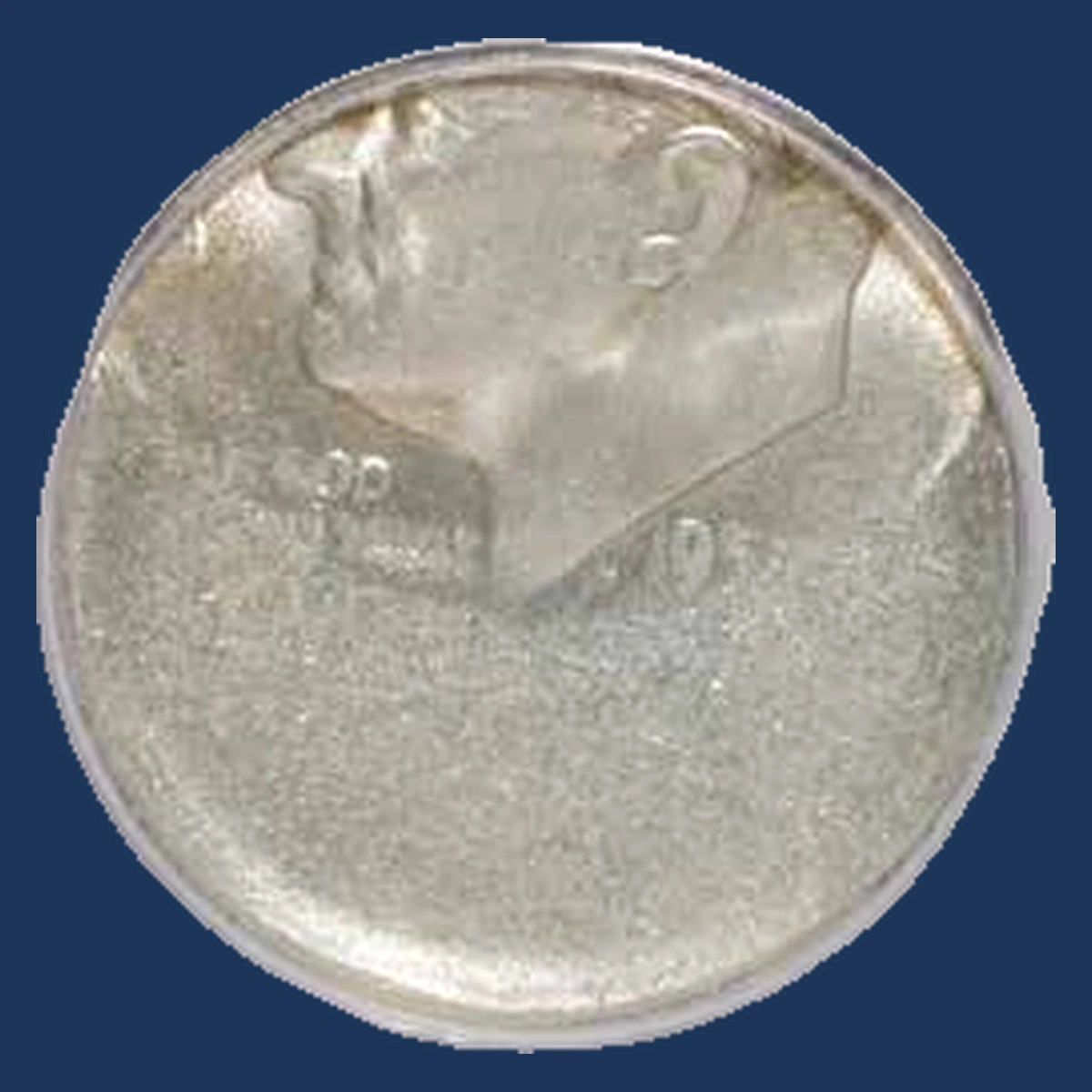
A large untouched crescent beside the portrait can show that the blank missed the center of the press. Some design then landed beyond the metal instead of on the coin.
One 1951 example graded ANACS MS62 was struck 50% off center. A separate NGC MS63 example has a 65% shift.
These are two different coins, with different amounts of displaced design. Neither description establishes a specific clock direction for the shift.
The date must remain tied to the surviving metal. A smooth area ground into a finished coin can imitate part of the outline without sharing its cause.
Estimated Value
The 50% off-center ANACS MS62 coin sold for $322 in June 2008. The separate 65% NGC MS63 example brought $372 in June 2023.
Use an estimated $100–$1,000 for genuine dated 1951 off-center dimes, depending on displacement, readable details, and condition. The two results help compare real examples without assigning the same value to every shift.
Heavy cleaning or a lost date can reduce demand. A larger untouched crescent does not automatically mean a better coin.
How to Identify
Read the date before measuring the blank area. Use a 10× magnifier to examine the boundary between untouched metal and struck details on both faces.
The same displaced disk should explain both designs. A shift confined to one face needs examination for a different tool-alignment problem.
Weigh a loose coin against 2.5 grams on a scale, and use calipers to record the changed outline against 17.91 millimeters. Check surviving edge grooves for later cutting, grinding, or flattening around the blank section.
An original smooth crescent paired with design cropped at the opposite border is the direct visual evidence for the off-center strike.
Conclusion
The estimated $10–$1,000 range for 1951 dime errors covers small raised flaws through dramatic off-center pieces. The documented 65% off-center sale at $372 is one comparison, not a fixed price for every unusual dime.
Check Denver and San Francisco mint marks on the back, compare the correct letter pattern, and keep actual rotation separate from sideways displacement. For lip doubling, establish the cause before applying a doubled-die premium.