1920 Nickel Error List with Pictures

What happens when a nickel design lands partly outside a copper cent blank? One 1920 Buffalo nickel combining those mistakes sold for $12,337.50 in April 2017.
These 1920 Buffalo Nickel errors range from missing letters to a coin split into two matching pieces. Estimated values span $15–$20,000, with whole pairs and combined errors priced together.
Read on to see which parts of the design, edge, and metal explain each example.
1. 1920 Buffalo Nickel Missing IVE in FIVE CENTS
Only part of FIVE CENTS may appear even though the metal beneath it remains. A collector’s 1920 example is described as missing IVE because the stamping tool’s lettering became blocked.
A die is the steel tool that stamps the design. Material filling its small letter recesses can prevent those letters from forming on the coin.
The displayed G4 grade means heavy wear, so comparison with nearby details is especially important. Wear can also make small lettering disappear.
The holder’s reported Full Steps wording is a labeling mistake, not another feature of the Buffalo design.
Estimated Value
Use an estimated $15–$200 for clearly original missing-letter examples. Strong surrounding detail makes a selective blockage easier to show than the same missing letters on a heavily worn coin.
The collector’s G4 example provides an illustration rather than a quoted sale. Its incorrect holder wording should not be added as a separate mint-error premium.
The range concerns the coin itself. More extensive wear or later damage can obscure the cause and reduce collector interest.
How to Identify
Locate FIVE CENTS on the back and compare the missing IVE with the remaining F and CENTS. Use a 10× magnifier and light from the side to inspect the actual surface.
Look for scraping where the missing letters should be. A broad worn patch affecting neighboring high points needs a different explanation from a few blocked letter recesses.
On a loose intact nickel, check about 5 grams and 21.21 millimeters with a scale and calipers. The edge should be plain.
The wrong Full Steps wording on a holder cannot identify the blockage. Judge the coin’s surviving design, especially because the pictured example is heavily worn.
2. 1920 Buffalo Nickel Tilted Back Design
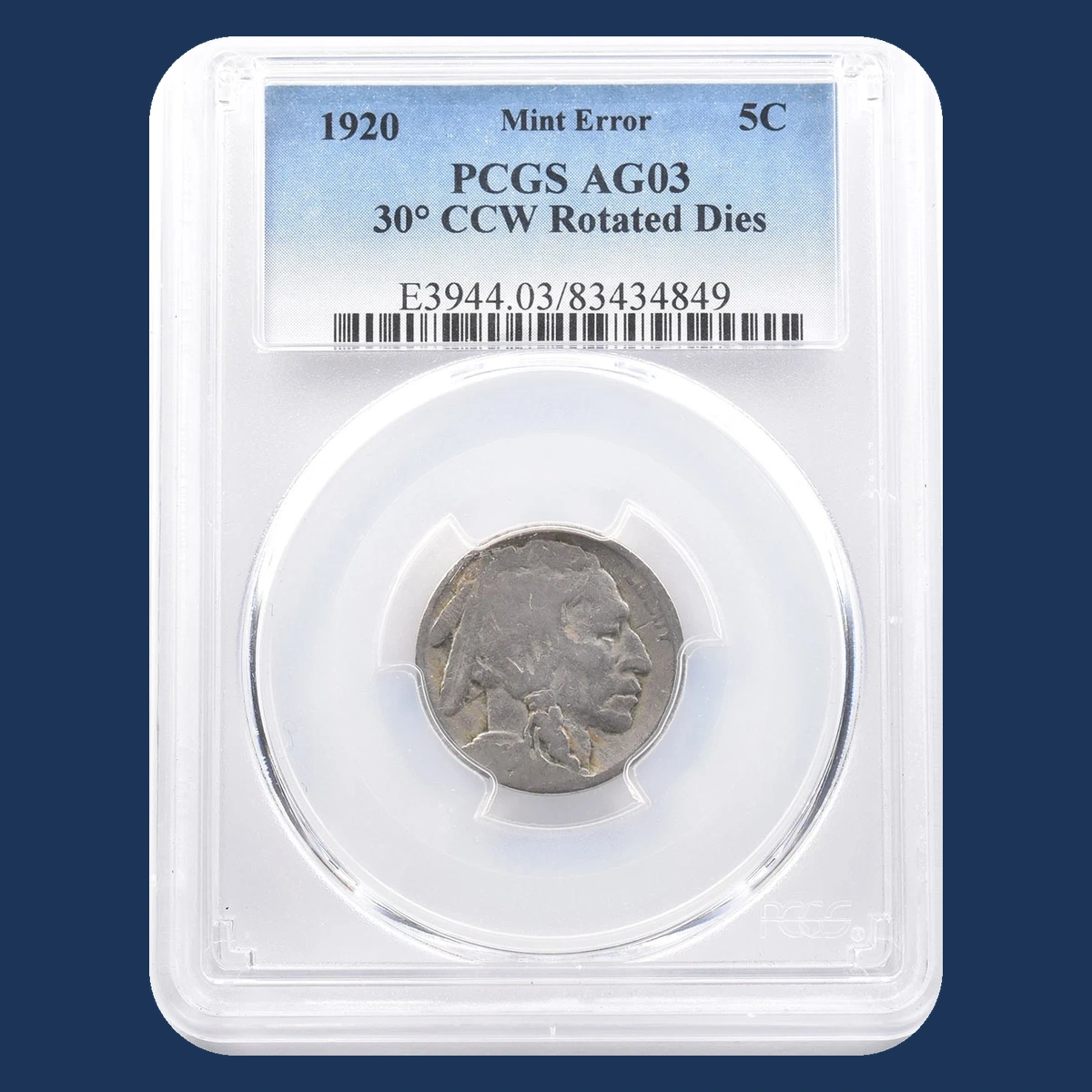
The buffalo should stand upright after an upright portrait is flipped from top to bottom. If it finishes tilted, the stamping tools may have turned out of their normal relationship.
A collector shows a lightly worn 1920-D with a small counterclockwise rotation and a 10% off-center strike. Those two observations describe the same coin.
Another Denver example has a more obvious reported rotation, but its exact angle is not established in degrees. The description’s percentage should not be converted into an assumed angle.
This alignment problem does not itself create a second portrait or buffalo.
Estimated Value
Estimate $30–$600 for genuinely rotated examples, depending on the amount of turn and the coin’s condition. A slight tilt is usually less compelling than a large, easily repeated angle.
The lightly worn Denver example also has an off-center strike. Its price would reflect both features on one coin rather than two independent full premiums.
This is an estimated range, not a sale result for either gallery coin. Independently rotated photographs cannot establish the feature needed for comparison.
How to Identify
First locate 1920 and the D below FIVE CENTS with a magnifier. Keep the lightly worn, slightly rotated coin separate from the other Denver example.
Hold the portrait upright and film a top-to-bottom flip without moving your grip sideways. The buffalo should normally finish upright.
Repeat the motion to see whether the same tilt returns. Measure the angle from that continuous movement, not from independently turned photographs.
A scale and calipers can check a loose complete nickel against 5 grams and 21.21 millimeters. The normal edge is plain, and these measurements do not prove rotation.
Leave a certified coin in its holder during the demonstration. The repeatable tilt after the same top-to-bottom flip is the visible evidence.
3. 1920 Buffalo Nickel Raised Areas from Broken Stamping Tools
A piece missing from a stamping tool lets extra metal rise where design should normally appear. When that raised area reaches the rim, collectors call it a cud.
The 1920 gallery includes a front break near ten o’clock and separate back breaks affecting FIVE CENTS. These are not opposite views of a single coin.
A Denver example has a retained back break: the cracked tool piece stayed partly in position instead of falling away completely. Some design can survive on that shifted section.
Later dents can push metal upward too, so the surrounding surface matters.
Estimated Value
For clearly identified breaks, estimate $30–$750, with larger, well-defined features above minor cracks or damaged examples. A strong loss of back lettering can be more visible than a small rim lump.
A different-year 1970-D nickel with two cuds sold for $63 in October 2022. That offers a modest broken-tool comparison, not a direct price for a 1920 Buffalo nickel.
Worn or damaged surfaces still affect value. Several breaks on one coin receive one whole-coin price.
How to Identify
With a 10× magnifier, compare the front lump near ten o’clock with its surrounding design and rim. Back breaks belong to separate specimens, so a missing section of FIVE CENTS needs its own matching photograph.
Look for surviving design on the Denver retained break, where part of the stamping tool stayed in place. A missing tool fragment can instead leave a plainer raised patch, while a dent may push up metal beside visible damage.
Inspect the plain edge, then use a scale and calipers on a loose intact coin against 5 grams and 21.21 millimeters. Follow the raised patch into the rim and check the nearby metal before identifying it as a cud.
4. 1920 Buffalo Nickel Repunched D Mintmark
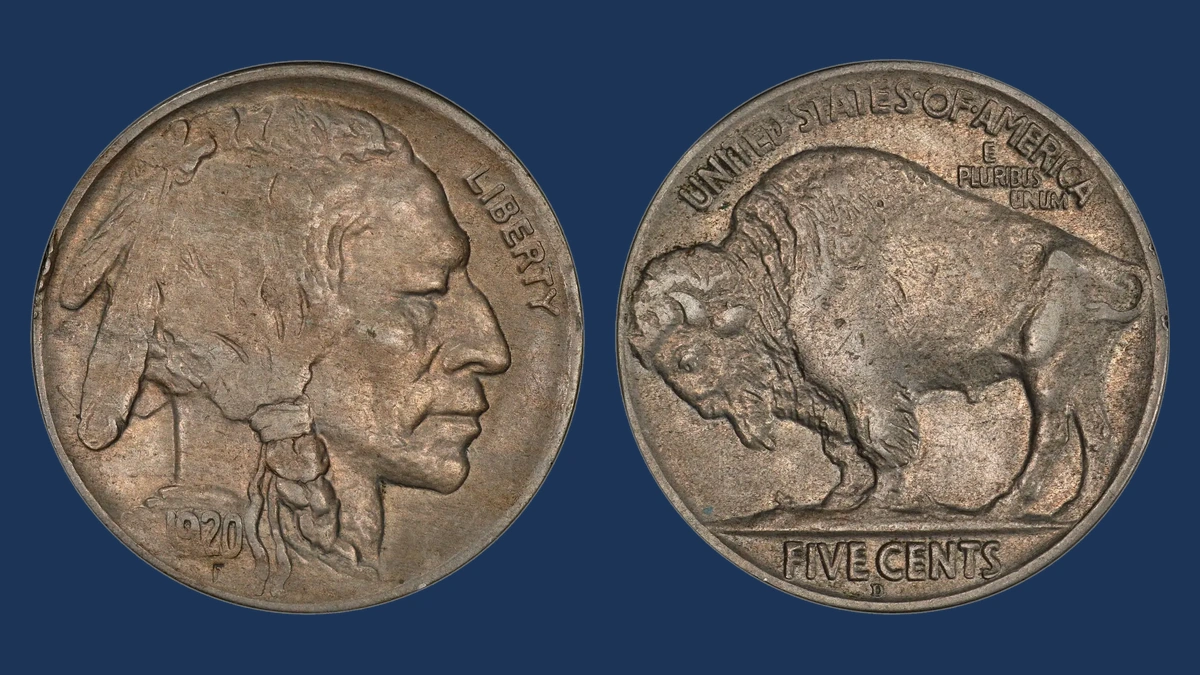
A second D can survive below the main mintmark when the letter was punched into the stamping tool more than once. The overlapping positions were then copied onto coins.
The collector’s AU55 example shows an earlier D to the south, or below, the later one. AU55 indicates light circulation wear.
The display names this pattern FS-502. Its earlier stroke must be distinguished from dents, corrosion, and a flat ledge caused by movement during striking.
A suspected D/D on a separate rotated coin was not accepted in that collector’s account. It should not become another confirmed example here.
Estimated Value
Allow an estimated $50–$1,500 for a clearly matched repunched D, depending on preservation and specialist demand. The upper end requires convincing identification and attractive surviving detail.
The gallery’s changing statements about how many were known are not a current population count. They should not be used to promise an automatic rarity premium.
Photographs that show the earlier D and surrounding design help buyers compare examples. This estimate values the whole nickel, not each separate stroke left by the punches.
How to Identify
Locate the D below FIVE CENTS and inspect its lower edge with a 10× magnifier under angled light. The extra curve should fit part of an earlier D below the final letter, rather than an isolated raised bump.
Compare the complete shape with the photograph of the lightly worn southward D/D example. A loose normal nickel should weigh about 5 grams on a scale and measure 21.21 millimeters with calipers, but neither measurement identifies repunching.
Check the plain edge and surrounding lettering for damage, then return to the outline beneath D. A matching earlier letter stroke is the useful evidence; the separate rotated coin’s disputed mark cannot complete a missing part of this pattern.
5. 1920 Buffalo Nickel Design Partly Outside the Blank
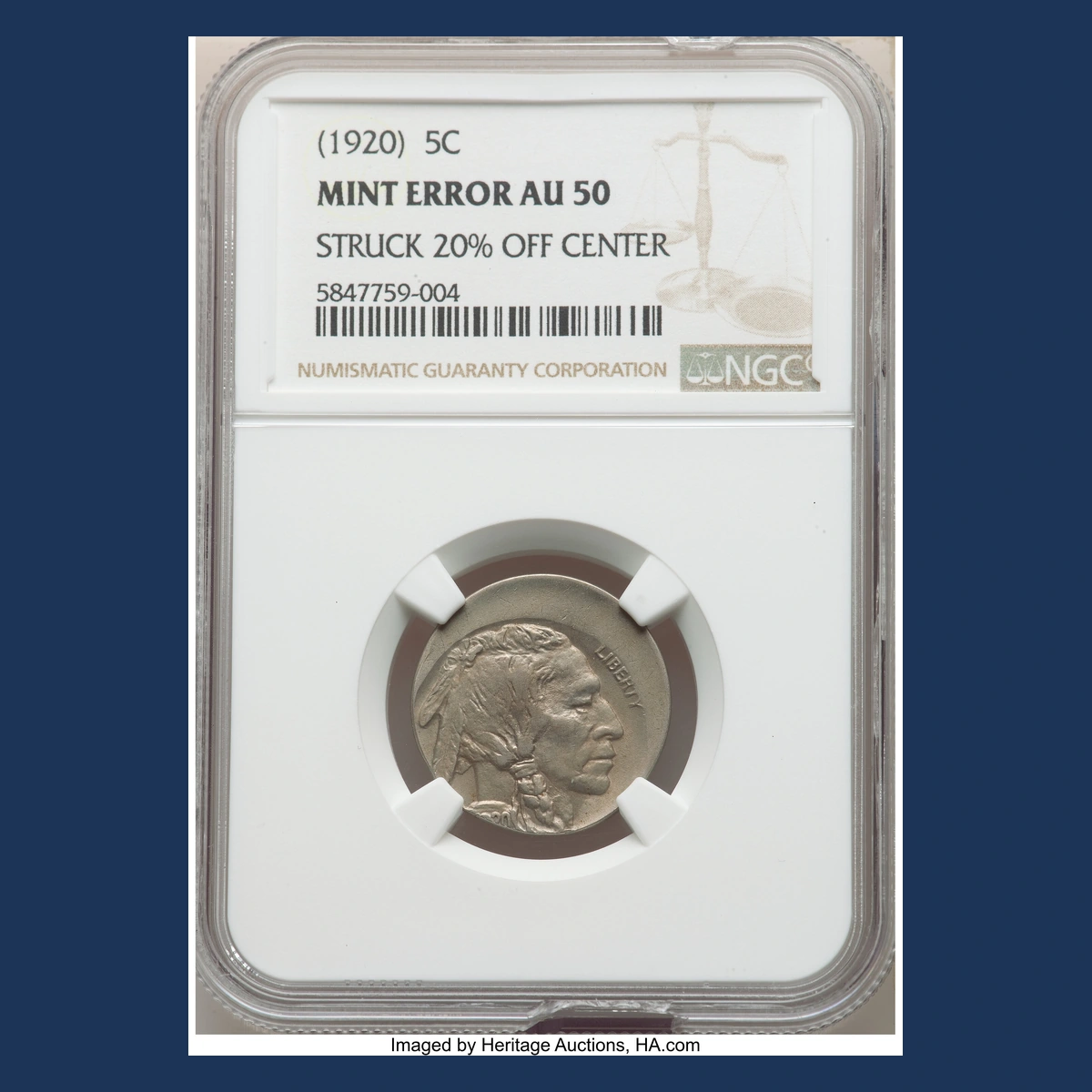
A blank crescent remains when part of the metal disk lies outside the stamping area. On the opposite side, some intended design falls beyond the edge.
The gallery’s Philadelphia example is 10% off center toward the top and upper right. A Denver coin also has a 10% shift, while a San Francisco piece is described as 20% off center.
Those percentages and directions belong to different specimens. The Denver coin also has a slight rotation between its front and back.
A separate damaged 25% example shows why a dramatic shift does not guarantee attractive condition.
Estimated Value
Use an estimated $100–$2,000 for genuine off-center 1920 nickels with readable identity. A modest shift on a worn coin generally sits below a bold, attractive example with its date intact.
As a comparison, a 1950 Jefferson nickel about 65% off center with a back crack sold for $528 in July 2022. It has a different design and an additional feature.
Assess the actual Buffalo nickel rather than multiplying that price by its percentage. Later rim damage can reduce its appeal.
How to Identify
Photograph both full faces before judging how far the design moved. A genuinely off-center blank explains design loss and untouched metal on both sides.
Read the date and any mintmark through a 10× magnifier. If the expected mark position missed the metal, its absence cannot prove Philadelphia manufacture.
Compare the unstruck area with fresh grinding or scraping. A patch made smooth after striking does not recreate an original blank crescent.
A loose intact nickel can remain near 5 grams despite the shift. Use calipers against the normal 21.21 millimeters and inspect the plain edge for later cutting or crushing.
Keep each specimen’s direction separate when matching a photograph.
6. 1920 Buffalo Nickel Coin Split into Two Matching Pieces
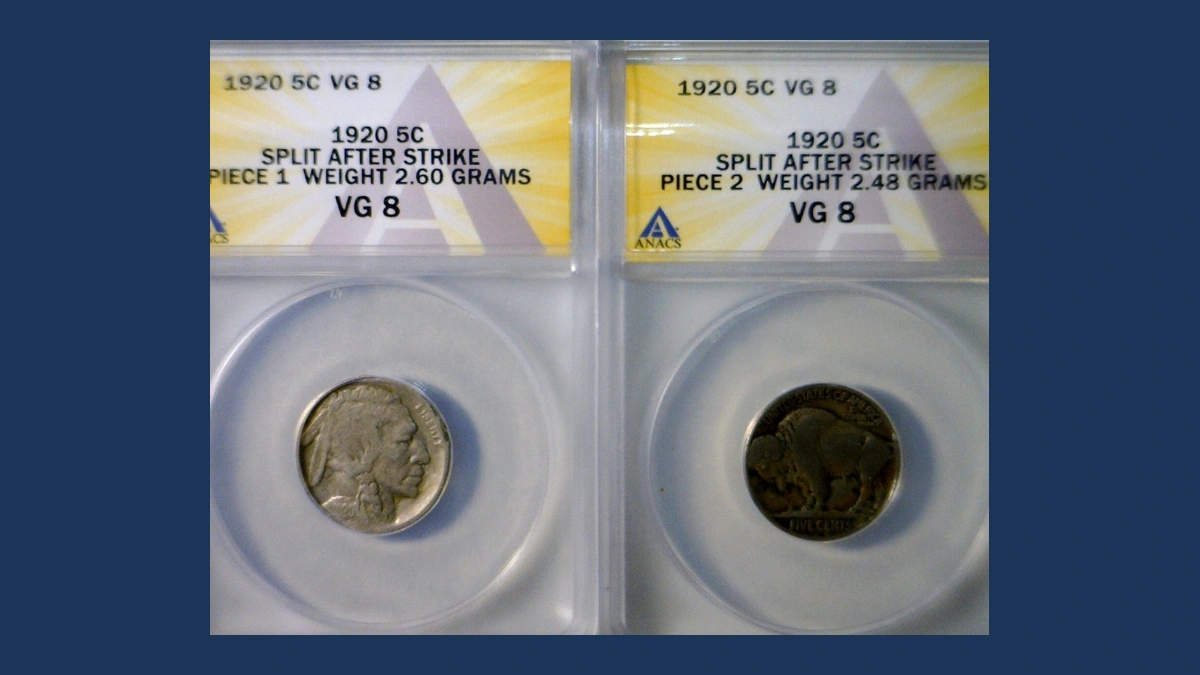
A complete nickel can separate through its thickness after it has been struck. One piece retains the portrait, while the other retains the buffalo.
The collector’s VF30 pair consists of those two pieces from the same 1920 coin. VF30 describes noticeable wear with useful design still visible.
The newly exposed inner faces show the split rather than fresh coin designs. This separates the pair from thin blanks that broke apart before being struck.
Two gallery photographs do not represent two complete nickels. The matching fracture and original designs explain why the pieces belong together.
Estimated Value
An intact matched pair has an estimated range of $250–$2,500. A clear fit and readable date make the original relationship easier to establish.
For a different kind of separation, a 1929-S nickel with an attached back flap sold for $149.50 in April 2010. That unworn coin retained a shallow layer, rather than two matching full-face pieces.
The pair here is priced together. Separating its pieces for individual sale can lose the evidence and appeal of the complete original coin.
How to Identify
Keep both pieces supported, without squeezing them together to test the fit. Photograph each outer design and each inner fracture face.
Under a 10× magnifier, compare the natural split pattern and outline. Tool-cut surfaces or an artificial seam call for a different explanation.
Weigh the loose pieces separately and record their combined weight against the normal 5 grams. Missing fragments can prevent an exact total.
Calipers compare intact spans with the nickel’s 21.21-millimeter width, while the divided plain edge can help match the original outline.
The useful combination is one original portrait, one original buffalo, and two matching unstruck inner surfaces—not two unrelated thin coins.
7. 1920 Buffalo Nickel Expanded Strike, Including a Two-Feather Example
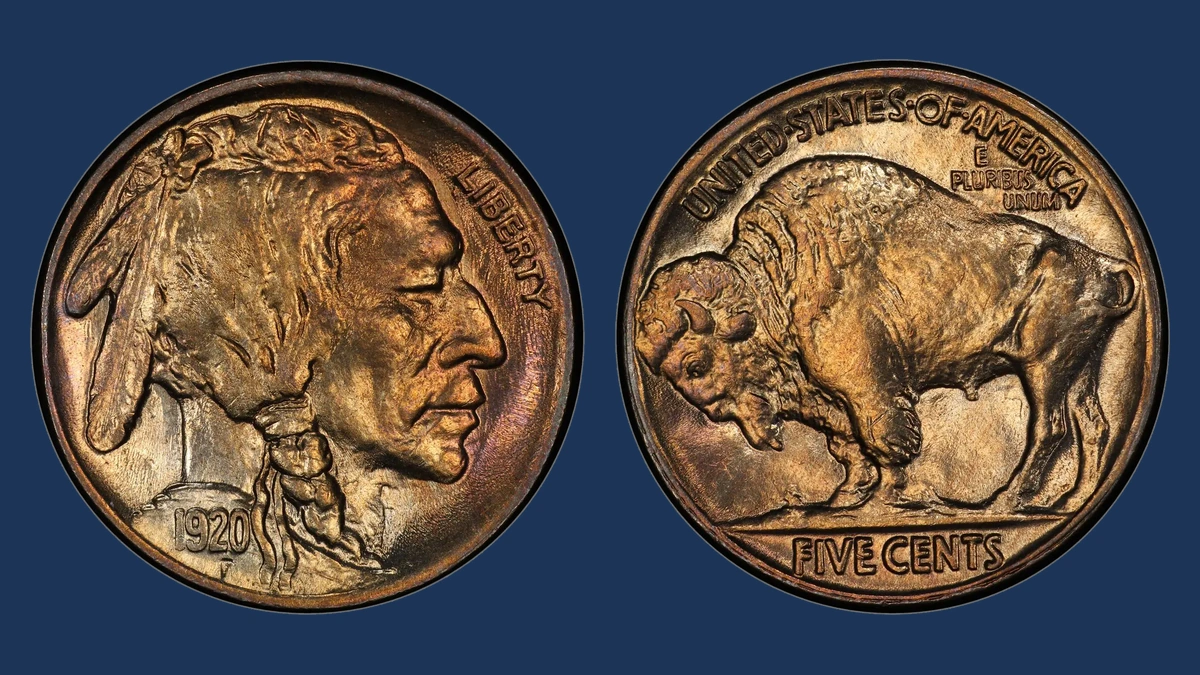
The design can remain complete while metal spreads beyond the usual border. A broadstrike forms when the collar, the ring around the blank, fails to restrain that metal.
One worn Philadelphia example was reportedly struck on a Type One blank. This means a blank without a prepared raised rim, not the different 1913 reverse design.
A separate San Francisco MS63 coin, unworn with visible marks, combines an uncentered broadstrike with the FS-401 two-feather variety. Polishing the stamping tool removed the small third feather from its design.
Both features belong to that same San Francisco coin.
Estimated Value
Estimate $75–$600 for a clear ordinary expanded strike and $300–$3,000 for the combined San Francisco two-feather example. Condition and the strength of both features affect the total.
PCGS records about $999 for a separate AU58 two-feather coin at Heritage in September 2016. That price does not establish a broadstrike on the auctioned piece.
The gallery’s MS63 compound coin is a different specimen. Do not add two full standalone prices together.
How to Identify
Read the full lettering around both faces before judging the wide border. A broadstrike keeps the design on the metal, whereas an off-center strike leaves part beyond it.
On a loose nickel, compare width with 21.21 millimeters using calipers and weight with 5 grams using a scale. Spreading can increase width without removing metal.
For the San Francisco coin, confirm S below FIVE CENTS. Then use a 10× magnifier at the small third feather’s expected position behind the portrait.
Compare nearby hair and feathers for wear or scraping. A missing feather on a worn coin alone does not establish the polished-tool variety.
Finally inspect the spread border and plain edge for crushing, which can imitate a broadstrike after minting.
8. 1920 Buffalo Nickel Design on a Copper Cent Blank
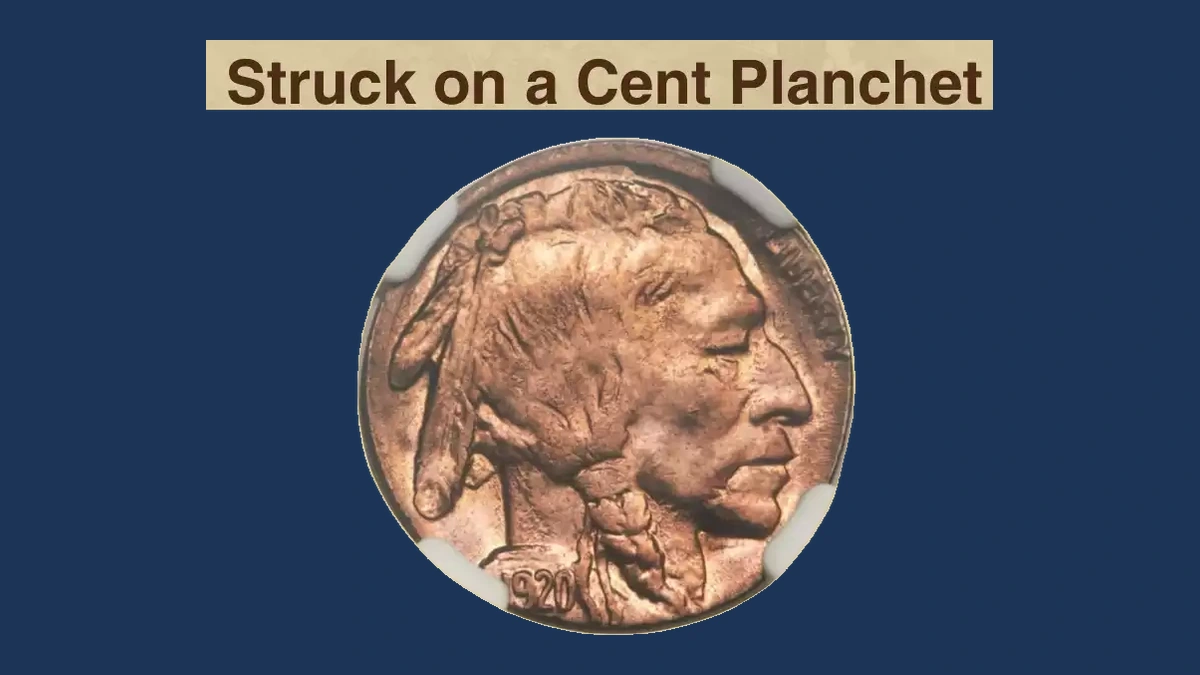
A cent blank is smaller and richer in copper than the disk intended for a Buffalo nickel. It can receive the nickel design while losing some of the outer lettering.
The collector’s gallery includes an MS61 example, meaning unworn with substantial marks. A separate MS64 Brown coin was also struck about 40% off center toward two o’clock.
On that second coin, the date survives but the mintmark area does not. The portrait’s profile and the buffalo’s legs lie beyond the metal.
Its wrong blank and shifted strike belong to the same coin, with one combined appearance.
Estimated Value
Estimate $2,000–$10,000 for genuine cent-blank examples, and $8,000–$20,000 for a strong combined off-center piece. Readable identity and condition affect the comparison.
A PCGS Fine 15 cent-blank coin sold for $2,580 in August 2024. The 40% off-center MS64 Brown example brought $12,337.50 in April 2017.
Fine 15 means considerable wear, unlike the unworn MS64 piece. Their different condition and strike patterns explain why the two results are not interchangeable.
How to Identify
For a loose candidate, compare its weight with the contemporary cent standard of about 3.11 grams. An ordinary Buffalo nickel weighs 5 grams, so a precise scale is more useful than brown color alone.
Measure the outline with calipers. A cent blank starts at 19.05 millimeters, compared with 21.21 for a nickel, but striking can spread the smaller disk.
Under a 10× magnifier, inspect the cropped lettering and edge for trimming or added plating. Read any surviving date without supplying missing details.
The 40% off-center specimen lacks the area where a mintmark would appear. Its absence cannot establish Philadelphia.
Keep that coin’s missing profile and shift direction together when comparing photographs. Professional metal testing should confirm cent material beneath the original struck design.
Conclusion
Estimated 1920 Buffalo Nickel error values range from $15 to $20,000. A faint blocked letter and a nickel on the wrong metal occupy very different parts of that span.
Use the mintmark, date, and specific visible feature together when choosing a comparison. Keep matching split pieces together, and remember that two features on one coin still have one total value.
An unusual shape deserves examination before it deserves a price tag.