1957 Dime Error List with Pictures

A small raised bump on Roosevelt’s nose and a dime made from foreign coin metal need very different explanations. Both appear in this 1957 dime error list.
The foreign-blank example brought $4,080 in July 2022, while smaller flaws can be much more affordable. Estimated values across the categories below run from $10 to $6,000.
Read on to compare what you can see, the tools that help identify it, and the difference between a recorded sale and an estimated price.
1. 1957 Roosevelt Dime Raised Bump on Roosevelt’s Nose
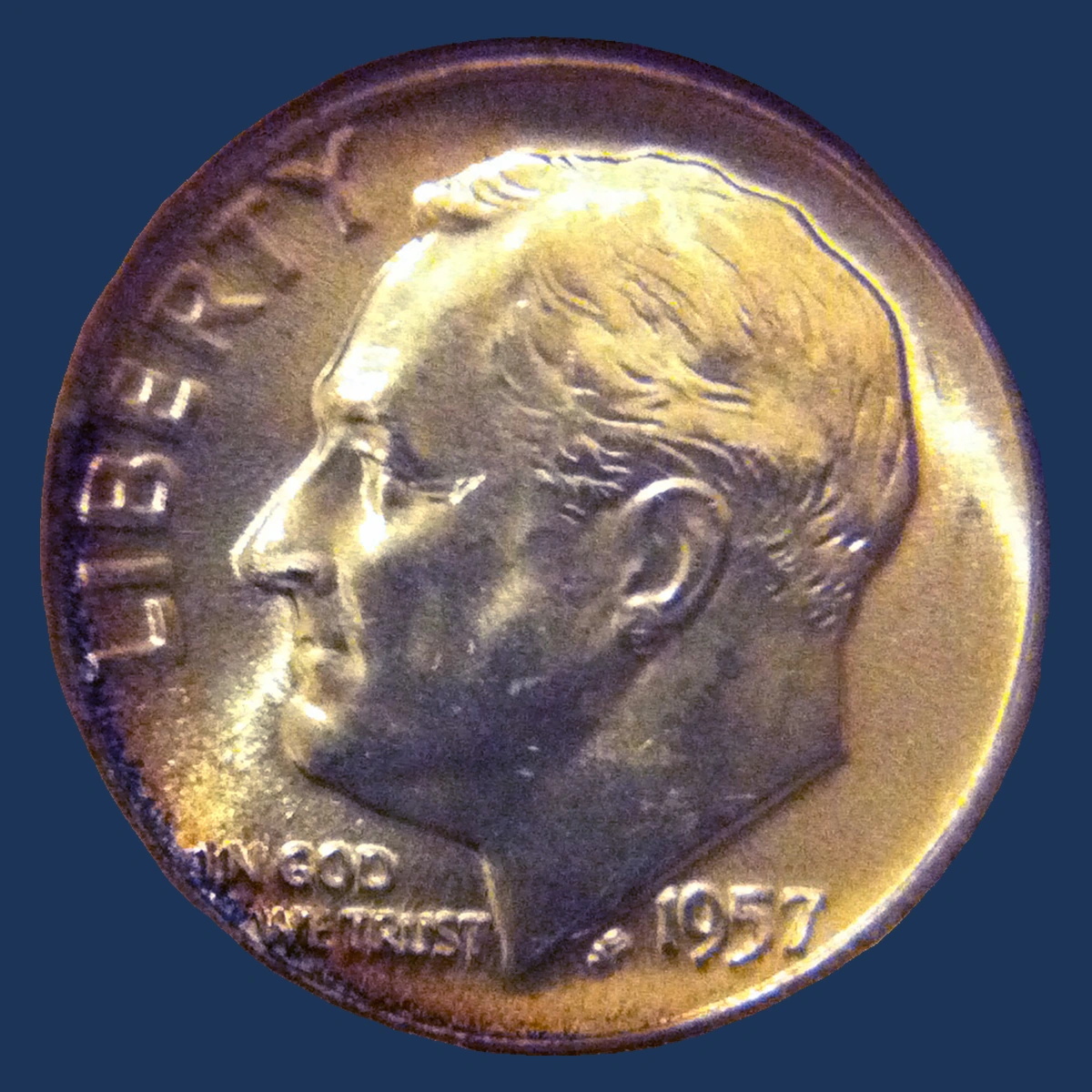
A small lump on Roosevelt’s nose can come from a chip in the steel tool that stamped the coin. Metal fills the missing spot in the tool, leaving a raised bump on the finished dime.
The tool is called a die, so collectors describe this as a die chip. A Philadelphia 1957 example was shown by its owner and discussed as this type of error.
It should not be confused with metal pushed upward beside a dent. The surrounding nose shape and surface help explain how the lump formed.
Estimated Value
A clear original nose chip is estimated at $10–$50 on an otherwise ordinary 1957 dime. The estimate assumes that the raised metal formed during striking rather than from later damage.
Small chips generally have modest premiums, even when a memorable nickname is attached. Their visibility and the coin’s preservation affect collector interest.
Compare the raised feature and the surrounding portrait before paying for the nickname. The range values the complete silver dime, including its normal coin value.
How to Identify
Tilt the nose under a lamp until the small lump casts a shadow. With a 10× magnifier, look for a raised patch whose surface fits the surrounding original metal.
Inspect beside it for a dent or scraped groove that could have pushed metal upward. A scratch can leave a raised lip without any broken stamping tool.
A loose normal dime should weigh about 2.5 grams and measure 17.91 millimeters on a scale and calipers. Check the grooved edge and the no-letter Philadelphia identity on the back.
An undamaged raised patch on the nose, without an adjacent impact that explains it, is the feature to compare.
2. 1957 Roosevelt Dime Faint Opposite-Side Design Marks
Thin extra outlines can appear in spaces that should be empty beside the normal design. They may come from the front and back stamping tools hitting each other without a coin disk between them.
That collision is called a die clash. The marked tools can then transfer faint opposite-side shapes onto later coins.
Clashes are reported for 1957 dimes, but no single location or direction identifies every example. A faint mark must resemble an actual part of the opposite design.
Random scratches and rough spots do not become clashes simply because they look unusual.
Estimated Value
Estimated values are $15–$150 for genuine 1957 clashes. A recognizable transferred outline has more appeal than a barely visible line requiring guesswork.
A different-year 2001-P dime combining a clash with a partial mirror-image striking error sold for $79 in November 2014. That later combined error is only a broad comparison, not a sale of a plain 1957 clash.
Wear and cleaning can hide or damage the faint marks. The estimate assumes the original feature remains identifiable.
How to Identify
Study a normal dime’s front and back before naming the extra line. You need a real design shape to match, not a guessed image in a scratch.
A scale and calipers can compare a loose coin with 2.5 grams and 17.91 millimeters. The grooved edge should not show crushing from two coins squeezed together later.
Now turn the candidate through several lighting angles under a 10× magnifier. Compare the faint outline with a mirror image of the opposite side.
Different tools can leave different marks.
Name the specific opposite-side feature that matches the outline before treating it as a clash.
3. 1957 Roosevelt Dime Peeling Silver Alloy
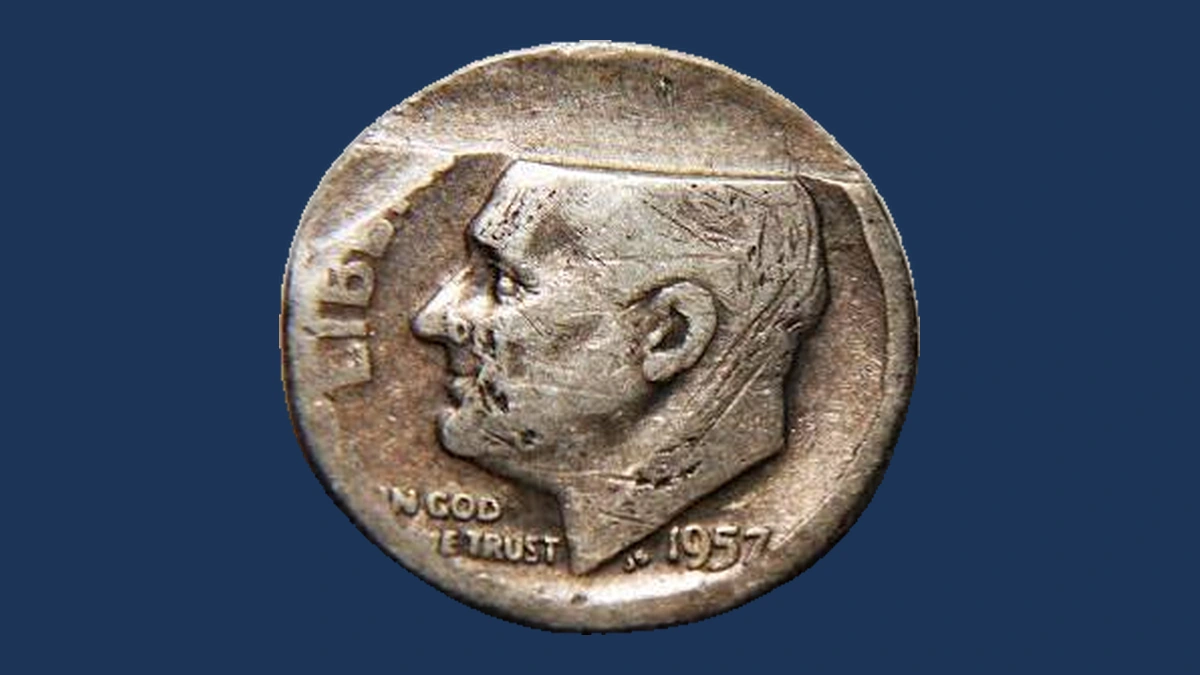
A rough strip or loose flake can interrupt the design when metal separates along a weak area. The defect may begin inside the alloy rather than at the coin’s outer edge.
Collectors call this a lamination. A seller reported a worn 1957-D example, with the precise position needing comparison to the actual coin.
Normal 1957 dimes contain 90% silver and 10% copper as an alloy. They are not later layered dimes with a copper center between pale outer faces.
A peeling patch therefore should not be described as the loss of a modern clad layer.
Estimated Value
A genuine 1957-D lamination is estimated at $15–$200. Smaller rough patches on worn coins generally cost less than broad clear separations on attractive examples.
The seller’s worn coin provides a condition comparison, rather than a reason to expect an unworn-coin price. The visible size of the separation and remaining detail should guide the estimate.
Attached metal should stay attached. Pulling a flake away can damage the evidence and reduce the interest of collectors who prefer the original appearance.
How to Identify
Leave any loose flake in position and examine it with a 10× magnifier. Look along the opening for a rough natural separation rather than a smooth scoop or cuts from a sharp tool.
Check the D below and left of the torch on the back, keeping the year and mint tied to the same coin. Study nearby design to see whether the separation interrupts original struck detail.
Use a scale on a safely handled loose piece against 2.5 grams, and compare intact width with 17.91 millimeters using calipers. A natural peel within the silver alloy, surrounded by otherwise normal surfaces and edge grooves, is the useful distinction from scraping.
4. 1957 Roosevelt Dime Repunched D Mint Mark
The D below the torch can show an extra curve or upright stroke from an earlier letter impression. In this period, workers punched mint marks into individual stamping tools by hand.
If a later punch landed in a slightly different position, both impressions could survive. Every coin struck with that tool could carry the overlapping D.
1957-D repunched marks appear in owner and year-specific reports. Their exact directions must come from the matching coin rather than a generic D/D illustration.
A dent beside the letter or a flat shelf from striking movement has a different cause.
Estimated Value
Repunched D examples are estimated at $15–$250. Clear earlier letter strokes on an attractive coin support a higher price than a faint extra edge on a worn dime.
The range is an estimate across identifiable examples, not a claimed sale for a specific catalog number. A seller’s D/D title alone does not establish the pattern.
Condition also affects the complete silver coin. Multiple visible strokes from the same earlier D are not separate errors with separately added prices.
How to Identify
Locate the D on the back below and left of the torch, then choose an enlarged photograph of the same 1957-D pattern. Use a 10× magnifier to follow the extra stroke around the final letter.
A normal loose dime should remain near 2.5 grams and 17.91 millimeters on a scale and calipers, with edge grooves. Those ordinary measurements cannot identify which punch impressions survive.
Compare rounded curves and straight letter strokes with the pictured D, while checking nearby metal for a dent or scraping. A recognizable earlier part of the letter provides stronger evidence than an isolated bump beside the mint mark.
5. 1957 Roosevelt Dime Clipped Disk, Including an Expanded Combination
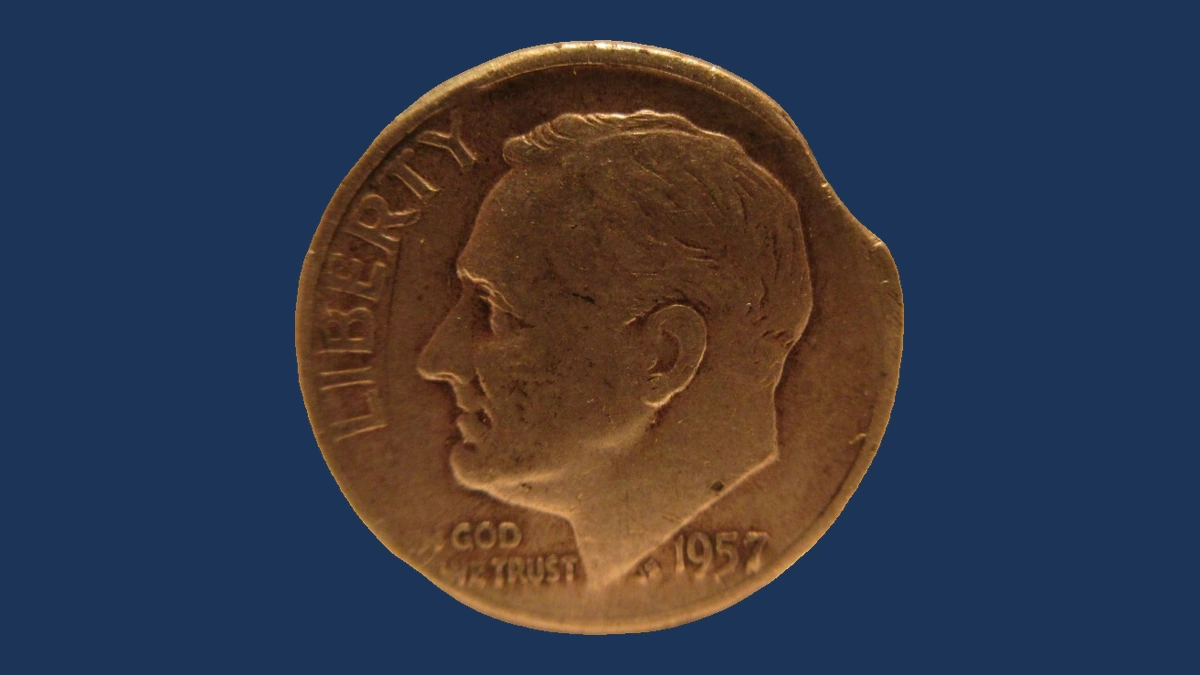
A missing edge section can begin when the blank is cut from its metal sheet. The blank is the disk that will later receive the coin design.
A Philadelphia 1957 clip appears in a dealer’s catalog as an almost-unworn coin. Its exact missing shape is not specified.
A collector also displays a separate MS62 example with a straight clip on the right and a strongly expanded, dish-shaped strike. The same coin has both features.
Its Full Torch description concerns clear torch details, not another minting mistake. The clip must still be distinguished from metal removed after striking.
Estimated Value
Ordinary genuine clips are estimated at $25–$200, while the straight-clip and expanded-strike combination is estimated at $75–$400. Condition and the clarity of both features affect the comparison.
A 1997-P nickel with a 20% clip sold for $124 in March 2025. That recent result involves another year and denomination, not the collector’s 1957 combination.
The combined coin receives one total value. Its widened shape should not be priced as if it were a separate second specimen.
How to Identify
Examine the missing section’s ends through a 10× magnifier. The struck rim should form naturally around the gap rather than stop at a fresh cut through finished lettering.
For the collector’s combination, look for the straight right-hand shortage and the broad dish-shaped outline together. Do not transfer that shape to the dealer’s separately listed clip.
A scale can compare a loose example with 2.5 grams. Calipers record intact dimensions against 17.91 millimeters, although expansion can increase width while the clip reduces mass.
Inspect remaining edge grooves for filing or forced flattening. Natural borders beside the shortage are the first useful proof that the missing metal preceded the strike.
6. 1957 Roosevelt Dime Expanded Strike Outside the Ring
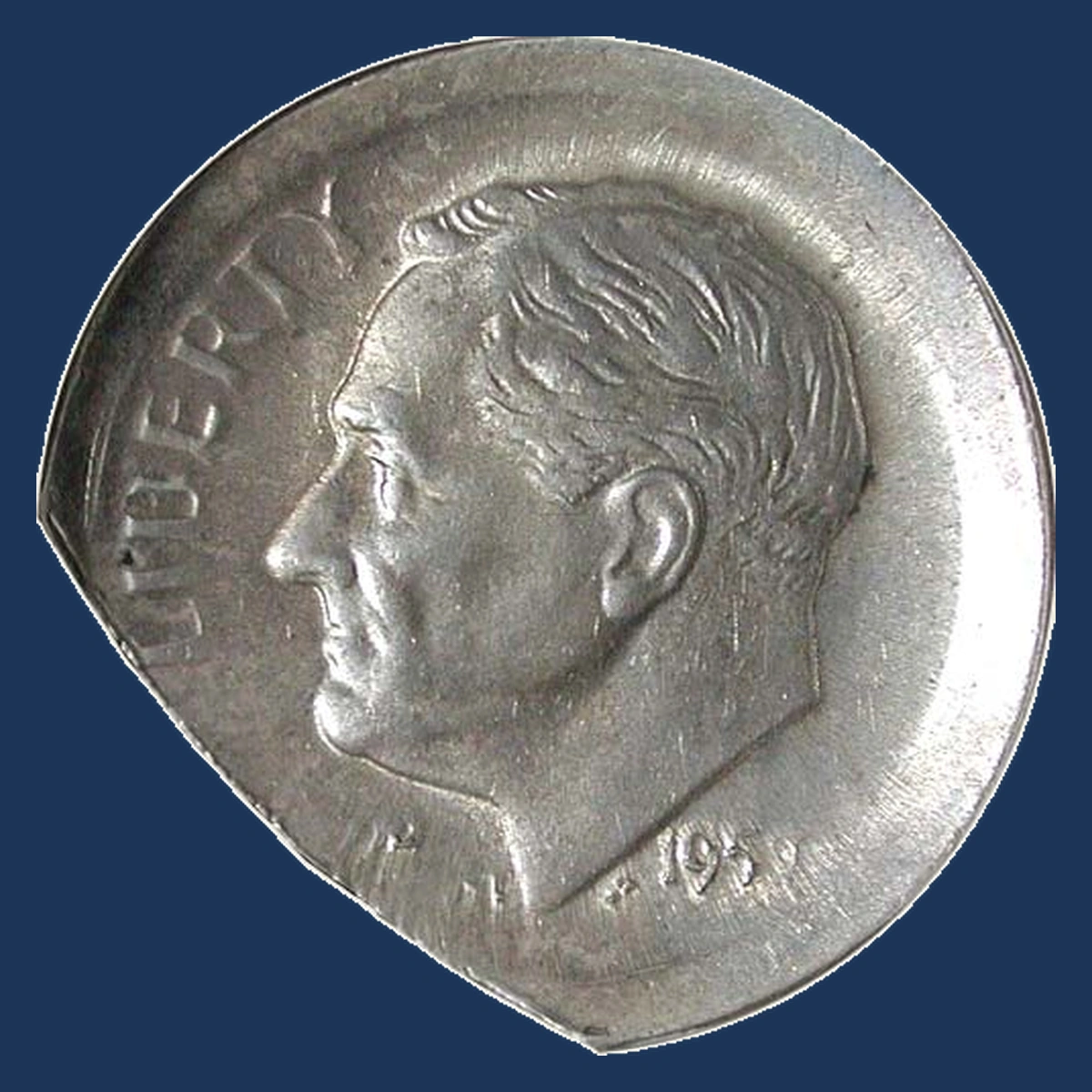
An oversized outline can surround a dime design when the restraining ring does not hold the metal firmly during striking. The coin spreads outward instead of keeping its normal narrow border.
This error is called a broadstrike. A year-specific report lists it for 1957, apart from the known straight-clip combination.
The complete design can remain on the expanded disk. That distinguishes it from an off-center strike where some design lands beyond the metal.
Edge grooves may be weak or incomplete, but every groove need not disappear. The whole shape and both faces must be considered.
Estimated Value
A genuine 1957 broadstrike is estimated at $40–$500. Greater natural expansion and attractive surfaces can bring more than a slight widening on a heavily marked coin.
For comparison, a 1988-P dime with a broadstruck second impression sold for $80.50 in May 2005. That later coin also had overlapping strikes, so its price does not measure expansion alone.
The range here concerns the complete 1957 coin. Metal flattened by later hammering does not qualify for the same premium.
How to Identify
Compare width first with calipers, using the normal 17.91 millimeters as a starting point. A loose broadstrike can still weigh near 2.5 grams on a scale because expansion does not necessarily remove metal.
Look at the border beyond the lettering on both sides.
Through a 10× magnifier, inspect outward metal flow and any surviving edge grooves. Partial ring contact can leave some grooves even when the coin expands.
Crushed high points or battered surfaces may instead reveal later hammering.
An enlarged disk with naturally spread borders and the intended design still present identifies the broadstrike more clearly than a wide outline alone.
7. 1957 Roosevelt Dime Doubled Front or Back Design
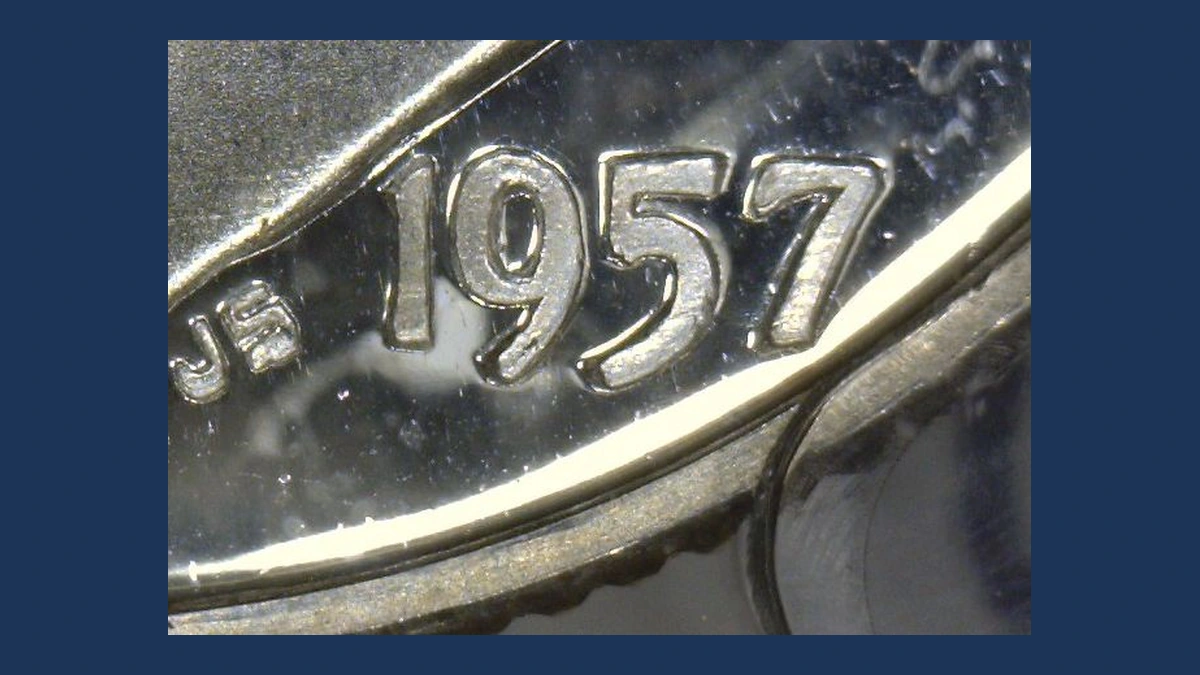
An extra rounded outline or split letter tip can come from a repeated design already present on the stamping tool. Collectors call that tool a doubled die.
A 1957 Proof front variety is listed as FS-101. Proof coins were specially made for collectors, usually with reflective surfaces.
A separate owner reports back doubling on an ordinary Philadelphia dime graded MS63 Full Bands. That grade describes the coin’s condition and clear torch bands, not certification of the claimed doubled pattern.
The two reports concern different finishes and different sides. Their identifying details must not be combined into one imagined coin.
Estimated Value
Matched FS-101 Proof examples are estimated at $50–$500. A confirmed ordinary back-doubled example is estimated at $20–$200, depending on strength and preservation.
GreatCollections sold a PCGS Proof-64 FS-101 in February 2026. The displayed page does not provide a public final amount, so no price is inferred from its starting bid.
The ordinary coin’s basic grade is not proof of its reported variety. Both estimates require matching the actual doubled details.
How to Identify
Decide whether the coin is an ordinary issue or a Proof before choosing the comparison. Both Philadelphia versions lack a mint mark, so an empty mint-mark position does not settle the finish.
Examine the affected face with a 10× magnifier. Use an authenticated FS-101 photograph for the Proof instead of combining general claims about LIBERTY and the designer’s initials.
The ordinary back report needs its own repeated details examined; its holder’s basic grade alone cannot establish them.
On a loose coin, compare scale and caliper readings with 2.5 grams and 17.91 millimeters, with a grooved edge. Matching rounded repeated contours on the correct face and finish is the decisive comparison.
8. 1957 Roosevelt Dime Off-Center Strike
The portrait and lettering can shift away from the center, leaving a smooth blank crescent on one side. Some of the opposite design then fails to reach the coin’s metal.
That happens when the blank is misplaced beneath the stamping tools. The resulting off-center strike affects the relationship between the whole disk and both designs.
1957 off-center reports do not establish one mint or percentage for every example. A visible date and mint-mark area should be recorded directly from the coin.
A shift of only one face or a cut-away edge needs a different explanation.
Estimated Value
Estimated values for genuine dated 1957 off-center dimes are $50–$750. Larger shifts with a clear date can bring more than slight displacement on a worn coin.
A 1977 dime struck 10% off center sold for $109 in June 2026. That recent sale is a different-year comparison, with later layered metal rather than the normal 1957 silver alloy.
A missing date, heavy marks, or cleaning can reduce demand. The biggest blank crescent does not automatically produce the highest price.
How to Identify
Find the date on the metal itself, then check where the mint-mark position should be. If that part missed the disk, do not assume Philadelphia simply because no D is visible.
Record a loose coin’s weight on a scale against 2.5 grams and its widths with calipers against 17.91 millimeters. A whole disk may retain normal mass despite its altered outline.
Use a 10× magnifier to compare both designs with the smooth crescent and inspect edge grooves for cutting. Displacement of both faces that leaves untouched metal opposite cropped design is the important combination, rather than a one-sided shift or artificially flattened patch.
9. 1957 Roosevelt Dime Fragment Impression with Reversed Head Detail
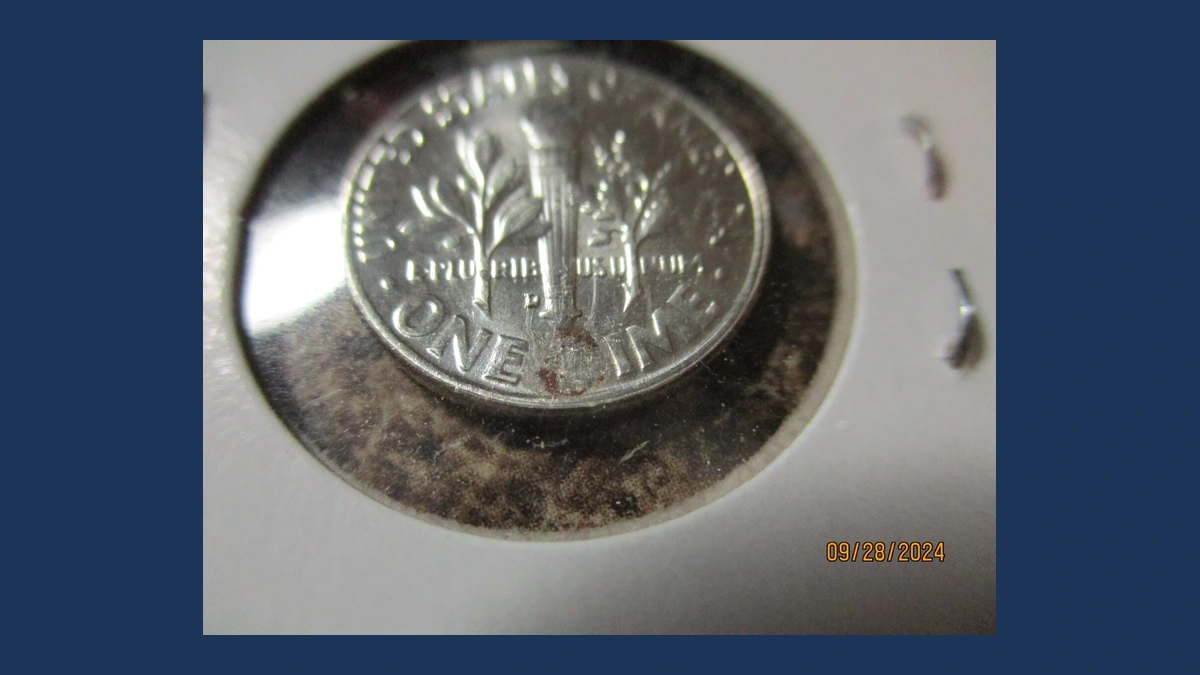
A depression on the back can preserve more than the outline of a trapped object. A cataloged 1957 dime has a fragment impression about five by ten millimeters, including traces of a head.
The coin was described as NGC MS63. Its combination suggests that the obstruction carried design detail that could transfer into the dime.
A reversed impression pressed into a coin is called a brockage. Here, the fragment impression and partial reversed detail belong to the same reported coin.
The description does not establish that the fragment remains attached. An empty impression should not be illustrated as retained metal.
Estimated Value
The fragment-and-reversed-detail combination is estimated at $100–$1,000. Clear transferred head detail can attract more interest than a plain shallow mark from an unidentified object.
A later 2001-P dime combining a partial brockage and clashes sold for $79 in November 2014. That is a different combination and year, so it provides context rather than a direct price for this silver dime.
The range values one combined error coin. It does not add the value of an unconfirmed retained fragment.
How to Identify
Begin at the back depression and identify the head detail described in the catalog. Use a 10× magnifier to decide whether the lines are a recognizable reversed design rather than scratches inside a dent.
Calipers can help compare the depression with the reported five-by-ten-millimeter size, without touching fragile surfaces. The normal coin is about 17.91 millimeters across.
Weigh a loose coin on a scale against 2.5 grams and inspect the surrounding edge grooves.
Do not assume a loose object was preserved just because its outline remains.
Sunken recognizable head detail within the fragment-shaped impression is the feature that distinguishes this combination from an ordinary impact mark.
10. 1957 Roosevelt Dime Strike on an El Salvador Coin Blank
The design reads as a Roosevelt dime, but the metal is brown instead of the normal silver alloy. This example was struck on a blank intended for an El Salvador one-centavo coin.
NGC graded it MS63 Brown, and the holder records a weight of 2.2 grams. That measurement belongs to this particular error, not to a normal silver dime.
The wrong blank entered the dime press and received the American design. A foreign blank is different from a finished foreign coin carrying an earlier design.
Brown color alone cannot establish that history or the blank’s origin.
Estimated Value
The NGC MS63 Brown example sold for $4,080 on July 5, 2022, in Heritage’s error-coin auction. An estimated $2,500–$6,000 covers comparable confirmed pieces according to condition and clear identification.
The result appears in Mint Error News’ illustrated auction report. It concerns the complete 2.2-gram dime, not a normal El Salvador coin.
An altered silver dime or copper-colored coating would not support the same price. The foreign blank and the genuine 1957 strike must both be established.
How to Identify
Have the metal examined without scratching the surface. A brown coating can imitate color but cannot establish the composition of the disk beneath it.
On a loose candidate, use a scale to record weight and calipers to measure width. Compare those readings with the documented 2.2-gram example and the normal silver dime standard of 2.5 grams and 17.91 millimeters.
Inspect the date and both designs through a 10× magnifier, then check the edge for trimming, plating, and the way any grooves formed. A genuine 1957 design on a disk matching the recorded foreign blank’s metal and measurements is the required combination.
Conclusion
These 1957 dime errors have estimated values of $10–$6,000, from a small raised nose chip to a verified foreign-blank strike. The $4,080 El Salvador blank example shows why metal identity can matter so much.
Start with the visible feature and keep the correct mint and finish in view. Weigh loose coins carefully, leave peeling metal alone, and compare doubled details with the actual variety photograph rather than a general nickname.