1976 Dime Error List with Pictures

Roosevelt’s portrait does not always tell the whole story. Beneath one 1976 dime design lies a finished Peruvian coin, and that unusual combination sold for $5,040 in January 2022.
Other 1976 dime errors are easier to picture: three missing edge pieces, a backward impression, or a second strike near the border. Estimated values below span $20–$7,500.
The dime kept its single 1976 date; it did not receive the double date used on that year’s larger commemorative coins.
Use the checks below to follow the feature visible on your coin.
1. 1976 Roosevelt Dime Expanded Beyond Its Normal Border
Extra space outside the lettering can appear when a dime spreads during striking. The edge ring, called the collar, normally holds the metal disk to its proper size.
Without that restraint, the blank can expand while retaining the full intended design. This is a broadstrike, rather than a design that partly missed the metal.
Broadstrikes are reported for ordinary 1976 dimes, but no single measured width defines the year’s examples. The expanded outline must agree with original struck details; a coin hammered flat afterward can also become wider than normal.
Estimated Value
For a genuine 1976 broadstrike, estimate $20–$250. Slight expansion on a worn coin falls toward the lower end, while a clear spread around an attractive complete design can bring more interest.
The condition of the edge matters as well as the portrait. Scratches and later flattening can obscure the original shape.
Original edge details make a wider coin easier to identify and display. Heavy flattening can hide those clues even when part of the expansion began at the Mint.
How to Identify
Place a normal dime beside the candidate in a photograph taken at the same scale. Compare the width of the outer border and the position of the complete design.
For a loose coin, calipers can show whether it exceeds the normal 17.91 millimeters. Inspect the expanded edge grooves at the same time for evidence of spreading during the strike.
Follow the letters around both faces to see whether any design ran beyond the metal. An off-center coin instead combines lost design with a plain crescent on the other side.
Look across Roosevelt and the torch for crushing or hammer marks. A wider disk with flattened high points may have been altered after it left the Mint.
2. 1976 Roosevelt Dime Three Curved Missing Pieces
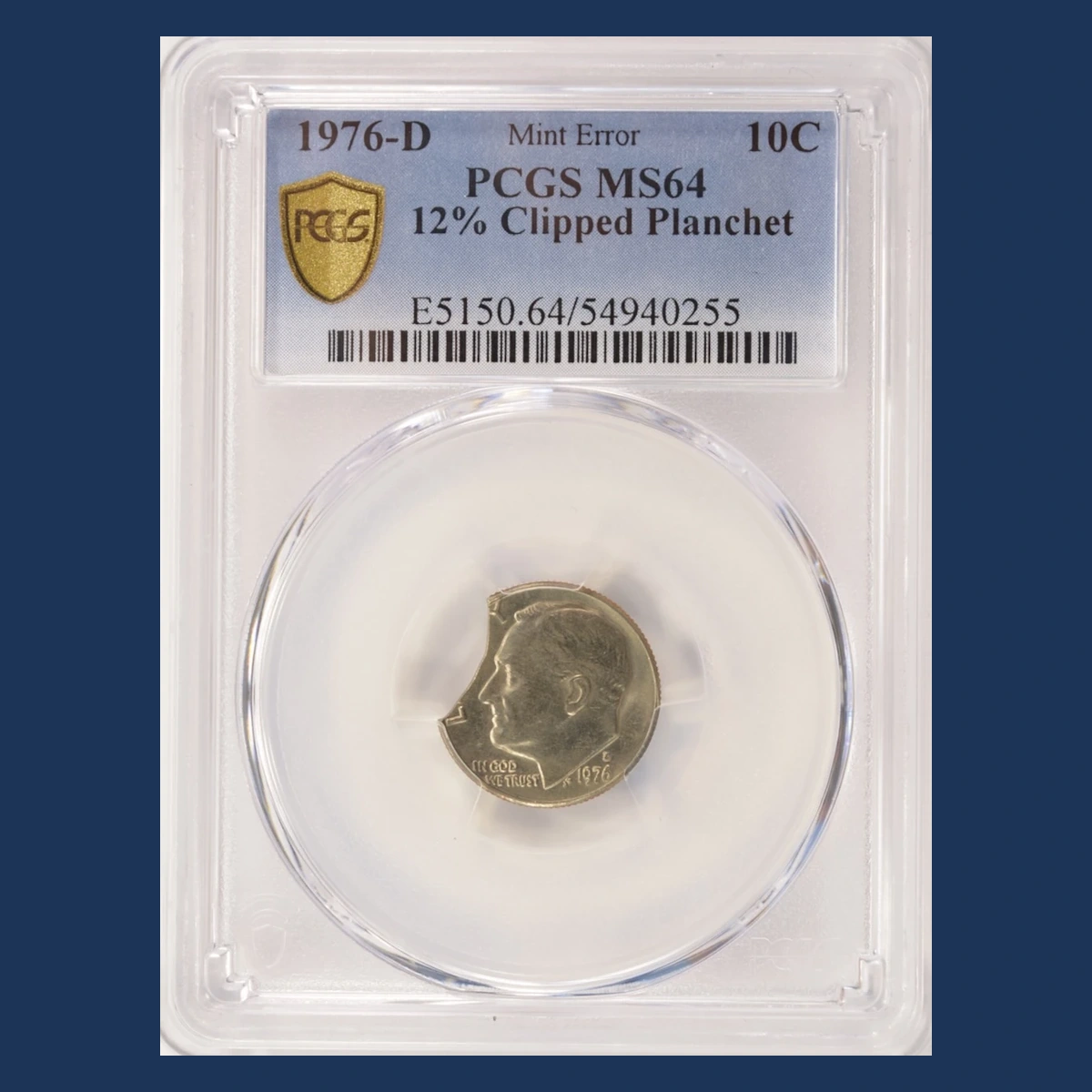
Three curved gaps interrupt the edge of one 1976 dime. They formed when the blank-cutting process produced an incomplete metal disk before the design was applied.
The no-mintmark example is graded NGC AU58, meaning it has only slight wear. Its three missing sections are recorded as curved clips, rather than straight cuts.
Count the gaps as features of one coin, not three separately priced errors. Each boundary can show how the surrounding metal moved during striking, which helps distinguish an incomplete blank from a finished dime cut or bitten afterward.
Estimated Value
The recorded triple-clip example sold for $51 in January 2017. For comparable genuine curved-clip dimes, estimate $25–$300, depending on the amount missing and the surviving design.
Three obvious original gaps can make a useful display even on a lightly worn coin. A complete date helps identify it without relying only on a holder label.
The estimate covers the entire dime. Later cuts and tool marks do not add value simply by increasing the number of gaps.
How to Identify
Locate all three curves before zooming in on one. Keep a full photograph so their relationship to the date and the remaining border is clear.
At each gap, examine the rim where it approaches the missing metal. Tapering or stretched details can support a blank that was incomplete when struck.
Turn to the exposed thickness and look for file marks, sharp cutting scars, or crushing. Those can explain missing metal removed after the coin was made.
A weak rim opposite a gap is helpful when present, but it is not required at every clip. Judge the three boundaries together instead of assigning clock positions from another clipped dime’s photograph.
3. 1976 Roosevelt Dime Copper Exposed by a Missing Outer Layer
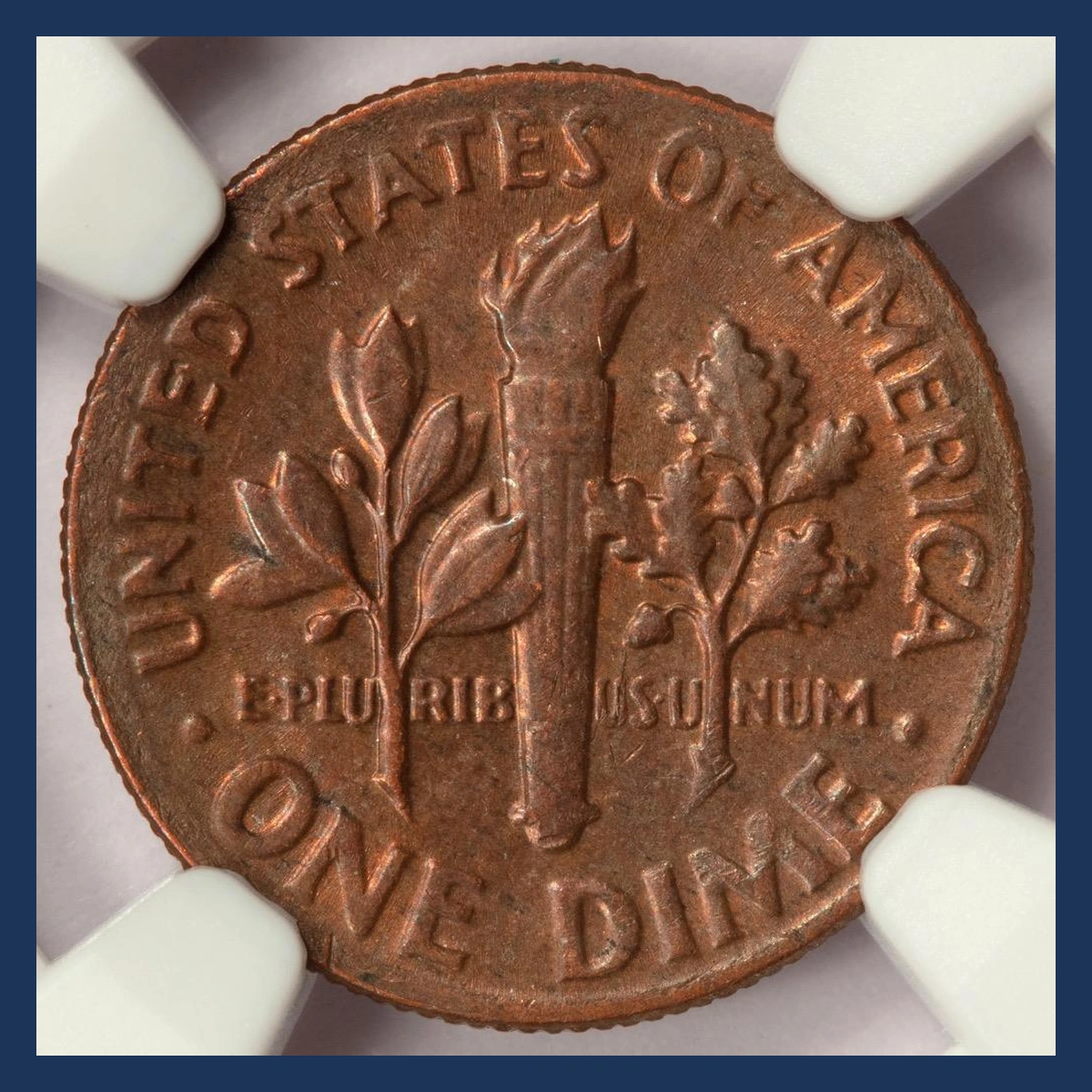
A normal 1976 dime has a copper center covered by pale copper-nickel metal on both faces. Losing one covering changes the edge structure as well as the coin’s color.
An example without a mint letter was graded ANACS MS63 and cataloged with a missing clad layer. That grade describes an unworn coin with noticeable marks.
Compare the affected face with the remaining covering and edge. A brown portrait or torch can also come from staining, so the change in metal structure matters more than its color alone.
Estimated Value
The ANACS MS63 example brought $44 in January 2004. Comparable authenticated missing-layer dimes have an estimated range of $50–$500 today.
As a newer different-year comparison, a 2000-D dime missing its front covering, graded MS65, sold for $104 in December 2022. It is a separate coin, with its own affected face and condition.
Clear original details on exposed copper improve the display. Stains or chemically damaged surfaces do not support the same comparison.
How to Identify
For a loose coin, a weight below the normal 2.268 grams can support missing metal. It cannot establish the cause by itself.
Find where the pale outer covering ends and the exposed copper begins. A normal copper stripe confined to the edge does not show that a whole face lost its covering.
Inspect the design on the copper under gentle side lighting. Letters formed during striking should differ from scrape lines or a rough surface left by chemical removal.
Compare the two faces and their adjoining edges in clear photographs before deciding which covering is absent.
Keep the coin uncleaned and have an error specialist assess any stripped-looking surface. An original missing layer and later chemical removal can produce similar colors for very different reasons.
4. 1976 Roosevelt Dime A Single Strike Far Off Center
When much of a blank sits outside the stamping area, the design occupies only a small part of the disk. The rest remains plain metal.
One 1976-D dime is cataloged as 55% off center toward twelve-thirty and graded ANACS MS63. The direction describes that particular strike, not every error with the same percentage.
A separate no-mintmark 55% example has a PCGS Uncirculated Details assessment for damage. Its later damage is distinct from the original displaced strike, and neither its condition nor its missing mint letter should be transferred to the Denver coin.
Estimated Value
Estimate $40–$700 for a genuine 1976 off-center dime. The remaining year, size of the plain area, and preservation of the original surface all affect the comparison.
A dramatic shift can be attractive even when much of the design is missing. A complete date generally makes the coin easier to identify and collect.
The damaged no-mintmark example needs a lower condition comparison than an equally clear, undamaged piece. An error does not cancel the effect of later scratches or impacts.
How to Identify
Find the date within the small struck area before estimating the displacement. Then locate the plain metal opposite the part of the design that missed the edge.
The Denver example’s twelve-thirty direction is slightly to the right of the top. Its 55% figure describes how far the strike missed, not how far the coin rotated.
Compare the back with the front to see whether both design boundaries fit the same misplaced blank.
Check the plain area for grinding marks and partly erased lettering. Also examine any damage separately from the original strike; a holder’s Details assessment describes a condition problem, not an additional minting accident.
5. 1976 Roosevelt Dime A Small Backward Image on the Front
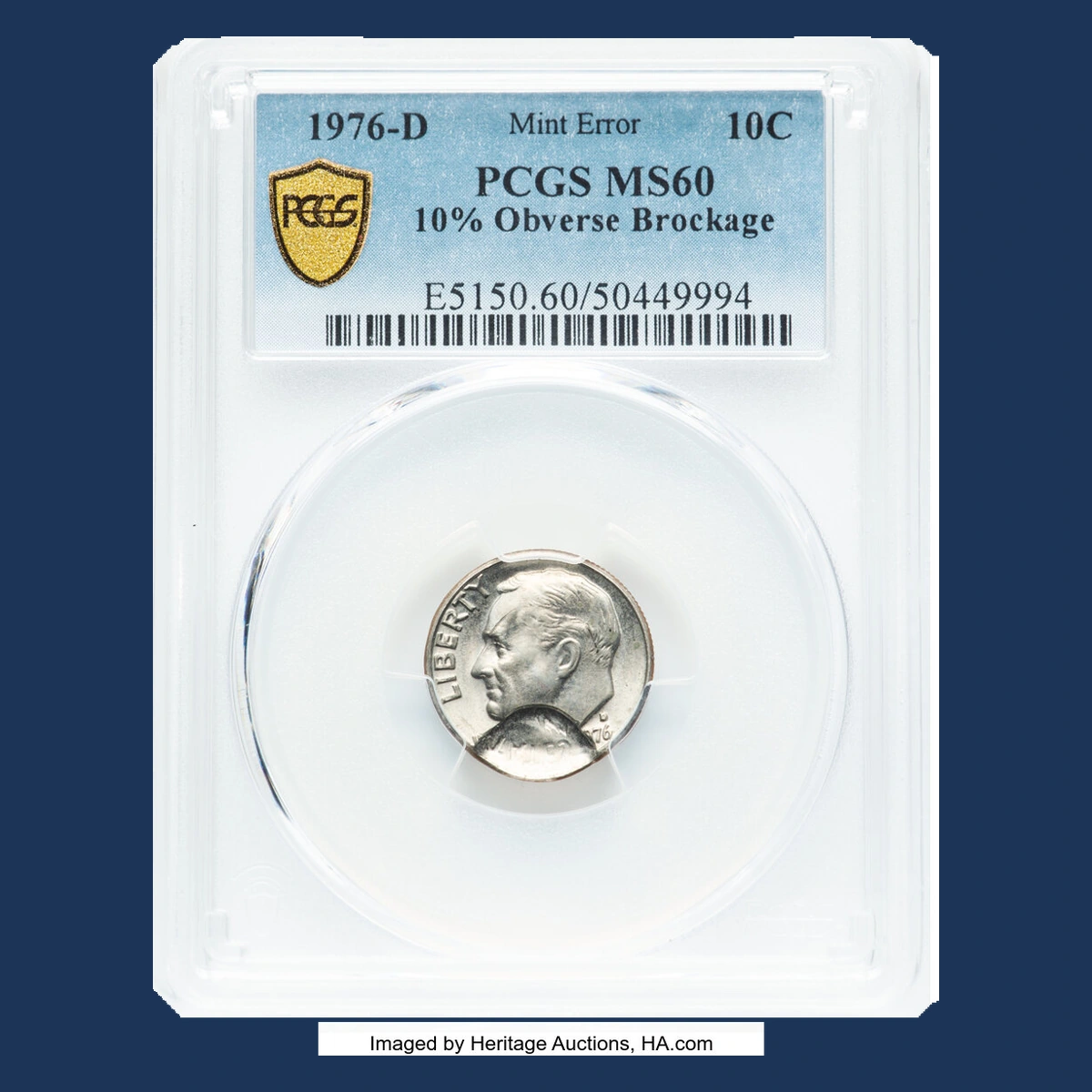
A coin already struck can press its raised design into another piece of metal inside the press. The transferred image reads backward and lies below the surface.
That effect is called a brockage. A 1976-D dime graded PCGS MS60 carries a ten-percent brockage on its front, next to the normal Roosevelt design.
The percentage gives the affected portion, not its clock position. This is also different from a smooth hollow left by an unstruck blank: the copied design is the clue that a finished coin supplied the impression.
Estimated Value
The PCGS MS60 example sold for $99 in June 2025. For comparable genuine partial brockages, estimate $75–$1,000, depending on how much transferred detail can be recognized.
MS60 describes an unworn coin with substantial marks, so a cleaner example may display the small copied image more clearly. Size alone does not explain every price difference.
A vague dent without recognizable backward detail is not an equivalent comparison. Later damage can also reduce interest in a genuine brockage.
How to Identify
Choose a recognizable letter or design fragment inside the affected patch. Tilt the coin under a lamp to see whether that detail sinks into the metal rather than rising above it.
Check whether copied letters read backward. A reflected photograph reverses the entire coin, while a brockage reverses the transferred image within the otherwise normally oriented coin.
Follow nearby copied shapes to see whether they fit one design. A random curved dent cannot establish the same process.
Photograph the complete front and back for an error specialist. Coins squeezed together outside the Mint can imitate a transfer, so the surrounding struck surface matters as much as the small hollow.
6. 1976 Roosevelt Dime Double and Triple Strikes
A second blow can land beside the first design, or the dime can turn over before it is struck again. One no-mintmark example flipped over, with its second strike 70% off center.
Other examples have a blocked back during a later strike, so both faces need not carry equally complete new images. Denver reports include a 90% displaced second strike and a separate MS61 double strike.
A Denver MS67 triple strike adds another sequence: the second impression largely overlaps the first, while the third is 90% off center.
Estimated Value
Estimate $100–$2,000 for comparable authenticated repeated-strike dimes. The PCGS MS64 flip-over example sold for $423 in January 2017.
A different Denver double strike with later counting-wheel damage brought $41 in March 2004. Its damaged condition explains why that sale is a poor benchmark for an attractive unworn example.
Visible relationships between the impressions improve appeal. A readable second date or clearly separated third image can make the minting sequence easier to understand.
How to Identify
Trace connected letters through each visible design position before counting the strikes. Small isolated shadows can make one impression look more complicated than it is.
For the flip-over example, look for front and back features together on one face. Normal raised remnants differ from a sunken backward brockage.
On the indented Denver example, the catalog suggests another blank blocked the back during the second blow. Keep that proposed cause separate from the later wheel damage.
The no-mintmark blocked-back report has an 85% displaced second strike, unlike the Denver 90% coin. For the triple strike, distinguish the nearly overlapping first two images from the separate third impression near the edge.
7. 1976 Roosevelt Dime Struck on a Copper Blank
Brown metal can also come from the blank itself, rather than a lost covering. One 1976-D dime was cataloged as struck on a copper blank weighing 2.2 grams.
It came from the Fred Weinberg Collection and was graded PCGS MS64. Its weight is close to that of an ordinary dime, making the metal structure particularly important.
The blank’s intended denomination is not identified. It should not be called a regular 1976 cent blank, which normally weighs 3.11 grams, simply because both pieces of metal can have a copper color.
Estimated Value
For an authenticated copper-blank dime of this kind, use an estimated range of $500–$2,500. The value depends on confirmed metal and original surfaces, rather than a brown appearance alone.
The MS64 grade describes an unworn example with relatively few marks. Clear Roosevelt details and a readable date help show what design struck the unusual blank.
Composition testing can strengthen the identification. A copper-plated normal dime or a stripped copper core belongs to a different comparison.
How to Identify
Start with the edge rather than the color of Roosevelt’s face. A normal dime shows separate coverings around a copper center; a copper blank needs a different metal structure.
A loose candidate can be weighed on a precise scale. The documented 2.2 grams is an actual specimen measurement, not the normal weight of every dime made from copper.
Look for boundaries where a covering was removed and for evidence of added plating. Both can create a misleading brown surface.
An error specialist can assess the composition without scraping the coin. Match the metal, original design, and measurements together before naming a particular blank or assigning it to another denomination.
8. 1976 Roosevelt Dime Reported on a Panama One-Tenth Balboa
Panama appears in the description of another unusual 1976 dime. PCGS graded the coin MS63 Brown, and Heritage cataloged it as on a Panama one-tenth balboa.
That short description identifies the foreign connection without saying whether the starting piece already carried a design. A used coin and an unused blank leave different kinds of evidence.
The Brown label describes the coin’s appearance; it does not supply an alloy or weight by itself. Those details need to be matched to the actual specimen rather than borrowed from the copper-blank Denver dime.
Estimated Value
The Panama-described coin sold for $822.50 in January 2016. An estimated range of $500–$4,000 applies to comparable authenticated foreign-metal dimes with a clear identity.
The grade describes an unworn coin with visible marks. Surface quality and how well the unusual starting piece can be identified influence collector interest.
This range does not make every brown dime a foreign-blank error. The connection to Panama needs more support than color or a seller’s unsupported label.
How to Identify
The holder and its photographs provide the starting point for this Panama-described coin. Check that the piece being offered matches that recorded example.
Look between Roosevelt’s features and the torch-side design for connected older letters or shapes. Recognizable foreign details could show that a finished coin, rather than an unused blank, entered the press.
When no older design is clear, the short catalog title does not settle that distinction.
Compare the edge and any recorded weight or diameter with the certified specimen. A brown appearance by itself establishes neither the country nor the metal.
An expert can examine the composition without scraping the surface. Preserve the coin’s original finish while checking whether its actual metal and struck details support the foreign identification.
9. 1976 Roosevelt Dime Struck over a Finished Peruvian Coin
This coin began as a finished Peruvian half-sol and later received the Roosevelt dime design. Both the host coin and the newer dime design are dated 1976.
The no-mintmark overstrike was graded NGC MS66, an unworn coin with very few distracting marks. Its foreign starting piece makes it quite different from a dime struck on an unused blank.
The important clues are surviving parts of the older design beneath the newer impressions. Their exact positions should be read from the individual coin, rather than inferred from its brass-colored appearance alone.
Estimated Value
The NGC MS66 Peru overstrike sold for $5,040 in January 2022. A working estimate for comparable authenticated examples is $3,000–$7,500.
Recognizable host details and well-preserved newer designs help explain the appeal. A coin with weak surviving identity or significant later damage needs a different comparison.
The price covers the complete overstrike, including both designs. It is not the ordinary value of a Peruvian half-sol added to that of a normal dime.
How to Identify
Look between Roosevelt’s design and the torch-side details for parts of the older Peruvian coin. Follow several connected letters or shapes instead of choosing one mark that happens to look foreign.
Compare those remnants with a normal 1976 Peru half-sol. Their arrangement should explain one earlier design beneath the newer dime impressions.
A close view of both faces is more useful than a color-only photograph. Plating can change the shade of an ordinary dime without producing an earlier coin design underneath.
Keep any grading holder sealed and use the certified specimen as the reference. The host coin’s identity and the order of the overlapping designs are central to this particular error.
Conclusion
The estimated $20–$7,500 range for these 1976 dime errors reflects very different accidents. Missing metal, displaced designs, and an older foreign coin underneath Roosevelt each leave their own clues.
Start with the complete coin, then examine the relevant edge or design area. Keep the mint, condition, and actual recorded weight attached to the right example; similar colors or repeated dates do not make two errors the same.