1978 Dime Error List with Pictures

A 1978-D dime went through the press twice, leaving its second impression mostly beyond the first. That unusual coin sold for $264 in January 2022.
This 1978 dime error list also includes copper-colored faces, extra outlines, and a reported foreign blank. Estimated values span $5–$5,000, with the highest range reserved for a professionally identified wrong-metal coin.
Read on to learn what each feature looks like and which simple checks help explain it.
1. 1978 Roosevelt Dime Struck-Through or Grease-Filled Detail (Estimated Up to $100)
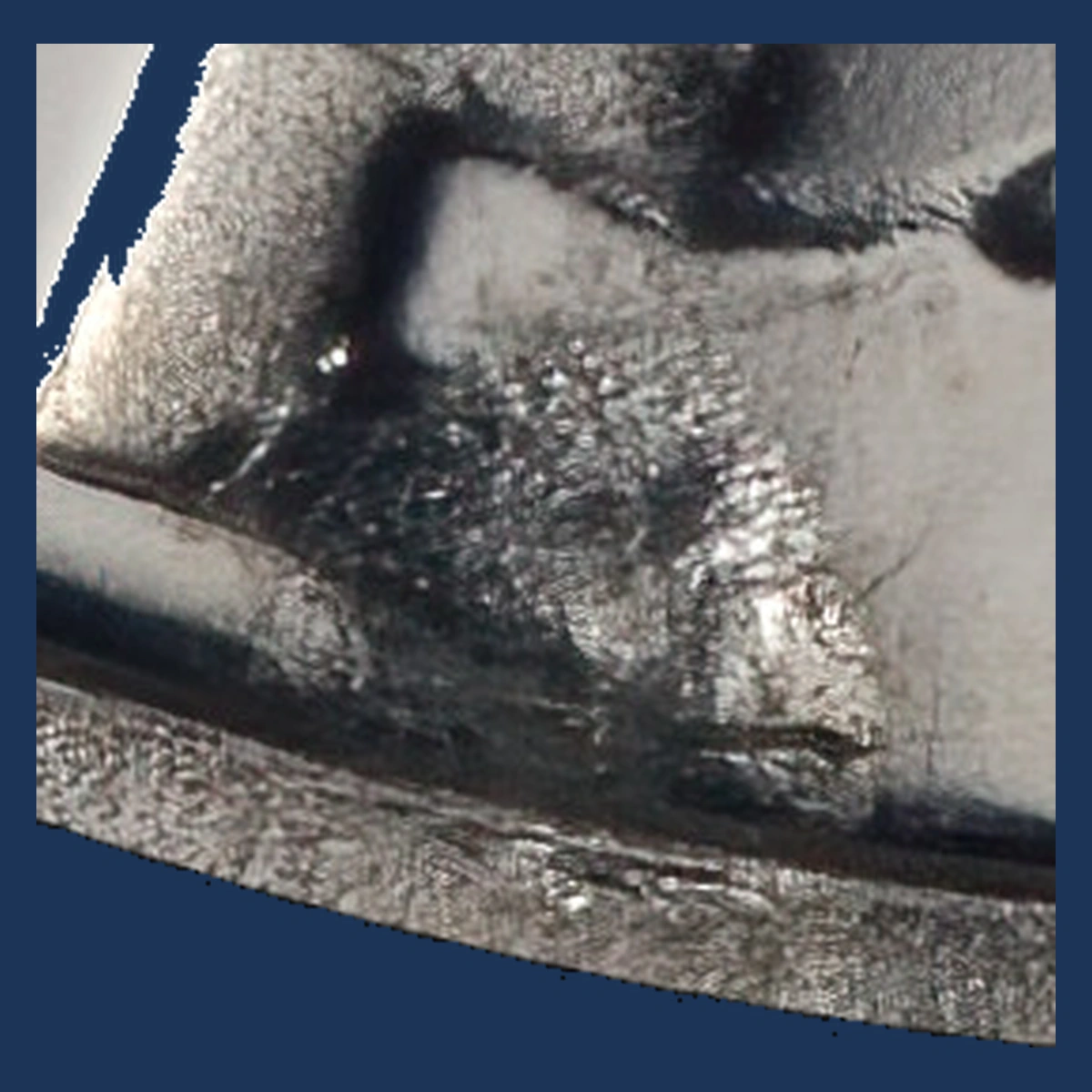
A patch of missing detail can begin with something blocking the stamping tool. Grease or another material prevents part of the design from reaching the blank.
The die is the steel tool that stamps the coin. A firm object may leave a hollow, while grease often leaves softer, incomplete detail.
Year guides discuss weak Denver mintmarks among these effects. However, a raised blob inside D can have another cause, such as a small broken tool.
Philadelphia dimes normally lack a mintmark. An empty space above the date does not by itself prove a filled die.
Estimated Value
Estimate $10–$100 for modest, clearly identified struck-through features on worn through unworn 1978 dimes. The lower part suits weak detail, while a distinct impression is easier to recognize.
Year guides place simple grease-filled effects around $10–$30. That is an estimate, not a named auction sale.
Ordinary wear adds no such premium. A readable date and undisturbed surrounding surface help a buyer judge whether the missing detail formed during striking.
How to Identify
Compare the weak area with nearby high points under a 10× magnifier. Wear usually affects exposed details elsewhere too.
If D is weak, photograph any remaining outline above the date. A completely absent letter also fits an ordinary Philadelphia coin.
A scale should show about 2.268 g, and calipers should show about 17.9 mm. Normal 1978 dimes have copper-nickel outer layers over copper and a grooved edge.
Look for pushed-up metal beside a hollow, which can suggest a later gouge. Do not scrape away material to investigate.
Check first where clear design meets the weak patch, looking for an original surface rather than scraped or worn metal.
2. 1978 Roosevelt Dime Broadstrike (Estimated Up to $150)
A broadstruck dime looks too wide, yet its main design remains on the metal. The blank spread outward because the surrounding retaining ring did not hold it normally.
That ring is called the collar. Besides controlling diameter, it gives an ordinary dime its edge grooves.
The 1978 year guide lists broadstrikes, and an auction listing identifies a graded example. Neither makes every slightly uneven border a broadstrike.
A genuine example needs outward metal spread and the expected edge changes. Hammering a finished coin can widen it too, but also damages the original surface and design.
Estimated Value
For a clearly expanded 1978 dime, use an estimated $25–$150 range across worn through unworn examples. A tiny border difference is not enough to support that price.
The year guide gives values reaching about $100 for obvious examples. The upper allowance here is for stronger preservation and more noticeable spread.
These figures are estimates rather than a recovered auction result. Compare the full design, edge, and condition before paying for the label alone.
How to Identify
Place the dime beside a normal example without pressing their surfaces together. Use calipers to compare the suspect coin with the usual 17.9-mm diameter.
A loose coin should weigh near 2.268 g on a scale. The extra width comes from spreading metal, not from adding a heavy coating.
Inspect the edge under a 10× magnifier. A full broadstrike should show the effects of escaping normal collar confinement.
The major design should remain present on both sides, even if the spread is uneven. Flattened letters, battered surfaces, or squeezed edge grooves can point to later damage.
The simplest check is a complete design inside a genuinely expanded outline, supported by the changed edge.
3. 1978 Roosevelt Dime Doubled Die Reverse (Estimated Up to $200)
Extra outlines around back lettering or leaves can come from a tool made with a doubled design. Every dime struck by that tool can repeat the same small pattern.
The 1978 year list describes reverse doubling around the torch, branches, or words. It does not name one tool showing all those features together.
Use those areas as places to inspect, not a checklist that every candidate must satisfy. A thicker letter alone is not enough.
Flat ledges caused during striking can resemble doubling. Rounded extra contours matching a known example provide much stronger support.
Estimated Value
An estimated $20–$200 suits identified minor reverse doubling on worn through unworn 1978 dimes. This follows the guide range rather than an auction price for a named tool.
Separation that remains clear in an ordinary close-up is easier for collectors to appreciate. Heavy wear may leave only a thick, ambiguous edge.
Before using the higher figures, establish the actual variety. Magnification alone cannot turn ordinary strike doubling into a valuable doubled die.
How to Identify
Start with ONE DIME and the torch under a 10× magnifier. Trace a suspect edge through neighboring details to see whether it follows a consistent second outline.
Take pictures under two light angles. A reflection may move, but an extra contour formed in the metal remains.
Check the front for the date and any mintmark before choosing a comparison. The year-list report does not establish one mint for every reverse pattern.
Weigh a loose dime against 2.268 g and measure against 17.9 mm with a scale and calipers. Retain a photograph of the normal grooved edge.
Focus on matching rounded duplicate contours, rather than flat shelves or one unusually thick letter.
4. 1978 Roosevelt Dime Missing Front Clad Layer (Estimated Up to $250)
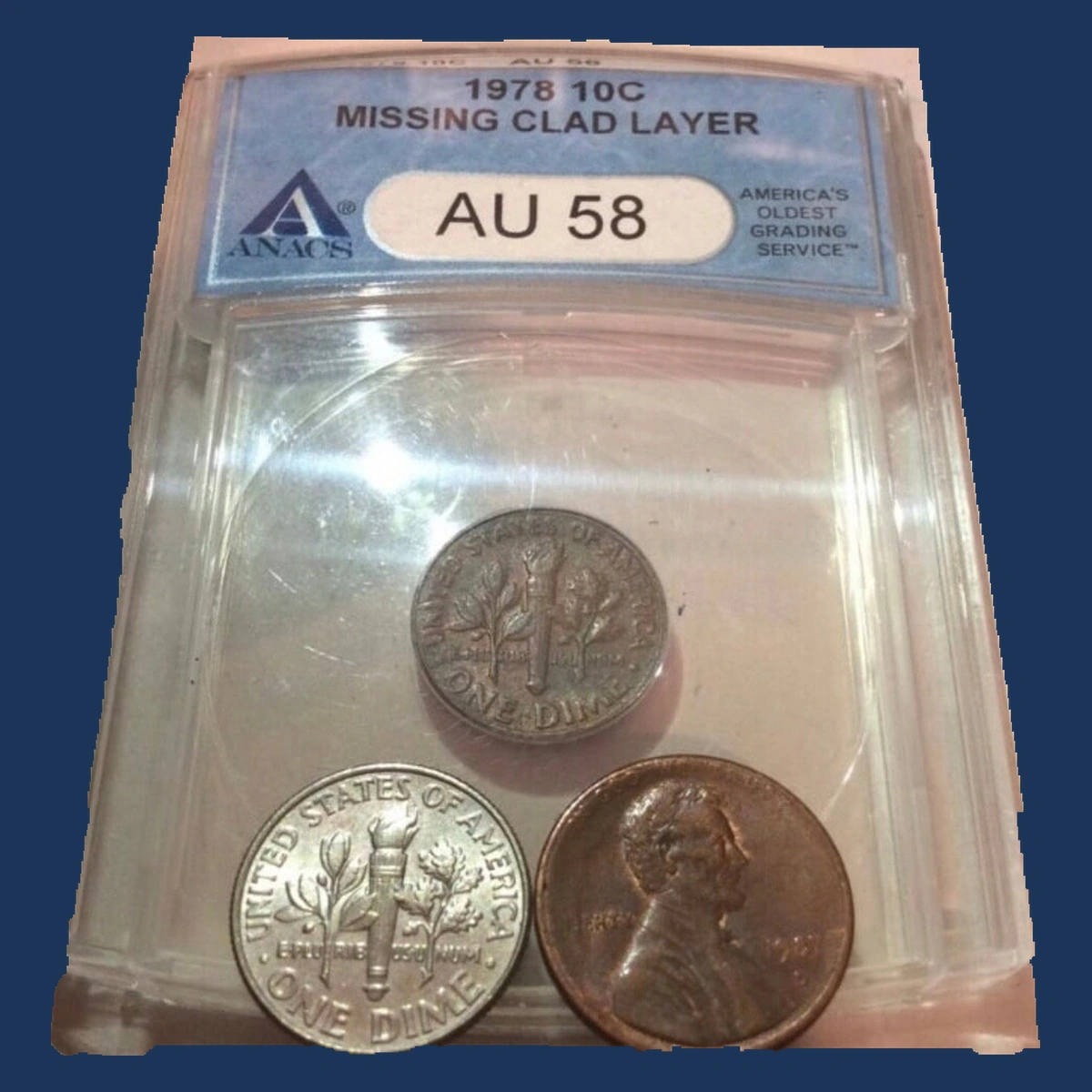
A copper-colored front beside a silver-colored back can signal a missing outer layer. Normal dime metal has two copper-nickel coverings bonded around a copper center.
If one covering is absent before striking, the design forms directly in the exposed copper. The coin also loses some of its expected weight.
The 1978 Philadelphia example described in the year guide has the front layer missing. It is reported at AU58, meaning slight circulation wear.
Color alone cannot establish this error. Heat, chemicals, or a coating can change a normal dime without removing its original outer layer.
Estimated Value
The reported Philadelphia example provides a useful starting point for an estimated $75–$250 whole-coin range. The year guide quotes roughly $75–$200 for missing-layer pieces, including lightly worn examples.
The upper allowance favors an attractive unworn coin with a clear color difference. These are estimates rather than a named sale of the AU58 piece.
Corrosion or later removal of surface metal lowers appeal. A professional finding that the layer was absent during striking matters more than copper color alone.
How to Identify
Weigh the coin before judging its color. A missing outer layer should reduce weight from the normal 2.268 g, but the exact loss depends on what is missing.
Use a scale accurate to 0.01 g and calipers to check the usual 17.9-mm diameter. A light coin may also have been chemically damaged.
With a 10× magnifier, inspect the copper-colored face for normal struck detail. Grinding can leave fine parallel marks and remove parts of the design.
Photograph both faces and the layered edge without cleaning. The reported Philadelphia coin has no mintmark.
The useful first combination is one copper-colored face, reduced weight, and original design still struck into that exposed metal.
5. 1978 Roosevelt Dime Strong Clashed Dies on a Proof (Estimated Up to $350)
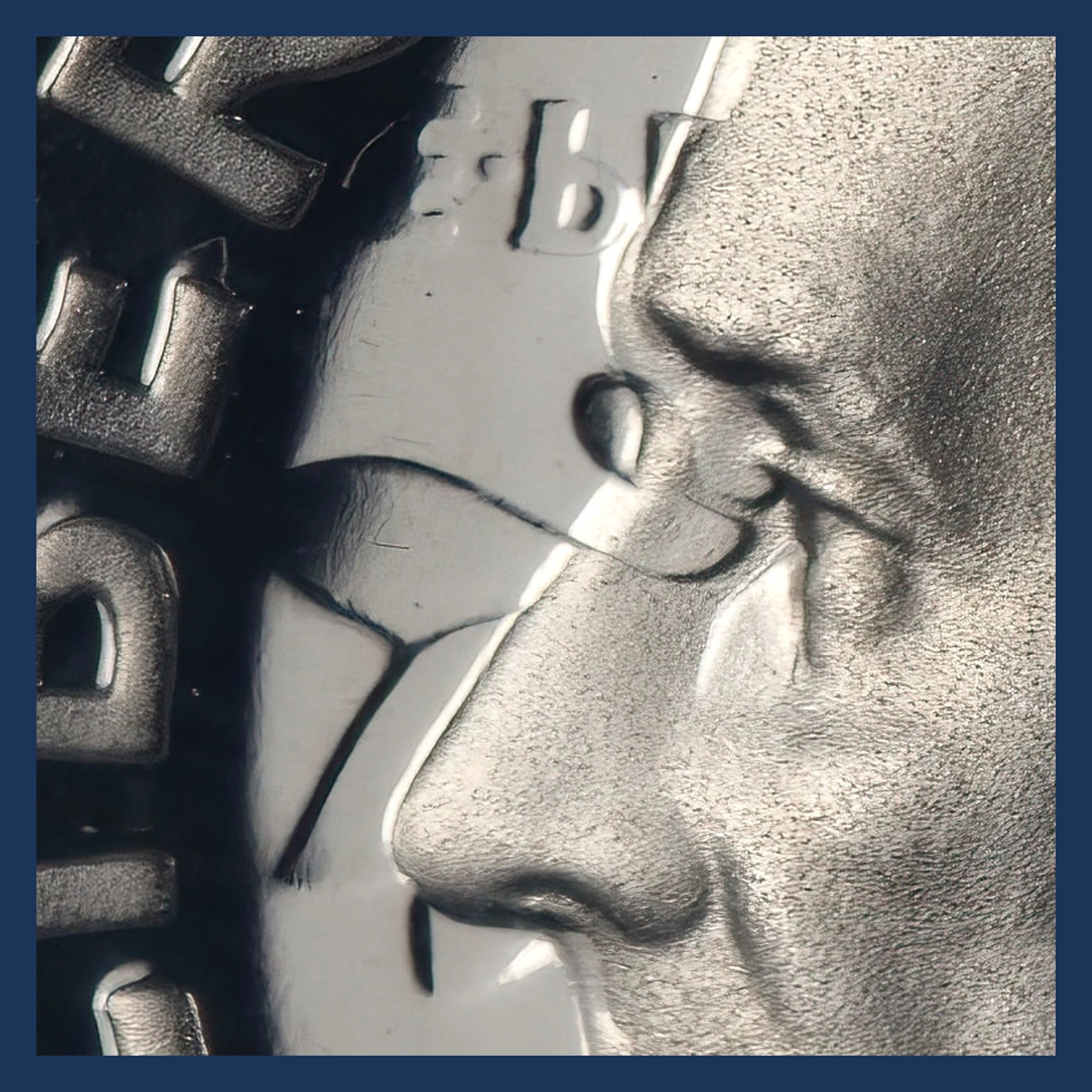
A proof is a specially made collector coin, usually with reflective backgrounds. The 1978-S clash examples show extra design traces on both faces of such coins.
The two stamping tools hit each other without a blank between them. Parts of each design marked the opposite tool and then appeared on later dimes.
Heritage recorded separate PCGS PR67 and PR68 Deep Cameo examples. Those labels describe well-preserved proofs with strong contrast between frosted designs and shiny backgrounds.
The extra traces belong to the tool damage. Normal reflection, cleaning lines, or a second strike can create different-looking effects.
Estimated Value
Two 1978-S proofs, graded PR67 and PR68 Deep Cameo, each sold for $159 at Heritage in October 2022. Those actual results support an estimated $100–$350 range for clear examples with attractive surfaces.
The clash must remain visible against the reflective background. Fine cleaning marks can distract from it and reduce demand.
These are copper-nickel clad proofs, not silver coins. The estimate reflects the striking-tool feature and preservation rather than a precious-metal premium.
How to Identify
Keep a graded proof in its holder. Turn it gently under diffuse light so the mirror-like background does not hide faint lines.
A 10× magnifier helps separate an extra design shape from straight cleaning scratches. Compare both faces with the recorded 1978-S proof, without assuming one exact location from the error name.
The S appears above the date. Normal measurements are 2.268 g and 17.9 mm, with a grooved edge.
Use the grading record for a sealed coin’s measurements. A loose example can be checked with a scale and calipers, handled only by its edge.
Look for recognizable opposite-design traces on both faces that match the proof example, rather than loose lines in the reflections.
6. 1978 Roosevelt Dime Die Cracks, Chips, and Cuds (Estimated Up to $400)
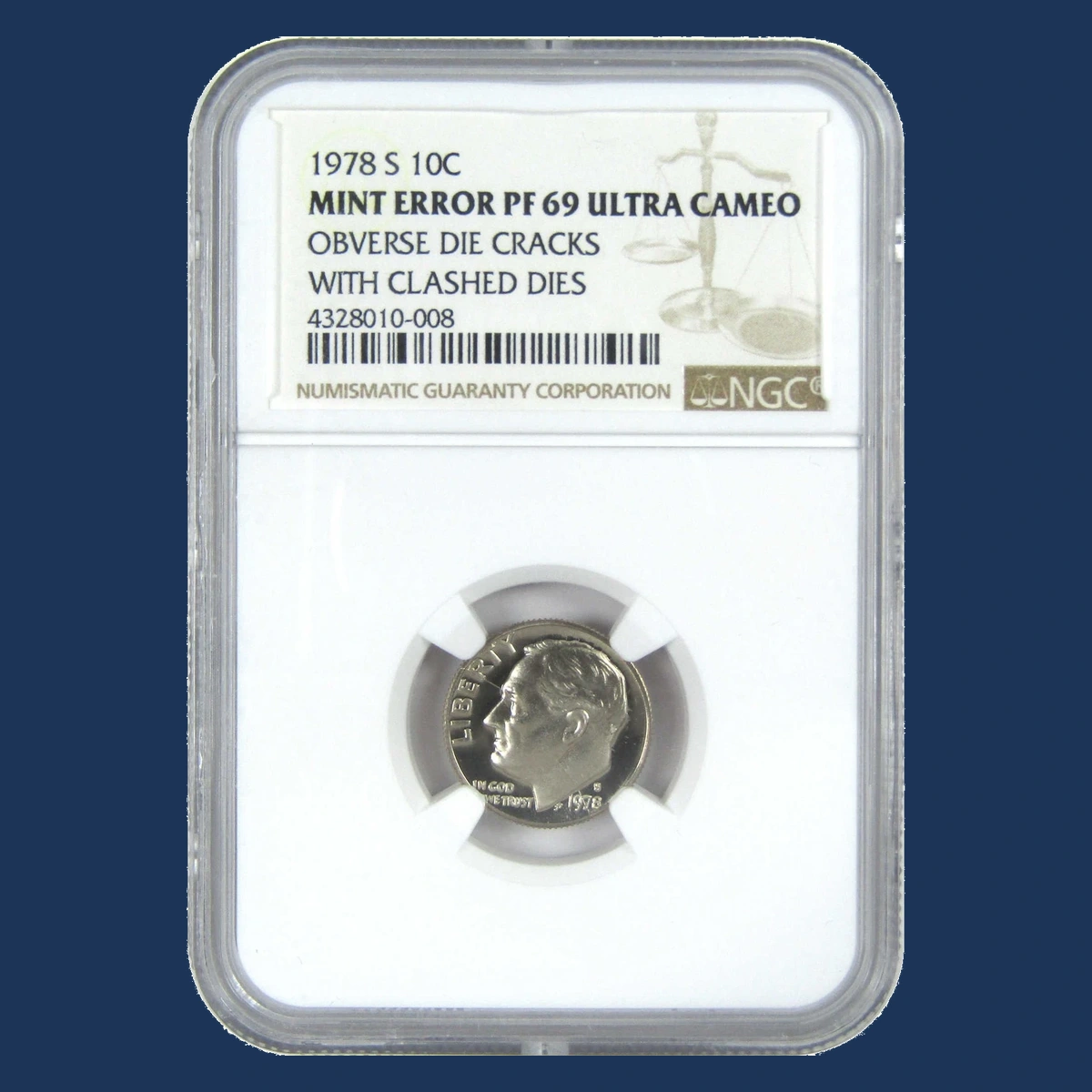
A thin raised line, a small bump, or a lump joined to the rim can reveal a damaged stamping tool. These marks differ in size and shape.
Metal fills a crack in the tool and forms a ridge on the coin. A small broken piece can leave a raised chip-shaped mark.
A cud is a larger break connected to the rim. It should not be confused with an isolated bump near Roosevelt’s face.
Year reports include ordinary 1978 tool breaks and a separate 1978-S split-tool proof. They describe different coins, not a single example carrying every feature.
Estimated Value
Minor raised chips may fit a $5–$30 estimate, while bold rim breaks can justify about $25–$400. Taken together, this gives a $5–$400 range for the group.
Size and visibility matter, but a proof needs its own comparison. No auction price is given here for the reported split-tool proof.
Do not add these figures for every ridge on one dime. Value the complete coin, including wear, surface marks, and the strength of its most important break.
How to Identify
Find out whether the mark rises above the surrounding surface. A 10× magnifier and low side light can distinguish a ridge from a cut.
Follow a suspected cud to the rim. An interior blob is a different kind of break, even when it is close to the edge.
For a split-tool report, compare the entire line and the nearby design with the actual example. A crack through the coin itself may be visible from its edge.
Check a loose dime with a scale against 2.268 g and calipers against 17.9 mm. Leave sealed proofs intact and use their records.
The first test is raised original metal: a ridge for a crack, or a rim-connected lump for a cud.
7. 1978 Roosevelt Dime Doubled Die Obverse (Estimated Up to $600)
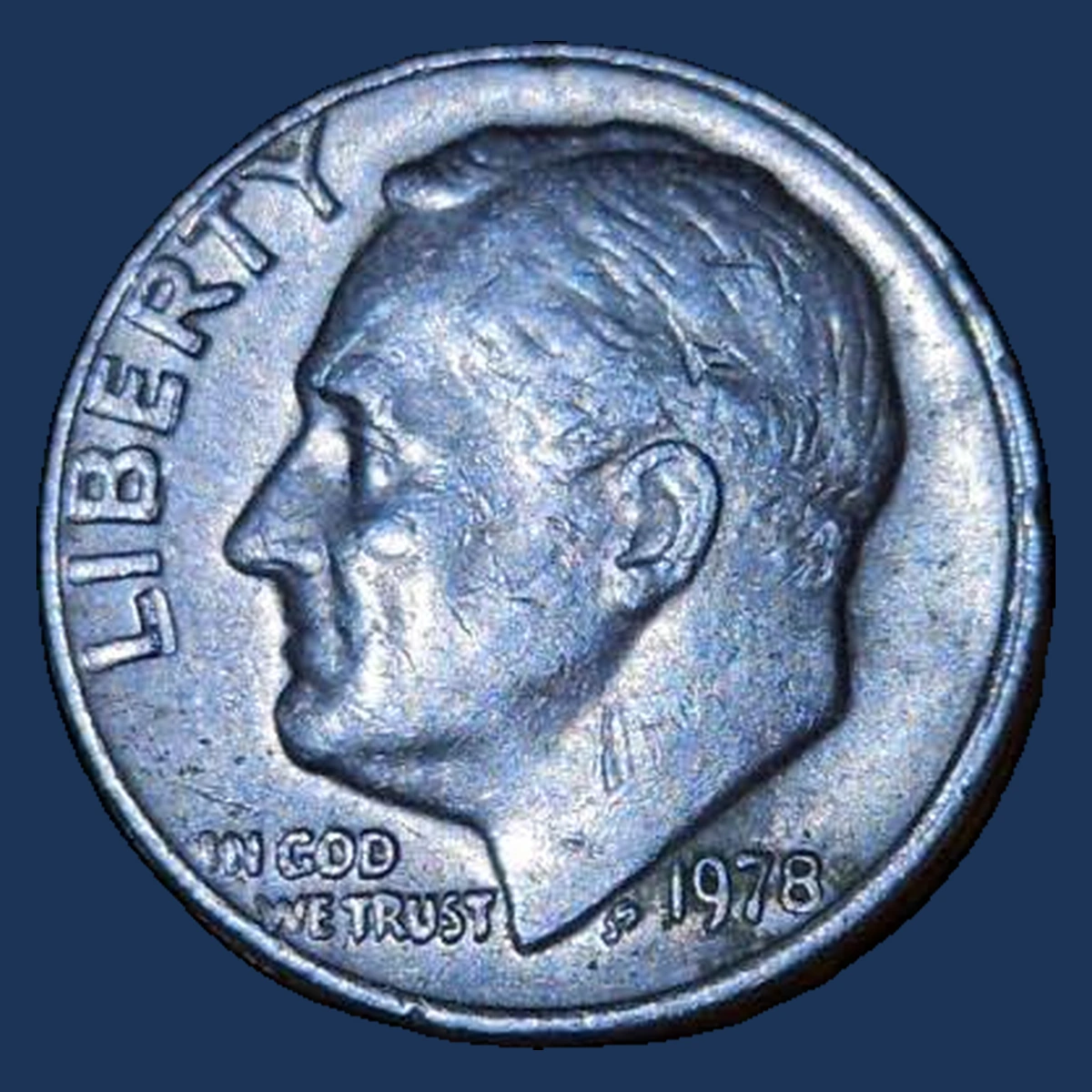
A second outline beside a date digit can draw attention before the rest of the coin. On a doubled die, that repeated shape was already present in the stamping tool.
The year guide lists the profile, LIBERTY, date, and motto as possible inspection areas. It does not identify one certified 1978 example carrying duplication in every place.
Each candidate therefore needs a specific match. A repeated contour in one area cannot prove all the others are doubled.
Strike movement can leave flat shelves beside otherwise normal letters. That common effect differs from a tool made with a doubled design.
Estimated Value
The year guide places front doubling around $50–$600, from modest worn examples to clearer unworn pieces. Use this as an estimated range for a correctly identified variety, not a promised sale price.
No named 1978 doubled-front auction is used here. A coin with merely thick letters should not receive the top figure.
Collectors need to see the repeated shape clearly. Distinct separation and undamaged surfaces offer a stronger basis for pricing than an unexplained seller label.
How to Identify
Photograph the complete front before enlarging a single letter. Keep 1978 and the mintmark area visible so the coin’s identity remains clear.
With a 10× magnifier, examine the date first, then the lettering and profile. Follow any second outline rather than treating every thick edge as another image.
Compare the suspect detail under changing light. Look for rounded duplication or a small split at a letter corner, not a low flat ledge.
A normal clad dime weighs 2.268 g and measures 17.9 mm, checked with a scale and calipers. The edge should have grooves.
Choose one clear repeated contour and match its shape and position to a documented example before assigning a doubled die.
8. 1978 Roosevelt Dime Triple Curved Clips with an Off-Center Strike (Estimated Up to $600)
Three curved gaps interrupt the edge of this Philadelphia dime, while the design also sits off-center. Both mistakes happened before the coin reached circulation.
The blanking punch overlapped earlier holes in the metal strip, leaving an incomplete disc. That blank later entered the press in the wrong position.
Heritage describes the resulting strike as 10% off-center. NGC called the coin unworn but gave it a Details label because of a wheel mark on the back.
That surface damage is separate from the minting errors. Three missing arcs should not be counted as three independently priced coins.
Estimated Value
For the triple-clip and off-center combination, estimate $100–$600, depending on the preserved design and later damage. The Heritage example confirms the combination, but no sale price is assigned to it here.
The same-year double-struck dime that brought $264 in 2022 offers broad context for a dramatic combined striking error. It is a different mechanism, so the comparison is limited.
The wheel mark matters. A cleaner coin may be more appealing than an otherwise similar damaged example.
How to Identify
Count the three missing arcs on both faces, then inspect each edge with a 10× magnifier. Saw marks or sharp freshly cut walls suggest later removal.
An original clip may show curved blanking surfaces and weakness in the opposite rim. The clipped metal was already absent when the coin was struck.
Use a scale to record its reduced weight against a normal 2.268-g dime. Calipers can document the remaining outline against the usual 17.9-mm diameter.
Next compare both designs for the 10% shift. Photograph the wheel mark separately instead of treating it as a fourth mint error.
The quickest check joins two observations: three original curved omissions and displaced design on the same coin.
9. 1978 Roosevelt Dime Double Strike with an Off-Center Second Strike (Estimated Up to $750)
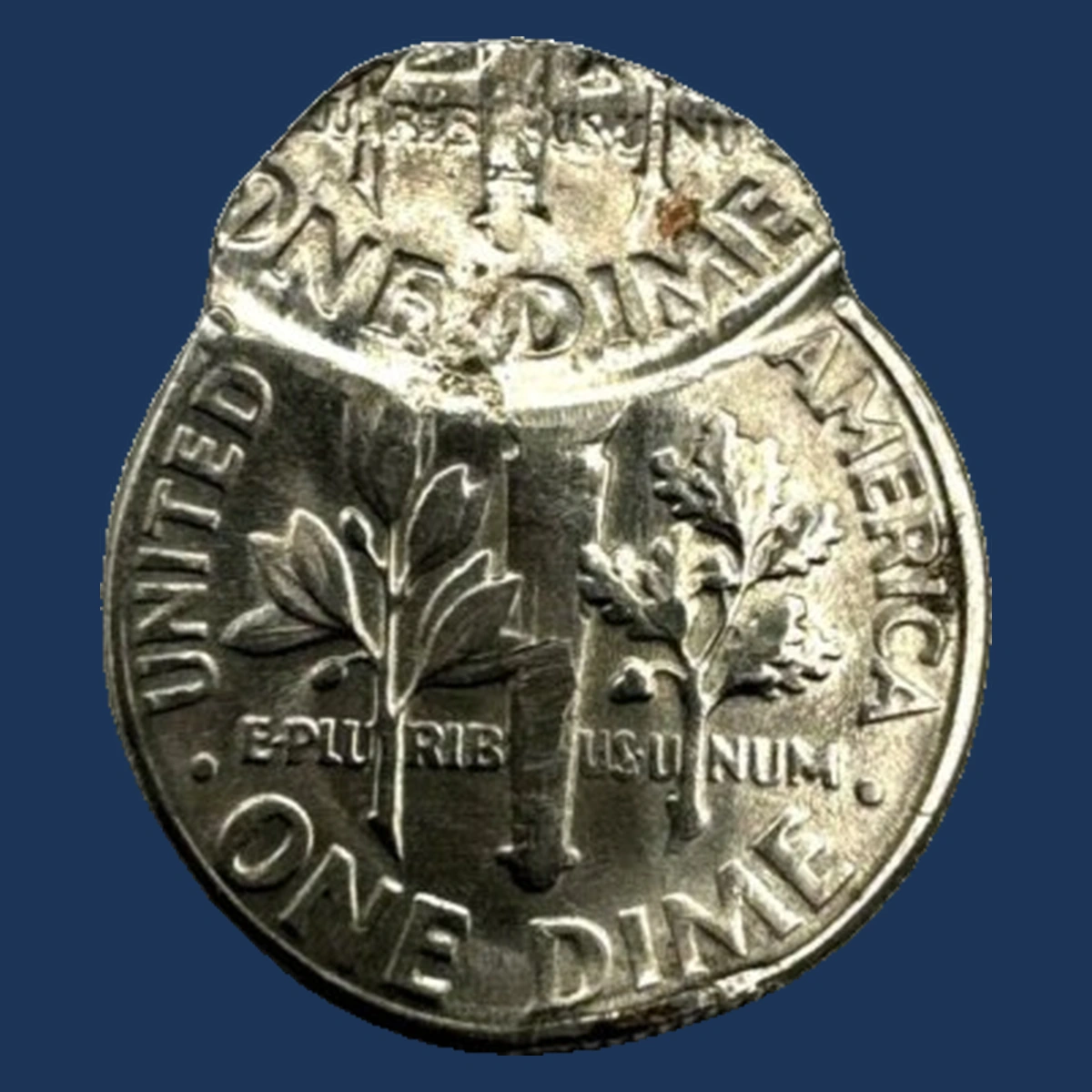
The first design survives across much of this Denver dime. A second impression sits far beyond it, showing that the coin returned to the striking area.
Heritage identifies the second strike as 85% off-center and uniface. Uniface means the second impression appears on only one face because something blocked the other side.
ANACS graded the coin MS63, meaning no circulation wear but noticeable marks. This is a second blow to an already struck coin.
It differs from a doubled die, which repeats small details from one tool. Here the two impressions occupy visibly different positions.
Estimated Value
The ANACS MS63 example sold for $264 on January 3, 2022. Its readable first design and strongly displaced second impression give a useful same-year auction comparison.
Estimate $150–$750 for collectible 1978 double strikes with similarly clear separation. Surface damage, lost date details, or a less obvious second impression can reduce appeal.
The 85% figure describes the second strike’s position. It does not mean that 85% of the coin’s metal is missing.
How to Identify
Try to read the first design without following the second. Then locate repeated letters or portrait details belonging to the displaced impression.
Use a 10× magnifier to inspect where the impressions meet. Scratches and pressed-on designs can disturb metal in ways a genuine second strike does not.
Check both faces: the recorded second strike is uniface, so it does not require a matching second design on the back. Keep the D and full first date visible.
The original clad blank weighed about 2.268 g and was 17.9 mm wide. A scale and calipers document any changed outline without assuming metal was removed.
Look first for two separate struck designs, with the later impression mostly displaced beyond the earlier one.
10. 1978 Roosevelt Dime Strike on an El Salvador Centavo Blank (Estimated Up to $5,000)
A yellowish dime may have been struck on brass intended for another country. A blank, also called a planchet, is the metal disc that receives the design.
A historical Mint Error News table lists a 1978 dime on an El Salvador one-centavo brass blank. It does not provide a measured weight or a mint for that specific entry.
The claim concerns the metal inside the coin, not just its color. Brass contains copper and zinc, unlike the normal dime’s layered copper and nickel.
A yellow coating or chemical discoloration cannot establish this rare wrong-blank error.
Estimated Value
A professionally identified example supports an estimated $1,000–$5,000 range, depending on condition and the strength of the identification. This is not a recorded 1978 sale.
A different 1957 Roosevelt dime on an El Salvador centavo blank sold for $4,080 at Heritage in July 2022. NGC graded that coin MS63 Brown, indicating an unworn piece with noticeable marks.
The comparison supports the scale of the estimate. Its recorded 2.2-g weight must not be assigned to the 1978 report.
How to Identify
Have the metal tested without scratching or filing the coin. A professional alloy test is more useful here than judging a photograph’s yellow color.
Record weight on a 0.01-g scale and diameter with calipers. Compare those results with a normal 2.268-g, 17.9-mm clad dime, then with the proposed foreign blank.
Under a 10× magnifier, inspect both faces and the edge for plating, peeling, or exposed normal layers. Photograph any incomplete outer design rather than assuming a brass blank must show one particular shape.
The historical entry does not provide its own measurements. Start with a confirmed brass alloy throughout the coin, supported by matching measurements and original struck surfaces.
Conclusion
Three missing arcs, a copper-colored face, and a second displaced design call for different checks. Start with the whole coin, then inspect the feature that best explains its unusual appearance.
The estimated range runs from $5–$5,000. Keep ordinary damage separate, use measurements when the blank is involved, and compare a named auction result only with a genuinely similar coin.