2022 Penny Error List with Pictures

LIBERTY can seem to gain an extra I, while a gray patch can expose the metal beneath Lincoln’s copper-colored surface. These clues lead to very different 2022 penny errors.
The estimated ranges below span $2–$500. For a recent comparison, a 2021 Shield cent with a small straight clip sold for $114 in September 2025.
That sale concerns another year, so match the feature before using the price. Continue through the close-up checks to separate raised tool marks, damaged plating, and misplaced strikes.
1. 2022 Lincoln Penny Die Chips and Cracks (Estimated Up to $50)
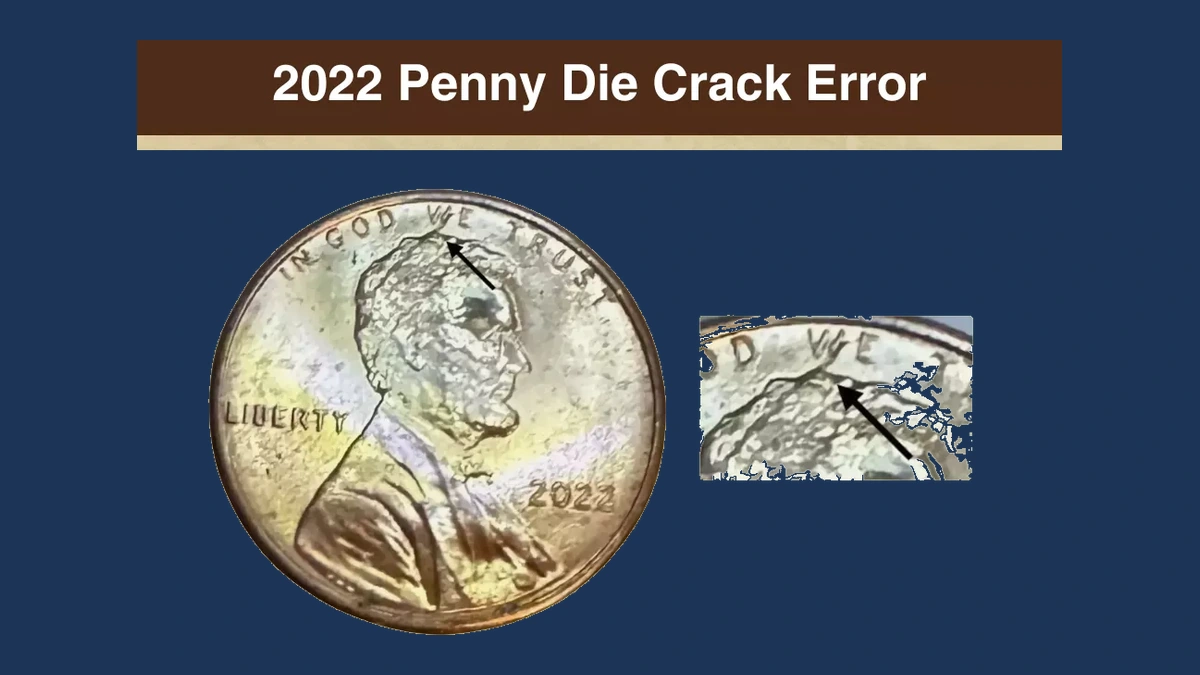
A short raised bar between B and E can make LIBERTY look like it contains an extra I. Collectors call this a BIE chip.
Another reported Denver example has a tear-shaped bump beneath Lincoln’s eye, nicknamed Crying Lincoln. Other reports describe raised shield lines or a bump inside the O of ONE.
These features come from damage to a die, the steel tool that stamps the coin. Metal fills a small break or crack in that tool.
The locations belong to different examples. A tear-shaped bump does not automatically mean the same coin also has doubled lettering.
Estimated Value
Estimate $2–$10 for small ordinary chips or short cracks. Clear BIE bars, tear-shaped bumps, and stronger lines can fit approximately $10–$50.
These are comparisons with minor tool breaks on modern Shield cents, not certified 2022 auction records. Shape and visibility help explain why one small flaw attracts more interest than another.
The nicknames do not guarantee rarity. A plated-metal blister or stuck-on dirt should not receive a die-chip premium.
How to Identify
Look between B and E first, then below Lincoln’s eye, and finally at the shield side. Keep each suspected feature in a separate close-up.
Through a 10× magnifier, check whether the line or bump rises from the coin’s surface. A scratch cuts inward, while a die crack leaves a ridge.
Copper plating can blister above the zinc center. Do not press or scrape a bump to see whether it moves.
The normal penny weighs 2.50 g and measures 19.05 mm with a smooth edge. Check accessible coins with a scale and calipers.
Match the actual location and shape with a genuine example. A solid raised bar between B and E is the direct BIE clue.
2. Reported 2022 Lincoln Penny Feeder Contact Marks (Estimated Up to $50)
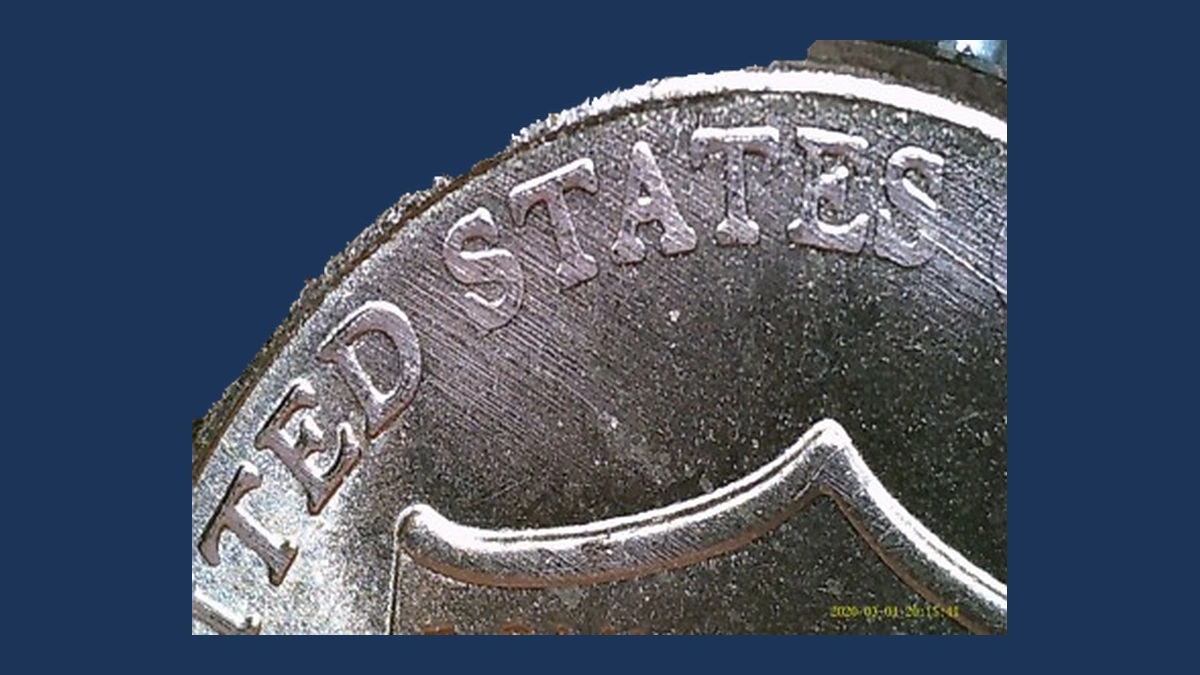
Regular parallel marks near Lincoln’s nose and chin have been described as feeder contact marks. A feeder is part of the equipment that moves blanks into the press.
The name alone does not explain how the lines formed. Marks cut into a stamping tool can appear raised on later coins.
Direct scratches on a finished coin are different. Material caught during striking can leave another kind of impression altogether.
The 2022 reports mix these explanations without establishing one mechanism for every example. Examine whether the marks rise or sink, and how they meet the portrait, before choosing a cause.
Estimated Value
For clearly established mint-made tool marks, use an estimated $2–$50 range. This follows small equipment-related marks on modern Lincoln cents.
It is not an auction price for an authenticated 2022 feeder-error specimen. Ordinary scratches carry no error premium merely because several lines run parallel.
A clean repeated pattern is easier to collect than a faint mark. The upper estimate assumes original mint-made features that can be distinguished from circulation damage and plating problems.
How to Identify
A light held almost level with the coin can reveal the lines’ shape. Watch their highlights and shadows through a 10× magnifier.
Raised lines may reflect marks in a stamping tool; cuts in the coin call for a different explanation. Neither conclusion follows from parallel spacing alone.
Check where each line crosses the nose or chin. Later scratches may cut through already finished detail or push metal beside the cut.
For safely accessible coins, use a scale and calipers against 2.50 g and 19.05 mm. Inspect the smooth edge for damage too.
A second genuine example with the same raised pattern can help establish a tool origin. Start by proving the lines are raised rather than simply calling them feeder scratches.
3. 2022 Lincoln Penny Doubled Designs (Estimated Up to $100)
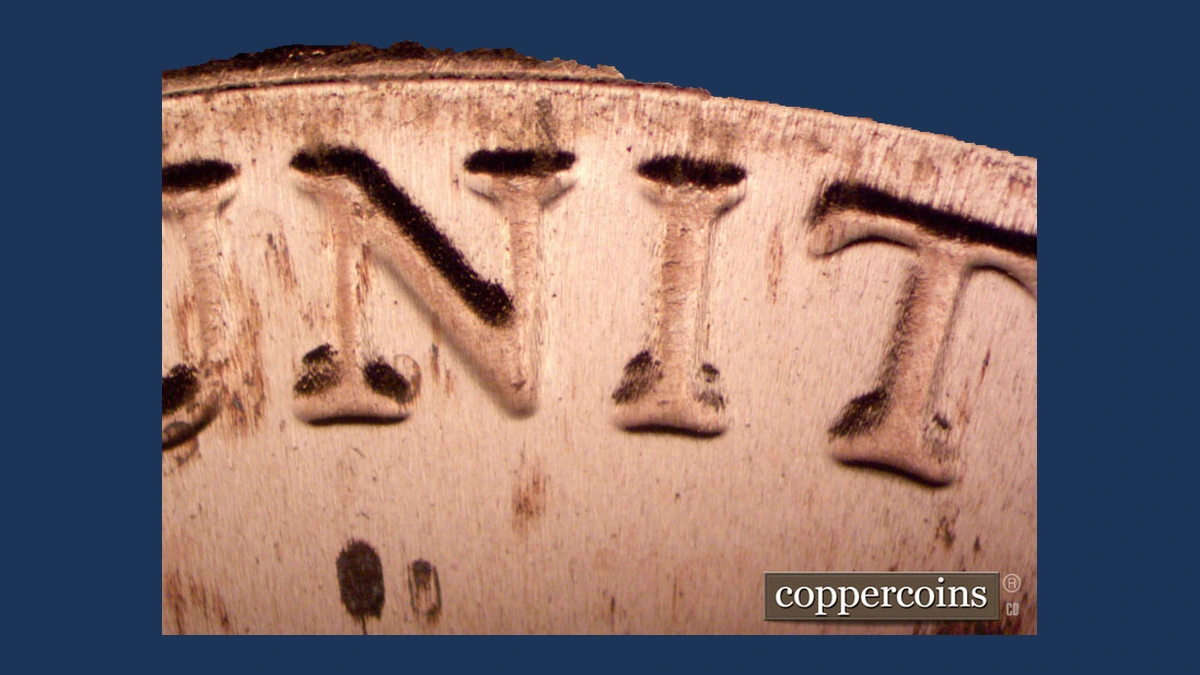
Extra outlines do not appear in the same places on every 2022 penny. Philadelphia examples include doubling at Lincoln’s eye, nose tip, chin, and the R in TRUST.
Some of that pattern came from a working hub, the tool used to make several stamping dies. It can therefore occur on many coins.
Denver front-side examples show date doubling toward the upper left and thickened lettering. Separate shield-side varieties affect letters, small initials, or other design edges.
Compare the correct mint and face. A common hub-made feature should not be sold as though every coin represents a separate rare discovery.
Estimated Value
Minor identified doubling has an estimated $5–$30 range. Clearer, attractive examples can fit approximately $30–$100.
These estimates compare modest modern Shield-cent varieties. They do not attach a rare-variety price to the shared Philadelphia hub pattern.
The strongest extra outlines are easier to see and display. Surface marks, wear, and very faint thickening can keep a coin near the lower end.
Compare the whole coin if both faces are doubled. Separate front and back estimates should not be added together.
How to Identify
Choose a mint-specific photograph from Wexler’s 2022 catalog before enlarging the coin. A Philadelphia penny has no mintmark; a Denver coin has D.
Use a 10× magnifier at the eye, nose, chin, and TRUST on Philadelphia examples. For Denver front doubling, compare the date and lettering with the corresponding Denver pattern.
On the back, examine the lettering, small designer initials, ribbon, and shield edges shown for that particular variety. Flat shelves can come from movement during striking.
A scale and calipers check the normal 2.50 g weight and 19.05 mm width when safely accessible. The edge should be smooth.
Look for matching raised separation in the same design details, rather than general letter thickness.
4. 2022 Lincoln Penny Struck-Through Error (Estimated Up to $150)
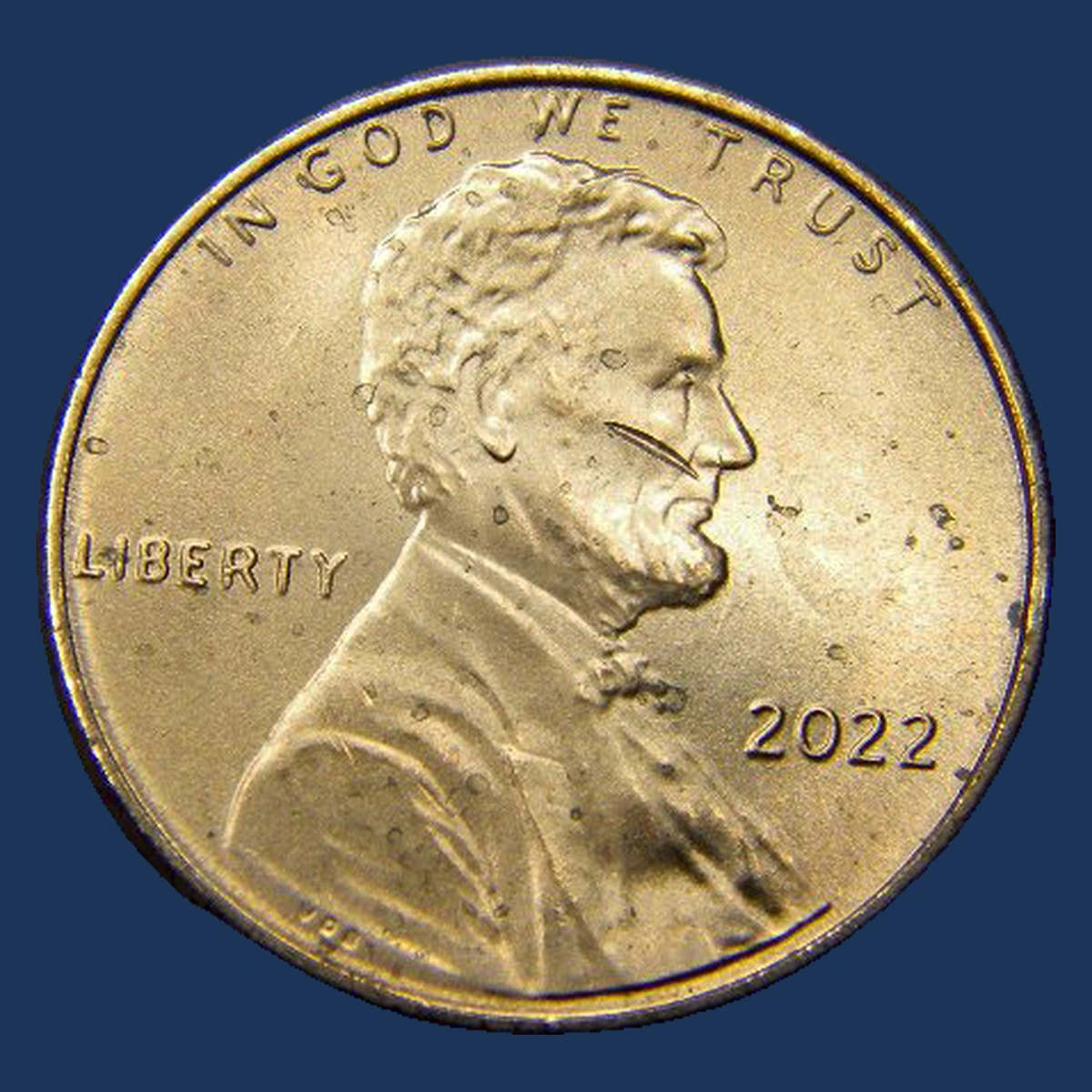
An impression near Lincoln’s forehead and missing letters on the back can have a shared cause. Something blocked the stamping tool from reaching the blank normally.
This is called a struck-through error. A solid object can leave an outline, while grease may produce softer areas of missing detail.
The forehead report concerns a Philadelphia coin without a mintmark. Reports of weak ONE CENT lettering need their own back-side examination.
These are separate examples, not a claim that both features must occur together. The description also does not identify wire or cloth merely from a mark’s nickname or rough shape.
Estimated Value
Estimate $5–$40 for small clear obstructions and $40–$150 for larger, stronger impressions. The amount and visibility of interrupted design affect the price.
A 2021-D Shield cent struck through grease sold for $84 in September 2025. PCGS graded it MS64 Red, meaning unworn with some marks and original copper-red color.
That nearby-year sale offers a comparison, not a 2022 result. Wear or a later dent does not become an error simply because detail is missing.
How to Identify
Compare the affected area with sharp details nearby. Missing letters beside otherwise clear design can suggest an obstruction, although weak striking also needs consideration.
For the forehead example, use a 10× magnifier to follow the impression’s boundary. A later impact often pushes metal aside and damages completed design.
Photograph both faces. An obstruction need not obey a rule that only one face can look unusual.
The normal copper-plated zinc penny is 2.50 g and 19.05 mm across, with a smooth edge. A scale and calipers can check safely accessible examples.
Those figures may remain normal because no metal had to leave the blank. The interrupted design and its original surface boundary provide the useful visual evidence.
5. 2022 Lincoln Penny Die Clash (Estimated Up to $150)
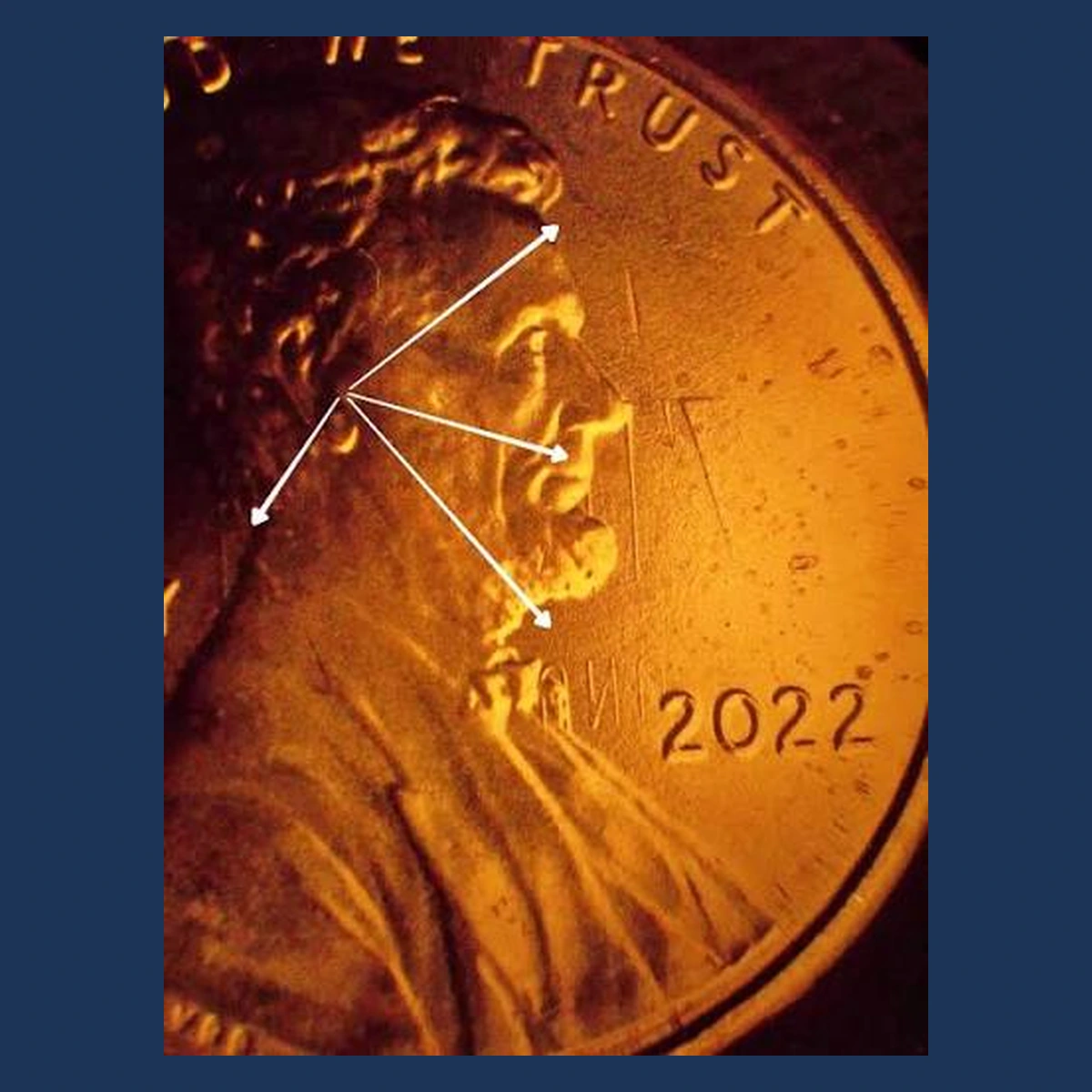
A faint shield outline behind Lincoln can seem to belong on the wrong side. It may have come from a die clash.
The front and back stamping tools struck each other without a blank between them. Their contact left marks that later appeared on coins.
Philadelphia reports describe shield-like traces behind the portrait. Denver reports include shifted clash marks, which need their own comparison rather than the same fixed outline.
A random collection of lines is not enough. The shapes and placement should make sense as transferred parts of the opposite design, even when only small portions remain visible.
Estimated Value
Use an estimated $10–$50 for faint but identifiable clash marks. Stronger recognizable outlines on clean coins can fit $50–$150.
The comparison is with modern Lincoln cents showing similar transferred design traces. No specific certified 2022 auction result is assigned here.
An obvious shield fragment can be more appealing than scattered lines that need a lengthy explanation. A shifted clash does not automatically earn more; the visibility and clarity of its transferred shapes matter.
How to Identify
Keep a clear image of the shield side beside the suspected clash on Lincoln’s side. Try to identify a matching design fragment rather than simply counting lines.
Use a 10× magnifier and move the lamp gradually. The appearance of a clash depends on which parts of the tools touched, so not every mark has the same height.
Polishing lines tend to follow their own paths. Later contact with another coin may leave damaged or sunken design impressions.
Check the normal 2.50 g weight, 19.05 mm width, and smooth edge with a scale and calipers when accessible.
Those checks support the coin’s identity. A recognizable part of the opposite design in the correct geometric position is the stronger clash clue.
6. Reported 2022 Lincoln Penny Extra V (Estimated Up to $200)
The small VDB initials sit at Lincoln’s shoulder. An Extra V report asks you to look immediately to their right for another V-shaped feature.
Year-specific lists mention 2022, but the certified Extra V variety used for comparison is dated 2023. A photograph of that later coin cannot establish a 2022 example.
The ordinary V in VDB is part of the normal design. A scratch or plating flaw nearby is not automatically another letter.
For a reported 2022 coin, keep the date and shoulder tied to the same specimen. The year matters as much as the shape of the extra mark.
Estimated Value
A 2023 Extra V sold for $69 in May 2026. PCGS graded it MS65 Red, meaning well-preserved, unworn, and copper-red.
For a genuine comparable feature on a correctly dated 2022 coin, use an estimated $20–$200 range. This is a conditional cross-year estimate, not a certified 2022 sale record.
The familiar 2023 name alone adds no value to a random mark. The full coin and extra letter need to be established together.
How to Identify
Begin with one photograph showing the full date and shoulder on the same coin. A close-up of VDB without the year leaves the central question unanswered.
Enlarge the area right of the B through a 10× magnifier. Keep the normal VDB letters visible so that a normal initial is not mistaken for an extra one.
Inspect the mark for a cut, blister, or damaged plating. Those can make a rough V without representing a repeated design feature.
The normal figures are 2.50 g and 19.05 mm, checked by scale and calipers when safely accessible. Inspect the smooth edge as well.
A clearly formed additional V beside intact VDB, on the same readable 2022 coin, is the combination that must be demonstrated.
7. 2022 Lincoln Penny Clipped Planchet (Estimated Up to $250)
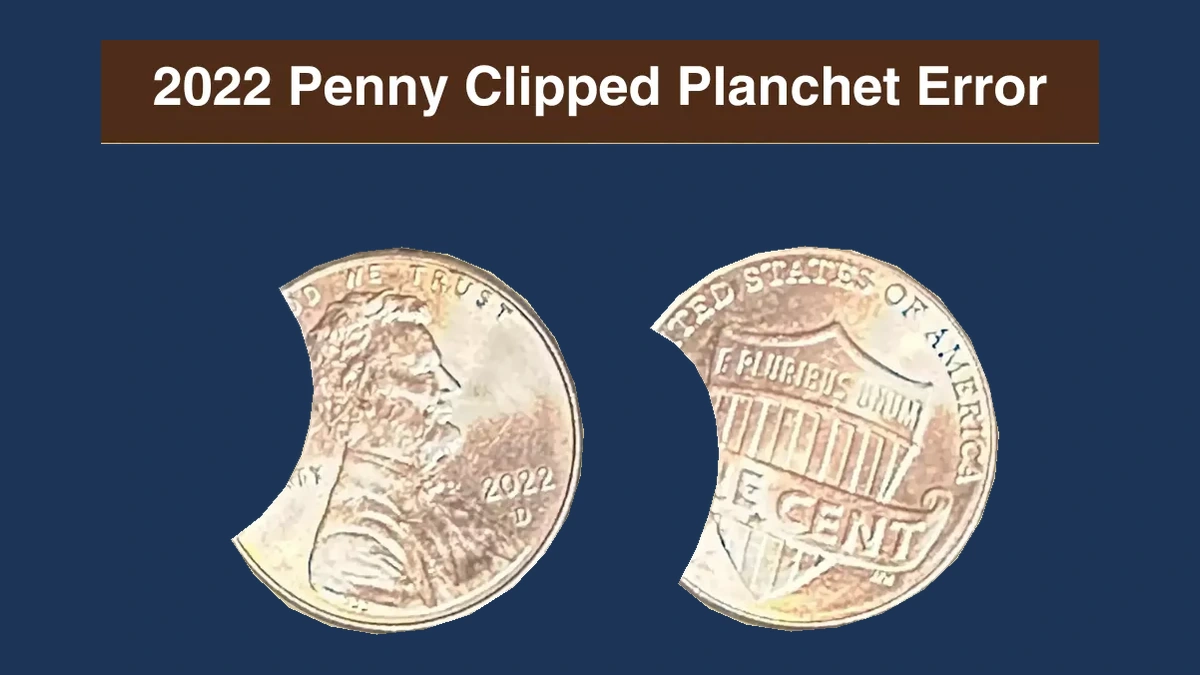
A piece missing from the edge may have been absent before Lincoln’s design was added. An incomplete prepared blank is called a clipped planchet.
The cutting punch can overlap an earlier hole or the edge of the metal strip. The resulting gap may be curved or straight.
The 2022 reports do not fix one mint or gap position. Each coin needs an examination of its own opening and surrounding rim.
A weak area opposite the gap can support a mint-made clip, but it is not always obvious. Its absence alone should not turn a genuine example into a rejected coin.
Estimated Value
A 2021 Shield cent with a five-percent straight clip sold for $114 in September 2025. PCGS graded it MS64 Red, an unworn coin with some marks and copper-red color.
For 2022 clips, estimate $25–$250 across smaller gaps and more attractive, obvious examples. The nearby-year sale provides a recent comparison.
The missing shape and condition affect appeal. The price is for one complete error coin, not a fixed amount for each percent of missing metal.
How to Identify
Inspect the two places where the normal rim meets the gap. Metal formed beside an existing opening can round or weaken as it reaches that boundary.
Saw marks and sharp cuts through finished detail suggest later removal. Use a 10× magnifier and photographs of the edge rather than touching the exposed metal.
A clip should leave less than the normal 2.50 g of metal. Check with a scale when safely accessible, and use calipers across an intact span against 19.05 mm.
The surviving edge should be smooth. Look at the rim opposite the gap for weakness, while allowing for examples where it is faint.
Original metal flow into the gap is more useful than the missing segment’s outline alone.
8. 2022-D Lincoln Penny Missing or Defective Copper Plating (Estimated Up to $400)
The gray metal under a modern penny’s copper skin is zinc. A report for 2022-D describes a copper-colored front paired with a gray back.
This is a plating issue, rather than the thick outer-layer construction of a dime. The copper coating is applied to a zinc blank.
An original coating failure can expose zinc before the coin is struck. Acid stripping, later scratches, and corrosion can expose the same gray center afterward.
Sharp-looking design alone does not settle the timing. The surface texture, boundaries, and remaining coating need to agree with a mint-made plating defect.
Estimated Value
Minor genuine coating defects can fit an estimated $10–$50 range. Extensive original missing plating on an attractive example can fit approximately $50–$400.
These estimates compare copper-plated zinc Lincoln errors from other dates. They do not represent a recorded sale of the reported 2022-D coin.
The intact design and amount of original coating matter. A chemically stripped coin receives no mint-error premium simply because it has become gray or has very little copper left.
How to Identify
Compare front, back, and edge under the same light. A photograph with different lighting on each face can exaggerate a color difference.
Use a 10× magnifier at the copper-to-gray boundary. Look for original struck texture rather than pits, scratches, or roughness from chemical attack.
A normal coin weighs 2.50 g and measures 19.05 mm with a smooth edge. Use a scale and calipers when safely accessible.
The copper coating is thin, so weight alone may not settle a small defect. Do not scratch the surface or use chemicals to test it.
Compare the finish with an authenticated unplated or partially plated zinc cent. Original design formed across an intact plating boundary is more informative than gray color alone.
9. 2022 Lincoln Penny Off-Center Strike and Partial Collar (Estimated Up to $500)
An off-center penny has both missing design and a blank crescent. The blank was misplaced when the front and back tools came together.
A reported 2022-D example combines roughly twenty-percent displacement with partial collar contact. The collar is the ring that normally limits the coin’s width.
Part of the blank remained inside the ring while another part spread beyond it. That can add a step or changing thickness around the edge.
These are two features of the same reported coin. Other off-center examples need not have that edge step, and spreading alone does not establish partial collar contact.
Estimated Value
Modest readable-date offsets have an estimated $15–$75 range. Larger, attractive examples can fit approximately $75–$500, using comparable modern Lincoln striking errors.
A year guide reports $14–$20 for the Denver twenty-percent offset with partial collar contact. That secondary report does not identify a verified auction lot.
The estimate therefore does not present $500 as that coin’s sale price. Price the combined example once, considering its design, edge, date, and condition together.
How to Identify
Look for the 2022 date, then compare the full designs on both faces. A shift on only one face may come from one misplaced tool instead.
Inspect the blank crescent with a 10× magnifier. Original unstruck metal should differ from a surface ground down after minting.
For the reported compound example, add side photographs around the whole edge. A changing step between confined and expanded metal supports partial collar contact.
The normal blank is 2.50 g and 19.05 mm across. Check accessible coins with a scale and calipers, allowing for spreading; the penny’s normal edge is smooth.
Confirm both the incomplete designs and the separate edge step before describing the Denver example as having both features.
Conclusion
Keep the coin’s date and full outline in view before enlarging a small mark. A raised BIE bar, a missing patch of plating, and a shifted design need different checks.
Estimated values run from $2 for minor tool damage to $500 for a stronger off-center example. Reported feeder marks and Extra V features need particular care with their cause and year.
Use the matching type and condition when comparing prices, and leave fragile plating untouched.