2000 Dime Error List with Pictures

A backward portrait belongs in a mirror, but one 2000-D dime carried it pressed into the metal. That brockage example sold for $1,080 in June 2018, despite damage on its other face.
The 2000 dime errors below include incomplete blanks, detached layers, and dimes struck again with another denomination’s design. Estimated whole-coin values span $2–$8,000.
Follow the visible shapes to understand which process explains each unusual coin.
1. 2000 Roosevelt Dime Rough Metal Projecting from the Rim
A thin metal projection can remain along a coin’s edge and make its outline look rough. This irregular lip is often called a burr.
A Denver example is reported for 2000 without an established position around the rim. The actual attachment needs examination before its origin can be decided.
Metal left during manufacture and metal pushed outward by a later impact can look similar from above. The base of the projection, nearby lettering, and opposite edge are more useful than its brightness or the fact that it feels sharp.
Estimated Value
A confirmed manufacturing-related rim burr has an estimated value of $2–$75. Small projections generally offer limited collector interest, while a clear intact example may be easier to display.
This estimate applies to an original production feature rather than ordinary edge damage. A folded lip beside a dent may add no premium.
Study how the projection joins the edge before comparing prices. A seller’s error label alone does not explain when the metal moved.
How to Identify
Do not rub a finger over the projection or bend it to test its attachment. A side photograph can show the thin metal without altering its shape.
Follow its base around the edge with a magnifier. Look for a nearby dent that could have pushed metal outward after the dime was finished.
Inspect the opposite face for crushed lettering or a flattened rim. Those marks can support an impact explanation.
An original lip should join the surrounding struck edge and surface without signs of a fresh impact. Include the date, D, and nearby rim in photographs so the attachment can be examined in context.
2. 2000 Roosevelt Dime Reported Loss of Detail from Tool Polishing
Polishing a stamping tool can remove some of its shallow design as well as marks on its surface. Coins made afterward may show a smooth area where a small detail should appear.
A 2000-S Proof report concerns Roosevelt’s neck and jaw. Proofs are specially made collector coins whose reflective backgrounds are normal, so a shiny surface alone is not this error.
The reduced detail must match a change in the tool. Rubbing or polishing the finished dime can also erase features, but it damages the coin rather than creating a tool-made variety.
Estimated Value
For a confirmed minor overpolished-tool feature on a 2000-S Proof, estimate $20–$150. The price depends on how clearly the lost neck or jaw detail can be recognized.
An untouched reflective background is more appealing than one covered with scratches or fingerprints. Compare coins with the same missing detail and similar surfaces.
Ordinary Proof shine adds no error premium by itself. A dime polished after minting also falls outside this estimate, even if its portrait looks smooth.
How to Identify
Compare the neck and jaw with a normal 2000-S Proof under soft light. Look for an actual missing part of the design rather than a reflection hiding a shallow line.
Inspect the surrounding surface for fine rubbing lines that may cross raised details. Later polishing can affect both the portrait and its background.
Tool polishing instead changes what the tool transfers. A matching example with the same reduced detail can help establish that relationship.
Keep the coin in its protective holder and photograph several light angles. Ordinary Proof shine, wear on high points, and a specific repeated loss of tool detail are different observations, even when one photograph makes them look similar.
3. 2000 Roosevelt Dime Abnormal Color from Heat Treatment
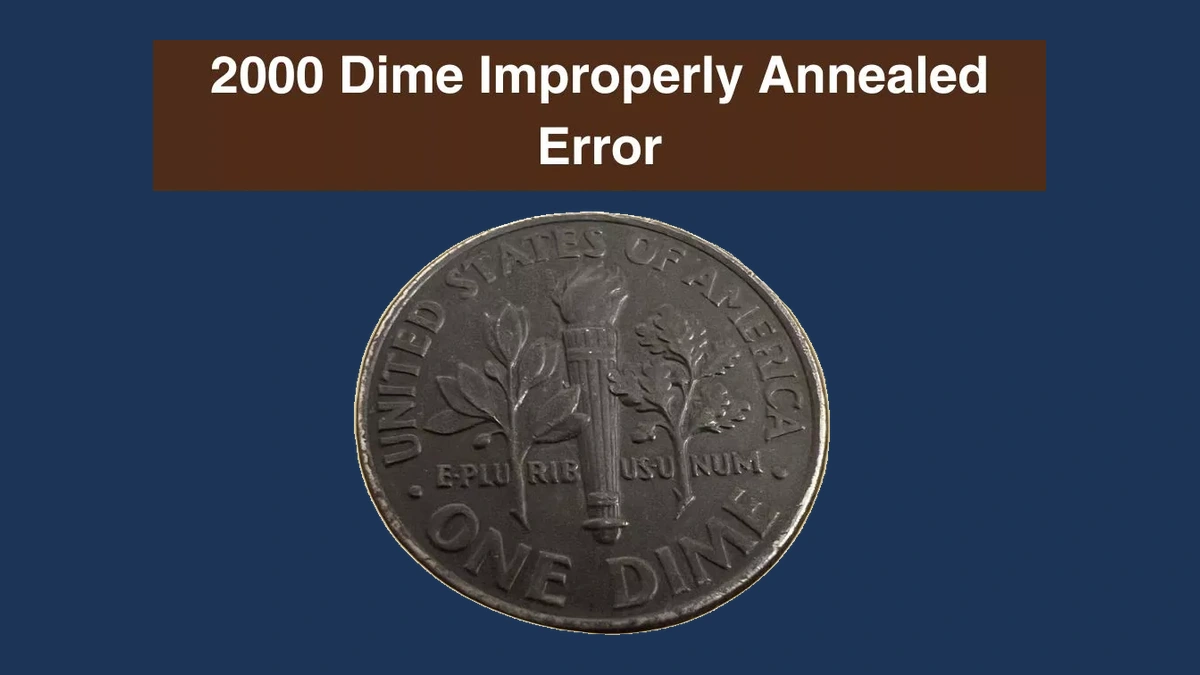
Heating a blank helps prepare the metal for striking. The process, called annealing, can leave an abnormal surface when something goes wrong during treatment.
Heritage recorded a 2000-D dime graded NGC MS63 with an improperly annealed blank. MS63 describes an unworn coin with noticeable marks, rather than the strength of its unusual color.
This production-related effect differs from burning or chemically treating a finished dime. Both later actions can also darken the surface, so a brown or reddish appearance alone is not enough to identify the cataloged error.
Estimated Value
The NGC MS63 example sold for $51 in October 2022. An estimated $20–$150 range covers comparable identified 2000 annealing errors with different preservation and visibility.
The sale gives a useful comparison for this unusual surface effect. Strong original detail can help display the color, while corrosion and cleaning can reduce appeal.
Use the estimate for an accepted manufacturing fault. A dime darkened by later heat does not belong in the same price range.
How to Identify
A copper-colored face may come from a missing outer sheet rather than heat treatment. Modern clad dimes contain a copper center between two pale metal sheets bonded together.
Inspect the edge first to see whether those sheets remain in place. If one is absent, compare the coin with a missing-layer example before judging its color.
Now view both faces under neutral light, since a yellow lamp can exaggerate copper tones. Use a magnifier to compare the surface inside protected letters with exposed areas.
Rough corrosion, thick residue, and patches of burned metal need a different explanation.
A normal weight cannot establish when the color appeared. Leave the surface untouched so a specialist can compare it with an identified annealing error.
4. 2000 Roosevelt Dime Very Weak Strike or Faint Outer Lettering
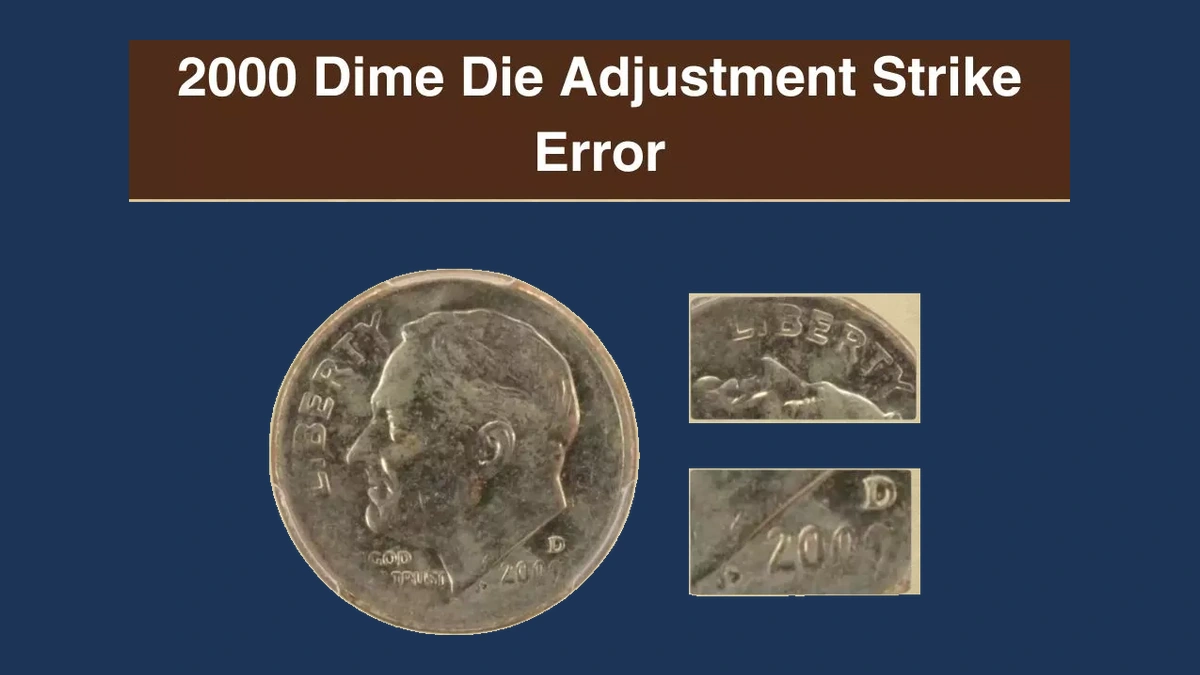
Some coins leave the press with shallow detail instead of a fully formed image. A Philadelphia example is reported with broad weakness across both faces.
A separate 2000-P report describes clearer central detail and weak outer lettering. That uneven strength needs to be examined on its own coin rather than assumed on the broadly weak example.
The nickname die-adjustment strike suggests a press being set up, but faint design alone cannot prove that purpose. The visible question is how completely the tools transferred their images, compared with wear or later surface removal.
Estimated Value
Modest original weakness can fit an estimated $5–$50 range. A dramatic, clearly identified weak strike may support an estimated $50–$300, depending on the surviving design and condition.
Broad weakness and faint outer letters can look quite different, so compare coins with similar visible effects. An unworn surface helps show that the detail was never fully formed.
A smooth, heavily worn dime belongs in another category. Faint lettering from circulation does not carry the same error premium.
How to Identify
Start with the strongest surviving detail and compare it with the faint areas. Does the whole coin look shallow, or is the weakness concentrated near the outer lettering?
Wear tends to flatten exposed high points first. Scraping or chemical treatment may leave damaged surfaces where detail has disappeared.
Use low lighting to examine whether original texture continues across the weak patch. Sharp neighboring features can help show where the strike failed to fill the design.
Keep full photographs of both faces with the date and P visible. Do not infer an intentional press test from weakness alone, or combine a clear center on one coin with a shallow portrait from another.
5. 2000 Roosevelt Dime Partial Collar with a Stepped Edge
A dime can form a step around its edge when only part of the blank sits inside the collar. That steel ring normally controls the edge and forms its grooves.
The portion outside the ring spreads farther during striking. The resulting two-level edge is called a partial collar, sometimes nicknamed a railroad rim.
A Heritage lot contained two 2000-P examples graded ANACS MS63. They are separate coins with the same broad kind of error, not two pieces that must fit together or a single dime with two complete edges.
Estimated Value
For an individual genuine 2000 partial-collar dime, estimate $20–$300. A strong step around an attractive edge is easier to recognize than a slight uneven rim.
The Philadelphia examples were sold together, so any combined price would belong to the whole lot. It would not establish an individual value for either coin.
For a single piece, compare the height and continuity of the edge step. Original surfaces and a readable date also affect its appeal.
How to Identify
View the edge from the side and follow it around the whole coin. Look for where a grooved band meets a wider section that escaped full collar restraint.
A loose coin can be turned gently beneath a fixed light to show changes in the step’s height.
Inspect that boundary with a magnifier for cutting or filing. A later groove may imitate two levels without fitting the original metal flow.
Compare both faces after the edge view, keeping the date and P visible. A local dent can create a raised lip but does not necessarily explain a continuous collar-related structure.
Photograph each coin separately rather than treating the two auction examples as a matched pair.
6. 2000 Roosevelt Dime Thin Layer Separated after Striking
A very thin piece of a dime can survive after an outer layer separates. The cataloged 2000-D example weighs only 0.37 grams and was described as split after striking.
ANACS assigned AU58 Details and noted scratches. That means slight wear and a condition problem on the surviving piece, not a normal complete dime weighing a fraction of its usual amount.
The layer already carried struck detail before it came away. Its thin edge and exposed inner surface need a different comparison from a mostly intact dime whose outer sheet is missing.
Estimated Value
The scratched 0.37-gram layer sold for $162 in July 2021. Comparable authenticated detached layers have an estimated value of $75–$400, depending on their preserved design and condition.
The price concerns that thin piece alone, without a matching remainder. Do not add the value of another piece unless the two can actually be connected.
Bending or scraping the fragile layer can damage its design. Careful handling also preserves the surfaces that show how it separated.
How to Identify
Keep a graded layer inside its holder, and do not flex a loose piece. This is a very fragile sheet of metal rather than an unusually lightweight complete dime.
Photograph the face carrying the design before turning to the exposed inner side. The surviving image should belong to a struck coin, while the inner surface should show where the layers separated.
Look along the edge for grinding marks or scraping that could have produced a thin shell after minting. The recorded 0.37 grams describes this particular piece; a different layer can have another weight without proving or disproving its origin.
7. 2000 Roosevelt Dime Missing Front or Back Outer Layer
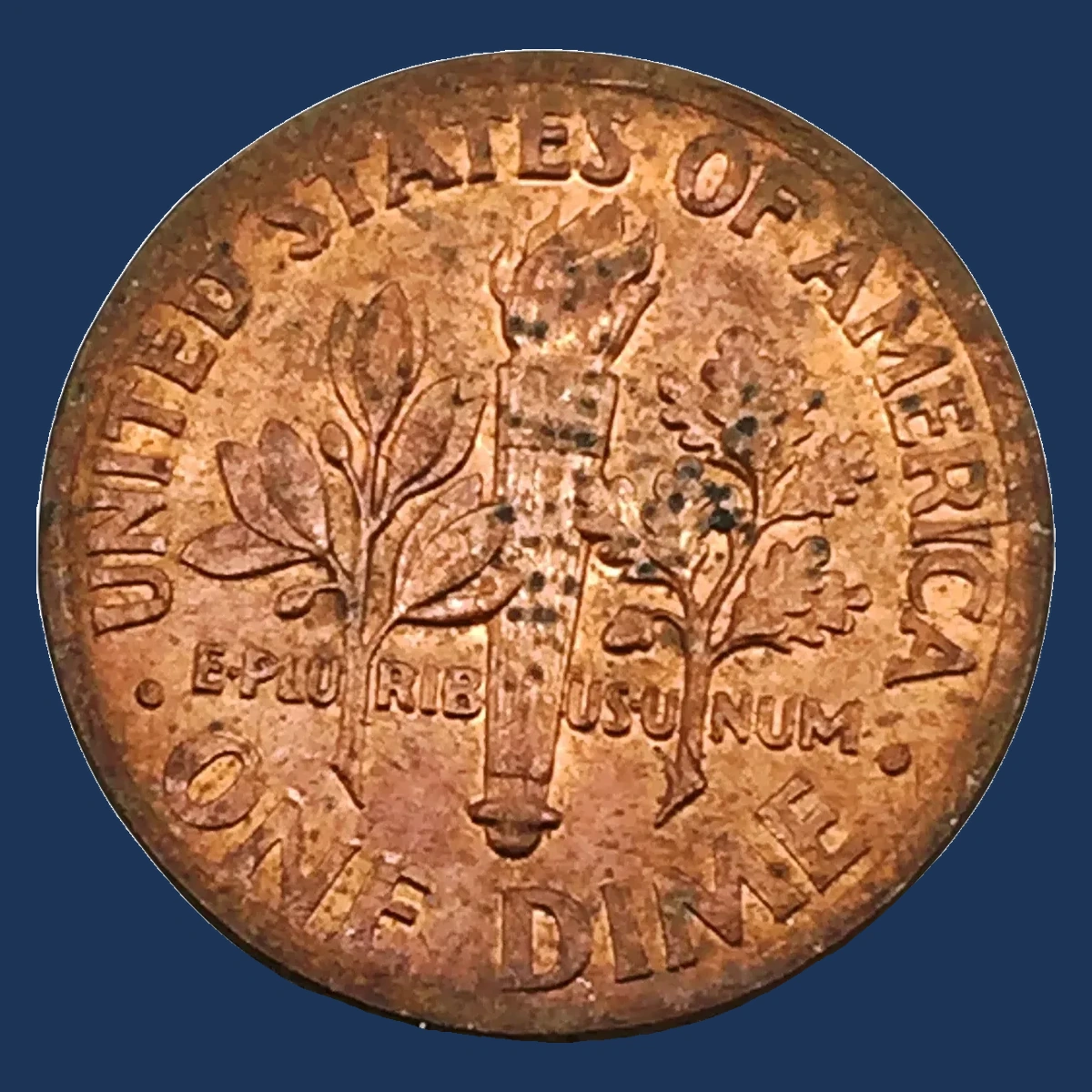
Copper-colored design can show where a pale outer layer is absent from a clad dime. The remaining coin still contains the copper center and the opposite outer sheet.
One 2000-D back-layer example was graded NGC MS63 and weighs 1.9 grams. A different front-layer coin graded NGC MS65 also weighs 1.9 grams.
A separate PCGS MS64 front-layer example is recorded as well. Similar descriptions do not make those coins identical, and the two measured weights should not be treated as a required number for every partial or complete layer loss.
Estimated Value
The back-layer MS63 sold for $132 in November 2020, while the front-layer MS65 brought $104 in December 2022. Estimated individual values are $50–$500 for comparable genuine 2000 missing-layer dimes.
The two results show why a higher grade does not automatically guarantee a higher price across different sales. The affected face, original design, color, and eye appeal all influence the comparison, while staining or later metal removal does not qualify as the same error.
How to Identify
Identify the exposed face first, then inspect the edge beside it. The change should involve the actual layer structure rather than a thin brown stain over intact pale metal.
Weigh a loose clad dime against the normal 2.268 grams. Missing metal can reduce the result, although acid or grinding can do that too.
Check the copper surface for original struck lettering, scrape lines, and corrosion pits.
The two 1.9-gram measurements belong to separate front- and back-layer coins. Use the specimen’s own measurement when judging another example.
A normal silver Proof from San Francisco is different: its ninety-percent silver metal has no copper core. Establish composition before treating an unusual edge color as layer loss.
8. 2000 Roosevelt Dime Clipped and Oval Blanks
A metal blank can be incomplete before the dime design reaches it. Curved gaps usually begin when the cutting punch overlaps an opening left by an earlier blank.
One 2000-P example has three curved clips and weighs just 1.18 grams. ANACS graded that coin MS63, indicating an unworn piece with visible surface marks.
A ragged-edge Philadelphia example and a separate oval blank are also reported. Those outlines belong to different coins, so the measured weight of the three-clip piece should not be transferred to either of them.
Estimated Value
Genuine examples fit an estimated $25–$600 range. The number and size of the gaps, remaining date, and surface condition help explain the difference.
A neatly displayed three-clip coin may attract more attention than a small rough edge. An oval shape also needs its own assessment rather than the price of the measured ANACS example.
This estimate concerns missing metal that preceded striking; later cutting does not earn the same error premium.
How to Identify
For a curved gap, follow the arc through the coin’s thickness. Nearby letters may stretch toward the opening as metal moves during the strike.
For the reported ragged edge, examine the entire irregular boundary. A saw cut or recent torn surface needs to be ruled out before calling it a blank-making error.
An oval piece requires a full outline photograph. Its longer and shorter dimensions help show how the original blank differed from a normal round one.
On the three-clip example, keep all three gaps in view together. Its recorded 1.18 grams supports that particular coin’s large metal loss, but weight alone cannot prove when a gap formed.
9. 2000 Roosevelt Dime Proof Metal Peeling Across the Portrait
A thin section of metal can separate when a weak area within the material opens. If it remains partly attached, the lifted section may still carry pieces of the struck design.
A 2000-S clad Proof dime is reported with peeling across Roosevelt’s portrait. Proof means a specially prepared collector coin with a reflective background.
The reported feature needs to be distinguished from damage to that delicate finish. Neither a bright patch nor a scratch proves that the metal separated because of an original manufacturing weakness beneath the surface.
Estimated Value
For a confirmed original peeling-metal error on a comparable modern Proof dime, estimate $100–$1,000. An intact flap with recognizable portrait detail can be more appealing than a heavily disturbed area.
The range assumes the metal separation itself is genuine. It does not establish a grade or a sale price for the reported 2000-S example.
Compare the extent of the lift, preservation of the mirrored surface, and any later handling marks before choosing a point within it.
How to Identify
A line on the holder can appear to cross Roosevelt even when the coin underneath is intact. Shift the viewing angle first and check whether the line stays on the metal.
If a flap really rises from the portrait, leave it alone. Neither push it flat nor lift it to see farther underneath.
Place a light beside the coin and follow the portrait lines toward the lifted edge. Parts of the original design may continue onto the flap, helping distinguish separated metal from a reflection.
Photograph the attachment and the exposed surface without touching either. Have a coin specialist examine that connection before assigning the peeling to a fault present during manufacture.
10. 2000 Roosevelt Dime Large Indent with an Expanded Outline
Another blank can overlap a dime during striking and leave a broad depression. Collectors call the resulting recessed area an indent.
A 2000-P example combines an indent covering about sixty percent of the coin with a greatly expanded outline. PCGS graded it MS65, meaning it shows no circulation wear.
The expanded shape is a broadstrike, formed when the retaining ring did not fully contain the metal. Both effects belong to this one dime: the overlapping object blocked part of the design while the metal spread outward during the strike.
Estimated Value
An estimated $200–$1,500 range covers comparable major indent-and-broadstrike dimes. The size of the depression and how clearly the remaining design explains the event are useful starting points.
A clean surface and readable year can increase interest. Heavy scratches or a poorly visible date may reduce it even when the hollow is large.
This is one combined-error coin, so separate full premiums for the indent and expanded outline should not be added together.
How to Identify
Locate the smooth hollow first. Its boundary should show where the overlapping object prevented the stamping tool from reaching the dime.
Follow the surviving letters around that boundary and then inspect the expanded outer edge. The depression and outward spread should form a connected explanation of the shape.
A mirrored portrait or backward letters inside the hollow would call for a different comparison. A plain indent does not require a transferred design.
Check the opposite face for the original strike and any later damage. Photograph the whole coin as well as the depression so a close crop does not exaggerate its size.
11. 2000 Roosevelt Dime Strike on a Smaller Unidentified Blank
A dime design can reach a blank intended for something smaller. The design then runs beyond the metal instead of fitting neatly inside a normal rim.
A reported 2000-D example loses upper LIBERTY lettering on the front and part of ONE DIME on the back. Those missing outer details are the main clues described for it.
The blank’s original denomination and metal have not been established. Its small appearance should therefore not be turned into a claim that it began as a cent, nickel, or a particular foreign coin.
Estimated Value
For an authenticated dime struck on a genuinely different small blank, use an estimated $300–$2,000 range. This is a comparison for the reported error type, not a recorded sale of this candidate.
The actual metal, size, and surviving design would help narrow the estimate. A coin trimmed after striking can also lose outside lettering, but it does not belong in this category.
A clear original edge is especially useful when comparing an unidentified blank.
How to Identify
Record the weight and widest diameter of a loose example before choosing a possible blank. Neither measurement alone identifies the metal or proves that the disk belonged to another denomination.
Next compare the cropped lettering on both faces: upper LIBERTY and part of ONE DIME are the reported losses. Their positions should fit a design too large for the available metal, rather than one damaged portion of the rim.
Examine the entire edge under magnification for file marks, cuts, or a freshly exposed surface. A specialist can then test the metal without scraping it; keep the blank unidentified until that evidence supports a particular match.
12. 2000 Roosevelt Dime Double and Fourfold Strikes
A coin that remains in the press can receive another blow after moving. Separate design positions then overlap on the same piece of metal.
One 2000-P dime received a second strike after rotating about half a turn. NGC graded it MS67 Full Bands, a label referring to clear horizontal bands on the torch.
A separate Denver example is reported with four strikes. The Philadelphia coin’s half-turn should not be assigned to that piece, and rotation during a repeated strike does not by itself mean the coin flipped over between blows.
Estimated Value
Comparable confirmed repeated-strike dimes have estimated values of $200–$3,000. Well-separated portraits or dates can make the sequence especially easy to see.
A four-strike label does not automatically place a coin above a clearer double strike. Overlap, wear, damage, and the amount of readable original design all affect appeal.
The Full Bands designation describes torch detail, not another minting error with a separate price. Assess the complete coin and its visible strike pattern together.
How to Identify
The Philadelphia coin should show two positions of the same design about half a turn apart. Begin with a portrait and nearby letters that clearly belong together, then locate their second positions.
Mark those two sets on a photograph instead of tracing uncertain lines on the coin.
Turn to the back and find how the torch and letters overlap there. Rotation keeps each face directed toward its original tool, whereas a flip would allow front and back designs to meet.
For the separate Denver report, look for four distinct sets of connected design details. A few doubled edges cannot establish four complete blows.
Where an impression covers another, follow the overlap to work out which came later.
13. 2000 Roosevelt Dime Backward Portrait Impressed into the Back
A finished coin can become trapped against the next blank and act like a stamp. Its raised design presses a backward, sunken image into the new coin.
That transferred image is called a brockage. A 2000-D dime carries this effect on its back, where the ordinary torch design would otherwise appear.
NGC described the example as having uncirculated detail but damage on the front. That wording records both an unworn design and a condition problem; it is not a numerical mint-state grade or a claim that the entire coin is undamaged.
Estimated Value
This damaged-front example sold for $1,080 in June 2018. Comparable genuine brockage dimes have estimated values of $300–$3,500, depending on the image and preservation.
A clear backward portrait makes the error easy to understand. A weak transfer or heavy later damage can attract less interest even when the minting process is the same.
The recorded sale belongs to the particular NGC-described coin, so it should not become a fixed price for every backward-looking dime.
How to Identify
Start by reading any transferred letters backward. In a brockage, the copied image is reversed and pressed down into the metal.
Tilt the coin under a small light to establish which features are sunken. An ordinary raised portrait seen through a reflection does not show the same structure.
Inspect the border of the transferred image and compare its details with the design that could have impressed it. A plausible portrait should contain several connected features.
Examine the normal front separately for scratches or other damage. The known coin has front damage that affects its condition and value, even though the back transfer is genuine.
14. 2000 Roosevelt Dime Struck Again as a Cent or Nickel
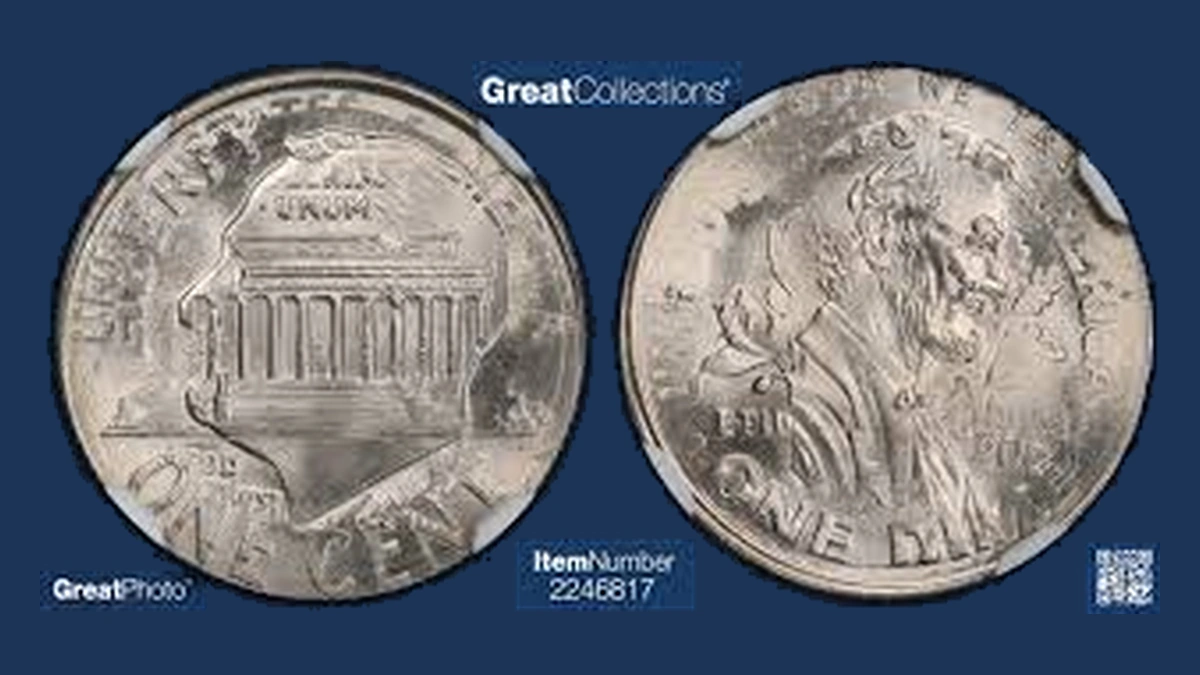
A finished dime can enter another denomination’s press and receive a second design. The result carries traces of two different coins on the same metal.
One 2000-P dime was struck again as a 2000 cent and graded NGC MS68. Roosevelt’s earlier portrait survives beside the later Lincoln design.
Two other dimes received nickel designs and were graded NGC MS67 and MS66. The latter also lacks its back outer layer; these are separate coins found together, not a bonded pair or two pieces whose shapes fit together.
Estimated Value
Estimated values are $700–$2,500 for a genuine cent-over-dime example and $2,000–$8,000 for comparable nickel-over-dime pieces. These are comparisons with similar errors, not reported sales of the three described coins.
The visibility of both designs and any missing layer affect each assessment. Finding two pieces together does not give them one shared error price.
Keep each coin’s grade and surface condition attached to its own photographs when comparing offers.
How to Identify
Find Roosevelt or another recognizable dime feature beneath the later design. The original dime must retain evidence of its first strike, unlike an unused dime blank.
On the cent example, look for Roosevelt toward the upper left relative to Lincoln. The later cent date and surviving dime mint letter provide separate identity clues.
For the nickel examples, the owner’s illustrated record shows the two different coins. The parenthesized nickel date is inferred rather than fully readable.
Keep the MS66 example’s missing back layer separate from the MS67 coin. A second denomination and a lost layer can occur on one piece without making every similar-looking example identical.
Conclusion
Estimated $2–$8,000 values cover very different 2000 dime errors, from a small edge burr to a coin carrying two denominations. A detached layer is a separate object, while a missing-layer dime still contains most of its metal.
Keep weight, grade, and price tied to the specific example. Study both faces, protect fragile pieces, and trace the original design before deciding whether a strange-looking feature came from the Mint.