2024 Dime Error List with Pictures

An ordinary 2024-P dime reached $51 in December 2024 because of its excellent condition and sharp torch bands. That was not an error sale.
For 2024 dime errors, the estimated ranges below span $5–$500. A raised bump, missing patch, or misplaced picture needs a different explanation from a well-preserved normal coin.
Follow the seven types below to learn what to inspect and how each price comparison applies.
1. 2024 Roosevelt Dime Die Chip (Estimated Up to $100)
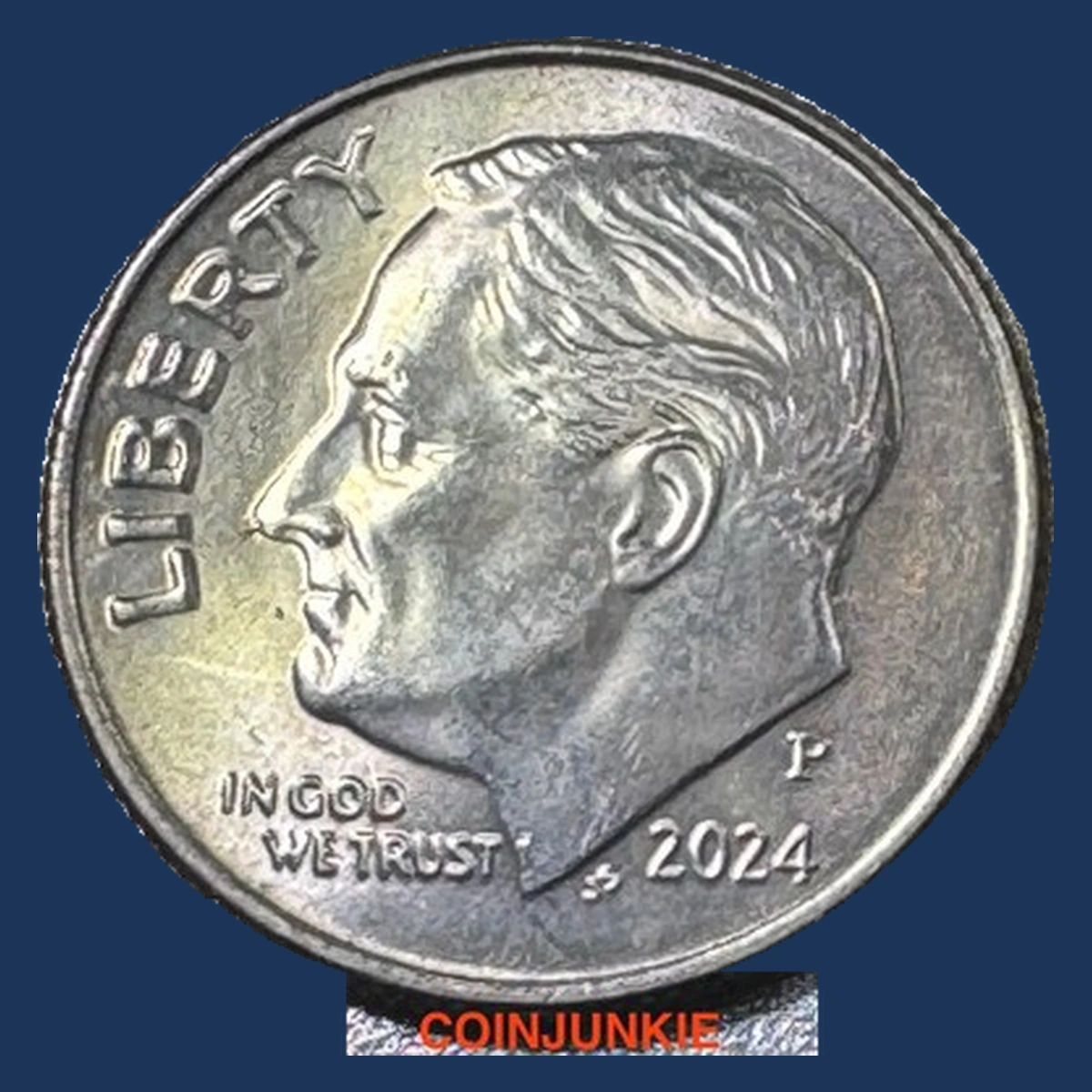
A small raised spot can start inside the tool that makes the coin. A fragment breaks from the die, the steel tool that stamps the design.
Metal fills that tiny hole during striking. The finished dime gains a bump where the tool lost a piece.
The 2024 Philadelphia report describes several chips on the front. It does not give one fixed position shared by every example.
Inspect each bump in its own setting. A dent can push metal upward, and material stuck to the surface can also resemble a chip at first glance.
Estimated Value
Estimated prices of $5–$100 cover noticeable chips, from small features to prominent groups on attractive coins. Tiny common bumps may add little value.
For comparison, PCGS records a $51 sale for an ordinary 2024-P dime in December 2024. It was graded MS67, meaning exceptional unworn condition.
Its Full Bands label means the horizontal torch bands remain clearly separated. Neither that label nor the sale price establishes a chip’s value.
How to Identify
Look over the entire front before enlarging a bump. Record the date and P mint letter so the feature stays linked to the correct coin.
A 10× magnifier and light from the side help reveal its shape. A chip should rise from the coin’s surface, rather than sit around a dent or show an attachment seam.
Modern everyday dimes weigh 2.268 grams and measure 17.91 mm. Chips normally leave those figures nearly unchanged; check with a scale and calipers when safely accessible.
Inspect the edge grooves and back for separate damage. On the front, look for a small mound joined smoothly to the struck surface, without an impact crater beside it.
2. 2024 Roosevelt Dime Doubled Die Obverse (Estimated Up to $100)
A doubled die carries an extra outline in its design before it strikes any coins. The resulting dimes can repeat that outline in the same place.
Reports for 2024 point to LIBERTY, IN GOD WE TRUST, and the date on Philadelphia and Denver pieces. They do not establish one shared direction of doubling.
A flat shelf beside a letter may instead come from movement during striking. That is a different effect.
Modern mint letters are part of the design-transfer process. An extra edge beside P or D does not show an old-style hand-punched mintmark mistake.
Estimated Value
The year guide estimates $50–$100 for clearly recognizable doubled-front examples. Stronger raised separation and attractive surfaces support the upper end.
This is a guide range, not a recorded sale of a specific 2024 coin. A seller’s label alone does not establish the variety.
The listed inspection areas are not all doubled on every example. Flat shelves caused by movement during striking should not automatically receive the same price as a doubled die.
How to Identify
Choose one letter or date digit that looks doubled. Change the light angle while studying it with a 10× magnifier.
Does the extra edge remain raised and rounded, or does it form a low, flat step? A flat step often appears to narrow the main letter.
Compare neighboring letters, then check the whole date. Keep P and D examples separate; one mint’s photograph does not prove that another has the same feature.
For the reported everyday coins, normal measurements are 2.268 grams and 17.91 mm. Use a scale and calipers when safely accessible, and inspect the edge grooves for alteration.
A matching extra outline should remain visible under changing light, rather than disappear like a reflection.
3. 2024 Roosevelt Dime Struck-Through Error (Estimated Up to $150)
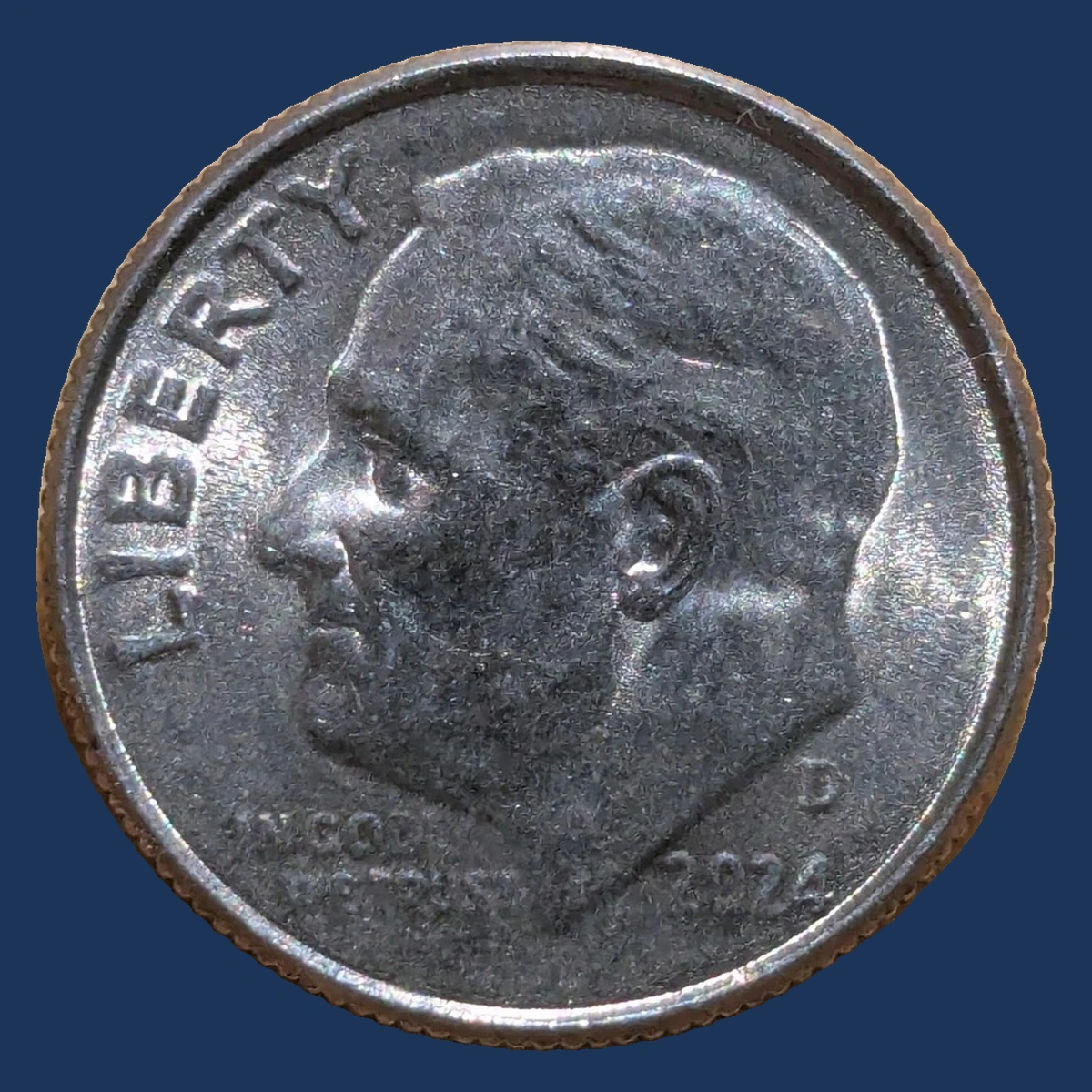
Something between the blank and stamping tool can interrupt the picture. Grease may fill small details, while a solid object can leave a more defined hollow.
Collectors call this a struck-through error. The affected patch can look weak even when nearby letters are sharp.
Reports include Philadelphia and Denver dimes and suggest inspecting the lettering, date, and torch bands. They do not identify one trapped object shared by these coins.
Weak bands alone are not enough. An ordinary soft strike, wear, or later scraping can also remove fine detail, so inspect the surrounding surface.
Estimated Value
For recognizable local interruptions, allow an estimated $20–$150 on ordinary 2024 dimes. The year’s error guide places these within the small-error market.
A clear hollow or missing patch on otherwise sharp surfaces can draw more interest. A barely visible weak band may add very little.
These figures are estimates rather than recorded 2024 sales. Compare the size and clarity of the affected area before choosing a point within the range.
How to Identify
A weak torch band is easy to notice, but check the nearby vertical lines and lettering too. If many high points look weak, the whole strike may simply be soft.
A local interruption behaves differently: clear details stop at a particular patch. Inspect that boundary under a 10× magnifier.
Look for scratches from rubbing or roughness from chemicals. A dent with metal pushed up around it suggests damage after the coin was made.
Use calipers and a scale when safely accessible; normal everyday dimes measure 17.91 mm and weigh 2.268 grams. Check the edge grooves as well.
Focus on the transition from crisp design to a naturally struck weak patch, with no scraping across it.
4. 2024 Roosevelt Dime Clipped Planchet (Estimated Up to $200)
A dime starts as a blank punched from a strip of metal. If the punch overlaps an earlier hole or the strip’s edge, part of that blank can be missing.
The incomplete blank may still pass through the press and receive a design. The gap then remains on the finished coin.
The 2024 guide includes clips but does not identify one coin with a fixed mint, percentage, or gap shape. Those details must come from the example itself.
A curved bite alone proves little. Tools and corrosion can remove metal after striking too.
Estimated Value
Estimated values of $25–$200 cover small clips through larger, well-preserved examples. A readable date and clear signs that the gap formed before striking support stronger prices.
A 2002-D dime with a ten-percent straight clip sold for $61 in September 2024. Its MS67 Full Bands grade describes excellent unworn condition and separated torch bands.
That is a different-year comparison. Neither a high grade nor a large percentage guarantees an expensive error.
How to Identify
Inspect the rim opposite the gap before judging the missing segment. It may be weak because the incomplete blank did not form normally.
Next, enlarge the gap with a 10× magnifier. Look for fading struck detail nearby, then check for burrs, file marks, or cutting scratches.
These everyday dimes have outer copper-nickel layers bonded to a copper center. Copper visible inside a gap is therefore normal and proves neither an error nor damage.
A scale should show less than the normal 2.268 grams if metal is missing. Use calipers across intact portions against 17.91 mm, and inspect the surviving edge grooves.
Fading design and natural metal flow beside the gap are more useful than the gap’s shape alone.
5. 2024 Roosevelt Dime Broadstrike (Estimated Up to $300)
A retaining ring normally limits how far the coin spreads when struck. It also helps form the grooves around the edge.
If the blank is struck without that restraint, metal can spread beyond the intended diameter. This is called a broadstrike.
Both pictures can remain complete even when the outer border looks uneven. The 2024 guide discusses this possibility without identifying a particular certified example.
The shape still needs careful checking. One wide border can have another cause, and hammering a finished coin can make it larger without creating a genuine mint error.
Estimated Value
The estimated range is $50–$300 for worn through attractive unworn examples. Natural outward spreading, complete designs, and undamaged surfaces support higher values.
A different-year 2000-P dime sold for $159 in September 2025. It was graded MS65, meaning well-preserved and unworn.
That coin was both broadstruck and struck more than once. Its price therefore covers two mistakes on one coin, rather than proving a sale price for a 2024 broadstrike.
How to Identify
Measure the coin’s outline when safely accessible. Calipers should show outward spreading beyond the ordinary 17.91 mm diameter, while a scale should remain near 2.268 grams.
Then follow the complete design around both faces. A broadstrike spreads the blank but keeps the pictures; an off-center strike leaves part of a picture beyond its edge.
Inspect the edge with a 10× magnifier. Grooves may be absent or incomplete where the retaining ring failed to shape them.
Look for repeated dents or scraped areas that could reveal later hammering. A smooth edge by itself is not proof.
Compare the wide outline with the intact designs and naturally spread border; all three should fit the same striking mistake.
6. 2024 Roosevelt Dime Lamination and Layer Separation (Estimated Up to $300)
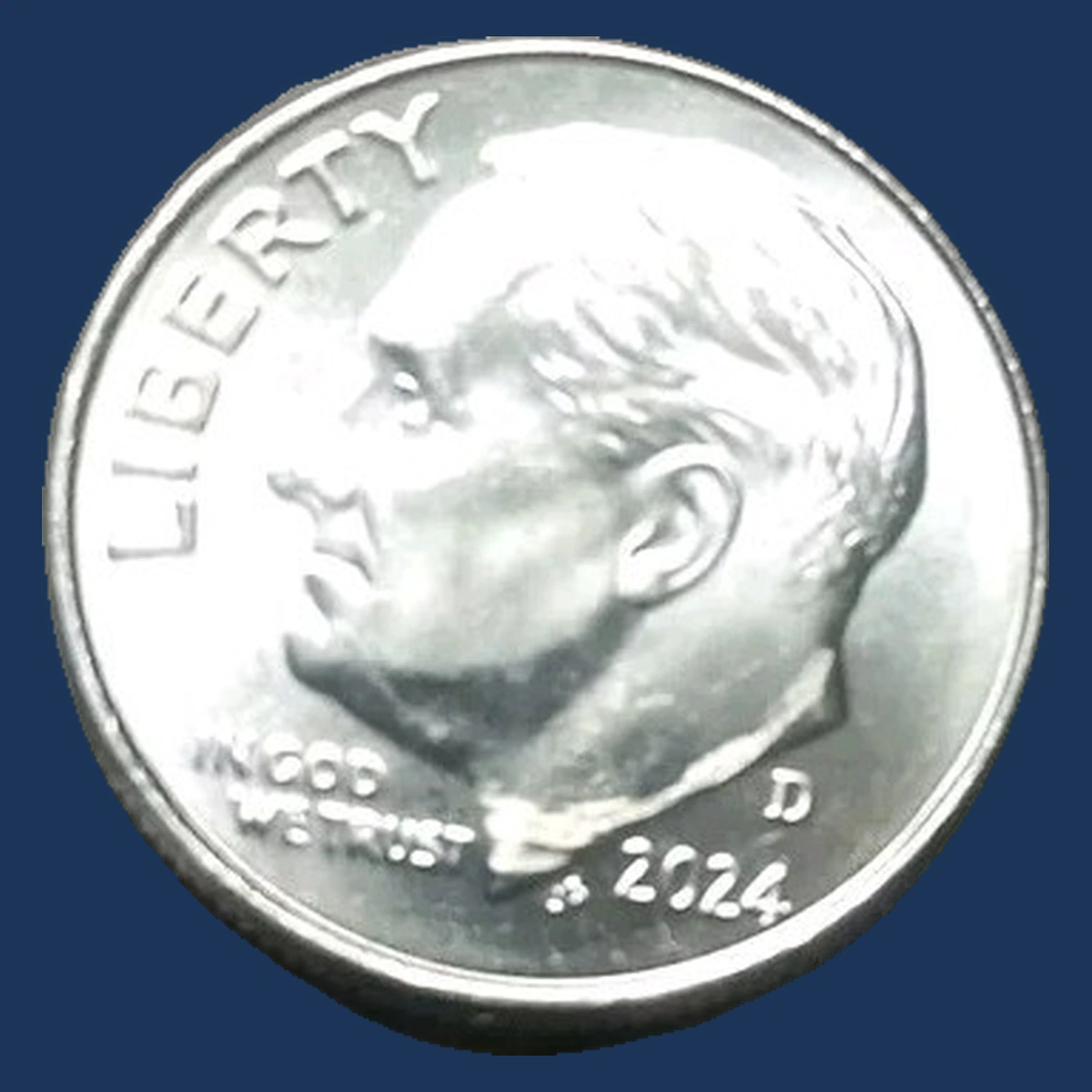
An everyday dime has a copper center between two outer copper-nickel layers. A weak bond can allow one layer to lift or separate.
A smaller flake can also form within the metal itself. Collectors call this surface peeling a lamination.
The 2024 discussion describes these possible defects without identifying one particular example. A copper-colored patch therefore needs inspection before it receives an error label.
The silver Proof is different. It is a specially made collector coin containing almost pure silver, so it cannot lose an outer copper-nickel layer in the same way as an everyday dime.
Estimated Value
Estimated values run from $15–$300 for genuine layer defects on everyday dimes. Small surface flakes occupy the lower end; larger lifted or missing portions can attract more interest.
A 2019-P dime missing 80% of its front outer layer sold for $139 in September 2024. It was graded MS61 Full Bands: unworn with noticeable marks and separated torch bands.
That different-year sale concerns a major missing layer. It does not price every small flake.
How to Identify
Identify the metal before studying a peel. An everyday P or D dime normally weighs 2.268 grams; the 2024-S silver Proof weighs 2.537 grams and contains 99.9% silver.
Both measure 17.91 mm, so a scale helps distinguish them better than calipers alone. Use measurements only when the coin is safely accessible.
Under a 10× magnifier, follow the opening toward intact metal. Check the edge grooves for a continuing split, but never pull a loose flap.
Grinding, heat, and chemicals can also expose copper or alter the surface. The ordinary copper stripe around an everyday dime’s edge is normal.
Look for a natural split continuing beneath metal that remains attached, rather than color alone.
7. 2024 Roosevelt Dime Off-Center Strike (Estimated Up to $500)
A blank entering the press out of position can receive only part of the design. The rest remains bare because it missed the stamping tools.
The 2024 Philadelphia and Denver reports include off-center strikes. A frequently mentioned forty-five-percent example is an estimated scenario, not a documented auction coin.
An actual example must show its own amount of shift and surviving date. A larger bare area can make the error more striking, but it may also remove useful details.
If the date is missing, the coin no longer provides the evidence needed to identify it as 2024.
Estimated Value
Readable-date examples have an estimated $25–$500 range, from small shifts to stronger, attractive errors. The date, amount of missing design, and surface condition all affect the price.
A different-year 1977 dime struck ten percent off center sold for $109 in June 2026. Its MS64 Full Bands grade means unworn with some marks and separated torch bands.
That comparison does not establish a 2024 sale. A larger shift does not always bring a higher price.
How to Identify
Find all four date digits and the P or D mint letter. Those details establish which year and mint you are examining.
Turn the coin over while keeping track of the bare area. Both pictures should show the same displaced blank; only one shifted picture suggests a different alignment problem.
With a 10× magnifier, compare untouched blank metal with areas that look polished or ground away. Inspect the edge grooves, which may be incomplete.
For a safely accessible example, use a scale and calipers against 2.268 grams and 17.91 mm. Allow for a distorted outline.
The strongest visible sign is matching bare metal beside incomplete designs on both faces, with no signs of later removal.
Conclusion
The estimated $5–$500 ranges cover different mistakes, so begin with what you can see. A bump adds detail, a split opens within the metal, and an off-center strike leaves part of the blank untouched.
Keep the date, mint letter, and both faces in your photographs. Normal copper at the edge and sharply separated torch bands are not errors by themselves; compare the actual unusual feature before assigning a value.