1916 Mercury Dime Error List with Pictures

A 1916-S Mercury dime struck ten percent off center sold for $207 in March 2003. A separate, wider coin offered at $450 keeps its complete design and belongs to a different error type.
These 1916 Mercury dime errors have estimated values of $20–$35,000, including the rare Denver issue. They concern the winged-cap design, not the Barber dimes also dated 1916.
Read on to compare the two faces, edge, and mint letter.
1. Reported 1916 Mercury Dime Die Crack (Estimated Up to $150)
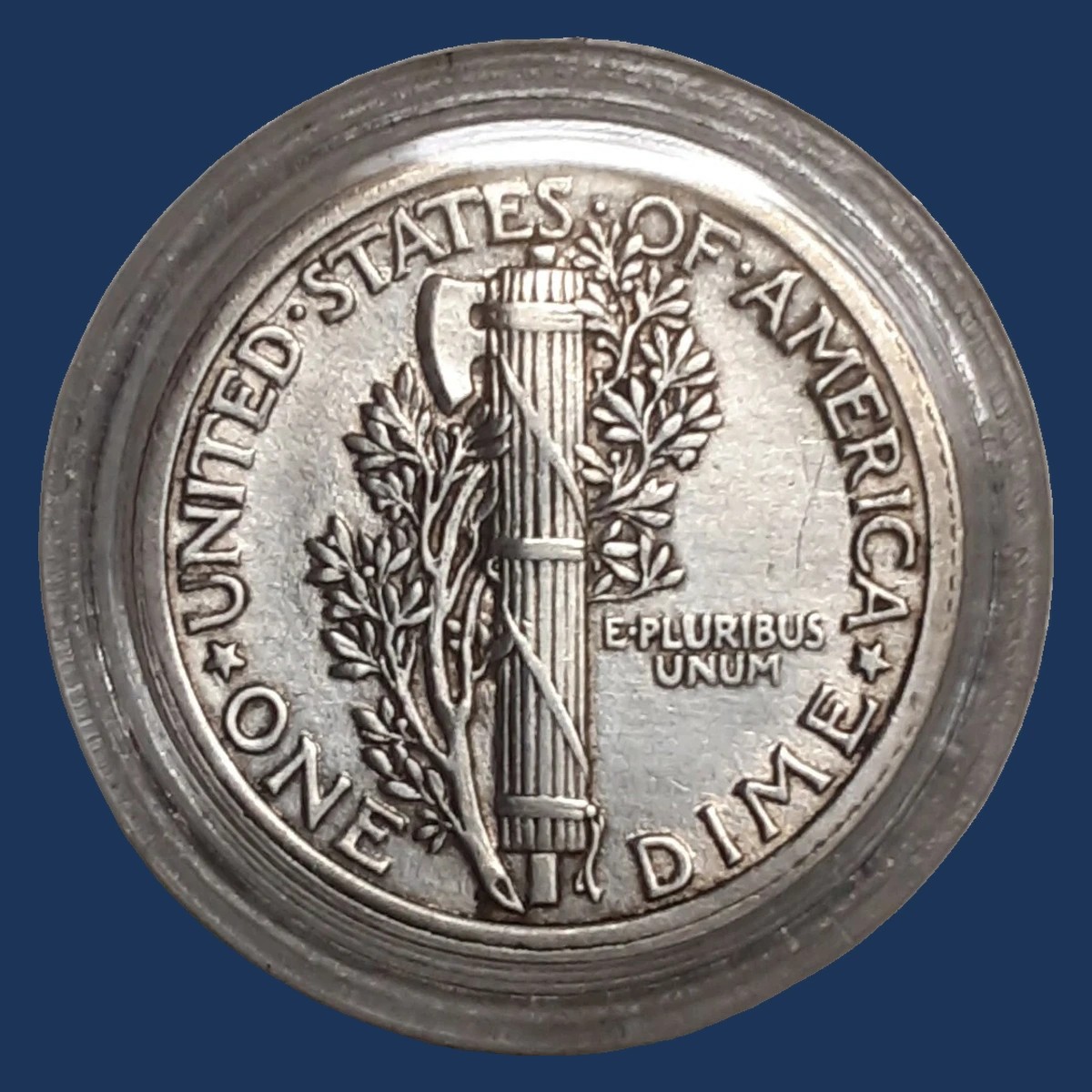
A narrow raised line can record a crack in the die, the steel tool that stamps a coin. Silver enters the opening and copies its shape during striking.
The coin itself has not necessarily cracked. A later scratch instead cuts into its finished surface.
The Mercury year list reports this category without naming a mint or specific route. Its line should not be assigned a location on Liberty’s wing without a matching example.
Check the winged-cap portrait before comparing photographs. A crack on a Barber dime from the same year does not identify a corresponding Mercury feature.
Estimated Value
For worn Philadelphia or San Francisco examples with a genuine crack, estimate $20–$150. This prices the complete coin, not an amount added for the line.
There is no recorded sale here for a named 1916 crack. The range covers modest examples with recognizable tool damage.
The rare Denver coin needs a higher separate comparison even before considering a crack. Exceptionally preserved Philadelphia or San Francisco dimes can also exceed this worn-coin range because of their condition.
How to Identify
Confirm the winged cap and the bundle of rods on the back, called the fasces. Then follow the suspected line with a 10× magnifier.
Change the light direction to see whether the line rises or forms a channel. A scratch can leave raised lips beside a sunken center.
Keep the line’s route visible across nearby design and flat areas. A broad raised patch reaching the rim needs a separate cud check.
Use a scale and calipers when safely accessible against 2.50 grams and 17.9 mm. Inspect the grooved edge for impacts or squeezing.
A continuous ridge joined to the original Mercury design supports a tool crack, rather than a later cut or a similar line on a Barber dime.
2. Reported 1916 Mercury Dime Cud (Estimated Up to $600)
A broad raised patch touching the rim can show that part of the stamping tool broke away. Collectors call this feature a cud.
Metal flows into the space left by the broken steel. Normal design disappears beneath the resulting lump.
The 1916 Mercury list reports the category without identifying a certified coin, mint, or clock position. A specific example must supply those details.
A thin line reaching the rim is still a crack. A small bump inside the design can come from a chip, while metal added after striking can imitate a larger raised area.
Estimated Value
Estimate $75–$600 for genuine rim cuds on ordinary Philadelphia or San Francisco dimes, from worn through modest unworn examples. Size, remaining detail, and attractive surfaces affect the comparison.
This is an estimate for the reported type, not a sale of a confirmed 1916 specimen. The rare Denver issue requires its own valuation.
Solder, crushed rims, and small interior chips are different features. Their appearance does not qualify them for this cud range simply because they contain raised metal.
How to Identify
Trace the raised patch from the rim into the face with a 10× magnifier. Look for normal design disappearing where the stamping tool could no longer form it.
A thin line by itself does not show that a whole section broke away. Inspect the larger area’s height and boundary.
Look for seams or a changed surface that could reveal added metal. A later impact may push the rim inward rather than leave an original struck patch.
The opposite face may show weakness, but that supports rather than replaces the rim connection. Check accessible coins with a scale and calipers against 2.50 grams and 17.9 mm, including surviving edge grooves.
Original raised metal replacing design in a broad rim-connected area provides the key cud evidence.
3. 1916 Mercury Dime Rim Clip (Estimated Up to $700)
A small missing edge near six-thirty identifies the Rippere Collection example. It is a Philadelphia Mercury dime graded PCGS MS63, meaning unworn with visible marks.
GreatCollections offered it in June 2025. The date and location belong to that particular coin.
The gap was present in the blank, the metal disc used to make a dime. Striking then shaped the remaining metal beside the missing section.
That sequence differs from cutting the edge of a finished coin. Other genuine 1916 clips may occupy different positions, so the clock location alone cannot decide whether another gap is original.
Estimated Value
Genuine Philadelphia clips have an estimated $75–$700 range, from worn through attractive unworn coins. The June 2025 Rippere catalog identifies the MS63 example but supplies no sale amount used here.
A different-year Mercury clip graded PCGS MS66 sold for $192 in March 2025. That higher grade describes a very well-preserved unworn coin.
The comparison shows why grade alone does not promise a four-figure price. Clip size, original surfaces, and clear evidence of striking around the gap matter too.
How to Identify
Hold the front upright and locate the small gap near six-thirty on the reference coin. Inspect both places where it meets the normal rim with a 10× magnifier.
Look for changes in the struck detail as it approaches the missing metal. The opposite rim may also be weak from the earlier rim-forming process.
A later notch can occupy the same position. Saw marks, file lines, or fresh burrs can reveal that different cause.
Use calipers across an intact span against 17.9 mm and a scale against the original 2.50 grams. Inspect the remaining edge grooves and retain photographs of both complete faces.
Natural strike changes beside the gap support an original clip more strongly than its shape or clock position alone.
4. Reported 1916 Mercury Dime Rotated Reverse (Estimated Up to $1,000)
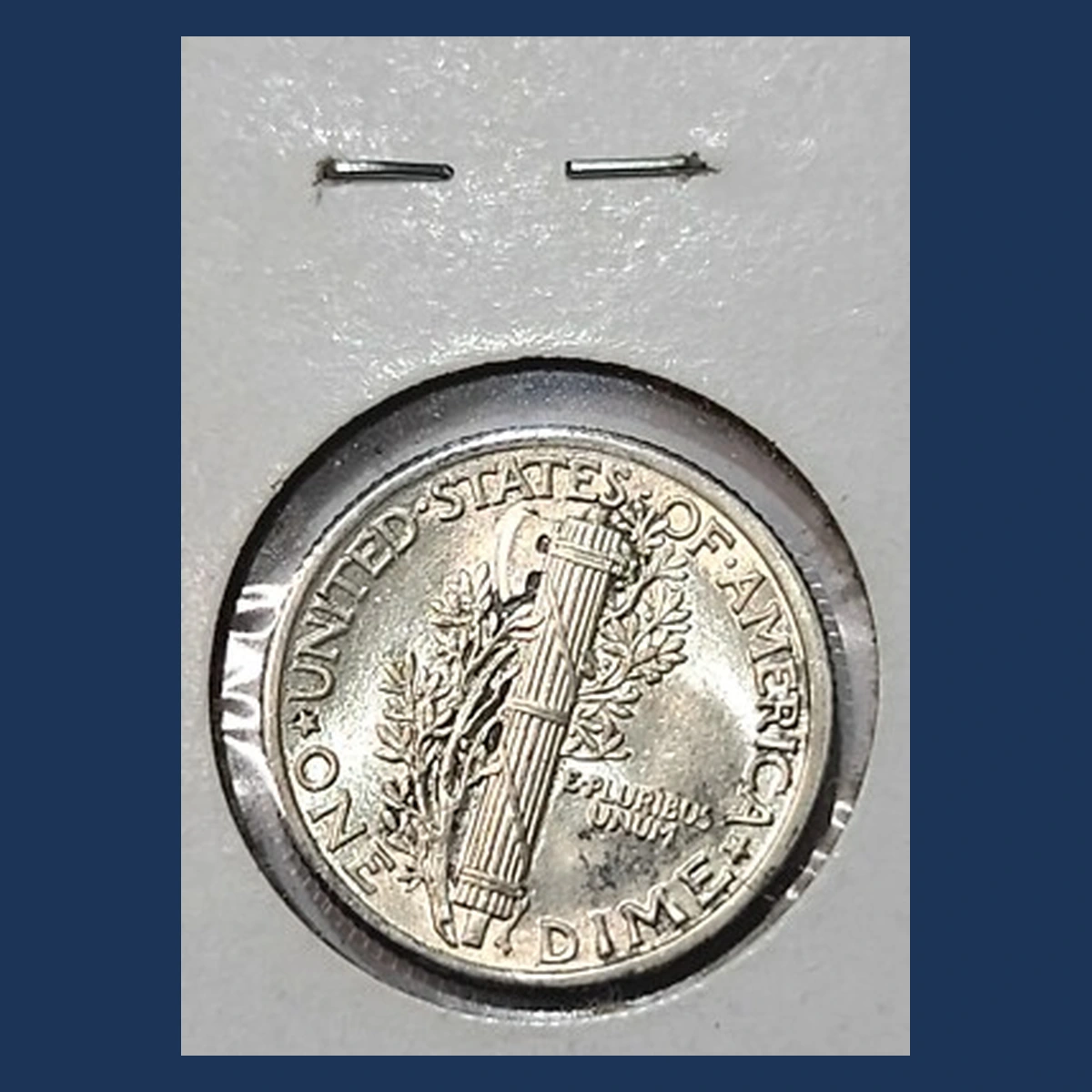
An unworn Philadelphia dime is reported with its back tilted away from normal alignment. The account gives no measured angle.
The two stamping tools pointed in different directions relative to each other. Their complete pictures can remain centered despite the unusual relationship.
To see it, turn the coin over in a controlled way. Rotating each photograph upright separately hides the feature.
The missing measurement matters when describing the report. It cannot be called a ninety-degree turn or an upside-down back simply because those are familiar examples of rotated tools on other coins.
Estimated Value
The year guide places its reported unworn example around $195. That is a guide figure, not a documented auction result.
Use an estimated $100–$1,000 range for genuine examples with a visible, repeatable rotation. Better preservation and a substantial angle support the higher portion.
The report does not state its angle, so its $195 figure cannot price a dramatic half-turn. The word rotated in a listing needs to be backed by the actual relationship between both faces.
How to Identify
Keep Liberty upright in a transparent holder that prevents the coin from spinning. Flip it straight from top to bottom without twisting sideways.
The bundle of rods on the back should normally finish upright. Measure any tilt against a fixed vertical line and repeat the flip.
A 10× magnifier can help match small rim landmarks between photographs. Inspect the edge for a seam that might reveal two joined pieces.
Use a scale and calipers when safely accessible against 2.50 grams and 17.9 mm, and check the normal edge grooves. A coin sitting crooked in its holder proves nothing by itself.
The same back angle after repeated controlled flips shows genuine face alignment; separately straightened photographs cannot measure it.
5. 1916-S Mercury Dime Uncentered Broadstrike (Estimated Up to $1,500)
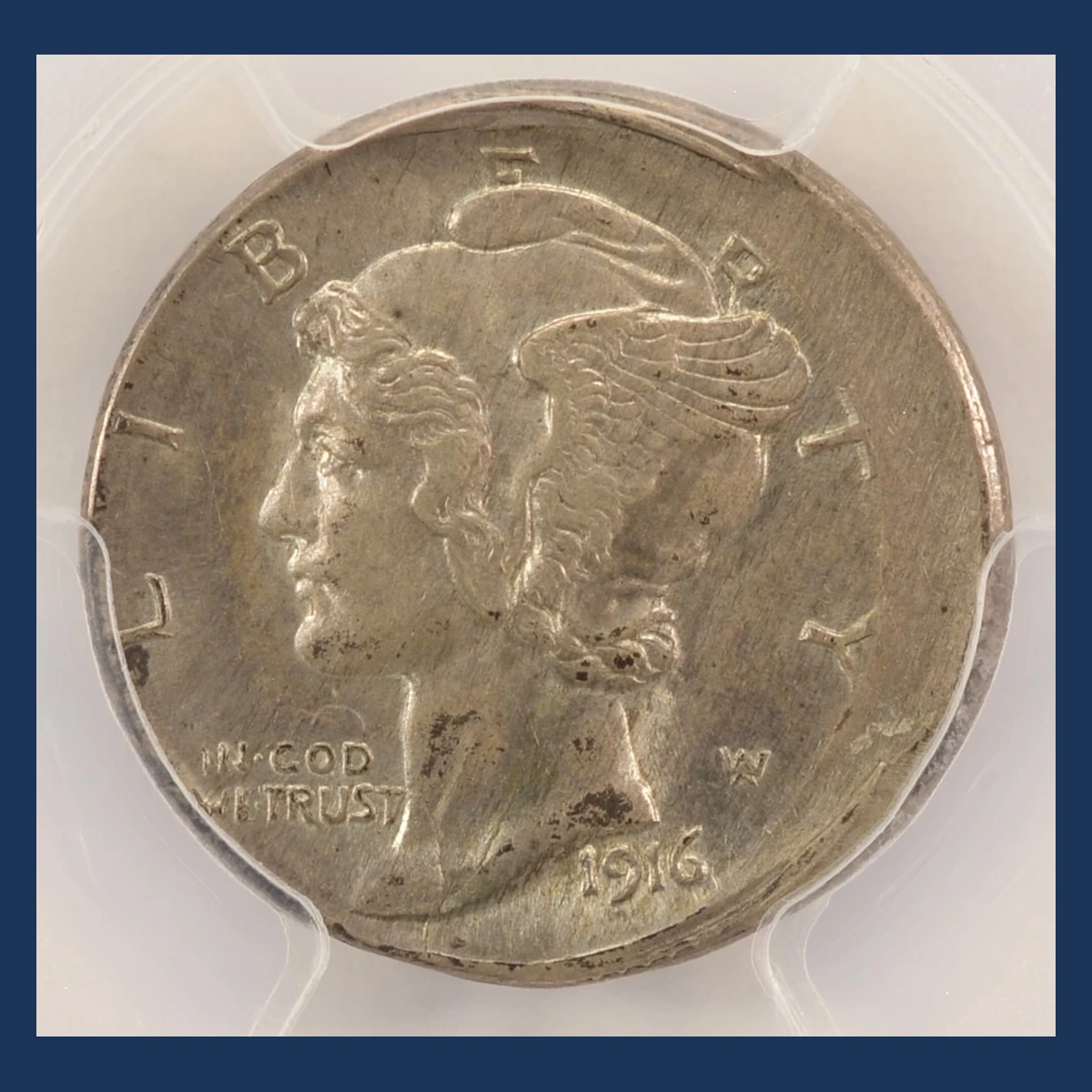
A wide uneven border surrounds the complete design on Sullivan Numismatics’ 1916-S. The dealer calls it a broadstrike, even though some bare metal appears beside the picture.
The collar, a ring that normally limits width and forms edge grooves, failed to hold the blank. Metal spread outward while retaining the whole design.
The account describes about ten percent of the blank showing outside the picture. That does not mean ten percent of the design missed the coin.
PCGS graded it Uncirculated Details, meaning no circulation wear but a condition problem. Minor scratches appear on the back.
Estimated Value
The dealer’s asking price is $450. It is an offer for the scratched example, not a completed sale.
Estimate $300–$1,500 for genuine San Francisco broadstrikes from collectible worn through attractive unworn condition. Clear expansion and original surfaces help determine where a coin belongs.
The offered coin’s back scratches reduce its appeal even though it has no circulation wear. The higher estimate assumes a stronger overall example and does not remove that condition problem from the listing.
How to Identify
Follow the outer letters around both faces with a 10× magnifier. The complete design should fit inside the expanded metal, even where the border is unusually wide.
Use calipers to measure several spans against the normal 17.9 mm. A scale compares the retained metal with the original 2.50 grams.
Inspect the edge for weak or absent grooves that fit failure of the retaining ring. Grinding or hammering an ordinary dime leaves different surface evidence.
Confirm S low on the back, left of the bundle of rods. Keep the entire outline in photographs.
Complete pictures on naturally expanded metal support a broadstrike; the dealer’s ten-percent bare-area description alone does not establish missing design or an off-center strike.
6. 1916-S Mercury Dime Off-Center Strike (Estimated Up to $2,000)
The design shifts toward eleven o’clock on Heritage’s 1916-S example. ANACS identified a ten-percent off-center strike and graded it XF45, meaning wear with strong remaining detail.
The blank did not sit fully beneath the stamping tools. Part of the intended picture missed the metal while another area remained bare.
The coin has brown and tan color from aging. That color is separate from the misplaced strike.
Its readable date and Mercury portrait identify the year and design. An undated extreme error or a same-year Barber dime must remain a different comparison, even if its shift looks similar.
Estimated Value
The XF45 example sold for $207 on March 1, 2003. That historical transaction documents a real San Francisco off-center coin.
Use an estimated $250–$2,000 for comparable readable-date examples, from collectible worn pieces through better-preserved or more dramatic strikes. The old sale is not a fixed current price.
The surviving date, mint letter, and surfaces all matter. Its ten-percent description should not acquire a larger shift or an unworn grade when used in a comparison.
How to Identify
Read 1916 beside the winged-cap portrait, then find S left of the bundle of rods on the back. These details keep the comparison with the correct coin.
Use a 10× magnifier at the boundary between design and untouched metal. Check the reported eleven-o’clock direction on the complete front photograph.
Compare the corresponding missing design on the back. One shifted face with a centered opposite picture can indicate a moved tool instead.
Use a scale and calipers when safely accessible against 2.50 grams and 17.9 mm, allowing for a distorted outline. Inspect the surviving edge grooves for cuts or grinding.
Matching design loss on both faces beside original bare metal provides the off-center evidence, with the date and S establishing its identity.
7. 1916-D Mercury Dime Repunched Mintmark (Estimated Up to $35,000)
The tiny D already makes a 1916 Mercury dime valuable before any repunching is considered. Jim Brown’s account describes two separate repeated-letter patterns on Denver tools.
One has an earlier D above the final letter. Another repunched D sits farther from the nearby leaf.
Workers punched the mint letter into the stamping tool. Pieces of an earlier position could remain beside the final impression and repeat on later coins.
These observations do not establish a San Francisco equivalent. They also make correct identification especially important, since an added D on a common Philadelphia dime can imitate the rare mint.
Estimated Value
Estimate $1,000–$35,000 for authenticated examples from worn condition through about MS64, meaning unworn with some marks. Exceptional Full Bands coins, with clearly separated bands on the back’s rods, need separate comparisons.
An MS64+ sold for $31,720 in May 2026. That price compares the rare Denver issue; no repunched-mintmark identification is assigned to the auction coin here.
The range chiefly reflects the coin’s mint and condition. A second D contour does not add another complete rare-coin value.
How to Identify
Find D below the back’s branch and compare its position with the nearby leaf. Use a 10× magnifier and the club’s illustrated discussion to choose the matching pattern.
The higher earlier D and the separate lower placement are different comparisons. Do not combine their outlines into one expected shape.
Inspect surrounding metal for a seam, cuts, or signs of an added letter. The full back design should agree with the original Denver tool.
Use a scale and calipers when safely accessible against 2.50 grams and 17.9 mm, and inspect the grooved edge. These normal measurements cannot prove an original D.
A matching original mintmark and earlier-letter pattern provide the starting evidence before professional authentication of this rare coin.
Conclusion
Estimated values span $20–$35,000, with the rare Denver issue accounting for the highest figures. A wide coin with a complete picture differs from one that lost design beyond its edge.
Keep the winged-cap design, readable date, and mint letter together in every comparison. Use close views for raised details, both faces for misplaced strikes, and a controlled flip for rotation.