1869 Nickel Error List with Pictures

Count the leaves, inspect the date, and then look at the coin’s shape. Errors on 1869 Shield nickels range from an omitted leaf to a cup-shaped example that brought $15,600 in July 2022.
This 1869 nickel error list spans estimated whole-coin values of $20–$20,000. Some features repeat on many coins from one stamping tool; others changed a single coin as it was made.
The sections below show what to look for and how each feature affects value.
1. 1869 Shield Nickel Reverse Lamination
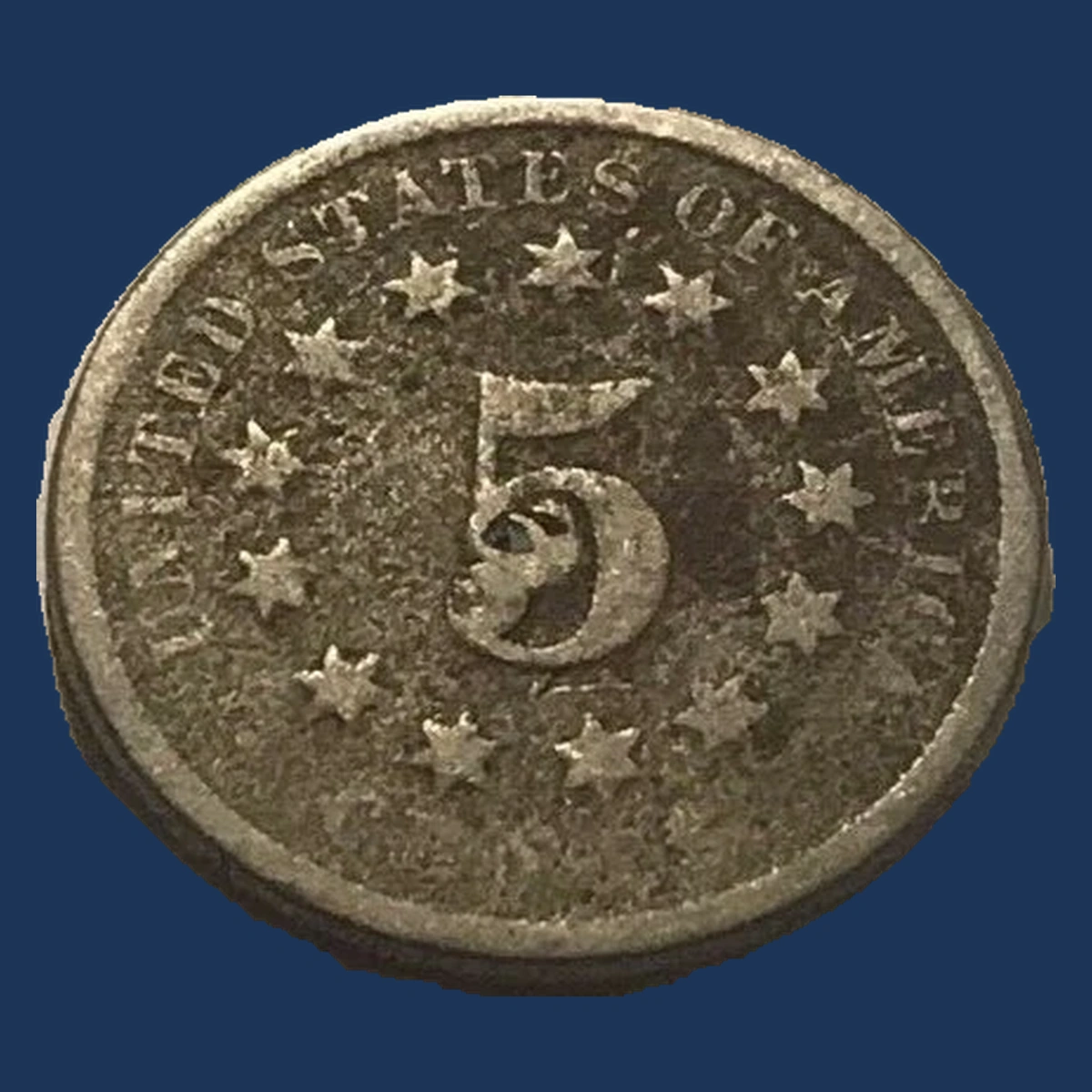
A rough patch or lifted sliver on the back may come from a weak seam within the metal. When that seam opens near the surface, collectors call the result a lamination.
A seller lists an 1869 Shield nickel with a reverse lamination. The coin is ungraded, and the listing does not establish a precise position for the affected area.
The seller also questions whether the date is repunched or doubled. That question does not prove an additional variety.
The peeling metal must stand on its own as the feature being examined.
Estimated Value
The ungraded reverse-lamination listing asks $75, with offers accepted. That is a seller’s request, not an auction result.
For genuine examples of this surface problem, estimate $25–$250. Small separations on worn coins usually stay near the lower end, while larger, clearer flaws can attract more interest.
Original surfaces remain important because scratches and corrosion can hide the boundary of the defect. A questioned date variety should not be added to the price without a separate match.
How to Identify
Photograph the rough reverse patch under low lighting, then rotate the light rather than scraping the surface. Use a 10× magnifier to look for a thin separation edge.
A normal Shield nickel weighs 5.00 grams and measures 20.5 millimeters. A scale and calipers can record a loose coin’s measurements, but a shallow lamination may change its weight very little.
The alloy is copper and nickel throughout, without an outer plated layer. Peeling here means separation within that alloy.
Check whether nearby design continues naturally into the affected area. A scrape can cut across the original design and leave fresh tool marks.
A visible seam beneath lifted original metal is more useful than roughness or discoloration alone.
2. 1869 Shield Nickel Clashed Designs on Both Faces
Faint outlines that do not belong on one face can be traces of the opposite design. They arise when the dies, the steel stamping tools, meet without a blank between them.
That contact damages the tools, which then pass the stray shapes onto later coins. The specialist catalog records an 1869 example with clash marks on both faces.
The same description questions a possible misplaced digit low inside the shield. The clash does not establish that separate suggestion.
A specific leaf, letter, or numeral should be matched before an unexplained line is called transferred design.
Estimated Value
Clear, recognizable clash marks can make an otherwise ordinary nickel more interesting to a specialist. Estimate $30–$400 for circulated to modest unworn examples with visible traces on both faces.
This is an estimated whole-coin range, with preservation and clarity doing most of the work. A barely visible mark on a heavily worn coin belongs nearer the lower end.
A supposed misplaced digit does not add value merely because it appears near a genuine clash mark.
How to Identify
Keep photographs of the front and back beside each other. For each stray outline, ask whether its shape could come from part of the opposite design.
Use a 10× magnifier and changing light to follow the full trace. A scratched straight line that resembles nothing on the other face is weak evidence.
Check the date and No Rays reverse, then measure a loose coin with a scale and calipers against 5.00 grams and 20.5 millimeters.
A clash is a mark copied from damaged tools, not a second coin pressed into the finished nickel. Confirm a recognizable transferred shape on each face rather than relying on the catalog’s separate suggestion of a misplaced digit.
3. 1869 Shield Nickel Die Cracks and a Rim Cud
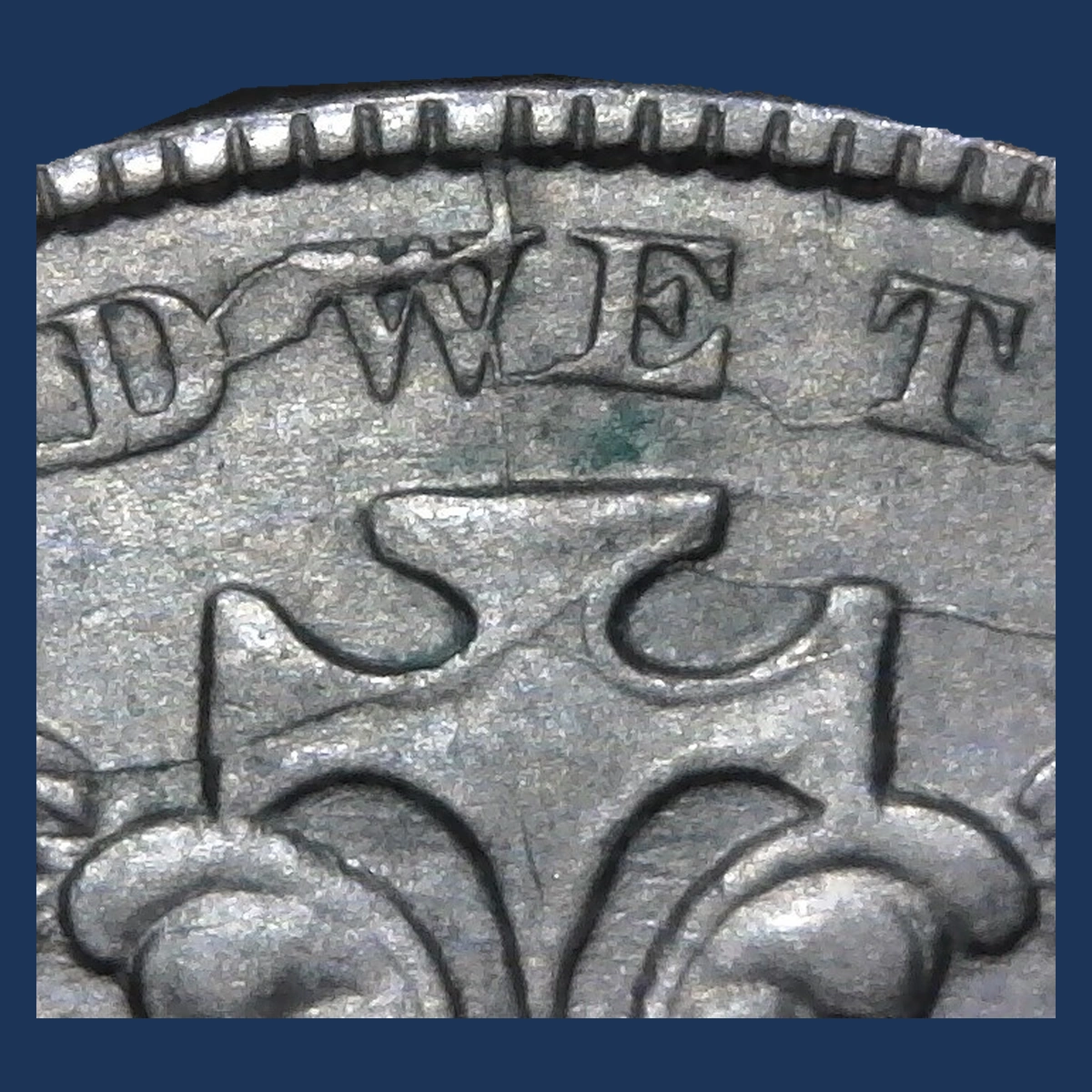
A thin raised line may cross the cross, lower leaves, date, or motto. It is a copy of a crack in the stamping tool, filled by metal during striking.
Some 1869 examples also show breaks above STATES OF on the back. These lines occur on different coins and need not appear together.
Another dealer catalog describes a raised rim lump from two to four o’clock on the front. Such a lump is called a cud and forms after a piece of the tool breaks away at its edge.
Estimated Value
A heavily worn 1869 cud appeared in a Jim’s Coins catalog with a $24 minimum bid. That figure sets an opening threshold, not a recorded sale.
Estimate $20–$300 for ordinary cracked examples and $40–$600 for clearly identifiable rim cuds. Size, remaining detail, and surface damage can move two coins with the same year far apart.
Fine cracks may add little to the basic coin price, while a bold rim-connected lump is easier to appreciate.
How to Identify
For the cataloged cud, go directly to the right edge of the shield face, between two and four o’clock. The raised lump should meet the rim and replace part of the normal design.
A 10× magnifier and side lighting reveal whether the boundary is original. A rim dent pushes existing metal around; added solder can have an unnatural join.
For a thin crack, trace its raised route across the cross, leaves, date, or motto instead.
Weigh a loose example on a scale and check its width with calipers against 5.00 grams and 20.5 millimeters. A cracked stamping tool does not require the coin itself to split.
Look for raised metal continuing through the design, rather than a cut running into it.
4. 1869 Shield Nickel Missing Leaf Variety
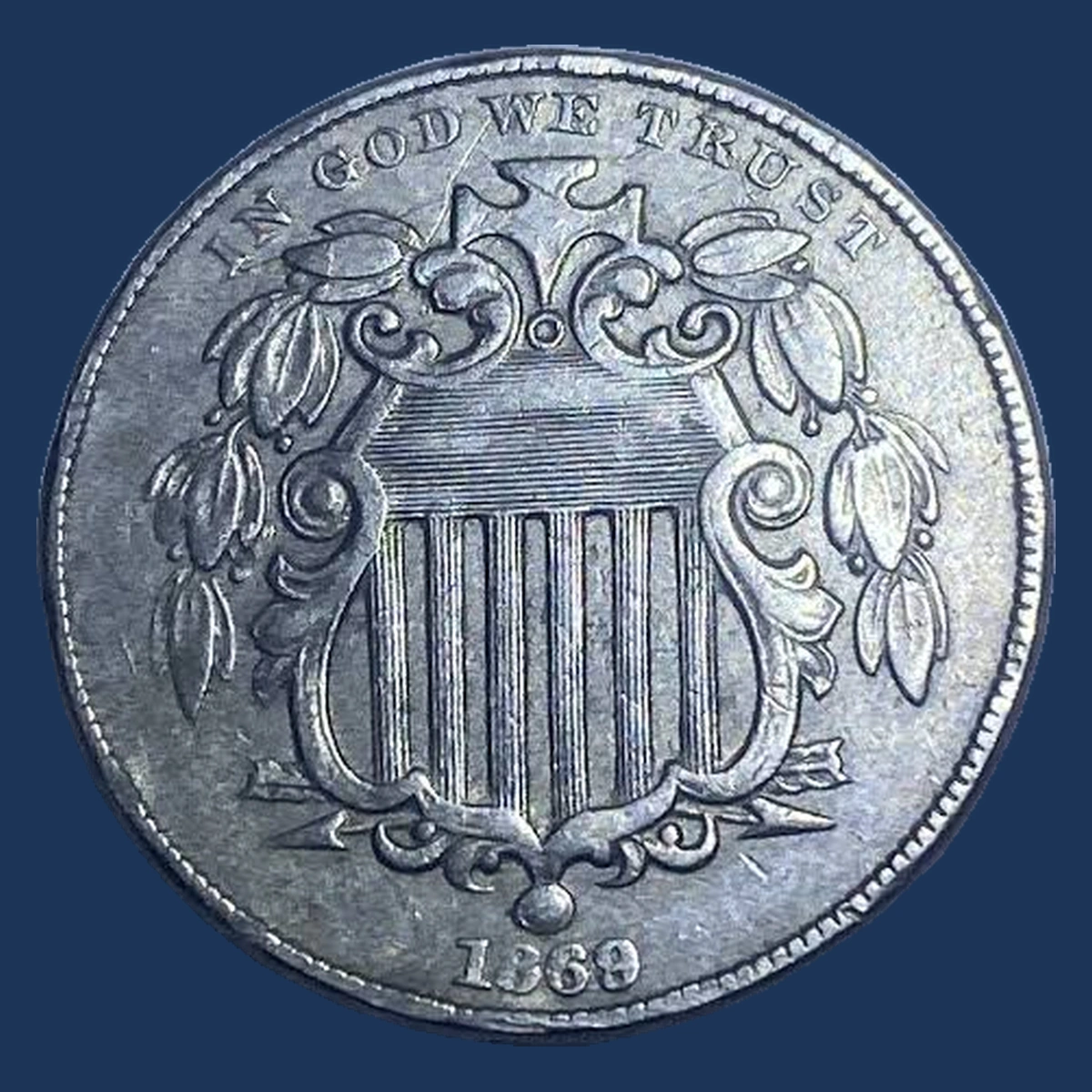
One small leaf is absent from the second cluster on the right side of the shield. This leaves three leaves where the completed design should have four.
The older master design lacked that leaf, so workers had to add it to individual stamping tools. If the extra leaf was not engraved, coins made from that tool inherited the omission.
The specialist catalog records this feature on wide-date 1869 nickels using the older front design. It is a repeated tool variety, rather than metal that later fell off each coin.
Estimated Value
For an identifiable missing-leaf variety, estimate $40–$700 across worn to attractive unworn examples. The other leaves should remain clear enough to show that one was omitted rather than lost to wear.
A worn patch in the right location carries less weight than a clean three-leaf arrangement. Date, surfaces, and overall preservation still account for much of the coin’s value.
Pay for a matched 1869 example, not an illustration of the same general feature on another year.
How to Identify
Count the leaves in the second cluster on the right side, using a 10× magnifier. The outermost leaf should be absent while the three remaining leaves keep their normal outlines.
The specialist explanation shows the relevant arrangement on earlier dates. For identification, compare your coin with an 1869 example of the same older front design.
Check the nearby leaves for wear or general weakness. If all their tips are flattened, a missing-looking leaf may simply be hard to see.
The ordinary specifications are 5.00 grams and 20.5 millimeters, checked with a scale and calipers on a loose coin. The decisive pattern is three intact leaves around the empty fourth position, not a damaged patch.
5. 1869 Shield Nickel Missing Metal at the Rim
A rim clip leaves a piece missing from the edge because the blank was incomplete before striking. The defect begins when blanks are cut from the metal strip, rather than after the finished coin enters circulation.
GreatCollections cataloged an 1869 example graded ANACS XF45 in the Rippere collection. That grade describes a circulated coin with substantial design detail remaining.
The listing calls the defect a rim clip but does not specify its shape or clock position. A crescent, straight edge, or exact missing percentage should not be assumed from that title.
Estimated Value
An estimated range of $75–$750 covers genuine rim clips from collectible worn pieces to more appealing examples. The missing area must be distinguishable from later cutting or grinding.
The ANACS XF45 coin appeared in the Rippere collection auction ending August 11, 2024. Its catalog identity provides a useful condition comparison, but the accessible listing does not show a public sale total.
A larger attractive clip may command more, while corrosion or a weakly defined edge can reduce demand.
How to Identify
Inspect the edge of the missing area before concentrating on the face. Under a 10× magnifier, look for signs that the metal flowed during striking around an already incomplete blank.
Fresh saw lines, a filed surface, or a sharp cut through finished design point toward later damage. Wear can soften these clues, so compare photographs of the entire boundary.
Use a scale to record how far the loose coin falls below the normal 5.00 grams. Calipers can measure the remaining full width against 20.5 millimeters without treating the notch as the diameter.
The Rippere catalog example is a starting comparison. Confirmation rests on an original missing-blank edge rather than a recently cut surface.
6. 1869 Shield Nickel Strongly Rotated Reverse
The reverse can sit at an unexpected angle even though each face has a single, complete design. One stamping tool was turned away from its normal position relative to the other.
An 1869 example in the specialist catalog is described as strongly rotated. The written description does not give an exact number of degrees.
This is different from date digits that tilt relative to earlier punched digits. A repunched date concerns marks within one face, while rotated dies change how the two faces line up when the whole coin is flipped.
Estimated Value
An estimated $60–$800 suits demonstrable large rotations on collectible 1869 nickels, with condition and angle affecting the price. A strong turn is generally easier to appreciate than a small lean.
Photographs need to establish the relationship between the faces rather than show each side independently upright. Clear video can make that difference easy to understand.
A worn but convincing example may be more useful to an error collector than a sharper coin with an unproven angle.
How to Identify
A magnifier helps read a worn date, but the rotation test needs a continuous view of both faces. Hold the shield upright and record a top-to-bottom flip around a horizontal axis.
The reverse should normally finish upright. Keep the movement continuous so a sideways hand turn cannot create a false angle.
A certified coin can remain sealed during the demonstration. For a loose piece, use a scale and calipers to record its weight and width against 5.00 grams and 20.5 millimeters.
Repeat the same flip without adjusting the reverse afterward. The reported strong rotation should consistently leave the reverse tilted, even though no precise angle is given in the catalog.
7. 1869 Shield Nickel Misplaced Date Variety
A digit punched outside its proper date position can leave a small extra mark elsewhere in the design. The mark transfers from the stamping tool onto each coin it strikes.
PCGS lists an 1869 misplaced-date variety under the number FS-1307. That listing establishes a named variety, but its brief text does not identify the exact stray digit position.
The specialist catalog separately questions possible digit marks near the shield’s bottom and ball. Those tentative marks should not automatically be treated as the PCGS variety without matching the actual coin.
Estimated Value
For a properly matched 1869 misplaced-date example, use an estimated whole-coin range of $75–$1,000. Clear extra digit detail and attractive preservation support the stronger prices.
The PCGS entry does not supply an auction record to turn into a realized-price claim. A small unexplained bump therefore should not be valued as though it already carried that named identity.
When several varieties occur on one coin, compare the complete piece rather than adding a price for each mark.
How to Identify
Begin with a clear image or grading record for FS-1307. Keep both faces visible so the date, design, and claimed variety remain tied to one coin.
For a loose example, check the normal 5.00-gram weight and 20.5-millimeter width with a scale and calipers. Those numbers identify the basic coin type, not the misplaced digit.
Enlarge the extra mark with a 10× magnifier and compare its shape and location directly with the named example. A crack may be jagged, while a surviving punch mark should preserve part of a recognizable numeral.
Do not assign the catalog’s tentative shield or ball marks to FS-1307 solely because they occupy a plausible position.
8. 1869 Shield Nickel Blank Split into Two Pieces after Striking
This coin separated through its thickness, leaving two thin pieces instead of one complete nickel. Each piece retains one original outer face and exposes an inner surface where the metal separated.
A seller offers both pieces together as an ANACS G4 pair split after striking. G4 describes a heavily worn coin with only basic design remaining.
The split follows a weak internal seam in the copper-nickel alloy. It is not the peeling of a plated coating.
Keeping both pieces together helps show how the separated surfaces relate to the original whole coin.
Estimated Value
The two-piece ANACS G4 listing asks $995 or best offer. The request covers both pieces together, not $995 for each thin half.
Estimate $300–$1,200 for a genuine matching pair in broadly comparable worn condition. The ability to show both original faces and corresponding inner surfaces can make the pair more appealing than one isolated fragment.
Later cutting, altered edges, or mismatched pieces would undermine that comparison even if the combined shape looked complete.
How to Identify
Keep a certified pair sealed and read the record for each piece. The reported ANACS description identifies separation after striking, rather than two unrelated thin blanks.
With loose pieces, a precise scale records separate and combined weights against the original 5.00-gram standard. Calipers compare the surviving outline with 20.5 millimeters.
Photograph each original outer face and each exposed inner surface. Do not force fragile fragments together.
Inspect the exposed texture under a 10× magnifier. Sawing or grinding may leave repeated tool marks rather than a natural break through the alloy.
The two pieces should preserve the original front and back with corresponding inner surfaces, not simply form a similar circle.
9. 1869 Shield Nickel Repunched Date
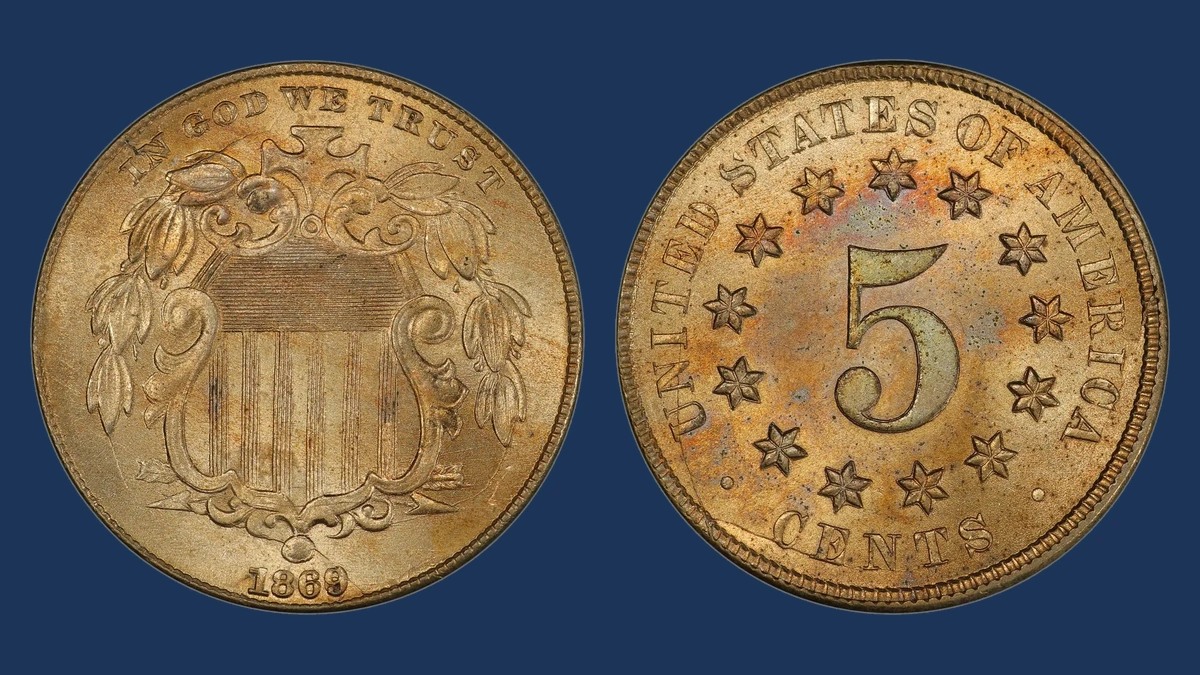
Extra curves beside 1, 18, 69, or the whole date can record a shifted date punch. The worker entered the date again in the tool, leaving portions of the first attempt.
On one narrow-date variety, an earlier 1 appears below the final digit. Wide-date examples include earlier strokes above or below several numerals.
Normal narrow and wide spacing is not itself repunching. A complete comparison needs the extra strokes.
Some older descriptions use 1869/8, but that interpretation is disputed and should not turn every raised mark near 9 into an earlier 8.
Estimated Value
Small date remnants on worn nickels can be modest purchases, while bold matches in high grades attract specialists. Estimate $40–$1,500 for recognizable repunched-date examples.
The strength and placement of the earlier strokes matter alongside the coin’s overall condition. A familiar variety number is useful only when the photographed date agrees.
Some counterfeits also show dramatic-looking extra date marks, so apparent strength alone cannot justify a premium. The range assumes a genuine coin with a matched pattern.
How to Identify
Compare the spacing of all four digits before looking at the extra marks. Choose a narrow-date or wide-date reference that agrees with the actual coin.
Under a 10× magnifier, follow the rounded remnants of the earlier punch above or below each numeral. An extra 1 below the narrow date belongs to a different pattern from a whole wide date repeated above.
Use a scale and calipers on a loose coin to check about 5.00 grams and 20.5 millimeters. Normal measurements cannot by themselves exclude a counterfeit.
The specialist catalog flags certain dramatic 869 patterns as false coins. Match the whole date and surrounding design rather than accepting a bold extra curve or the old 1869/8 label.
10. 1869 Shield Nickel Strike About 20% Off Center
The design on a dealer-listed example sits about 20% off center toward eight o’clock. Part of the blank remained outside the stamping tools, leaving an untouched area beside the shifted design.
Jim’s Coins described the piece as an 1869 nickel in VG condition, meaning heavily circulated but still showing important outlines. Only part of the date is visible.
The year therefore relies on the catalog’s identification, rather than four complete readable digits. The blank area and missing design should be examined together before comparing it with a fully dated example.
Estimated Value
The listed piece carried minimum bids of $899 and $698 in different Jim’s Coins catalogs. Neither number establishes a completed sale.
For a genuine example of this size and general condition, estimate $500–$2,000. A more complete date and cleaner surfaces can make a coin easier to sell and compare.
The incomplete date is a real limitation when assigning it specifically to 1869. An otherwise similar off-center Shield nickel with an unreadable year should not receive that identity automatically.
How to Identify
Find every surviving part of the date before estimating the displacement. Keep the catalog’s 1869 identification separate from the digits you can actually read.
Look across both faces for a matching displaced design and unstruck portion. On this reported piece, the direction is toward eight o’clock when the front is upright.
A magnifier helps inspect the boundary where the design ends. Cuts or grinding remove metal after striking and can imitate a missing design area.
A loose coin should remain near the normal 5.00 grams unless metal has been lost. Use calipers to record the altered outline against the usual 20.5-millimeter width.
The original unstruck area should correspond on both faces, rather than result from cutting away the finished coin.
11. 1869 Shield Nickel Doubled Shield and Motto
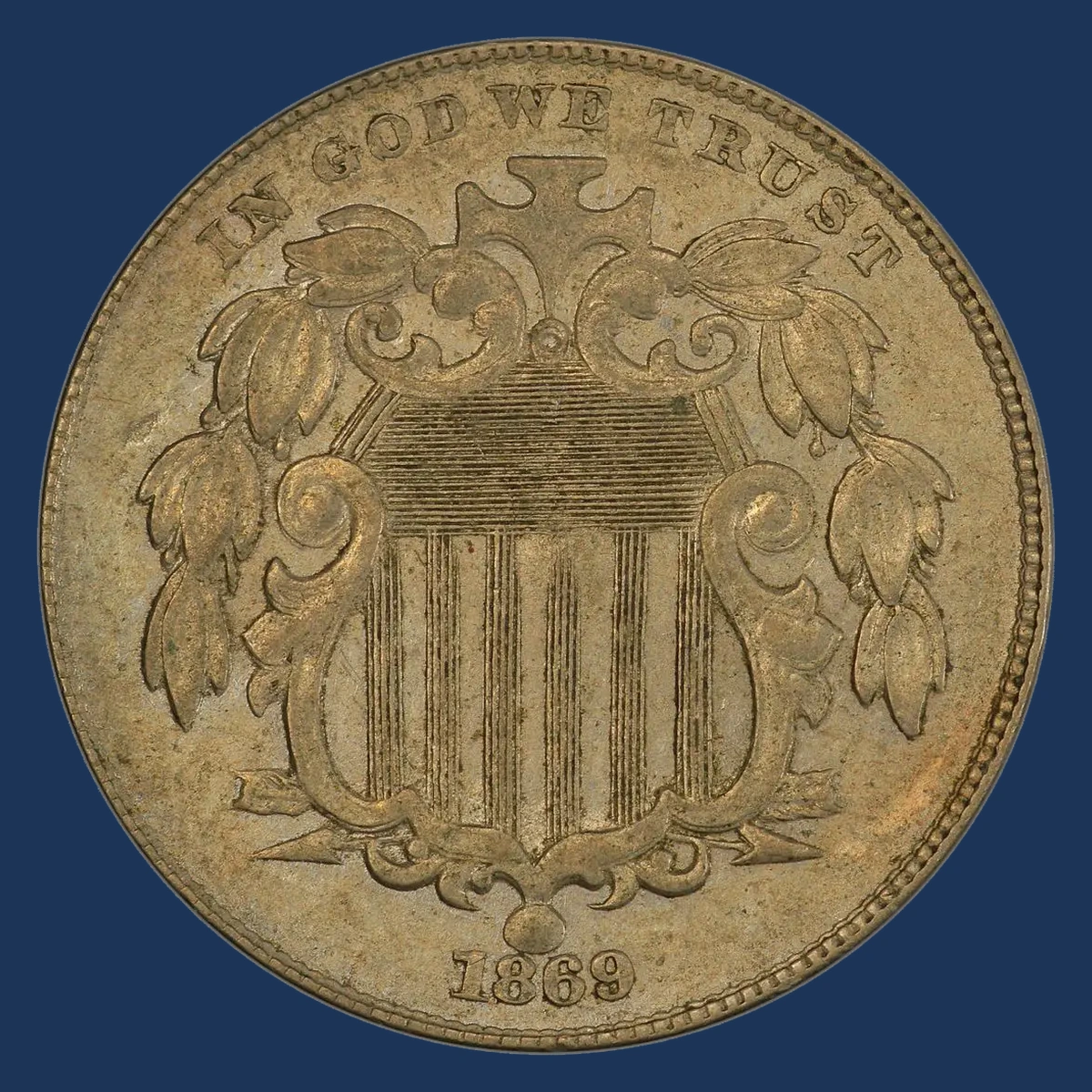
The shield may show doubled lines, and some examples also repeat parts of the motto above it. These extra contours were already present in the stamping tool before it struck the coin.
The wide-date 1869 series contains strong and subtle versions of this effect. They do not all share the same direction or visible letter pattern.
A coin can also carry repunched date digits and later cracks from the same tool. Those accompanying marks help with comparisons, but they do not replace the repeated shield or motto details that establish doubling.
Estimated Value
Estimate $75–$2,500 for properly identified doubled designs across worn and attractive unworn examples. Bold separation that remains visible without extreme enlargement tends to be easier for collectors to appreciate.
Subtle doubling on a worn coin belongs lower in the range unless a particular scarce variety supports more. Flat ledges caused by movement during striking do not earn the same treatment.
If repunching or cracks accompany the doubling, value the entire coin once rather than adding three separate maximum prices.
How to Identify
Enlarge the shield’s repeated lines and compare their spacing with an identified wide-date example. Then check whether that particular variety also doubles letters in IN GOD WE TRUST.
A 10× magnifier and changing light help separate rounded duplicate contours from flat ledges. Do not demand identical doubling on every 1869 example.
The normal 5.00-gram weight and 20.5-millimeter diameter can be checked on a loose coin with a scale and calipers.
Inspect any date repunching or raised cracks as supporting features, while leaving those separate mechanisms distinct. Wear can hide smaller parts of the pattern.
The main match remains the repeated shield or motto design, not a thick date digit alone.
12. 1869 Shield Nickel Reverse Die Cap with Brockage
A coin that sticks to a stamping tool can spread around it as more blanks enter the press. The resulting raised wall gives the coin a cap-like shape.
An 1869 example graded NGC MS64 was cataloged as a reverse die cap with brockage. MS64 means an unworn coin with relatively few marks.
Brockage describes a recessed, mirror-image impression made through contact with another coin. Here the cap and brockage belong to the same unusual specimen.
The exact transferred design must be checked on that piece, rather than assumed from its cap-shaped outline alone.
Estimated Value
Mint Error News reports $15,600 for this MS64 specimen in Heritage’s July 2022 auction. That result prices the complete cap-and-brockage coin, not two separate errors.
For a comparable genuine example, an estimated $10,000–$20,000 reflects its dramatic shape, old date, and strong preservation. Wear, damage, or less recognizable design would change the comparison.
The intact cap wall and identifiable coin details matter more than simply attaching several error names to the same piece.
How to Identify
View the edge and both faces together before interpreting the unusual shape. A cap has metal displaced into a wall, rather than just a flat coin bent across its center.
Compare the piece with the illustrated MS64 example in the published auction results. The large 5 and surrounding stars belong to the reverse of a Shield nickel.
Use a 10× magnifier to inspect any recessed, reversed design separately from the cup wall. Do not mistake a flattened area for a readable mirror impression.
The normal blank started at 5.00 grams and 20.5 millimeters; a scale and calipers can record a loose specimen’s changed dimensions. Leave a certified example sealed and match both its cap shape and transferred design.
Conclusion
The estimated range for these 1869 Shield nickel errors is $20–$20,000, with the documented cap-and-brockage coin selling for $15,600. Most small cracks and surface flaws sit far below that dramatic example.
Let the visible feature guide the comparison: count leaves, trace extra digits, inspect a missing edge, or compare separated pieces. A dealer’s minimum bid or asking price remains different from a completed auction sale.