1873 Nickel Error List with Pictures

A copper-colored Shield nickel brought $21,600 in May 2022 because it was struck on a cent blank. Most 1873 errors are less dramatic, showing extra date strokes, raised lines, or a turned reverse.
This 1873 nickel error list covers estimated whole-coin values from $30 to $30,000. Open 3 and Closed 3 describe normal date styles, so that difference alone is not an error.
Read on to learn which small details matter and how the larger mistakes compare.
1. 1873 Shield Nickel Die Cracks and Rim Breaks
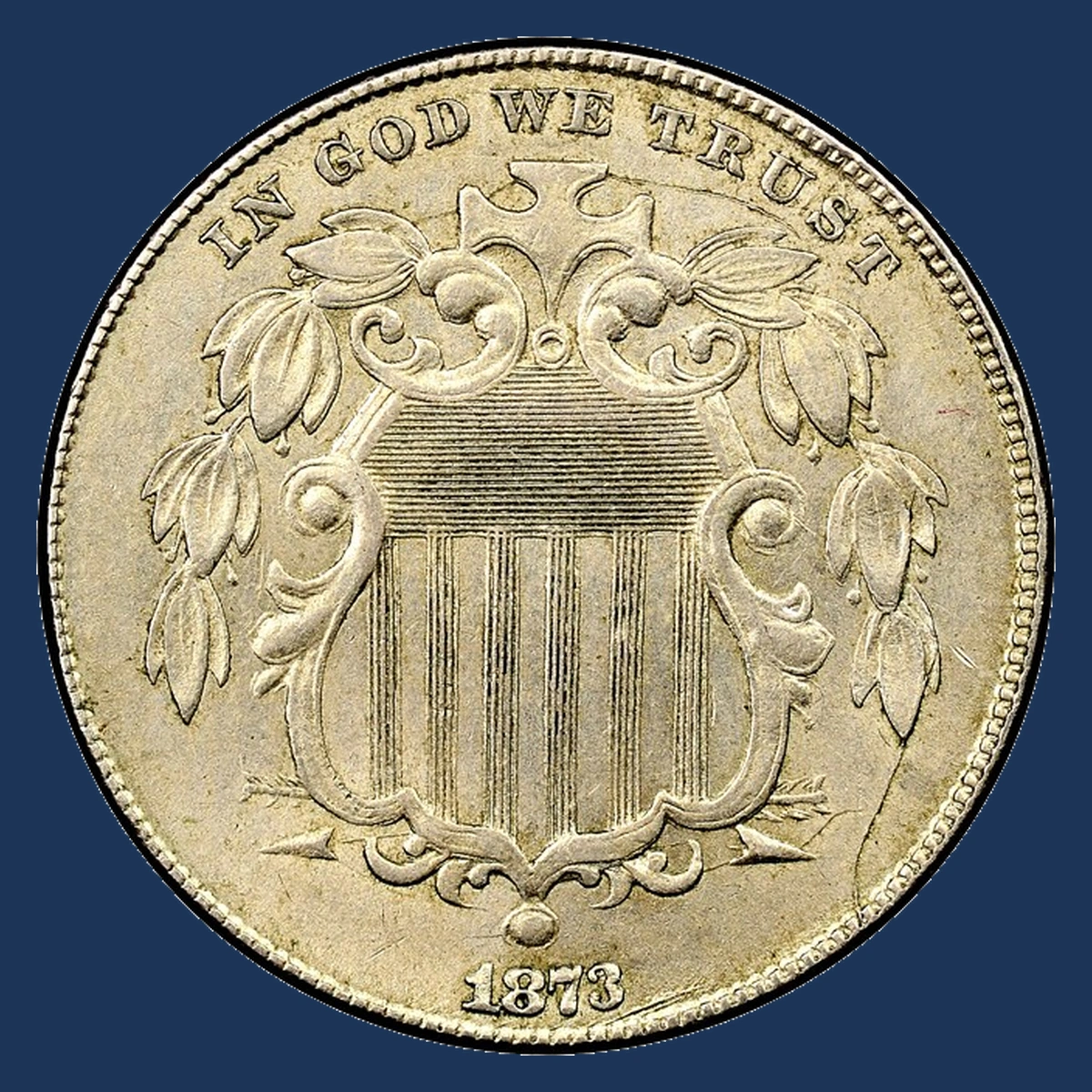
A raised thread crossing a leaf or arrow can come from a cracked die, the steel tool that stamps coins. Metal squeezed into the crack and copied its shape.
Closed 3 examples have cracks near the cross and between leaves, arrows, and the edge. Different Open 3 pieces show lines across the cross or through the left design.
A larger missing piece of the tool can leave a raised lump joined to the rim, called a cud. A specific 1873 cud still needs confirmation; the known thin cracks do not establish one.
Estimated Value
For ordinary 1873 examples with clear cracks, allow roughly $30–$700, with condition accounting for much of the difference. A small raised line on a worn coin may add very little.
A confirmed large rim cud would warrant a separate conditional estimate of $250–$1,000. Its size and remaining design would matter more than the number of small cracks nearby.
These prices cover the whole nickel, including its date and preservation.
How to Identify
Tilt the line under a desk lamp before using a 10× magnifier. A die crack should rise above the surface instead of cutting a trench through it.
The Shield Nickel Varieties catalog maps several different paths. On Closed 3 coins, examples include the lowest left leaf to the left arrow and the upper right arrow toward the edge.
Do not mistake every straight line for a crack. A reported line from W toward the first left leaf was identified as a scratch.
Check a loose coin with a scale and calipers against 5.00 grams and 20.5 millimeters. For a suspected cud, inspect where the raised lump joins the rim and replaces normal design.
2. 1873 Shield Nickel Misplaced Date Digits
Look below the shield rather than inside the date. One Open 3 variety shows the top bar of an extra 1 projecting left of the small ball.
This happened when the date punch touched the wrong place in the stamping tool. Its leftover mark then appeared on the coins made from that tool.
Another example has misplaced digit remnants among the tiny rim teeth below the date. That coin also has a doubled design, but the stray digits and doubling are different features of the same piece.
Estimated Value
A practical estimate is $75–$1,000 for identifiable misplaced-date examples, from worn coins with visible marks to attractive unworn pieces. The tiny extra digit needs to remain clear enough for a buyer to recognize.
An isolated bump that cannot be matched should not receive the same premium. On a coin that also has a doubled design, compare prices for the complete combination.
Do not add the highest estimate for each feature as though they belonged to separate coins.
How to Identify
Place an enlarged photograph of the lower shield beside a known Open 3 example. First find the small ball, then check immediately to its left for the extra top of 1.
A 10× magnifier helps separate this short digit stroke from the ball’s normal outline. For the other reported variety, move down to the rim teeth beneath the date instead.
Keep the full date in the comparison photograph so the Open 3 shape remains visible. Standard loose-coin checks use a scale and calipers: about 5.00 grams and 20.5 millimeters.
A jagged raised line may be a crack rather than a numeral. The useful match is the extra digit’s shape and exact position beside the ball or within the lower rim teeth.
3. 1873 Shield Nickel Peeling Metal or Lamination
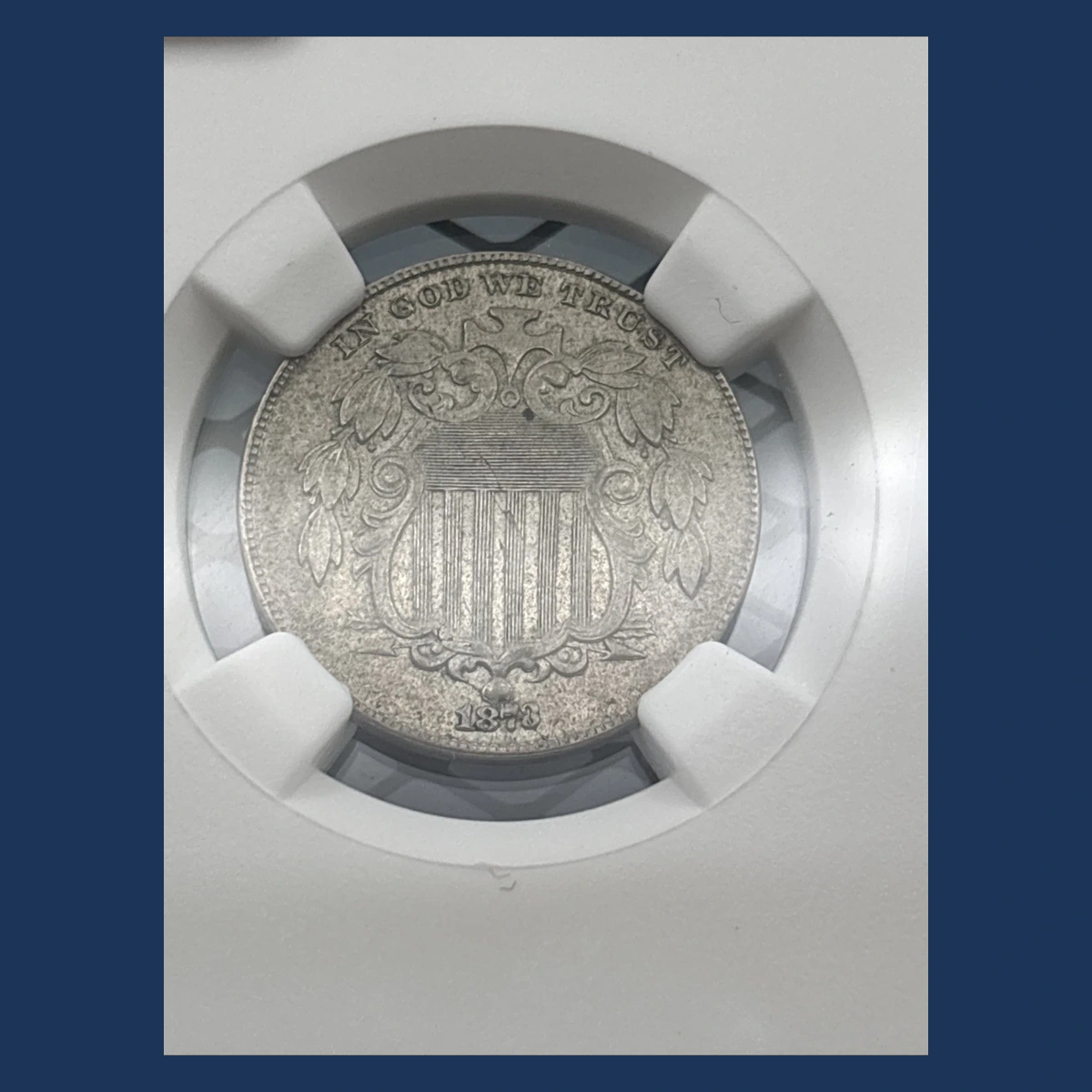
A thin piece of the surface can lift or peel when the metal contains a weak seam. Collectors call this a lamination, even though a Shield nickel is not a plated or layered coin.
A seller describes an Open 3 example graded NGC MS62 with this problem. MS62 means it has no circulation wear but has noticeable marks.
The same listing also mentions a repunched date and a die crack. Those marks must be examined separately from the peeling metal, whose exact location is not specified in the listing text.
Estimated Value
The listed Open 3 MS62 coin carries a $990 asking price, not a completed sale. That request includes the coin’s condition and its other reported features.
Estimate $40–$1,200 for genuine 1873 laminations across worn to attractive unworn grades. A small flake on a heavily worn nickel belongs nearer the lower end.
Large, clearly original separations can attract stronger interest, especially when the surrounding design remains easy to see.
How to Identify
Do not lift a loose flap. Photograph it as found, including the edge of the separation and the nearby design.
Use a scale if metal is missing: the normal weight is 5.00 grams. Calipers should show roughly 20.5 millimeters, although neither measurement alone proves a lamination.
Under a 10× magnifier, look for metal that has separated along a shallow seam. A peeled area may retain uneven original texture, while a fresh scrape often cuts through nearby details.
This alloy is copper and nickel throughout, so a color change does not demonstrate a missing outer layer. Check the seam itself for lifted or missing original metal, rather than treating the separate raised die crack as peeling.
4. 1873 Shield Nickel Rotated Reverse
The reverse on one reported Open 3 nickel sits nearly upside down after the coin is flipped from top to bottom. A normal nickel should show both designs upright with that movement.
One stamping tool turned away from its usual position relative to the other. This changes the relationship between the two faces, without necessarily making either face look doubled.
The specialist report describes nearly 180 degrees of rotation. That wording does not establish an exact angle, and separately rotated photographs cannot demonstrate the effect on a physical coin.
Estimated Value
For a clearly demonstrated large rotation, estimate $100–$1,500 across worn and unworn 1873 nickels. Near-upside-down alignment is easier to show and often more appealing than a slight tilt.
The amount of wear still matters: clear shield details and an undamaged edge support stronger prices. A photograph with the reverse turned independently cannot support the same valuation.
Treat this as an estimated whole-coin range for the reported mechanism, with the angle confirmed before purchase.
How to Identify
Hold the shield upright with the top edge at twelve o’clock. Flip the coin over from top to bottom without turning it sideways.
If the reverse 5 and stars appear nearly upside down, record a short video of that same movement. This is more useful than two photographs that might have been rotated separately.
For a loose nickel, record weight with a scale and width with calipers: normally 5.00 grams and 20.5 millimeters. If it is sealed in a grading holder, leave it there and demonstrate the flip with the holder.
Repeat the movement to rule out a hand turn. The nearly inverted reverse should return to the same position each time the upright shield is flipped top to bottom.
5. 1873 Shield Nickel Repunched Date
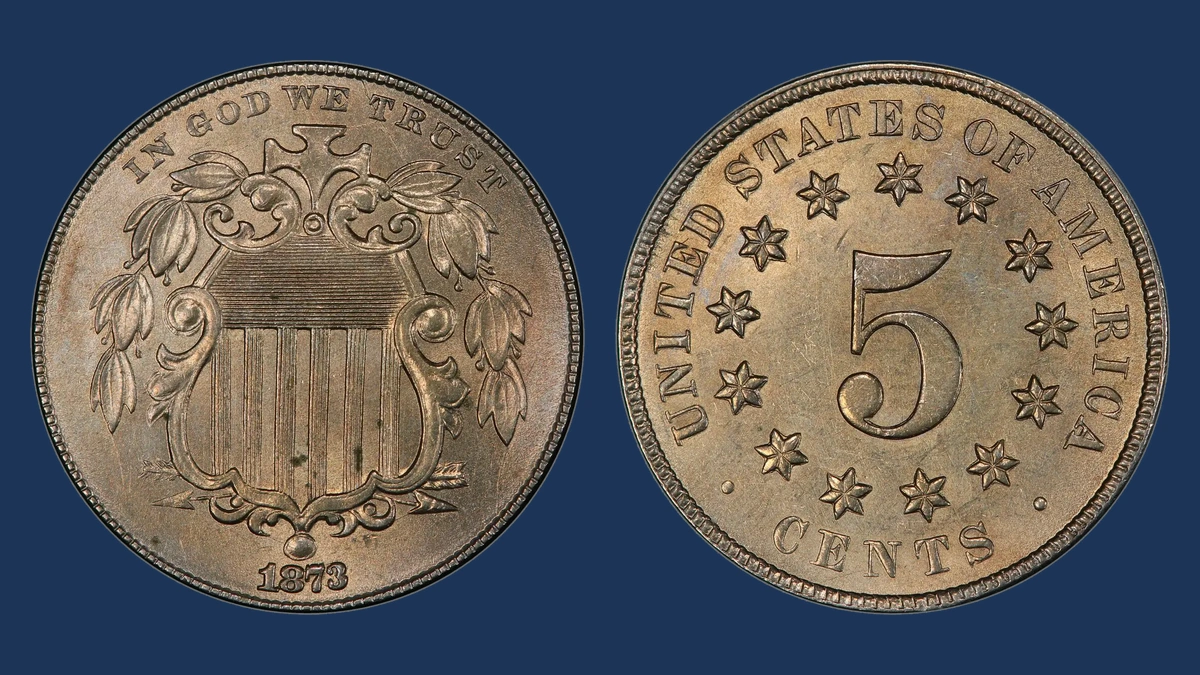
A second curve or short stroke beside a date digit can preserve an earlier punch position. The date was entered again in the stamping tool after the punch moved.
Closed 3 examples include extra marks below 1 or below several digits. Among Open 3 varieties, one larger date was punched over a smaller date, leaving parts of the smaller numerals visible.
These patterns differ from an entire doubled shield. A lump inside 3 also needs care: a crack can imitate part of a supposed earlier year without proving an overdate.
Estimated Value
Allow $50–$1,500 for recognizable repunched dates, with bold surviving strokes and attractive surfaces toward the upper end. Subtle remnants on worn coins generally draw less attention.
The $990 seller request discussed under lamination concerns one MS62 coin with several reported features, including repunching. It is neither a sale nor a separate price for the date marks.
Compare the exact date pattern and grade before using that request to judge another nickel.
How to Identify
Open 3 and Closed 3 are normal date styles, so choose the correct comparison before examining extra strokes. All 1873 Proofs, the specially made collector coins, have Closed 3 dates.
For a loose coin, use calipers and a scale to check 20.5 millimeters and 5.00 grams. These measurements cannot identify the date punch.
Now follow the earlier digit strokes with a 10× magnifier. Lower marks on one Closed 3 variety cannot be borrowed to identify an Open 3 coin.
For the larger-over-smaller variety, match pieces of the smaller numerals beneath the final date.
A single irregular lump inside 3 is different. Look for a recognizable numeral stroke before calling it an earlier date ending in 2.
6. 1873 Shield Nickel Doubled Design on the Front
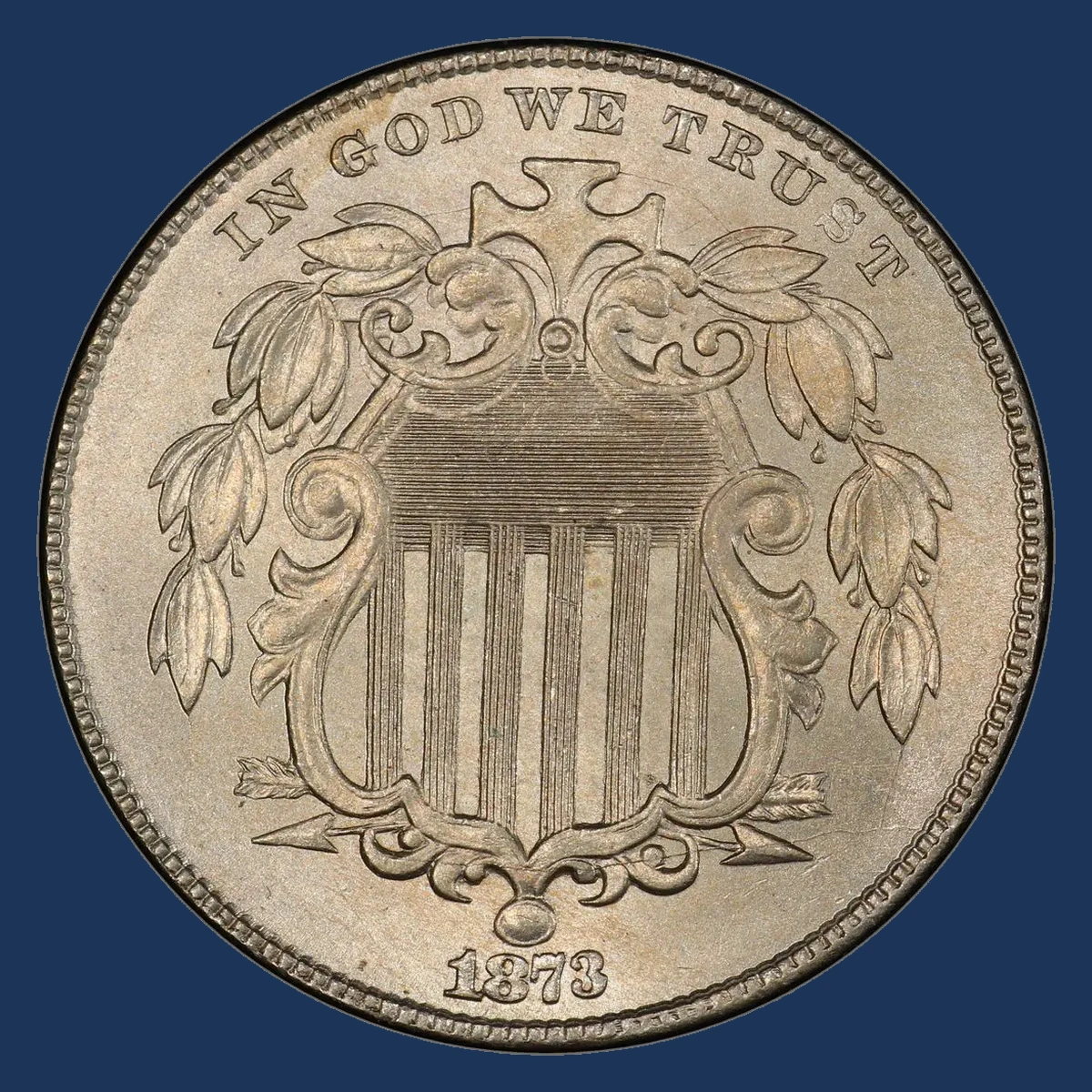
The cross and small ring above the shield look strongly doubled on an Open 3 discovery described by NGC. The tool received slightly shifted design impressions while it was being made.
An earlier impression lies toward the lower right on that variety. Extra outlines also affect the shield and nearby leaves.
A separate Closed 3 variety, known as FS-102, shows strong doubling within the shield. These are different tools and different date styles, so their details must not be mixed.
Neither variety requires two separate strikes on the finished coin.
Estimated Value
A Closed 3 FS-102 example graded PCGS MS64 with CAC approval sold for $2,880 in March 2021. That is an unworn coin with relatively few marks, not the separate Open 3 discovery.
Estimate $150–$3,500 for collectible examples of the documented doubled designs, depending on strength, grade, and variety. The strongest clear patterns in attractive condition can draw specialist bidding.
Weak flat ledges from movement during striking do not justify the same price range.
How to Identify
The NGC discovery photographs show where to examine the Open 3 cross and small ring. Compare both features under a 10× magnifier, then follow the extra outlines into the surrounding design.
For Closed 3 FS-102, use a photograph of that particular variety and inspect the shield. It has its own pattern.
Normal Shield nickel measurements are 5.00 grams and 20.5 millimeters, checked on a loose coin with a scale and calipers.
Correct measurements establish size, not the doubled tool.
Tilt the coin to distinguish rounded extra outlines from flat, shelf-like ledges. On Open 3, the repeated lower-right design matches matter more than simple thickening of a single leaf.
7. 1873 Shield Nickel Off-Center Strike
An off-center strike leaves part of the blank outside the stamping tools. The design stops short on one side while an untouched area remains on the other.
This error requires matching evidence on both faces. A narrow border on just one side can instead come from a misaligned tool.
The 1873 year guide includes off-center strikes, but a clearly identified Shield nickel example still needs confirmation. No particular direction or missing percentage can therefore be assigned to this year.
A dated 1873 cent or a nickel from another year would be a different coin.
Estimated Value
For a confirmed 1873 Shield nickel with a substantial off-center strike, use a conditional estimate of $500–$5,000. This range applies to a genuine misplaced strike with enough date remaining to establish the year.
A small displacement on a worn piece belongs lower than a dramatic, attractive example. Missing dates, corrosion, or later cutting make direct comparisons harder.
The range is an estimate for the mechanism, rather than a claim that a particular 1873 coin sold within it.
How to Identify
Start with the date and denomination in the full-coin image. The visible design must establish an 1873 Shield nickel, not merely an old five-cent-sized piece.
Next compare the untouched area on both faces. A genuine off-center strike displaces both designs relative to the same blank.
A scale should give a result near the normal 5.00 grams if no metal has been lost. Use calipers to record the outline against the normal 20.5-millimeter width, allowing for distortion during striking.
Inspect the boundary with a 10× magnifier for original struck metal beside the unstruck area. Saw marks or grinding would point to later alteration.
The essential check is the shared displacement of both faces with the date still readable.
8. 1873 Shield Nickel Design Struck on a Cent Blank
A Shield nickel can appear copper-colored because the press received a blank meant for an Indian Head cent. This is a wrong-planchet error: planchet simply means the metal blank before striking.
An Open 3 example graded NGC MS64 Red and Brown sold through Heritage in May 2022. Its grade describes an unworn coin, while Red and Brown describes the surviving copper color.
A cent blank is smaller and lighter than a nickel blank. Color alone cannot prove this mistake because ordinary nickels can be coated or chemically changed.
Estimated Value
The Open 3 cent-blank example brought $21,600 in May 2022. Its unusual metal, recognizable design, and unworn condition explain why this error stands far above a small date variety.
An estimated whole-coin range of $8,000–$30,000 allows for condition and the strength of an independently confirmed example. Corrosion or heavy wear would reduce appeal.
This estimate concerns the documented cent-blank mechanism, not every brown nickel or a copper pattern made as an intentional experiment.
How to Identify
Begin with weight before judging the copper color. A normal Shield nickel weighs 5.00 grams, while the contemporary bronze cent standard is about 3.11 grams.
Use a precise scale for a loose coin, then calipers to compare its width with the normal nickel’s 20.5 millimeters. A cent blank began around 19.05 millimeters wide, though striking can change its outline.
Those are standard blank measurements, not published measurements of the auctioned specimen. A sealed coin should stay in its holder while its recorded metal and weight are checked.
Under a 10× magnifier, inspect design crowding and the edge for signs of applied copper. A professional match between the bronze metal, lighter blank, and struck Shield design is stronger evidence than color alone.
Conclusion
The estimated span for these 1873 Shield nickel errors is $30–$30,000. A small raised crack and the $21,600 cent-blank coin occupy very different parts of that range.
Identify the normal date style before comparing extra strokes or doubled outlines. For larger mistakes, examine both faces, record the weight, and keep seller requests separate from completed sales.
Clear photographs of the actual feature make every comparison more useful.