1913 Buffalo Nickel Error List with Pictures

In 1913, the buffalo stood on a raised mound before the design changed to flatter ground. Both designs are normal, but one flat-ground coin was struck in gold and brought $78,000 at Heritage in January 2021.
The 1913 Buffalo Nickel errors below have estimated values from $50 to $500,000, with the exceptional gold piece far above ordinary errors.
First identify the mound design, called Type 1, or the flat-ground Type 2; then follow the checks for your coin’s unusual feature.
1. 1913 Buffalo Nickel Back Struck Through Debris
A depression or interrupted design can form when something lies between a coin blank and the stamping tool. The obstruction takes the pressure, leaving its shape or blocking part of the design.
This is called a struck-through error. A 1913-D Type 2 example graded NGC MS62 has been offered with the affected area on the back.
The object that caused that particular mark has not been identified here. A dent made later can look similar, so the depressed area must be judged with the surrounding original surface.
Estimated Value
For the recorded 1913-D Type 2 error, use an estimated $150–$750 whole-coin range across modest through more prominent examples. The coin’s condition and ordinary date value remain part of that amount.
The GreatCollections MS62 listing confirms an unworn example, but its selling price is not supplied here. This range is an estimate rather than that lot’s result.
A shallow mark that barely affects the design usually adds less than a clear, distinctive impression.
How to Identify
Locate the affected back area by comparing the coin with a normal 1913-D Type 2. Look at how the original design changes as it enters the depression, using a 10× magnifier.
A later impact often leaves a sharp cut or displaced metal around the damaged area. A struck-through mark needs to fit the surface formed during striking, without fresh damage crossing it.
Inspect D below FIVE CENTS and the flatter ground beneath the buffalo. Neither a Philadelphia coin nor the raised-mound design is the same comparison.
For a loose coin, use a scale and calipers against 5 g and 21.2 mm, then inspect the plain edge. A natural interruption of the struck design is the key feature, not merely a low spot.
2. 1913 Buffalo Nickel Broadstrike
An unusually wide border can appear when the steel ring around the coin fails to contain the metal during striking. The disk spreads outward while the complete design can remain on it.
This error is called a broadstrike. A recorded Philadelphia Type 1 example is graded AU58, indicating only slight circulation wear.
The buffalo stands on the original raised mound. That normal mound should not be confused with the error, which concerns the wider shape and border of the coin rather than the design under the buffalo.
Estimated Value
An estimated $100–$1,000 covers a clear Type 1 broadstrike from circulated through attractive unworn condition. Expansion, surface quality, and completeness of the design affect the price.
This is an estimate for the Philadelphia example’s error type, not a reported sale of the AU58 coin. Slight spreading generally attracts less attention than a bold expanded border.
Flattening after the coin left the Mint can produce a wider disk but does not earn the same premium.
How to Identify
Check whether every outer letter remains complete in good lighting before focusing on the wide rim. A pure broadstrike keeps the full design, while an off-center strike can lose lettering beyond the metal.
Use calipers to compare its width with the normal 21.2 mm diameter. A scale should still read close to 5 g because spreading does not require metal to disappear.
Inspect the plain edge and the expanded border through a 10× magnifier for natural metal flow rather than crushing or scraping. With the Type 1 mound and Philadelphia identity established, complete lettering on the expanded disk supports a broadstrike.
3. 1913 Buffalo Nickel Straight Clip with a Rotated Back
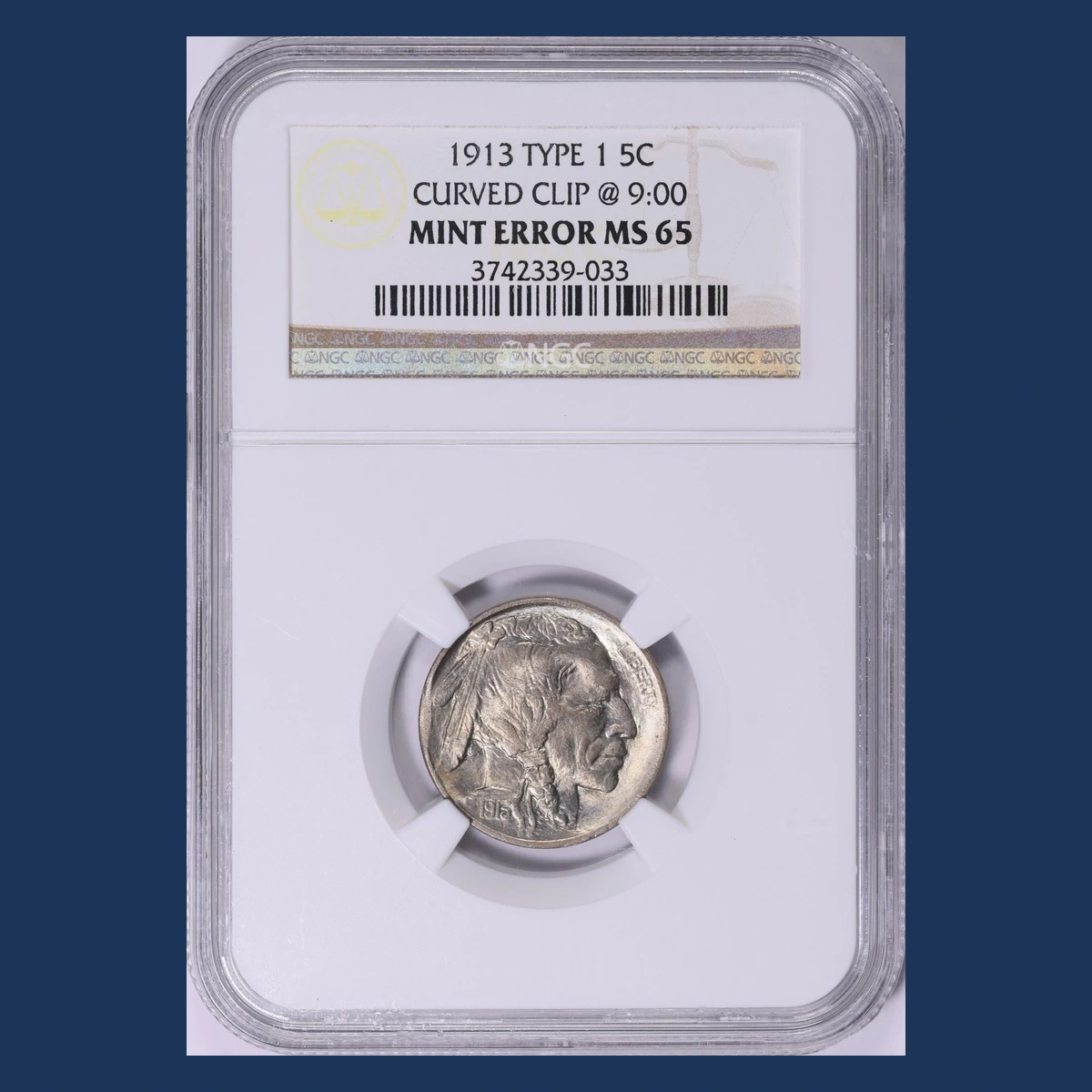
A straight missing section along the lower edge identifies the clipped blank in this recorded example. The metal disk was incomplete before the design was struck onto it.
The same Type 1 coin, graded ANACS MS62, also has a back design turned about 20 degrees from normal alignment. That rotation comes from tool alignment, not from the missing metal.
The clip spans roughly the lower edge around six to seven o’clock. Its two unusual features belong to one coin, even though cutting the blank and aligning the tools are different processes.
Estimated Value
Estimate $150–$1,200 for a genuine Type 1 straight clip with a similar modest rotation, depending on size and condition. This is one whole-coin estimate for the combined example.
A historical Jim’s Coins catalog listed the ANACS MS62 piece with a $189 minimum bid. That figure was an auction starting requirement, not a verified selling price.
Do not price the clip and rotation as two separate coins or add their full estimated values together.
How to Identify
Keep the portrait upright and turn the coin from top to bottom, as if flipping a calendar page. The buffalo should finish upright; the recorded coin instead shows about 20 degrees of rotation.
Repeat the turn with the same axis before measuring the angle. Separately rotated photographs can give a false impression.
Examine the lower straight gap through a 10× magnifier for natural edge texture and weak nearby design. Saw marks or crushed metal suggest later cutting.
A scale should normally show less than 5 g when metal is missing. Use calipers across intact sides to compare with 21.2 mm, and inspect the remaining plain edge.
Check rotation by the controlled flip and the clip by its natural boundary; neither feature proves the other.
4. 1913 Buffalo Nickel Doubled Back Design
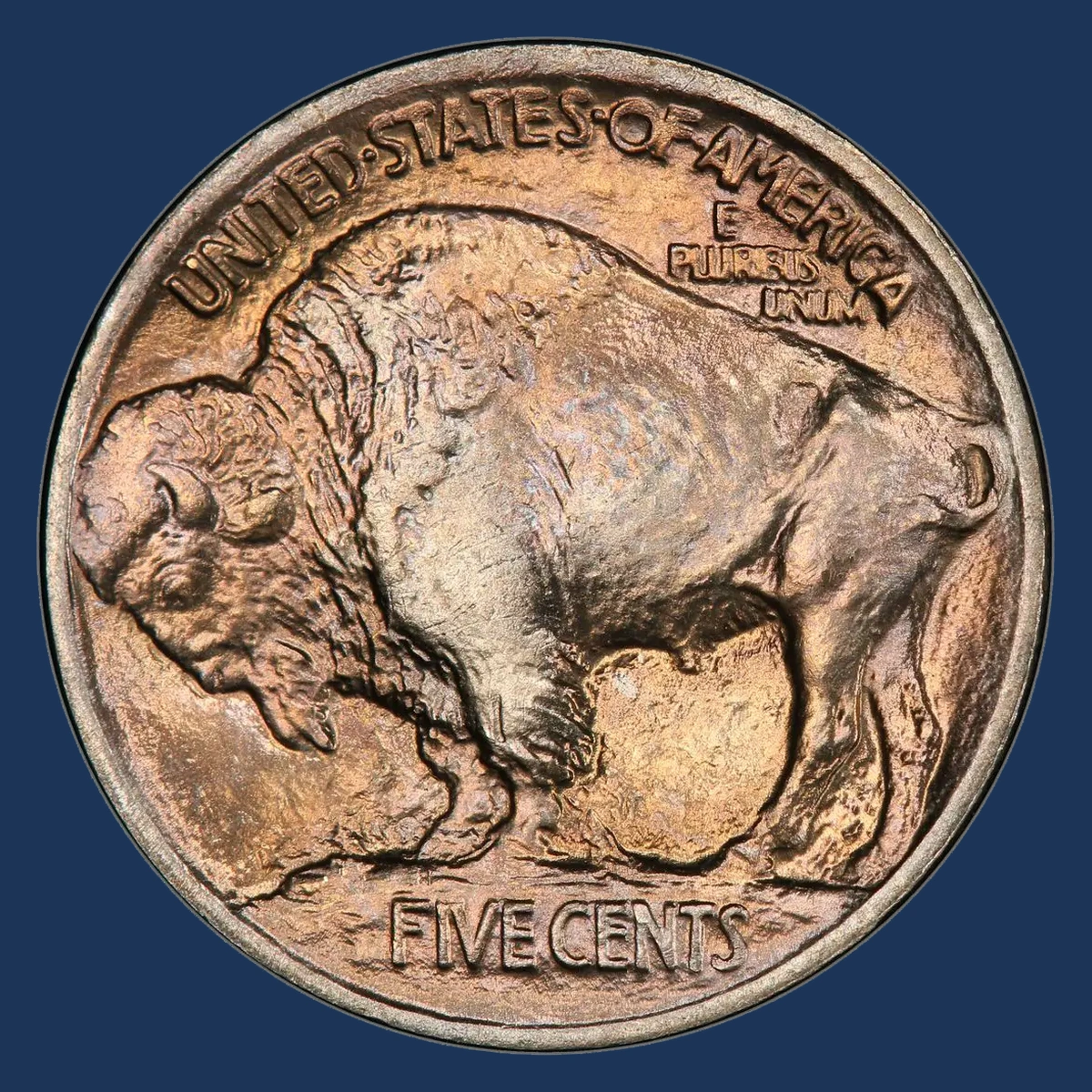
Extra raised outlines in the back lettering can come from a doubled design in the stamping tool. The coin repeats the tool’s defect every time that tool strikes a blank.
This differs from a coin receiving two separate blows. It also differs from a flat shelf left beside letters by movement during a single strike.
Both 1913 design types require their own comparisons. A named Type 2 example is FS-1801, but a doubled-looking Type 1 coin cannot be identified by borrowing the same number or photographs.
Estimated Value
Allow an estimated $50–$2,000 for a matching doubled-back variety across worn and attractive unworn examples. The exact type and doubled pattern matter more than a generic error label.
A Type 2 FS-1801 graded MS64 sold for about $588 in October 2014 at Heritage. That provides a same-year comparison for the named flat-ground variety.
The range is an estimate across the category, not a promise that every thickened letter receives a similar premium.
How to Identify
Identify the ground beneath the buffalo before comparing doubled letters. Type 1 has a mound, while Type 2 places the denomination in a lower, flatter area.
Under a 10× magnifier, inspect the back words and nearby contours for separate rounded outlines. Change the light direction to distinguish actual relief from a bright reflection.
Compare the same group of details with a named example of the same type. Wear can blur the outlines, but should not be used to invent missing matches.
For a loose normal coin, check 5 g and 21.2 mm with a scale and calipers, along with the plain edge. The doubled pattern must match the correct design type, not just one unusual-looking letter.
5. 1913 Buffalo Nickel Repunched D or S Mint Mark
A second outline around D or S can show where a worker punched the mint letter into the stamping tool twice. Each coin made with that tool then repeated the overlapping mark.
The recorded examples here are a Denver Type 1 and a San Francisco Type 2. The latter is an especially important distinction because normal Type 2 San Francisco coins are already scarce.
The extra outlines need to match the particular coin. No direction or small identifying scratch should be assumed merely because a mint letter looks thick.
Estimated Value
Estimated whole-coin values span $75–$3,000, allowing for the two different mints, designs, and condition levels. Much of a strong 1913-S Type 2 price can come from the scarce ordinary coin itself.
For a broader comparison, a 1930-S repunched mint mark graded MS62 sold for about $431 in 2011. That different-year sale is not a result for either 1913 variety.
Clear extra punch outlines deserve more attention than a worn or damaged thick letter.
How to Identify
Choose D on a raised-mound Type 1 or S on a flat-ground Type 2 before searching for the extra outline. The mint letter sits below FIVE CENTS.
A scale and calipers should give approximately 5 g and 21.2 mm for a loose normal coin, with a plain edge.
Use a 10× magnifier to examine the complete letter, including the spaces inside and around it. Compare a normal mint mark under the same lighting.
An extra rounded remnant of a differently placed punch is more useful than general thickness. Corrosion, a small metal lump, and flat shelf-like doubling can imitate part of an outline.
Match the extra mark on the same mint and design type rather than treating any doubled-looking D or S as this variety.
6. 1913 Buffalo Nickel Off-Center Strike
Part of the design can run beyond the metal when the disk is out of position in the press. The opposite side keeps an unstamped crescent where no design was impressed.
Two San Francisco examples show why the design type matters. A Type 1 is described as about 20% off center, while a Type 2 is about 10% off center toward the left.
The smaller displacement does not automatically mean the lower value. The scarce flat-ground coin has its own ordinary value before the striking error is considered.
Estimated Value
For these dated San Francisco examples, estimate $500–$6,000 depending on design type, wear, and how clearly the error shows. The scarce Type 2 coin can cost more despite having a smaller displaced area.
A 1921 nickel struck 45% off center, graded MS63, sold for $2,300 in 2009. Its mint was unknown, so it is only a different-year comparison.
The figures here are estimates, not recorded sales of the two 1913-S collector examples.
How to Identify
Read S below FIVE CENTS and identify the mound or flat ground wherever those areas survive. Then check that all four digits of 1913 are visible.
Compare both faces with normal coins of the same type. The struck design should end naturally beside the unused area, rather than being erased from an otherwise complete coin.
A 10× magnifier helps reveal grinding or cuts along that boundary. The original plain edge should also be checked for later damage.
Use a scale against the normal 5 g and calipers against 21.2 mm, allowing for spreading. A displaced strike need not lose weight.
Keep the 20% Type 1 and left-shifted 10% Type 2 examples separate when matching the visible blank area.
7. 1913 Buffalo Nickel Polished-Away Leg, Feather, or Initial
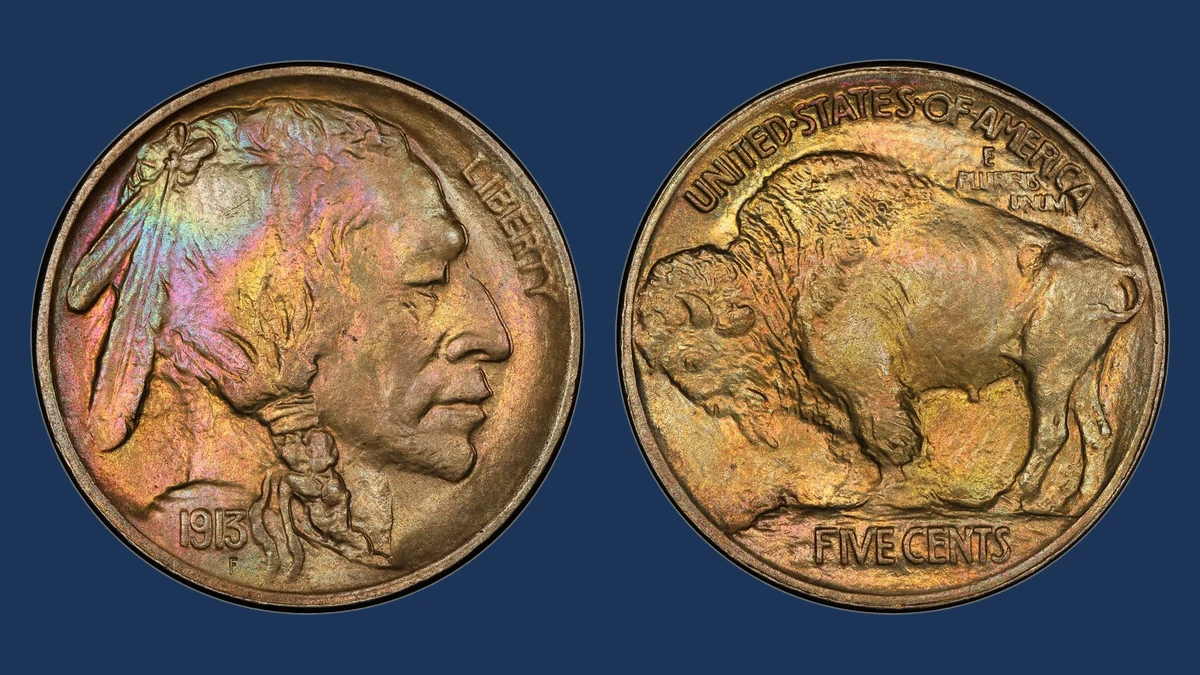
Missing details can result when workers polish a stamping tool too heavily. Polishing removes shallow parts of the design, and the tool then strikes coins without those features.
The Philadelphia Type 1 Three-and-a-Half Legs variety loses much of one front leg while retaining the hoof. It is a specific variety, not any buffalo with a weak leg.
A separate San Francisco Type 1 example combines Two Feathers with a missing F below the date. That F is the designer’s initial, and both missing details can belong to the same polished tool.
Estimated Value
Use an estimated $50–$50,000 across these distinct polishing varieties. The rare Philadelphia Three-and-a-Half Legs accounts for the high end; ordinary worn missing-detail coins do not approach it.
An NGC MS65 Three-and-a-Half Legs sold for $47,437.50 in August 2004, while a PCGS MS63 brought $4,230 in September 2016. PCGS records those sales.
For the separate San Francisco Two Feathers/No F combination, estimate about $50–$2,000 according to condition and a confirmed match.
How to Identify
Compare wear across the coin before examining a missing feature. Broadly smooth hair, date, and buffalo details can explain an absent small design element without tool polishing.
For a loose example, check the usual 5 g weight, 21.2 mm diameter, and plain edge with a scale and calipers. Confirm the raised mound of Type 1.
On Philadelphia Three-and-a-Half Legs, use a 10× magnifier to compare the front leg’s missing segment and surviving hoof with an identified example.
On the San Francisco combination, inspect the inner feather behind the neck and F below the date. Look for scraping or a sunken patch that could show later removal.
The relevant missing detail must match its own variety while nearby original details remain visible.
8. 1913 Buffalo Nickel Strike on a Five-Dollar Gold Blank
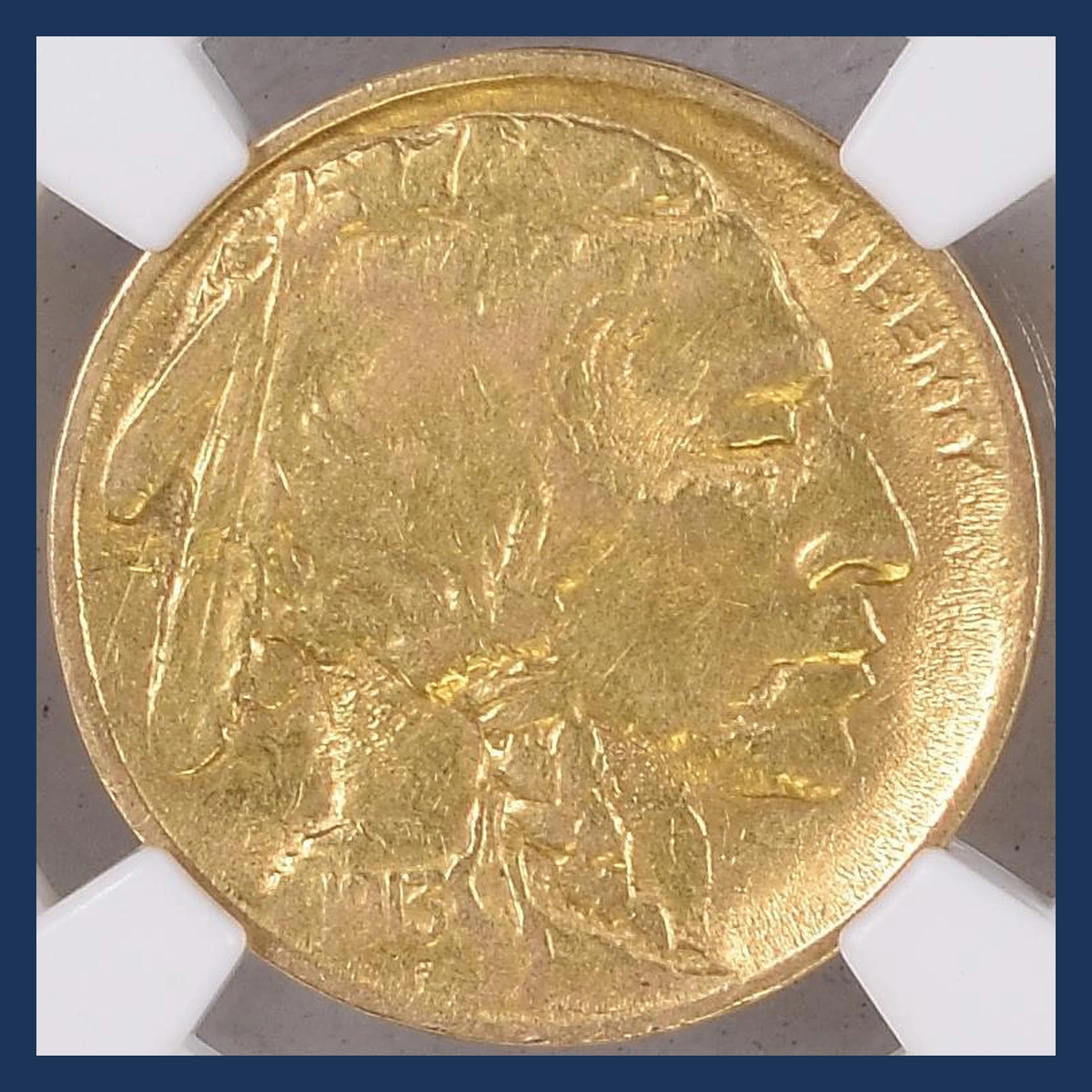
This coin has the Buffalo Nickel design but was struck on a gold disk intended for a five-dollar coin. Its measured weight is 8.33 g, far above a normal nickel’s 5 g.
The known Type 2 piece has a small old test cut on the back rim. It later received an AU53 grade, indicating light wear.
The gold blank is established, but how it reached the nickel tools is not. It may have been an accidental error or a deliberately made special piece; neither explanation should be presented as proven.
Estimated Value
An estimated $100,000–$500,000 reflects this exceptional gold piece’s market, rather than ordinary plated nickels. It brought $78,000 on January 21, 2021, at Heritage, then described as genuine with wear and a test cut.
Dealer Mike Byers later reported selling it for $400,000 after it received a numerical grade. That was a dealer-reported sale, not another auction result.
The range is an estimate for the authenticated rarity, not for a gold-colored surface.
How to Identify
Weight provides an immediate distinction: the recorded coin weighs 8.33 g, while an ordinary Buffalo Nickel weighs 5 g. A thin gold coating would not explain that difference.
Use a scale only for a loose coin, and have a specialist test the metal without cutting or scratching it. Calipers can compare the outline with a normal 21.2 mm nickel and the documented gold specimen.
With a 10× magnifier, examine the Type 2 design, the edge, and the existing back-rim test cut near seven-thirty. Do not make a new test cut.
The usual nickel has a plain edge, but color and edge appearance alone cannot prove the gold blank. Match the measured weight and non-damaging metal analysis with the authenticated coin’s full design.
Conclusion
Estimated 1913 Buffalo Nickel error values span $50–$500,000, but the gold piece sits in a very different market from common surface or striking errors. Most examples need a careful match of design type, mint, and condition.
Check the mound or flat ground before comparing photographs. Complete lettering, natural metal boundaries, and matching small details provide better evidence than color or a dramatic seller’s description.