1994 Nickel Error List with Pictures

One unusual 1994-P nickel sold for $881.25 in April 2013 because its design was struck on layered metal. Normal nickels use a single copper-nickel mixture throughout.
That difference is one of several clues in this 1994 Jefferson Nickel error list, with estimated values from $5–$2,500. Others include missing letters, an edge step, or several overlapping designs.
Use the sections below to compare the actual feature, keeping ordinary coins separate from the special matte collector version.
1. 1994 Jefferson Nickel Letters Blocked during Striking
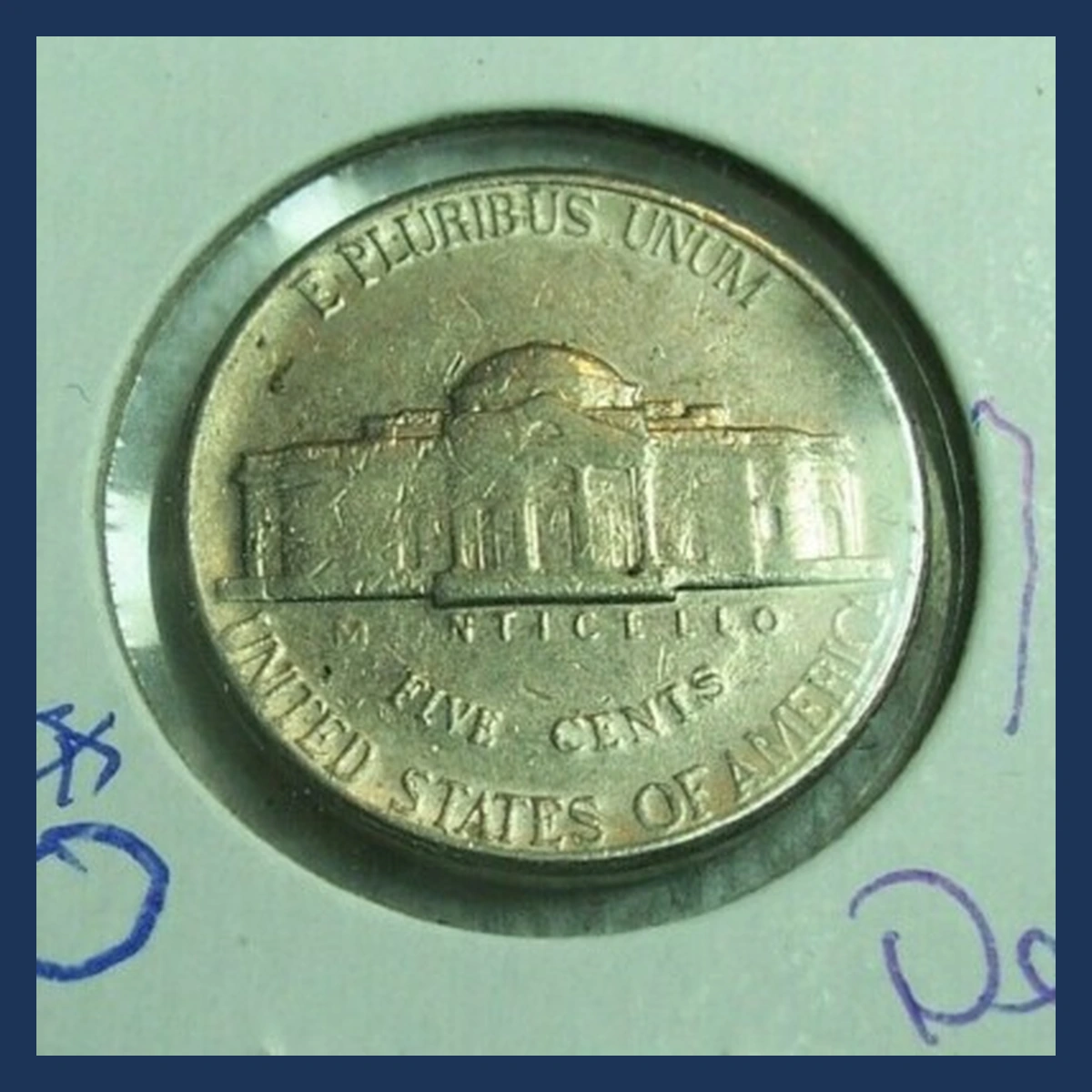
Two missing letters can draw attention before any unusual shape does. A Philadelphia report describes MO missing from MONTICELLO on a 1994 nickel.
Material between the blank and the stamping tool can prevent letters from forming. The tool is called a die, and the resulting coin is described as struck through material.
The report does not establish the particular object that blocked MO. Grease, threads, and metal fragments are possible obstructions in general, not separate confirmed examples for this coin.
Wear or later polishing can also weaken words. The boundary between missing letters and preserved detail is therefore important.
Estimated Value
Minor original letter loss is estimated at $5–$40. A more extensive, clearly defined struck-through area can fall around $40–$175, depending on condition and visibility.
The reported missing-MO example has no individual sale assigned here. Its range is an estimate rather than a price guaranteed by two absent letters.
A smooth patch made after minting does not qualify for the same premium. The effect must show how an obstruction prevented the design from forming instead of merely removing finished detail.
How to Identify
Begin with the rest of MONTICELLO rather than the blank-looking MO area. Under a 10× magnifier, compare the strength of the neighboring letters and the nearby building.
If everything at the same height is worn flat, circulation may explain the weakness. A local interruption beside sharper details calls for a closer look at its boundary.
Use a scale and calipers on a loose nickel against 5 grams and 21.21 millimeters. Inspect its plain edge for squeezing and the surface for polishing lines.
Photograph the full word under light from both sides. Check whether original surface detail continues beside the missing letters, rather than disappearing into scratches or a polished patch.
2. 1994 Jefferson Nickel Peeling Metal
The surface can develop a thin flap when a weakness inside the metal opens. If the flap falls away, it leaves a shallow rough patch.
This is called lamination. It differs from a scratch cut across a finished coin or a coating peeling from the outside.
Year reports include the type for 1994 without one established mint or location. A specific opening must be judged from the actual coin.
Normal Jefferson nickels use copper and nickel mixed throughout. Their ordinary construction has no separate copper core with nickel skins, so peeling alone does not make them missing-clad-layer errors.
Estimated Value
A genuine small separation is estimated at $15–$75, with a larger attractive flap around $75–$200. Those ranges assume original metal separation rather than corrosion or scraping.
No particular 1994 lamination sale sets the figures. The size, surviving design, and condition of the surrounding surface all influence a useful comparison.
An attached piece should remain intact. Pulling it away changes the object and may reduce its appeal; extra damage does not make the original flaw a larger mint error.
How to Identify
Keep any loose flap untouched while viewing its edge from the side. A 10× magnifier and low light can reveal a thin layer rather than a deep trench.
A loose coin may weigh less than the normal 5 grams if material has fallen away. An attached flap may leave the scale reading almost unchanged.
Use calipers on intact spans to compare with the usual 21.21-millimeter diameter.
Follow the layer boundary into a nearby letter or portrait detail, then inspect the plain edge if the split reaches it. Added coatings rest on top of the finished surface.
Look for separation within the coin’s original metal, rather than a surface film or a gouge bordered by pushed-up metal.
3. 1994 Jefferson Nickel A Back Design Turned out of Position
An angled Monticello can result when the two stamping tools are turned out of their normal relationship. This is a rotated-die error.
The design can remain complete and centered on each face. The unusual feature is the angle between the two faces, rather than missing letters or an off-center outline.
The type is listed for 1994 without a measured specimen. General examples of quarter-turn or half-turn rotation do not establish an angle for a newly found coin.
The test also depends on handling. A sideways turn or movement inside a holder can produce an apparent angle on an ordinary nickel.
Estimated Value
Estimate $25–$200 for a clearly measured original rotation on an ordinary 1994 nickel. A strong repeatable turn is easier to demonstrate than a small tilt.
A different-year 2015-D nickel with a ninety-degree counterclockwise rotation sold for $79 in October 2021. That gives a related comparison without assigning the same angle to the 1994 report.
The range depends on condition as well as rotation. Separately turned photographs cannot establish an error simply because the building appears crooked in one image.
How to Identify
Hold Jefferson upright against a straight line and turn the coin from top to bottom. Monticello should finish upright when the tools have their normal alignment.
Repeat that turn without allowing the coin to slip sideways. A consistent result matters more than the apparent angle in one photograph.
A loose normal nickel weighs about 5 grams and measures 21.21 millimeters, checked with a scale and calipers.
Inspect the plain edge through a 10× magnifier for a seam suggesting two pieces joined after minting. Then use a photo grid or protractor to measure the angle.
Keep the reference line visible in both views so the same controlled flip can reproduce the measured rotation.
4. 1994 Jefferson Nickel Part of the Blank Missing
A gap in the edge may have existed before the coin acquired its design. A blank cut across an earlier hole or the edge of a metal strip can be incomplete.
The press then stamps the remaining metal. This is a clipped-planchet error, with planchet meaning the prepared metal blank.
Clips appear in 1994 year lists without one fixed shape or percentage. Curved, straight, and ragged openings are general possibilities, not three established specimens from that report.
Later cutting can imitate a missing section. The nearby rim and letters provide clues to whether the gap came before or after striking.
Estimated Value
For an original clipped 1994 nickel, estimate $15–$250. A larger natural gap with a readable date and undamaged surfaces can attract more interest than a tiny edge defect.
A 1997-P nickel with a twenty-percent clip sold for $124 in March 2025. This is a different-year comparison, and its missing percentage should not be assigned to an unmeasured 1994 coin.
The whole object determines the value. A cut or crushed edge added after minting does not qualify for the same range.
How to Identify
Weigh a loose coin first, comparing it with the normal 5 grams, and measure intact spans against 21.21 millimeters with calipers. Missing metal can lower the weight, but cutting after minting does that too.
Under a 10× magnifier, follow the struck rim toward both ends of the gap. Natural weakening near the opening differs from a sharp cut through a finished border, saw grooves, or folded metal.
Inspect the remaining plain edge and photograph both faces, including the rim opposite the gap. Weakness there can support a clip, but the gap’s own natural boundary matters more than its shape alone.
5. 1994 Jefferson Nickel A Wide Coin with a Complete Design
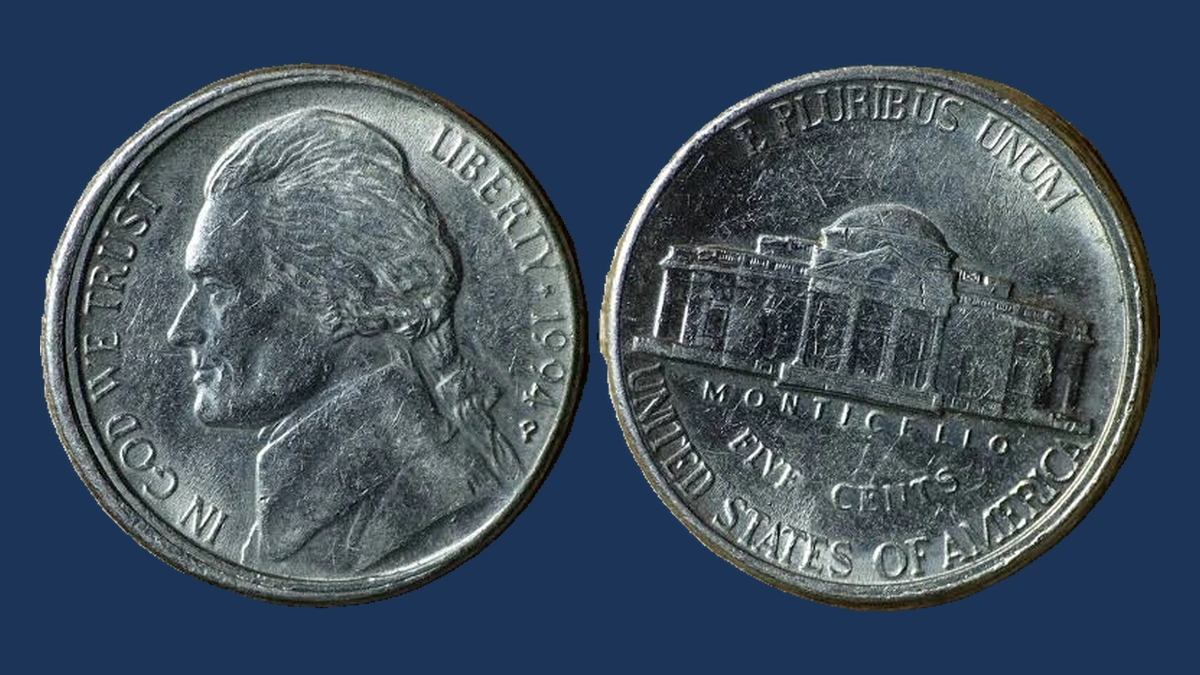
A broadstrike can be wider than an ordinary nickel while keeping its full design. The blank spread because the surrounding edge ring did not restrain it normally.
That ring is called the collar. Its job includes controlling the outline as metal spreads under the stamping tools.
The 1994 type is reported without one measured specimen or identified mint. A complete design inside a larger outline is the feature to investigate.
An uneven border does not automatically make the coin off center. Conversely, a smooth edge proves little because ordinary Jefferson nickels already have plain edges rather than grooves.
Estimated Value
Genuine broadstrikes are estimated at $30–$300, with clear natural expansion and attractive surfaces supporting stronger interest. The range does not represent one recorded 1994 sale.
A Philadelphia broadstrike from 1998 sold for $57.50 in July 2002, while a 1999-P example brought $89 in March 2025. These different-year results offer comparisons at modest price levels.
A later flattened nickel can also be wide. Crushed lettering or repeated impact marks require a different explanation before a broadstrike estimate applies.
How to Identify
Check the outside letters first, following every word around both faces. A broadstrike should keep the entire design on the metal, even where the border is uneven.
Use calipers to compare the widest and narrowest spans with the normal 21.21 millimeters. A scale should remain near 5 grams if the metal only spread.
Now examine the portrait and widened border under a 10× magnifier. Hammering can enlarge the outline while crushing details that were already present.
Include the plain edge in photographs without treating its smoothness as proof. Complete lettering and naturally spread metal must support the same explanation, rather than relying on extra width alone.
6. 1994 Jefferson Nickel A Raised Back Crack on the Special Collector Version
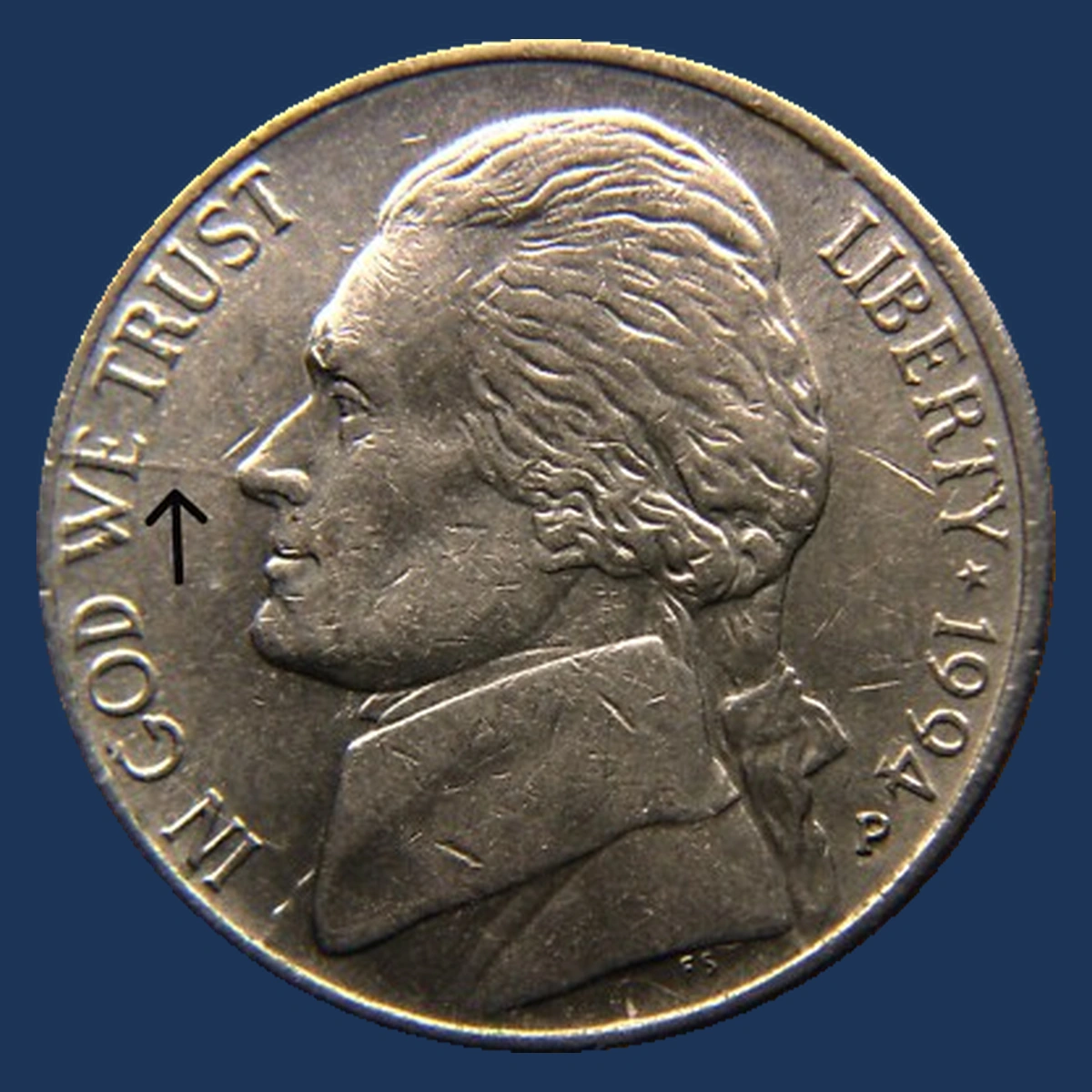
A thin raised line can appear when metal enters a crack in the stamping tool. The finished coin copies that opening as a ridge.
The 1994 report concerns the back of a special Philadelphia collector nickel. This matte-finish coin was supplied in the Coinage and Currency Set and is often called an SMS or special strike.
Its softly textured surface is intentional, not an error. The additional raised crack is the feature being considered here.
The report gives no fixed path across Monticello. A faint line on a regular nickel should not inherit the collector version’s identity or value.
Estimated Value
For a special-finish coin with an original back crack, estimate $30–$350. Much of the total may reflect the collector coin’s finish and preservation rather than the crack alone.
No individual sale is assigned to this reported cracked example. A small ridge on a marked coin should not be compared with an exceptionally preserved special strike solely by its grade number.
The range values the complete object. Intentional matte texture and normal stair detail are not additional errors to price separately.
How to Identify
Establish the special finish before concentrating on the line. Original set information or a grading description can help distinguish the matte Philadelphia collector coin from an ordinary P nickel.
Keep the coin under neutral light and use a 10× magnifier on the suspected back crack. Its center should rise above the surrounding surface instead of forming a cut groove.
A scratch can have raised metal along its sides, so inspect the middle carefully.
For a loose example, check 5 grams with a scale and 21.21 millimeters with calipers, including the plain edge. Photograph the actual route of the ridge; the year report does not supply a path to assume across the building.
7. 1994 Jefferson Nickel A Step around the Edge
Part of the blank can sit above the edge ring when the coin is struck. The exposed metal spreads farther, leaving a step around the edge.
This is called a partial collar. It affects the coin’s thickness and outline rather than the direction of the design.
A special-finish 1994-P example was graded ICG MS69 Full Steps. Full Steps describes sharply formed stairs on Monticello, not a second error.
An ordinary Philadelphia partial-collar nickel also appears in a mixed auction lot. A separate special-strike report uses an NGC SP69 grade; those labels should not be assumed to describe one specimen.
Estimated Value
The ICG MS69 special-finish example sold for $161 in March 2008. Estimate $75–$500 for comparable special collector pieces and $20–$150 for ordinary partial-collar nickels.
The ordinary 1994-P example was included in a twenty-coin lot sold for $80.50 in June 2000. That total also covered nineteen other coins, so it cannot establish an individual price.
Finish and preservation matter alongside the edge step. The tiny defect should not inherit the full value of an unrelated exceptionally graded coin.
How to Identify
Look at the edge from the side, following its width around the coin through a 10× magnifier. A partial collar leaves a step between metal contained by the ring and metal that spread above it.
On a loose coin, calipers can compare the two levels against the normal 21.21-millimeter diameter, while a scale checks about 5 grams. Reject cuts, squeezing, or a seam joining separate pieces as explanations for the apparent step.
Identify the ordinary or matte collector finish separately before choosing a price comparison. The normal nickel already has a plain edge, so the useful feature is a genuine change in width rather than absent grooves.
8. 1994 Jefferson Nickel Off-Center Strikes and Contact with a Neighboring Blank
A blank can miss the center of the tools and receive only part of the intended design. A Philadelphia example is reported sixty percent off center toward eleven o’clock, with its full date and P visible.
A separate Philadelphia coin was described as fifty percent off center with a chain strike. That means its edge contacted another blank during striking.
The neighboring contact can leave a distinct shaped boundary. It is an additional feature on that one off-center coin.
The two examples have different percentages and histories. The eleven-o’clock direction belongs only to the sixty-percent specimen.
Estimated Value
The ANACS MS64 sixty-percent offset appeared with a $65 asking price. Estimate $25–$350 for comparable ordinary offsets and $200–$1,500 for a convincing combination with chain contact.
The fifty-percent chain strike was part of the twenty-coin lot sold for $80.50 in June 2000. That total cannot be treated as the chain-struck coin’s individual sale.
A separate 1973-D chain strike brought $1,020 in May 2021. It offers a stronger different-year comparison without assigning its grade or contact position to 1994.
How to Identify
For an ordinary offset, find the solid unused metal opposite the missing design. Both faces should fit the same displaced blank under a 10× magnifier.
To identify chain contact, examine the edge separately. Its altered boundary needs to match pressure from a neighboring blank rather than a dent or later cut.
A loose example should stay near 5 grams on a scale unless metal was also lost. Calipers document its changed outline against the normal 21.21 millimeters.
Photograph the plain edge, surviving date, and P together with both faces. Keep the sixty-percent coin’s eleven-o’clock shift separate from the fifty-percent combination; an off-center design alone does not prove contact with another blank.
9. 1994 Jefferson Nickel Repeated Strikes with Turning or Flipping
Two shifted portraits can remain after a coin moves and receives another blow. A 1994-P example combines a rotated second strike with a partial-collar edge step.
PCGS graded that coin MS64, describing an unworn piece with noticeable marks. The catalog does not assign an exact turning angle.
A separate Philadelphia nickel flipped and received four strikes in total, including three off-center impressions. PCGS graded it MS63.
Flipping can place parts of the old portrait beside the later building, or vice versa. These large overlapping designs differ from fine doubled lettering already present on one stamping tool.
Estimated Value
The PCGS MS63 flipover four-strike example sold for $360 in January 2018. Estimate $100–$1,500 across genuine repeated strikes with different complexity and preservation.
The separate rotated double strike needs its own comparison; no sale is assigned to it here. Its edge step and second design are features of one complete coin.
A greater strike count does not multiply the price automatically. Readable overlapping designs and original surfaces usually explain the object better than a high number with little visible detail.
How to Identify
Examine both faces before counting the visible impressions. On a flipover strike, remnants of the portrait and the building can share a side.
A scale should show close to the normal 5 grams unless metal was lost. Use calipers to record any spreading beyond the usual 21.21-millimeter outline.
With a 10× magnifier, follow one repeated date, portrait, or building through the overlap. Later blows may flatten parts of earlier impressions.
The separate rotated double strike also has an edge step, so inspect the plain edge from the side. Its title does not supply a measured turning angle.
Look for design impressions that continue naturally through the overlaps, rather than dents or folds pressed into an already finished coin.
10. 1994 Jefferson Nickel A Nickel Design on Unusual Layered Metal
An unusually light nickel can reveal a blank unlike the normal solid alloy. Expert Mike Diamond described a 1994-P piece weighing 2.14 grams with apparent layered copper-nickel construction.
Its weakly formed faces have rough surfaces and narrow copper borders. The edge shows copper rather than the ordinary nickel-colored alloy.
These features do not establish a standard dime blank. The thin, slightly undersized piece belongs to an unusual blank type whose original purpose is not identified.
A Heritage listing separately records a 1994-P nickel on a clad blank. The two records have not been established as the same physical coin.
Estimated Value
The NGC MS63 clad-blank nickel sold for $881.25 on April 28, 2013. Estimate $500–$2,500 for a comparable authenticated unusual layered-blank error.
That price is not an established sale of the expert’s separate 2.14-gram example. The grade describes an unworn coin with visible marks.
Metal identification is central to the comparison. A stained or heat-discolored normal nickel does not qualify simply because copper color appears at its edge or across its surface.
How to Identify
Keep a certified example in its holder and use its recorded weight. For a loose candidate, compare a scale reading with 5 grams and use calipers against the normal 21.21-millimeter diameter.
The expert’s 2.14-gram example needs its own metal comparison. Neither low weight nor a copper-colored edge establishes a standard dime blank.
Use a 10× magnifier to examine both faces and the plain edge without scratching a test patch.
Photograph any visible layer boundaries and check for an added coating or later grinding. Ordinary heat discoloration changes the surface color without proving bonded metal layers.
A professional metal examination should establish actual layers before the coin is identified as an unusual layered-blank error.
Conclusion
Estimated $5–$2,500 values cover very different 1994 nickel errors. Start with a visible clue: locally missing letters, an edge step, overlapping designs, or unusual metal.
The matte Philadelphia collector finish is normal for that version. Identify the added error separately, and keep special-finish prices apart from ordinary circulation coins.
Photograph both faces and the edge without cleaning. The complete object will explain more than a cropped mark or an impressive label alone.