1929 Nickel Error List with Pictures

Half of LIBERTY runs beyond the edge of one unusual 1929 Buffalo nickel. Its design was struck on a smaller cent blank, and the coin sold for $9,775 in January 2006.
The 1929 Buffalo Nickel errors below span estimated values of $20–$15,000. Smaller clues include a peeling flap, an extra mintmark curve, and repeated lettering.
Read on to identify the visible features, with each coin’s mint, metal, and condition tied to its own price comparison.
1. 1929 Buffalo Nickel Cracked Blank
A crack can open in the metal disk that becomes a coin. This is a cracked blank, rather than a raised line copied from a crack in the stamping tool.
One recorded 1929 Buffalo nickel has this defect along with later damage. Its ANACS description places it in heavily worn G4 condition.
The crack’s path and clock position are not specified. Those details must come from the actual piece.
Later damage does not erase an original minting defect, but it can complicate identification. Each feature needs its own explanation when the coin is examined.
Estimated Value
The auction table reports $84 in April 2022 for the damaged cracked-blank example. Use an estimated $40–$500 for genuine 1929 pieces, with clarity of the original fracture and condition affecting the comparison.
A worn coin with added damage belongs in a different condition category from a clean unworn example. The defect should still be recognizable.
A crack forced into a finished nickel afterward does not receive the same mint-error premium. The fracture’s origin matters as much as its size.
How to Identify
Do not bend the coin to open the crack. Look at the plain edge first, then follow the fracture into the face under a 10× magnifier.
A crack in the disk opens into its metal; a cracked stamping tool usually leaves a raised ridge on the coin. Fresh cuts, forced bends, and damaged areas need to be examined apart from any original flaw.
For a loose intact piece, compare scale and caliper readings with 5 grams and 21.21 millimeters. The recorded coin has no specified crack position, so identify a natural break through the metal rather than assuming that a particular line belongs there.
2. 1929 Buffalo Nickel Raised Front Crack beside the Rim
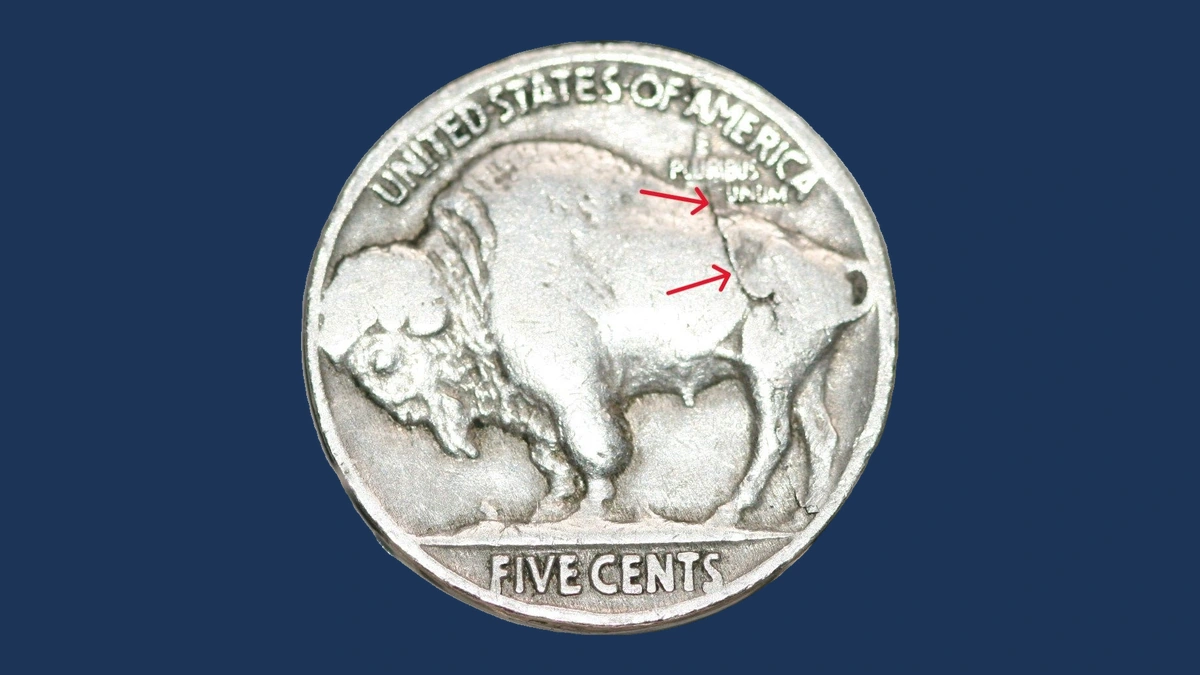
A raised line near the rim can mark a cracked area of the stamping tool before that area breaks away completely. Collectors sometimes call this a pre-cud stage.
A 1929-S example in a collector’s set is described this way on its front. PCGS graded it VF35, indicating circulation wear with considerable detail remaining.
The description does not establish that the tool fragment had already fallen out. It should not become a solid rim blob simply because later-stage breaks can produce one.
Its exact crack route is not specified. The intact design beside the line helps distinguish the reported stage.
Estimated Value
Estimate $30–$600 for recognizable examples of this rim-connected cracking, depending on the visible feature and coin’s condition. Fine raised lines generally attract less attention than a strongly defined damaged-tool area.
The VF35 collector example provides a worn-condition comparison. It should not be priced as an unworn coin or as a completely missing rim section of the tool.
Later impacts and scratches can imitate parts of the appearance. The range assumes the raised feature formed with the original strike.
How to Identify
Locate the S below FIVE CENTS on the back before comparing the front crack with this San Francisco example. The year and mint must belong to the same coin.
A scale and calipers should show about 5 grams and 21.21 millimeters for a loose complete nickel. Inspect the plain edge for dents that pushed metal onto the face.
Now follow the front line with a 10× magnifier and low angled light. Check whether original design survives on both sides.
A broad featureless lump would suggest a later stage, after part of the tool broke away.
For this reported earlier stage, seek a raised crack through otherwise surviving design, rather than an isolated rim dent.
3. 1929 Buffalo Nickel Retained Metal Flap on the Back
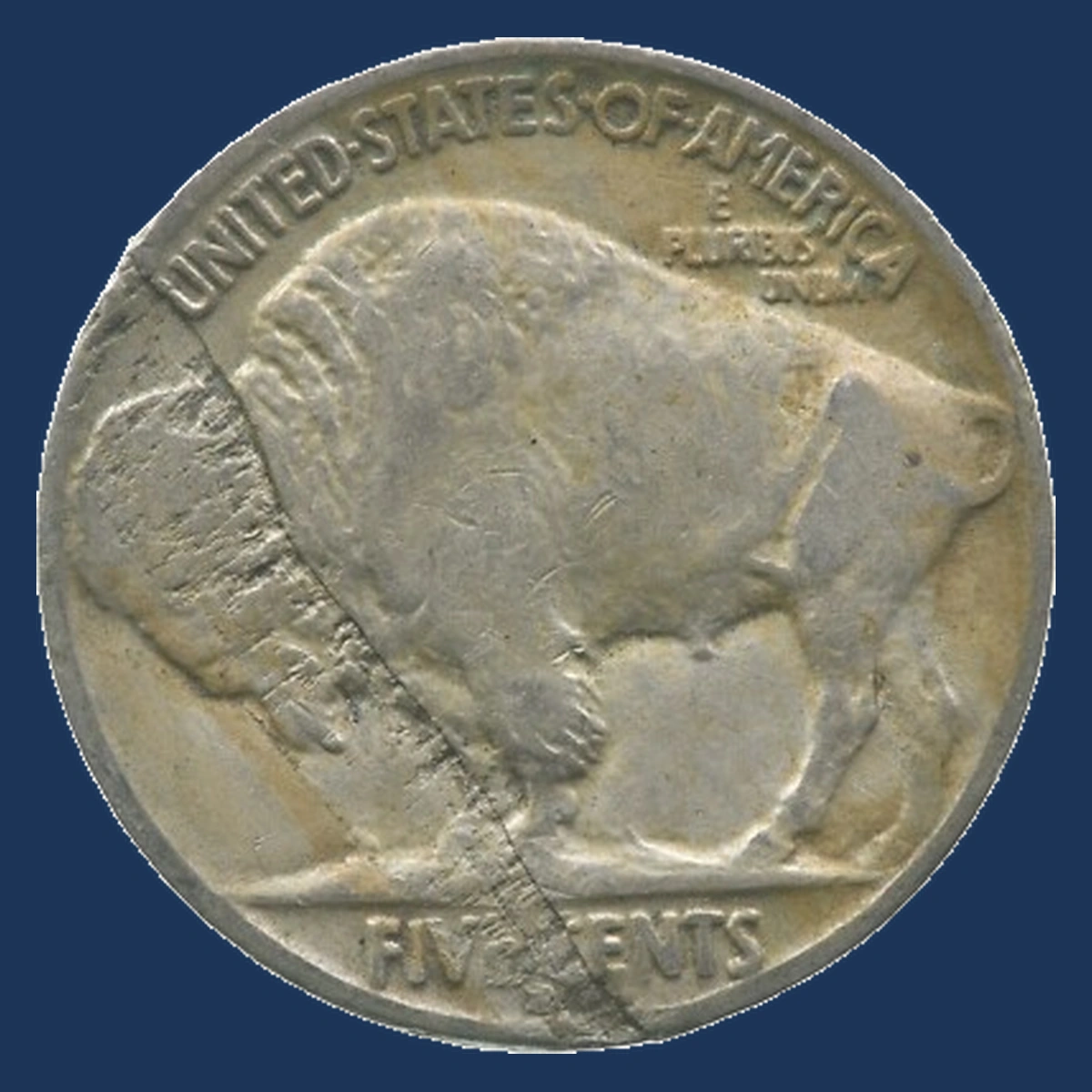
A thin layer remains attached on the back of a documented 1929-S nickel. It separated along a weak area in the metal instead of falling away completely.
This is a retained lamination flap. The alloy is copper and nickel throughout, so the defect does not represent a missing silver coating.
PCGS graded the coin MS64, an unworn grade with noticeable marks allowed. Its auction title identifies the back but does not specify a clock position.
The surviving connection is useful evidence. Pulling up the flap could destroy that connection and change the appearance of the original defect.
Estimated Value
The PCGS MS64 example sold for $149.50 in April 2010. Estimate $30–$700 across genuine 1929 retained laminations, allowing for the flap’s size, visibility, and overall preservation.
A small rough patch on a worn coin needs a lower comparison than a broad intact flap on an attractive unworn piece. The recorded price belongs to one San Francisco specimen.
The whole coin and attached metal are valued together. Removing the flap to display it separately can reduce its appeal and damage evidence.
How to Identify
Avoid pressure on the flap when handling the coin. A scale can check a loose specimen against 5 grams, but calipers should touch only intact areas when comparing width with 21.21 millimeters.
View the back from a shallow angle with a 10× magnifier. Follow the lifted layer to its surviving connection, and look beneath it for naturally rough inner metal rather than smooth cuts or scraped ridges.
The S below FIVE CENTS and the plain edge should fit the recorded San Francisco example. An original thin layer still joined to the coin is the important clue, and there is no need to lift it farther.
4. 1929 Buffalo Nickel Single and Double Clips
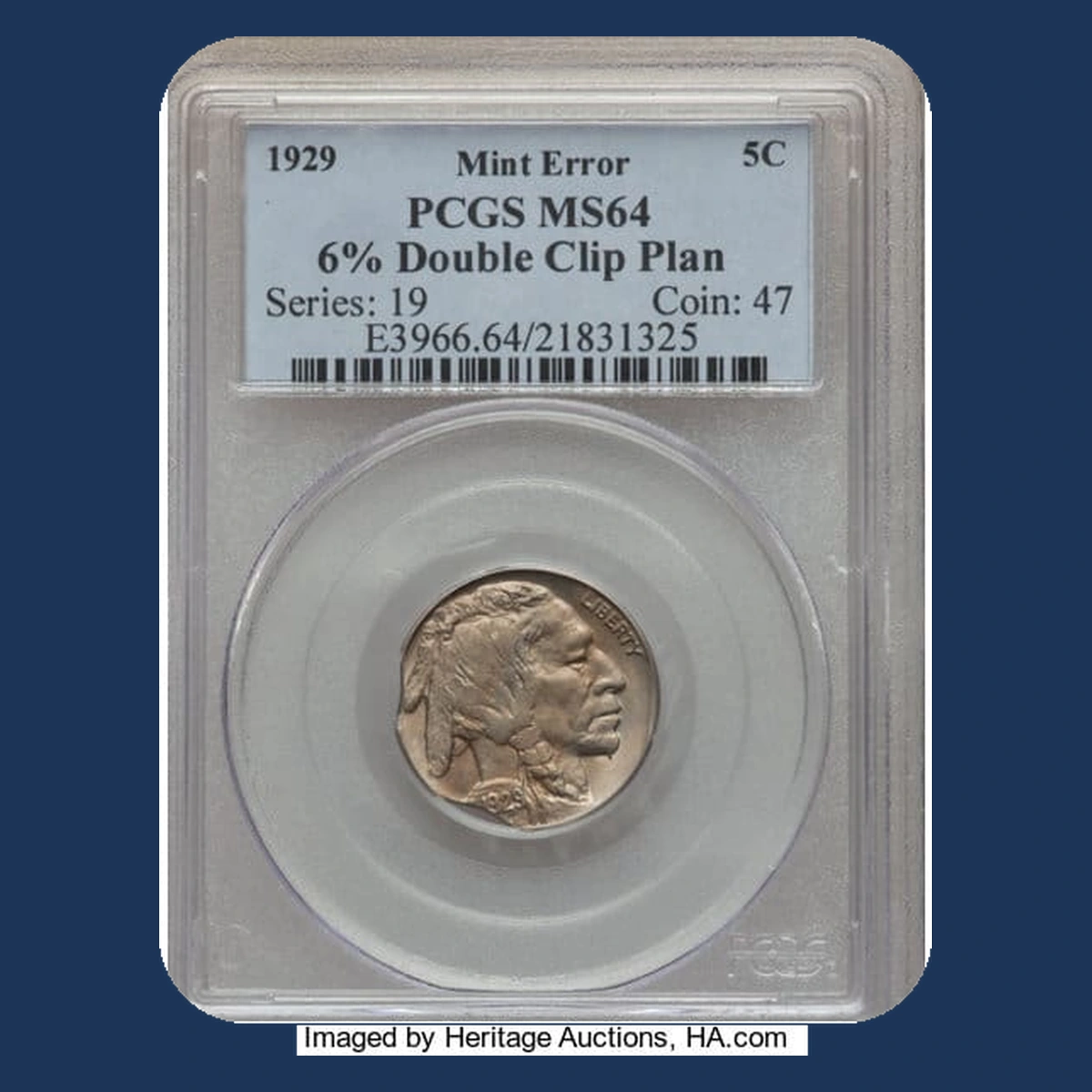
A curved gap forms when the metal disk is incomplete before it receives the design. The struck rim then forms around the missing area.
An NGC MS62 example has a five-percent curved clip at four o’clock. Its unworn grade allows noticeable marks.
A different year-guide report describes an MS64 nickel with six percent missing across two clips. Their shapes and positions are not established by that report.
These are separate specimens of the same general blank shortage. Two missing sections do not prove that a finished coin was struck twice, and neither should be confused with later cutting.
Estimated Value
The five-percent NGC MS62 clip is reported at $168 in July 2021. A year guide separately reports $250 in 2015 for its six-percent double-clip example.
Estimate $50–$800 for genuine 1929 clips, depending on size, shape, and preservation. Clear original rim formation helps establish what a buyer is paying for.
Do not assign the single clip’s four-o’clock position to either gap on the other coin. The two-clipped example also has no established mint in the report.
How to Identify
For the NGC MS62 example, start at the curved gap near four o’clock. Under a 10× magnifier, follow the rim into both ends and look for softly formed borders.
Weigh a loose coin against 5 grams and use calipers across intact spans against 21.21 millimeters. The remaining edge should be plain.
Examine both gaps independently on a double-clip coin. Their positions and shapes cannot be borrowed from the single-clip example.
File marks, sharp burrs, and cuts through finished letters suggest later damage.
Weakness opposite a gap can help, but natural struck metal flowing toward its ends provides the more direct evidence that the shortage existed before striking.
5. 1929 Buffalo Nickel Repunched D and S Mintmarks
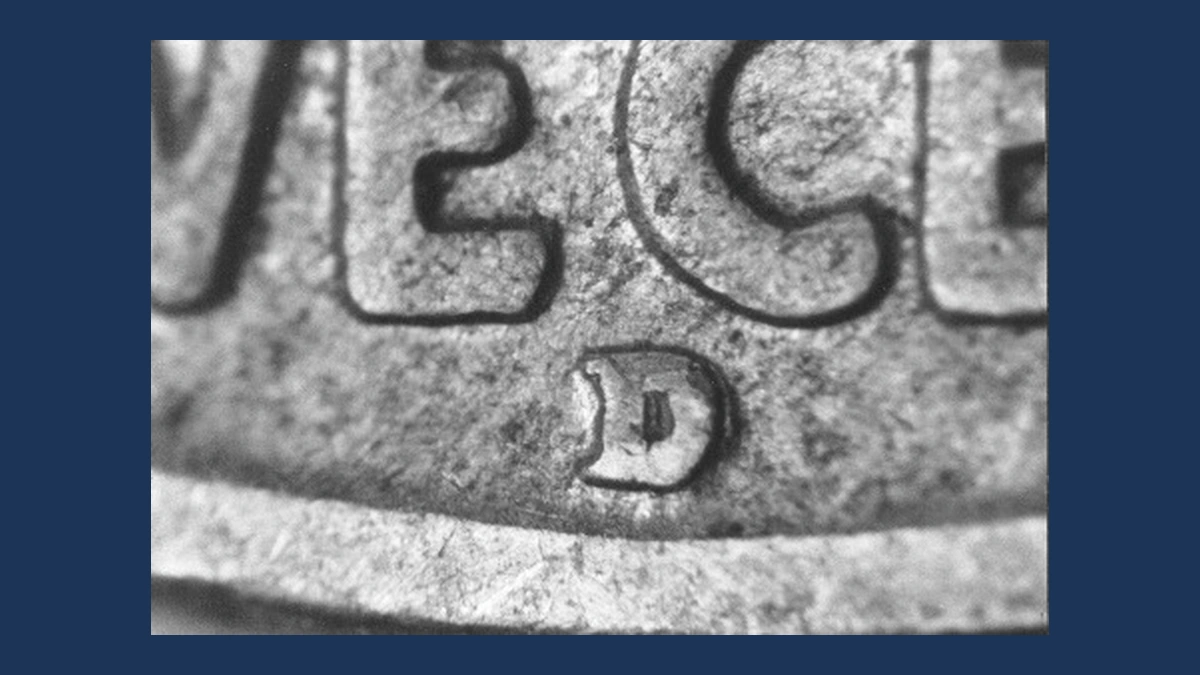
The small D or S below FIVE CENTS can preserve parts of an earlier punch. Workers placed mintmarks into the stamping tools by hand, and a second placement could leave extra strokes.
Denver examples show earlier D outlines to the right or lower left. San Francisco patterns include S remnants above, beside, or below the final letter.
Some S patterns involve more than two impressions. They need a full shape comparison rather than a count based on one extra curve.
Different catalogs can use the same number for different patterns. The actual photograph matters more than matching a short code.
Estimated Value
Estimate $20–$1,000 across recognizable 1929 mintmark varieties, with clear patterns and attractive condition supporting stronger values. Small repunches on worn coins generally belong toward the lower end.
An extra S above and below the final letter should not automatically receive the price of a different named S pattern. Mintmark shape and preservation must agree with the comparison.
The amount covers the entire nickel. Do not add a separate full premium for each surviving stroke from the earlier punches.
How to Identify
Compare the whole D or S below FIVE CENTS with the matching 1929 mintmark photographs. A 10× magnifier helps separate an earlier letter stroke from a dent beside the final letter.
Denver’s rightward and lower-left extra outlines are different patterns. For an S, follow its upper and lower curves before choosing among the San Francisco examples.
On a loose coin, scale and caliper readings near 5 grams and 21.21 millimeters, with a plain edge, fit the normal nickel. They cannot identify a repunched letter, so match the earlier strokes and nearby details to one pictured pattern before assigning its name.
6. 1929 Buffalo Nickel Doubled Front and Back Designs
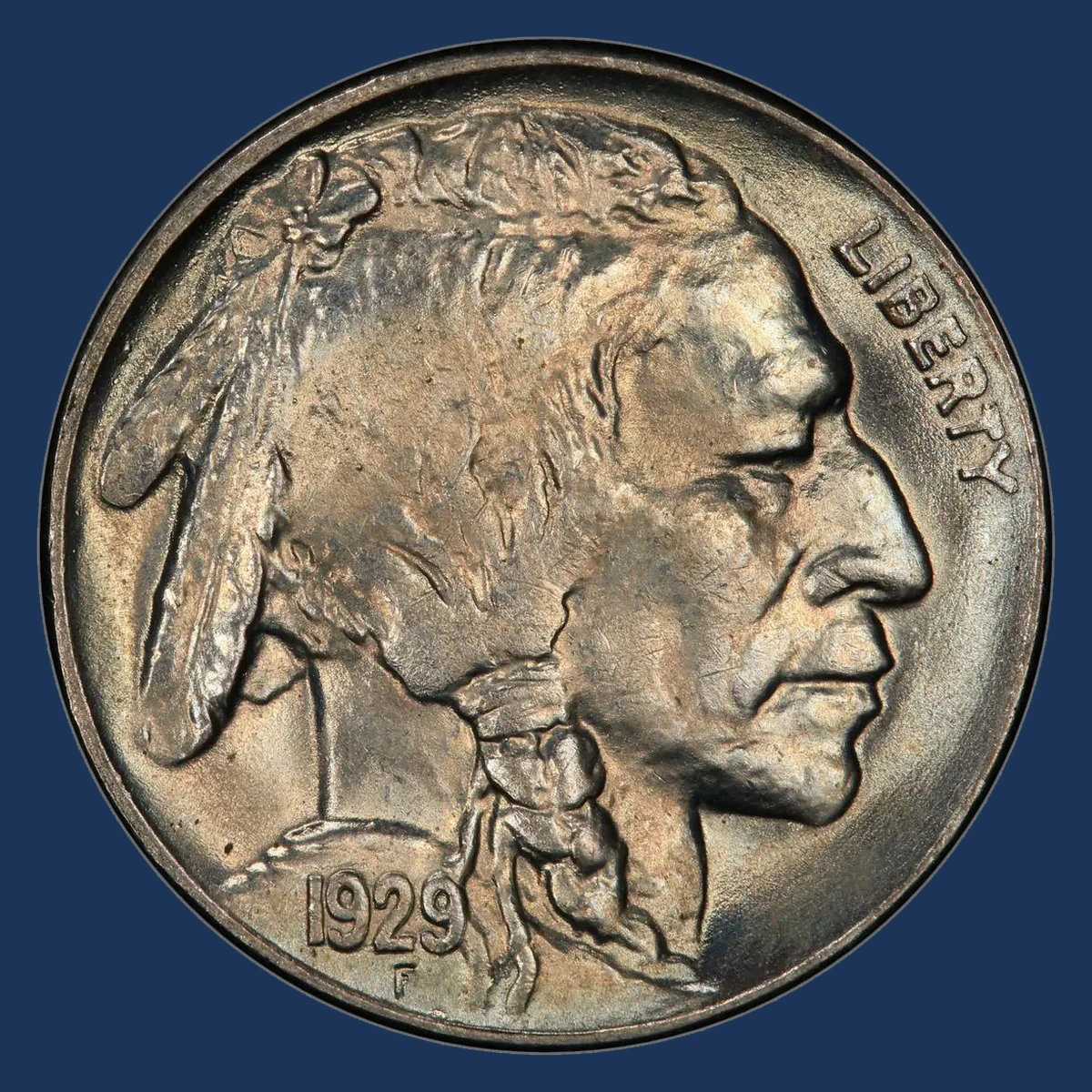
The date and braid details repeat on the Philadelphia front variety called FS-101. Weaker extra outlines also appear around parts of the face and feathers.
Three cataloged back patterns differ from that front variety and from each other. Their repeated details include E PLURIBUS UNUM, other lettering, and, on one pattern, the buffalo’s head.
These extra outlines began in the steel stamping tools, called dies. A coin could receive them in one strike.
They are not four stages of one coin. A catalog’s number must be matched to its own photograph before the pattern is named.
Estimated Value
Use an estimated $25–$3,000 across identifiable doubled designs, from minor worn examples to named varieties in attractive condition. The breadth reflects different tools and levels of preservation.
Bold repeated contours in several places make a stronger comparison than one thick letter. The front FS-101 variety should not set the price of every faint back doubling.
A flat shelf caused by movement during striking is different from an extra design present in the tool. The estimate assumes a matched doubled-die pattern.
How to Identify
Check the mintmark area below FIVE CENTS first, since these patterns belong to Philadelphia. A loose normal nickel weighs about 5 grams and measures 21.21 millimeters on a scale and calipers, with a plain edge.
For front FS-101, use a 10× magnifier around the date and braid. Follow the extra rounded outlines across several details rather than treating one thick edge as proof.
Back varieties require a different comparison: one mainly repeats the upper motto upward, while another pattern also affects the buffalo’s head. Match the shapes in their correct places on one variety’s photograph, without combining details from several different stamping tools.
7. 1929 Buffalo Nickel Two-Feather Variety
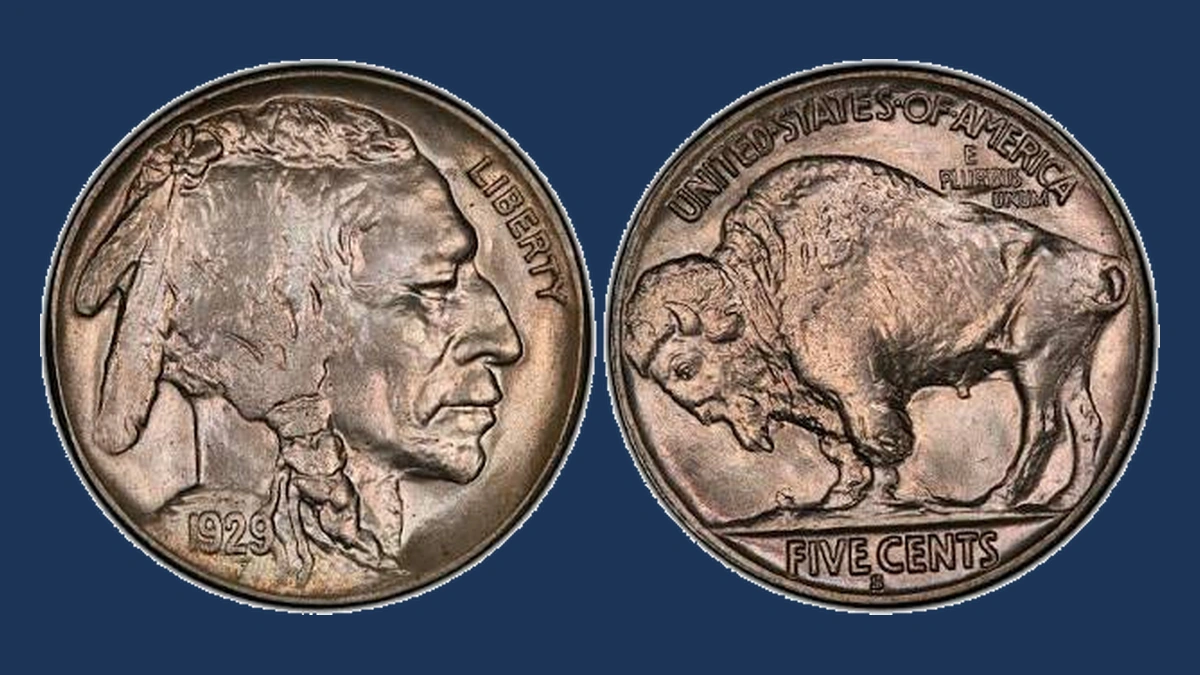
The portrait normally includes a small third feather behind the larger feathers. On the 1929-S variety called FS-401, that small detail is absent.
The missing feature belongs to the stamping tool’s design as it struck these coins. It is different from someone scraping a feather off an already finished nickel.
PCGS lists the San Francisco variety in its Buffalo nickel variety set. A matching example needs the right year, S mintmark, and feather pattern together.
General weakness or wear can make the smallest feather hard to see. The neighboring design must remain clear enough to support the comparison.
Estimated Value
Estimate $50–$3,000 for genuine 1929-S two-feather examples, allowing for the strength of identification and the coin’s condition. Attractive unworn pieces need different comparisons from heavily worn nickels.
The name alone does not justify the upper end. A vague worn patch where a feather should be is much weaker evidence than a clean match to the named variety.
Original surfaces and readable date help buyers judge the pattern. Scraping or smoothing around the missing detail can sharply reduce confidence and value.
How to Identify
Use a normal 1929-S coin to locate the small third feather’s expected position behind the portrait. Examine that spot with a 10× magnifier before simply counting the visible feathers.
Then look at nearby hair and feather details. If they are all flattened by wear, the small missing-looking feather needs closer examination.
Confirm the date and the S below FIVE CENTS on the same coin.
A loose candidate should normally read about 5 grams and 21.21 millimeters on a scale and calipers, with a plain edge.
Check the empty position for scraping, then match the surrounding preserved details to the FS-401 photograph rather than relying on absence alone.
8. 1929 Buffalo Nickel Off-Center Strikes
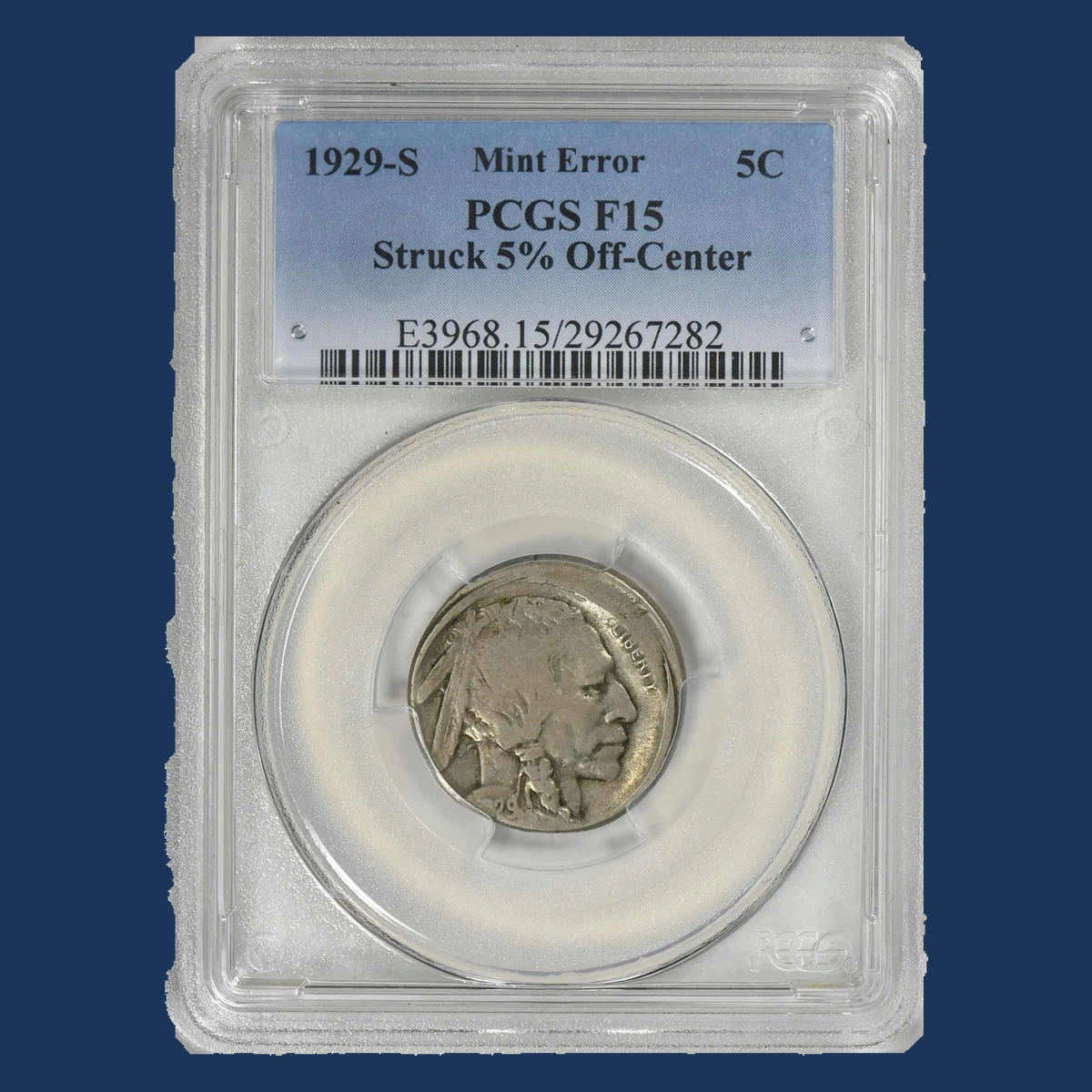
One dramatic example leaves the portrait’s face and mintmark position beyond the edge of the metal. Its complete date survives despite a forty-percent shift toward two o’clock.
PCGS graded that coin MS64, an unworn grade with noticeable marks allowed. The absent mintmark area leaves its mint unidentified.
A collector separately shows an approximately twenty-five-percent eastward strike and questions whether it came from Denver. That suggestion is not a firm mint identification.
A third example has a readable S and a five-percent shift. Its AU Details description also notes cleaning, a later condition problem separate from the minting mistake.
Estimated Value
The forty-percent MS64 example sold for $2,587.50 in September 2008. The cleaned 1929-S five-percent example brought $312 in October 2022.
Estimate $100–$4,000 across genuine dated off-center pieces, considering displacement, preservation, and readable identity. The two documented results show why different examples need separate comparisons.
A large blank crescent can attract attention, but a lost date or surface damage can reduce appeal. Do not assign Denver or Philadelphia solely because the mintmark position missed the metal.
How to Identify
Read the date and locate where the mintmark should be. If that area missed the metal, keep the mint unidentified rather than assuming Philadelphia.
A scale may still show close to 5 grams for a loose intact disk. Use calipers to record the changed outline against the normal 21.21 millimeters, and inspect the plain edge for cutting or squeezing.
Through a 10× magnifier, compare where both designs meet untouched metal. The forty-percent example shifts toward two o’clock and loses the portrait profile.
The approximately eastward coin and small San Francisco shift are separate examples. Match the blank area to the missing portion of each design on the coin being examined.
9. 1929 Buffalo Nickel Struck on Cent or Silver Dime Blanks
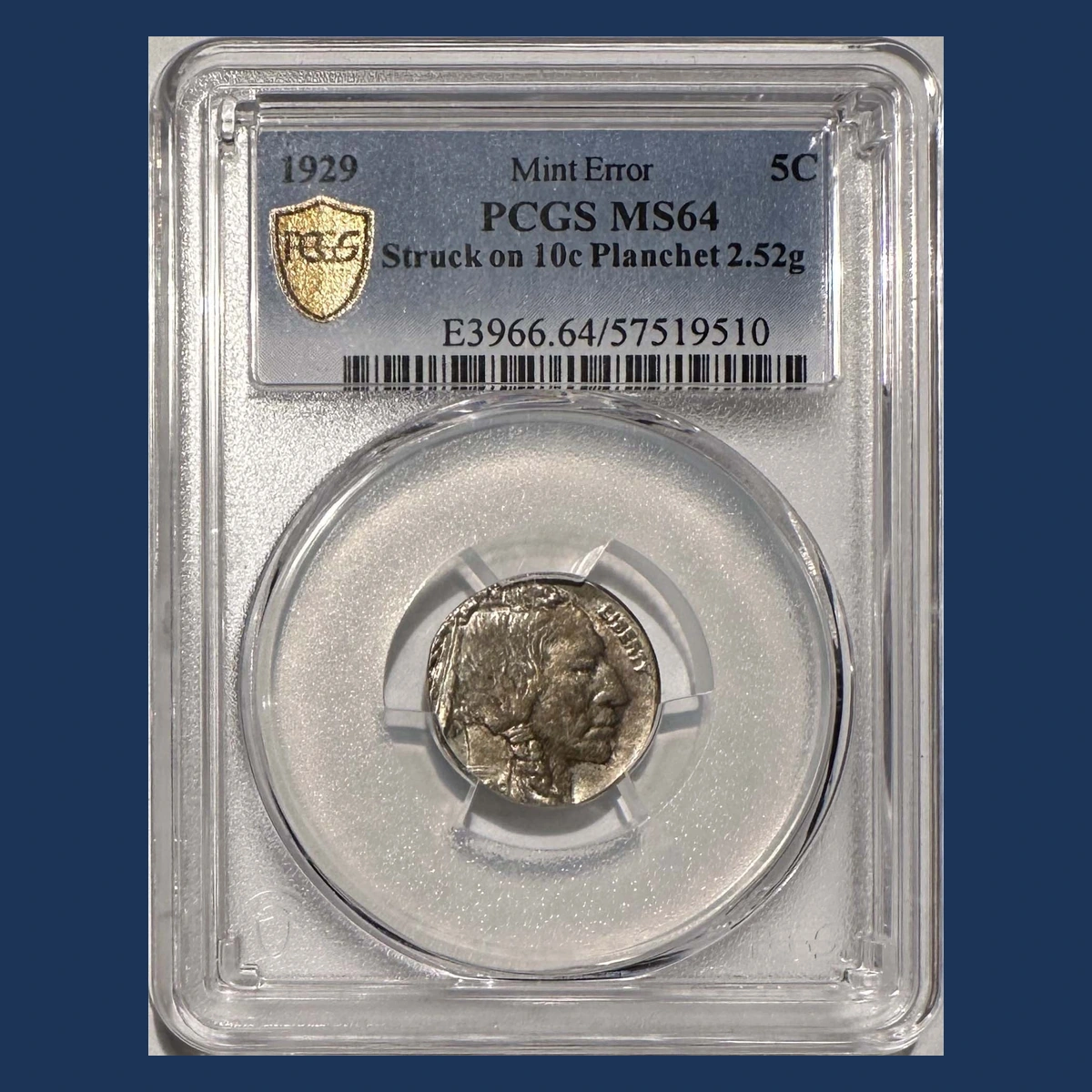
About half of LIBERTY runs off the cent-blank example, and its mintmark position lies outside the metal. PCGS graded this brown copper coin MS64.
The auction describes plum and olive color on the front, with brown and traces of red on the back. Its mint cannot be recovered simply from a general catalog number.
A collector separately displays an MS64 nickel described as struck on a silver dime blank. That coin uses different metal and needs its own measurements.
Both errors start with a disk intended for another denomination. Neither is established merely by an unusual surface color.
Estimated Value
The MS64 Brown cent-blank coin brought $9,775 in January 2006. Estimate $3,000–$15,000 for genuine comparable cent-blank examples and $2,000–$8,000 for identified silver dime-blank examples.
The cent result does not price the collector’s separate silver coin. Metal, readable design, and preservation all affect the comparison.
Both ranges concern the entire error coin. A colored coating, altered edge, or incorrect blank identification would undermine the stated comparison.
How to Identify
Weigh a loose coin before judging its color. A contemporary cent blank normally starts at 3.11 grams and a silver dime blank at 2.5 grams, compared with a normal nickel’s 5 grams.
Those are standards, not measured weights of the pictured errors.
With calipers, compare width against the starting diameters of 19.05 millimeters for a cent and 17.91 for a dime. Striking can spread either smaller disk beyond its original width.
Inspect the cropped design and edge through a 10× magnifier for trimming or coating. A dime blank struck by nickel tools need not have normal dime edge grooves.
Match the smaller disk and tested metal together, keeping the mint unidentified if its original mark position lies off the metal.
Conclusion
These 1929 Buffalo nickel errors have estimated values of $20–$15,000. The $9,775 cent-blank example and $2,587.50 off-center coin show how much metal, design visibility, and preservation can change the comparison.
For smaller varieties, match the actual letters or feathers rather than a nickname. Keep measured weights separate from standard blank specifications, and leave the mint unidentified when its original position lies outside the coin.