2022 Dime Error List with Pictures

A missing silver-colored surface can turn the back of a dime copper-brown. A dealer asks $1,199 for a 2022-P example with its reverse outer layer missing; that is an asking price, not an auction result.
This 2022 dime error list covers estimated values of $3–$1,500, from tiny raised chips to major metal problems. The wrong-blank section gives a conditional estimate because a specific 2022 example still needs confirmation.
Follow the visible clues below before putting a price on your coin.
1. 2022 Roosevelt Dime Weak or Missing Torch Detail
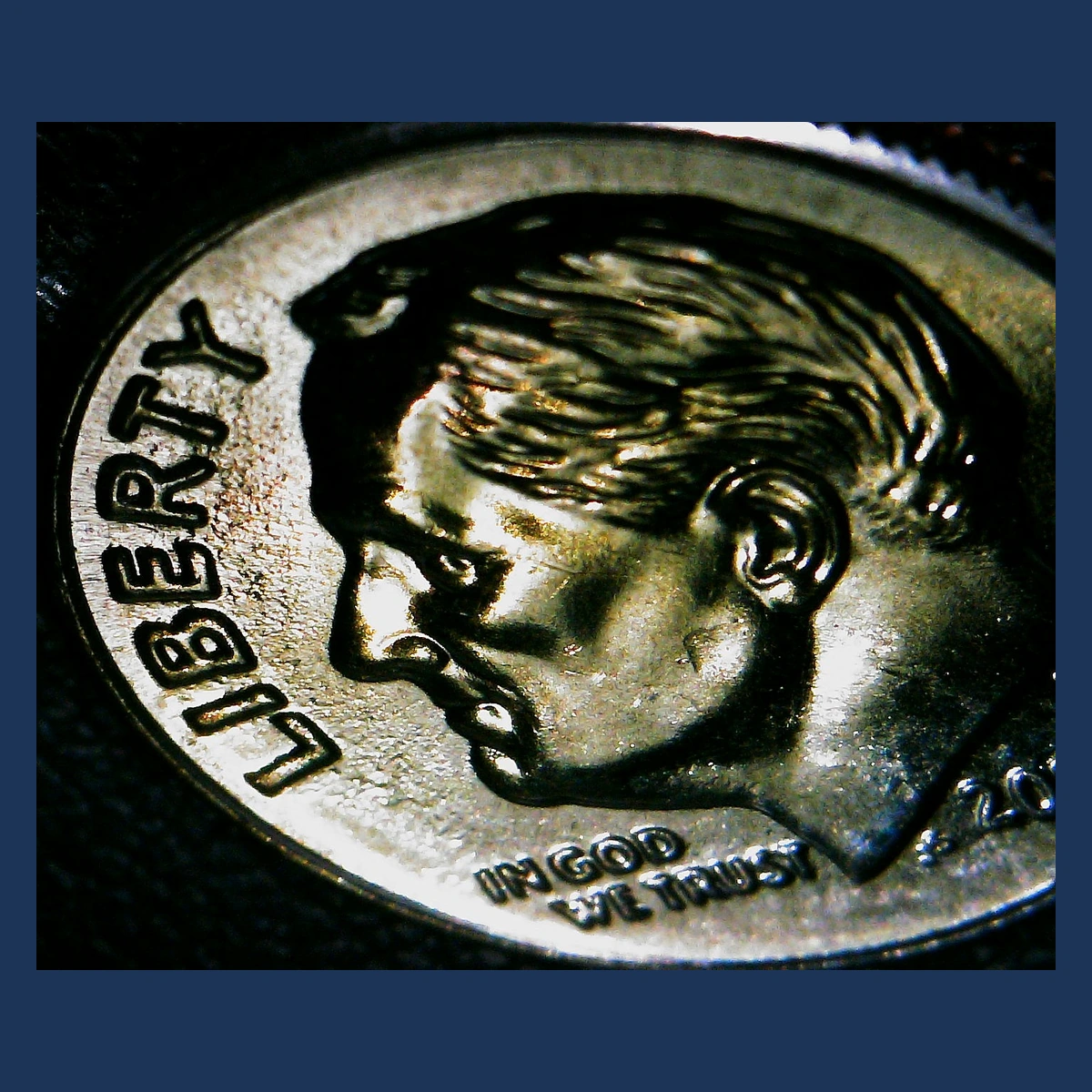
The left side of the torch flame may look faint or almost absent while the right side remains clearer. Some collectors call this appearance Burning Torch or Smokey Torch.
The year guide explains it as grease or debris blocking part of the die, the steel stamping tool. Metal could not fully enter that section of the design during striking.
Torch bands or nearby letters can also be weak, but missing sharpness alone does not prove trapped grease. Wear and an incomplete strike can produce similar flat areas without the same cause.
Estimated Value
Allow roughly $5–$30 for clear localized missing-detail examples. The year guide places small affected letters near the lower end and a visible Burning Torch appearance nearer the upper end.
An unworn coin with sharp surrounding detail makes the feature easier to judge. General flatness across a worn reverse is less convincing.
These are estimated market ranges rather than documented auction results for a particular 2022 coin. The nickname does not add a separate premium to the same weak flame.
How to Identify
Compare the two sides of the flame with a normal 2022 dime under a 5× or 10× magnifier. Look for a weak left portion beside clearer right-hand detail.
Now examine the torch bands and surrounding letters. If the entire reverse is worn flat, the flame alone cannot establish a grease blockage.
For a loose P or D coin, use a scale and calipers against 2.268 grams and 17.91 millimeters. A filled design recess should not remove a substantial amount of the blank’s metal.
Tilt the affected area under a lamp to look for gouging or grinding. Smooth missing detail beside sharper original design is the useful clue, while cut or scraped metal points toward later damage.
2. 2022 Roosevelt Dime Raised Chips and Cracks
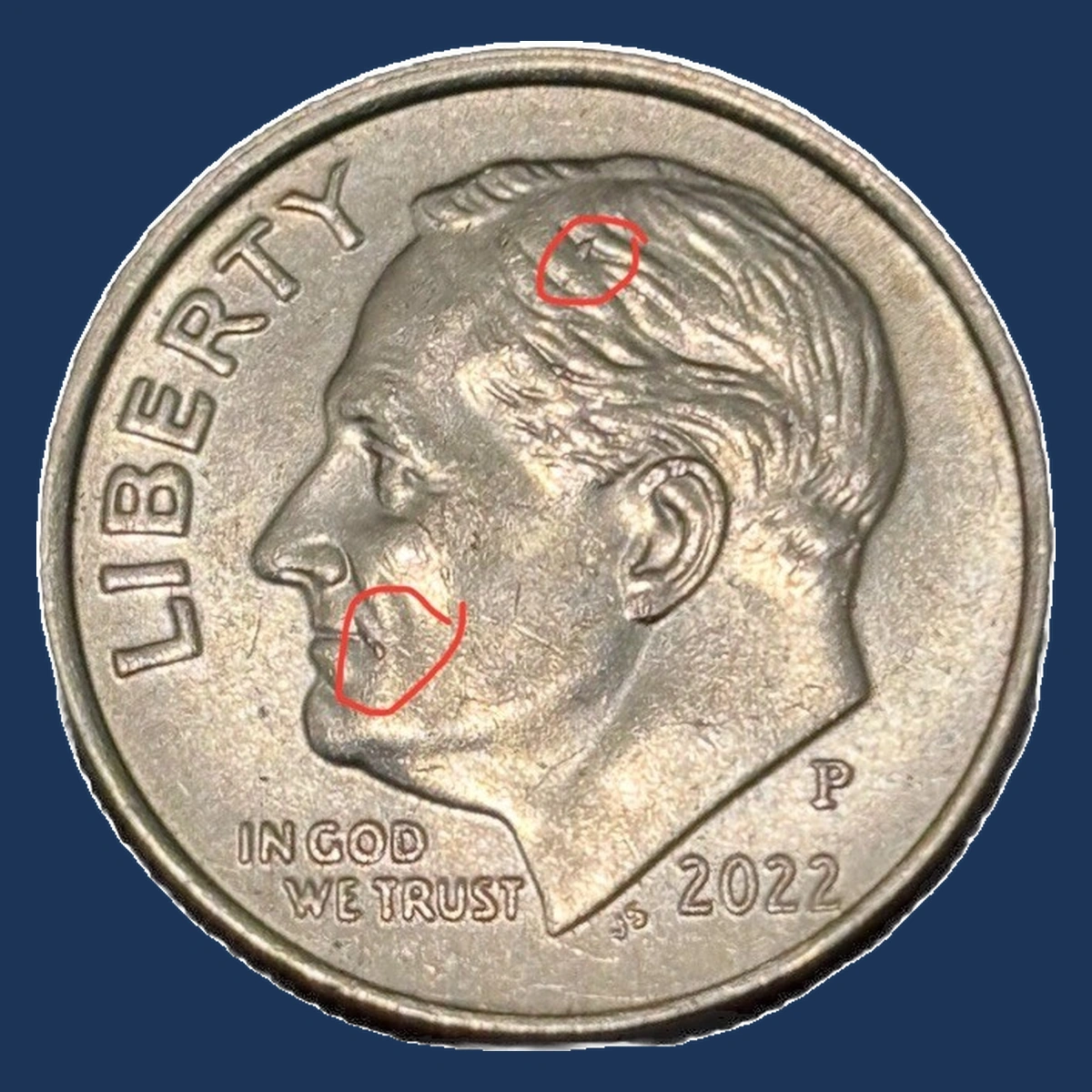
A small raised lump near Roosevelt’s lips can make him appear to be drooling. That nickname, Drooling Frank, describes the appearance rather than a separate minting process.
A tiny piece of the stamping tool broke away, allowing metal to fill the opening. Similar chips can occur near the nose or chin, while a narrow tool crack leaves a raised line.
The year reports include separate P and D examples, plus a line near the torch base. A lump inside the portrait is not a rim cud unless it actually joins the coin’s rim.
Estimated Value
Small lip chips and fine cracks usually fit an estimated $3–$30 range. A bold nose chip on an unworn coin can be easier to sell than a tiny bump hidden by wear.
The 2022 error guide gives modest prices for these common-looking defects. Larger combined features need their own comparison rather than an automatic multiplier.
The price concerns the whole coin, and a catchy nickname does not turn every raised speck into a valuable error.
How to Identify
Leave the raised spot untouched: scraping it could damage an original feature. Use a 10× magnifier and side lighting to see whether it is part of the coin’s metal.
Check the P or D mintmark near the date before comparing a lip, nose, or chin example. A different coin’s lump may occupy another position.
A loose circulation dime normally weighs 2.268 grams and measures 17.91 millimeters, checked with a scale and calipers.
For the torch-base line, distinguish a raised ridge from a scratch cut into the surface. Nearby displaced metal can make a scratch look misleadingly raised.
A genuine chip should have a continuous metal surface, while glue or another attached substance may show a separate boundary.
3. 2022 Roosevelt Dime Faint Design Transferred to the Wrong Face
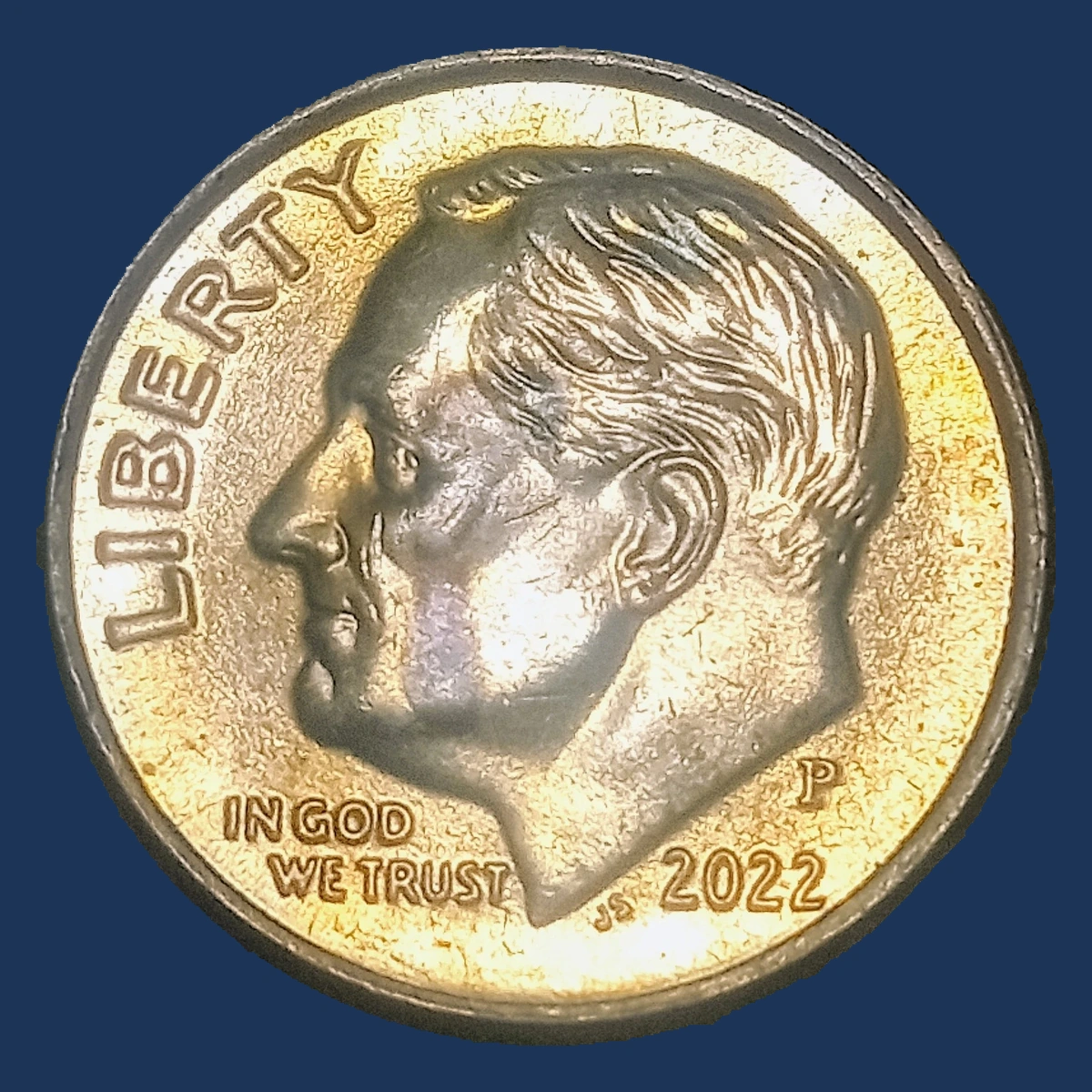
A faint outline on the reverse may resemble part of Roosevelt’s portrait instead of the torch and branches. The year guide reports this as a die clash.
The two stamping tools met with no blank between them and marked each other. Later coins could then receive traces of the opposite design in the wrong place.
The report does not map a particular 2022 specimen’s full outline. A random curved line should therefore be compared with the actual portrait shape before it receives that name.
Ordinary polishing lines and later scratches are common lookalikes.
Estimated Value
Use an estimated $30–$50 for a clearly recognizable clash on a collectible 2022 circulation dime. This follows the year guide’s comparison range rather than a named auctioned specimen.
Traces that show a recognizable part of the opposite design are more persuasive than isolated fine lines. Wear, stains, or heavy contact marks can make the match harder to see.
The value depends on the visible transferred pattern, not simply on how many faint marks appear in the smooth background.
How to Identify
Place photographs of both faces beside each other and locate the unexpected outline. Compare its shape with a real part of the opposite design before zooming in.
A 10× magnifier helps follow the trace across the smooth background. Random scratches often run through unrelated areas without reproducing a recognizable design.
For a loose P or D dime, check 2.268 grams and 17.91 millimeters with a scale and calipers. Normal measurements support the basic coin identity but do not prove a clash.
A second coin pressed against a finished dime can leave damage that looks suggestive. The convincing evidence is a consistent transferred design matching the opposite face, rather than a single accidental curve.
4. 2022 Roosevelt Dime Thin Raised Rim or Fin
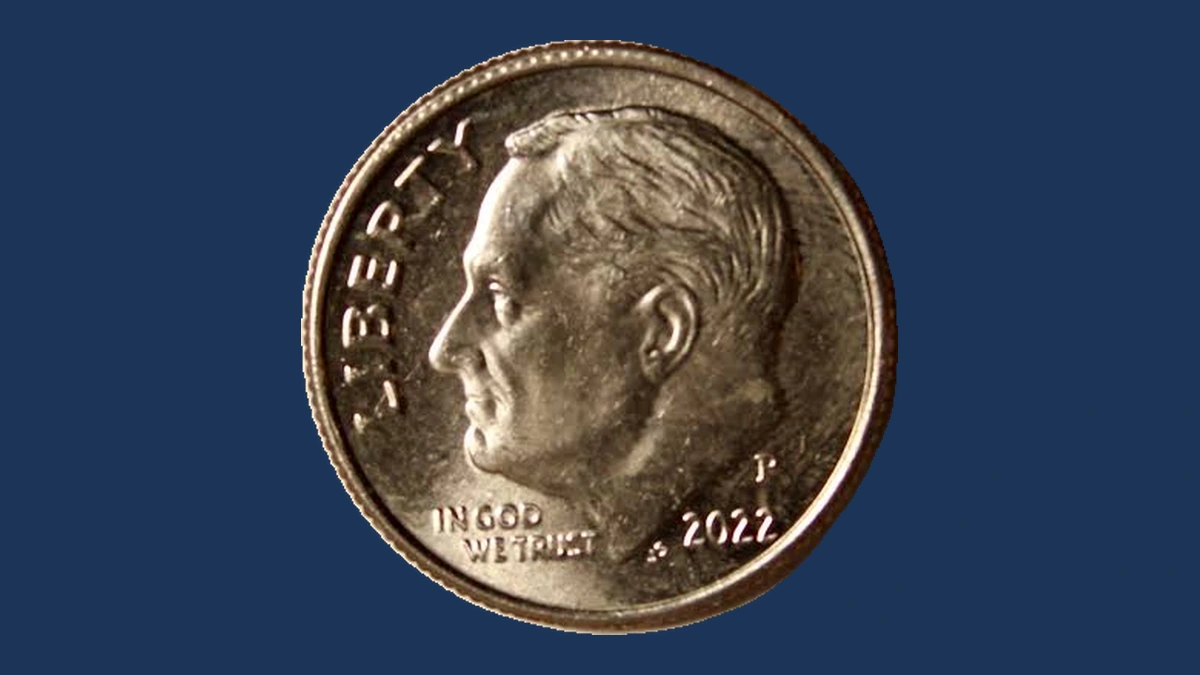
An unusually tall, thin edge can stand above the face like a small metal fin. It forms when striking pressure forces metal into a narrow gap near the stamping tool and surrounding collar.
The collar is the ring that controls the coin’s width and forms its edge grooves. The 2022 guide reports both more even raised rims and higher sections on one side.
Uneven height alone does not establish exactly how the tools were positioned. A rolled or battered edge from later handling can imitate a high rim and needs to be excluded.
Estimated Value
Estimate $20–$50 for a clear original raised-rim error on a 2022 circulation dime. A thin, visible fin on an otherwise attractive coin is easier to recognize than a barely elevated edge.
The year guide supplies this price range without identifying a particular auction result. It should therefore be used as an estimate.
Later edge damage can reduce or eliminate an error premium. Height matters only after the metal’s original shape has been distinguished from rolling, impact, or wear.
How to Identify
Look along the coin at eye level beside a normal dime. A thin fin should rise above the face rather than merely make the edge look rounded and thick.
Record the width with calipers before judging whether metal has spread outward; the normal diameter is 17.91 millimeters. A scale should place an ordinary clad example near 2.268 grams.
Inspect the high edge with a 10× magnifier without pressing it down. Check for a sharp, narrow extension and for undamaged design immediately inside it.
A worn, rolled edge may show flattened grooves or rubbed metal all around. The clearest original fin is a thin projection above the face with nearby struck detail still intact.
5. 2022 Roosevelt Dime Parallel Lines from Feeder Contact with a Die
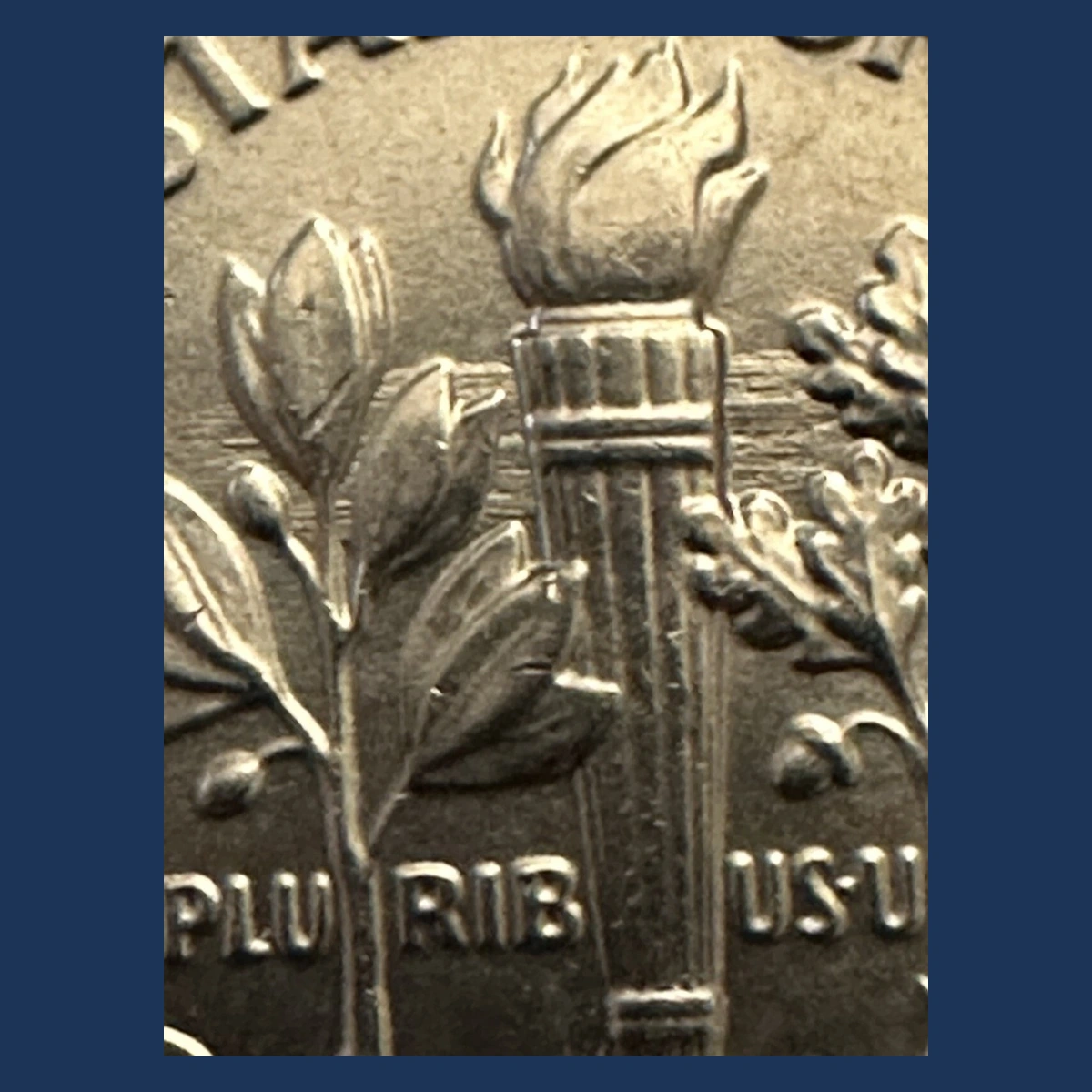
Fine parallel ridges above Roosevelt’s head are described in the year guide as feeder-finger marks. A feeder finger is the press part that moves a blank into position.
If that part scrapes a stamping tool, the tool can copy the resulting lines onto later coins. Another reported location is behind the torch on the back.
This explanation concerns marks transferred from the damaged tool. It is different from a feeder part lying directly across a blank during striking.
Evenly spaced lines alone cannot prove the cause because tool polishing can also leave repeated lines.
Estimated Value
The guide’s estimated range is $50–$100 for clearly visible examples, with worn pieces lower and attractive unworn coins higher. Stronger lines that can be photographed clearly are easier to compare.
That range assumes the pattern is correctly identified as transferred tool damage. Ordinary scratches or polishing lines should not receive the same label solely because they run parallel.
Look for a convincing pattern and preserved surrounding design before using the upper end as a buying target.
How to Identify
Start with photographs of the full pattern above the portrait, or behind the torch for the separate reverse report. Include the surrounding design so another coin’s lines can be compared in the same position.
Move a lamp across the area and use a 10× magnifier to check whether the lines are raised. Cuts into the finished coin are a different kind of mark.
For a loose circulation dime, record the weight and width with a scale and calipers against 2.268 grams and 17.91 millimeters. Those measurements will not separate feeder marks from ordinary tool polishing.
A matching pattern of raised lines on other coins from the same tool is stronger evidence than regular spacing alone.
6. 2022 Roosevelt Dime Doubled Design on the Front or Back
Extra outlines may appear beside LIBERTY, the date, or parts of Roosevelt’s face. The 2022 guide also reports doubled reverse lettering and torch detail on separate examples.
A doubled die means the stamping tool carried a doubled design before it struck coins. It does not mean the finished dime received two separate blows.
The year reports do not establish one shared pattern or a particular mintmark for every example. Front and back doubling should therefore be checked independently.
A flat ledge from movement during striking is a different effect and is often mistaken for true doubling.
Estimated Value
For a clearly matched doubled design, use an estimated $10–$150 range across circulated and attractive unworn examples. More obvious separation can support the upper end, while slight, difficult-to-see doubling usually attracts less.
The guide’s combined-error prices should not be treated as sales for every standalone doubled die. A coin with an additional missing-detail area still needs each feature identified.
Mechanical ledges and normal torch bands do not justify this estimate simply because they resemble doubled lines.
How to Identify
The torch already has paired horizontal bands. Compare with a normal dime before treating those two lines as an extra copy of the design.
For a loose P or D coin, a scale and calipers check the normal 2.268 grams and 17.91 millimeters. Keep its mintmark visible beside the date when choosing a comparison.
Focus a 10× magnifier on the letter corners of LIBERTY and the date curves, or on the reported reverse lettering. Look for separately raised contours rather than thick edges.
Shift the lighting to examine the same contour again. A stable second outline is more convincing than a flat shelf that catches the lamp at one angle.
7. 2022 Roosevelt Dime Wider Coin from Striking Outside the Collar
A broadstruck dime spreads wider than normal while keeping its complete design. The collar ring failed to contain the metal during the strike.
Without that ring, the usual edge grooves may not form, leaving a broad smooth edge. This combination is more useful than extra width alone.
The 2022 guide includes broadstrikes but does not give a measured specimen’s width or weight. Those figures must come from the actual coin being examined.
A coin flattened after leaving the Mint can also become wider, so intact design and original edge shape are essential parts of the comparison.
Estimated Value
A practical estimated range is $30–$150 for genuine broadstruck 2022 circulation dimes. A clear expanded outline with complete, attractive design belongs toward the stronger end.
The upper figure follows the year guide’s market estimate, not a documented sale for a named specimen. Damage or a very slight spread can reduce interest.
Compare the whole edge as well as the face: a simply flattened dime should not be priced like an original strike made without proper collar support.
How to Identify
Measure the loose coin across several directions with calipers. Compare its width with 17.91 millimeters, then weigh it against the normal clad standard of 2.268 grams.
A larger outline with substantially normal weight suggests spreading rather than extra metal. It does not establish when that spreading happened.
Use a 10× magnifier to inspect the edge and the complete design. A true broadstrike should retain the design without the cutoff associated with an off-center strike.
Later flattening may crush the portrait, torch, and rim together. The stronger combination is outward-spread metal, missing normal edge grooves, and original design that remains complete instead of being pressed flat.
8. 2022 Roosevelt Dime Curved or Straight Missing Blank Metal
A clipped blank can leave a curved bite or straight missing section at the edge of a dime. The missing metal was absent before the design was struck.
Curved clips can form when the blank-cutting punch overlaps a previous hole in the metal strip. A straight missing section can come from the strip’s edge.
The 2022 report includes both shapes, without specifying a single coin’s mintmark or clip size. They belong to the same incomplete-blank mechanism.
A weak rim opposite the missing area may help identification, but its absence does not automatically rule a genuine clip out.
Estimated Value
Estimate $20–$200 for genuine curved or straight clips on 2022 dimes, depending on size and condition. A clear missing area with an undamaged date is easier to compare than a tiny questionable notch.
This range estimates the mechanism rather than a sale for an unspecified coin. Larger clips can attract attention when the exposed boundary shows original manufacture.
Later cuts do not earn the same premium simply because they remove a similar amount of metal.
How to Identify
Weigh the loose dime first and record its loss from the normal 2.268-gram clad standard. Then measure the remaining full width with calipers against 17.91 millimeters.
Under a 10× magnifier, follow the boundary of the missing section. Look for original metal flow and a transition formed during striking rather than a fresh cut through finished detail.
Check the opposite rim for weakness, often called the Blakesley effect. This is supporting evidence rather than an absolute requirement.
Inspect both faces and the exposed edge for filing, saw marks, or later clipping. A consistent original boundary matters more than whether the notch looks perfectly curved or perfectly straight.
9. 2022 Roosevelt Dime Rotated Torch Side
The torch side should stand upright after an upright portrait is flipped from top to bottom. If it consistently finishes at an unusual angle, the stamping tools may have been rotated relative to each other.
A 2022-P sales entry reports this kind of rotation. Its written description does not establish a specific angle.
A separately turned photograph can make an ordinary coin look rotated. The movement between the two faces is therefore part of the evidence.
This error changes the front-to-back relationship; it does not require doubled letters or a second torch on either face.
Estimated Value
For a verified substantial rotation, an estimated $20–$250 allows for the amount of turn and the coin’s condition. Small deviations generally create less interest than a strong, easily demonstrated angle.
The 2022-P sales report supplies an example to investigate, not a measured angle or a confirmed auction total. A continuous flip video is more useful for pricing than independently upright photographs.
An attractive coin with a clearly repeatable rotation makes the strongest comparison within this range.
How to Identify
Use a fixed camera and hold Roosevelt upright with the date at the lower edge. Turn the coin over from top to bottom without twisting it sideways.
The torch should normally finish upright. Repeat the motion while keeping your grip in the same position, so a hand turn cannot create the apparent error.
A P mintmark belongs to the reported example. A magnifier can help read it, but enlargement cannot replace the whole-coin flip test.
For a loose clad dime, use a scale and calipers to check 2.268 grams and 17.91 millimeters. Leave a certified coin sealed while demonstrating its alignment.
The torch must return to the same tilted position after each consistent flip.
10. 2022 Roosevelt Dime Off-Center Strike
Part of the design can run off the blank while an untouched crescent remains on the opposite side. This happens when the blank sits partly outside the stamping tools.
The 2022 guide describes smaller offsets around 5–10% and gives broader price estimates for more dramatic examples. Those larger estimates do not establish a particular high-percentage 2022 specimen.
Both faces should show the displaced strike. An uneven border on only one face can instead indicate a misaligned tool.
The visible date and mintmark determine how precisely an actual example can be identified.
Estimated Value
Allow about $10–$50 for small, clear offsets and $75–$500 for a dramatic example with its date preserved. These are estimates for comparable appearances, not verified sales for each percentage.
The blank crescent, surviving design, and overall condition all affect demand. A complete date can make a large offset easier to collect than an equally dramatic undated piece.
An uneven rim without genuinely missing design should not be priced as a major off-center strike.
How to Identify
Find the point where the struck design stops and untouched blank begins. With a 10× magnifier, check that the transition is original rather than a ground-down area.
Compare both faces: the shifted design should relate to the same unstruck part of the blank. Then read the surviving date and mintmark before assigning it to 2022 P or D.
A loose clad coin should remain near 2.268 grams unless metal was lost. Calipers can record its altered outline against the normal 17.91-millimeter diameter.
An off-center strike may distort the outline without removing metal. Confirm a genuine blank crescent and corresponding design cutoff on both faces, not simply a narrow border on one side.
11. 2022 Roosevelt Dime Missing Reverse Outer Layer
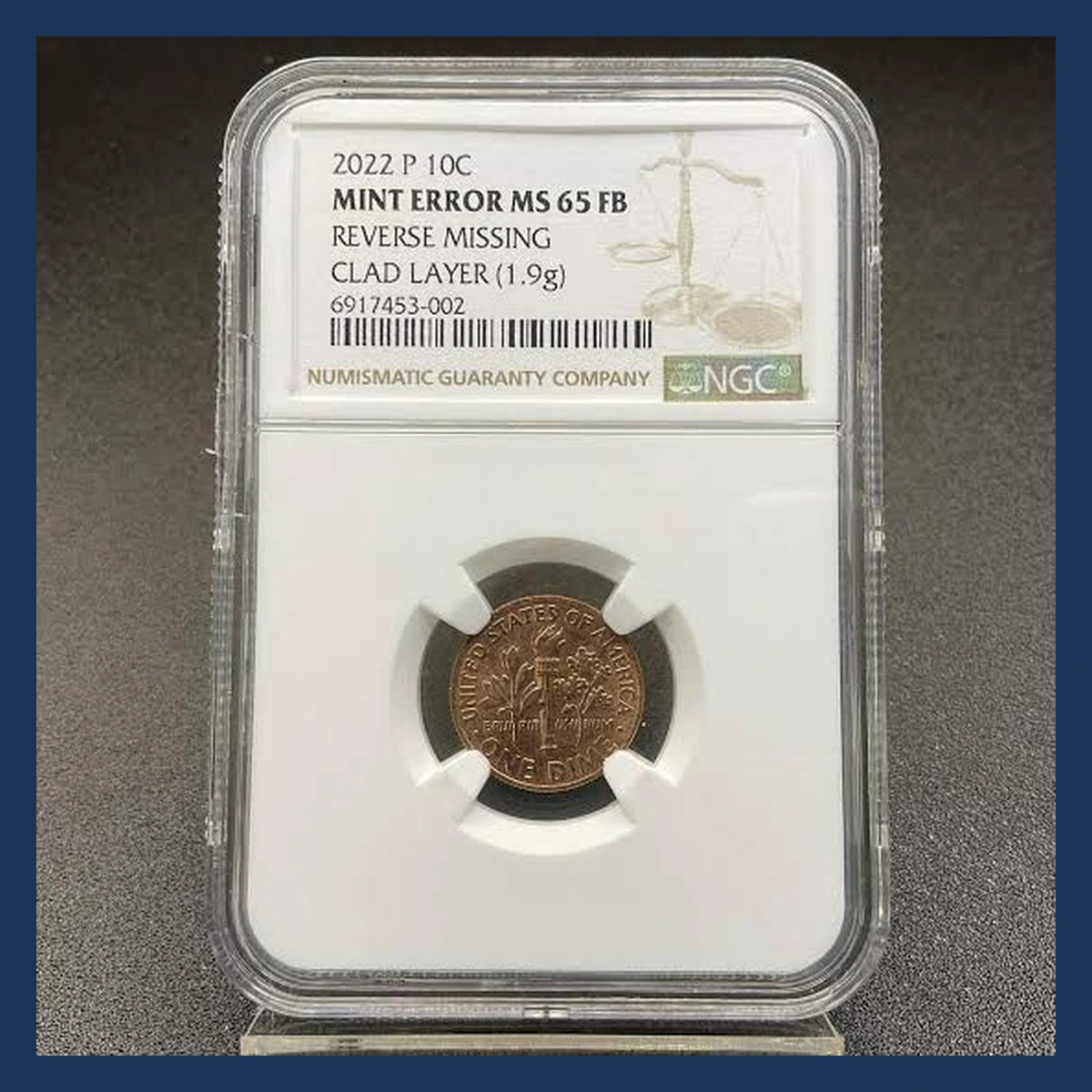
One face can be copper-colored while the other retains its normal silver-colored surface. A clad dime has copper-nickel outer layers bonded to a copper core, and a missing layer exposes that core.
A dealer lists a 2022-P example with the reverse layer missing and an NGC MS65 grade. MS65 means the coin has no circulation wear and relatively few visible marks.
A copper band along an ordinary dime’s edge is normal and does not mean a layer is missing. Here, the copper-colored area covers the back face, where a pale outer layer should normally be.
Estimated Value
Mallard Collectibles lists the MS65 example at $1,199. This is an asking price, and it does not establish that another buyer paid that amount.
Estimate $150–$1,200 for genuine examples, with preservation and clear evidence of the missing layer influencing the price. A heavily marked coin should not be compared directly with an attractive MS65.
The visible copper face, reduced weight, and original struck surface need to agree before the seller’s upper-end request becomes a useful comparison.
How to Identify
Check the holder’s error description first if the coin is certified. For a loose candidate, weigh it with a precise scale before deciding from its color.
A normal P or D clad dime weighs 2.268 grams; a missing outer layer should reduce that weight. Calipers should still show a width near 17.91 millimeters.
Inspect the copper-colored reverse and its edge under a 10× magnifier. Grinding or chemical stripping can remove an outer layer after striking, often changing the surface or edge.
A normal 2022-S silver Proof, a specially made collector coin, weighs about 2.537 grams and is 99.9% silver. It is a different issue.
The useful match is an original struck copper reverse, lower weight, and a normal opposite face.
12. 2022 Roosevelt Dime Design Struck on the Wrong Blank
A dime design struck on metal intended for another coin could have an unusual weight, width, or color. Planchet is the name for the blank that receives the design.
The older 2022 guide discusses cent and quarter blanks, but a specific genuine example still needs confirmation. These possibilities should not be presented as established 2022 auctioned coins.
A modern cent blank is larger than a dime blank, not smaller. A quarter blank is larger still.
An odd-looking coin therefore needs measurements and metal identification before its appearance can establish which blank was used.
Estimated Value
If a genuine 2022 dime on a cent blank is confirmed, a conditional estimate is $750–$1,500. For a confirmed quarter-blank example, use $750–$1,200 as an initial comparison range.
These estimates follow the guide’s comparisons with other wrong-blank errors; they are not realized prices for known 2022 specimens. Condition and the amount of recognizable dime design would affect the final value.
A plated, stained, or damaged ordinary dime does not qualify for either range merely because its color looks different.
How to Identify
Record weight and width before naming a possible blank. A precise scale and calipers should show about 2.268 grams and 17.91 millimeters for a normal clad dime.
A modern cent blank normally starts near 2.50 grams and 19.05 millimeters. A clad quarter blank starts near 5.670 grams and 24.26 millimeters, though striking can alter the outline.
Use a 10× magnifier to examine the edge and any missing design. A silver-colored S Proof may instead be the normal 2.537-gram silver issue, which also measures 17.91 millimeters.
Color can be changed after minting, so professional metal testing may be needed. Match the measured metal and dimensions to an actual blank type before calling the dime a wrong-planchet error.
Conclusion
These 2022 dime errors have estimated values from $3 to $1,500, with the highest wrong-blank estimates remaining conditional. The $1,199 missing-layer example is a dealer request rather than a completed sale.
Start with what the coin actually shows: raised metal, missing detail, an incomplete edge, or a changed face color. Good photographs and measurements help separate those features from damage and keep small defects from being mistaken for major errors.