1938 Jefferson Nickel Error List with Pictures

Extra outlines on a first-year Jefferson nickel helped one exceptional example bring $2,702.50 in January 2016. Its almost spotless surfaces and sharp staircase also mattered.
These 1938 Jefferson nickel errors range from small metal peels to coins struck on copper cent blanks. Estimated values span $10 to $3,000.
This is the Jefferson series, with Monticello on the back. Read on to see the features that separate its errors.
1. 1938 Jefferson Nickel Lamination
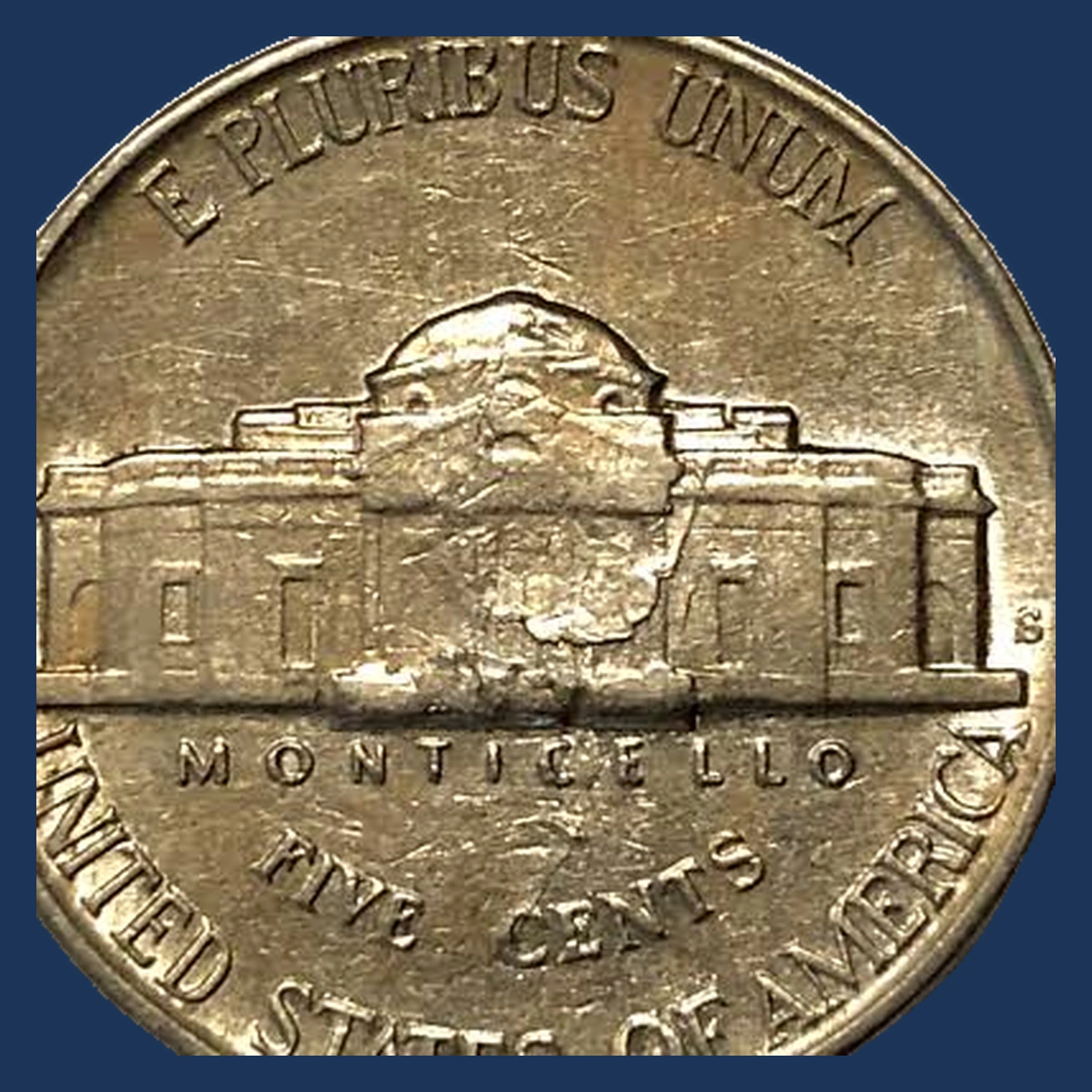
A thin layer can lift from a coin when the metal beneath it separates. Collectors call this a lamination.
Two reported 1938 examples show where to look. One Denver coin has the flaw on the back near seven to eight o’clock, while a San Francisco listing shows it across Monticello’s center.
Those are separate coins with different patches. The same location is not required on every lamination.
A peel may remain attached or leave a shallow hollow after falling away. Dirt and poor bonding inside the original metal can create the weak layer.
Estimated Value
A Denver example was reported sold for $24 through HiBid in August 2025. The listed result does not establish whether all buyer fees were included.
The San Francisco seller asked $14.99 for a different coin. That is an asking price, not a sale.
An estimated $10–$100 suits small to fairly clear 1938 laminations. Size, remaining detail, and an attached flap can change buyer interest; corrosion alone does not earn that error premium.
How to Identify
Find the mint letter to the right of Monticello before choosing a comparison photograph. For the reported Denver coin, examine the lower-left portion of the back; for the San Francisco piece, examine the building’s center.
Tilt the coin beneath a lamp and inspect the edge of the layer with a 10× magnifier. Do not lift it, even if it already looks loose.
A normal 1938 nickel weighs 5.00 grams and measures 21.21 millimeters. A scale may show a small loss if metal has fallen away; calipers check the remaining undamaged outline.
Look for a thin layer separating from otherwise solid metal. Scattered pits, bubbling, or a scraped trench suggest a different kind of damage.
2. 1938 Jefferson Nickel Ragged Clipped Planchet
The edge of this Denver nickel has an irregular missing section. Its blank was incomplete before the design was stamped onto it.
The term ragged clip describes that uneven outline. It does not mean the finished coin was clipped with a tool afterward.
GreatCollections listed a 1938-D example graded ANACS MS64, meaning no circulation wear but some visible marks. Its recorded weight was 4.91 grams.
That small weight difference fits a modest loss of metal. It does not tell the exact location or shape of the gap without looking at the coin itself.
Estimated Value
For an identified 1938-D ragged clip, use an estimated $40–$200. This range reflects modest clipped-blank errors and the reported MS64 condition, rather than a verified selling price for the 4.91-gram coin.
A clearly original edge is more valuable than a doubtful notch. Wear, scratches, and cleaning can lower interest.
The missing portion must belong to the blank before striking; a later chip or cut does not qualify for this estimate.
How to Identify
The recorded 4.91 grams is only slightly below the normal 5.00 grams. Check a loose coin with a scale, but do not treat that small difference alone as proof of a clip.
Use a 10× magnifier along the irregular opening to find how the nearby design meets it. Letters and rim metal should fit an edge that was already incomplete during striking, rather than stop at a fresh cut.
Calipers can compare the undamaged spans with the usual 21.21-millimeter diameter; the plain edge should also be checked for tool marks. Photograph both ends of the gap, where changes in the rim and design are often easier to judge than the rough center.
3. 1938 Jefferson Nickel Off-Center Strike with an Indent
Only a small part of the design reached the blank on this example. PCGS described it as 90% off center and graded it MS62, an unworn grade that allows noticeable marks.
The coin also has an indent on its back. Another blank or coin occupied part of the striking area and pressed into the metal.
An indent is a depressed contact area, not necessarily a backward copy of a design. These two effects belong to the same nickel.
The large untouched portion makes the shape striking, but the remaining details still establish its identity.
Estimated Value
Estimate $250–$800 for a comparable identified 1938 off-center nickel with an original indent. A separate 1941 nickel struck 15% off center sold for $373.75 in September 2010.
That comparison had a higher grade and sharp staircase detail, but lacked this stated combination. It provides a price reference without pricing the 1938 coin as identical.
The ninety-percent figure is not a multiplier for value. Surviving identification and the quality of both effects matter.
How to Identify
Begin with the small struck area rather than the broad blank surface. Check the remaining year against the label and full photographs, since so much of the design missed the blank.
Turn to the back and follow the smooth boundary of the indent with a 10× magnifier. The depression should fit the striking accident, without crushed finished details suggesting a later blow.
An off-center coin can retain a normal nickel’s 5.00-gram weight. Use a scale for a loose coin and calipers to record its outline against the usual 21.21 millimeters.
The side that received the indent may differ from the other face. Compare the untouched area, stamped details, and depressed patch together to see how the metal was held during the strike.
4. 1938 Jefferson Nickel Double Strike with a Clip and Broadstrike
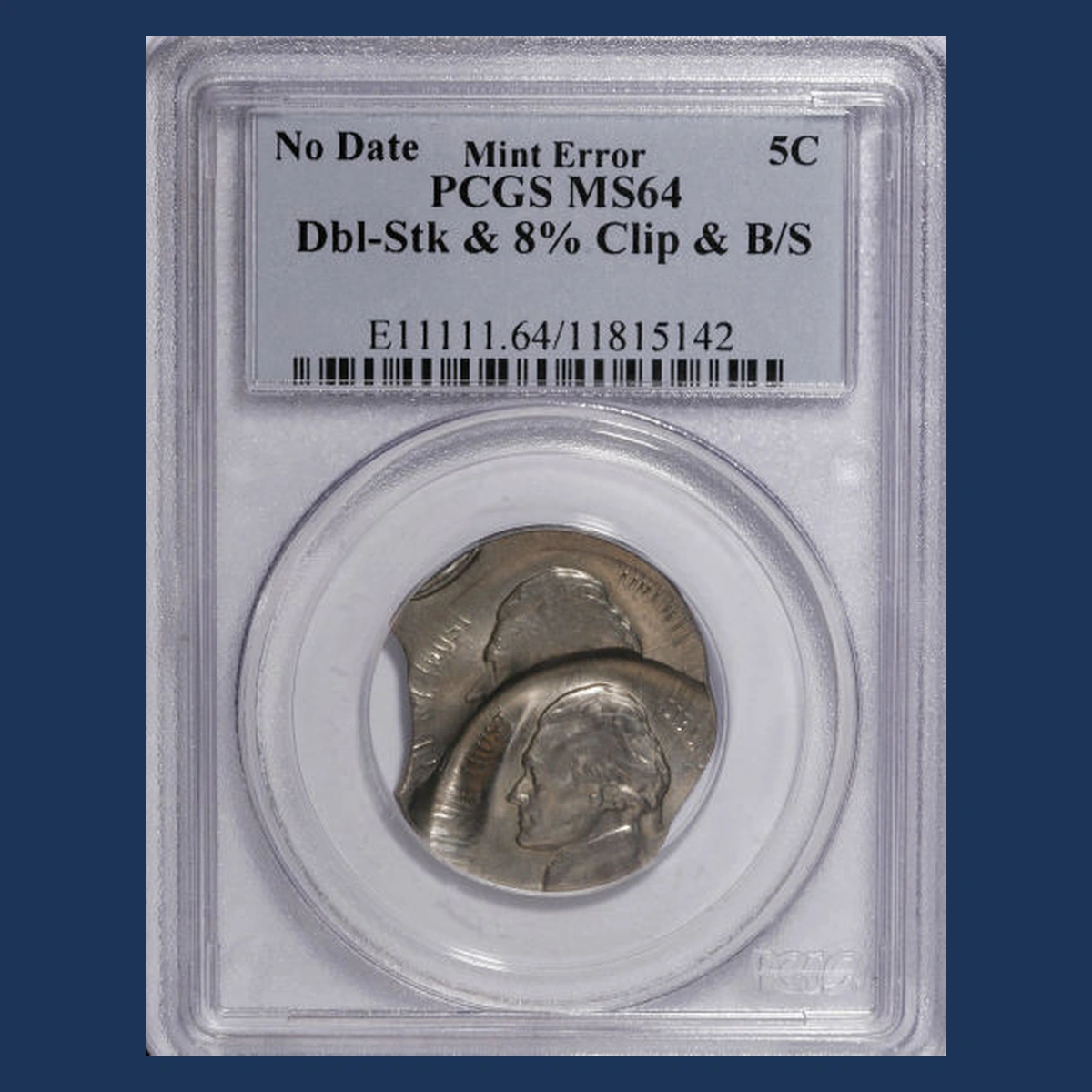
This one nickel combines three visible mistakes. Its blank had an eight-percent clip, it received more than one strike, and it spread outward during striking.
The spreading is called a broadstrike. It happens when the surrounding collar, which normally limits a coin’s width, does not contain the metal properly.
Mint Error News pictured the 1938 example with a PCGS MS64 grade. The clip and repeated design belong to that same coin.
A double strike repeats parts of the design in another position. That differs from close doubled outlines already present on a stamping tool.
Estimated Value
An estimated $400–$1,500 is a practical range for a well-preserved combination like this. There is no separate recorded sale assigned to the pictured 1938 MS64 coin here.
A different 1998-P nickel, flipped over and struck twice off center, sold for $604 in September 2004. That comparison shows demand for complex repeated strikes, but its details differ.
The clip, broadstrike, and extra blow contribute to one price. Adding three full error prices would overstate the result.
How to Identify
First separate the three features by sight. Find the missing edge, then a repeated letter or portrait, and finally the metal that spread outward.
A 10× magnifier helps show which impression crossed an earlier one. Raised design from two blows should be recognizable, not just a pair of flat shelves beside letters.
The blank began below the normal 5.00-gram weight because of the clip. Check that with a scale if the coin is loose.
Calipers can record the enlarged outline against a normal nickel’s 21.21 millimeters. Keep the clipped opening apart from the expanded areas when measuring.
Inspect the plain edge for crushing or filing. The missing section should fit the struck rim, while the overlapping designs explain how the coin spread.
5. 1938 Jefferson Nickel Struck on a Cent Blank
The copper color is the first surprise: Jefferson’s portrait appears on a blank intended for a cent. The smaller disk leaves too little room for the full nickel design.
A documented 1938 example weighs 3.0 grams and was graded NGC MS63 Red and Brown. That describes an unworn coin with marks and a mixture of original copper color and brown toning.
Its blank had not already become a Lincoln cent. A wrong-blank error begins with an unstamped disk entering the wrong press.
Copper plating on a normal nickel can imitate the color, but not the complete combination.
Estimated Value
Use an estimated $800–$2,500 for an identified 1938 nickel on a copper cent blank. The documented 3.0-gram MS63 example has no individual selling price used here.
A 1941 nickel on a cent blank, graded MS66 Red and Brown, brought $2,400 in July 2021. Its stronger condition makes it a useful upper comparison, not an exact price for the 1938 piece.
Readable identification and original surfaces remain important even when the metal mistake is obvious.
How to Identify
Copper color should lead to measurements, not an immediate value claim. A normal 1938 nickel is a solid copper-nickel alloy weighing 5.00 grams; the documented wrong-blank coin weighs 3.0 grams.
The usual cent blank was about 3.11 grams and 19.05 millimeters before striking. Use a scale and calipers on a loose candidate, allowing for the smaller blank to spread under nickel tools.
With a 10× magnifier, inspect the outside letters and plain edge for natural loss of design at the blank’s boundary. Grinding a nickel smaller leaves a different edge.
A sealed example should be checked through its recorded measurements and photographs. Confirm that the small copper body and cropped nickel design belong to the same coin.
6. 1938 Jefferson Nickel Doubled Die
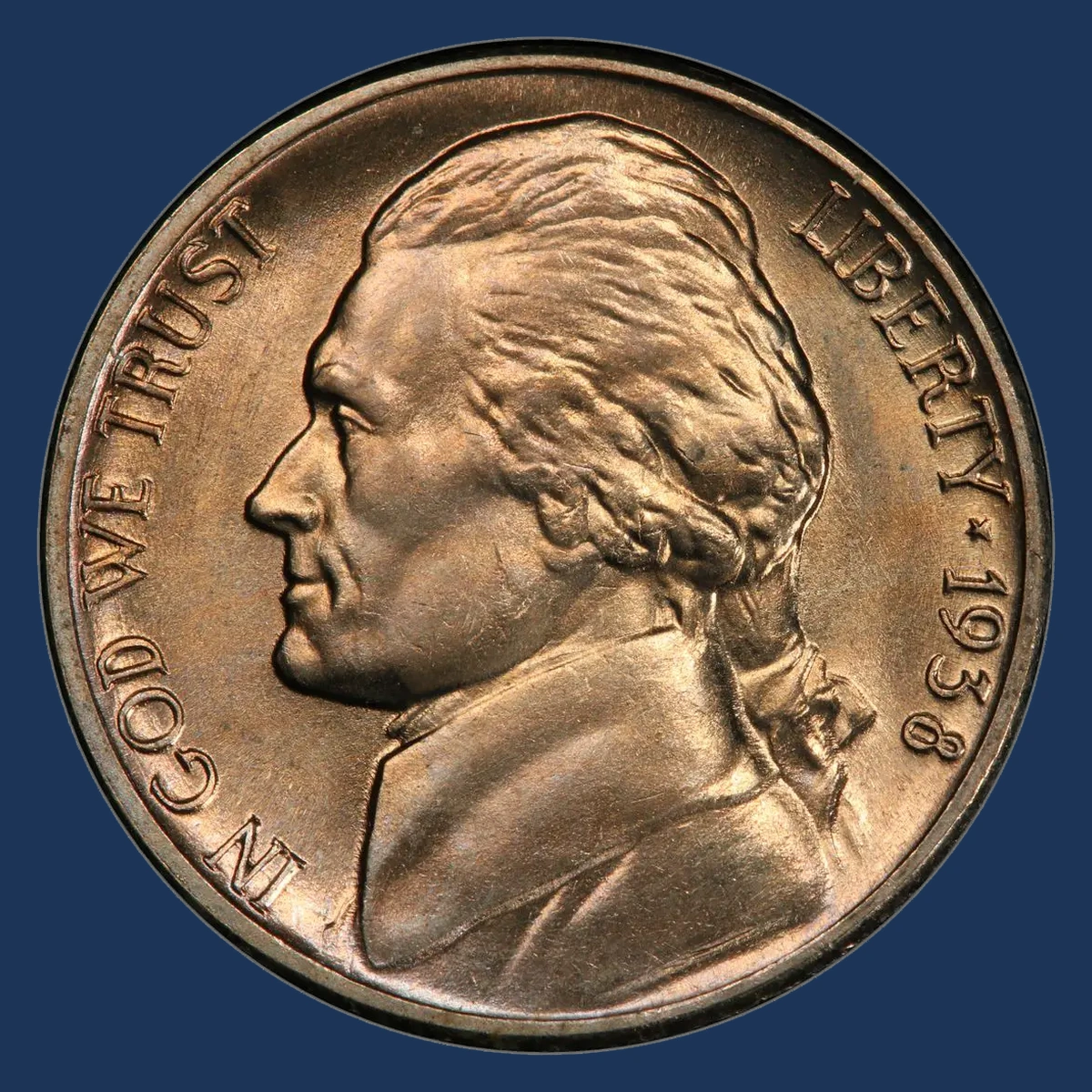
The 38 in the date can show two distinct outlines on a recognized Philadelphia variety. The motto and star also help identify it.
A die is the steel stamping tool. When that tool carries a doubled design, it can repeat the same extra outlines on many coins.
Another Philadelphia variety has several closely spaced outlines and is called a quadrupled die. It did not require four strikes on each finished coin.
Collectors also report front doubling on Denver coins and back doubling on Denver and San Francisco coins. Their exact patterns must be checked separately.
Estimated Value
For identified doubled varieties, estimate $20–$700 in many ordinary grades, with exceptional examples reaching about $3,000. The FS-105 quadrupled variety brought $2,702.50 in January 2016 at MS67 Full Steps.
MS67 means no wear and very few marks; Full Steps describes sharp staircase lines on the back. That quality contributed to the price.
The FS-105 catalog number names the variety. It should not be confused with the separate Full Steps quality designation.
How to Identify
On a Philadelphia front variety, examine the 38 with a 10× magnifier before checking the motto and star. Matching extra outlines in several places are more useful than one thick-looking number.
For Denver or San Francisco comparisons, first find the small D or S to the right of Monticello. Their reported reverse varieties need their own matching photographs; the well-known 1939 doubled Monticello is a different year.
A scale and calipers should show the normal 5.00 grams and 21.21 millimeters on a loose coin. Doubled tooling changes the design without requiring another blank or a major change in size.
Flat, shelf-like edges can result from movement during striking. Compare rounded extra outlines and split letter ends against the exact variety, rather than judging thickness alone.
Conclusion
Estimated prices run from $10 to $3,000 across these 1938 Jefferson nickel errors. Small surface peels occupy the lower end, while exceptional doubled varieties and wrong blanks can cost much more.
Start with the visible feature: a missing edge, repeated design, loose layer, or unusual metal. Then compare the same mint and type of error.
Keep a multi-error coin together in your assessment; several mistakes still produce one selling price.